

A waterless car wash is essentially a high-tech, spray-on detailer. You spray it on, and its high-lubricity formula lifts light dirt and grime right off your car's surface. Then, you just wipe it away safely with a good microfiber towel. It's a fantastic option for quick touch-ups between full washes, especially if you live in an apartment or are dealing with water restrictions.
Understanding the Waterless Car Wash
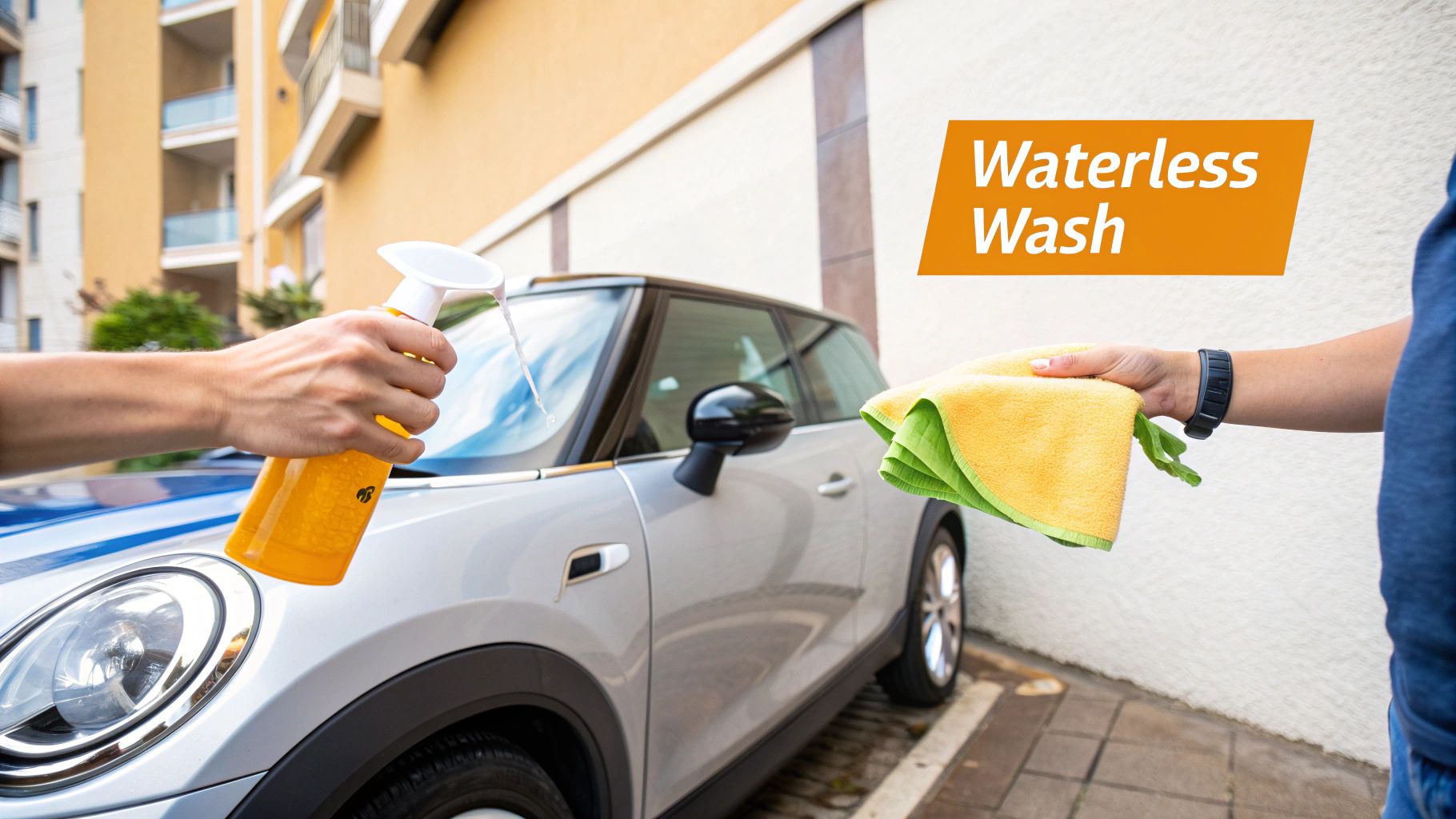
Think about it: you could clean your entire car in a parking garage or your driveway in just 15-20 minutes. No hose, no buckets, no watery mess, just a brilliant shine. That's the real magic of a waterless wash. It swaps out gallons of water for smart chemistry.
The spray itself is packed with special polymers and lubricants that do two jobs at once. First, they surround and encapsulate dirt particles, lifting them away from the paint. Second, they create an incredibly slick barrier between that dirt and your car's clear coat. This is what allows a plush microfiber towel to glide across the surface, trapping the grime without scratching the paint.
Who Benefits Most from This Method?
As great as it sounds, a waterless car wash isn't a silver bullet for every dirty car. It shines in some situations and is the wrong tool for others. Knowing when to use it is key.
This approach is a lifesaver if you:
- Live in an apartment or condo where a hose and bucket just aren't an option.
- Are facing local water restrictions that make traditional washing impossible.
- Need to quickly get rid of light dust, pollen, or fingerprints before a car show or a night out.
- Want to keep that "just-detailed" look going between your more thorough washes.
This mix of convenience and eco-friendliness is why these products are exploding in popularity. The global market for waterless wash kits is on track to grow from USD 540.0 million in 2026 to over USD 1,102.6 million by 2036. That growth is largely fueled by urban water shortages and a growing awareness of conservation. You can read the full research about water conservation's impact on car care products to see the data behind the trend.
The key is understanding its limitations. This method is designed for light to moderate soiling. If your car is caked in thick mud, road salt, or heavy grit, you’ll need a more robust cleaning method to avoid scratching the paint. Think of it as a maintenance clean, not a deep restoration.
Deciding between a quick waterless wipe-down and a full-blown traditional wash can be tricky. Here’s a simple guide to help you make the right call based on how dirty your car actually is.
Waterless Wash vs Traditional Wash Decision Guide
| Situation | Best Method | Reasoning |
|---|---|---|
| Light dust, pollen, fingerprints | Waterless Wash | Perfect for lifting light contaminants without scratching. Fast and efficient. |
| Heavy mud, road salt, or grit | Traditional Wash | Water is needed to safely rinse away heavy, abrasive particles first. |
| Apartment living, no hose access | Waterless Wash | The ideal solution when you can't use a hose and bucket. |
| Water restrictions are in effect | Waterless Wash | Conserves water while still keeping your car looking sharp. |
| Deep cleaning after a long road trip | Traditional Wash | A full wash is better for removing bug guts, tar, and heavy road film. |
| Quick touch-up before an event | Waterless Wash | Nothing beats it for a fast, show-ready shine in minutes. |
Ultimately, choosing the right method comes down to assessing the level of dirt on your car. If it's just dusty, a waterless wash is your best friend. If it's truly filthy, stick to the tried-and-true hose and bucket to be safe.
Building Your Waterless Detailing Toolkit
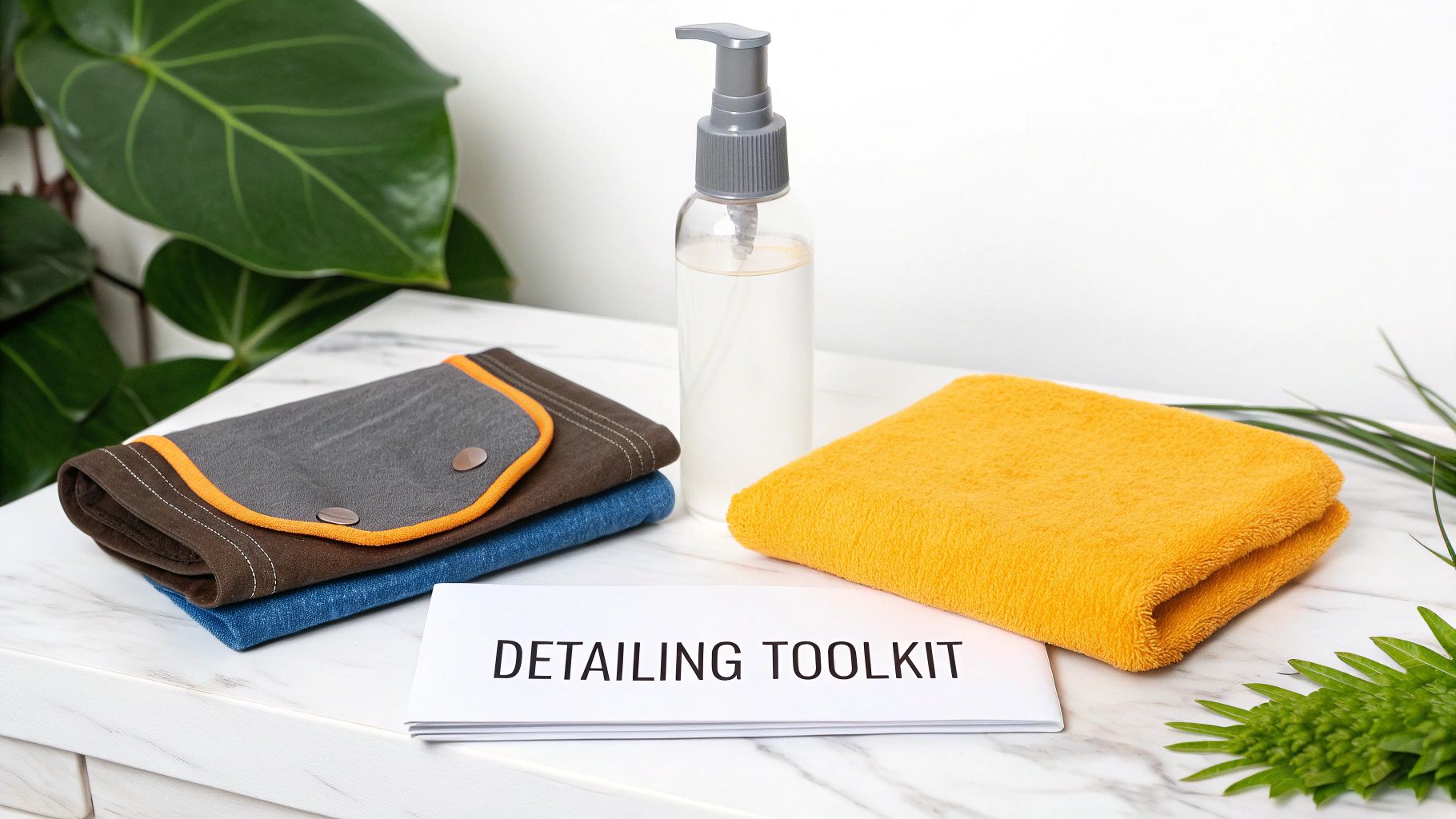
Getting that flawless, scratch-free shine from a waterless wash doesn't require a garage overflowing with gear. It all boils down to two things: the right spray formula and the right microfiber towels. Get these two elements dialed in, and you're set up for a safe and stunningly effective clean.
You’re not alone in making the switch. The waterless car wash market, currently valued at $503.0 million, is on track to nearly double, hitting an estimated $888.7 million by 2033. This surge is all about water conservation awareness and the incredible convenience of getting top-tier products delivered right to your door.
Choosing Your Waterless Wash Formula
The liquid in that spray bottle does all the heavy lifting. A high-quality waterless wash formula is far more than just soapy water; it’s a carefully engineered blend designed to protect your paint at every step.
When you're comparing products, look for bottles that list these key ingredients:
- High-Lubricity Polymers: This is the secret sauce. These polymers create an ultra-slick barrier between the dirt and your paint, letting you wipe away grime with almost zero friction. This is your number one defense against swirl marks.
- Advanced Surfactants: Think of these as tiny molecular lifters. They get to work breaking down and encapsulating dirt particles, lifting them off the surface so your towel can trap them safely.
- Wax or Sealant Additives: Many of the best formulas pull double duty. They often include carnauba wax or synthetic sealants that leave behind a thin, protective layer, boosting gloss and helping the surface stay cleaner for longer.
A good formula should feel slick to the touch. When you spray it, it should come out as a fine mist that clings to the panel for a moment, giving those active ingredients time to work their magic before running off.
The Critical Role of Microfiber Towels
I can't stress this enough: your towels are just as crucial as your chemical spray. Using the wrong towel is the quickest way to put fine scratches into your paint, completely defeating the purpose of the waterless method.
The most important metric here is GSM (Grams per Square Meter). This tells you the towel's density and plushness. For a waterless wash, you absolutely need a high GSM towel with a deep, fluffy pile to safely pull dirt away from the paint.
Expert Tip: Never, ever use a low-pile, utility-style microfiber towel on your paint for a waterless wash. Its fibers are too short to trap grit, which means you're essentially just dragging abrasive particles across your car's finish. Save those for wheels and interior plastics.
Here’s a look at what you need to build out your towel collection.
Your Microfiber Towel Arsenal
Having a few different types of towels on hand ensures you have the right tool for each part of the job, maximizing safety and results.
| Towel Type (GSM) | Primary Use | Key Feature |
|---|---|---|
| Plush (400-600 GSM) | Initial wipe-down to lift dirt. | Deep pile provides a safe cushion, pulling dirt away from the paint surface. |
| General Purpose (300-350 GSM) | Final buffing and residue removal. | Lower pile provides just enough bite to leave a streak-free, high-gloss finish. |
| Waffle Weave | Cleaning glass and windows. | Unique pocketed texture traps liquid and dirt without leaving lint behind. |
| Utility (200-250 GSM) | Wheels, tires, door jambs. | Durable and less expensive, perfect for the dirtiest jobs away from the paint. |
Having at least 8-12 high-quality, plush towels dedicated solely to your paint is a smart investment. This ensures you always have a clean, fresh side to work with and never risk cross-contamination from a previously used towel.
For a deeper dive into what makes these tools so effective, check out our guide on selecting the best microfiber towels for cleaning. A small investment here will pay off big time in achieving that perfect, safe finish every single time.
The Safe and Effective Waterless Wash Method
Alright, you’ve got your high-quality spray and a stack of plush microfiber towels. Now for the fun part: bringing that shine back to your car. The whole game here is about technique. We’re going to use a simple, deliberate method that pros rely on to get a flawless finish without causing any scratches. Forget about aggressive scrubbing—this is all about finesse, lubrication, and letting the product do the heavy lifting.
The golden rule is to work in small, manageable sections. Always start from the cleanest parts of the car (usually the top) and work your way down to the dirtiest. This simple top-down approach stops you from dragging road grime from the lower panels all over your cleaner paintwork. Think of a single car door as one section. The roof might be two, and a big hood could be two or even three.
The Art of the Panel-by-Panel Approach
Let's start with the roof, since it's typically the least grimy spot.
Working on just one small section at a time, go ahead and generously mist the surface with your waterless car wash solution. You're looking for a nice, even, wet layer covering the entire panel. Don't be stingy here—proper lubrication is your number one defense against scratching the paint.
Now, just let it sit for about 30-60 seconds. This isn't wasted time. That brief pause is crucial, as it allows the specialized polymers and surfactants in the formula to get to work encapsulating the dirt particles and lifting them right off the paint. This is where the magic happens. The product is doing the hard work so the wipe-off is much, much safer.
Next, grab one of your clean, plush microfiber towels and fold it into quarters. This little trick is non-negotiable. Folding gives you eight clean, usable sides from a single towel, which is the secret to preventing cross-contamination and making sure a fresh surface is always touching your paint.
Gently glide that folded towel across the panel in one straight line. No need for circles or heavy downward pressure. Seriously, just let the towel glide. Its deep fibers are designed to pick up and trap that encapsulated dirt. After one pass, lift the towel, flip it to a clean side, and make another pass on the area next to it.
Your goal is to lift the dirt away, not grind it into the paint. Picture yourself gently sweeping dust off a delicate piece of furniture. Every pass with a fresh side of the towel ensures you're trapping the grime, not just pushing it around.
Mastering the Two-Towel Buff
After that first wipe-down, you'll probably notice a slight haze on the surface from the cleaning solution. That's totally normal. This is where your second towel enters the picture.
Grab a separate, completely dry microfiber towel—I like using one with a slightly shorter pile for this part—and gently buff the area. In just a few seconds, you'll reveal a brilliant, streak-free shine.
This two-towel system is absolutely critical for getting that professional look. Here’s the breakdown:
- The Primary Towel: This is your "wet" or "dirty" towel. Its only job is to safely lift off that initial layer of dirt and product. It's going to get dirty as you work your way around the car.
- The Buffing Towel: This is your "dry" or "clean" towel. It should never touch a heavily soiled panel. Its sole purpose is to clear away any leftover product residue and bring out that slick, glossy finish.
As you move around the vehicle, just keep repeating this spray-wipe-buff process, one panel at a time. Remember to work from top to bottom: roof, windows, hood, trunk, upper door panels, and then finish with the lower rocker panels and bumpers. Always save the filthiest parts of the car for the very end.
Here’s a pro tip: Keep a few older, less pristine towels just for those grimy lower sections. That way, the heavy brake dust and road tar you pick up down there will never contaminate the towels you use on your paint. By sticking to this systematic approach, your waterless car wash becomes a safe, almost meditative routine that delivers stunning results without a single drop of water from a hose.
Mastering Scratch Prevention and Paint Safety
Let's be honest, the biggest hesitation most people have with a waterless car wash is the fear of scratching their paint. It's a valid concern. If you just grab a random spray and an old rag, you're asking for trouble. But when you understand the process and use the right tools, it's one of the safest ways to clean a car.
The magic is in the formula. A good waterless wash isn't just soapy water; it's packed with lubricants and polymers that get to work the second you spray. They surround and lift dirt particles, encapsulating the grit so it's suspended in a slippery solution. This makes it possible to wipe away dirt without grinding it into your clear coat.
Still, the product is only half the equation. Your technique is what makes or breaks the whole deal.
The Foundation of a Scratch-Free Wash
Before you even touch a spray bottle, give your car a quick once-over. Are we talking about a layer of light dust and pollen, or is it caked in mud and road salt from a week of bad weather? Waterless washing is a champ for the first scenario, but you’ll want to head to a proper car wash for the heavy-duty stuff.
When you start wiping, your new mantra is zero pressure. I mean it. You are not scrubbing. You're simply guiding the towel over the surface to collect the dirt that the spray has already loosened for you. Let the product's lubricants and your plush microfiber towel do all the heavy lifting.
Think of it this way: you're trying to lift dirt off the paint, not drag it across the paint. Your towel should act more like a magnet for grime than a scouring pad. Every single wipe needs to be light and intentional.
This simple infographic really nails the core concept—it's a three-part dance of spraying, wiping, and buffing.
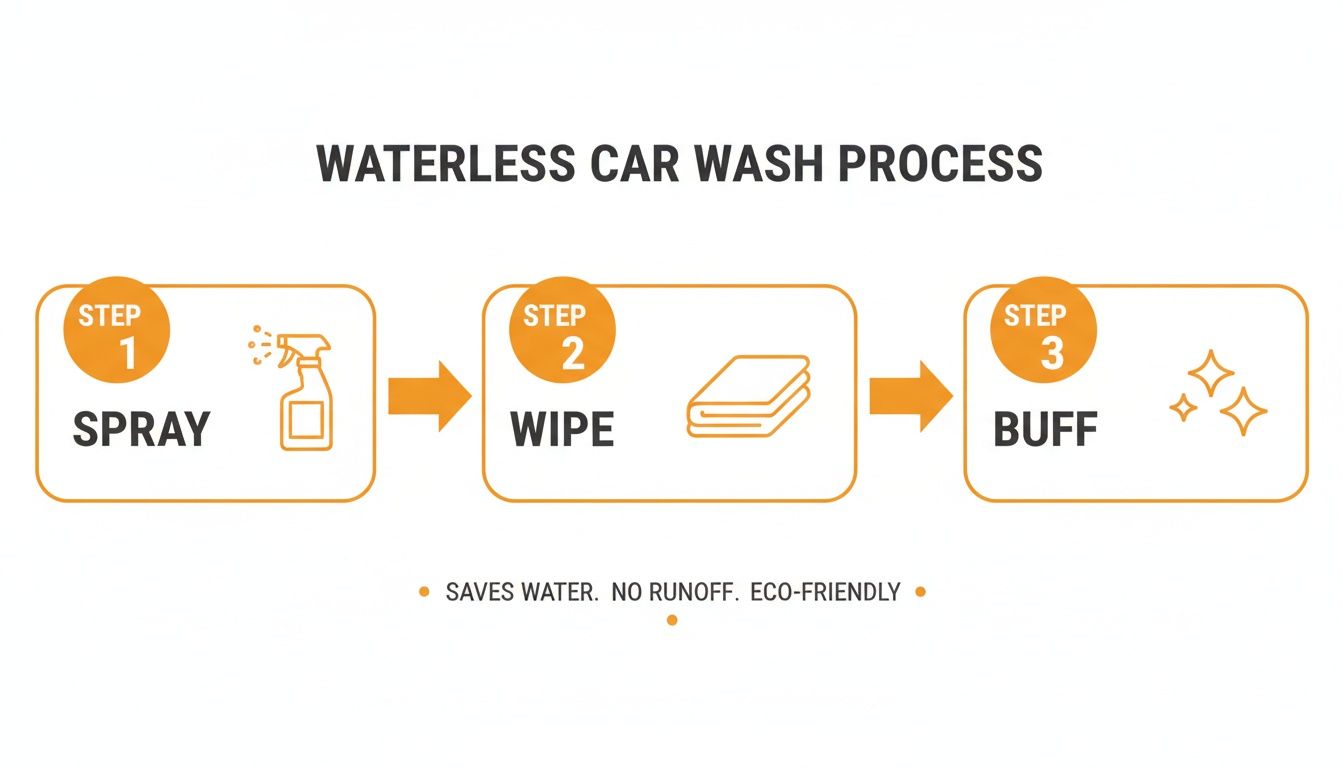
Getting this spray-wipe-buff sequence right is everything when it comes to a safe, flawless finish.
Proven Methods for Maximum Safety
If you want to take paint safety seriously, there are a couple of professional techniques you need to adopt right away. These aren't just suggestions; they're the habits that separate a pristine finish from a web of swirl marks.
Here’s what I do every single time:
-
The One-Directional Wipe: Ditch the circular "wax on, wax off" motion. That just drags dirt around. Instead, gently glide your towel in one straight line. After a single pass, lift the towel off the paint, flip to a fresh, clean side of your microfiber, and then make your next pass. This ensures you’re never dragging trapped grit back over a clean area.
-
The Two-Towel System: This is non-negotiable for me, and it should be for you too. Always have two separate towels.
- Towel #1 (The "Wet" Towel): Fold this one into quarters. It's your workhorse for the initial wipe, picking up the dirt and the waterless wash solution.
- Towel #2 (The "Dry" Towel): This is your buffing towel. It should be perfectly clean and dry, used only to gently buff away any leftover haze for that deep, streak-free shine. This towel should never touch a dirty panel.
One towel does the cleaning, the other does the perfecting. It’s that simple.
When you combine these habits with a top-to-bottom cleaning strategy, you can get that showroom look without a single scratch. For more pro-level insights to keep your ride looking its best, check out our guide on advanced vehicle detailing tips. These are the little things that make all the difference.
When You Need a Foam Cannon Instead
A waterless car wash is a fantastic tool for regular upkeep, but let's be realistic—every tool has its limits. Its absolute kryptonite? Heavy, caked-on grime. If your car looks like it just came back from an off-road adventure or is wearing a thick crust of winter road salt, it’s time to put the spray bottle down.
Trying to tackle that level of filth with a waterless wash is a surefire way to scratch your paint. The sheer volume of abrasive grit is just too much for the spray-and-wipe method to handle safely. This is precisely where a foam cannon comes in, bridging the gap between a light touch-up and a harsh, high-pressure assault.
A foam cannon is an enthusiast's best friend for dealing with serious dirt. It hooks up to your garden hose or pressure washer and blankets your car in a thick, satisfying layer of cleansing foam. This isn't just for looks; the foam clings to the surface, giving the cleaning agents precious time to break down and loosen stubborn dirt, mud, and road grime.
This pre-soak step is non-negotiable for a truly dirty vehicle. It lifts the heaviest, most dangerous particles off the paint before you ever touch it with a wash mitt. That single step dramatically reduces the risk of dragging grit across your clear coat—the number one cause of swirl marks.
The Power of a Pre-Soak
Think of the foam as a protective cushion that does the initial heavy lifting for you. It seeps into every crack and crevice, breaking the bond between the grime and your paint. After letting the foam dwell for a few minutes (don't let it dry!), you can rinse it all away, taking the worst of the dirt with it. This sets you up for a much safer and more effective contact wash.
A foam cannon is the only smart choice in a few key situations:
- After Winter Storms: When your car is coated in a gritty, salty mess.
- Post-Road Trip: To safely dissolve layers of bug guts and heavy road film.
- Mud and Dirt Buildup: For any time your vehicle is visibly caked in mud, dirt, or sand.
Why Not Just Blast it With a Pressure Washer?
Using a pressure washer by itself can be way too aggressive. High-pressure water can easily damage sensitive trim, emblems, or even force water into seals where it doesn't belong. The foam cannon, on the other hand, delivers a gentle yet highly effective cleaning action that respects your vehicle's finish. It's all about working smarter, not harder.
We're seeing a big shift in the car care world toward more efficient methods. While a traditional bucket wash can use 50-150 gallons of water, a foam cannon uses far less, and a waterless car wash uses mere ounces. This focus on efficiency is driving huge market growth, with the global waterless car wash franchise market projected to grow from USD 1.32 billion to USD 3.31 billion by 2033. For the weekend detailer, a foam cannon lets you get a car properly clean in under 20 minutes, blending professional-grade results with the convenience of doing it yourself. You can learn more about the growth of water-efficient car care and see the data for yourself.
The bottom line is this: a waterless wash is for maintenance, while a foam cannon is for deep cleaning. Knowing which tool to grab for the job at hand is the secret to keeping your car looking flawless year-round.
If you're ready to see how this tool can fit into your routine, check out our in-depth guide to car washing with a foam cannon, where we cover everything from choosing the right soap to mastering your technique.
Got Questions About Waterless Washing? We've Got Answers.
Even after you've got the basics down, a few questions always pop up before you fully embrace the waterless wash. Let's tackle the most common ones I hear, so you can clean with confidence.
Probably the biggest concern is about safety. Is this really okay for my car's paint? The short answer is yes, absolutely—if you do it right. The secret is in the product's high-lubricity formula. It wraps around each dirt particle, lifting it safely off the surface. When you combine that with a plush microfiber towel and the right technique (no downward pressure!), it's one of the safest ways to clean off light dust and road film. Just know its limits; this isn't the right tool for a car caked in mud or heavy grit.
What about other parts of the car, like windows and wheels? Most quality waterless wash formulas are perfectly safe for all exterior surfaces—glass, chrome, plastic trim, and even your wheels. For windows, you might want a quick follow-up with a dedicated glass cleaner to get that perfectly streak-free finish. And while it's great for keeping clean wheels looking sharp, rims caked with baked-on brake dust will still need a heavy-duty wheel cleaner and a proper wash.
How Many Towels Should I Grab?
This is a fantastic question, and getting this right is critical for a scratch-free job. For a typical sedan or small SUV, I recommend having at least 8 to 12 fresh, high-quality microfiber towels on hand before you even start.
The Golden Rule: Never reuse a dirty section of your towel. A fresh, clean face of the towel for every single panel is your best defense against scratches.
Having plenty of towels means you won't be tempted to cut corners and re-use a soiled one. That's the single fastest way to put fine scratches into your paint. I also like to keep a separate stack of older towels just for the really grimy spots, like the lower rocker panels. This keeps the heavy gunk off my good paint towels entirely.
Ready to make your car shine without the hassle of a hose? The SwiftJet Car Wash Foam Gun is the ultimate tool for a fast, effective, and satisfying clean. Click here to get your SwiftJet Foam Gun today!
