

Let's be honest, if you're still using old cotton rags to clean, you're working way harder than you need to. Microfiber towels are a complete game-changer because their design is just smarter. Each towel is made of ultra-fine, split fibers that create millions of microscopic hooks. These hooks don't just push dirt around—they actively grab and trap dust, grime, and moisture.
The result? A highly absorbent and virtually lint-free cloth that leaves a perfect, streak-free shine on just about any surface you can think of.
Why Microfiber Towels Are a Game Changer in Cleaning
The move from cotton rags to microfiber isn't just a minor upgrade; it's a massive leap forward in cleaning technology. This shift has changed everything from professional car detailing to how we handle everyday spills at home. It's not about a new material—it's about a fundamentally better way to clean.
Think of an old cotton towel like a clumsy mop. It mostly just soaks up liquid and smears the dirt across the surface. A microfiber towel, on the other hand, works more like millions of tiny magnets for grime. Every single fiber is split into microscopic strands, which dramatically increases the surface area and gives it the power to lift and lock away contaminants.
This unique structure is what gives microfiber its edge:
- Superior Cleaning Power: The fibers are so effective at grabbing particles that they can remove dust, bacteria, and allergens, often with just a little water—no harsh chemicals needed.
- Scratch-Free Performance: The material is incredibly soft and plush, making it safe for delicate surfaces like your car's paint, glass, and electronics. No more worrying about swirl marks or fine scratches.
- Exceptional Absorbency: A good microfiber towel can hold up to eight times its weight in water. This makes it an absolute beast for drying your car or soaking up spills in a flash.
The proof is in the numbers. The global microfiber cleaning towel market was recently valued at over one billion dollars and is on track to nearly double in the next decade. That kind of growth tells you that both pros and weekend warriors are sold on the results. You can dig into more data on the growth of the microfiber market.
The real magic of microfiber lies in its ability to deliver a flawless finish. By physically lifting dirt away from the surface, it sets the stage for a truly deep clean, especially when paired with high-quality tools like a foam gun.
Using the right gear takes things to the next level. For example, when you pair a great towel with a SwiftJet foam gun, you're not just wiping—you're loosening and encapsulating dirt in thick foam before you gently wipe it away. That combination is the secret to getting professional-grade results right in your own driveway.
To really complete your setup, take a look at our guide on finding the perfect pressure washer PSI for car washing.
Microfiber Towels vs Cotton Towels at a Glance
So, what are the real, practical differences when you put microfiber head-to-head with traditional cotton? While cotton has been a go-to for generations, the science behind microfiber gives it a clear advantage in almost every cleaning scenario.
This table breaks down how they stack up.
| Feature | Microfiber Towel | Cotton Towel |
|---|---|---|
| Cleaning Action | Lifts and traps dirt with split fibers. | Pushes dirt and absorbs liquid. |
| Absorbency | Extremely high; holds up to 8x its weight. | Moderate; becomes saturated quickly. |
| Lint & Streaks | Lint-free and leaves a streak-free finish. | Tends to leave lint and streaks behind. |
| Drying Time | Dries very quickly. | Dries slowly, can develop mildew. |
| Durability | Lasts for hundreds of washes. | Fibers break down and thin out over time. |
| Surface Safety | Non-abrasive and safe for all surfaces. | Can be abrasive and cause micro-scratches. |
The takeaway is clear: for any job where a clean, scratch-free, and lint-free finish is the goal, microfiber is simply the superior tool. It cleans more effectively, lasts longer, and protects your surfaces better than cotton ever could.
Understanding What Makes a Great Microfiber Towel
Not all microfiber towels are created equal. Walk down the cleaning aisle, and you'll see a dozen different kinds, with technical jargon on the packaging that can make your head spin. But here’s a secret: you only need to understand a few key terms to go from a confused buyer to a confident expert.
Think of it like choosing bed sheets. You wouldn't just grab a set without knowing the thread count, right? The same idea applies here. To really get what makes a towel great, it helps to see them as part of the bigger picture of professional window cleaning supply essentials. The pros know the towel's construction is everything.
Decoding GSM: The Secret to Absorbency and Softness
The single most important metric you'll run into is GSM, which stands for Grams per Square Meter. It’s just a fancy way of describing the towel's density and weight.
GSM is the best indicator of a microfiber towel's quality. A higher GSM means more tiny fibers are packed into the fabric, making the towel softer, plusher, and a whole lot thirstier.
Here’s an easy way to think about it. A low GSM towel (around 200-250) is like a thin, lightweight summer sheet. It’s perfect for quick jobs like wiping down a dusty dashboard or cleaning windows. A high GSM towel (450 and up) is more like a luxurious, thick hotel towel—incredibly soft, super absorbent, and just what you need for safely drying your car without leaving a single scratch.
This infographic breaks down exactly why microfiber is such a game-changer for cleaning.
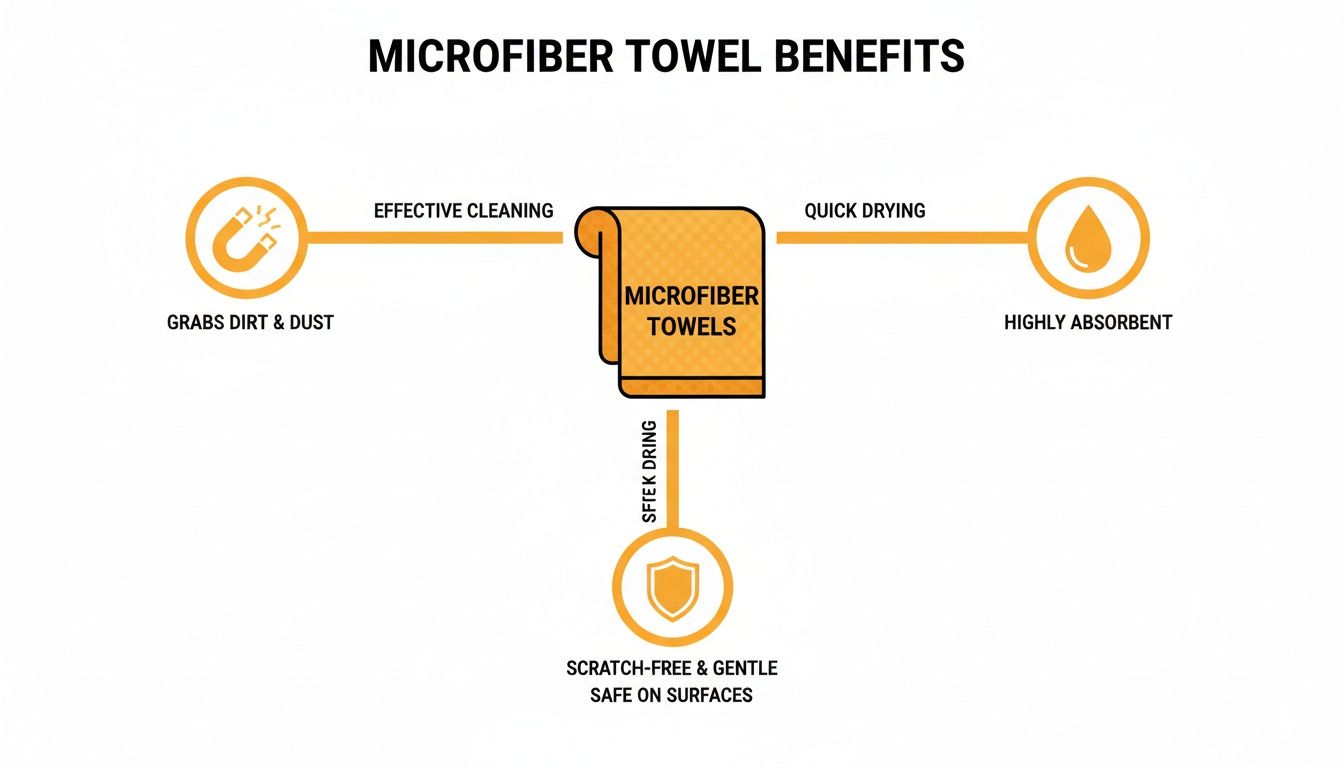
As you can see, the magic is in the structure. It’s designed to grab dirt, soak up tons of liquid, and glide over delicate surfaces without causing harm.
Weave and Pile: How a Towel's Texture Defines Its Job
Beyond just density, the weave (how the fibers are looped together) and the pile length (how long the individual fibers are) determine what a towel is best at.
Let’s break down the common types you'll see and what they're made for:
-
Low Pile (Short Fibers): These towels feel a bit thinner and have a tight, flat weave. They are absolute champions for cleaning glass and mirrors because they don't leave streaks or lint behind. They're also fantastic for buffing off stubborn wax or polish residue from car paint.
-
Medium Pile (All-Purpose): This is your versatile, do-it-all workhorse. With a balanced pile length, these towels are perfect for general interior cleaning, wiping up spills, and dusting surfaces all around your home, car, or RV.
-
High Pile (Long, Plush Fibers): These are the super-soft, fluffy towels you can’t help but touch. They're all about maximum safety and absorbency. Their long, cushy fibers pull dirt and grit deep into the towel and away from your car's paint, preventing those dreaded swirl marks and scratches. This makes them the number one choice for drying your vehicle, especially after a good rinse with a foam gun.
Matching the Towel to the Weave
The weave pattern itself adds another layer of specialization. You don't need to be an expert on every single one, but knowing these three will make you a much smarter shopper.
| Weave Type | Best Use Case | Why It Works |
|---|---|---|
| Waffle Weave | Glass, Windows, Drying | The little grid-like pockets trap water incredibly well and glide over surfaces, leaving a perfect streak-free finish. |
| Pearl Weave | Polishing, Wax Removal | This is a very tight, closed-loop weave that buffs surfaces to a high shine without grabbing or leaving any lint behind. |
| Twist Loop | Vehicle Drying | Features long, twisted fibers that act like little sponges, soaking up an unbelievable amount of water in a single pass. |
Understanding these three elements—GSM, pile, and weave—is the key to everything. Once you get how they work together, you can walk into any store and confidently pick out the perfect microfiber towel for any job. You’ll know exactly why that thick, high-pile twist loop towel is the ultimate tool for drying your car, and why a thin, low-pile waffle weave is your best friend for crystal-clear windows.
Matching the Right Microfiber Towel to the Job
Alright, we've covered the language of microfiber—GSM, pile, and weave. Now it's time to put that knowledge to work. Picking the right towel isn't about just grabbing the fluffiest one off the pile; it's a strategic move to get the best possible result for whatever you're cleaning.
Think of it like a chef reaching for a specific knife. You wouldn't use a giant cleaver for delicate garnish work, right? The same logic applies here.
Your microfiber towels are specialized tools. Using the wrong one can turn a simple wipe-down into a frustrating mess of streaks, lint, and wasted time. A big, thick drying towel, for example, would be clumsy and ineffective for cleaning the tight corners of your car's dashboard.
On the flip side, a thin, low-pile towel would be completely soaked trying to dry an entire SUV. By matching the towel's design to the surface and the mess, you set yourself up for a faster, safer, and more effective clean every single time—whether you're detailing your car, tidying the RV, or deep-cleaning the house.
Automotive Detailing Towels
For anyone who loves their car, the right microfiber towel is absolutely essential. It's the final, critical step that protects hours of hard work washing, polishing, and waxing your vehicle. The name of the game is maximum safety and a perfect, swirl-free finish.
It's no secret that microfiber dominates the car care world. It's proven to remove up to 98% of waxes and polishes without leaving behind those dreaded swirl marks—a must for detailers and enthusiasts who demand perfection.
Here's your go-to guide for picking the right towel for your car:
- Washing: A chenille microfiber wash mitt is your best friend here. Its long, fluffy "fingers" gently lift dirt and trap it deep within the pile, which keeps that grit from being dragged across your paint.
- Drying: This is where high GSM is king. You want a large, plush towel with a GSM of 500 or higher and a twist loop or high-pile weave. These towels are incredibly thirsty, soaking up massive amounts of water in one pass and drastically reducing the amount of wiping needed.
- Wax and Polish Removal: Reach for a towel with a low to medium pile and a GSM around 300-350. This build gives it just enough "bite" to buff away product residue without being too grabby, leaving behind nothing but a brilliant, slick shine.
- Interiors and Glass: For dashboards, touch screens, and windows, a low-pile, low-GSM (250-300) towel is what you need. A waffle weave is the undisputed champion for glass, as its unique pockets trap moisture and leave a completely streak-free view.
Your Microfiber Towel Cheat Sheet for Any Task
To make it even easier, here’s a handy guide matching towel specs to common cleaning jobs. Think of it as your quick-reference chart for grabbing the perfect tool every time.
| Cleaning Task | Ideal GSM Range | Best Weave or Pile | Why It Works |
|---|---|---|---|
| Car Drying | 500+ GSM | High Pile, Twist Loop | Maximum absorbency for safe, one-pass drying. |
| Streak-Free Glass | 250-350 GSM | Waffle Weave | Pockets trap water and glide smoothly for a clear finish. |
| Kitchen Counters (RV/Home) | 300-400 GSM | Medium Pile | Versatile for wiping spills and cleaning surfaces. |
| Dusting Furniture | 300-400 GSM | Medium Pile | The static charge grabs and holds onto dust particles. |
| Stainless Steel Appliances | 250-350 GSM | Low Pile, Flat Weave | Buffs away fingerprints without leaving lint or streaks. |
| Upholstery Cleaning | 350-450 GSM | Medium Pile | Gently lifts stains and soil from fabric fibers. |
This table simplifies the process, so you can spend less time guessing and more time getting great results.
Home and RV Cleaning Solutions
The same logic we use for cars applies directly to cleaning your home or RV, with a focus on versatility and efficiency. For life on the road, quick-drying and multi-purpose towels are a lifesaver, helping you save space while tackling everything from muddy floors to kitchen cleanup.
A well-rounded collection of microfiber towels can replace an entire cabinet of disposable wipes, paper towels, and single-purpose cloths, making your cleaning routine simpler and more sustainable.
In the kitchen, a medium-pile towel (around 350 GSM) is perfect for wiping down countertops and soaking up spills. Got stainless steel appliances? A low-pile, flat-weave towel will be your secret weapon against smudges and fingerprints. These same towels are also fantastic for dusting furniture, as their natural static charge attracts and traps fine particles instead of just pushing them around.
Microfiber isn't just for hard surfaces, either. If you want to learn more about tackling fabrics, check out a practical guide on how to clean sofa upholstery. And for jobs like that, our popular microfiber car wash mitt works wonders for gently scrubbing and agitating cleaning solutions on fabric furniture.
How to Use a Color-Coding System to Prevent Scratches
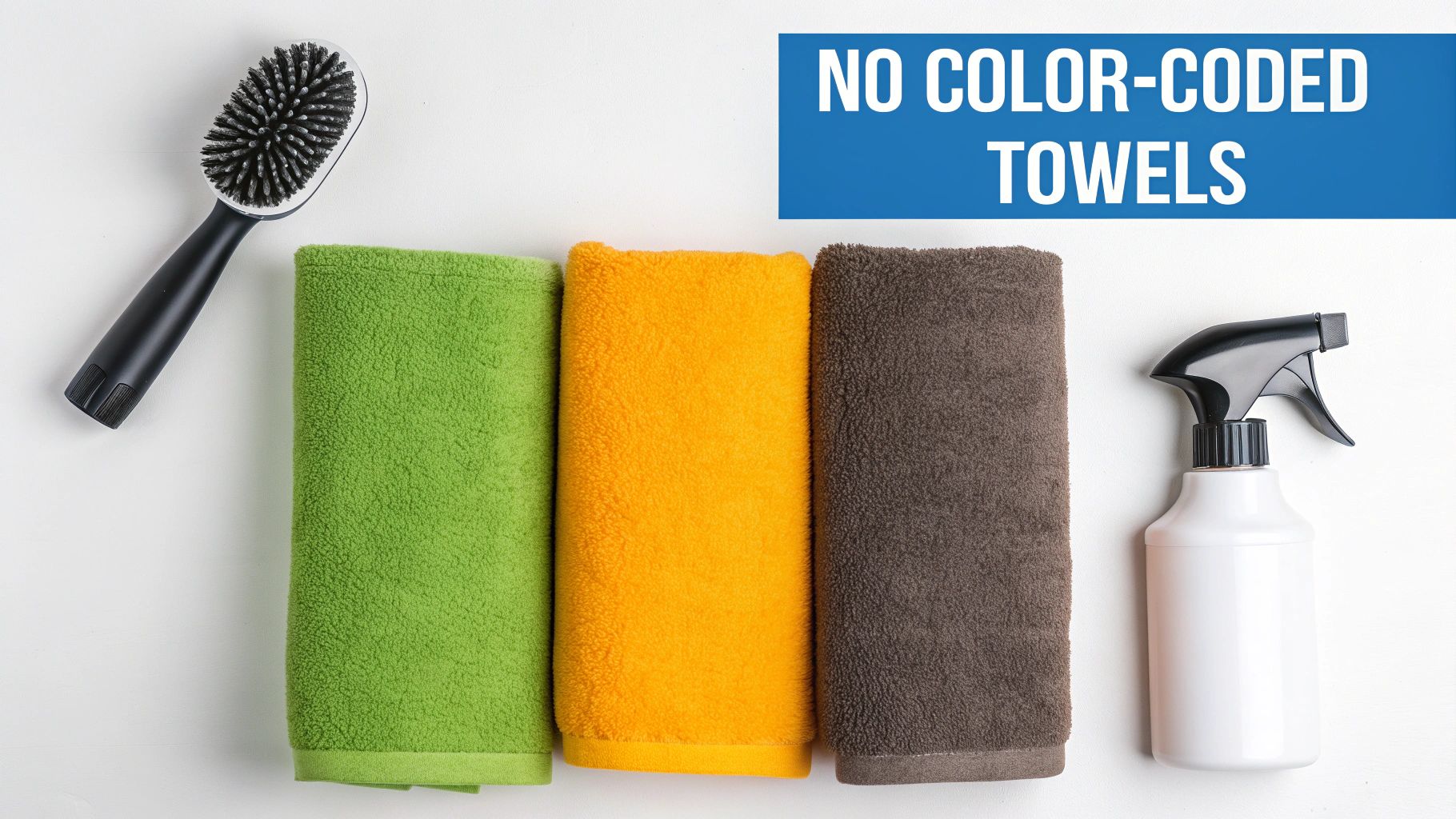
One of the smartest things pro detailers do has nothing to do with expensive tools or secret formulas. It’s a dead-simple system for preventing the number one cause of accidental scratches: cross-contamination.
Think about this for a second. You grab a towel, wipe down your filthy wheels, and then, on autopilot, you use that same towel on your car's perfect paint. You’ve just dragged brake dust, road grime, and tiny metal particles all over your clear coat. The result? A new network of swirl marks and fine scratches.
This is exactly why color-coding your microfiber towels is a non-negotiable habit for anyone who cares about their finish. It's a pro-level best practice that protects your investment—whether it’s a car, RV, or delicate surfaces at home—and instantly levels up your entire cleaning game.
Building Your Color-Coded System
The idea is simple: assign a specific towel color to a specific cleaning task or area. This creates a visual stop sign, preventing you from accidentally moving nasty contaminants from a dirty zone to a sensitive one. There’s no single “right” way to do it, but whatever system you choose, stick with it.
A great place to start is with a four-color system. It’s enough to cover all the bases for most vehicles and even household cleaning, giving you a solid foundation for preventing damage.
Here's a tried-and-true system many pros rely on:
- Black or Dark Gray Towels: These are for the absolute dirtiest jobs. Think wheels, tires, engine bays, exhaust tips, and greasy door jambs. They’re your heavy-hitters that tackle the worst of it.
- Blue or Red Towels: Dedicate these colors only to your vehicle's exterior paint. Use them for washing, drying, applying quick detailer, or buffing off wax and sealants. These towels should never touch anything but the paint.
- Yellow or Green Towels: Assign these to all interior surfaces. This covers your dashboard, leather seats, door panels, and plastic trim. Keeping them separate ensures road grime and brake dust never make their way inside.
- White or Light Blue Towels: Use these exclusively for glass and mirrors. A dedicated glass towel (often a waffle weave) is the key to a streak-free shine and stops oily residues from smearing your windows.
This disciplined approach isn't just about preventing scratches. It makes sure every towel is doing what it was designed for, from the super-absorbent drying towel on your paint to the lint-free waffle weave on your windshield.
As more people look for eco-friendly cleaning methods, microfiber has become incredibly popular, with market trends for microfiber cloths pointing toward huge growth. This lines up with the need for better ways to care for vehicles and outdoor gear. Using a color-coded system with a foam gun kit, for example, allows for specialized cleaning of camping equipment or a car before giving it a final buff.
When you adopt this simple organizational habit, you stop just cleaning. You start detailing with precision and care.
The Right Way to Wash and Maintain Your Microfiber Towels
Getting the most out of your microfiber towels has as much to do with how you clean them as how you use them. These aren't just shop rags; they’re finely tuned cleaning tools. Treat them right, and they’ll stay soft, thirsty, and effective for hundreds of washes, which is great for your wallet and your car's paint.
Think of each towel as a web of millions of microscopic hooks designed to snatch up dirt. The problem is, things like high heat, harsh chemicals, or even lint from a cotton t-shirt can clog, melt, or break those hooks. Once that happens, the towel is toast. A bit of care on laundry day is all it takes to keep them working like new.
The Cardinal Rules of Microfiber Laundry
First things first: always, always wash your microfiber towels by themselves. I can't stress this enough. It's not a suggestion, it's the golden rule. If you toss them in with your jeans or cotton towels, the microfiber will act like a lint magnet, pulling all those loose fibers deep into its own weave. That lint clogs everything up and kills the towel's cleaning power for good.
Just as critical is steering clear of two common laundry products: fabric softener and bleach.
-
Fabric Softener: This is microfiber’s kryptonite. Fabric softener works by leaving a waxy, oily film on fabrics to make them feel soft. On microfiber, that same film smothers the tiny fibers, completely clogging them up and making them useless for absorbing water or grabbing dirt.
-
Bleach: The chemicals in bleach are way too aggressive for microfiber. Bleach will eat away at the delicate polyester and polyamide strands, making them brittle and ruining their effectiveness over time.
A crucial takeaway: once a microfiber towel is coated in fabric softener or fried by high heat, there's no bringing it back. Its performance is permanently shot. The only way to get a long, effective life out of your towels is to care for them properly from the very first wash.
Following these simple rules ensures your microfiber towels for cleaning stay in prime condition, ready to deliver a perfect, scratch-free finish every single time.
Step-by-Step Washing and Drying Instructions
Washing your towels correctly is pretty simple. Just build this routine and your towels will thank you.
-
Shake Them Out: Before they even see the washer, give each towel a vigorous shake. This gets rid of any loose dirt, sand, or chunks of debris so they don't get ground into the fibers during the wash.
-
Separate by Grime Level: Group your towels. The really nasty ones used for wheels and engine bays should never be washed with the ones you use on your paint or glass. This keeps heavy grease and brake dust from contaminating your "clean" towels.
-
Set Up the Wash Cycle: Use a gentle cycle with warm water—hot water can damage the fibers. Add a small amount of a dedicated microfiber wash, or a gentle liquid detergent that's free of dyes and perfumes.
-
Drying Done Right: Air drying on a rack is the safest bet, hands down. If you need to use a machine, it's absolutely essential to use the lowest heat setting possible, or even better, a no-heat "air fluff" cycle. Too much heat will literally melt the plastic fibers, and there's no coming back from that.
Stick with this process, and your collection of microfiber towels for cleaning will be a dependable part of your detailing kit for years.
Bringing It All Together: The Art of a Perfect Clean
Mastering the art of cleaning isn't about more elbow grease; it's about being smarter with your tools. We’ve seen how microfiber towels for cleaning are less like simple rags and more like highly engineered instruments. The real secret to a flawless, professional-grade finish lies in understanding the small details that make a huge difference.
It really comes down to a few key ideas. First, those technical specs like GSM, pile, and weave aren't just jargon—they're the towel's DNA, telling you exactly what it's made for. A thick, plush, high-GSM towel is what you want coddling your car's paint, while a thin, low-GSM waffle weave is the key to perfectly clear, streak-free glass.
Second, the simple habit of dedicating the right towel to the right job, often with a color-coded system, is what takes your cleaning game to the next level. This is your best defense against cross-contamination, which is the number one culprit behind accidental swirls and scratches.
The ultimate takeaway is this: A superior clean is a system. It's the combination of knowledge, the right tool for the job, and proper maintenance that delivers consistent, professional results every single time.
The Final Polish on Your Process
Proper care is the last piece of the puzzle. Think of washing your towels correctly—separately, with no fabric softeners, and using low heat—as an investment. It’s what protects their cleaning power for hundreds of washes to come. Skipping this step is like letting a high-precision tool rust; it just won't perform when you need it.
To really lock in this system, you need a great starting point. The SwiftJet Car Wash Foam Gun, which comes with its own microfiber mitt, lays the perfect foundation. It pre-soaks and lifts stubborn grime, letting your specialized towels glide across the surface to safely whisk away dirt instead of grinding it in. You can learn more about how a foam gun transforms your car wash routine and truly sets the stage for a perfect, scratch-free finish.
Ready to stop just washing your car and start detailing it? Explore the SwiftJet collection and find the tools that will completely redefine your standard of clean.
Got Questions About Microfiber Towels?
Even after covering the basics, a few questions always seem to pop up. Think of this as the troubleshooting part of the guide, where we tackle the common "what ifs" and "why is this happening" moments. I'll give you some straight answers on everything from a towel that suddenly starts leaving lint to how long you can expect a quality one to last.
Getting these little details right is what separates a good result from a great one. It protects your investment in good towels and guarantees you get that perfect, streak-free finish you're after. Let's dig into the most common questions.
Can You Really Get Things Clean with Just Water and a Microfiber Towel?
Yes, and it’s one of their best features. The magic is in how incredibly fine the fibers are—we're talking as small as 1/100th the diameter of a single human hair. This isn't just a fun fact; it means a single towel has an enormous surface area.
These split fibers act like millions of tiny hooks, grabbing and holding onto dust, grime, and even bacteria. For everyday jobs like dusting a coffee table or wiping down a kitchen counter, a microfiber cloth dampened with a bit of water is often all you need. It physically lifts the gunk off the surface instead of just pushing it around with a chemical cleaner. It’s a game-changer if you’re trying to clean more effectively with fewer chemicals.
Now, if you're dealing with serious grease or a heavily soiled surface, you'll still want to reach for a proper cleaner. But for the daily wipe-downs and dusting, water and microfiber are a surprisingly powerful team.
Why Is My Microfiber Towel Leaving Lint Everywhere?
This one is super frustrating, but the culprit is almost always the same: laundry contamination. If your towel is shedding lint, it’s because it has snagged fibers from other fabrics, usually cotton.
Think about it—microfiber is designed to grab tiny particles. That includes lint from your cotton bath towels, t-shirts, and socks. Once those cotton fibers get tangled in the microfiber's weave, they break free when you use the towel, leaving a trail of lint on your car's paint or your glass tabletops.
There are two main ways this happens:
- Washing with a Mixed Load: This is the number one mistake. Tossing your microfiber in with your regular laundry is a guaranteed way to cause linting. Always, always wash them in a microfiber-only load.
- A Contaminated Dryer: Even if you wash them separately, the dryer drum can hold onto lint from the last load. It’s a good habit to give the inside of the dryer a quick wipe before you toss your microfiber in.
If a towel is already linting, you can try rewashing it properly, but sometimes the damage is done. Your best bet is always prevention.
How Long Should a Microfiber Towel Actually Last?
This really depends on two things: the quality of the towel you bought and how you treat it. A cheap, flimsy towel you picked up from a bargain bin might only survive a dozen or so washes before it feels stiff and useless.
A premium, well-made microfiber towel, on the other hand, is a real workhorse. If you take care of it—wash it separately, use a dedicated microfiber detergent, and keep it away from high heat and fabric softener—a quality towel can easily last for several hundred washes. That’s why investing in good towels pays off. They’ll outperform and outlast the cheap ones many times over, saving you a lot of money and frustration in the long run.
Why Do Some Microfiber Towels Cost So Much More?
It all boils down to the quality of the materials and the manufacturing process. Two towels might look nearly identical on the shelf, but how they perform can be night and day.
Here’s what you’re paying for when you buy a premium towel:
- Higher GSM: A higher Grams per Square Meter (GSM) means the towel is denser and has more material. This translates directly to better absorbency and that plush, cushioned feel.
- A Better Fiber Blend: The ratio of polyester to polyamide is critical. Premium towels typically use a superior 70/30 or 80/20 blend, which makes them softer and more effective at grabbing dirt.
- Specialized Weaves: Things like waffle weaves for drying or twist loop designs are more complicated and expensive to produce, but they offer dramatically better performance for specific jobs.
- Built to Last: Higher-grade fibers and better stitching mean the towel won't fall apart. It will hold its shape and cleaning power through hundreds of tough wash cycles.
You're not just buying a piece of cloth; you're investing in a purpose-built tool that will make your cleaning safer, faster, and more effective.
Ready to see what a professional-grade cleaning system can do for you? At SwiftJet, we’re obsessed with providing the right tools for a flawless finish, every single time.
