

Picking the right soap for car wash isn't just about getting your car clean—it’s the single most important choice you can make to protect its finish and preserve its value. It's tempting to just grab whatever is under the sink, but using the wrong stuff, like dish soap, can strip away essential protective layers and do some serious, long-term damage.
Why The Right Car Wash Soap Is Your Paint's Best Friend
It helps to think of your car’s clear coat like your skin. You wouldn't wash your face with a harsh degreaser, right? You'd use something gentle and pH-balanced. Dish soap is formulated to destroy the grease on your dinner plates, and it's just as aggressive on your car’s wax and sealants.
When those protective layers are stripped away, your paint is left naked and vulnerable to the elements—harsh UV rays, acid rain, bird droppings, and all the grime the road can throw at it. This is where a dedicated car wash soap proves its worth.
The Power of Lubricity
The real magic in a quality car wash soap is a property called lubricity. It's the key to a safe wash. Think about sliding a heavy box across a dry concrete floor versus sliding it across that same floor after it's been soaped up. The soap creates a slick, slippery surface that lets dirt and grit glide right off your paint instead of being dragged across it.
Without proper lubrication, you are essentially sanding your car with a mitt full of dirt. This action creates thousands of microscopic scratches that, over time, manifest as dullness and unsightly swirl marks visible in direct sunlight.
Those swirl marks aren't just an eyesore; they kill your car's shine, hurt its resale value, and can only be removed with expensive, professional paint correction. Using the right soap is the easiest way to prevent this from ever happening.
Maximizing Performance with Modern Tools
Getting the most out of these advanced soap formulas is where modern tools like the SwiftJet foam gun come in. A foam gun works by mixing the soap with water and pressurized air, creating a thick, clinging foam that blankets your car. This foam significantly increases the soap’s “dwell time”—how long it stays on the surface to break down grime before you even touch it with a mitt.
This one-two punch of a superior soap and a better way to apply it is a true game-changer. Professional detailers have known this for years; the added lubricity from a quality soap can boost cleaning efficiency by 40-50%, which dramatically cuts down the risk of scratching. It’s no wonder the global car wash services market is projected to hit USD 42.49 billion by 2033, as more people look for professional-grade results at home.
When you invest in a proper soap for car wash, you’re doing more than just buying a cleaning product. You’re adopting one of the most critical car wash tips for keeping your paint looking brand new for years to come.
Understanding The Science Behind The Suds
To really get the best results from a quality soap for car wash, it helps to know a little about what's actually going on in that bottle. I like to think of a car's clear coat like its skin—it needs a gentle cleanser that gets rid of the dirt but doesn't strip away its protective layers. This is where a little bit of chemistry becomes your best friend in keeping that paint looking brand new.
The real heroes in any good car shampoo are molecules called surfactants. It sounds technical, but the concept is simple. Picture them as tiny little agents with two different ends: one end loves water (hydrophilic), and the other loves oil and dirt (lipophilic).
When you cover your car in foam, the oil-loving ends grab onto all the road grime, grease, and dirt. At the same time, the water-loving ends face out, letting the water from your hose or foam gun rinse everything away cleanly. This process wraps up the dirt particles, preventing them from being dragged across your paint and causing those dreaded swirl marks and scratches.
Why pH Balance Is So Important
You’ve probably heard about "pH balance," and for your car's paint, it’s a huge deal. The pH scale runs from 0 (very acidic) to 14 (very alkaline), with 7 being perfectly neutral, just like pure water. Your car’s clear coat is more delicate than you might think, and using a soap with the wrong pH can do some serious damage over time.
For just about any routine wash, you'll want to reach for a pH-neutral soap. These formulas are specifically designed to be tough on dirt but completely safe for the wax, sealant, or ceramic coating on your vehicle. They clean beautifully without stripping away that protective layer you spent time (and money!) applying.
Using a soap that’s too acidic or too alkaline for a regular wash is like using a harsh chemical peel on your face every day. It might look clean at first, but it will quickly break down the protective layers, leaving your paint dull and exposed.
Maintaining this balance is the secret to a long-lasting, deep shine. For some great pH-neutral options, check out our guide to the best foam soap for cars that are engineered for both safety and incredible results.
When To Use Different pH Levels
While pH-neutral is your go-to for maintenance, there are times when you need something with a little more kick. Knowing when to use a different pH lets you pick the right tool for the job without accidentally causing harm.
Here's a quick look at the different types of soaps and what they're best used for.
Car Wash Soap pH Levels Explained
| Soap Type | pH Level | Primary Use | Paint Safety |
|---|---|---|---|
| Acidic Soap | 1-6 | Removing mineral deposits & brake dust. | Use with caution; can harm protection. |
| pH-Neutral Soap | ~7 | Routine maintenance washes. | Safe for all waxes, sealants, & coatings. |
| Alkaline Soap | 8-14 | Heavy degreasing & stripping old wax. | Intentionally strips protection; not for regular use. |
As you can see, each type has a very specific purpose.
-
Acidic Cleaners (Low pH): These are the heavy hitters for specialized jobs. Think stubborn water spots etched into your glass or caked-on brake dust on your wheels. Their acidic nature is great at dissolving mineral and metallic gunk, but they need to be used carefully and rinsed off completely.
-
Alkaline Cleaners (High pH): These are basically powerful degreasers. They're fantastic for breaking down oily road tar, bug splatters, and other tough organic messes. An alkaline soap is what you'd use for a "strip wash"—a deliberate process to remove old waxes before doing a full paint correction and applying a fresh layer of protection.
For over 95% of the washes you’ll ever do, a good pH-neutral soap is the right and safest choice. By matching the soap's chemistry to your goal, you can clean anything off your car while making sure that flawless finish lasts for years.
Choosing the Right Soap for Your Car
Okay, now that you've got the science down, let's talk about picking the right soap. Walking down the car care aisle can feel overwhelming, with dozens of formulas all promising a perfect shine. Think of it like a toolbox—you need the right tool for the job. You wouldn't use a sledgehammer to hang a picture frame, right?
The best car wash soap for you really comes down to what you're trying to accomplish, how dirty your car is, and how much time you've got. Let's break down the main players to help you find your perfect match.
The All-Purpose Workhorse: Traditional Shampoos
This is your classic, reliable, go-to car soap. A good pH-neutral shampoo is the cornerstone of any car washing routine. Its mission is simple: clean your car safely without messing with the wax, sealant, or ceramic coating you've already applied.
These shampoos are designed to create slick, thick suds that provide a ton of lubrication. When you're using a foam gun like the SwiftJet, this lubricity is your best friend. It helps lift dirt and grime away from the paint, drastically reducing the risk of creating those dreaded swirl marks and fine scratches during the wash.
The Time-Saver: Wash-and-Wax Formulas
If you're short on time but still want that freshly detailed gloss, a wash-and-wax soap is a fantastic option. These are two-in-one formulas that mix a gentle, pH-neutral cleaner with a bit of carnauba wax or synthetic polymers. So, while you're washing away the dirt, you're also laying down a fresh, thin layer of protection.
Think of wash-and-wax soaps as a "top-up" for your existing protection, not a replacement for a proper wax job. They’re perfect for boosting that glossy, water-beading look between your bigger detailing sessions.
They work great for weekly maintenance washes, helping to extend the life of your main wax or sealant and keeping your car looking sharp with minimal extra effort.
The High-Tech Protector: Ceramic-Infused Soaps
Welcome to the modern era of car care. Ceramic-infused soaps are packed with Silicon Dioxide (SiO2), the same magical ingredient that gives professional ceramic coatings their incredible durability and shine. With every wash, you're depositing a microscopic layer of this ceramic protection onto your paint.
This builds up a seriously tough, slick, and hydrophobic barrier. You'll notice water beading up and flying off the surface like never before, and dirt will have a much harder time sticking around for the next wash. While it won't last as long as a full-blown coating, you can expect months of enhanced protection, not just weeks. It’s a huge step up for anyone wanting maximum performance from their wash routine.
Specialized Solutions: Rinseless and Waterless Washes
What if you live in an apartment or an area with water restrictions? Don't worry, you can still get a brilliant clean. Rinseless and waterless washes are brilliant innovations for exactly these situations.
- Rinseless Wash: You mix a tiny concentrate with a bucket of water. Just wash one panel at a time with a plush microfiber towel, then immediately dry it with another. No hose, no final rinse, no mess.
- Waterless Wash: This is your "quick detailer" in a spray bottle. It's perfect for removing light dust, fingerprints, and bird droppings between washes. Just spray on and wipe off.
Both types are loaded with high-tech polymers that encapsulate dirt particles, lifting them safely off the paint without scratching. It's proof that you don't always need a flood of water to get a spotless finish.
How To Get Perfect Foam Every Time
Let’s be honest, generating that thick, shaving-cream-like blanket of foam is half the fun of washing your car. But it's not just for looks—it’s the single most effective way to pre-soak your vehicle and lift away abrasive dirt before you ever touch the paint.
Mastering your foam gun is what separates a routine rinse from a professional-grade detail. The secret isn't just dumping more soap in the canister; it's about finding that perfect balance between your car wash soap and water.
Think of it like being a barista pulling the perfect espresso shot. Too much water (a weak shot) and it’s thin and ineffective. Too much coffee (over-concentrated soap) and you’ve got a wasteful, sludgy mess. The goal is that perfect dilution ratio that creates a rich, clinging foam that has enough time to work its magic, breaking down grime without running right off.
As you can see below, car soaps have come a long way, evolving to meet different cleaning and protection needs.
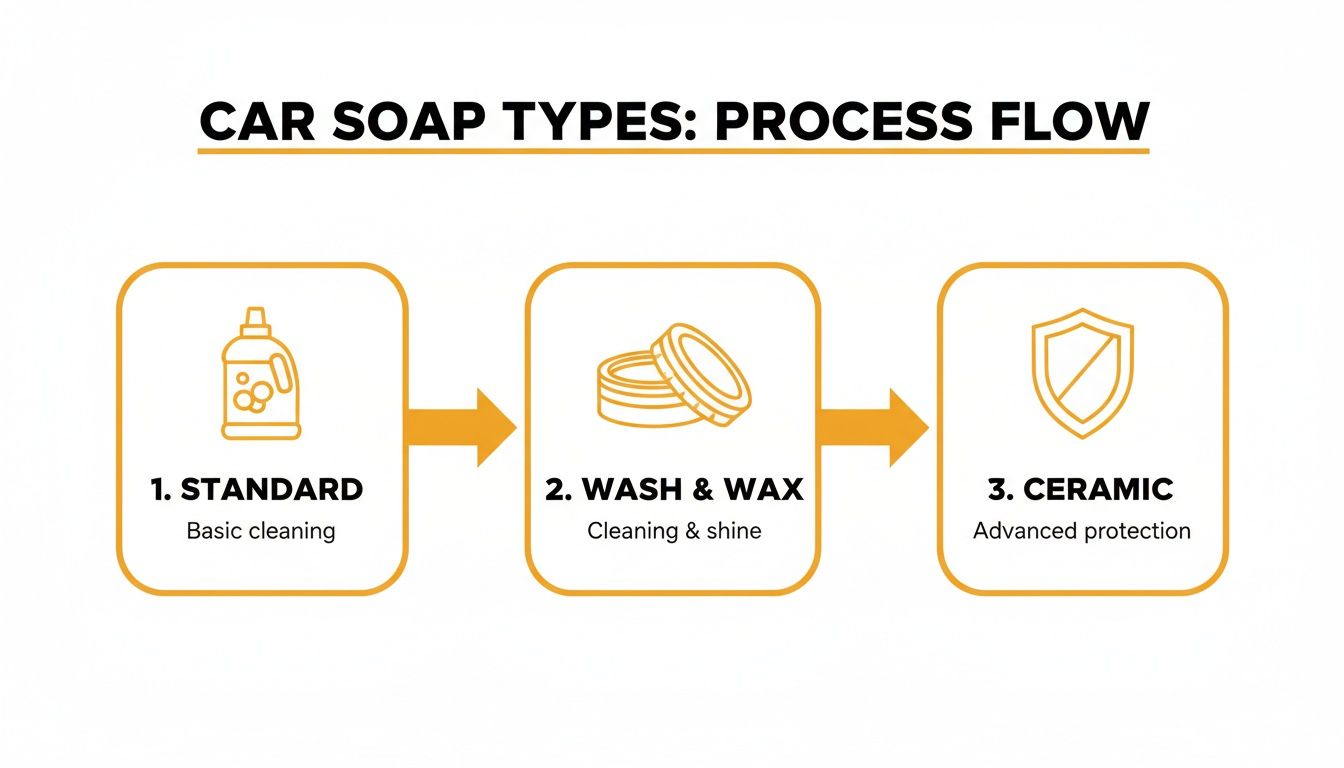
This evolution from basic cleaners to advanced ceramic-infused formulas really shows how the focus has shifted to combining serious cleaning power with lasting paint protection.
Finding Your Perfect Dilution Ratio
The ideal mix comes down to two things: how concentrated your soap is and the hardness of your water. If you have hard water, which is full of minerals, you’ll often need a little extra soap to get the same sudsy result you’d get with soft water.
For most foam guns, including the SwiftJet, a great place to start is a 1:10 ratio.
- Pour 3 ounces of your favorite car wash soap into the 32-ounce foam gun canister.
- Slowly top it off with warm water. Warm water is a game-changer—it helps the soap dissolve completely for a much thicker foam.
- Give the canister a gentle swirl to mix everything together. You want to avoid creating a bunch of suds inside the bottle before you even start.
- Attach it to your foam gun, connect the hose, and you're ready to make it snow.
If the foam seems watery and just slides off the car, try adding another half-ounce of soap on your next wash. If it’s so thick it’s struggling to spray, just dial the soap back a bit. You’ll find that perfect recipe within a wash or two.
Pro Tip: Always foam your car from the bottom up. This simple trick prevents the soap from the roof from running down and creating clean streaks on the dirty panels below. It ensures the entire car gets maximum dwell time.
Best Practices For A Flawless Foam Wash
Once you’ve got your dilution dialed in, a few simple habits will guarantee you a scratch-free, spot-free finish every single time. It's funny to think that back in 1910, with over 500,000 cars on American roads, people were just figuring out that harsh household detergents were destroying their paint. Now, the automotive cleaning market is on track to grow from USD 9.5 billion to USD 16.7 billion by 2035, all thanks to formulas designed to protect modern car finishes.
Just using a proper pH-neutral car wash soap can slash the risk of creating swirl marks by up to 70% compared to using something like dish soap.
- Work in the Shade: This is non-negotiable. Never wash your car in direct sunlight. The heat bakes the soap and water onto the surface before you can rinse, leaving behind stubborn spots that can actually etch into your clear coat.
- Pre-Rinse First: Before you even think about foaming, give the car a good rinse with plain water. This knocks off all the loose grit and grime, so you aren’t dragging it across your paint later.
- Let It Dwell: Patience is key. Once the car is covered, let the foam sit for 3-5 minutes. This is when it’s doing the heavy lifting, encapsulating all that dirt. Just be sure to rinse it off before it has a chance to dry.
Stick to these guidelines, and you’ll be getting that deeply satisfying, professional-level clean right in your own driveway. If you want to get even deeper into the gear, check out our guide on choosing the right car foaming gun.
Eco-Friendly Soaps And Protecting Your Paint
Picking the right soap for car wash isn't just about getting a great shine anymore. These days, it's about making a smart choice for your car and for the environment. As more of us think about our environmental footprint, the demand for green-friendly car soaps has exploded, and it’s changing the whole game.
When you're browsing the aisle, keep an eye out for labels that say "biodegradable" or "phosphate-free." Those aren't just buzzwords; they signal a much safer formula. Phosphates, which used to be in almost every detergent, are notorious for causing algae blooms in our lakes and rivers, which throws the whole ecosystem out of whack. Biodegradable soaps, on the other hand, are designed to break down harmlessly, so the runoff from your driveway has a minimal impact.
And don't think you're sacrificing performance for principles. Modern eco-friendly soaps are packed with powerful, often plant-derived, cleaning agents that lift away grime just as effectively as the old-school chemical stuff. You get that brilliant, just-detailed look without worrying about what’s flowing into the storm drain.
Protecting Your Paint With Smarter Soaps
This shift toward gentler ingredients is fantastic news for your car’s paint. Eco-friendly soaps are almost always pH-neutral and skip the harsh chemicals that can strip away your wax, sealant, or even damage the clear coat over time. Their secret weapon? High lubricity.
A soap with great lubricity creates an ultra-slick cushion between your wash mitt and the paint. This is huge. It means dirt and grit get lifted and glide away safely instead of being dragged across the finish, which is exactly what causes those frustrating swirl marks and tiny scratches. You’re essentially bubble-wrapping your paint while you wash.
Choosing a high-quality, eco-friendly soap is a dual investment. You are actively preserving your vehicle’s finish and resale value while minimizing your environmental impact with every wash.
The market is clearly heading this way, with eco-friendly formulas now making up 25-30% of all car wash soap sales. This trend is only growing, especially as water conservation becomes more important. When you pair a great soap with a tool like the SwiftJet foam gun, which can use up to 50% less soap concentrate than a traditional bucket wash, you’re being incredibly efficient. For a deeper dive into industry trends, the International Carwash Association offers some fascinating market insights.
Of course, keeping your paint pristine is just one piece of the puzzle. To keep your car in top shape, it's important to know what maintenance your car needs on the inside, too. Combining a smart, eco-conscious wash routine with regular mechanical upkeep is the best way to ensure your car looks and runs great for years to come.
Your Top Car Wash Soap Questions, Answered
Alright, even after you've got the basics down, a few questions always seem to surface when you're standing there with a bottle of soap and a foam gun. Let's tackle the most common ones I hear so you can wash your car with complete confidence.
Think of this as your final pre-wash checklist. We'll clear up any confusion and make sure you're ready to get a safe, effective, and honestly, pretty satisfying clean.
Can I Just Use Dish Soap to Wash My Car?
This is easily the question I get asked most often, and the answer is a hard no. It’s tempting, I get it—it's right there under the sink. But dish soap is formulated to be a powerful degreaser, perfect for cutting through last night's bacon grease. On your car, it does the exact same thing to your protective wax or sealant.
Once you strip that protective layer, your paint is left wide open to UV rays, bird droppings, acid rain, and all the other gunk the road throws at it. On top of that, dish soap has none of the lubricants found in proper car wash shampoos. That means you're basically dragging dirt and grit across the surface, which is a perfect recipe for creating fine scratches and swirl marks. Always, always stick with a pH-neutral soap made specifically for vehicles.
How Much Soap Do I Put in My Foam Gun?
The perfect soap-to-water ratio can change a bit depending on your soap's concentration and even the hardness of your water, but a fantastic starting point for most foam guns is a 1:10 ratio.
- For a typical 32-ounce foam gun canister, that means pouring in about 3 ounces of soap.
- Then, just fill the rest of the canister with warm water. A little tip: using warm water helps the soap dissolve and mix better, which gives you a much richer, thicker foam.
If the foam looks a little thin or watery, just add another half-ounce of soap next time. If it's so thick it's struggling to spray, dial it back a bit. After a wash or two, you'll find the sweet spot for your exact setup.
Don't forget, some of those ultra-concentrated soaps might only need a 1:15 or even a 1:20 ratio. It never hurts to glance at the manufacturer's directions on the bottle to get a good baseline.
What’s the Difference Between a Foam Cannon and a Foam Gun?
The real difference here comes down to the power source, and that directly impacts the kind of foam you get.
A foam cannon hooks up to a high-pressure washer. It uses that intense, high-pressure stream of water to create an incredibly thick, shaving-cream-like foam that just clings to the vehicle. This is the go-to tool for professional detailers who need maximum dwell time.
A foam gun, like the SwiftJet, connects directly to a standard garden hose. It works with your home's regular water pressure. While the foam isn't quite as dense as what a cannon produces, it's more than enough to safely pre-soak your car and lift away the loose grime. For most of us washing our cars in the driveway, a foam gun is far more practical, affordable, and accessible—no pressure washer needed.
Do Those "Wash and Wax" Soaps Actually Work?
Yes, they do, but it's crucial to have the right expectations. These two-in-one soaps are infused with carnauba wax or synthetic polymers that leave behind a light layer of protection and give your paint a noticeable boost in shine.
They are fantastic for maintaining an existing coat of wax or sealant. Think of it as "topping up" the protection with every wash, helping your main protective layer last longer. However, a wash-and-wax soap is no replacement for a dedicated, hand-applied coat of wax or sealant, which provides much more durable, long-lasting protection from the elements.
They're a brilliant maintenance tool for keeping your car glossy between major details, not the foundation of your paint protection plan. They save a ton of time and deliver a great-looking finish.
Ready to get that perfect, sudsy wash at home without all the hassle? The SwiftJet Foam Gun makes it dead simple to cover your car in a thick, dirt-lifting foam for a safer, scratch-free clean. It’s time to step up your car care game and give your paint the treatment it deserves. Grab yours today at the official SwiftJet website.
