

When it comes to bird droppings on your car, speed is everything. The best approach is to soften the mess with a bit of water or a quick detailer spray, then gently lift it off with a microfiber towel. Whatever you do, avoid scrubbing, as that’s a surefire way to scratch your paint.
Why You Need to Deal With Bird Droppings Right Away
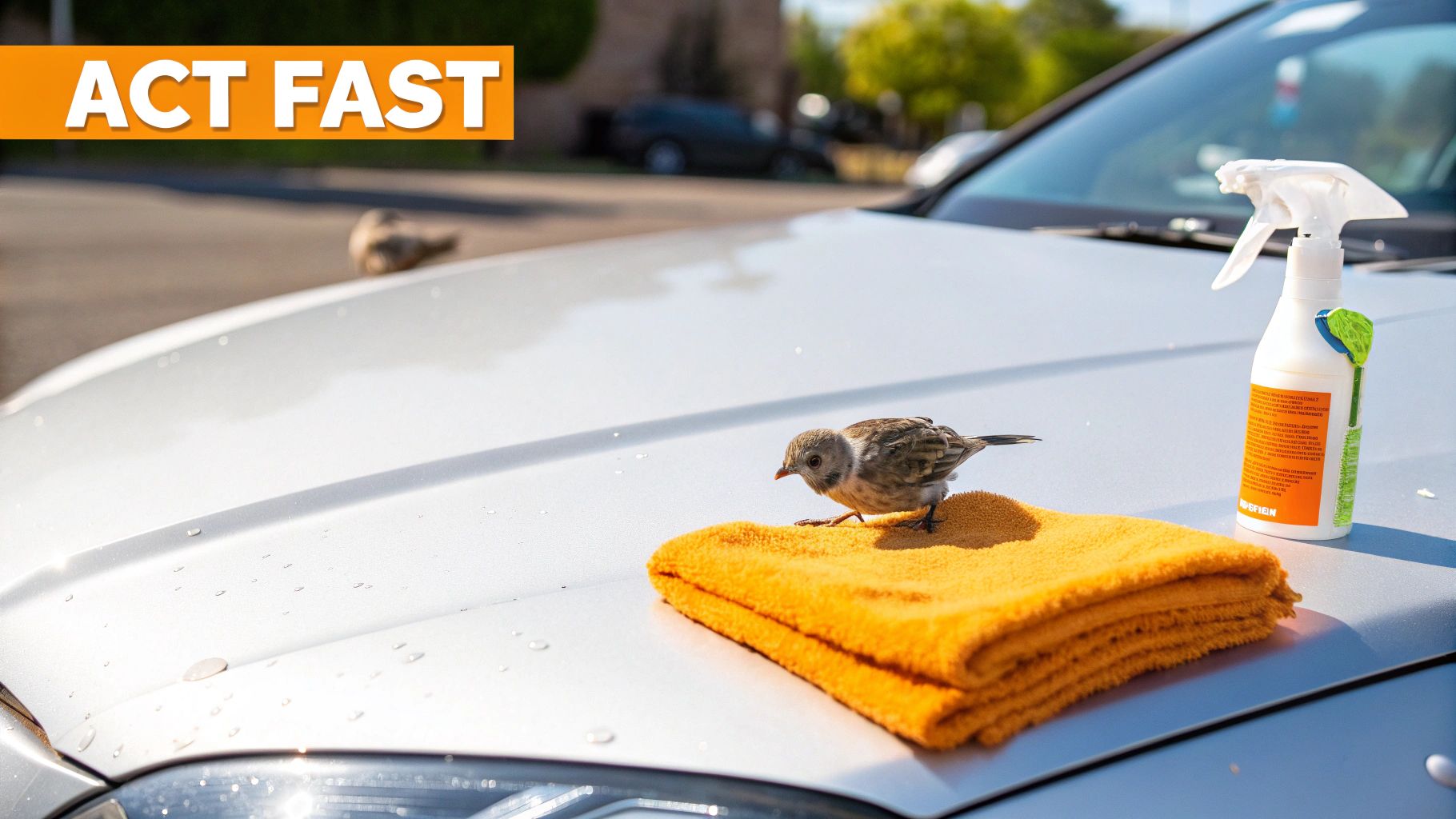
It’s easy to dismiss a bird dropping as just another annoying mess you’ll get to at the next car wash. But that thinking can lead to permanent damage. This isn't just dirt; it's a direct chemical assault on your car's finish.
Bird waste is a nasty, corrosive cocktail. The white part you see is mostly uric acid, and it’s surprisingly potent. With a pH typically between 3 and 4.5, it's acidic enough to start eating away at your car’s clear coat almost immediately.
Heat Makes a Bad Situation Worse
Sunlight and heat turn this problem into a race against the clock. When your car’s metal panels get hot, the clear coat on your paint actually expands. This opens up microscopic pores, allowing that uric acid to seep in much deeper and faster.
At the same time, the dropping itself is drying out and hardening. As it shrinks, it pulls and stresses the paint surface. This one-two punch of a chemical burn and physical strain can leave a permanent dull spot or etch mark in just a few hours.
A survey of 1,000 U.S. drivers found that 11% have had their car's paint genuinely damaged by bird droppings. It’s a far more common problem than most people think. You can see more details in the full car and bird droppings report.
This goes way beyond just being an eyesore; it's about protecting your car's value. Ignoring a bird bomb can quickly spiral into more serious issues:
- Clear coat etching: This is the initial stage, where the surface looks dull or hazy.
- Paint discoloration: If the acid sits long enough, it can actually bleach the color underneath.
- Permanent stains: The combination of the acid and pigments from whatever the bird ate can create a mark that won't come out.
Ultimately, leaving bird droppings on your paint is a bet against time and temperature—and it's a bet you'll eventually lose. Taking a minute to clean it up properly can save you from a costly trip to the detailer for paint correction down the road.
Putting Together Your On-the-Go "Bird Bomb" Kit
When it comes to bird droppings on your car, time is the enemy. The acidic mess starts etching into your paint almost immediately. That's why having a small, dedicated emergency kit tucked away in your trunk can be a real paint-saver.
You don't need a professional detailing setup for this—just a few simple items for quick, safe removal. Think of it as first aid for your car's finish.
What to Keep in Your Car
Your mission is to soften and lift the dropping without grinding it into the paint. Here’s what you absolutely need:
- Spray Bottle of Water: Honestly, this is your most important tool. A few spritzes of plain water can rehydrate dried-on droppings, loosening their grip and making them much safer to remove.
- Quick Detailer Spray: This is your secret weapon for tougher spots. A good quick detailer provides lubrication, which is crucial. It creates a slippery barrier between the mess and your paint, drastically reducing the chance of scratching as you wipe.
- A Few Soft Microfiber Towels: This is non-negotiable. Never, ever use paper towels or a napkin—they're made of wood pulp and will cause tiny, spiderweb-like scratches on your clear coat. Keep a couple of clean, plush microfibers in a ziplock bag so they're always ready to go. To really get why they're so essential, you can dive into the specifics of microfiber towels for cleaning and see why they outperform everything else for automotive care.
Expert Tip: Caught without your kit? A bottle of plain seltzer water or club soda can work wonders in a pinch. The carbonation helps break down the acids and lift the gunk right off the surface. It’s a surprisingly effective trick I’ve used more than once.
The Right Way to Clean Bird Droppings at Home
When you're back in your driveway with the right tools, you can give that spot the deep, safe clean it really needs. While those on-the-go sprays are lifesavers, a more methodical wash at home guarantees you’ve removed every trace of that corrosive acid. The trick is to let your products do the hard work for you, not your elbow grease.
First things first: pre-soak the area. I can't stress this enough. Never, ever go straight at a dried-on bird dropping with a sponge or cloth. That’s a surefire way to drag tiny, abrasive bits across your clear coat, leaving behind a mess of scratches and swirls. Just give the spot a gentle rinse with your hose to start softening it up.
Take Your Wash to the Next Level with a Foam Gun
This is where a tool like a SwiftJet foam gun really changes the game. Instead of just a simple rinse, you can completely cover the dropping in a thick, rich layer of cleaning foam. It looks cool, sure, but it's also incredibly effective. The foam clings to the surface, breaking down the acids and encapsulating all the grit, lifting it safely away from your paint.
Just hook the foam gun up to your garden hose, pour in your favorite car wash soap, and lay down a heavy blanket of suds. Now, be patient. Let the foam sit and work its magic for a few minutes (just don't let it dry in the sun). You'll be amazed at what a good foam gun and the best foam soap for cars can do together.
For those moments you're away from home, this is the basic emergency kit you'll want in your trunk.
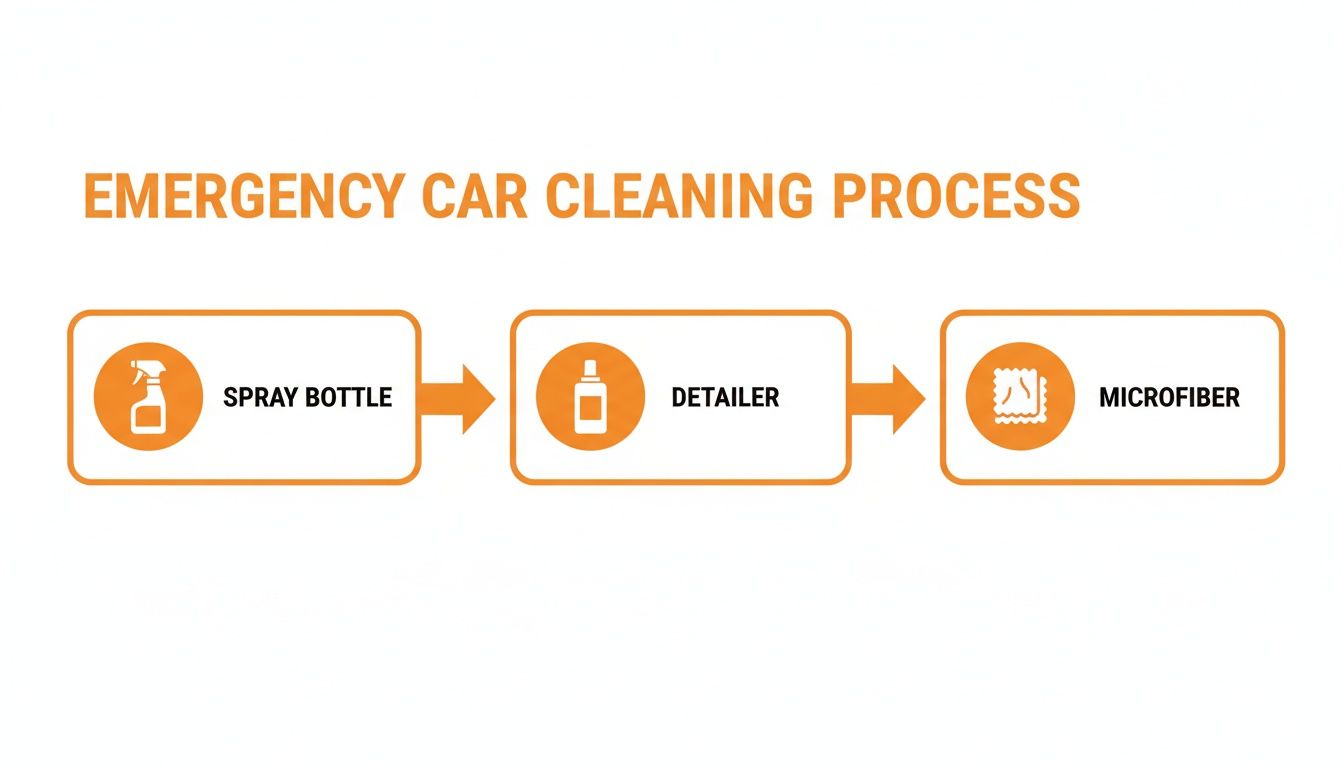
As the visual shows, the core principle is always the same: lubricate the area, dissolve the mess, and wipe it away gently.
Finishing Up with a Gentle Wipe
After the foam has had a chance to dwell, rinse the entire area thoroughly with your hose. Most of the time, you'll see the mess just slide right off—no scrubbing required.
My Go-To Technique: Always rinse from the top down. Gravity is your friend here. It pulls the soap and grime down and away, so you're not accidentally re-soiling the area you just cleaned.
If a little bit of residue hangs on, now you can intervene. Grab a clean microfiber wash mitt loaded with soapy water and use very light pressure. I always recommend wiping in straight lines, not circles, as this is much less likely to cause swirl marks.
Once it's all gone, give it one last rinse and then dry the spot completely with a fresh, soft microfiber towel. This last step is crucial for preventing water spots from forming. Following this process is how you get bird poop off car paint without causing any damage.
How to Handle Stubborn Stains and Etching
So, you cleaned the mess off, but a ghostly outline remains. It happens. Sometimes you're left with a faint stain or a dull, etched spot where the acid did a number on your clear coat. It's frustrating, but don't assume you need to book a costly appointment with a professional detailer just yet.
With a little patience and the right approach, you can often fix these minor imperfections yourself. The golden rule here is to always start with the least aggressive method first. Never jump straight to heavy compounds or harsh polishes, as these actually remove a thin layer of your car's clear coat.
First Up: Using a Clay Bar for Lingering Stains
Your first line of defense for a stubborn, embedded stain is a detailing clay bar. Think of it like a high-tech magnet for anything that has stubbornly bonded to your paint. Paired with a quality lubricant (like a quick detailer spray), it glides across the surface and gently pulls out tiny particles that washing alone can't touch.
- Start by generously lubricating a small section of the paint around the stain.
- With light pressure, gently rub the clay bar back and forth over the area.
- As you work, fold the clay often to expose a fresh, clean surface. This prevents you from just rubbing the grime back into the paint.
This process is fantastic for lifting residue that has seeped into the paint's pores, but it won't fix etching, which is actual physical damage.
Important Takeaway: The goal is to remove the contaminant, not the paint. A clay bar is the safest next step when a simple wash isn't enough, and it helps preserve the integrity of your clear coat.
Stepping It Up: Correcting Minor Etching with Polish
If you’ve clayed the spot and can still see a dull patch, then the clear coat itself is likely etched. Now it's time to bring out a fine-cut polish. All you need is the polish and a microfiber applicator pad.
Apply a small, pea-sized amount of polish to your pad and work it into the affected area. Use light, overlapping circular motions. What you're doing is carefully leveling the clear coat immediately around the etch, which makes the damage seem to disappear.
Once you’re done, wipe the residue away with a clean microfiber towel. You should be left with a restored, glossy finish. Knowing how to remove bird poop from car paint, even after it’s stained, is a skill that empowers you to keep your vehicle looking its best.
Proactive Strategies to Protect Your Car's Paint
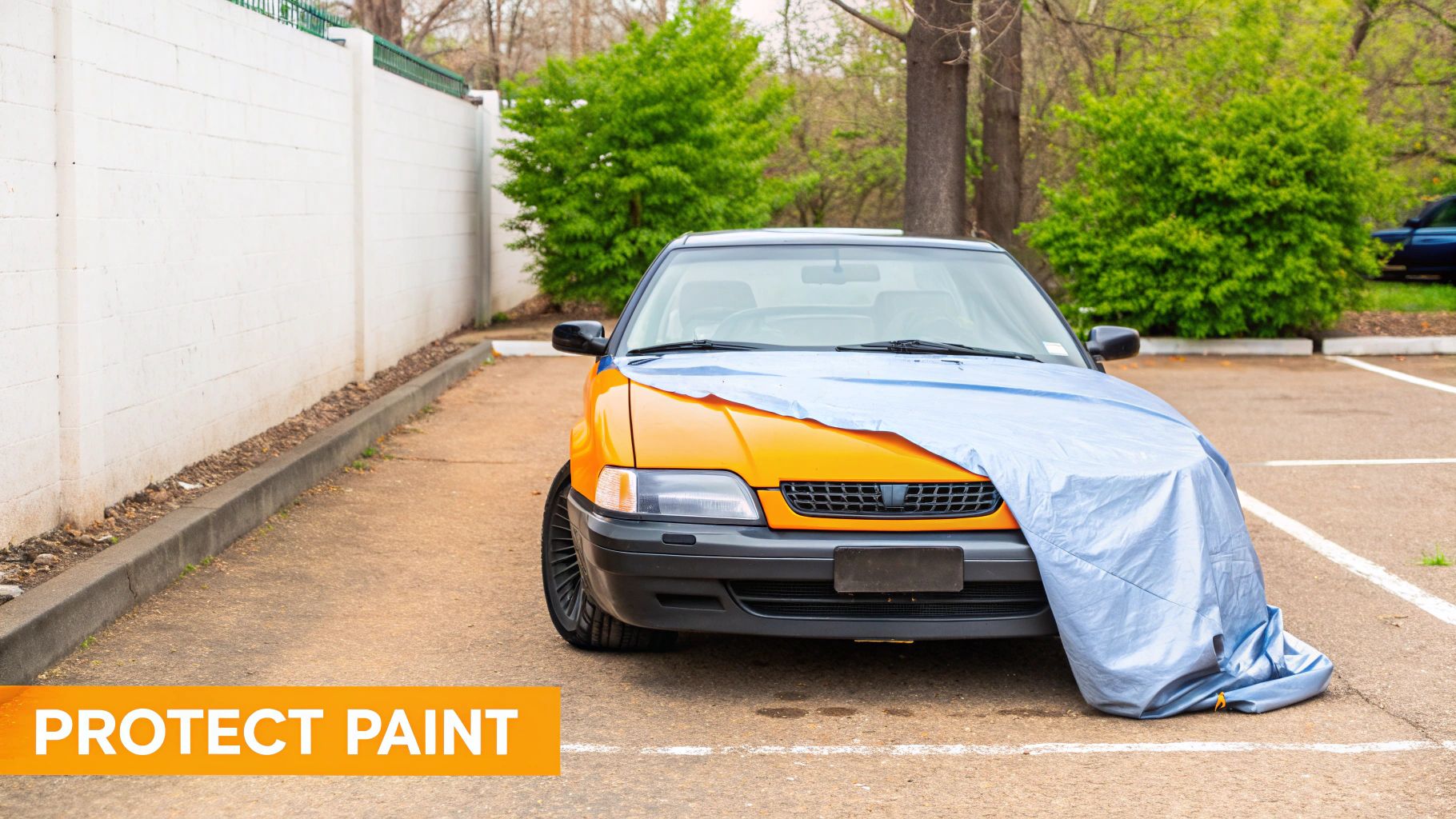
Knowing how to clean up a bird dropping is one thing, but preventing the damage in the first place is the real win. Moving from a reactive mindset to a proactive one will save you a ton of stress and keep your car's finish looking pristine.
Your first line of defense is a high-quality car wax or, even better, a modern ceramic coating. Think of these as a sacrificial, water-repelling shield for your paint. This slick barrier stops acidic droppings from immediately eating into the clear coat, buying you a crucial window of time to clean it off safely. It's a small investment that pays off big in peace of mind.
Smart Parking Avoids Problems
You'd be surprised how much your parking spot matters. It’s not just about avoiding the obvious spots under trees or power lines where birds hang out. It turns out, some cars are just more attractive targets.
Research shows that birds seem to have preferences. Ram trucks, Jeeps, and Chevrolets get hit most often. As for color, brown, red, and black vehicles tend to attract more unwanted attention than white or silver ones. With 58% of Americans reporting multiple daily incidents, where you park is a bigger deal than you might think.
If you have to park in a high-risk area for a long time, nothing beats a quality car cover. It's a physical shield that blocks not just bird droppings but also tree sap and damaging UV rays.
Taking these proactive steps doesn't just keep your car looking sharp; it’s part of smart overall vehicle upkeep, which can even have an impact on things like electric car maintenance costs. For more ways to keep your car in showroom condition, check out our other vehicle detailing tips.
Tackling Your Bird Poop Questions
Even when you know the basics, dealing with a fresh bird dropping on your car's paint can bring up a few questions. Getting the right answers is key to tackling the problem with confidence and avoiding a costly mistake.
Can I Just Use Windex or Vinegar?
It's so tempting to reach for whatever cleaner you have under the kitchen sink, but please don't. Household products like Windex, vinegar, or all-purpose sprays are a huge risk for your car's finish. They're often too acidic or alkaline and can strip your protective wax layer, or worse, permanently etch your clear coat.
The only safe bet is to use products designed for automotive paint. A pH-neutral car shampoo, a good quality quick detailer spray, or a dedicated bird dropping remover are formulated to do the job without causing harm.
Expert Tip: Think of it this way: using the wrong chemical is just as bad as scrubbing with sandpaper. Stick with car-specific products to protect your investment.
What Do I Do if It’s Already Dried and Hard?
Whatever you do, don't try to scrape or pick at it. That's a surefire way to leave deep, ugly scratches right where the dropping was. The secret to handling hardened droppings is patience and rehydration.
Grab a plush microfiber towel and soak it in warm, soapy water. Lay the wet towel directly over the dried spot and just let it sit for a good 10-15 minutes. This is the most important step—it softens and rehydrates the entire mess, allowing it to release its grip on the paint so you can wipe it away gently. No force required.
Seriously, How Fast Do I Need to Clean It?
Honestly? As fast as you possibly can. The uric acid in bird droppings is incredibly corrosive. On a hot, sunny day, that acid can begin to etch into your car's clear coat in a matter of minutes.
If the weather is cool and overcast, you might have a few hours of breathing room. But the universal rule is that the longer it sits, the higher the risk of permanent damage. Making it a habit to clean it off immediately is the best policy you can have.
For a professional-level clean every time, trust SwiftJet to deliver thick, clinging foam that lifts away grime without scrubbing. Get your SwiftJet Car Wash Foam Gun today and make car care effortless.
