

Getting bugs off your windshield comes down to a few key things: softening the gunk first, using a good quality car soap or a dedicated bug remover, and then wiping it all away with a soft microfiber towel. The absolute golden rule here is to act quickly. Fresh splatter is a breeze to clean compared to the cement-like mess it becomes after baking in the sun. Your wipers? They’ll just smear it, making things worse. A proper cleaning is the only way to go.
Why You Have to Get Bug Splatter Off Immediately
Ever finish a drive on a warm evening and find your windshield looks like a battlefield? It’s not just ugly; that bug splatter is a serious safety problem that needs to be handled right away.
When that mess dries, it creates a distorted film on your glass. This film catches the light from oncoming headlights and the sun, creating a blinding glare that can seriously mess with your ability to see the road ahead.
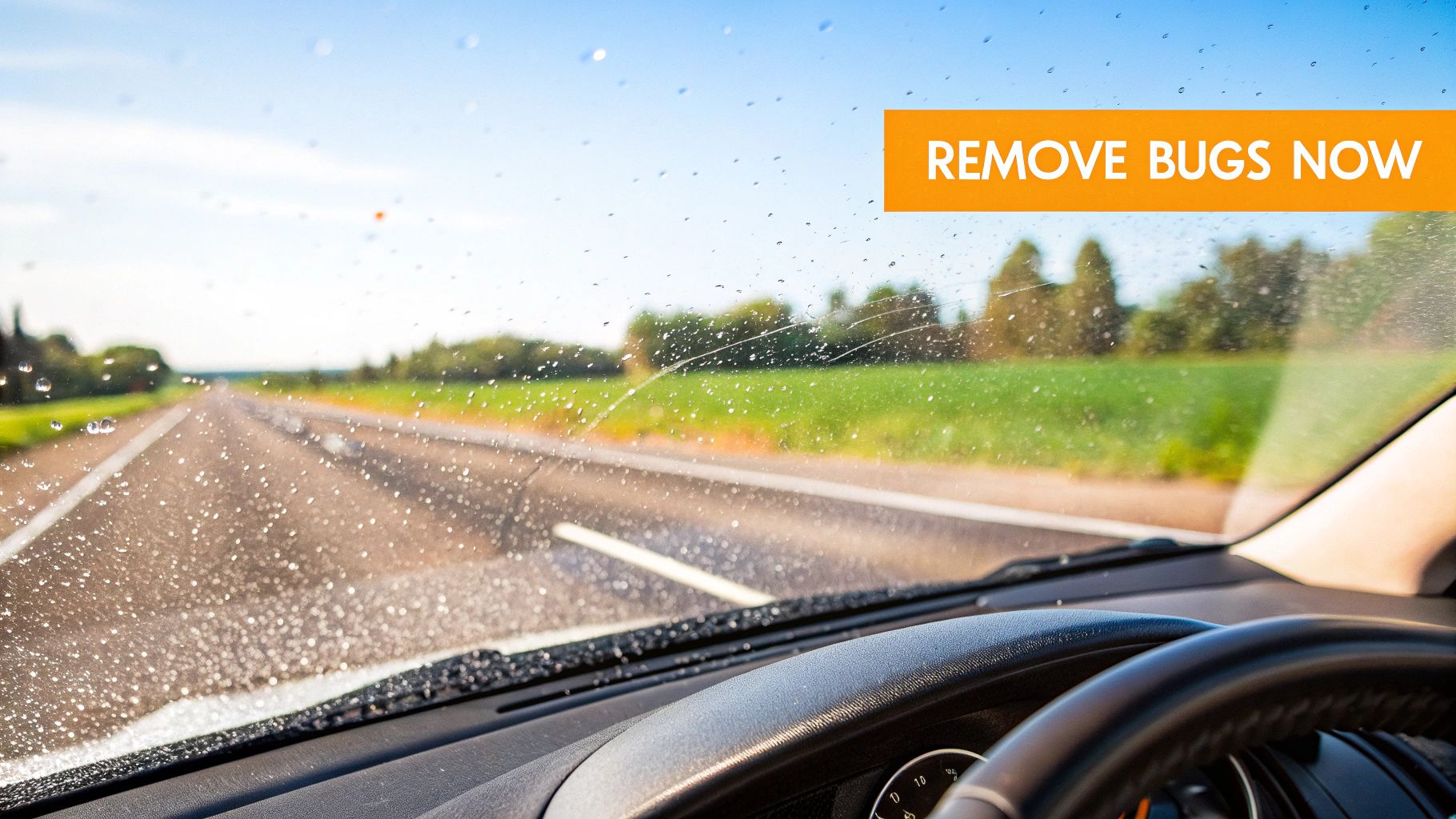
The longer you put it off, the harder the job gets and the more you risk damaging your vehicle. Bug guts aren't just sticky; they’re surprisingly acidic.
The Science Behind Splatter Damage
When a bug hits your windshield at 60 mph, its insides—full of complex proteins and acidic gunk—instantly bake onto the hot glass. This triggers a chemical reaction that can permanently etch the surface, creating tiny pits that you can't just wipe away.
A quick flick of the wipers won't cut it. In fact, the blades usually just smear the goo across your line of sight, making a bad situation even more dangerous. This is precisely why knowing how to clean bugs off your windshield the right way is so important.
A study from the IIHS connects poor visibility to more than 200,000 traffic incidents around the world every year. Bug splatter alone can be responsible for a 30% reduction in driver visibility.
Leaving bug residue on your windshield isn't just lazy; it's a gamble. The damage progresses faster than most people realize.
Bug Residue Breakdown: The Risks of Waiting
| Timeframe | Effect on Windshield | Visibility Impact | Removal Difficulty |
|---|---|---|---|
| 0-24 Hours | Acids begin to bond with the glass surface. | Minor glare, smearing with wipers. | Easy: Wipes off with pre-soak. |
| 1-3 Days | The residue hardens; etching can start. | Noticeable glare, especially at night. | Moderate: Requires bug remover. |
| 1+ Week | Permanent etching (pitting) is likely. | Significant light distortion and halos. | Difficult: Needs scrubbing. |
| 1+ Month | Severe pitting; deep, irreversible damage. | Hazardous glare; compromised clarity. | Very Difficult: May be permanent. |
As you can see, waiting turns a simple cleaning task into a potential permanent problem.
A Costly and Dangerous Nuisance
This isn't just a minor annoyance during the summer; it's a huge, year-round problem for millions of drivers. The demand for products that can handle this is massive. In 2023, the automotive screenwash market, which leans heavily on bug removers, was valued at an incredible USD 20.48 billion. It's expected to hit USD 30.72 billion by 2031.
This growth is fueled by the sheer number of cars on the road—over 93.5 million were produced in 2023 alone—and every single one needs clear glass to be safe. You can dig into more data on the automotive cleaning market to see just how big this issue really is.
Building Your Bug Removal Toolkit
Getting that crystal-clear windshield isn't about scrubbing harder; it’s about having the right gear ready to go. You can't treat caked-on bug guts the same way you treat light road dust. A simple bucket of soapy water often just smears the mess around and can even lead to scratches. Putting together a dedicated bug removal kit is the first real step to getting the job done right, every time.
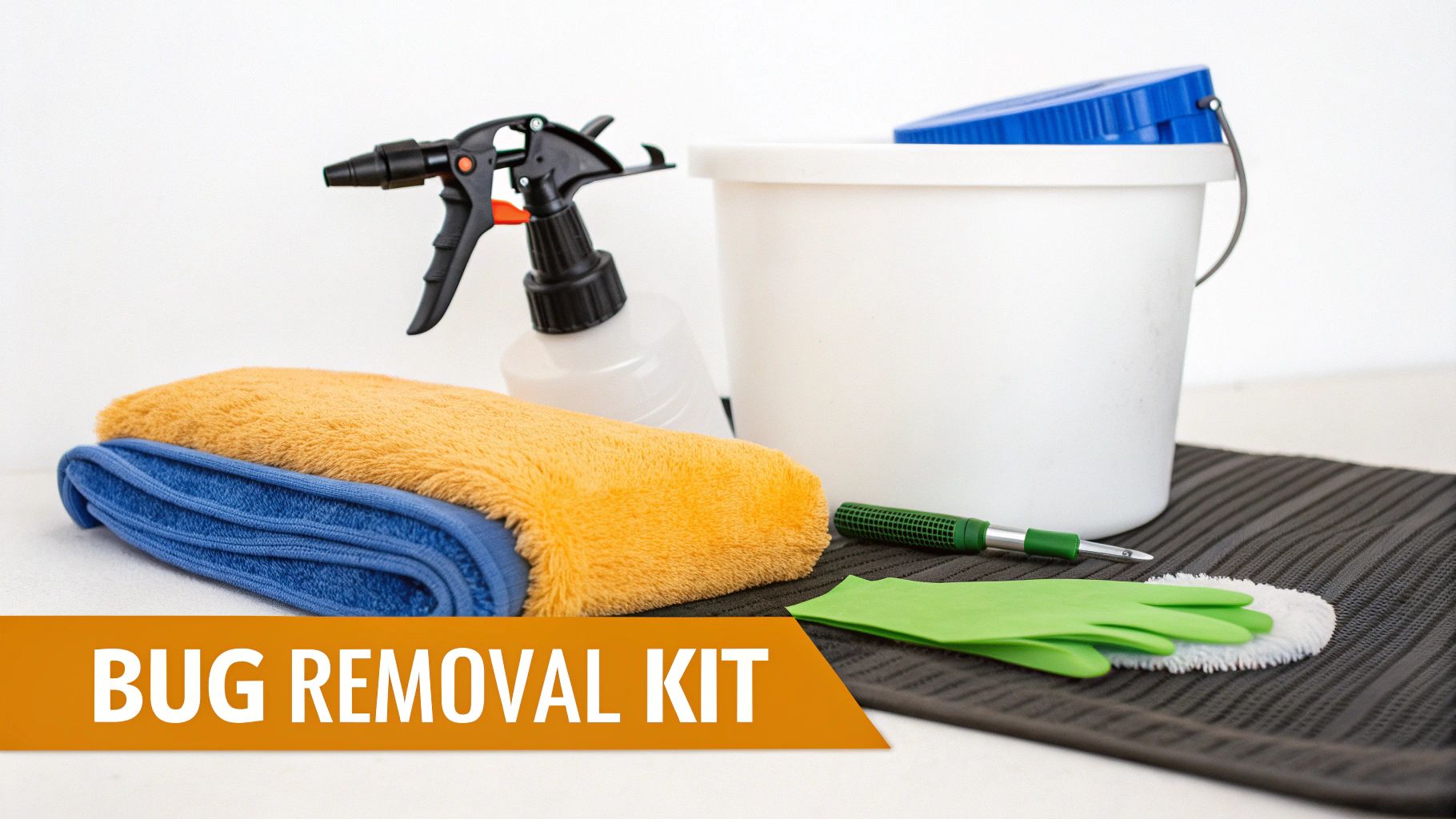
At a minimum, your setup needs a few non-negotiables. First, get yourself some high-quality microfiber towels. Their soft, dense fibers are clutch for trapping bug bits and grime without marring the glass. A good car wash soap is also key—you want something that's tough on the bug residue but won't harm your car's paint or trim. If you want to dive deeper into proper glass cleaning methods, check out these expert tips for streak-free windows.
Taking Your Cleaning Up a Notch
If you want to make bug removal genuinely easy, a few specialized tools can completely change the game. For me, the real game-changer is a good foam gun, like the SwiftJet Car Wash Foam Gun. This isn't just a sprayer; it hooks up to a standard garden hose and whips your car soap into a thick, shaving-cream-like foam.
The secret to effortless bug removal is letting the cleaner do the work. The thick foam from a tool like this clings to the windshield, giving the soap time to break down those stubborn, acidic bug remains instead of just running off onto the ground.
Basically, the foam does the heavy lifting for you. It softens and lifts all that baked-on gunk, which means you'll spend way less time aggressively scrubbing. That’s a huge plus because less scrubbing means a much lower risk of accidentally scratching your glass.
Your Go-To Bug Removal Checklist
So, what should be in your ideal toolkit? Here’s a quick list of everything you'll need to keep that windshield spotless.
- SwiftJet Car Wash Foam Gun: The best way to apply a thick, clinging foam that dissolves bug residue before you even start scrubbing.
- High-Quality Car Wash Soap: Look for a pH-neutral formula. It’s the safest bet for your glass, paint, and all the plastic trim.
- Plush Microfiber Towels: Grab at least two. One for the initial wash and a separate, dry one to buff the glass to a perfect, streak-free shine. Understanding the importance of microfiber towels for cleaning will seriously improve your results.
- A Bucket of Clean Water: You’ll need this for rinsing your towel or wash mitt frequently. You don't want to be dragging old grime back across the glass.
With these items in your arsenal, you're more than ready to tackle any bug splatter the highway can throw at you.
The Best Way to Get Rid of Fresh Bug Guts
You just got home from a drive, and your windshield looks like a bug graveyard. This is your chance to act. Dealing with it now, before the sun bakes that acidic mess onto the glass, will save you a world of hurt later. The trick is to let your cleaning solution do the real work for you.
First thing's first: give the windshield a quick, gentle rinse with a garden hose. This starts to soften up the bug remains and makes them much easier to remove. Whatever you do, don't start scrubbing a dry, bug-covered windshield—that's a recipe for dragging tiny, gritty particles across the glass and creating fine scratches. A simple cool-down rinse is all you need to get started.
Let the Foam Do the Work
This is where a tool like the SwiftJet Car Wash Foam Gun really shines. Forget about those weak, watery suds you get from a bucket. A foam gun creates a thick, clingy foam that sticks right to the windshield, refusing to just run off. Lay down a heavy blanket of this foam, making sure you cover every single bug spot.
Now comes the most critical part: wait. Just let that foam sit for at least three to five minutes. It might feel like you're not doing anything, but there's a lot going on. The soap is actively breaking down the acidic proteins in the bug guts, dissolving them from a hard, caked-on mess into a liquid that will rinse away effortlessly.
Insider Tip: Try to wash your car in the shade or during a cooler time of day, like early morning or late evening. Hot, direct sun makes the foam and water evaporate way too fast, leaving behind soap scum and hard water spots.
The Gentle Wipe and Final Rinse
Once the foam has had a few minutes to do its thing, most of the bug residue should be pretty loose. For any stubborn bits that are still hanging on, it's time for a little gentle persuasion.
Grab a clean microfiber wash mitt, get it soapy with some foam, and lightly wipe the areas. You're not trying to scrub here; you're just lifting what the foam has already loosened.
When you're happy with the results, give the windshield one last, thorough rinse with clean water. Always start rinsing from the top and let the water flow down, washing away all the dissolved bugs and soap. You should be left with a crystal-clear view. For more great techniques on getting a professional, streak-free shine on any glass, check out these pro window cleaning tips.
It's a surprisingly simple process, but it's far more effective than the alternatives. Consider this: the global market for automotive windshield washer fluid has hit USD 2.15 billion, and formulas designed to repel bugs make up 22% of that. While those special fluids help, just relying on your wipers isn't always enough. In fact, studies show that caked-on bug residue can slash wiper blade efficiency by 12%, which can be a real safety hazard on the highway. Using a foam gun gives you the superior coverage and deep-cleaning power you need from the get-go.
How to Tackle Stubborn Baked-On Bugs
Fresh bug splatter is one thing, but what about the guts that have been baking in the sun for a week? That stuff turns into a cement-like mess that feels impossible to remove without taking a chisel to your windshield. It’s so tempting to grab a kitchen scour pad or scrape like crazy, but trust me, those shortcuts are a fast track to permanent scratches and a whole lot of regret.
A much better approach requires a bit of patience and the right technique. Forget brute force; the secret is to rehydrate and soften that stubborn residue so it lifts away without a fight. This battle plan will show you how to dissolve even the toughest baked-on bug graveyards safely.
Start With an Extended Pre-Soak
Your first move is to give that hardened mess a long, thorough soak. You really can’t rush this part. A quick spritz of water isn't going to penetrate the tough, dried-out shell of bug proteins.
One of the best tricks I've learned is to saturate a thick microfiber towel in very warm water, lay it across the affected areas of the windshield, and just let it sit for at least 10-15 minutes. This prolonged contact with heat and moisture is what starts the crucial process of rehydrating the bug remains, making them significantly easier to clean later on.
If you have a dedicated bug remover spray on hand, now's the time to apply it generously and let it dwell according to the product's instructions.
Bring in the Heavy Artillery: The SwiftJet Foam Gun
After that initial soak has done its job, it’s time to escalate your efforts with a tool designed for this exact problem. This is where the SwiftJet Car Wash Foam Gun really proves its worth. By blanketing the pre-soaked areas with a thick, dense layer of foam, you trap moisture against the glass and give your car soap maximum time to work its magic.
Let this foam dwell for another 5-10 minutes. The clinging action is key—it allows the cleaning agents to penetrate deep into the rehydrated bug guts, breaking down the final bonds holding them to your windshield.
This chart gives you a simple breakdown for choosing your method based on how bad the bug situation is.
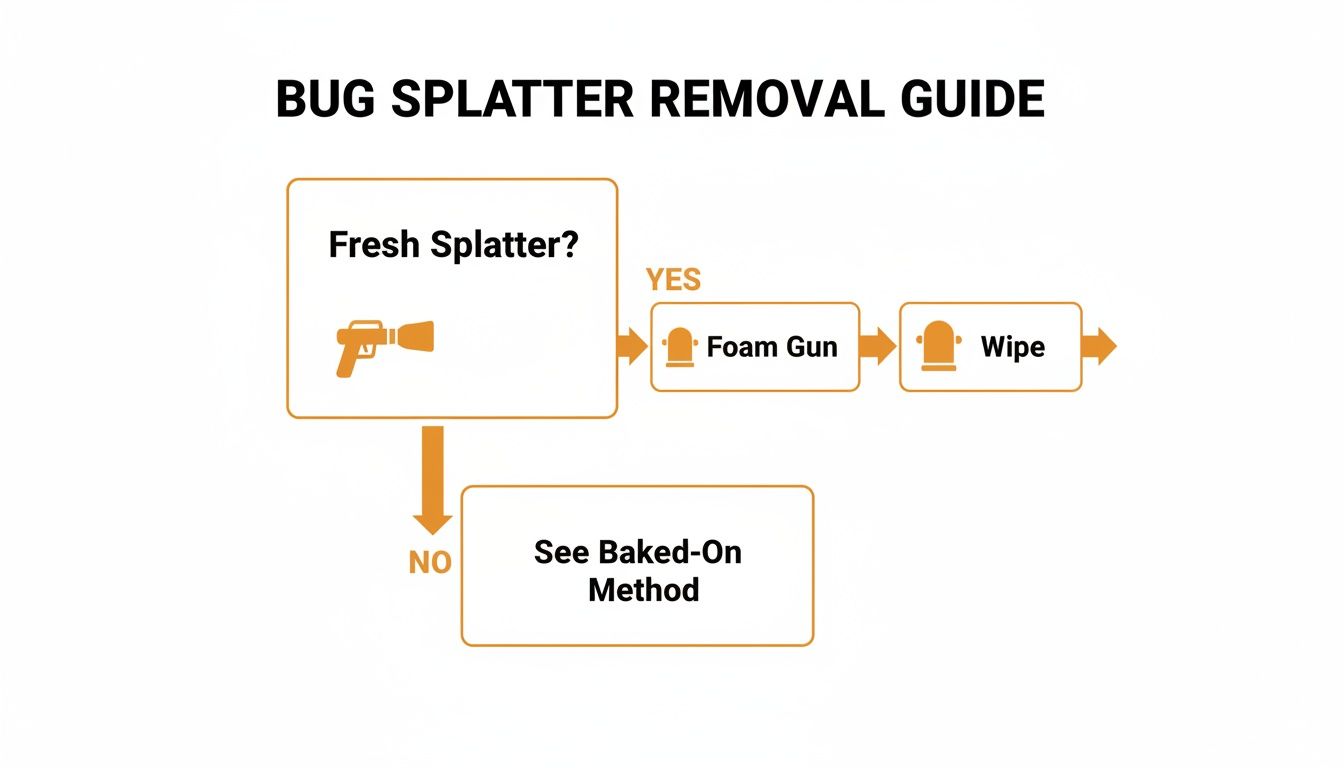
As you can see, while fresh splatter is a quick fix, that baked-on residue really does require a more intensive approach.
Safely Removing What Remains
For the most extreme cases, you might need a little extra—and very careful—agitation. But please, put down that metal razor blade. Instead, reach for one of these much safer alternatives:
- Plastic Razor Blade: These are designed specifically for automotive use and give you a sharp edge without the high risk of scratching glass. Hold the blade at a low, 45-degree angle and use gentle, short strokes to lift the softened residue.
- Bug Scrubber Sponge: These sponges have a special, non-abrasive mesh made to scrub away stubborn grime without harming glass or paint. The trick is to always use it wet and with plenty of foam as lubrication.
Imagine you're cruising at 70 mph when you drive through a cloud of bugs, instantly smearing your view. The National Highway Traffic Safety Administration has reported that insect residue contributes to about 25% of visibility-related accidents during peak seasons. While wipers alone only clear 40-50% of the splatter, a tool like the SwiftJet Foam Gun can penetrate bug guts three times better than a simple spray bottle, loosening up to 95% of the debris in one go.
If you're ever faced with a really stubborn spot, it helps to know which tool to reach for.
Safe Removal Methods for Stubborn Residue
| Method | Effectiveness | Risk Level | Best For |
|---|---|---|---|
| Bug Sponge | High | Low | General baked-on residue that's been properly softened. |
| Plastic Razor Blade | Very High | Low-Medium | Extremely stubborn, concentrated spots that won't lift with a sponge. Requires a careful touch. |
| Clay Bar | Medium-High | Low | Lingering residue and contamination after the bulk of the bugs have been removed. |
| Metal Razor Blade | Very High | Very High | Not recommended for windshields. Reserved for professional glass restoration, as one wrong move causes permanent damage. |
No matter which tool you use, the most important rule is to work smart, not hard, and let the products do the heavy lifting.
Key Takeaway: Never, ever scrub a dry windshield. Whether you're using a bug sponge or a plastic blade, your best friend is lubrication. A constant supply of foam from your SwiftJet ensures you can apply gentle pressure without risking a single scratch.
Finally, after all the residue is gone, give your windshield a thorough rinse to wash away all the debris and soap. This methodical approach is just as effective for other stubborn contaminants; in fact, you can apply very similar principles for removing bird poop from your car.
Proactive Tips to Keep Your Windshield Clear
Let's be honest, scraping baked-on bug guts off your windshield is one of the worst car care jobs out there. The real secret isn't a magic cleaning solution—it's preventing them from sticking in the first place.
With a few smart moves, you can turn a future marathon scrubbing session into a quick, satisfying rinse. It really is a classic case of an ounce of prevention being worth a pound of cure. The goal is to make your windshield too slick for bug splatter to bond with.
Create a Non-Stick Surface
This is where you can make the biggest impact. Applying a quality glass sealant or a ceramic coating designed for automotive glass is a total game-changer. These products lay down an invisible, super-slick hydrophobic barrier on your windshield.
You'll immediately notice water beading up and flying off, but the real win is how it deals with bugs. Splatter can't get a solid grip on the coated surface. Instead of baking into the glass itself, the residue just sits on top of that protective layer. Most of the time, a simple rinse or a light wipe is all it takes to get things clean again. It's a small investment in time that pays off with months of easier washes.
Protective coatings like these are amazing for other parts of your car, too. You can see just how effective they are when you need to remove hard water stains from car windows.
Pro Tip: For any glass sealant to work its best, you have to nail the prep. The glass needs to be spotless and fully decontaminated before you apply anything. This ensures the coating bonds correctly and lasts as long as it should.
Smart Habits Make a Big Difference
Beyond specialized coatings, some simple changes to your driving and maintenance routines can drastically cut down on bug buildup.
- Upgrade Your Washer Fluid: Ditch the standard blue stuff and grab a washer fluid made with bug-removing enzymes. These formulas are designed to break down bug proteins right away, keeping your view clearer between full washes.
- Time Your Drives: Bugs are most active around dawn and dusk. If your schedule allows, try to avoid driving through rural or marshy areas during these times when swarms are at their peak.
- Wash Regularly: This is a big one. Don't let bug splatter sit and bake in the sun. A quick, regular wash makes all the difference. Using the SwiftJet Foam Gun makes this part easy—a five-minute foam-down can lift off fresh bugs before they have a chance to harden into cement.
By pairing a good protective coating with these simple habits, you’ll stop fighting a losing battle against bug messes and start keeping your windshield effortlessly clear.
Got Questions About Getting Bugs Off Your Windshield?
Even after you've got a solid game plan, a few questions always pop up. It's totally normal. Let's walk through some of the most common ones I hear, because getting the small details right is what separates a quick, effective clean from a frustrating Saturday afternoon—or worse, accidentally damaging your car.
Can I Just Use Windex or Vinegar from the Kitchen?
It's tempting, I get it. You see the bugs, you see a bottle of glass cleaner under the sink, and you think, "problem solved." But please, put the Windex down.
The short answer is a hard no. Household cleaners are not your friend here. Most of them, including the famous blue stuff, are packed with ammonia. That ammonia is a disaster for your car. It will absolutely destroy your window tint, turning it purple and bubbly. It also dries out and cracks the rubber seals around your windshield and can discolor the plastics on your dash if any of it drips.
Vinegar is another one people often suggest as a "natural" alternative, but its high acidity is just as risky. Sure, it might cut through some of the bug grime, but any overspray that lands on your paint can start to etch away at the clear coat. It's just not worth the risk when you can use a product made for the job.
Stick with a pH-neutral car wash soap. It’s specifically engineered to be tough on grime but completely safe for your car's paint, plastic, rubber, and glass. A foam gun makes applying it a breeze and ensures it only works on the stuff you want to remove.
So, Will a Quick Run Through the Car Wash Take Care of It?
Honestly, it’s a gamble. A standard automatic car wash might knock off some of the fresher bug splatters, but it almost never gets the really baked-on, stubborn ones.
Those high-pressure jets and generic soaps just can't break down the acidic, concrete-like proteins that make bug guts stick so fiercely. More often than not, you’ll pull out of the car wash, the sun will hit your windshield just right, and you'll see a ghostly film of bug residue left behind. It’s incredibly frustrating.
For a truly clean windshield, you have to pre-treat the area. Giving those spots a good soak with a foam gun before you hand wash (or even before you head to the automatic car wash) makes all the difference. The foam has time to work its magic and dissolve the mess.
How Often Do I Really Need to Clean Bugs Off?
My best advice? As soon as you possibly can.
In the summer, the sun acts like an oven, baking that acidic bug goo right onto your glass. The longer it sits, the more it etches into the surface, and that damage can become permanent.
As a general rule, try to give your car a proper wash at least once a week during bug season. And if you've just come back from a long road trip where your front end looks like a bug graveyard, clean it that same day. A quick five-minute foaming and rinse is a tiny bit of effort that saves you from an hour of scrubbing later.
Ready to stop scrubbing and start enjoying a crystal-clear view? The SwiftJet Car Wash Foam Gun makes bug removal genuinely simple. Its thick, clinging foam does the heavy lifting, dissolving bug residue so all you have to do is rinse. Get your SwiftJet today and enjoy a spotless windshield on every drive.
