

A good home car washing kit is your secret weapon for getting a professional, swirl-free shine right in your own driveway. It's more than just a bucket and a sponge; it’s a system of specialized tools and products built to protect your car’s paint while delivering a better-than-the-car-wash finish. And honestly, modern kits make getting that showroom look easier than ever.
Why a Home Car Washing Kit Beats the Drive-Thru
Look, I get the appeal of the drive-thru car wash. It's fast. It's easy. But convenience comes at a cost, and I'm not just talking about money. Those giant, spinning brushes might seem like they're doing a great job, but they're often loaded with abrasive grit from the dozens of cars that went before you. All that does is create a web of micro-scratches and swirl marks in your clear coat, which slowly dulls your car's finish.
When you take matters into your own hands, you control everything. You pick the soap, the mitts, the technique—ensuring every part of the process is gentle and effective. It turns a weekend chore into a satisfying ritual.
The Real Value of a DIY Approach
Protecting your paint is the main goal, but the benefits don't stop there. Think about the long-term savings. A single professional detail can easily run you $50 to $100, sometimes more. A one-time investment in a quality set of tools will pay for itself in just a handful of washes.
This isn't just a niche hobby, either. The entire car care industry is seeing a massive shift toward smarter, more efficient DIY solutions. Take the waterless car wash market, for example. It was valued at a staggering USD 503.0 million and is only expected to keep growing, which tells you people everywhere are looking for better, more cost-effective ways to care for their vehicles. You can dig into the specifics by reading more about the waterless car wash market growth and its drivers.
Taking the time to wash your car by hand isn't just about cleaning—it's about connection. You start to notice the little details, learn the contours of your vehicle, and feel a real sense of pride in how it looks.
Key Components for a Flawless Finish
Getting professional results at home has never been more achievable, thanks to some fantastic modern tools. The SwiftJet foam gun is a perfect example. It hooks up to a regular garden hose and lays down a thick blanket of lubricating foam that starts lifting dirt and grime before you even touch the paint. This pre-soak is crucial for minimizing the risk of scratching when you finally do the contact wash.
Beyond the foam gun, a few other essentials form the foundation of any great car washing kit:
- pH-Neutral Soap: You need a soap that cleans effectively without stripping off your car's wax or sealant.
- Two Buckets with Grit Guards: This is non-negotiable. One bucket for soapy water, one for rinsing your mitt. The grit guards trap dirt at the bottom, keeping it off your mitt and away from your paint.
- Microfiber Mitts and Towels: Forget old t-shirts or bath towels. Quality microfiber is ultra-soft and super absorbent, making it the only thing that should touch your car's finish.
Once you get the hang of using these tools, you'll achieve a level of clean that those automated car washes can't even come close to. It’s a genuine investment in your vehicle's health and appearance.
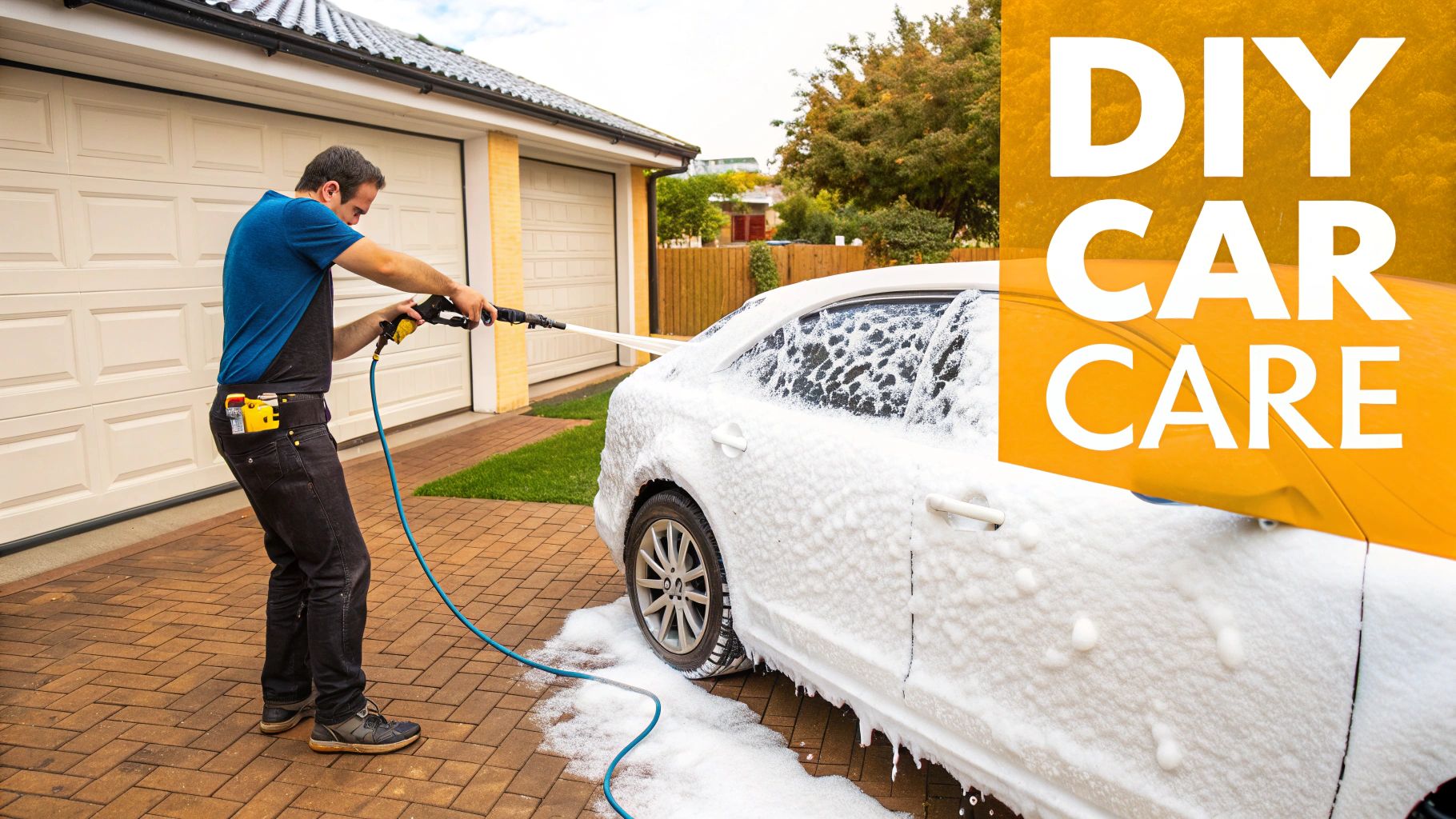
Your Essential Home Car Wash Checklist
To keep things simple, here’s a quick rundown of the gear you'll want to have on hand for a perfect at-home car wash. Think of this as your core setup.
| Component | Primary Function | Why It's a Must-Have |
|---|---|---|
| SwiftJet Foam Gun | Applies a thick layer of pre-soak foam | Lifts and lubricates dirt, dramatically reducing the risk of swirl marks and scratches. |
| Two 5-Gallon Buckets | Separates clean soapy water from dirty rinse water | Prevents you from reapplying dirt and grit back onto the car's surface. A classic detailing trick. |
| Grit Guards (x2) | Traps dirt and debris at the bottom of the buckets | Keeps your wash mitt clean and ensures you're not grinding abrasive particles into your paint. |
| pH-Neutral Car Soap | Gently cleans the vehicle's surface | Strong enough to remove grime but gentle enough to leave your wax or sealant layer intact. |
| Microfiber Wash Mitts | Safely agitates and removes dirt | The soft, deep pile traps dirt particles away from the paint, unlike flat sponges that just push it around. |
| Microfiber Drying Towels | Absorbs water quickly without scratching | A high-quality, plush drying towel (or two) is the key to a streak-free, spot-free finish. |
Having these items ready to go will set you up for success every time. It’s all about working smarter, not harder, to get that flawless look.
Assembling Your Ultimate Car Wash Arsenal
Putting together the right car wash kit is the single most important step toward getting that slick, swirl-free finish everyone wants. It’s not about owning a garage full of complicated gadgets. It’s about having a few, high-quality tools that work in harmony to protect your car’s paint. A smart setup turns a weekend chore into something genuinely satisfying, giving you pro-level results right in your own driveway.
The heart of any modern car wash is a solid foam applicator. This is where the SwiftJet Car Wash Foam Gun really shines. It hooks directly up to a standard garden hose, so you don't need a pricey pressure washer to get that thick, clinging foam. Its simple trigger control lets you start and stop the suds instantly, giving you total command over where the foam goes and making sure you don't waste a drop of soap.
The Right Soap and the Two-Bucket Method
With your foam gun ready to go, the next critical piece of the puzzle is the soap. You absolutely have to use a pH-neutral car soap. I can't stress this enough. Household cleaners like dish soap are formulated to strip grease and oil, and they’ll do the exact same thing to your car's protective wax or sealant. That leaves your paint totally exposed. A dedicated car soap, on the other hand, cleans away the grime while leaving that crucial protective layer intact.
If you need a hand picking the right one, check out our guide on selecting the best foam soap for your car.
Next up is the one technique that separates the amateurs from the pros: the two-bucket method. It’s an incredibly simple concept that dramatically reduces the risk of scratching your paint.
- Wash Bucket: Fill this one up with your pH-neutral soap solution.
- Rinse Bucket: This bucket gets nothing but clean, plain water.
- Grit Guards: Drop one of these into the bottom of each bucket. A grit guard is a simple plastic grate that traps dirt at the bottom, so your wash mitt doesn't pick it back up and drag it all over your car.
The process is easy. After you wash a single panel, you dunk your dirty mitt into the clean water of the rinse bucket first. Give it a good scrub against the grit guard to release all the trapped dirt. Only then do you dip it back into the soapy wash bucket. That one extra step makes all the difference.
Microfiber: The Only Thing That Should Touch Your Paint
Throw away the old sponges, ripped t-shirts, and crusty bath towels. For anyone who's serious about their car's finish, high-quality microfiber is non-negotiable. You'll need two main types in your kit.
- Wash Mitts: A plush microfiber wash mitt has a deep, soft pile that pulls dirt particles up and away from the paint surface, trapping them safely within the fibers.
- Drying Towels: A big, ultra-absorbent microfiber drying towel—often called a "waffle weave" or "twist loop"—can soak up an incredible amount of water. This makes drying quick and effortless, which is key to preventing water spots.
Using the right towels is just as important as using the right soap. The recent explosion in DIY car care has reshaped the entire $13.40 billion global car care products market, where cleaning supplies account for a massive 83.48% of sales. In North America alone, it’s a $3.06 billion industry, largely driven by people like us who prefer to do it ourselves. After 2020, surveys revealed that 60% of car owners started washing their own vehicles, a big jump from 45% previously. People are realizing they can save money and get a better finish with pro-grade tools at home. You can dig into more data about the booming car care product market here.
A proper home car washing kit isn't an expense; it's an investment in your vehicle's longevity and appearance. The right tools protect your paint, save you money, and deliver a shine that automated washes simply can't match.
Once you have these core components—a quality foam gun, the right soap, two buckets with grit guards, and premium microfiber towels—you have everything you need to wash your car safely and effectively. You’re not just cleaning your car; you’re protecting your investment for years to come.
Mastering the Art of the Foam Wash
Alright, you've got your home car washing kit ready to go. Now for the fun part. This is where the magic happens, and a little bit of technique can make a world of difference between a decent wash and a jaw-dropping, swirl-free shine. Let's walk through the process the right way.
First things first: location, location, location. Never, ever wash your car in direct sunlight. A hot surface is your worst enemy—it bakes the soap right onto the paint, leaving stubborn spots and residue that are a nightmare to get off. If you don't have a garage, aim for the early morning or later in the evening when the sun is low. Trust me, it makes a huge difference.
The All-Important Pre-Rinse and Foam Bath
Once you're set up in the shade, grab your garden hose and give the car a good, solid pre-rinse. You're not trying to pressure-wash the paint off here. The goal is simply to knock off the loose, heavy stuff—think mud, dust, and pollen. Getting that abrasive grit off the surface before you touch it with a mitt is one of the most critical steps to prevent scratches.
Now it's time to break out the foam. Hook up your SwiftJet, fill the canister with your pH-neutral soap and water (just follow the ratio on the soap bottle), and get ready to paint the car with suds. Start at the roof and work your way down, covering every inch in a thick blanket of foam. Let it sit for a few minutes. You'll actually see the foam doing its job, grabbing onto the dirt and pulling it away from the surface.
This simple visual breaks it down into the three core stages.
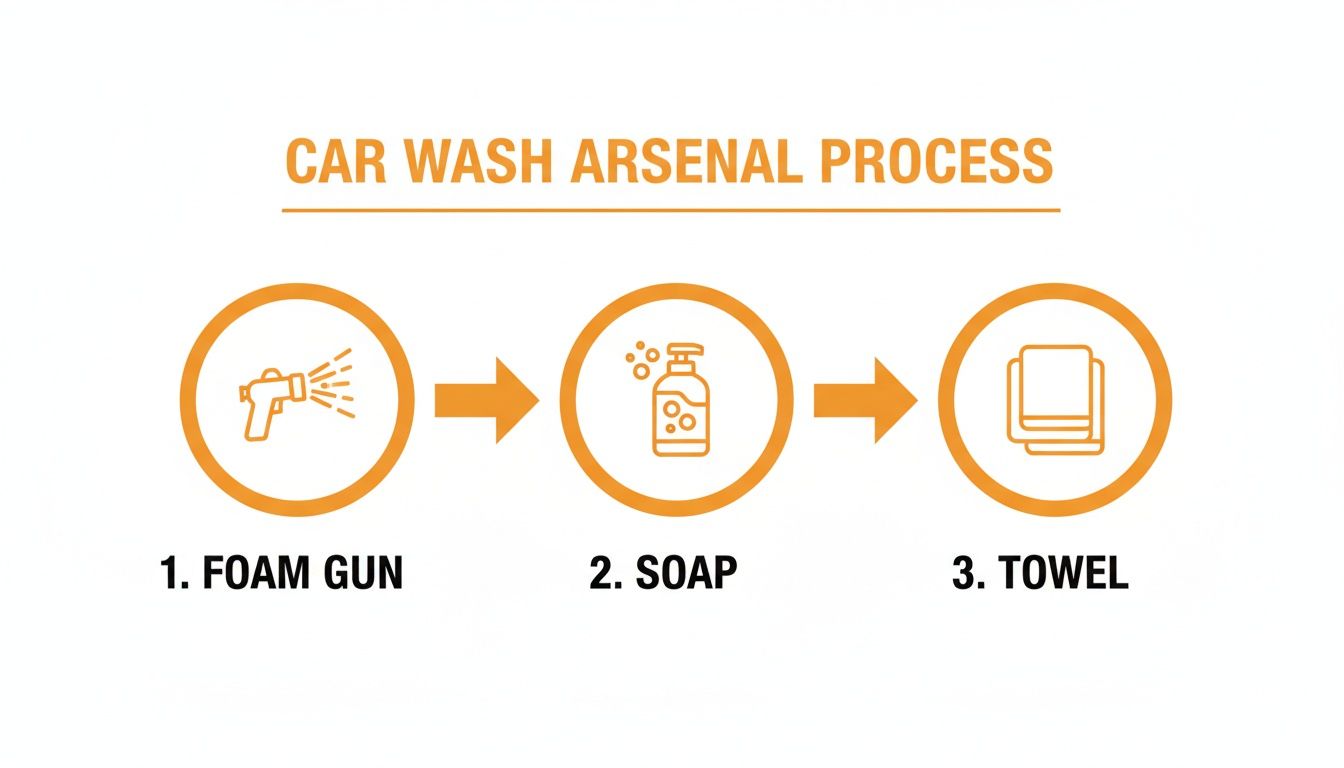
As you can see, each tool—the foam gun, the soap, and the towel—has a specific role to play in getting that perfect, safe wash.
The Two-Bucket Method: Your Paint's Best Friend
After the foam has had a chance to work its magic and loosen up the grime, it’s time for the contact wash. This is where your two-bucket system is non-negotiable. One bucket gets the car soap solution, the other gets clean rinse water. Make sure you have a grit guard at the bottom of each one.
The process is simple but incredibly effective for a scratch-free finish:
- Dunk your clean wash mitt into the soapy water.
- Gently wash one panel at a time, always starting from the top and working down. Use straight-line motions, not circles—circular scrubbing is what causes those dreaded swirl marks.
- After finishing a panel, rinse the mitt in your clean water bucket. Rub it against the grit guard to release all the dirt you just picked up.
- Now, and only now, dip it back into the soap bucket for fresh suds and move on to the next panel.
This method guarantees you’re not just dragging dirt from one part of the car to another. It’s a total game-changer for keeping your paint looking pristine. If you want to get into the nitty-gritty of the science, you can learn more about how a car foaming gun really elevates the whole process.
The two-bucket method isn't just a "pro tip"—it's the single most effective technique for preventing the microscopic scratches that dull your paint over time. It’s the foundation of a safe wash.
The Final Rinse and Dry for a Flawless Finish
Once the whole car is clean, it's time for the final rinse. Grab the hose again and use a steady stream of water (no high-pressure nozzle needed) to wash away all the soap. Start from the top, letting the water cascade down. Be meticulous here; you don't want any soap residue hiding in panel gaps or around the trim.
Last but not least, drying. This step is just as important as the wash for preventing water spots. Grab a big, plush microfiber drying towel. The trick is to blot, not rub. Lay the towel out over a section of the car, pat it down gently, let it soak up the water, and then lift it off. Move to the next spot. This approach is super effective and minimizes any friction on your fresh, clean paint. Work efficiently to get the whole car, including the glass and mirrors, perfectly dry for a brilliant, streak-free shine.
Pro Tips for a Showroom Shine Every Time
Getting the hang of the basic foam wash is fantastic, but a few insider tricks can take your car's finish from just clean to genuinely eye-popping. These are the little details that professional detailers live by, and they make a world of difference in how your car looks and how long that shine lasts.
One of the biggest rules in detailing is to always wash from the top down. It seems simple, but gravity is a powerful force. All the dirt, soap, and grime naturally run downwards. When you start with the roof and work your way to the hood and trunk, you're letting gravity help you, preventing dirty water from streaking over areas you've just cleaned. This single habit stops you from dragging the heavy gunk from your rocker panels back onto the paint.
Tackle Wheels and Tires First and Separately
Let's be honest: your wheels and tires are the grimiest parts of your car, hands down. They're constantly bombarded with brake dust, road tar, and other nasty stuff you definitely don't want anywhere near your paint. This is why you should always treat them as a completely separate job, preferably before you even start foaming the car's body.
Keep a dedicated set of tools just for this task:
- A separate bucket: This is non-negotiable. Never let the bucket you use for your wheels touch your car's paint.
- Stiff-bristled brushes: You'll need these to really scrub the tire sidewalls and get into all the nooks and crannies of your wheel design.
- A dedicated wheel cleaner: These formulas are designed specifically to dissolve that stubborn, baked-on brake dust.
By isolating your wheel cleaning, you eliminate the risk of transferring those highly abrasive brake dust particles onto your car’s delicate clear coat, which is a major cause of swirl marks.
A great wash isn't just about the tools; it's about the process. Keeping your 'dirty work' (wheels) completely separate from your 'clean work' (paint) is a non-negotiable rule for a swirl-free finish.
Maintain Your Tools for Lasting Performance
Your home car washing kit is an investment that pays off with every wash, so a little upkeep goes a long way. After you're done, take five minutes to clean your SwiftJet foam gun. Just run some clean water through the canister and sprayer to flush out any leftover soap. This simple step prevents clogs and keeps everything working like new.
Your microfiber towels need love, too. They’re the last thing to touch your paint, so they have to be perfectly clean. To get the full rundown on keeping them soft, absorbent, and safe, check out our guide on the right way to care for your microfiber towels for cleaning.
The Eco-Friendly Advantage of Foam
Beyond getting a killer shine, using a foam gun is also a smarter choice for the environment. It's no secret that 40% of vehicle owners prefer to wash their own cars, but water conservation is a growing concern. With global water shortages affecting 2.4 billion people, every drop counts. A foam cannon can use up to 70% less water compared to a constantly running garden hose, making it a responsible choice.
Once you’ve perfected your wash routine, you might want to think about long-term protection. If you're chasing that ultimate, deep gloss and durability, it’s worth exploring what is the best paint protection for your car.
Common Car Washing Mistakes and How to Avoid Them
Having a great home car washing kit puts you on the right track, but even the best gear can't save your paint from a bad technique. It’s usually the simple, avoidable slip-ups that lead to swirl marks, water spots, and a finish that just looks… disappointing.
A classic rookie mistake is washing the car in direct sunlight, especially on a hot day. The sun bakes the soap and water onto the paint almost instantly. This leaves behind stubborn residue and spots that are a real pain to get off. Do yourself a favor: work in the shade or wait for a cooler time of day, like early in the morning or later in the evening.
Using the Wrong Products and Tools
It’s tempting to grab whatever is under the sink, but using household cleaners is a fast track to damaging your paint. Dish soap is a common culprit. It's designed to annihilate grease, which means it will strip off your car's protective wax or sealant, leaving your clear coat exposed. Stick with a pH-neutral car soap that’s actually meant for the job.
Then there's the dreaded "one bucket" wash.
Using a single bucket is like taking a bath and never draining the dirty water. You’re just picking up all the grit you just rinsed off and grinding it right back into the paint. The two-bucket method isn't optional if you want to avoid scratches.
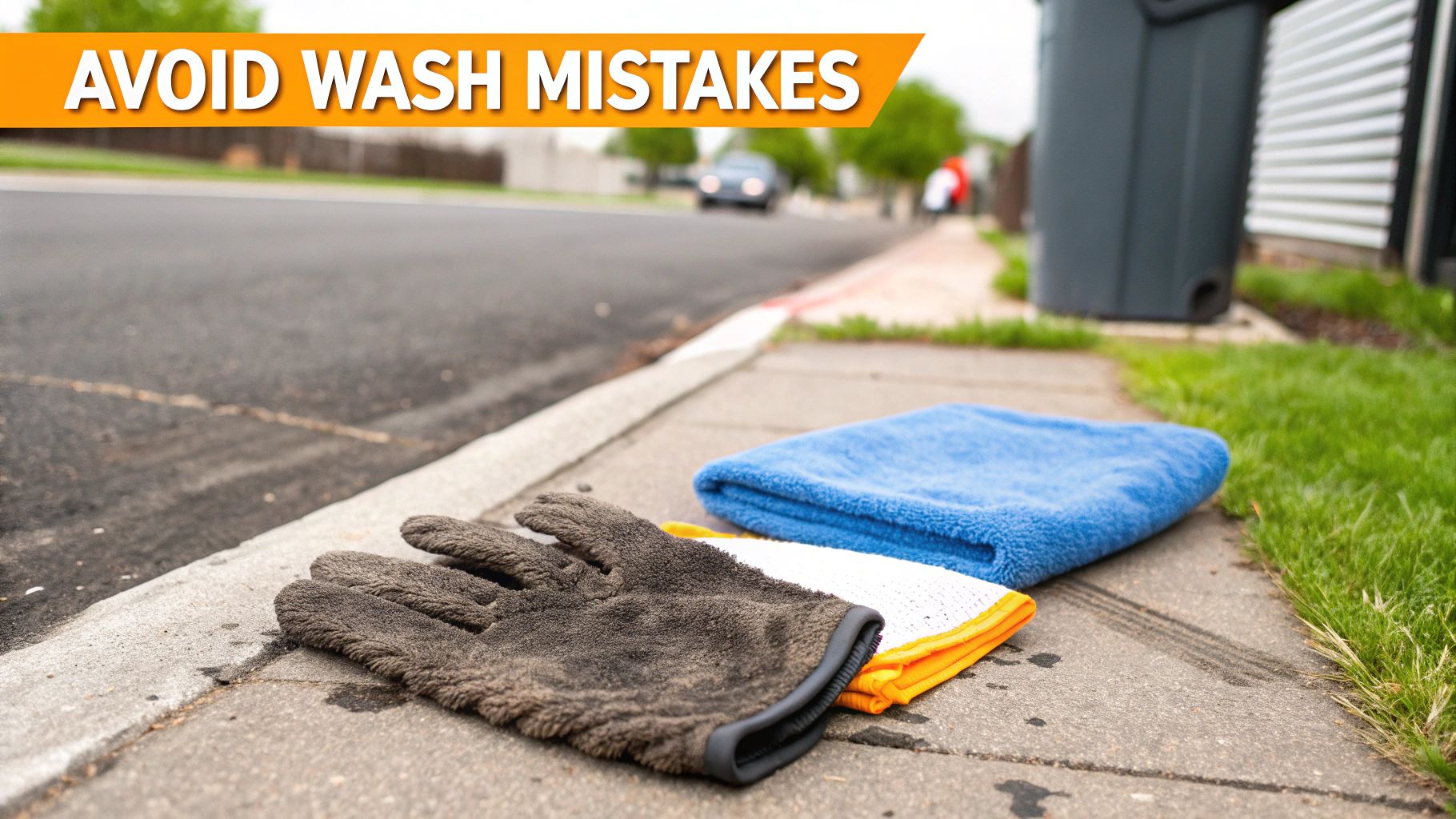
Even with the right setup, one clumsy moment can ruin your day. If your wash mitt hits the ground, that's it—game over for that mitt. Consider it contaminated and do not put it back on your paint until it's been through a washing machine. A single piece of trapped grit is all it takes to leave a nasty scratch.
Poor Drying Habits Undermine Your Work
You can do everything right and still mess it up in the final five minutes with a bad drying strategy. An old bath towel or a cheap squeegee can easily inflict a network of fine scratches and streaks. You need a plush, high-quality microfiber drying towel. Period.
The trick is to blot or gently drag the towel across the surface—never scrub. Follow this simple checklist for a perfect, spot-free finish every time:
- Have a dedicated drying towel: Don't mix it up with your washing or waxing towels.
- Blot, don’t rub: Lay the towel flat on a panel and pat it down. Let the microfiber do the work of absorbing the water.
- Move with a purpose: Get the entire vehicle dry before water spots have a chance to form and etch into your paint.
Steering clear of these common pitfalls will make a world of difference. You'll protect your car's finish and get that "just detailed" look after every wash.
Got Questions About Washing Your Car at Home? We've Got Answers.
Even with the right gear in hand, it's natural to have a few questions. Getting straight answers is the key to washing your car with confidence and getting that showroom look. Let's tackle some of the most common things people ask when they start washing their car at home.
So, How Often Should I Really Be Washing My Car?
This is probably the number one question, and the honest answer is: it depends. But a great rule of thumb for most daily drivers is every two weeks. That's the sweet spot for keeping the everyday grime from building up and starting to eat away at your paint.
Of course, you’ll want to adjust that based on where you live and how you drive.
- You'll need to wash it more often if... you deal with things like road salt in the winter, constant bird droppings, or tree sap. Those are paint killers and should be washed off as soon as you spot them. Same goes for areas with a lot of dust or acid rain.
- You can probably wash it less often if... your car is a garage queen that only comes out on sunny weekends. In that case, you could easily go three or even four weeks between washes.
Can I Just Use Dish Soap in My Foam Gun?
Please don't. This is a hard "no," and for a very good reason. Dish soap is designed to be aggressive—it needs to cut through tough, baked-on grease on your pans. When you put that on your car, it strips off everything, including the protective wax and sealant you've applied.
Think of it this way: using dish soap on your car's paint is like using a harsh degreaser on your own skin. It leaves it dry, exposed, and vulnerable.
Without that protective layer, your car's clear coat is left wide open to UV damage, oxidation, and all sorts of environmental fallout. Stick with a quality, pH-neutral car soap. It's made specifically to lift dirt without stripping protection.
Is a Foam Gun Actually Better Than a Pressure Washer?
For most of us washing our cars in the driveway, a garden hose foam gun like the SwiftJet is absolutely the better—and safer—choice. Pressure washers are powerful tools, no doubt, but that power can be a double-edged sword. Get too close, use the wrong tip, or hit a rock chip just right, and you can easily blast a chunk of paint right off. You can also damage rubber trim or force water past seals.
A foam gun gives you the single most important part of the equation—thick, slick foam that lubricates the surface—without any of that risk. It's the perfect middle ground, delivering professional-level suds safely and easily.
Ready to put together your ideal home car washing kit and get that perfect, swirl-free shine? The SwiftJet Car Wash Foam Gun is the key to making every wash safe, fun, and incredibly effective. Explore the SwiftJet and upgrade your car care routine today.
