

In reported medical-device cleaning studies, effective procedures reduced contamination by approximately 4 log10, or about 99.99%, while some machine-cleaning methods reached 5–6 log10, roughly 99.999%–99.9999%. For a vehicle, routine cleaning means scheduled physical removal of dirt, road film, oils, salt, and organic debris with water and detergent, not chemical disinfection or sterilization.
You've probably seen the situation after a weekend drive: the paint looks dull, the lower doors feel gritty, and dried bugs or bird droppings have started bonding to the finish. A quick spray may make the vehicle look wet, but it doesn't necessarily remove the contamination safely.
A good routine wash is a repeatable maintenance action. It removes material before it hardens, scratches the clear coat, stains decals, or carries polluted water into a storm drain. The right schedule depends on exposure and condition, not an arbitrary calendar rule.
Defining Routine Cleaning for Vehicle Care
Routine cleaning is the regular removal of dirt, soil, organic material, and other foreign matter from a surface, usually with water and detergent or an enzymatic product. The CDC definition of cleaning makes an important distinction: cleaning physically removes contamination, while disinfection is a separate process intended to destroy or inactivate microorganisms.
For vehicle care, that means washing away road film, dust, oils, salt, mud, pollen, insects, bird droppings, tree sap, and other residue. The purpose isn't to make a car sterile. It's to keep abrasive and chemically active material from remaining on paint, glass, trim, wheels, rubber, and RV graphics.
What routine cleaning protects
A clean surface gives you more than a better reflection. Removing loose and bonded contamination helps prevent grit from being dragged across the clear coat during contact washing. It also limits the time that salt, organic acids, oils, and damp debris remain against vulnerable finishes.
Routine cleaning is different from deep restoration. A maintenance wash removes current contamination and preserves a clean baseline. Paint correction, stain removal, tar treatment, and oxidation removal address problems that routine washing alone may not solve.
Practical rule: Wash to remove contamination before it becomes a correction project.
A sound routine usually follows this sequence:
- Assess the surface: Look for visible film, dried deposits, staining, or a gritty feel.
- Loosen contamination: Use water and an appropriate detergent before touching the paint.
- Agitate carefully: Work with clean tools and controlled pressure.
- Rinse completely: Remove suspended soil and detergent residue.
- Dry without grinding: Use clean drying towels or suitable air movement.
Owners of large vehicles may also need a method that handles height, length, and frequent road exposure efficiently. For fleet operators, maintenance managers, and commercial vehicle owners, commercial truck washing in DFW can provide useful context on maintaining larger vehicles without treating every wash as a cosmetic detail.
The Mechanics of Physical Soil Removal
Routine cleaning works through a combination of chemistry, fluid movement, and mechanical action. Water helps carry soil, while detergent loosens oils and helps suspend particles so they can be rinsed away. Friction from a wash mitt, brush, or towel then lifts contamination from the surface, but that friction must remain controlled.
The NHS describes cleaning as the combined action of fluid and friction, with microorganisms removed rather than necessarily destroyed in the process. That principle applies directly to vehicle care. A detergent can loosen road film, but the contamination still has to leave the panel. If it stays on the surface, spreading water over it doesn't equal cleaning.
Why contact before rinsing creates risk
Road film often contains fine grit mixed with oils and traffic residue. When you press a mitt into that film before loosening it, the particles can move across the paint like a cutting medium. Repeated contact under those conditions can contribute to micro-marring and swirl marks.
Foam helps by providing coverage and dwell time, but thick foam isn't a substitute for rinsing or clean tools. The goal is to soften and suspend contamination so the next step requires less force. Guidance on foam density and vehicle washing can help DIYers understand why coverage matters more than producing a dramatic layer of bubbles.
Use separate tools for especially dirty areas, such as wheels, tires, rocker panels, and the upper body. Change or rinse mitts when they collect visible soil, and work from cleaner areas toward dirtier ones. Straight-line passes are easier to control than aggressive circular scrubbing, especially when you're maintaining delicate clear coat or RV graphics.
The result you want is a surface that's visibly clean and free of loose abrasive debris, not merely a vehicle that's been soaked.
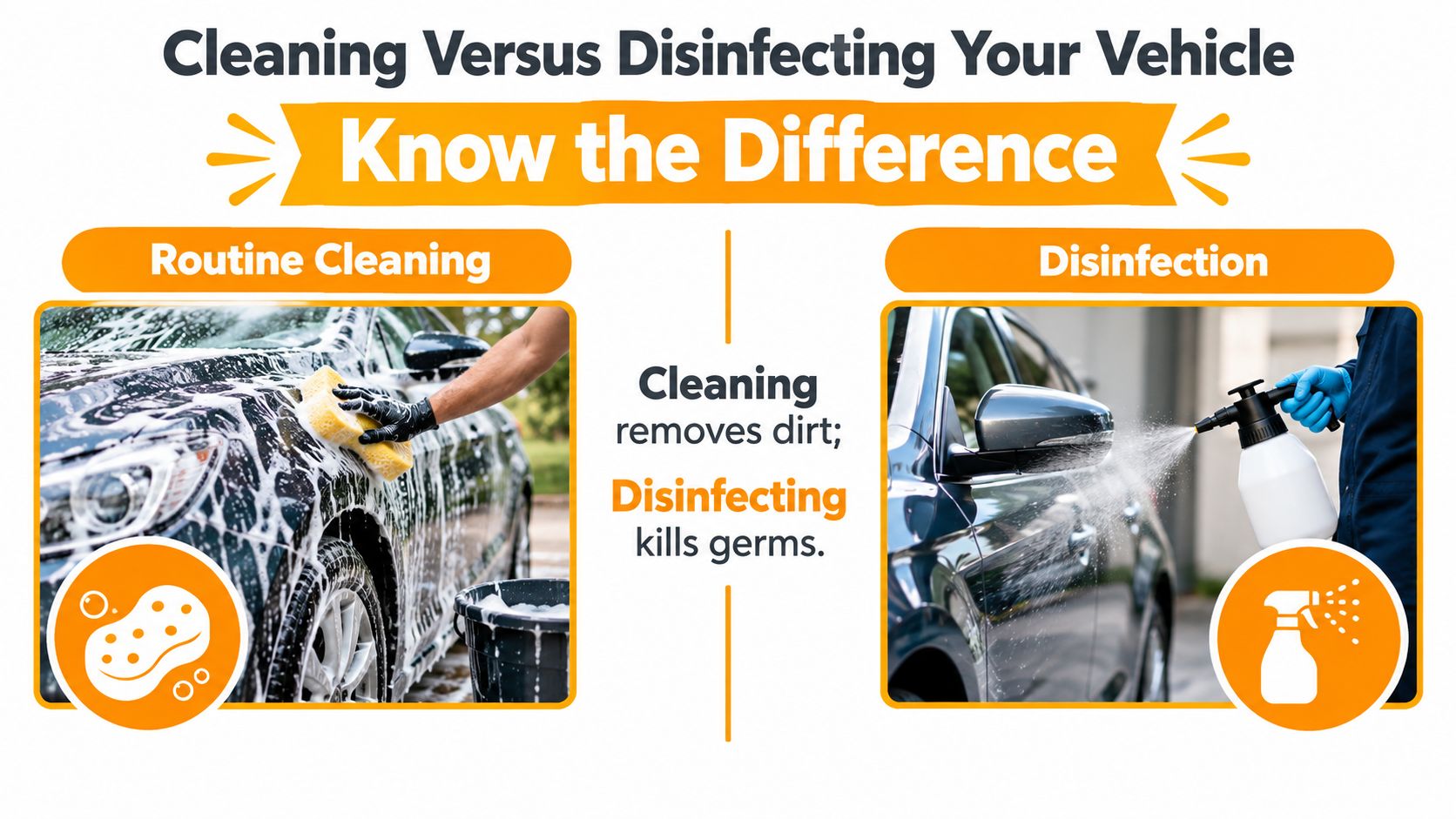
Cleaning Versus Disinfecting Your Vehicle
Washing and disinfecting solve different problems. The CDC distinction between cleaning, sanitizing, and disinfecting defines cleaning as using water, soap, and scrubbing to remove dirt, impurities, and many germs. Sanitizing reduces germs to an accepted level, while disinfecting uses chemicals to kill remaining microorganisms.
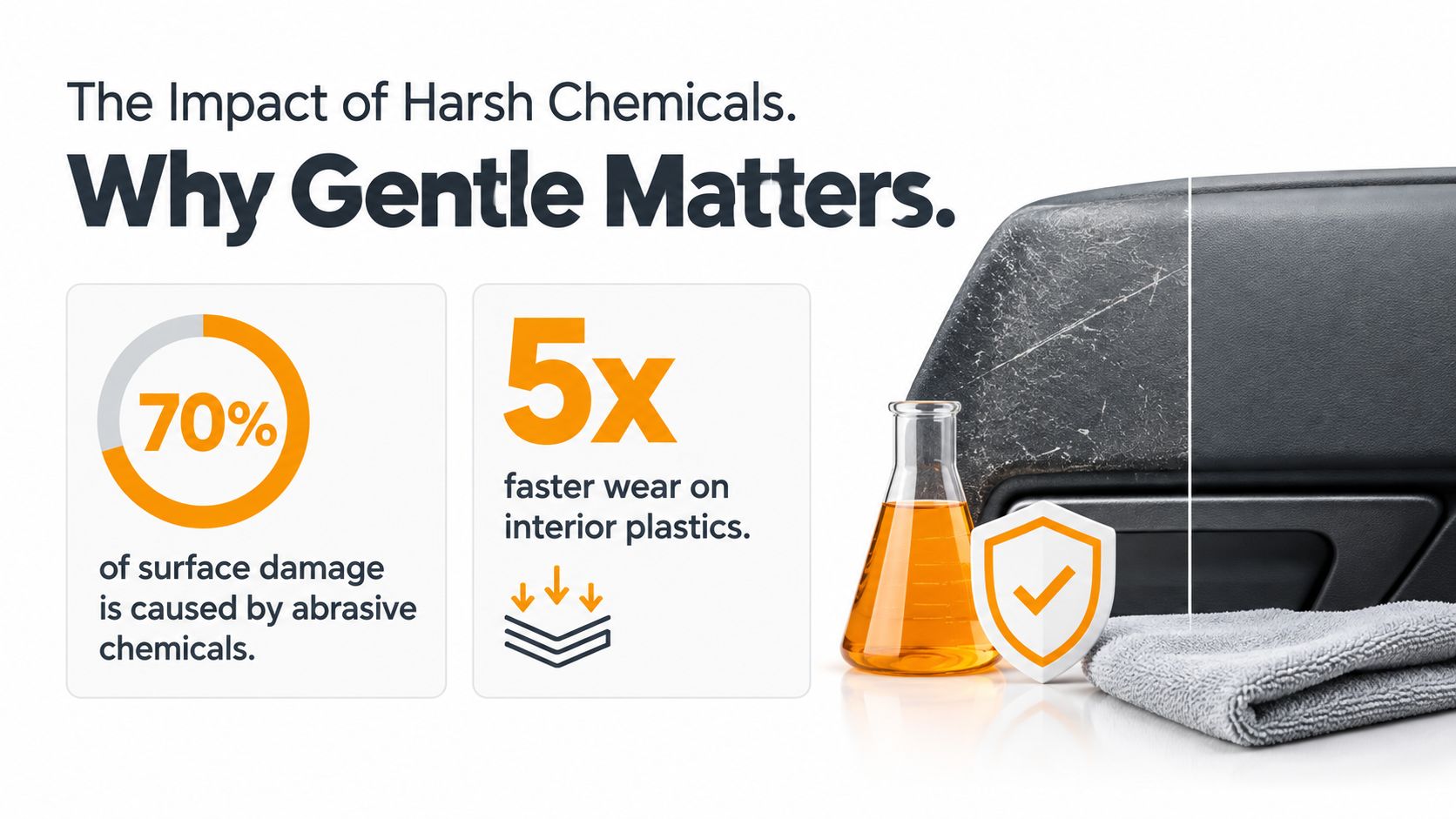
That difference matters because many exterior contaminants aren't a disinfection problem. Road salt, dust, oil, mud, pollen, and bird droppings need to be removed from the surface. Applying a disinfectant without first removing the soil can leave the contamination in place and may expose paint, rubber, plastic, or coated surfaces to chemicals they don't need.
Choosing the least aggressive effective method
For ordinary exterior maintenance, soap, water, rinsing, and safe mechanical removal are usually sufficient. Use a product designed for automotive surfaces, follow its directions, and avoid adding stronger chemicals just because the vehicle looks dirty.
Targeted disinfection can make sense after a specific contamination event or on interior high-touch areas when there's a clear reason. Steering wheels, door handles, gear selectors, switches, and RV living spaces may need more focused attention than an exterior panel. Before using a disinfectant, check compatibility with leather, vinyl, coated plastics, touchscreens, and delicate finishes.
- Routine cleaning: Removes dirt, oils, salt, debris, and many germs from surfaces.
- Sanitizing: Reduces germs to an accepted level.
- Disinfecting: Uses chemicals to kill remaining microorganisms.
The same logic appears in professional workplace hygiene, including Toronto office cleaning Covid protocols, where the cleaning objective and the disinfection objective must be treated as separate decisions. For your vehicle, that separation helps prevent chemical overuse, surface wear, and unnecessary runoff.
Clean also doesn't mean sterile. A vehicle can be visibly clean while still carrying microorganisms, and a disinfected surface can become dirty again immediately if soil is reintroduced. Match the method to the actual risk.
Condition Triggers and Wash Frequency
A fixed wash interval can be a useful starting point, but it shouldn't override what the vehicle is experiencing. A car driven through winter salt, construction dust, muddy roads, or heavy tree cover needs different attention from a vehicle stored indoors and driven occasionally.
CDC environmental-cleaning guidance specifies at least daily cleaning for high-touch surfaces and floors in relevant occupied healthcare areas, with more frequent cleaning when contamination is visible. Vehicle care isn't healthcare cleaning, but the transferable principle is clear: frequency should rise with exposure and visible contamination.
Read the vehicle instead of the calendar
Use these triggers to decide when routine cleaning is due:
- Road salt or de-icing residue: Rinse and wash promptly because salt deposits can remain damp and attack exposed surfaces.
- Mud and gritty road film: Clean before the deposits dry into a harder, more abrasive layer.
- Bird droppings: Remove them as soon as practical instead of allowing organic residue to remain on warm paint.
- Tree sap and insect residue: Treat early because bonded deposits become more difficult to remove safely.
- Heavy dust or construction exposure: Use a thorough pre-rinse before any mitt touches the surface.
- Travel or outdoor storage: Inspect the roof, rear hatch, wheel arches, lower panels, and RV decals after exposure.
A visual film, gritty feel, sticky patch, or dried deposit is a stronger signal than a date on the calendar. If the vehicle has encountered a contaminant that can retain moisture or chemically affect the finish, move the wash forward.
Build a simple risk assessment
Before washing, ask three questions. What has the vehicle contacted? Where has contamination collected? Can the material be removed with a gentle rinse, or does it need a planned wash with detergent and controlled agitation?
Work from less contaminated areas toward more contaminated ones. Use fresh solution, clean microfiber tools, and a final rinse that carries away suspended soil. This approach reduces unnecessary scrubbing and directs effort to the areas that need it most.
Managing Wash Water Runoff and Environmental Impact
A driveway wash can look harmless because the water disappears quickly. It may carry detergent, sediment, metals, hydrocarbons, oils, and surfactants into a storm drain. The EPA vehicle-washing guidance explains that residential outdoor washing can send polluted wash water toward waterways, while commercial facilities may recycle water or treat discharge before it reaches a sanitary sewer.
The scale of the problem becomes clearer in an EPA city-level example, which estimated annual vehicle-washing contributions of 190 gallons of fuel and motor oil, 14 pounds of dissolved copper, 400 pounds of nitrogen and phosphorus, 60 pounds of ammonia, 2,200 pounds of surfactants, and 3,000 pounds of solids. Those figures are an example, not a universal total, but they show why wash location matters.

Keep wash water out of storm drains
Choose the least polluting practical setup:
- Use permeable ground: Washing on grass, gravel, or another absorbent surface can help reduce direct flow, provided local rules allow it.
- Avoid storm drains: Position the vehicle away from inlets and don't push dirty water toward the street.
- Limit detergent: Use only the amount needed to loosen soil. More product doesn't automatically create a cleaner vehicle.
- Contain the flow: Use berms, drain covers, wet vacuums, or other suitable methods to collect and redirect wash water where appropriate.
- Consider a facility: Commercial wash sites may have water-recycling or wastewater controls that a driveway lacks.
Low-water methods can also reduce the volume that needs to be managed. A guide to low-water car washing offers useful ideas for situations where a full hose wash isn't practical.
Mobile detailers, RV travelers, and owners of heavily soiled trucks should plan the runoff route before opening the hose. If the job involves substantial oil, mud, or chemical residue, a professional service such as Renue Systems Four Points shares may offer a more controlled approach than letting contaminated water leave the property.
A Practical Routine Cleaning Checklist
A safe maintenance wash begins before the first contact. Park in shade when possible, close windows and doors, gather clean microfiber tools, prepare the detergent according to its directions, and inspect the surface for fragile decals, loose trim, or heavy deposits.

Use this wash sequence
- Rinse from top to bottom. Remove loose dust and grit before introducing a mitt. Give extra attention to roof edges, wheel arches, rocker panels, and the rear of the vehicle.
- Apply detergent evenly. Cover the panels with a suitable car-wash solution. A hose-mounted foam tool, such as the SwiftJet Car Wash Foam Gun, applies car-wash soap through a garden hose and can help provide broad coverage before contact washing.
- Allow soil to loosen. Follow the product directions and don't let the solution dry on the surface. The objective is to suspend contamination, not bake another layer onto the paint.
- Wash with a clean microfiber mitt. Use light pressure and straight passes. Start with cleaner upper panels, then move toward lower and dirtier areas. Rinse the mitt regularly rather than carrying grit across multiple panels.
- Separate the wheels and tires. These areas collect brake dust, road salt, and heavier grime. Use dedicated tools so wheel contamination doesn't return to painted body panels.
- Rinse thoroughly. Work from the roof downward and remove detergent from mirrors, trim gaps, door jambs, emblems, and RV hardware. A complete rinse takes away the soil the detergent has suspended.
- Dry with control. Use clean drying towels or air to remove standing water. Don't drag a towel across a panel that still feels gritty.
- Inspect before putting everything away. Check glass, lower doors, behind license plates, wheel arches, and the rear bumper. Spot-clean remaining deposits with the least aggressive method that will work.
For a vehicle-specific supply list, this DIY car cleaning kit guide can help you match tools to the job. The same sequence works for daily drivers, trucks, and RVs, but large vehicles benefit from dividing the work into manageable panels so detergent and water never dry before rinsing.
SwiftJet offers a garden-hose foam gun for applying car-wash soap during routine vehicle cleaning, along with guidance on pre-rinsing, foaming, microfiber washing, rinsing, and drying. Visit SwiftJet to review the tool and build a more controlled wash process for your car, truck, or RV.
