

You're probably standing in the driveway with a foam gun in one hand, hose in the other, and a bucket nearby just in case this thing disappoints you again. You pull the trigger, expecting shaving-cream foam, and what lands on the paint looks more like soapy runoff. It slides off the doors, leaves dry patches on the hood, and burns through soap faster than it should.
That's not usually a bad foam gun problem. It's a performance optimization problem.
With garden hose foam guns, the difference between weak suds and thick cling comes from small things pressure washer guides barely talk about. Hose flow. Tiny air leaks at fittings. The front nozzle position. Soap concentration inside the bottle, not in the bucket. Even the order you spray the car matters more than commonly assumed.
Doug Lea's long-standing optimization principle still applies here: find the bottleneck, shorten the critical path, and stop wasting effort where it doesn't change the outcome Doug Lea's chapter on optimization. In foam gun terms, that means you don't chase “better foam” by dumping in more soap first. You check the choke points first. Water delivery, pickup, dilution, spray pattern, and contamination inside the gun.
From Watery Mess to Thick Clingy Foam
Thin foam has a pattern. The gun seems to work, but it doesn't work well. You get bubbles in the bottle, suds at the tip, and almost no dwell on the panel. The roof goes patchy before you finish the second side. By the time you walk around the car, the first section is nearly bare.
That usually comes from one of three issues. The mix is too weak, the nozzle is opened too far, or the water supply is starving the gun. Sometimes it's all three.
What thick foam actually needs
A hose foam gun can't brute-force foam the way a pressure washer cannon can. It has to make the most of limited pressure and available water flow. That means every part of the system has to help.
You want:
- Consistent water delivery so the venturi can pull soap smoothly
- A clean pickup path so dried residue doesn't interrupt mixing
- A usable dilution setting that matches the soap, not just the label
- A spray fan with enough concentration to lay foam onto paint instead of misting it away
Practical rule: If the foam looks airy at the nozzle and watery on the panel, don't add more soap until you check the spray pattern and hose flow.
The result you're after
Good foam from a garden hose gun isn't about making the thickest possible blob for social media. It's about making a blanket that stays wet long enough to soften road film and give you a safer contact wash. If it clings, stays uniform, and doesn't collapse instantly, the system is doing its job.
That's where performance optimization pays off. The same mindset used in software and process tuning works here too. Start with a baseline, identify the bottleneck, change one thing at a time, then keep what improves the outcome. That measured approach is the difference between wasting a half bottle of soap and getting repeatable foam every wash.
Your Foundation for Thick Foam Initial Setup and Pre-Wash
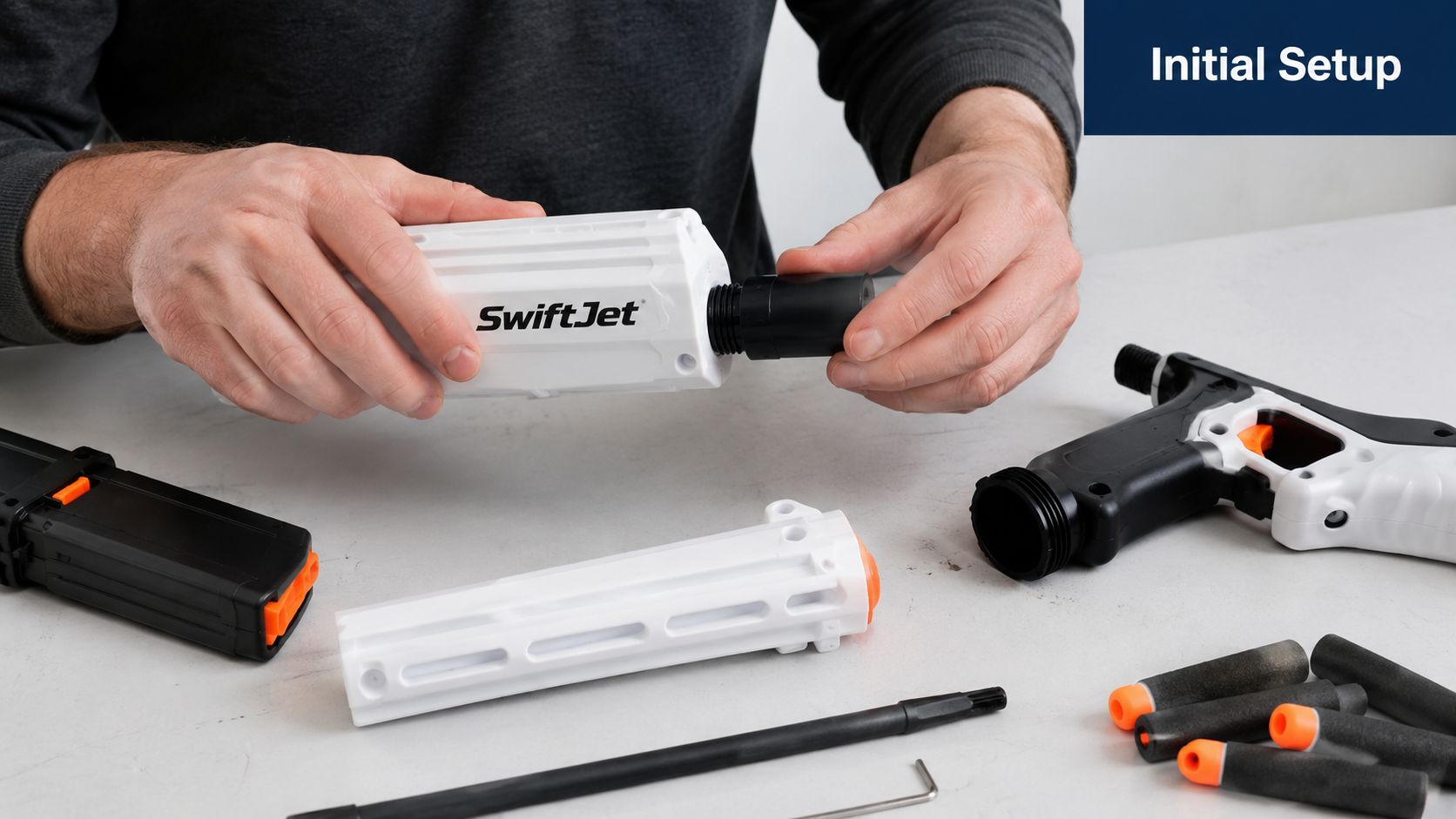
A hose foam gun lives or dies on setup. With a garden hose unit like a SwiftJet, small losses in flow show up fast. The gun has far less pressure in reserve than a pressure washer cannon, so a half-seated fitting or dirty pickup tube is enough to turn promising foam into runny shave cream.
Start at the spigot and build a clean water path all the way to the bottle.
Build the water path first
Every connection can bleed off performance before water reaches the nozzle. On a hose gun, that matters more than many pressure washer guides admit because you are already working with modest pressure and whatever flow your home spigot can supply.
Run through these checks before you mix soap:
-
Check the hose washer
Confirm the rubber washer is present, flat, and not split. A small leak at the faucet end often means weaker output at the gun. -
Tighten threaded connections by hand
Snug is enough. Cross-threaded plastic parts seal poorly and can introduce drips or air leaks. -
Inspect the pickup tube
Make sure the siphon tube reaches the bottom of the bottle and has no kink, crack, or dried soap blockage. -
Test the gun with plain water
Spray water only first. Look for steady output and make sure the trigger, bottle, and nozzle are seated correctly.
If you use quick-connects, fit matters. Loose or worn couplers can choke flow even when they do not leak much. SwiftJet's guide to 3/4 quick connect fittings is a useful reference for matching the hardware correctly.
Start with a clean gun
Old soap changes how the gun draws product. Dried residue around the pickup, bottle neck, or nozzle face narrows the path and makes the siphon inconsistent. Then you start chasing the wrong problem.
Before each wash, especially if the gun sat for a week or you switched shampoos, rinse the:
- Bottle interior
- Pickup tube
- Nozzle face
- Mixing chamber, if your model allows access
This takes a minute and saves a lot of false tuning. I have seen foam guns blamed for weak output when the actual issue was old soap gelled inside the pickup tube.
Pre-rinse the vehicle like it matters
A proper pre-rinse gives the foam a real job to do. Flood the paint, trim, wheel arches, rocker panels, and rear end first so loose grit leaves with water instead of sitting under the foam.
Garden hose foam guns work best as a pre-wash layer over a surface that has already been knocked down with free-flowing water. On heavily soiled vehicles, spend extra time on lower doors, behind the wheels, and the tailgate area. Those sections hold the kind of grit that will drag during the contact wash if you rush this step.
Water pressure at the house also affects this stage. If the stream feels weak before the foam gun is attached, the foam gun will not fix it. Open the spigot fully, straighten hose kinks, and avoid running through restrictive splitters if you want the nozzle to pull soap consistently.
Repeat the same setup every wash
Consistency beats guesswork. Build the setup the same way each time, test with water, then foam. That gives you a reliable baseline for later nozzle and mix adjustments instead of changing three variables at once.
That discipline shows up in the final wash quality, especially on vehicles being cleaned for sale. Shops that offer pre-sale car preparation services pay close attention to prep because missed grime usually hides in seams, badges, and trim edges long before the mitt comes out.
Mastering the Mix Foam Ratios and Soap Selection
A hose foam gun lives or dies by the bottle mix. With a SwiftJet-style setup, the soap in the bottle is only the starting concentrate. The gun pulls that solution, then dilutes it again with tap water. That is why a ratio that works great in a bucket, or even in a pressure washer cannon, often turns into thin foam and fast runoff through a garden hose gun.
Get the mix right first. Everything else gets easier.
Pick soap for the wash you are doing
Soap choice matters, but not in the way label marketing suggests. For hose foam guns, I care about three things: how easily the soap pulls through the pickup tube, how long it stays wet on the panel, and whether it rinses clean at garden hose pressure.
Three soap types cover nearly every job:
- pH-neutral wash soap for routine maintenance on protected paint
- Prep or strip soap for road film, neglected vehicles, or protection removal
- Ceramic-infused soap for added slickness, with the understanding that some formulas give up foam density to get it
pH-neutral soap is usually the cleanest place to start. It behaves predictably and gives you a reliable baseline. Prep soaps can clean harder, but some get runny or lose cling if you overmix them in a hose gun bottle. Ceramic soaps are the trickiest. They can feel slick on the paint while producing foam that looks lighter than expected.
If you are comparing formulas, SwiftJet's guide to best foam soap for cars gives a useful shortlist of soap types that suit foam gun use.
Start richer than bucket-wash logic suggests
A lot of weak foam problems come from under-mixing, not bad hardware.
Pressure washer guides push ratios that assume far more force at the nozzle. A garden hose foam gun does not have that advantage, so it usually needs a richer bottle mix to get the same cling and dwell. On a SwiftJet, I would rather start slightly rich and back down than start lean and chase foam with the dial.
Use these ratios as starting points.
SwiftJet Foam Gun Mix Ratio Guide
| Cleaning Goal | Recommended Soap Type | Starting Ratio (Soap:Water) | SwiftJet Dial Setting |
|---|---|---|---|
| Weekly maintenance wash | pH-neutral car shampoo | 1:10 | Mid to rich |
| Moderate road film and bug residue | Higher-foaming pH-neutral or stronger cleaning shampoo | 1:8 | Rich |
| Heavy grime on lower panels | Stronger cleaning prep soap | 1:6 | Rich to maximum |
| Prepping for wax or sealant application | Prep or strip soap | 1:6 to 1:8 | Rich |
| Light wash on already protected vehicle | pH-neutral or ceramic-infused soap | 1:10 to 1:12 | Mid |
These numbers are a baseline, not a rule. Some soaps bloom quickly with very little product. Others need a heavier bottle mix before they stop looking watery through a hose gun.
Use the dial to fine-tune, not to rescue a bad mix
The dial is not magic. It changes how much solution the gun pulls from the bottle compared with incoming water.
That matters because hose pressure changes from house to house. A setup with strong flow at the spigot can stay at a middle setting and still produce usable foam. A weak residential line often needs a richer dial setting and a stronger bottle mix before the gun starts laying down foam with any body.
Use the dial like this:
- Foam looks thin, but output volume is strong. Increase the dial richness first.
- Foam looks good, but the bottle drains too fast. Keep the same soap ratio and reduce the dial slightly.
- Output surges, sputters, or turns inconsistent. Leave the ratio alone and inspect the pickup tube, cap seal, and front end before making mix changes.
Change one variable at a time. If you alter the soap ratio and the dial together, you lose the baseline and end up guessing.
Hard water and cold water both change the result
Hose foam guns differ from pressure washer advice. House water quality has a bigger effect than many people expect.
Hard water can knock down foam volume and leave the soap feeling dull. Very cold water can make thicker shampoos pull poorly, especially in the first few passes. If a foam gun worked well in summer and suddenly feels weak in winter, the soap may be fine. The bottle mix is just flowing differently.
Practical fixes:
- Use warm water in the bottle if the soap label allows it
- Increase the soap concentration slightly
- Shake the bottle before spraying
- Clean the gun more often if you know your water leaves mineral residue
Judge the mix by dwell and panel coverage
Big foam looks good in photos. On the car, I want something more specific.
A good hose foam gun mix lands evenly, hangs on long enough to soften traffic film, and stays wet while you work around the vehicle. If it slides off the upper panels instantly, the mix is too lean, the soap is mismatched to the gun, or the house water is fighting you. If it comes out pasty and burns through the bottle in no time, it is richer than it needs to be.
The sweet spot is dense, wet foam with controlled runoff. That is the mix that gives a garden hose foam gun real pre-wash value instead of a watery showpiece.
Perfecting Your Spray Technique and Nozzle Tuning
Technique is where a decent mix turns into a useful wash. Two people can use the same soap, same hose, same bottle ratio, and get very different results just from how they hold the gun and tune the front nozzle.
That's normal. Foam guns reward control.
Dial in the nozzle before you touch the whole car
The front nozzle controls more than shape. It also changes how concentrated the output feels on the panel. Open too wide and the foam gets airy, thin, and easy to blow away. Close too tight and you get a narrow, heavy stream that wastes coverage and can run in stripes.
Start by testing on a lower door or rear quarter.
Use this sequence:
- Begin near the middle of the adjustment range
- Spray a short burst
- Tighten slightly if the output looks misty
- Open slightly if it's too narrow to cover evenly
- Stop when the foam lands dense and uniform
If you're familiar with pressure washer setup, don't copy that nozzle logic directly. A garden hose foam gun behaves differently. SwiftJet's overview of a pressure washer foam nozzle is useful mostly as a contrast. Hose guns need more attention to pattern concentration because they don't have the same pressure reserve.
Distance changes cling
Hold the foam gun too far away and you atomize the output before it hits the paint. Hold it too close and you create heavy runoff lines instead of a blanket. The sweet spot is close enough that the foam lands wet and connected, but not so close that it hammers one strip at a time.
On most panels, keep the gun at a moderate working distance and watch the foam behavior, not your hand position. If it splashes and breaks apart, back up slightly or widen the pattern. If it mists and disappears, move closer or tighten the nozzle.
The panel tells you the right distance. You want laid-down foam, not floating foam.
Spray bottom up, then wash top down
For foam application, start lower and work upward. That sounds backward until you try it. Going bottom up gives dirty lower panels longer dwell time and makes it easier to see exactly where you've already covered.
For the contact wash, reverse it. Wash top down with your mitt.
A practical pattern looks like this:
- First pass on rocker panels, lower doors, bumpers
- Second pass through mid-door sections and fenders
- Final pass on hood, roof, trunk, and glass
Overlap each stroke slightly so you don't leave dry channels between passes.
Use the trigger like a metering tool
A hose foam gun with an on/off trigger gives you better control than people realize. Don't keep it flowing while you walk between panels or move the hose around the mirror and wheel arch. Shut it off, reposition, then lay the next pass cleanly.
That saves product, but above all it preserves rhythm. A rushed, always-open trigger hand usually causes misses around pillars, emblems, and lower corners.
If you want to watch the basic motion in action, this clip gives a useful visual reference:
What doesn't work
Some habits almost always make foam worse:
-
Standing too far back
The foam drifts and thins before it lands. -
Trying to coat the whole car in one fast lap
The first side dries before the last side is covered. -
Using the widest fan all the time
Wide isn't better if the foam loses body. -
Aiming at dry hot panels in direct sun
Even good foam won't dwell properly there.
Tune for dwell, not drama
The goal is even foam with enough cling to stay useful while you move into the wash stage. If you can coat one side of the car, see a consistent blanket, and still find moisture on the first panel when you're ready to wash, your technique is in the zone.
That's practical performance optimization. You're not guessing. You're adjusting the slowest, weakest part of the system until the whole wash works better.
Essential Maintenance for Lasting Performance
Storing a foam gun dirty is the fastest way to make it foam worse.
With hose-fed units like the SwiftJet, small restrictions matter more than pressure washer guides admit. You do not have extra pressure in reserve to overpower dried soap in the pickup tube, mineral crust at the nozzle, or residue packed into the dial. The usual result is predictable. Foam gets thinner, the fan pattern turns uneven, and people start pouring in more shampoo to chase performance that a quick cleaning would have restored.
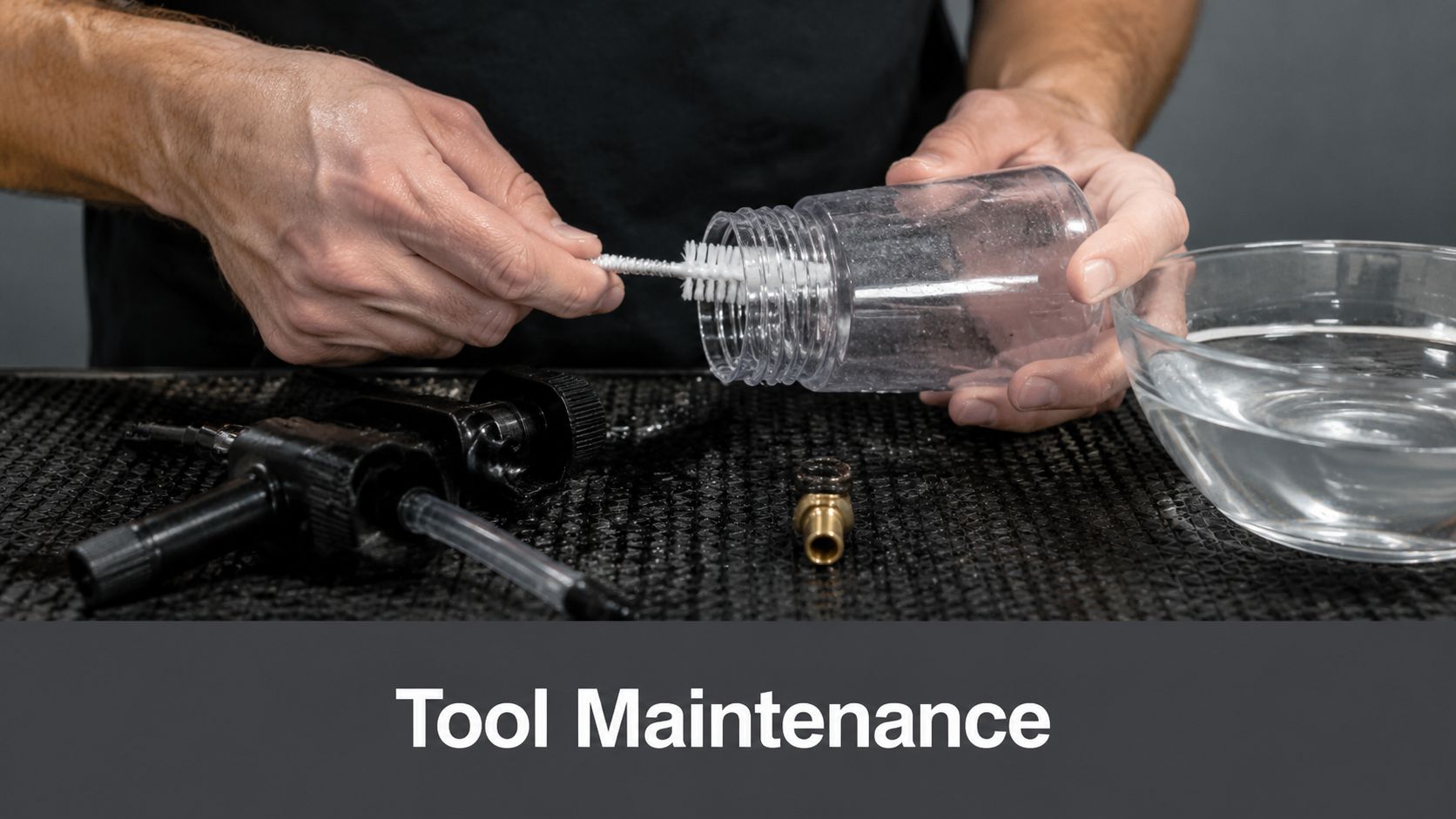
Flush it right after the wash
Do the cleanup while the gun is still wet.
Empty the bottle, add clean water, and run the foam gun until the output is fully clear. Then remove the bottle and rinse the parts that trap residue:
- Bottle and cap threads
- Pickup tube
- Front nozzle opening
- Any screen or mixer insert if your model uses one
That last bit matters on garden hose foam guns because the passages are small and the water supply is modest. A thin ring of dried soap inside the tip can change the draw rate enough to throw off the mix you carefully dialed in during the wash.
Fix the common failures fast
If foam falls off from one wash to the next, start with the hardware before blaming the soap.
Sudden weak foam
Check these first:
- Partial clog in the nozzle or pickup tube
- Loose fitting pulling air into the system
- Bottle cap not fully seated
- Residue inside the dial or mixer path
Uneven spray pattern
That usually points to one of three things:
- Debris at the tip
- Mineral buildup from hard water
- An internal nozzle piece knocked slightly out of position after rinsing or storage
I see this a lot with hose guns that live in a garage cabinet all season. The owner keeps richening the bottle mix, but the actual problem is a restriction in the foam path.
Store it dry and out of heat
Drain the bottle. Let the canister and pickup tube air-dry. Keep the gun out of direct heat so seals stay pliable and leftover soap does not bake onto the internals.
A soft detailing brush or small utility brush is enough for the bottle threads, cap grooves, and vented areas around the head. The same maintenance logic applies to other airflow and spray tools around the house. This guide on how to clean bathroom exhaust fans shows the same basic principle. Performance drops when residue is allowed to harden inside narrow passages.
Treat maintenance like part of the wash
Good foam starts before the trigger gets pulled, and it lasts only if the gun goes away clean.
For a garden hose foam gun, maintenance is part of performance tuning, right alongside mix ratio, nozzle setting, and working with the water pressure you have at home. If the gun suddenly needs a richer mix than it needed last month, assume buildup first. Clear the restriction, rinse the internals, and test with plain water before changing anything else.
Foam Gun Performance FAQs
Why is my foam still weak after trying everything
Go back to the full chain and test one variable at a time. Start with plain water output. Then check for leaks, a blocked pickup tube, dried soap in the nozzle, and a bottle mix that's too lean for a hose-fed system.
If all of that checks out, look at the environment. Hot panels, direct sun, and hard water can make decent foam look worse than it really is.
Can I use dish soap in my foam gun
You can physically put it in the bottle, but that doesn't make it a good idea for vehicle washing. Dish soap isn't designed around automotive paint care, wash lubrication, or existing wax and sealant layers.
Use a car shampoo that matches the job. Maintenance wash soap for regular washes. Prep soap for stronger cleaning.
How is a garden hose foam gun different from a pressure washer foam cannon
A hose foam gun relies on garden hose supply, so tuning matters more. You have less pressure reserve to hide a weak mix, poor nozzle position, or a flow restriction. A pressure washer cannon can produce denser foam with more force, but it also changes the whole setup and workflow.
A hose gun is simpler, faster to grab, and easier for routine washes. It just needs tighter control over the basics.
Can I use a foam gun on things other than my car
Yes, as long as the surface and soap make sense together. People use them on trucks, RVs, boats, patio furniture, camping gear, and some exterior household items. The same rule applies every time. Match the soap to the surface, then rinse thoroughly.
Why does my bottle empty so fast
Usually because the dial is set too rich, the bottle mix started too strong, or you're holding the trigger open while moving between panels. Rich output has a place, especially for dirty lower sections, but if you use maximum draw for the entire vehicle you'll burn product quickly.
Does thicker foam always clean better
No. Better foam is foam that sticks evenly, stays wet long enough to do useful work, and rinses clean. Some soaps make dramatic foam with less cleaning bite. Others clean well without making the thickest blanket.
Judge the result on the paint, not just the look in the air.
If you want a hose-fed setup built around this style of washing, SwiftJet offers a garden hose foam gun format that focuses on simple connection, trigger control, and bottle-fed foam application. The payoff comes from using it with a repeatable setup, a tuned mix, and a clean nozzle. That's what turns a foam gun from a novelty into a dependable wash tool.
