

Your car is dusty, the wheels are grimy, and you want it clean today. But you live in an apartment, your neighborhood has water restrictions, or you prefer not to drag out a hose, bucket, wash mitts, drying towels, and half your Saturday.
That’s where a no wash car wash starts to make sense.
The phrase sounds wrong the first time you hear it. Car washing without a full wash setup seems like a shortcut. Sometimes it is. Sometimes it’s a smarter method. The difference comes down to the condition of the vehicle, the chemistry you use, and how disciplined you are with your towels.
The Future of Car Washing is Here and It Uses Almost No Water
A lot of car owners still think the only proper wash involves running water and a driveway. That works if you have the space, the time, and no restrictions. Plenty of people don’t.
Apartment dwellers often have nowhere to wash. RV travelers may be cleaning at campsites with limited access to water. Busy owners just want to remove dust, pollen, fingerprints, and light road film without turning it into a project. That’s exactly why no wash methods have moved from niche detailing talk to mainstream car care.
The market shift is real. The global waterless car wash products market reached USD 1.82 billion in 2024, and DIY consumers are projected to capture 57% of the waterless car wash kits market by 2026, according to Fact.MR’s waterless car wash kits market report.
That doesn’t surprise me. When a method saves time, avoids a hose, and works in places where a traditional wash isn’t practical, drivers adopt it fast.
Why this appeals to normal car owners
A no wash car wash fits real life.
- Apartment parking lot use: You can clean safely without runoff.
- Water-restricted areas: You avoid the waste of a standard hose wash.
- Quick maintenance washes: Light contamination doesn’t always justify a full setup.
- Travel and camping: Portable cleaning matters when your vehicle is also your gear hauler or temporary home.
There’s also a broader shift toward eco-friendly cleaning solutions in home and vehicle care. People want products and methods that cut waste without giving up results.
A clean car doesn’t always require more water. It requires the right method for the dirt that’s actually on the paint.
That last part matters. No wash methods are excellent in the right conditions. They are not magic. If the vehicle is heavily caked in mud or gritty winter sludge, forcing a waterless wipe-down is how people create scratches and then blame the product.
Understanding How No Wash Car Washes Safely Lift Dirt
A dusty black hood in direct sun is where people lose confidence in no-wash methods. The panel feels hot, the dust looks harmless, and one rushed wipe can put fine marring into the clear coat.
The safe version depends on two things. The dirt has to be light enough for contact washing, and the product has to leave enough lubrication between the towel and the paint.
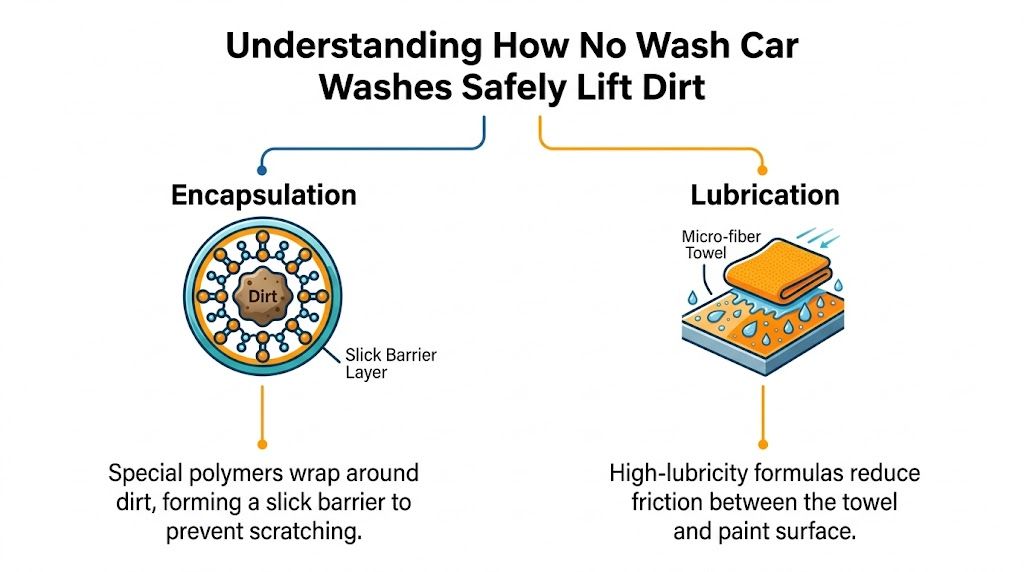
Encapsulation is what makes the method possible
Good no-wash products do more than wet the surface. They soften light contamination, surround small particles, and help pull them into the towel instead of letting them skate across the paint.
That is the core safety mechanism.
On a lightly dusty vehicle, this works well. On a panel with gritty road film, caked pollen mixed with moisture, or wind-blown sand, the margin for error gets much smaller. The product can only do so much if the contamination is sharp, heavy, or bonded hard to the surface.
Lubrication is what keeps contact from turning into friction
Encapsulation helps separate dirt from the paint. Lubrication helps the towel move with less drag while that dirt is being picked up.
Both matter at the same time. If the surface starts drying too fast, especially in heat or wind, lubrication drops off quickly. That is one reason waterless washing in direct sun is risky even with a quality product. The chemistry may be right, but the working conditions are wrong.
I treat weather as part of the process, not an afterthought. Hot panels, steady wind, and low humidity shorten your safe working window, so smaller sections, more product, and more towels become necessary.
Chemistry does the cleaning. Technique protects the paint.
No-wash products are built for controlled contact cleaning. Glass cleaner, quick detailer, or diluted soap do not give the same cushion or dirt-handling ability.
For readers who also care about low-pressure exterior cleaning beyond cars, the principles of soft washing explain the same broader idea. Good cleaning comes from matching chemistry, dwell time, and surface conditions instead of forcing the job with pressure or scrubbing.
A simple rule helps here. If the dirt cannot be safely lifted with a soft, well-lubricated wipe, it needs a wetter process, a pre-rinse, or a full wash.
Where no-wash methods work best
No-wash products are a strong fit for maintenance cleaning on:
- Light dust and pollen
- Fingerprints and smudges
- Fresh bird droppings after they have been softened
- Light road film on well-kept vehicles
- Coated or garage-kept cars between deeper washes
They are a poor fit for:
- Heavy mud
- Packed grit along rocker panels
- Salt buildup
- Sand from windy conditions
- Undercarriage contamination on trucks, SUVs, and RVs
That last point gets ignored too often. Body panels are only part of the job. A no-wash product can maintain painted surfaces, but it will not replace proper cleaning for wheel wells, suspension components, steps, mud flaps, or the undercarriage of a truck or RV. Modern no-rinse and low-water tools can close some of that gap, but heavy grime underneath still calls for a method with more flushing power.
Paint safety comes from honest assessment. If the vehicle is lightly dirty, no-wash chemistry can lift contamination safely. If the dirt load is too high, the safest decision is to stop wiping and switch methods.
Waterless vs Rinseless Which Method Is Right for You
Individuals don’t need a debate. They need a decision.
If your car has a light layer of dust after sitting for a few days, waterless is usually the faster answer. If it has a more noticeable film from commuting, rain residue, or a road trip, rinseless gives you more margin for safety.
The short version
Waterless is the convenience specialist. Rinseless is the flexibility specialist.
One is ideal when the car is already fairly clean. The other handles more grime with less risk because you’re using a wetter process and more solution in play.
Waterless vs. Rinseless Wash Comparison
| Criterion | Waterless Wash | Rinseless Wash |
|---|---|---|
| Best for | Light dust, fingerprints, fresh light contamination | Moderate grime, road film, dirtier daily drivers |
| Setup | Spray bottle, towels | Bucket, rinseless solution, towels or wash media, drying towel |
| Water use | Minimal product application only | Small amount of mixed solution, but no free-flowing rinse |
| Speed | Faster for touch-up cleaning | Slightly slower, but safer on dirtier paint |
| Apartment friendly | Excellent | Good, if you can manage a bucket setup |
| Risk level | Higher if the car is dirtier than you think | Lower margin of risk on moderate contamination |
| Best weather window | Shade or cool panels | Also prefers shade, but gives you more working time |
| Large vehicles | Can become towel-intensive fast | Often easier to manage on trucks and SUVs |
| Wheels and lower panels | Limited for anything more than light dust | Better starting point for dirtier sections |
| Who should choose it | Owners doing frequent maintenance washes | Owners who want a safer all-around no-rinse process |
When waterless is the better choice
Choose waterless if the paint looks dusty, not dirty.
That means no visible grit line behind the wheels, no heavy film on the tailgate, and no crusted contamination along rocker panels. A garage-kept sedan, a weekend car, or a coated daily driver often fits this category.
Waterless also suits owners who want to clean often. Frequent light maintenance is where it shines.
When rinseless wins
Rinseless is the smarter pick when you’re on the fence.
If you’re asking, “Is this maybe too dirty for waterless?” it usually is. Rinseless gives you more lubrication, more media options, and a more forgiving process.
If waterless is a scalpel, rinseless is a chef’s knife. Both are useful. One just handles a wider range of jobs.
Conditions matter as much as dirt level
A lightly dusty car in direct sun can be trickier than a slightly dirtier one in cool shade.
Wind, heat, and panel temperature change how fast products flash and how controlled your wipe can be. On large vertical surfaces like vans, trucks, and RVs, that matters even more because product can evaporate or drift before you’ve wiped the section properly.
That’s why method choice isn’t just about the dirt. It’s also about your working environment, how many towels you have ready, and whether you can keep each section wet long enough to clean it safely.
The Dos and Donts for a Scratch-Free Finish
A scratch-free no wash comes down to restraint.
The product matters, but the primary difference is judgment. Knowing when to wipe, when to switch towels, and when to stop saves more paint than any label on the bottle.
Do start with an honest dirt check
Inspect the vehicle before the first spray.
Check the lower doors, rear bumper, tailgate, rocker panels, and the area behind the wheels. If the surface shows caked grit, sand-like contamination, or heavy road film, a no wash approach is already on shaky ground. I treat that kind of buildup as a warning sign, especially on dark paint where towel marks show fast.
This matters even more on trucks, vans, and RVs. Their lower panels and rear surfaces carry more grime, and that extra mass of dirt changes what is safe.
Don’t starve the panel of lubrication
A dry panel and a loaded towel are how paint gets marred.
Spray enough product to wet the section evenly so dirt can soften and lift into the towel. If sun or wind cuts your working time short, reduce the section size right away. Half a door is often safer than a full door. On hot panels, even less.
Saving product rarely saves money if the result is polishing work later.
Do use plenty of clean towels
Towel management is where careful owners separate from careless ones.
Use a stack of clean microfiber towels and change them sooner than feels necessary. Fold each towel into manageable sections so you always have a fresh face available. Once a side shows dirt, stop using it on paint.
If you are still sorting out what kind of towel works best, this guide to choosing microfiber towels for cleaning is a useful reference. Soft fibers, decent absorbency, and consistent construction matter more than a bargain price.
Don’t let one towel do every job
Cross-contamination is a common mistake.
Keep paint towels separate from anything used on glass, jambs, lower panels, wheels, or step bars. On larger vehicles, I also separate upper-body towels from lower-body towels because the contamination level is rarely close to the same.
A towel that touched gritty rocker panels has no business going back on a hood.
Do work in small sections and wipe with control
One controlled section at a time is safer than broad, fast passes across half the vehicle.
Start with the cleaner areas. Roof, glass, hood, upper doors, then the dirtier lower sections. Use straight, light passes. The towel should lift contamination away from the surface, not grind it across the clear coat. Follow with a dry or secondary towel only after the dirt has been removed.
Don’t scrub stuck contamination
Bird droppings, bug remains, and hardened spots need time, not force.
Let the product dwell. Reapply if needed. Use light pressure and short passes. If contamination still resists, stop and switch methods. That is especially important on front caps of RVs, truck mirrors, and bug-heavy highway vehicles where residue can bake on hard.
Forcing a no wash process past its limit is where avoidable scratches happen.
Do adjust for sun and wind
Good technique indoors can fall apart outside.
Direct sun shortens dwell time and raises panel temperature. Wind blows dust onto wet surfaces and can dry product before you complete the wipe. In those conditions, work the shaded side first, keep more towels within reach, and clean smaller sections than you would in a garage. Large vertical panels on trucks and RVs are the first place this becomes obvious because product can flash before you make a second pass.
Don’t chase every dirty area in one session
Paint safety beats completeness.
If the upper body is lightly dusty but the lower half is coated in road grime, clean the safe areas and leave the rest for a rinseless or traditional wash. The same rule applies underneath. Undercarriages, wheel wells, and suspension areas on trucks and RVs usually need different tools and more flushing action than a towel-based no wash can provide safely.
Watch the process in motion
If you’re new to this style of washing, seeing towel handling and panel workflow helps.
Do know when to stop
A careful partial clean is better than a full-vehicle wipe that leaves swirls behind.
That judgment is part of doing this well. The best no wash results come from staying inside the method’s limits, especially in bad weather, on hot paint, or on larger vehicles with dirtier lower sections.
Choosing the Right Tools for Your No Wash Kit
A no wash kit succeeds or fails on contact points. The towel touching the paint, the way product lands on the panel, and how clean tools stay between passes matter more than owning a long list of supplies.
Start with the pieces that control friction and contamination.
The core kit
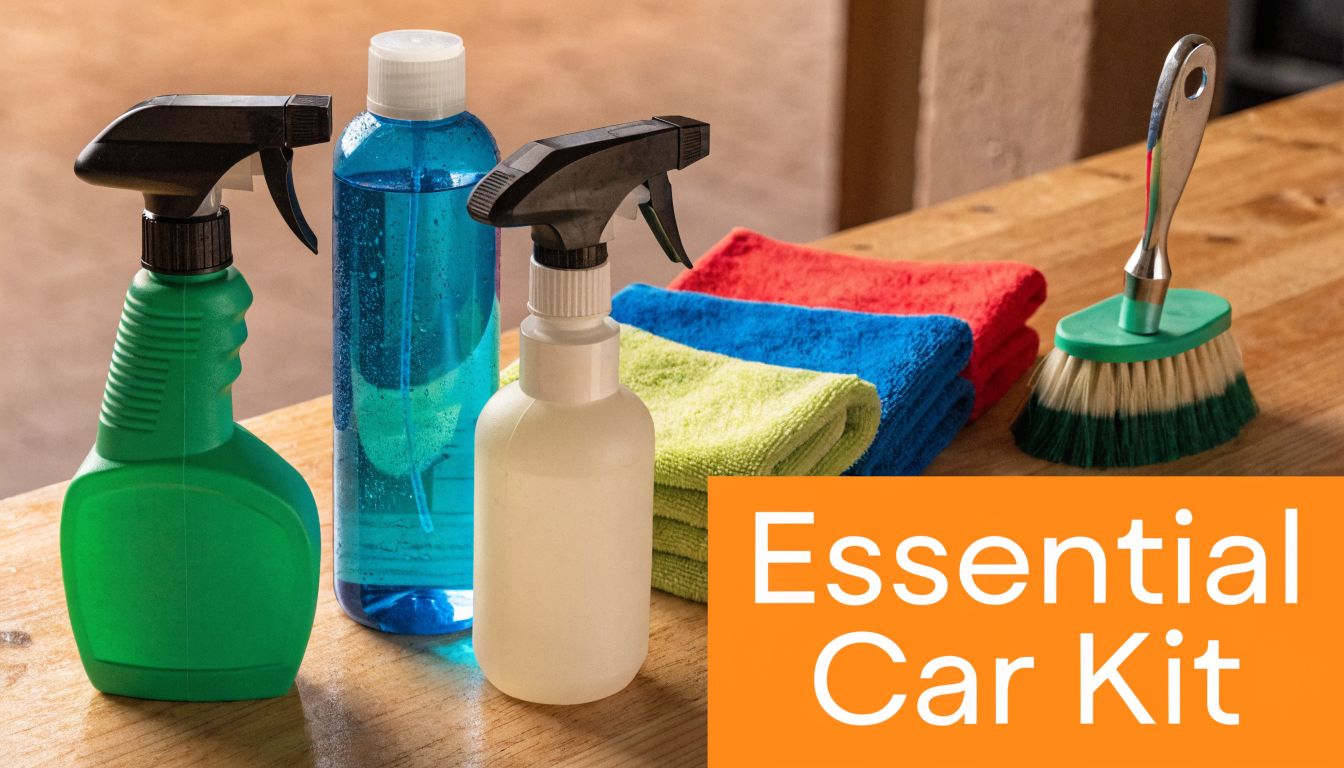
A practical setup usually includes:
- High-quality microfiber towels: Use plush, paint-safe towels with enough pile to trap light dirt away from the surface.
- A reliable spray bottle: An even spray pattern helps you wet the panel and the towel consistently.
- Separate towels for glass, paint, and dirtier areas: Lower panels and jambs should never share towels with the hood or doors.
- A rinseless bucket setup if that is your preferred method: It gives you a cleaner wash media cycle and more control on moderately dirty vehicles.
Put more of the budget into towels
Cheap microfiber usually shows its problems fast. Stiff edges, inconsistent nap, and poor absorbency all raise the odds of dragging residue across the paint instead of lifting it cleanly.
Good towels give you a wider safety margin, especially on black paint, hot panels, and dusty daily drivers. If you want help comparing pile, weave, and intended use, this guide on microfiber towels for cleaning is a useful reference.
Keep more towels on hand than you think you need. On larger vehicles, that single habit prevents a lot of bad decisions.
Where foam tools actually help
Spray bottles work well on sedans with light dust. They get less efficient on tall trucks, vans, and RVs, especially in sun or wind where coverage dries unevenly and broad panels need faster, more uniform wetting.
A foam tool can help close that gap. The point is not extra theatrics. The point is better dwell and more complete pre-soak on vertical panels, bug-heavy front ends, mirrors, running boards, and other awkward areas where a hand sprayer leaves dry spots.
Useful benefits include:
- Better cling on tall vertical panels
- More even product spread on wide sections
- Longer working time before the surface starts to dry
- Less repeated trigger pulling on large vehicles
That last point matters more than people expect. Fatigue leads to rushed wiping, and rushed wiping is where paint gets marked up.
The upgrade that solves a real problem
For bigger vehicles or maintenance washes in less-than-ideal conditions, a hose-end foam gun is a sensible upgrade. It does not replace careful towel technique, and it does not turn a dirty lower section into a safe waterless wipe. It improves the pre-treatment stage so grime softens earlier and coverage stays more consistent.
I recommend it most for owners dealing with campers, RVs, work trucks, or SUVs with large lower panels that collect more road film than the upper body. It is also useful when washing outside, where direct sun and wind shorten your working window and punish uneven application.
Tackling Tough Jobs Beyond Body Panels
Most no wash tutorials stop at hoods and doors. Real vehicles get dirty in places that are harder to clean and easier to neglect.
Wheels, glass, and trim need different expectations
Wheels are usually the dirtiest part of the vehicle. If they’re lightly dusty, a no wash approach can work with dedicated towels and gentle chemistry. If they’re loaded with brake dust and grime, treat them as a separate job.
Glass is simpler, but it punishes sloppy towel use. Use a dedicated towel and shorter wipe paths. Interior plastics can also be cleaned with low-moisture methods, but they don’t need the same heavy lubrication strategy as paint.
The undercarriage problem people skip
Undercarriages, wheel wells, running boards, and lower suspension areas are where no wash advice usually falls apart. That’s a mistake, especially for trucks, campers, and winter-driven vehicles.
According to this undercarriage wash reference, 28% of vehicle breakdowns in the US and Canada are linked to undercarriage corrosion, and foam application can help cleaning solutions dwell on salt and grime in ways a simple spray bottle can’t.
That doesn’t mean a no wash method fully replaces high-pressure cleaning underneath. It means foam can extend your maintenance options when a full wash isn’t practical.
A better approach for lower, dirtier zones
Use foam or a heavier pre-treatment on:
- Wheel wells
- Running boards
- Mud flaps
- Lower rocker panels
- Accessible underbody edges
Let the product sit briefly, then wipe only where the contamination is manageable. For stubborn messes like dried bird bombs on upper panels before they etch, this guide on how to remove bird poop from car is a useful companion because spot contamination often needs a different tactic than whole-car washing.
A no wash car wash works best when you stop trying to make one technique do every job on the vehicle.
Embrace a Smarter Way to Keep Your Car Clean
A no wash car wash isn’t a gimmick, and it isn’t a replacement for every traditional wash. It’s a modern maintenance method that works extremely well when you match the process to the condition of the vehicle.
Use waterless when the car is lightly soiled and you need speed. Use rinseless when contamination is more than light and you want a wider safety margin. In either case, paint safety comes from restraint, lubrication, clean towels, and honest judgment.
That matters even more if your vehicle has protection on it already. If you’re maintaining a coated finish, this overview of automotive ceramic coating helps frame why gentle maintenance methods are worth learning in the first place.
The bigger takeaway is simple. You don’t need to choose between a dirty car and a full wash setup every time. There’s a middle ground that saves water, fits apartment life, works for travelers, and keeps a well-maintained vehicle looking sharp.
If you want an easier way to pre-soak larger panels, clean trucks and campers more efficiently, and make at-home washing less of a chore, take a look at SwiftJet. Its hose-connected foam gun is built for fast, controlled foam application and makes a practical addition to a modern car care kit.
