

A customer is waiting beside a dusty SUV, clouds are moving in, and the parking area has no convenient drain. Your water tank is limited, the hose connection needs an adapter, and the foam cannon must work as soon as you pull the trigger. In mobile detailing, a small delay can turn a profitable appointment into a rushed job.
The best mobile car wash tips aren't isolated product tricks. They form a connected workflow that protects the paint, controls water use, keeps equipment ready, and gives the customer a predictable experience. A professional mobile setup may use only 3 to 5 gallons per vehicle, while a home driveway wash can use 80 to 140 gallons, according to mobile car wash water-use guidance. That difference makes every rinse, spray pattern, and setup decision matter.
Use the sequence below as an operating framework: remove loose grit, create controlled foam coverage, wash with clean media, manage wastewater, schedule realistically, reset equipment, communicate clearly, and adapt to the weather.
1. Pre-Rinse Technique for Maximum Foam Efficiency
A good pre-rinse removes the loose material that causes the most avoidable paint contact. Dust, road film, sand, and loose mud should come off before your wash mitt touches the surface. If you apply foam over a layer of loose grit and immediately scrub, the mitt can drag that grit across the clear coat.
Start with a low or moderate water flow and work from the roof downward. Let water cascade over the panels instead of blasting one area at close range. The roof, glass, hood, upper doors, wheel arches, rocker panels, and lower bumpers each deserve deliberate coverage because lower sections usually hold the heaviest contamination.
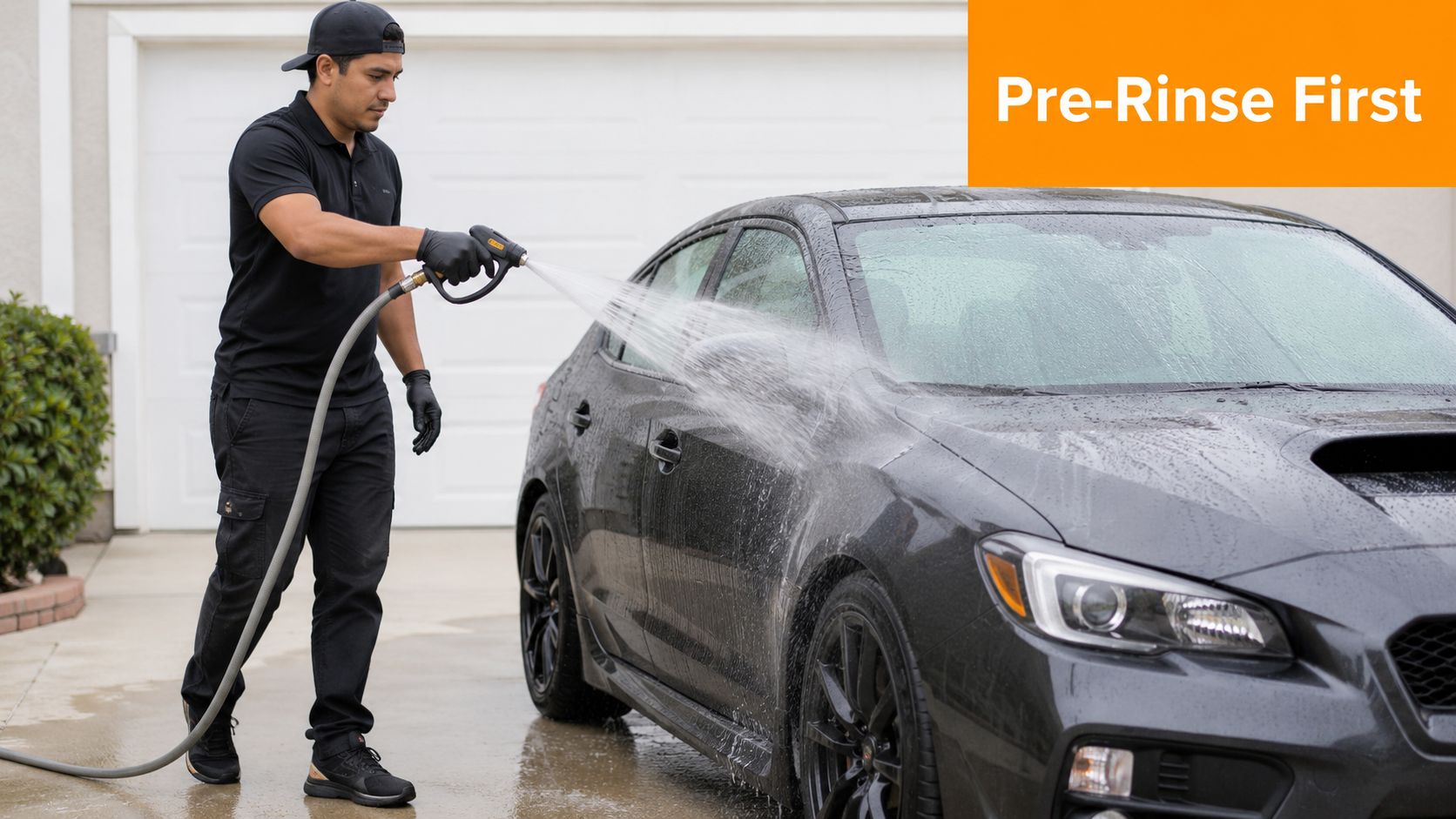
Control the rinse instead of chasing pressure
High pressure isn't automatically better. It can force water into seals, scatter dirt onto clean sections, or create unnecessary splash in a tight apartment or office parking area. Use enough flow to move loose debris, then reserve stronger agitation for areas that really need it, such as wheel wells and heavily soiled lower panels.
A pre-rinse also makes your foam more useful. The foam can spend its dwell time loosening bonded road film rather than covering particles that could have been removed with water alone. For hose setup and vehicle-washing technique, SwiftJet's guide to powering a car wash provides a useful reference for connecting a garden hose and controlling the wash process.
Practical rule: If the vehicle is visibly gritty, don't start hand washing until the rinse has removed the loose surface contamination.
In a water-restricted location, choose the rinse method carefully. A controlled low-water pre-rinse can be appropriate for light dust, but embedded grit, heavy mud, and safety-critical areas still need enough flushing to avoid dragging contamination across the paint.
2. Two-Bucket Wash Method for Swirl-Free Results
The two-bucket method separates clean wash solution from the water used to release dirt from your mitt. One bucket holds the soapy solution. The other holds rinse water. After cleaning a small panel, rinse the mitt in the clean-water bucket, inspect it, and reload it with wash solution before returning to the vehicle.
This separation doesn't make the mitt clean by itself, so use your eyes and hands. Rub the mitt against a grit guard or the bucket wall with light pressure, then check for trapped particles. If the mitt still feels gritty, switch to a clean mitt rather than trying to save a few seconds.
Wash in sections and protect the lower panels
Keep the wash motion organized. Clean upper panels before rocker panels, bumpers, and wheel areas. Those lower surfaces collect the most abrasive material, so they should have dedicated media whenever possible. Don't carry a mitt from a dirty wheel area back to the hood.
Position the buckets where you can reach them without dragging hoses across the vehicle. A mobile detailer loses time through small interruptions, such as walking around the car repeatedly or setting a mitt on a contaminated surface.
- Use separate media: Reserve different mitts or brushes for paint, wheels, tires, and heavily soiled trim.
- Refresh dirty water: If rinse water becomes visibly loaded with grit, replace it rather than treating the bucket as a permanent filter.
- Keep the solution consistent: Mix soap thoroughly before the wash begins so the mitt receives even lubrication.
- Inspect before each panel: A quick visual check prevents a trapped particle from creating a long correction job later.
The method works best after a thorough foam pre-wash, not as a substitute for one on a badly contaminated vehicle. For choosing and caring for wash media, SwiftJet's microfiber wash mitt guide is relevant to this part of the workflow.
3. Strategic Foam Application with Cannon Systems
Foam should cover the vehicle systematically, not randomly. Begin at the top, move across the upper sides, and finish with the lower panels. This sequence gives the cleanest areas the longest controlled dwell time while gravity carries loosened material downward.
Start with mirrors, door handles, and narrow areas that are easy to miss. Then apply overlapping passes across the roof, glass, hood, doors, and rear panels. Keep the trigger closed while repositioning the hose or moving to the next section. Continuous spraying wastes solution and can leave some panels with too little dwell time while other areas receive excessive product.
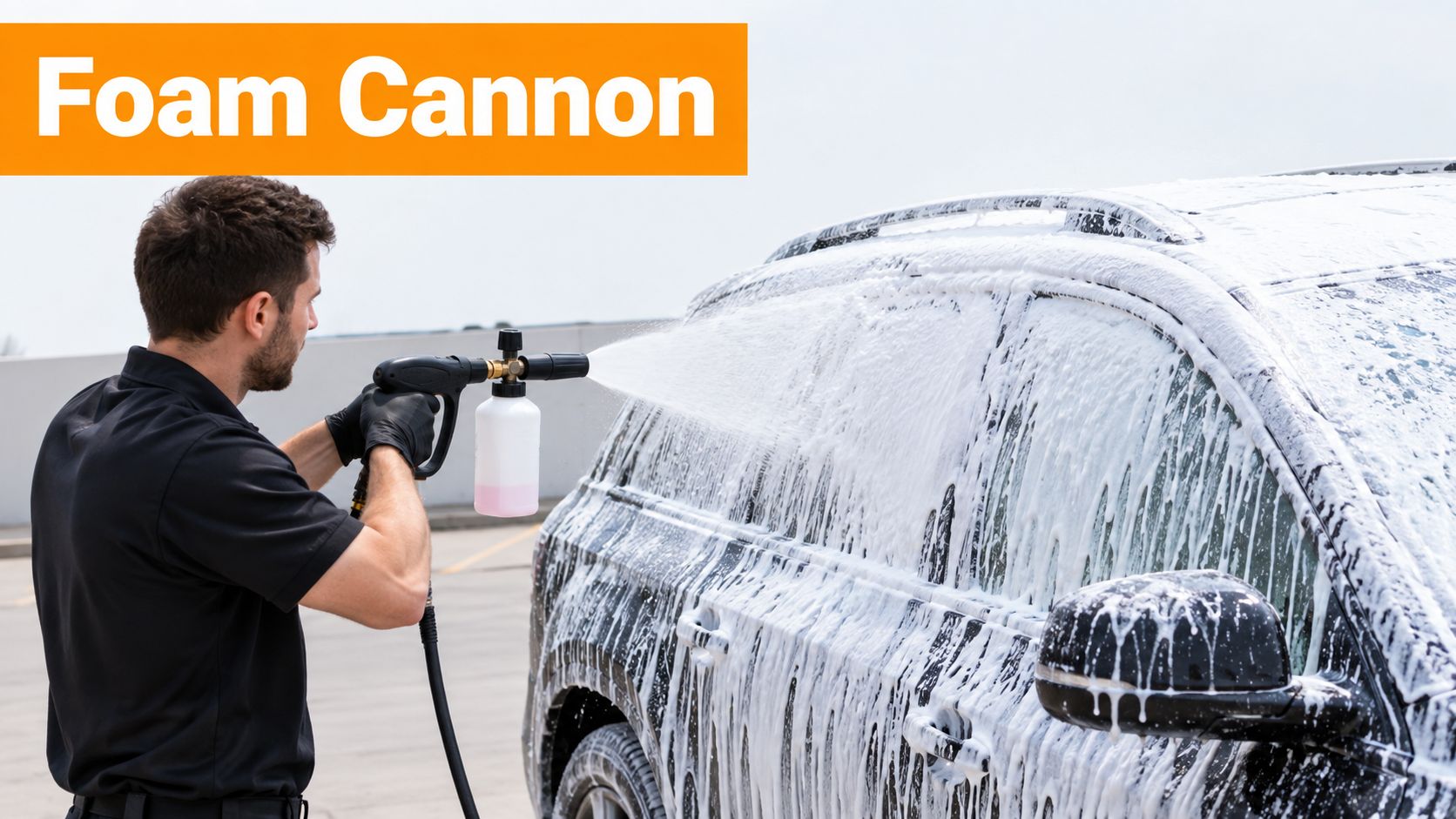
Adjust foam to the vehicle and conditions
Thicker foam isn't always stronger cleaning. Concentration, water hardness, temperature, surface contamination, and the product itself all affect performance. If foam runs off immediately, adjust the mixture or application technique. If it dries on the panel, reduce the amount applied, work in smaller sections, or change the appointment time.
Give the foam enough time to loosen contamination, but never allow it to dry on the paint. Shade, wind, panel temperature, and humidity matter more than a fixed timer. The operator should watch the surface rather than follow a rigid routine.
A hose-connected tool such as the SwiftJet foam gun can fit a portable setup because its on/off trigger allows the operator to stop application between panels. These foam application methods explain why pattern, coverage, and dwell control matter more than producing a large amount of suds.
Use a clean rinse after the dwell period, again working from the top down. If the foam reveals bonded tar, iron contamination, or heavy mud, pause and choose a suitable treatment instead of expecting foam alone to solve every problem.
The practical test is simple. After rinsing, the surface should feel cleaner without requiring aggressive pressure from the wash mitt. If it doesn't, improve the pre-rinse or chemistry before increasing hand pressure.
4. Water Recycling and Sustainable Mobile Operations
Water control starts before the first spray. Confirm whether the site permits exterior washing, where runoff can go, and whether the customer has access to a drain, hose, or power outlet. Apartment complexes, office lots, and drought-restricted cities often require a low-water or waterless approach, but that doesn't mean every vehicle is suitable for one.
Waterless methods can use 70% to 90% less water than conventional washing, according to coverage of waterless mobile car washing. They work best when contamination is light and the product provides enough lubrication for controlled wiping. They aren't the right choice for thick mud, embedded grit, or surfaces where wiping could spread abrasive material.
Match the method to the contamination
A practical decision looks like this:
- Light dust and recent road film: A waterless product may be suitable when you use abundant lubrication and clean microfiber towels.
- Moderate grime: Use a low-water pre-rinse or rinseless process, then wash with carefully managed media.
- Heavy mud and grit: Use a traditional pre-rinse or controlled pressure wash before any contact wash.
- Restricted runoff sites: Capture wastewater where required and follow local disposal rules instead of allowing dirty water to enter storm drains.
Portable catch mats, recovery vacuums, filtration equipment, and onboard tanks can make a self-contained service more reliable. Recycled water may be appropriate for an initial rinse or another low-risk stage, while fresh, clean water is preferable for the final rinse when spotting and residue matter.
Don't market sustainability as a vague promise. Explain the method you use, the limits of that method, and how you handle wastewater. Customers trust a clear process more than a broad environmental claim.
5. Time Management and Service Efficiency Scheduling
A mobile route fails when the schedule assumes every vehicle, parking space, and weather window will behave perfectly. Build appointments around the work itself, not just the vehicle type. A compact car with neglected wheels may take more attention than a larger vehicle that receives regular maintenance.
Group nearby jobs whenever possible and leave room for travel, parking, hose setup, payment, and unexpected contamination. Route-planning software can help field teams coordinate appointments and locations. Recepta.ai's field service scheduling guide is a useful starting point for evaluating scheduling workflows.
Estimate by service conditions
Record the actual duration of each appointment. Note vehicle size, soil level, interior condition, access problems, water availability, and whether the customer added services on site. After several jobs, you'll have a more useful planning baseline than a generic service promise.
Use a simple booking intake:
- Vehicle details: Ask for make, body style, color, and recent use.
- Condition photos: Request images of wheels, lower panels, seats, and cargo areas.
- Site information: Confirm parking access, shade, water, power, drainage, and building rules.
- Customer availability: Ask whether the owner must remain present or can leave the vehicle accessible.
- Weather sensitivity: Tell the customer what happens if rain, wind, or extreme heat affects the appointment.
A waiting customer notices lateness before noticing small improvements in foam thickness. If you're running behind, send a message early and give a realistic arrival window. Don't promise a fast job if the vehicle requires decontamination, pet-hair removal, stain treatment, or heavy mud removal.
The market context supports convenience-led service. One industry summary reports that about 60% of customers prefer at-home detailing and 30% choose mobile service, as described in mobile detailing customer preference data. That convenience only becomes a competitive advantage when arrival times and service expectations are dependable.
6. Equipment Maintenance and Portable Supply Management
Your equipment checklist should be as routine as your wash sequence. Before leaving for the route, test water flow, inspect connectors, confirm product levels, and check that every tool has a designated storage place. A foam gun that worked last week can still fail when a clogged filter, damaged O-ring, or blocked nozzle meets a customer's vehicle.
Clean the foam cannon after use. Product residue can restrict the internal passage and change the spray pattern. Inspect hoses and fittings for leaks, kinks, and pressure loss, then keep adapters, spare seals, and basic hand tools in a labeled case rather than loose in the van.
Separate clean and dirty supplies
Microfiber management deserves its own system. Store clean towels in closed containers, place used towels in a separate bag, and never return a used towel to the clean stack. Wash microfiber without fabric softener, follow the towel manufacturer's care instructions, and dry it in a way that prevents lint and contamination.
Keep enough wash media to complete the route without reusing a compromised mitt. Carry separate towels for glass, paint, wheels, interiors, and drying. Color coding can reduce mistakes when you're working quickly.
A clean tool is part of the service, not an optional extra. Customers may not know which nozzle you used, but they'll notice residue, streaks, or a tool that stops working beside their vehicle.
Maintain a written log for foam equipment, hoses, filters, tanks, pumps, and electrical connections. Record the date, the issue, the action taken, and any replacement part. This helps you spot recurring failures before they interrupt an appointment.
Portable operators also need a recovery plan. Carry absorbent materials, spare connectors, extra batteries where applicable, backup towels, and an alternative cleaning method for a failed water source. A small amount of redundancy protects customer trust when the job site doesn't cooperate.
7. Customer Relationship Management and Upselling Techniques
Retention starts with a precise service record. Save the vehicle details, paint color, previous concerns, products used, customer preferences, parking instructions, and areas requiring special care. The next appointment then runs faster, and the customer does not need to repeat the same information.
Follow up with useful guidance instead of a generic sales message. Send a short care note covering when the vehicle can be driven, how to handle light dust, and which signs indicate that another service is due. Before-and-after photos document the result, particularly when the customer was away during the appointment. Consistent notes, clear proof of work, and practical aftercare build trust between visits.
Recommend the next useful service
Upselling works when it addresses a visible problem. If the exterior is clean but the cabin has stains, offer interior treatment. If recurring contamination keeps returning, discuss a maintenance plan or protective service. Recommend a ceramic coating, tire treatment, or paint correction only when the vehicle's condition and the customer's priorities justify it.
Recurring service can suit commuters, families, company vehicles, and ride-share operators. The global mobile car wash service market is projected to reach about $13.6 billion by 2030, up from $9 billion in 2024, with a reported 7.1% compound annual growth rate, according to Grand View Research's mobile car wash market analysis. That projection does not guarantee results for an individual operator, but it supports building repeatable service relationships rather than relying only on one-off bookings.
Use a CRM such as Housecall Pro, Jobber, or another field-service platform. This guide to CRM for field teams can help with setup. Track reminders, vehicle notes, completed services, and follow-up dates in one place. Ask for a review after a successful job, respond professionally to concerns, and make referrals easy. A customer who understands the process is more likely to book again than one who only remembers a clean vehicle for a short time.
8. Weather Adaptation and Seasonal Service Protocols
Weather changes the chemistry, the working time, the runoff, and the customer's perception of the result. Direct sun can dry foam before it has loosened contamination. Wind can carry spray onto nearby vehicles or buildings. Cold conditions can reduce product performance and create freezing risks in hoses, pumps, and fittings.
Check the forecast before confirming the route, then check conditions again on the morning of service. If rain is likely, explain whether the appointment can proceed, be shortened, or be moved indoors. Don't apply a last-minute cancellation policy inconsistently. Clear communication protects both the schedule and the relationship.
Change the process, not just the appointment
In hot weather, work in smaller sections and keep panels cool where possible. Reduce foam coverage when the product begins drying too quickly. In cold weather, protect water lines, allow chemistry more working time, and avoid leaving wet surfaces exposed to freezing conditions.
Hard water can leave mineral spots and reduce the apparent performance of cleaning products. If the local water produces spotting, test a different dilution, use a suitable final-rinse method, and dry panels promptly. Record which products and techniques work under local conditions rather than changing several variables at once.
Wind requires controlled application. Keep the nozzle close enough to reduce drift, use the trigger to stop spraying while repositioning, and avoid washing beside open windows, freshly painted surfaces, or pedestrians. In a storm-prone area, offer weather-compatible alternatives such as interior cleaning, vacuuming, or protected maintenance work when an exterior wash isn't sensible.
Weather adaptation is a quality-control decision. Rescheduling a risky exterior wash is better than delivering dried foam, water spots, or runoff on a neighboring property.
Mobile Car Wash Tips, 8-Point Comparison
| Technique | Implementation Complexity 🔄 | Resource Requirements ⚡ | Expected Outcomes 📊 | Ideal Use Cases | Key Advantages & Tip ⭐💡 |
|---|---|---|---|---|---|
| Pre-Rinse Technique for Maximum Foam Efficiency | Low 🔄 | Garden hose, adequate water supply (low cost) ⚡ | Improves foam efficiency; ~30% product savings; adds 2–3 min per vehicle 📊 | Mobile detailers, DIY, RV owners | ⭐⭐⭐⭐ - Reduces swirl risk; 💡Use low–medium pressure, work top→bottom |
| Two-Bucket Wash Method for Swirl-Free Results | Medium 🔄🔄 | Two 5‑gal buckets, grit guards, microfiber mitts ⚡ | Dramatically reduces swirl marks; preserves paint longevity 📊 | Professional detailers, premium service providers, careful DIYs | ⭐⭐⭐⭐⭐ - Best paint protection; 💡Replace rinse water every 3–4 vehicles |
| Strategic Foam Application with Cannon Systems | Medium 🔄🔄 | Foam cannon, proper PSI (40–80), soap concentrates ⚡ | Faster application (~40% faster); uniform coverage; lower chemical use 📊 | Mobile ops, cost‑conscious pros, client demos | ⭐⭐⭐⭐ - Fast, uniform cleaning; 💡Apply top→bottom, allow 5–10 min dwell |
| Water Recycling and Sustainable Mobile Operations | High 🔄🔄🔄 | Portable recycling unit ($2k–$10k), filters, storage space ⚡ | Reduces water use up to 80%; lower disposal and utility costs 📊 | Urban/mobile operators, eco‑focused businesses, restricted‑water areas | ⭐⭐⭐ - Major long‑term savings & branding; 💡Use recycled water for pre‑rinse only |
| Time Management and Service Efficiency Scheduling | Medium 🔄🔄 | Scheduling software, routing tools, training/time investment ⚡ | Increases throughput (e.g., +35%); reduces travel/fuel per job 📊 | Multi‑route operators, franchises, growing services | ⭐⭐⭐ - Higher revenue/hour; 💡Batch jobs geographically and add time buffers |
| Equipment Maintenance and Portable Supply Management | Medium 🔄🔄 | Maintenance time, spare parts, storage, replacement supplies ⚡ | Extends equipment life 50%+; fewer mid‑service failures; lower emergency costs 📊 | All mobile operators prioritizing reliability | ⭐⭐⭐⭐ - Consistent uptime & quality; 💡Keep maintenance logs and spare mitts |
| Customer Relationship Management and Upselling Techniques | Medium 🔄🔄 | CRM software, marketing materials, staff time for follow‑up ⚡ | Raises customer lifetime value 25–40%; predictable recurring revenue 📊 | Businesses targeting repeat customers and premium pricing | ⭐⭐⭐ - Better retention & revenue; 💡Send post‑service photos and tailored offers |
| Weather Adaptation and Seasonal Service Protocols | Medium 🔄🔄 | Weather tools, heated water options (when needed), flexible protocols ⚡ | Maintains service quality year‑round; reduces weather‑related service issues 📊 | Operations in variable climates or seasonal markets | ⭐⭐⭐ - Consistent quality across conditions; 💡Adjust dwell time & schedule around forecasts |
Turn These Tips Into a Repeatable Route
The strongest mobile car wash operation doesn't depend on one impressive product. It depends on a sequence that makes good decisions easy under pressure. Confirm the site, check the weather, inspect the vehicle, and choose the cleaning method before you open the tank or connect the hose.
Begin with the pre-rinse when the vehicle has loose grit or road debris. Use controlled flow and work from the top down. Apply foam in a deliberate pattern, keep the trigger closed while moving between sections, and watch the panels so the product doesn't dry. Foam should loosen contamination, not become a substitute for judgment.
After rinsing, use clean wash media and keep dirty water separate from your wash solution. Start with the cleaner upper panels, reserve dedicated tools for wheels and lower areas, and replace media when it becomes contaminated. Your goal isn't to create more friction. It's to remove soil while limiting the opportunities for that soil to move across the paint.
Water control should reflect the site and the vehicle. Light dust may suit a waterless or rinseless process, while heavy mud and embedded grit call for a proper pre-rinse. The water-use contrast is significant. Professional mobile detailing commonly uses 3 to 5 gallons per vehicle, compared with 80 to 140 gallons for a home wash, based on reported mobile and driveway wash usage. Still, efficiency doesn't mean ignoring wastewater rules. Check local requirements, control runoff, and explain your process clearly.
Schedule the job with those realities in mind: allow time for travel, access, setup, drying, payment, and unexpected soil. Track actual service duration and product use after each route. If appointments regularly run long, change the estimate or the service scope instead of asking the technician to work faster and sacrifice inspection quality.
End every job with a reset. Inspect the vehicle in changing light, check glass and lower panels, remove equipment from the customer's property, separate used towels, clean the foam system, and restock before the next appointment. A tool that is ready at the next stop is worth more than one that looked organized after the last stop.
Customer retention follows the same principle. Send a useful follow-up, save the vehicle notes, document any unresolved concern, and recommend the next service based on actual condition. A maintenance plan can be particularly practical for busy households, office workers, fleets, and drivers who value on-site convenience.
Test one workflow change at a time. You might improve the pre-rinse on one route, change foam dilution on another, or adjust appointment buffers after reviewing your records. Observe cleaning quality, water consumption, service duration, weather conditions, and customer feedback. Then keep the changes that improve efficiency without reducing finish quality or trust.
SwiftJet can fit into this workflow as a hose-connected foam gun with trigger control and an included microfiber wash mitt. Use it as one part of a disciplined process, not as a replacement for proper rinsing, clean media, wastewater planning, and careful inspection.
SwiftJet offers a portable car wash foam gun that connects to a garden hose, applies controlled foam with an on/off trigger, and includes a microfiber wash mitt for vehicle maintenance. Visit SwiftJet to explore a practical tool for building a more consistent mobile wash routine.
