

When it comes to the perfect car wash pressure washer psi, the magic number is actually a range: 1200-1900 PSI. This is the sweet spot. It has enough muscle to lift away tough road grime and dirt, but it’s gentle enough to keep your car's paint and clear coat safe from harm. Pushing the pressure much higher is asking for trouble and can cause damage you can't undo.
Finding The Sweet Spot For Car Wash PSI
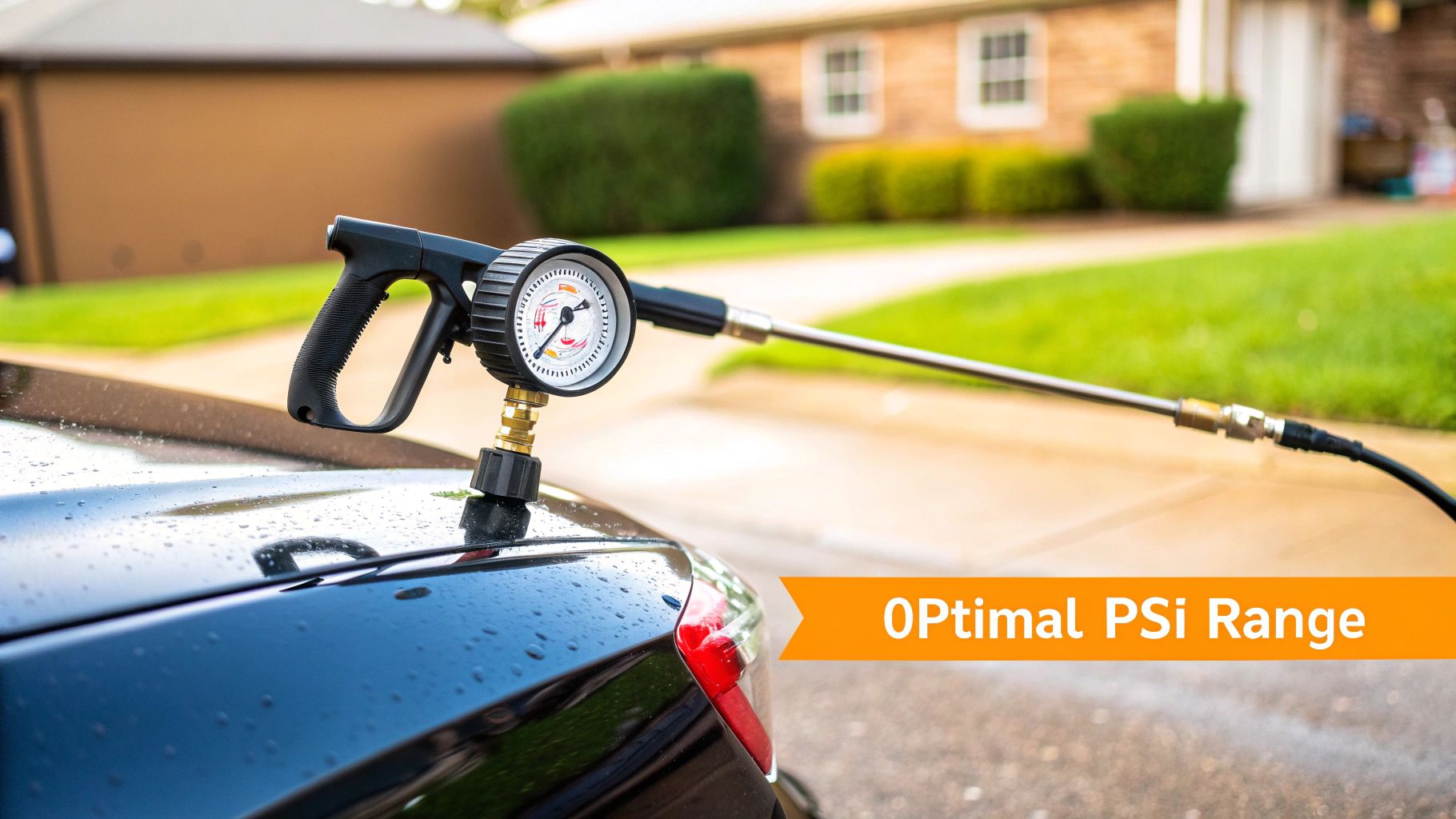
The real secret to a perfect, damage-free wash isn't just one PSI setting. It’s about recognizing that different parts of your car need a different touch.
Think about it like this: you wouldn't use coarse, heavy-grit sandpaper on a delicate piece of furniture. The same logic applies to your vehicle. The painted surfaces are far more sensitive than the rugged tires or the grimy undercarriage.
This is why starting with the right gear is so important. Knowing how to operate a suitable pressure blaster with adjustable pressure gives you the control you need. This flexibility is what separates a professional-quality clean from a costly mistake.
A Quick Guide To Recommended PSI Levels
You'll find that machines in the 1,501-3,000 PSI range are the most popular, making up a huge 42.5% of the market. There's a good reason for this—they offer the ideal balance of power and safety for home use. Most electric pressure washers fall right into this category, making them a fantastic choice for car washing without the risk of overpowering your paintwork.
For a handy reference, here’s a quick rundown of what PSI to use on different parts of your car.
Quick Guide to Safe Car Wash PSI Settings
This table breaks down the ideal pressure settings for each part of your car, helping you clean effectively without causing any damage.
| Vehicle Part | Recommended PSI Range | Key Considerations |
|---|---|---|
| Paint & Body Panels | 1200 - 1500 PSI | Always use a wide-angle nozzle (25° or 40°) and keep a safe distance of 12-18 inches to protect the clear coat. |
| Wheels & Rims | 1600 - 1900 PSI | A bit more pressure helps break loose stubborn, baked-on brake dust. Just don't get too close to avoid damaging the wheel's finish. |
| Tires & Wheel Wells | 1600 - 1900 PSI | These tough areas can handle more pressure, making it easy to blast away caked-on mud and road grime. |
| Undercarriage | 1500 - 2000 PSI | This is perfect for removing the salt, dirt, and other gunk that collects under your vehicle. |
Sticking to these guidelines ensures every part of your car gets the right treatment—a deep clean that’s tough on dirt but gentle on your vehicle.
Understanding Your Pressure Washer's Power
To really get the hang of using a pressure washer on your car, you first need to get a feel for its two main power settings: PSI (Pounds per Square Inch) and GPM (Gallons Per Minute). Understanding how these two work together is the secret to getting a safe, quick, and really effective wash every single time.
Think of it like this: imagine you're trying to peel a stubborn price sticker off a new coffee mug. The PSI is the focused pressure you use with your fingernail to get under the edge and break it loose. It’s the force that does the heavy lifting, separating the dirt and grime from your car's paint. More PSI means more power to break that bond.
Now, what about the sticky gunk left behind? The GPM is like the stream of water from your tap that you use to wash all that residue away. It’s the flow, the volume of water that actually carries the loosened dirt completely off your car. A higher GPM means you can rinse everything away faster and more completely.
Finding The Perfect Balance
Here’s the thing: neither PSI nor GPM is very useful on its own. A machine with super high PSI but a trickle of GPM would be like scraping at that sticker with a dry finger—you might loosen the dirt, but you're just smearing it around. On the flip side, high GPM with barely any PSI is like dumping a bucket of water on the sticker. You'll make a mess, but you won't have the focused force to actually lift the grime off.
The real magic happens when these two are working in harmony. You need just enough PSI to safely pop the contaminants off your paint and enough GPM to efficiently sweep them away. This sweet spot is what the pros look for when they talk about a machine’s overall cleaning ability.
Expert Insight: A handy way to measure a pressure washer's real-world power is with "Cleaning Units" (CU). You just multiply the two specs together: PSI x GPM = CU. This number gives you a much better idea of how a machine will actually perform than just looking at a high PSI number alone.
This is exactly why electric pressure washers have become the go-to for car detailing. They've really taken off with weekend warriors and professional detailers alike because they hit that perfect balance. They’re generally quieter, way less of a hassle to maintain, and operate in a power range that’s strong enough to clean well but safe enough for your car’s finish. You can see this trend reflected across the industry on market analysis sites like Precedence Research.
Why The Right Equipment Matters
Once you understand this dynamic, you can pick the right tool for the job. A pressure washer boasting a crazy-high PSI might look good on the box, but it’s usually way too much for a car and can easily strip paint or damage trim. You’ll always be better off with a balanced machine that gives you moderate pressure and a solid flow rate.
This knowledge also changes how you work. As we'll get into, the nozzle you choose and how far you stand from the car directly control the actual pressure hitting the surface. For a deep dive into the right techniques, check out our full guide on how to power wash a car safely. By managing these factors, you can dial in the power perfectly for each different part of your vehicle, from the tough wheels to the delicate paint, ensuring a perfect shine with zero risk.
Matching Pressure to Different Parts of Your Car
Thinking your car is one big, uniform surface is a rookie mistake—and a fast track to damaging it. You wouldn't use a sledgehammer for a delicate sculpture, right? The same logic applies here. To wash your car safely and effectively, you need to tailor the PSI for each specific part of the vehicle.
Your car’s body panels are the most fragile; they need a gentle touch to keep the paint and clear coat pristine. But down below, the wheels and undercarriage are constantly battling brake dust, mud, and road grime. They’re built tougher and can handle a bit more of a punch.
Pressure Settings for Painted Surfaces
Let's start with the most visible—and most vulnerable—part of your car: the paint. For the doors, hood, trunk, and roof, you’ll want to keep the pressure dialed back to a safe 1200-1500 PSI.
This sweet spot has just enough oomph to lift away dirt without scouring the clear coat or blasting water into sensitive panel gaps. Pro tip: always use this lower pressure with a wide-angle nozzle, like a 40-degree tip, to spread out the force and soften the impact.
If you're ever unsure, this flowchart is a great mental guide for choosing the right pressure.
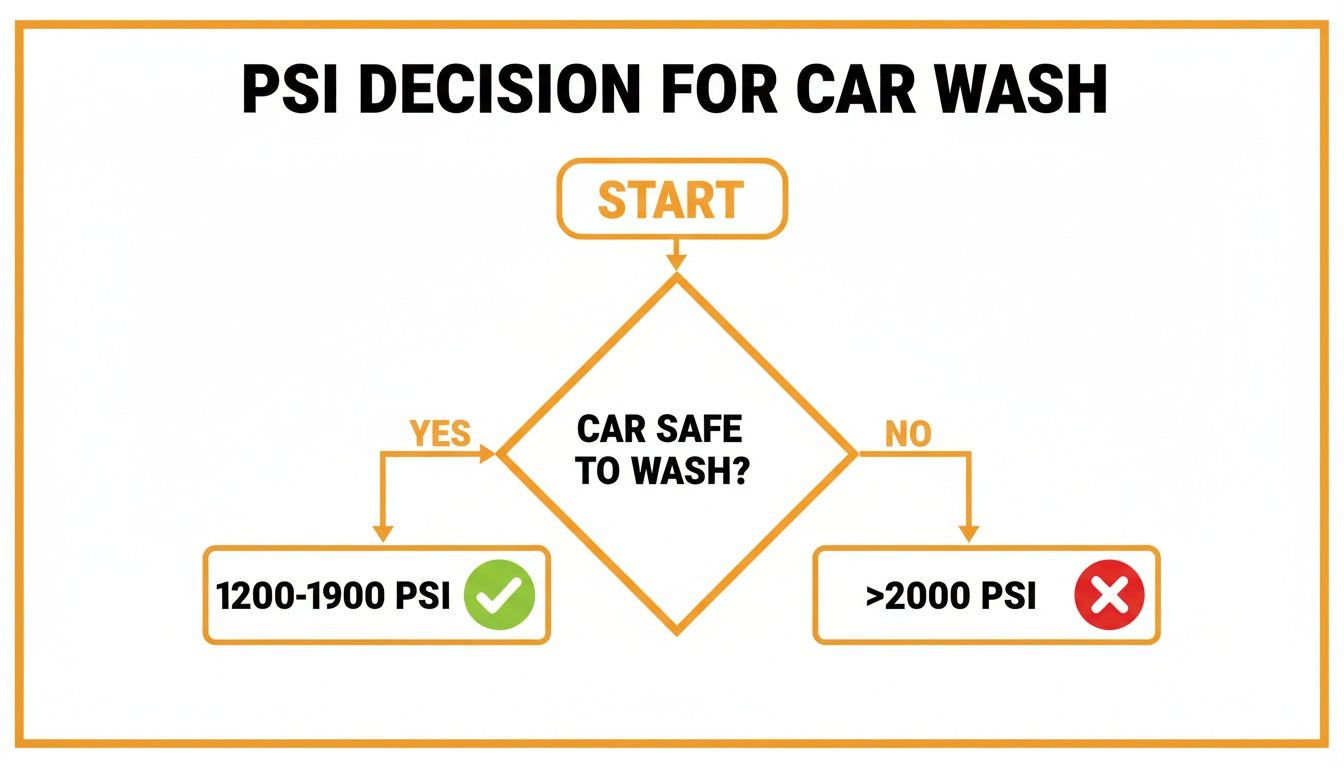
The main takeaway is simple: stick within the 1200-1900 PSI range for a safe, effective wash. Pushing past 2000 PSI is just asking for trouble.
Tackling Wheels and Undercarriage Grime
Your wheels and undercarriage are the unsung heroes, taking the brunt of the road's filth. They can definitely take a bit more pressure to get clean. For these tougher areas, you can bump the pressure up to 1600-1900 PSI.
That extra force is perfect for dislodging stubborn, baked-on brake dust and caked-on mud that a gentler spray would just laugh at. Still, you need to be smart about it. Never aim a concentrated blast directly at tire valve stems or wheel weights—you could easily knock them loose.
My rule of thumb is to always start low and go slow. You can always dial the pressure up if you need to, but you can't undo stripped paint or a damaged finish.
Navigating The Danger Zones
Some parts of your car are what I call "danger zones." They are incredibly easy to damage with even moderate pressure, and a mistake here can lead to a costly fix. When you're cleaning these spots, drop the pressure to its lowest setting and use your widest nozzle.
- Emblems and Badges: It’s surprisingly easy to force water behind these, breaking the adhesive seal and ripping them right off the car.
- Plastic Trim and Seals: High pressure can crack brittle, sun-damaged plastic trim. It can also force water past the rubber seals around your windows and doors, leading to leaks.
- Convertible Tops: Whether fabric or vinyl, a convertible top is no match for a high-pressure jet. You risk fraying the material, causing a tear, or creating a leak.
- Antennas and Mirrors: These components have delicate joints and seals. A direct blast of water can compromise them in an instant.
This "gentle but firm" approach applies to cleaning almost any vehicle. For instance, knowing how to clean an RV roof follows the same principles—you use a low-pressure rinse to avoid damaging the roofing material and seals. It’s all about using the right tool for the job.
How Nozzles and Distance Control Your Real Power
The PSI number printed on your pressure washer is only half the story. Think of it as the machine's maximum potential—the power it could produce. But the force that actually hits your car’s paint is something you control with two simple variables: the nozzle you choose and how far you stand from the surface.
Mastering these is the real secret to a safe and effective wash.
It's a bit like a garden hose. Pinch the end with your thumb, and you get a powerful, narrow jet that can dig trenches in your flower bed. Let it flow openly, and you get a gentle stream perfect for watering delicate plants. Pressure washer nozzles are just a more sophisticated way of doing the same thing. They use precisely engineered angles to shape the water and control its impact.
This is why understanding the color-coded nozzle system isn't just a "nice to know"—it's absolutely essential. Each color represents a different spray angle, which directly dictates how concentrated, or how gentle, that water pressure will be.
Decoding Your Nozzle Tips
The little plastic tips that came with your pressure washer are your most important safety tools. A narrow angle focuses all the machine's power into a small, high-impact point. A wider angle spreads that same power over a much larger area, dramatically reducing the force and making it safer.
It's a surprisingly simple system. Here’s how it breaks down:
- 0° Nozzle (Red): The red nozzle is pure destruction. It creates a pencil-thin jet of water with enough force to cut through wood or even soft concrete. Never, ever use this on a vehicle. It will strip paint, slice through tires, and destroy plastic trim in a heartbeat.
- 15° Nozzle (Yellow): This one is still way too aggressive for paint. Think of it as a tool for heavy-duty stripping on things like concrete driveways or grimy brick, not your car's delicate clear coat.
- 25° Nozzle (Green): Now we're getting somewhere. The green nozzle produces a wider, fan-like spray that's great for blasting caked-on mud and grime from tough areas like wheel wells and the undercarriage.
- 40° Nozzle (White): This is the detailer's workhorse. Its wide, gentle spray is perfect for rinsing soap from large, sensitive surfaces like your paint, windows, and roof. It has enough power to rinse effectively but is gentle enough to avoid damage.
For those looking to fine-tune their foam cannon setup, you can also find specialized foam gun nozzle attachments that offer different spray patterns for creating the perfect thick foam.
The nozzles are your first line of defense against damaging your car's finish. The table below gives a quick overview to help you make the right choice every time.
Choosing the Right Nozzle for a Safe Car Wash
| Nozzle Color | Spray Angle | Best Use for Car Washing | Safety Warning |
|---|---|---|---|
| Red | 0° | None. Do not use on a car. | Extreme Danger: Can instantly strip paint, cut tires, and cause serious injury. |
| Yellow | 15° | Extremely limited. Maybe for heavy-duty degreasing on engine parts (with caution). | High Risk: Far too aggressive for paint, glass, or plastic. Avoid for general washing. |
| Green | 25° | Great for rinsing heavy mud from wheel wells, undercarriage, and rubber floor mats. | Use with Caution: Keep a safe distance from paint. Can still be too strong up close. |
| White | 40° | The ideal choice. Perfect for general rinsing of all vehicle surfaces—paint, glass, and chrome. | Safest Option: Provides a wide, gentle spray that cleans effectively without high risk. |
Ultimately, choosing the right nozzle is about matching the tool to the job. For washing your car, that almost always means sticking with the wider-angle, gentler options.
Key Takeaway: For 99% of car washing tasks, you'll only ever need the 25° (green) and 40° (white) nozzles. Put the red and yellow ones in a drawer and forget about them when you're washing your vehicle.
The Critical Role of Distance
Your second, and most immediate, layer of control is distance. The force of the water spray drops off dramatically the farther the nozzle is from the surface. This is what we call effective PSI, and it's your most important safety technique.
Think about it: holding a 1500 PSI washer with a 40° nozzle just three inches from your paint is way more dangerous than standing two feet away. By simply taking a step back, you can turn a potentially damaging blast into a gentle and perfectly effective rinse.
As a rule of thumb, always start washing from at least 12-18 inches away from the paint. If you encounter a stubborn spot, you can move a few inches closer slowly and carefully. This simple adjustment gives you precise, real-time control over the car wash pressure washer psi, ensuring you never apply too much force.
Using a Foam Cannon for a Scratch-Free Wash
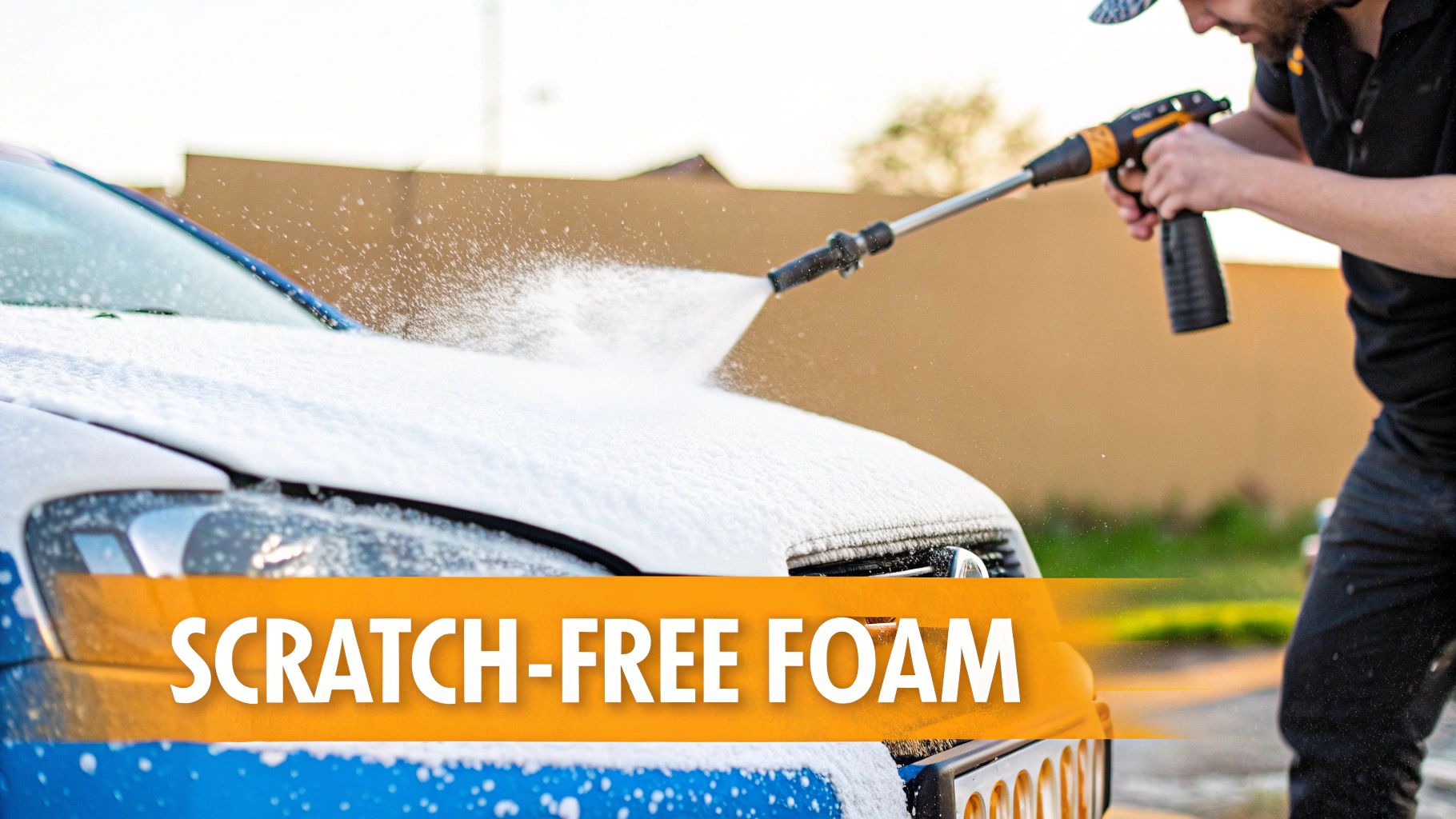
If you've ever marveled at a professional detailer's flawless, mirror-like finish, the secret often lies in a step that happens before a wash mitt ever touches the paint. The tool behind the magic is a foam cannon, and it turns your pressure washer into the ultimate pre-soak machine.
This isn't just for that cool, snowy look. A thick blanket of foam is all about doing the heavy lifting for you. It lubricates the entire surface while gently loosening and lifting the abrasive grit, dust, and road grime that’s clinging to your car.
This pre-soak is arguably the single most important step in preventing swirl marks. By letting the foam encapsulate all those tiny, harmful particles, you can rinse the majority of them away before you even start the hand-washing stage. That means you're not dragging and grinding them into your clear coat later on.
Your Step-By-Step Foaming Guide
Using a foam cannon is dead simple and, let's be honest, incredibly satisfying. All it takes is the right soap-to-water ratio and a little patience to get it perfect.
-
Fill the Canister: Pour your favorite car wash soap into the foam cannon's reservoir. A 1:10 ratio of soap to warm water is a great starting point, but feel free to tweak it to get thicker or thinner foam.
-
Attach and Shake: Screw the reservoir onto the main foam cannon body until it's secure. Now, give it a gentle shake to mix the solution.
-
Connect to Your Washer: Snap the foam cannon onto the end of your pressure washer wand, just like you would any other nozzle tip. Make sure you hear it click firmly into place.
-
Adjust and Apply: Fire up the pressure washer. Most foam cannons have an adjustment knob on top to control the soap flow and a twistable nozzle upfront to change the spray pattern. Dial it in until you get that thick, shaving cream-like consistency.
-
Cover the Vehicle: Always work from the top down. Blanket your entire car in a thick layer of foam—don't be shy here. A heavier coat clings longer, giving the soap more time to do its job.
Letting The Foam Do Its Work
Once the car is completely covered, just let it sit. Give the foam a good 5-10 minutes to dwell on the surface. You’ll literally see the dirt start to drip off the car as the suds pull it away from the paint. The key is to not let the foam dry, especially if you're washing in direct sunlight.
Pro Tip: Remember, the foam cannon is all about lubrication and chemical cleaning, not high-pressure blasting. A lower car wash pressure washer psi is perfect for this step. Let the suds do the work, not the force of the water.
After the dwell time is up, switch to your 40° rinse nozzle and wash away all the foam and the grime it has loosened. You'll be left with a much cleaner surface that’s perfectly prepped for a safe, two-bucket hand wash.
To see just how much of a difference this can make, you can learn more about how a car foaming gun elevates your entire detailing process. This one simple step dramatically reduces wash-induced scratches, helping preserve your car’s finish for years to come.
Your Final Checklist for a Perfect Pressure Wash
Alright, let's pull all this information together. Think of this as your final pre-flight check before you start spraying. Getting that perfect, swirl-free finish comes down to a simple balance of power and safety.
This isn't just about blasting dirt off; it's about smart cleaning that protects your car's paint and trim. Follow these simple rules, and you'll get that professional-looking clean every single time, without a hint of damage.
The best car wash is one that takes off the grime but leaves the paint untouched. This checklist is your game plan for doing exactly that.
Before you pull the trigger, run through these key points one last time:
-
Find the Sweet Spot: Stick to a pressure range of 1200-1900 PSI. This is the magic window where you have enough force to clean effectively without putting your clear coat at risk.
-
Pick the Right Nozzle: Always, and I mean always, use a fan-pattern nozzle. Your go-to options should be the 25° (green) or the 40° (white) tip. They give you a wide, safe spray pattern.
-
Keep Your Distance: Maintain at least a 12-inch gap between the nozzle and your car's surface. Distance is your best friend when it comes to controlling the real impact pressure.
-
Do a Test Spot: Never start on a main panel. Find a hidden spot—like the inside of a wheel well or a low-profile rocker panel—and do a quick test spray to make sure your setup is perfect.
Got Questions? We've Got Answers
Even after you've got the basics down, a few questions always seem to pop up. Let's tackle some of the most common ones people have when pressure washing their cars.
Is a 3000 PSI Pressure Washer Safe for My Car?
You can, but it's like using a sledgehammer to crack a nut—way too much power for the job and incredibly risky, especially if you're new to this.
To even attempt it safely, you'd need the widest nozzle (the 40-degree tip) and have to keep it at least 18-24 inches away from the surface. Even then, you’d have to be hyper-aware of delicate areas like trim, emblems, and any little paint chip that could instantly become a huge problem. Honestly, a pressure washer in the 1200-1900 PSI range is a much smarter, safer, and all-around better choice for washing cars.
Electric vs. Gas Pressure Washers: Which One Is Better for Cars?
For car washing, electric pressure washers are the clear winner. They’re designed to operate right in that sweet spot of 1500-2200 PSI, making them perfect for the job. They're also lighter, quieter, and just plain easier to handle for detailing work.
Gas-powered machines are beasts. They often push 3000 PSI or more, which is powerful enough to strip paint or blast out rubber seals in the blink of an eye. For washing your car at home, an electric model gives you all the cleaning muscle you need without the risk.
A foam cannon is the best insurance against wash-induced scratches. It lifts abrasive grit off the paint before you touch it, preserving your car’s finish and shine for the long term.
You don't have to use a foam cannon, but if you're serious about keeping your car's paint looking its best, you really should. It dramatically cuts down the risk of dragging dirt across the paint and creating those dreaded swirl marks.
Ready to get that professional, scratch-free wash in your own driveway? The SwiftJet Car Wash Foam Gun connects to a standard garden hose and covers your car in thick, cleansing foam. It makes washing faster, safer, and way more effective. Explore the SwiftJet Foam Gun and get yours today!
