

You're probably dealing with the same moment hit before you start searching for a better hose setup. You drag the hose over to the car, unscrew the rinse nozzle, reach for the foam gun, and the fitting either binds up, drips, or sprays your hand while you try to catch the threads.
That mess usually isn't a mystery and it usually isn't because one brand is “bad.” Most of the time, it comes down to understanding what garden hose easy connect fittings do, what they don't do, and how the standard garden hose thread underneath the system makes the whole swap possible.
Why Garden Hose Easy Connect Fittings Actually Work
The reason most hose accessories in the U.S. and Canada fit each other at all is standardization. The common connector is 3/4-11.5 NH, also called garden hose thread or GHT, with a straight, non-tapered thread and 11.5 threads per inch. Its major diameter is about 1.0625 inches (27 mm), and that same thread form is used across hoses, nozzles, sprinklers, and faucets in North America, which is why cross-brand swapping usually works in the first place, as described in the garden hose thread overview.
That's the hidden part many first-time buyers miss. “Easy connect” isn't a new hose standard. It's a shortcut built on top of the existing one.
The real job of the quick connect
A garden hose easy connect setup separates the connection into two jobs:
- The threaded job: You screw a base fitting onto the hose or accessory one time.
- The swapping job: After that, you push and pull attachments on the quick-connect body instead of twisting threads every time.
If you wash your car, that matters right away. One mounted fitting can stay on the hose while your nozzle, foam gun, or rinse tool rotates through the same outlet.
Practical rule: If two attachments share the standard hose thread, the quick connector is there to make swapping faster, not to “convert” one brand into another.
Why compatibility starts with the thread
Standard North American hose connections use 3/4-inch GHT/NH threads, so most easy-connect products are really designed around that base thread geometry, not around changing hose diameter, as explained in this guide to GHT diameters and adapters. That's why a good quick-connect set works best when it mates cleanly with the same thread shape.
If you want a useful companion read on hose specs before buying fittings, SwiftJet's overview of garden hose ratings helps connect hose construction to real-world use.
Anatomy of a Quick Connect Fitting
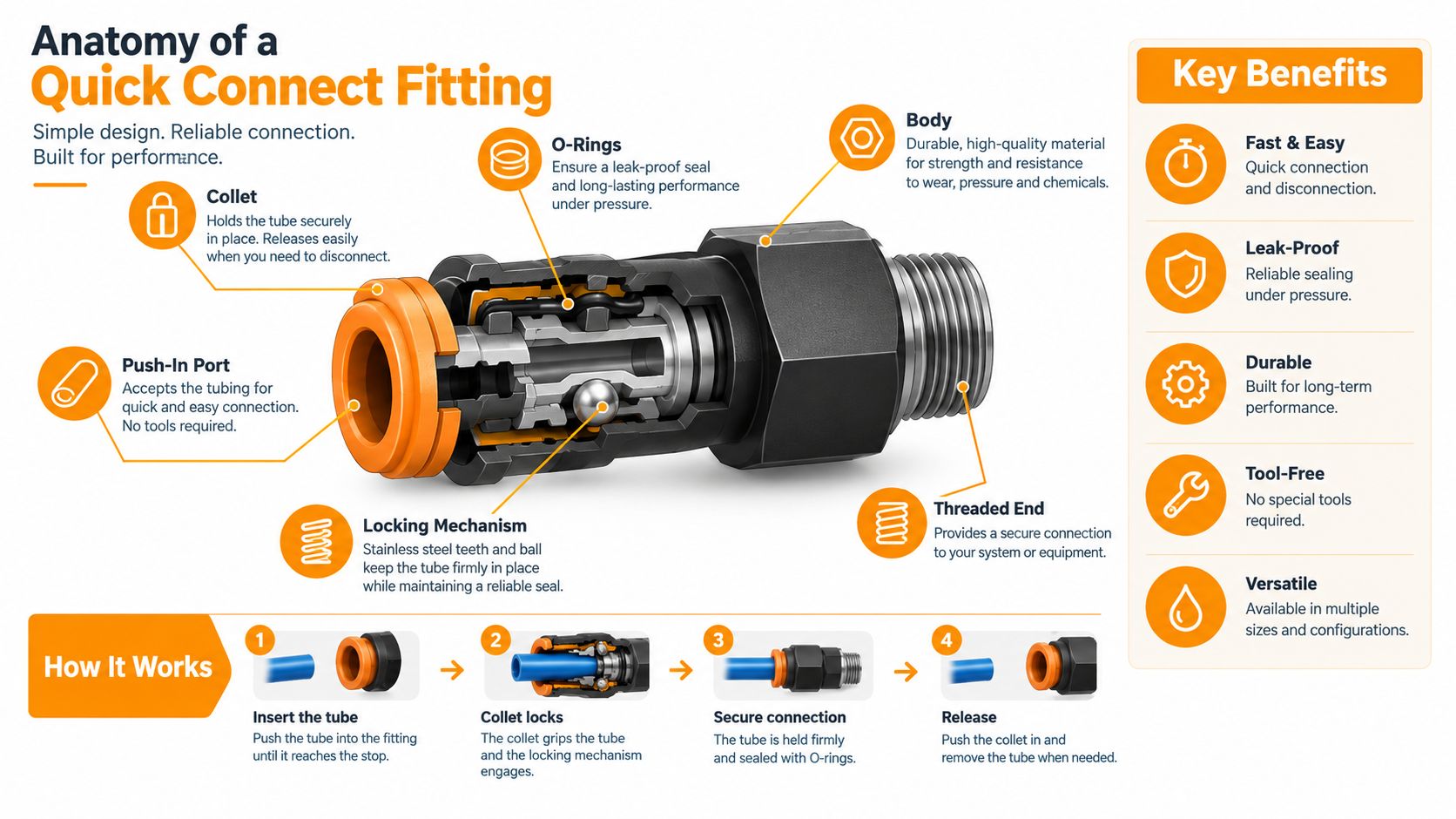
A quick connect fitting makes more sense when you stop thinking of it as one part. It's really two matched halves that work together.
One side stays put. The other side travels with the accessory.
The female side
The female half is usually the socket or coupler. This is the piece many people mount on the hose end or at the spigot.
It usually includes:
- A threaded base that screws onto standard garden hose threads
- An internal seal or O-ring that stops water from leaking
- A release sleeve that slides back when you want to remove the accessory
- Locking parts inside that grab the matching male plug
The seal is important. New users often think the metal threads do the sealing. On a hose fitting, the threads mostly pull the parts together. The washer or O-ring does the sealing work.
The male side
The male half is the plug. You attach one of these to each nozzle, sprayer, or foam gun you want to swap quickly.
That plug has a smooth section and a groove. When you push it into the female socket, the locking parts inside the coupler snap into that groove and hold it in place.
How the connection happens
The action is simple when the parts are clean and aligned:
- Hold the male plug straight.
- Push it into the female coupler.
- Keep pressing until you feel or hear the click.
- Tug lightly to confirm it locked.
To release it, pull back the sleeve on the female side and pull the accessory out.
The O-ring does the sealing during the swap, which is why you don't need thread tape every time you change attachments.
If you want a visual guide to the parts and terms, SwiftJet's article on the quick disconnect fitting is a helpful side reference.
Compatibility With Hoses, Nozzles, and Foam Guns
People get tripped up. They buy a quick-connect kit, then ask whether it works with a nozzle, a sprinkler, a foam gun, or a different hose size. The answer depends less on branding and more on what thread is on the accessory before the quick-connect goes on.
What usually fits without drama
In a typical North American setup, standard garden hoses, spray nozzles, sprinklers, and pistol-grip sprayers commonly use the same garden hose thread family. That means you can put one male adapter on each accessory and move them through one female coupler on the hose.
A foam gun built for a regular garden hose follows the same logic. If it accepts the same hose thread, it can sit in the same quick-connect system as your nozzle.
Quick-Connect Compatibility at a Glance
| Accessory | Thread Standard | Fits Without Adapter |
|---|---|---|
| Standard garden hose nozzle | GHT / 3/4-11.5 NH | Usually yes |
| Impact sprinkler | GHT / 3/4-11.5 NH | Usually yes |
| Pistol-grip sprayer | GHT / 3/4-11.5 NH | Usually yes |
| Garden-hose foam gun | GHT / 3/4-11.5 NH | Usually yes |
| Imported fitting marked “universal” | May vary | Sometimes no |
| Pressure washer fitting | Often not GHT | Usually no |
| Plumbed pipe fitting | Often not GHT | Usually no |
Where adapters are actually needed
A few situations deserve a pause before you force anything together:
- Imported accessories: Some use BSP threads instead of GHT.
- Pressure washer hardware: These often use a different fitting family.
- Plumbed pipe parts: Pipe threads and hose threads aren't the same thing.
- Smaller hose sizes: The hose may still use the same end thread, even if the hose body itself is narrower.
For readers who also use hose-fed tools for exterior cleaning, this clean windows hose attachment guide is useful because it shows how different attachments share a similar hose-end logic even when the cleaning task changes.
If you've been puzzled by “universal” labels, SwiftJet's article on the universal hose connector helps explain where universal really means “fits the standard” and where it doesn't.
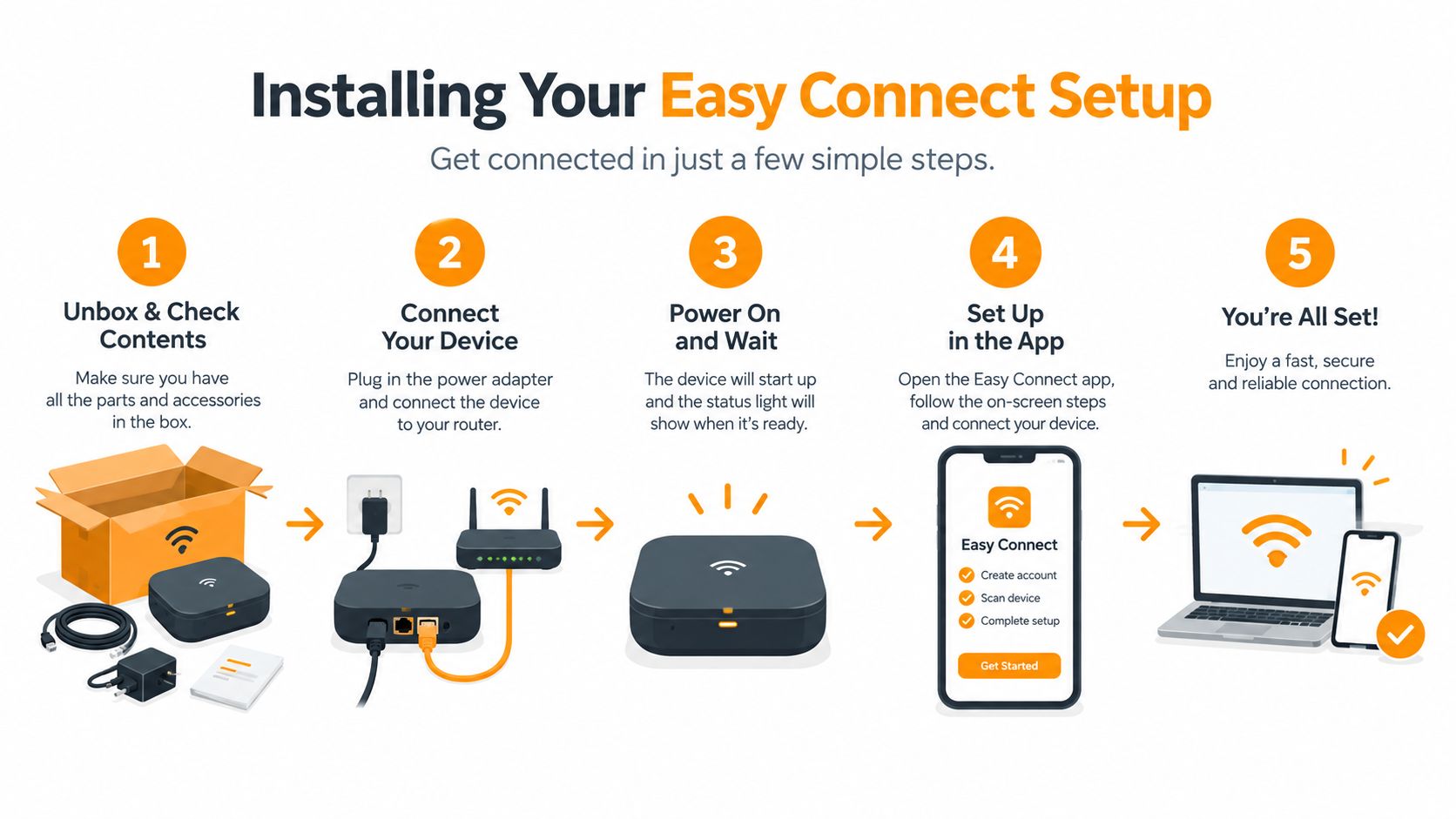
Installing Your Easy Connect Setup
A clean install is short. Most problems start when people rush, over-tighten, or try to fix a crooked thread by muscling it.
Start with dry hands and a clean hose end so you can feel whether the fitting is threading correctly.
Step by step at the hose end
Use this sequence:
- Check the hose end and spigot. Make sure the threads are clean and not mashed or bent.
- Inspect the washer or O-ring inside the female quick-connect base. If it's missing, stop there.
- Thread the female base on by hand. It should go on smoothly. If it catches immediately, back it off and start again.
- Snug it gently. Hand-tight is usually the right starting point. A little extra tightening may help, but crushing the seal creates leaks instead of fixing them.
Attach the accessory side
Now install the male plug on the accessory you want to use first, such as a nozzle or foam gun. Again, start by hand so you can tell whether the threads are straight.
Then push the male plug into the female coupler until it locks. Give it a light pull. If it slides back out, it didn't seat fully.
A fitting that needs force on the threads is usually cross-threaded, not “just tight.”
Do a leak check before real use
Turn the water on and watch the joints. Look at the hose-threaded base and the snap-in seam separately. They fail for different reasons, so check them as different points.
If you're using a foam gun, pay attention to the trigger lock area. Some models need the trigger stopper positioned a certain way, and some users remove a backflow preventer if their specific setup interferes with the lock mechanism. After the first use, check it again once the parts have warmed up and cooled down.
Real World Use With Foam Guns and Car Washing
On wash day, the benefit of a quick connect isn't abstract. It shows up in your hands.
You rinse the wheels, pull back the sleeve, click in the foam gun, soap the panels, pop that off, and go back to a rinse nozzle without walking to the spigot to unthread everything. That's why car owners and mobile detailers like this setup. The time saver is in the repeated swap.
What changes during the wash
A threaded-only setup asks you to grip wet metal or plastic, line up threads, and spin the tool on and off every time. A quick-connect setup turns that into one short movement.
That matters most when you switch between:
- A rinse nozzle for pre-wetting
- A foam gun for soap application
- A softer sprayer or brush feed for delicate areas
- A final rinse tool for cleanup
Flow matters more than people think
Not all quick connectors pass water equally well. High-quality brass quick-connect fittings are commonly marketed as full-flow couplers and are commonly rated around 200 PSI, with the goal of preserving the hose's 3/4-inch water volume and minimizing pressure loss or restriction, as described by Eley's garden hose quick connectors.
That's especially relevant with foam tools. A foam gun depends on water moving through the tool cleanly. If the connector necks down too much inside, the spray can feel weaker and the soap output may suffer.
SwiftJet sells a foam gun made for a standard garden hose connection, so it fits into the same kind of hose-end workflow as a regular nozzle when paired with the proper adapter.
Troubleshooting Leaks and Sticking Connections
Quick-connect fittings aren't install-and-forget hardware. They live close to dirt, soap, sun, grit, and repeated handling. That's why reliability after many connection cycles matters more than the package card usually suggests.
Guidance on garden hose quick connectors often focuses on how easily they push together and release, while practical maintenance advice keeps circling back to sleeves, seals, and replacing worn O-rings. The gap is durability in real use, especially after repeated use and exposure, which is why the LSU AgCenter quick-connectors overview is useful background.
Four failure modes worth knowing
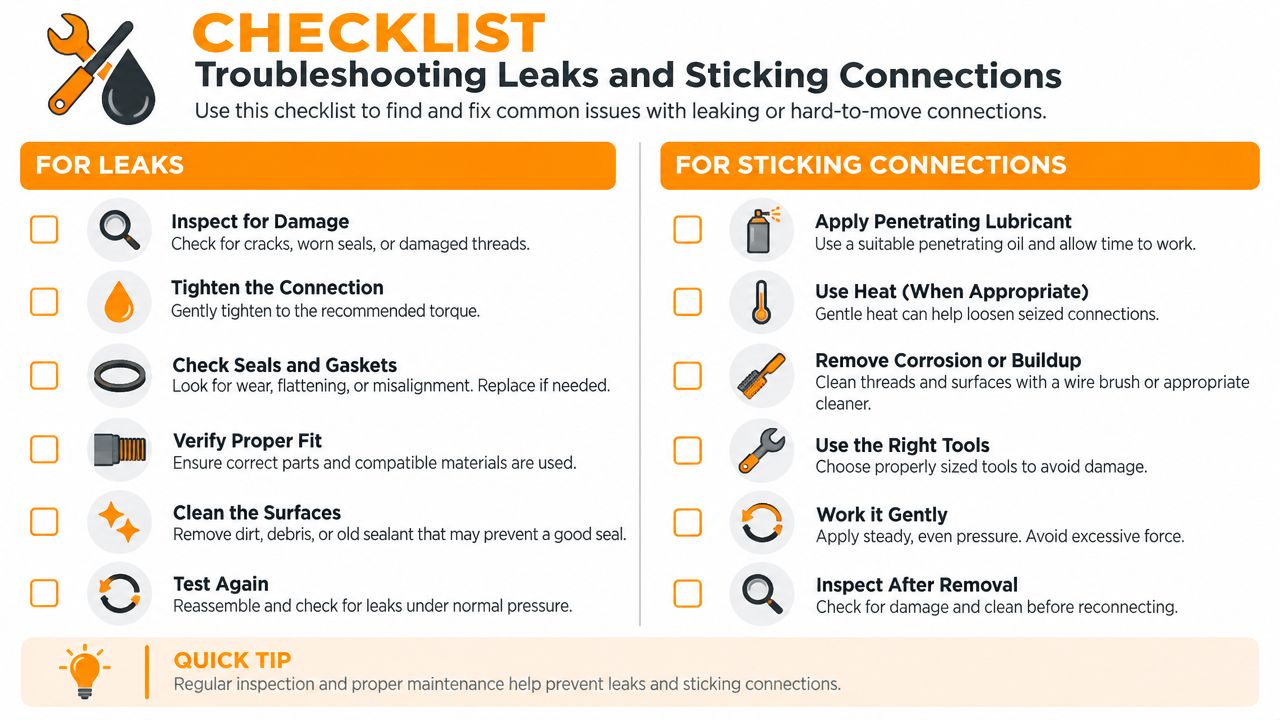
Most quick-connect problems fall into one of these buckets:
- Drip at the snap connection: Usually an O-ring problem
- Drip at the threaded base: Often cross-threading or poor seating
- Sleeve won't retract: Usually dirt, scale, or corrosion
- Male plug won't seat fully: Burrs, debris, or a damaged groove
What to do in each case
If water leaks at the snap seam, remove the male plug and inspect the O-ring inside the female coupler. If it looks flattened, cracked, or missing, that's your first suspect. A small amount of food-grade silicone grease can help the seal move smoothly.
If the leak is where the fitting screws onto the hose, remove it completely and inspect the threads. Clean them with a small brush, then reinstall by hand. If the fitting starts crooked, no amount of extra tightening will save it.
Check the simplest soft part first. In hose fittings, that's often the O-ring.
If the sleeve sticks, flush the coupler with water and work the sleeve back and forth. If the male plug won't lock in, inspect the plug for rough edges or trapped plastic shavings. A quick visual check every so often prevents most of these surprises.
What to Look for When Buying Easy Connect Fittings
Shopping gets easier once you stop looking at packaging claims and start checking the physical details.
A decent set should tell you what thread it fits, what it's made from, and whether replacement seals are available. If that basic information is missing, you're guessing.
The buying checklist that matters
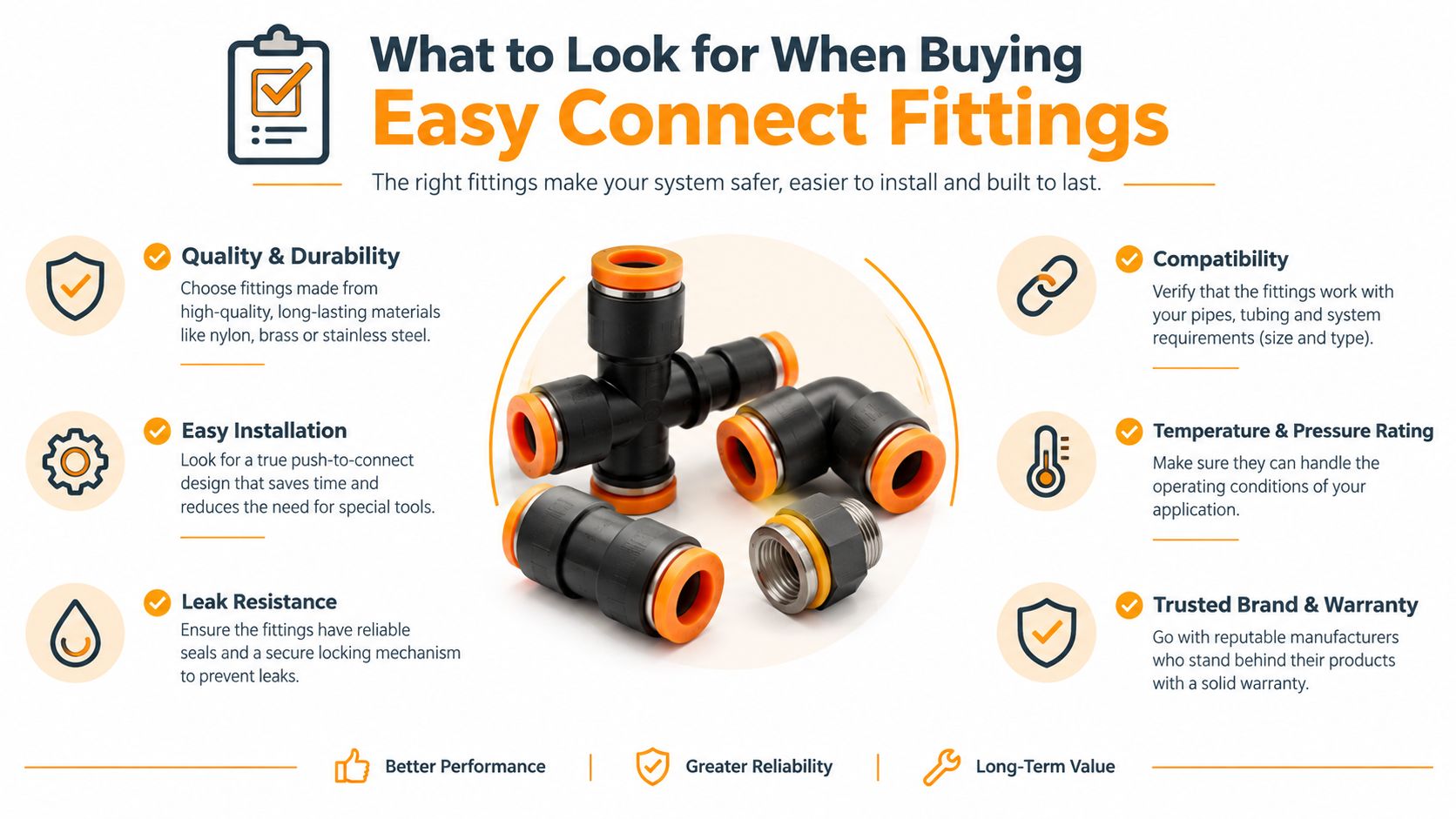
Look for these points first:
- Thread fit: Confirm it's made for standard garden hose threads used in your setup.
- Body material: Brass and stainless options usually hold up better than lightweight plastic in repeated outdoor use.
- Seal support: Replacement O-rings should be available, because seals wear before the whole fitting does.
- Release sleeve feel: It should move smoothly but not feel loose.
- Internal passage: If you care about rinse performance or soap delivery, avoid fittings that look narrow inside.
Match the fitting to the job
A patio hose used a few times a month can get by with a simpler connector than a wash setup that sees regular attachment swaps. Car washing exposes fittings to soap residue, grit, and lots of handling with wet hands.
That means your buying priorities should be practical:
- Reliable lock engagement
- Easy sleeve operation
- Seals you can inspect and replace
- Materials that won't get chewed up by repeated use
A flashy package doesn't tell you whether the coupler will still slide cleanly after a season outside. The small serviceable parts do.
Putting It All Together
The easiest way to think about a garden hose easy connect system is this: it's a standard garden hose connection wrapped in a faster outer shell. Once you understand that, the whole category gets less confusing.
The fixed threaded side handles compatibility. The snap-in side handles convenience. The seal happens at the washer or O-ring, not by brute force on the threads.
The mental model to keep
If a setup works, it usually comes down to a short chain of good decisions:
- You started with the correct hose-thread standard.
- You installed the threaded parts by hand without cross-threading.
- You used fittings with a decent internal path for water.
- You checked the O-ring when a leak showed up.
A simple order for solving problems
When a fitting drips or jams, use this order:
- O-ring
- Debris
- Thread alignment
- Sleeve movement
That order saves time because it starts with the most common, easiest fixes first.
Garden hose easy connect fittings aren't magic, and that's good news. They're understandable hardware. If you know the thread standard, pay attention to the seal, and choose fittings built for repeated swapping, you can turn an annoying wash setup into one that clicks together cleanly and stays manageable.
If you want a foam gun that fits naturally into a standard garden hose workflow, SwiftJet offers garden-hose car wash tools built for quick hose hookup and easy attachment changes during wash day. You can look over the foam gun options, hose-friendly accessories, and product details at SwiftJet.
