

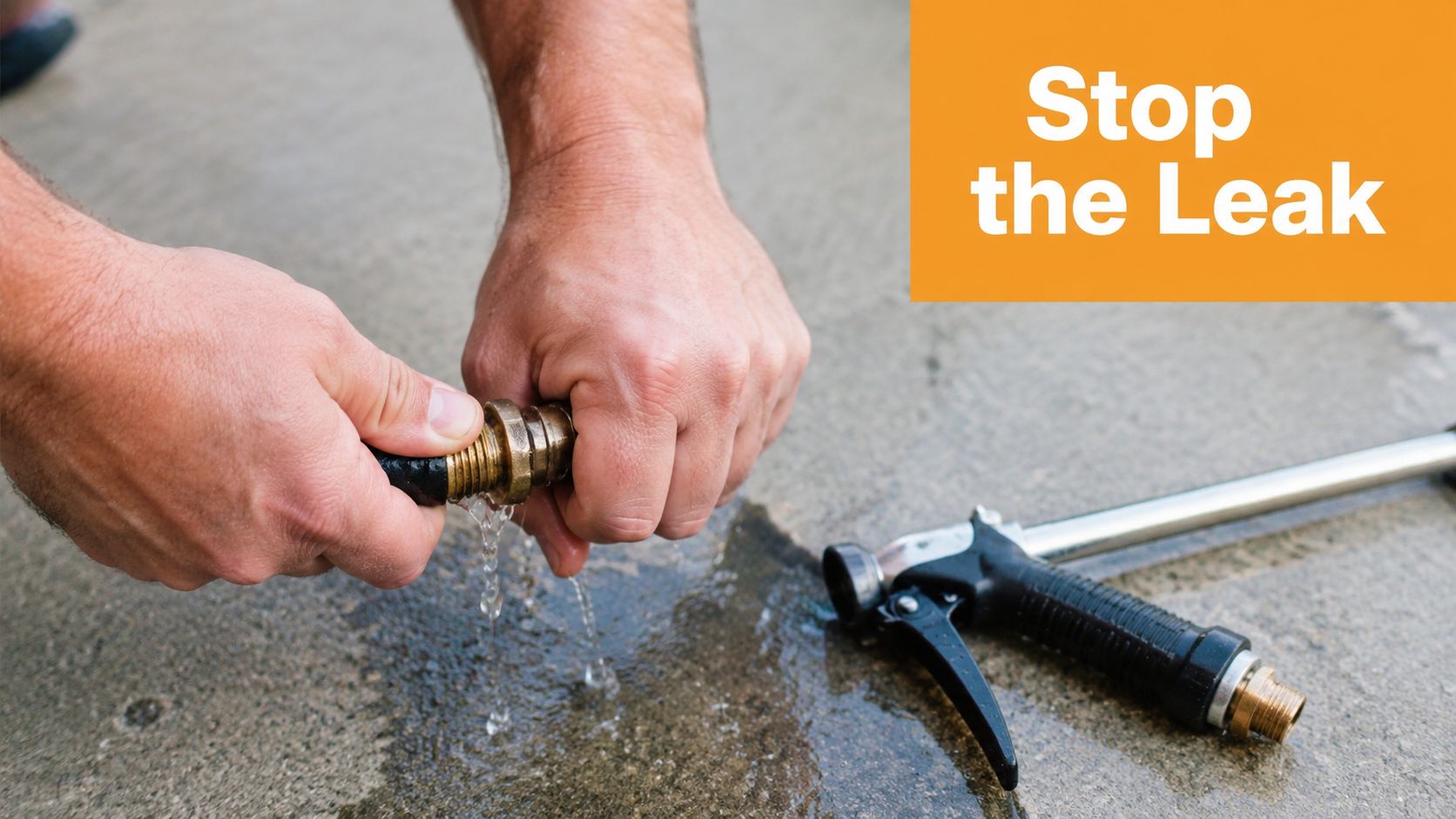
You're halfway through washing the car when the foam gun starts spraying water around the connection instead of through the nozzle. You unscrew the hose, try another adapter, tighten everything again, and still can't get a clean seal. The fitting may look right, but a quick disconnect fitting isn't automatically compatible just because it clicks into place.
That's the trap with garden hoses, pressure washers, foam guns, and splitters. Thread type, seal design, coupling profile, and pressure rating all determine whether a connection will stay dry and secure. This guide focuses on the details that matter in a real driveway setup, including what fits, what fails, and how to avoid buying a bag of adapters that never work together.
Why Quick Disconnect Fittings Matter for Car Washing
A typical driveway wash involves more equipment changes than you might expect. You might connect a hose to a spray nozzle, remove it for a foam gun, switch to a rinse attachment, then reconnect the nozzle for wheels or tires. Screwing each accessory directly onto the hose works, but it's slow, hard on plastic threads, and inconvenient when your hands are wet.
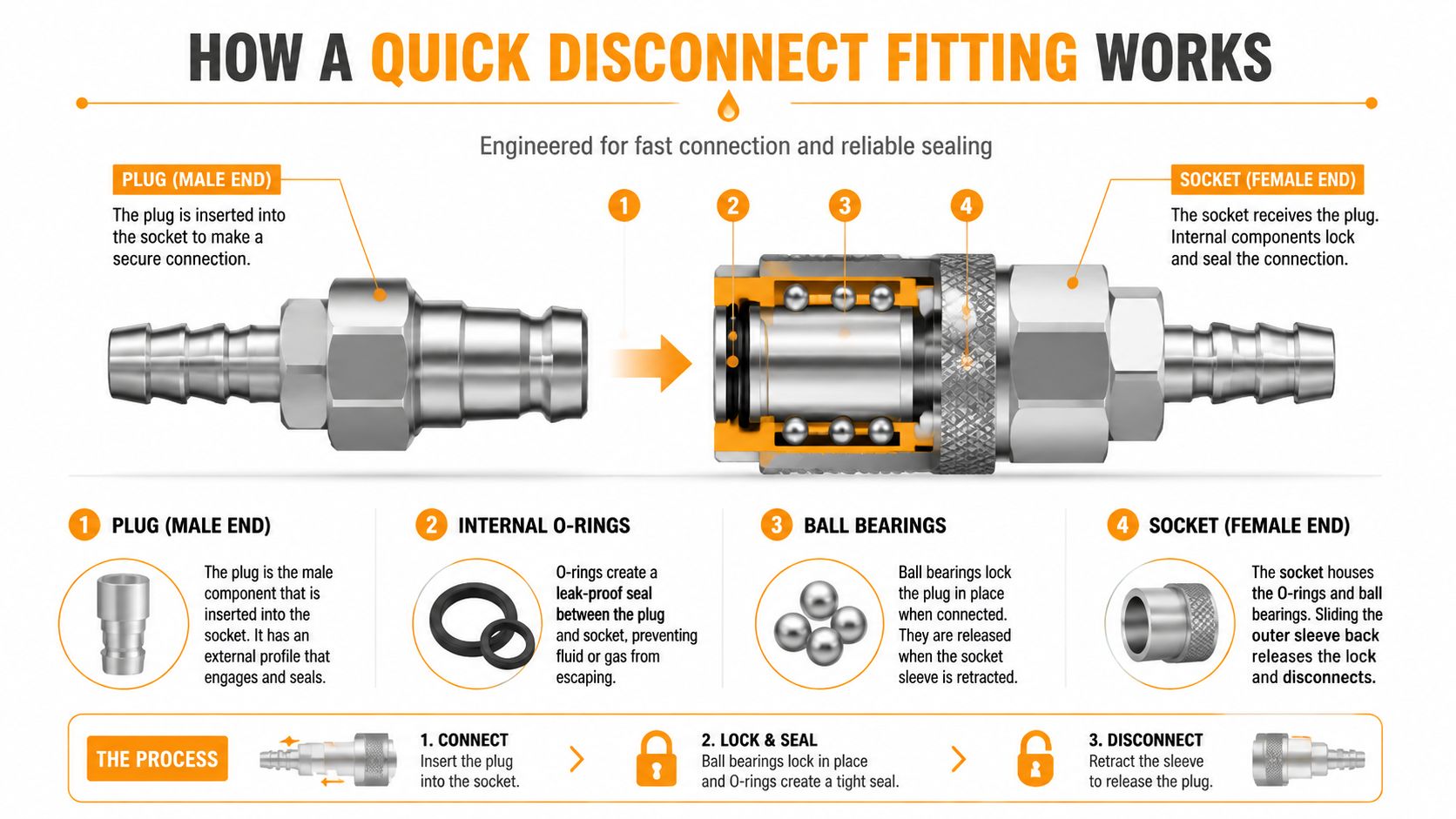
A quick disconnect fitting uses two matching parts. The plug stays attached to the accessory, while the socket stays on the hose, wand, or supply line. Pull back the socket sleeve, insert the plug, and release the sleeve. The internal locking mechanism holds the two pieces together, while an O-ring forms the water seal.
That simple arrangement turns an awkward threaded connection into a fast swap. It works especially well when you're moving between a hose nozzle and a foam gun several times during one wash. You can also keep dedicated plugs on different tools, reducing the need to remove and reinstall thread tape or repeatedly tighten brass fittings.
Practical rule: A quick disconnect saves time only when both halves use the same profile and the correct end standard. A fast mismatch is still a mismatch.
The small fitting also affects the entire wash experience. A restricted passage can reduce flow at the accessory, while a worn seal can create a leak near the collar. A poorly supported fitting may place extra strain on the hose end or foam gun inlet. The component is small, but it controls the point where water enters the tool, so its design and condition matter.
Quick disconnect fittings are also part of a broader, standardized industrial technology. ISO 7241 defines interface dimensions and basic performance requirements for two series of hydraulic quick-action couplings, while ISO 16028:2023 covers flush-face hydraulic couplings across specified pressure ranges. Those standards aren't a direct guide for choosing a garden-hose adapter, but they show why the term “quick connect” describes a mechanism, not one universal interface. Different applications use different dimensions, seals, and performance requirements.
How a Quick Disconnect Fitting Actually Works
The mechanism is easier to understand. The plug is the tongue, the socket is the buckle, the locking balls hold the connection, and the sleeve releases it when you need to separate the parts.
The parts inside the coupling
The plug, sometimes called the male end, has a shaped nose that enters the socket. The socket, or female end, contains the locking and sealing components. Inside the socket, an O-ring presses against the plug's smooth sealing surface, while ball bearings or another locking element sit in a groove or shoulder behind the plug.
A spring-loaded collar controls the lock. With the collar in its normal position, the locking balls are pushed inward. When you insert the plug fully, the plug moves the balls outward briefly, then the balls drop into their retaining groove. The collar returns over them, preventing the plug from backing out.
Pulling the collar back moves the retaining sleeve away from the balls. That creates enough room for the balls to move outward, allowing the plug to slide free. The action is quick, but it still depends on full insertion and a clean internal bore.
Why a click doesn't prove a good seal
The click tells you that the locking parts have moved into position. It doesn't confirm that the O-ring is undamaged, that the plug reached the correct depth, or that the two components share the same profile. A plug can appear engaged while a mismatched shoulder prevents the seal from sitting correctly.
Water pressure can help press the sealing surfaces together, but pressure won't fix a torn O-ring or an incorrect plug geometry. Dirt has the opposite effect. Grit on the plug can scratch the sealing surface, hold the O-ring slightly open, or stop the locking balls from moving smoothly.
A fitting that pops loose deserves immediate attention. Shut off the water, release trapped pressure, and inspect the plug, socket, collar, and locking groove. Don't keep using it on the assumption that tightening the hose connection will solve an internal locking problem.
Types Sizes and Materials Explained
Car-care fittings usually fall into three groups, and they shouldn't be treated as interchangeable. Garden hose connections typically rely on garden hose thread, pressure washer systems often use M22 or 1/4-inch quick-connect arrangements, and industrial-style couplings use their own profiles and dimensional conventions.
The outside diameter can also mislead you. A fitting that appears close in size may use a different thread pitch, sealing shoulder, or coupling profile. If you need help interpreting diameter terminology, this guide to 1 inch measurements offers useful measurement context, but diameter alone still won't identify the correct thread standard.
| Fitting Type | Thread Standard | Best For | Common Material |
|---|---|---|---|
| Garden hose style | GHT | Garden hoses, hose bibs, hose-fed foam guns | Brass, plastic |
| Industrial interchange | M-style or A-style profiles | Air and fluid equipment using matching industrial couplings | Brass, plated steel, stainless steel |
| Pressure washer threaded connection | M22 | Pressure washer hoses, guns, and compatible adapters | Brass, stainless steel |
| Pressure washer quick connect | 1/4-inch quick-connect profile | Wands, nozzles, spray guns, and surface-cleaning accessories | Brass, stainless steel, plated steel |
Garden hose connections
A garden hose setup normally starts with GHT at the hose end or faucet connection. A foam gun designed for a standard garden hose needs a compatible inlet, not just a fitting with a similar-looking thread. The 3/4-inch quick-connect fitting information is useful when comparing larger hose-side connections and accessory arrangements.
Pressure washer connections
M22 is a threaded pressure washer connection, while 1/4-inch quick-connect refers to a plug-and-socket style commonly used on pressure washer accessories. These terms describe different connection details, so an M22 hose end won't directly become a 1/4-inch nozzle connection without the correct adapter.
Material choices
Brass is a practical choice for many outdoor wash setups. It offers a solid balance of durability, corrosion resistance, and cost, though its threads can be damaged by excessive force. Stainless steel is better suited to corrosive conditions or buyers who want greater resistance to surface degradation, but it generally costs more. Plastic is light and inexpensive, yet it deserves closer inspection around threads, collars, and hose strain points because those areas can crack or deform.
The Hidden Compatibility Traps Most Guides Ignore
“Universal quick connect” can mislead buyers. In accessory listings, it often means the fitting is common within one profile. It does not confirm safe compatibility with every garden hose, foam gun, pressure washer, or splitter.
Thread type can stop the connection before it starts
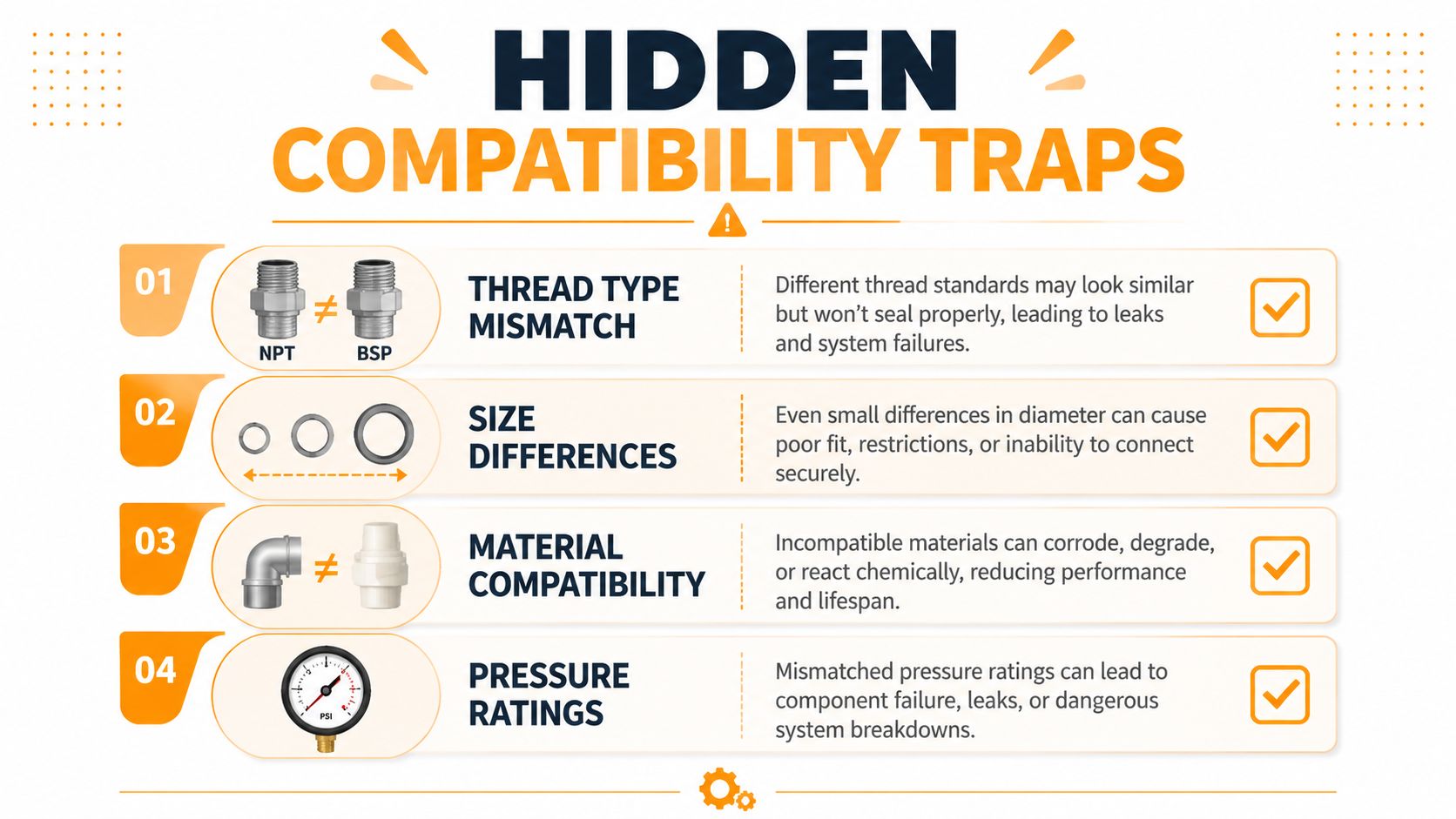
NPT, BSP, and GHT threads use different forms and sealing methods. NPT is a tapered pipe thread. BSP may have a different pitch or profile, while GHT is a garden-hose thread designed for another connection style. A fitting may screw in for several turns and still leak because the threads were never meant to mate.
Use this hose connector type reference to identify each connection before ordering. Examine the accessory inlet, hose end, adapter outlet, and splitter separately. The hose alone does not identify the whole setup.
M22 and 1/4-inch quick-connect are entirely different systems, so an M22 hose cannot become a 1/4-inch nozzle connection without a proper adapter. The plug and socket must also share the same quick-connect profile. A similar outside diameter is not enough.
Seal material changes the result
The O-ring affects whether the connection stays leak-free. Buna-N, Viton, and EPDM differ in chemical and temperature suitability. For water and car-shampoo setups, match the seal material to the manufacturer's intended service and the cleaning solution.
Correct threads and a matching profile still leave room for failure. A flattened, swollen, cut, or unsuitable seal can leak immediately. Frequent disconnecting makes lubrication and cleanliness more important. A dry O-ring can drag across the plug, while grit can score the sealing surface.
The governing standard matters
Hydraulic, pneumatic, aerospace, marine, garden, and pressure-washer couplings may all be called quick disconnects. Their standards address different operating conditions. SAE and ASTM references distinguish application-specific selection, manufacturing, safety, and interchangeability requirements, including aerospace fluid systems and marine applications, as described in the SAE aerospace coupling standard.
For demanding fluid systems, pressure rating sets a design limit. ASTM F1122 specifies a minimum allowable working pressure of 150 psi for couplings up to 4 inches nominal size, and relates allowable working pressure to burst pressure through separate coupling classes in the ASTM F1122 standard sample. A garden-hose accessory should not be chosen from a hydraulic listing solely because its body appears stronger.
A foam-gun setup can look assembled yet fail at one transition. Before placing the order, verify the following details:
- Thread specification: Identify NPT, BSP, GHT, M22, or another stated thread.
- Coupling profile: Match the actual plug and socket pattern, not only the nominal diameter.
- Seal material: Confirm that the O-ring suits water, detergent, and the manufacturer's operating conditions.
- Pressure requirement: Choose a fitting rated for the actual supply, including pressure fluctuations.
- End standard: Check each transition point, especially adapters and hose splitters.
Installation Maintenance and Troubleshooting Steps
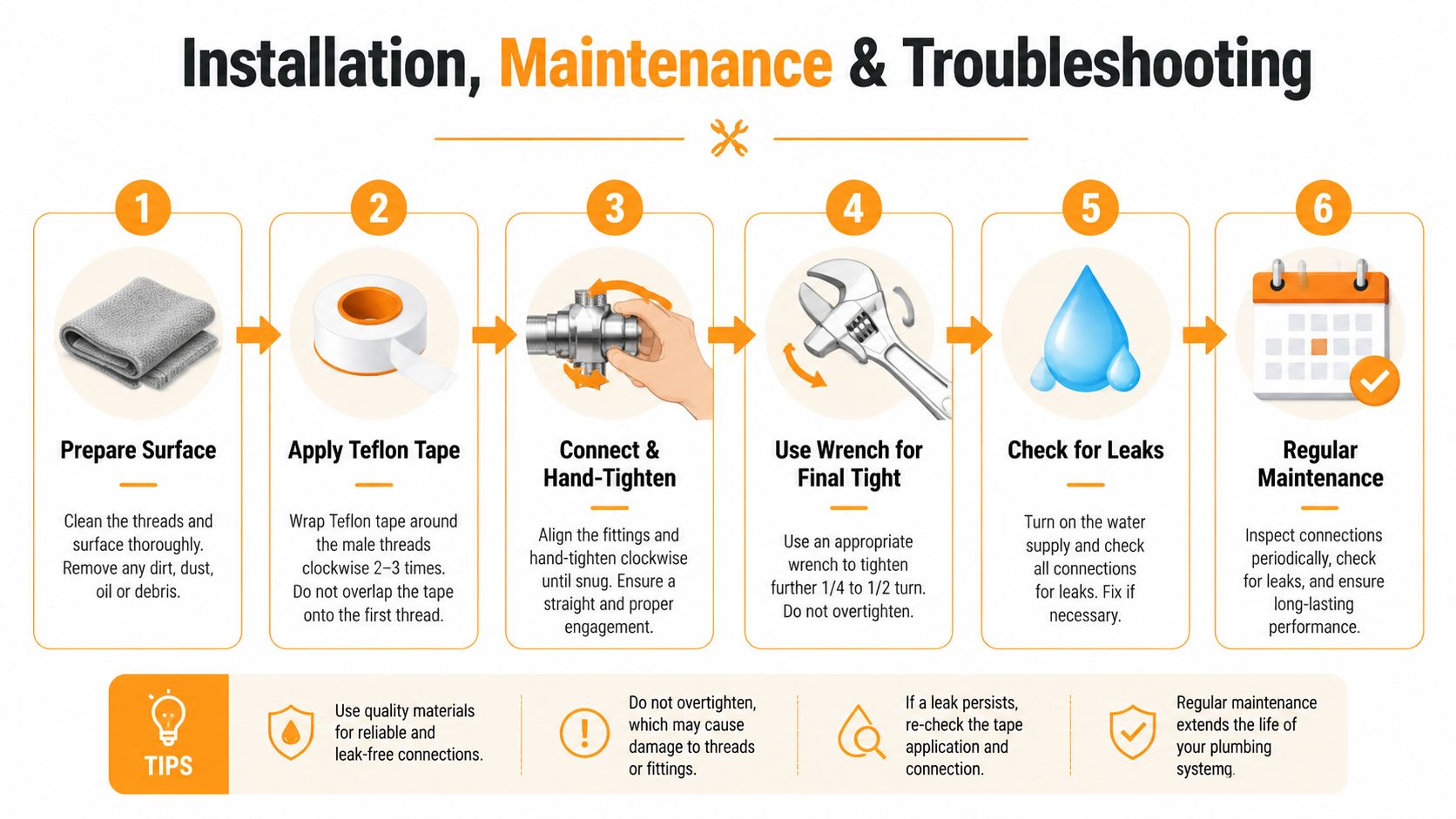
Installation problems often begin before the fitting is threaded. Turn off the water, drain pressure from the hose, and clean the mating surfaces. Lay out the hose, accessory, adapter, and socket so you can verify which parts are threaded and which parts are intended to click together.
Install the threaded side correctly
Use PTFE tape only on compatible tapered pipe threads, such as an NPT connection where the manufacturer allows it. Don't wrap tape over a face-sealing connection, a garden hose washer, or a fitting that seals through an O-ring. Tape in the wrong location can prevent the parts from seating or shed fragments into the water path.
Wrap the tape neatly in the tightening direction, keeping the first thread clear. Start the fitting by hand to avoid cross-threading. Once the fitting bottoms or reaches the intended orientation, use a wrench for a controlled final adjustment. Brass bodies can crack when someone treats a small adapter like a pipe nipple.
Lubricate the O-ring with a compatible, light lubricant if the manufacturer permits it. Avoid random petroleum products, especially when the seal material or fluid compatibility is unknown. Push the plug straight into the socket until the locking mechanism engages, then pull lightly on the accessory to confirm retention.
Maintain the moving parts
Rinse dirt from the plug before every connection. Inspect the O-ring for cuts, flattening, hardening, or distortion, and check that the collar slides freely without grit. If the fitting has been exposed to shampoo residue, rinse it with clean water and let it drain before storage.
Flush the assembly after washing, particularly when detergent has entered the coupling. A short clean-water rinse helps remove residue that could make the sleeve sticky or leave deposits on the seal. Store the hose and fitting where they won't be dragged across concrete or left under tension.
Diagnose the common failures
- Leak at the collar: Shut off the supply and inspect the plug and O-ring. A damaged seal, incomplete insertion, or mismatched profile is more likely than a loose threaded hose end.
- Fitting won't lock: Pull the sleeve back, clean the plug, and try again with the plug aligned straight. If the collar still won't return, the profiles may not match or the locking balls may be contaminated.
- Foam output falls: Check the water filter, nozzle, inlet screen, and hose path before blaming the coupling. A restricted quick disconnect can reduce flow, but incorrect soap dilution or a blocked foam passage can produce the same symptom.
- Connection separates under pressure: Stop using it immediately. Verify the pressure rating, inspect the locking groove, and replace worn components rather than relying on a tighter threaded connection.
For more targeted leak checks, this hose connection leak guide provides additional troubleshooting context.
Buying Considerations for Foam Gun and Hose Setups
Start with the water source, then work toward the accessory. A garden hose supplied by a household faucet has different demands from a pressure washer hose, and neither should be judged by the fitting's appearance alone.
Match pressure and flow
Pressure rating defines the safe operating boundary. Flow capacity affects how much water reaches the foam gun and how much pressure is lost through the connection. Cv describes flow capacity in relation to pressure loss, so a higher Cv generally indicates less pressure drop at the same flow. Gates publishes Cv values ranging from 0.54 to 4.25 across one UQD family, depending on size, in its UQD coupling specification sheet.
A separate CPC high-flow family reports throughput comparable to many 1/2-inch couplings in a 3/8-inch body, with a maximum operating pressure of 125 psi, according to the same product-data reference. That comparison reinforces a useful buying lesson. Nominal hose size doesn't tell you the entire flow story, so look for a manufacturer's flow curve or Cv information when foam thickness and rinse volume matter.
Compare brass and stainless steel
Brass works well for ordinary outdoor car washing when the fitting is protected from impacts and drained after use. Stainless steel makes more sense when the fitting sees frequent handling, corrosive exposure, or prolonged outdoor service. The extra cost isn't automatically worthwhile for every hose, but replacing bargain fittings repeatedly can erase the initial savings.
Read the product listing skeptically
A useful listing should identify the thread, coupling profile, seal material, pressure rating, and included plug or socket. “Fits most hoses” isn't enough information to confirm compatibility with a foam gun inlet or pressure washer wand.
Before ordering, check:
- Connection map: Write down what attaches to each side.
- Profile match: Confirm plug and socket names from the same system.
- Seal details: Look for replacement O-rings and fluid compatibility.
- Flow information: Prefer published Cv or flow data over vague high-flow claims.
- Replacement support: A fitting with available seals is easier to maintain.
- Storage conditions: Consider corrosion resistance if the equipment stays in a damp garage or vehicle.
Cheap multi-packs can be useful for simple hose-end accessories, but they often create confusion when several profiles look nearly identical. A well-specified individual fitting is usually the better choice for a foam gun inlet or pressure washer connection where one wrong standard can make the entire setup unusable.
Frequently Asked Questions About Quick Disconnect Fittings
Does a quick disconnect fitting reduce water pressure?
It can. Any coupling creates a passage through the water line, and an undersized or restrictive design can add pressure loss. The effect depends on the fitting's internal geometry, flow rate, and the rest of the hose system. For foam applications, choose a fitting with published flow information when available, rather than judging performance by the outside diameter.
Can I leave one connected outdoors during freezing weather?
That's risky. Water trapped inside the socket, plug, hose, or foam gun can freeze and expand, damaging seals or cracking the body. Disconnect the system, drain it fully, and store the fitting somewhere protected from freezing temperatures.
How can I tell GHT from NPT without a caliper?
Look at the connection's intended use and sealing method. Garden hose thread normally uses a washer or face seal at a hose-end connection, while NPT relies on tapered threads and a sealant approved for that application. Visual inspection can narrow the possibilities, but it can't reliably confirm every thread profile. Manufacturer specifications or a thread gauge are safer than forcing two parts together.
Why does a fitting click but still leak?
The locking mechanism and the water seal perform different jobs. The plug may lock while a damaged O-ring, dirt, incomplete insertion, or standard mismatch prevents a proper seal. Shut off the water and inspect both halves instead of tightening the collar.
Will a foam gun work with a standard quick-connect adapter?
Only if the adapter matches the foam gun inlet and the hose-side connection. Confirm whether the foam gun uses GHT, M22, or another interface, then select the corresponding plug or socket. A standard pressure washer quick connect isn't automatically suitable for a garden-hose foam gun.
A dependable wash setup starts with the right connection, and SwiftJet offers a garden-hose foam gun designed for practical vehicle cleaning without the usual accessory confusion. Visit SwiftJet to review the foam gun and choose the connection approach that matches your hose and wash routine.
