

Saturday morning. The car is dusty, the wheels are brown with brake grime, and your old wash routine is already annoying before you even start. You drag out a bucket, drop the sponge once, rinse it, wonder if it picked up grit anyway, then spend the next half hour pushing dirty water around the paint.
A lot of people search for foam cannon walmart because they want out of that cycle. They want the fun part of detailing without turning their driveway into a full pro setup. That search usually starts with a simple question: can you really get good foam from something affordable and easy to buy locally?
The short answer is yes, with the right expectations.
Walmart helped make foam washing easier to try by carrying low-cost options like the Hyper Tough model, which is priced around $20 and is described as a budget-friendly step into foam washing in this Hyper Tough foam cannon review video. That matters because foam washing used to feel like gear for serious detailers only. Now it's something a first-time DIYer can test without spending premium-brand money.
The trick is knowing what you're buying. Some Walmart options are built for a pressure washer. Some shoppers are really looking for a garden hose foam gun. Those are not the same tool, and that confusion is where most disappointment starts.
The End of the Bucket and Sponge
Most bad car washes happen in a completely normal way.
You fill one bucket with soapy water. You grab a sponge or mitt. You start on the hood, then the doors, then the lower panels. Somewhere in the middle, the water gets murky, the sponge feels heavier, and the car still doesn't look as clean as you expected.
That old method has two big problems. First, you're doing all the loosening by hand. Second, you're always one mistake away from rubbing grit across the paint.
Why the old way feels like hard labor
A sponge works a bit like a paper towel on a muddy floor. It can move dirt, but it also drags some of that dirt along the surface if you aren't careful. That's why people end up with faint wash marks, streaks, or that dull look that shows up in sunlight.
Foam changes the order of the job. Instead of scrubbing first, you pre-soak first. The soap sits on the dirt, softens it, and gives you a safer starting point.
Practical rule: The less dirt you grind into the paint with your hand, the better your finish usually looks.
That one shift makes a wash feel less like a chore and more like a process. You spray, let the foam work, rinse, then touch the paint more gently if it still needs it.
Why Walmart became part of the foam wash story
For a long time, foam gear felt tied to expensive detailing brands. Then budget models showed up at stores where regular drivers already shop for oil, wash soap, and tire cleaner. Walmart's lower-priced options made foam washing feel approachable.
That doesn't mean every product on the shelf gives pro-detailer results. It means you can try the method without a major investment. That's a real change for beginners, apartment dwellers with limited tools, and anyone who wants a cleaner car without building a pressure washer setup from scratch.
A foam cannon or foam gun isn't magic. It won't replace good soap, patience, or proper rinsing. But it does solve one of the most frustrating parts of home car care: trying to wash a dirty vehicle by hand before the dirt is softened.
Who gets the most value from foam
Foam washing makes sense for more than one kind of driver:
- Daily drivers: You want a faster wash that feels easier on the paint.
- Truck and SUV owners: Bigger vehicles benefit from broad soap coverage.
- RV and camping users: Foam helps loosen road film, dust, and trail grime before you start wiping.
- Gift buyers: Foam gear feels more exciting than another bucket or towel set.
If you've been fighting with a sponge and wondering why the finish still looks tired, this is usually the point where foam starts to make sense.
Understanding How Foam Cannons Create Suds
Think about a greasy pan after dinner. If you attack it with a scrubber right away, you're working hard. If you let warm, soapy water sit on it first, the mess loosens and the job gets easier.
Foam does the same thing on a dirty vehicle. It lays a blanket of soap over dust, pollen, road film, and bug residue so the grime can soften before you touch the paint.
What the foam is actually doing
People sometimes think the bubbles themselves are doing all the cleaning. Not exactly. The important part is that the foam helps keep the soap on the surface long enough to loosen dirt.
When the soap clings instead of running off immediately, you get more time for grime to break free. That matters because loose dirt rinses away more safely than dirt you scrub loose with pressure from your hand.
Foam is less about making the car look like a shaving cream commercial and more about buying time for the soap to work.
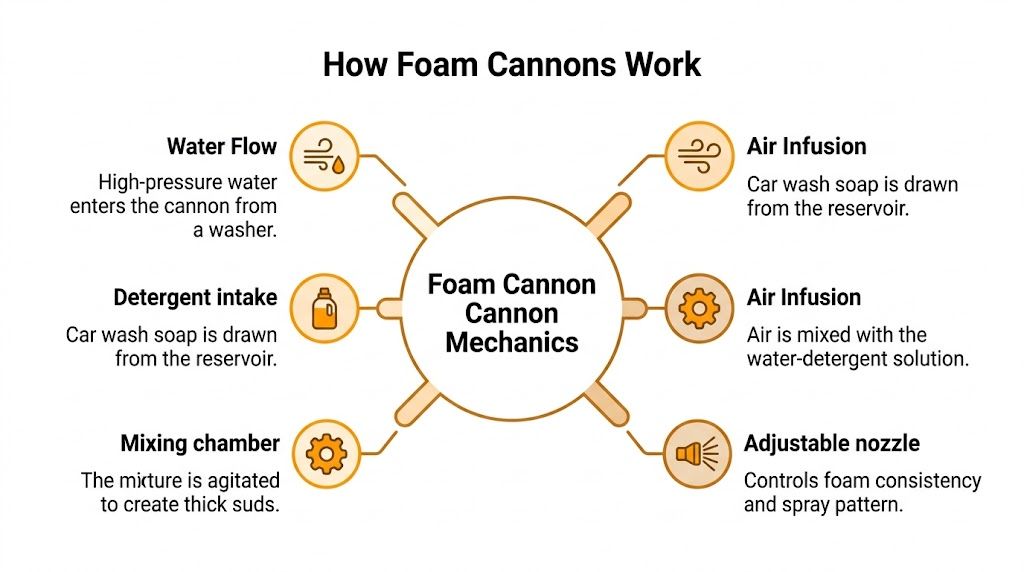
The simple mechanics behind it
A foam cannon or foam gun mixes three things:
- Water
- Car wash soap
- Air
Inside the tool, moving water pulls soap from the bottle and blends it with air. That mixture exits through the nozzle as sudsy foam. The nozzle shape and adjustment dial affect whether the spray comes out wider, narrower, thicker, or more watery.
Pressure washer cannons do this with much more force. That extra force usually creates thicker, longer-lasting foam. Garden hose foam guns can still help, but they won't usually match the dense output of a pressure washer unit.
A major source of confusion is that product pages often blur those categories together. As noted in this review of hose models versus pressure washer options, there is a clear performance gap between garden hose tools and pressure washer-specific models. Hose versions are fine for basic DIY rinses, but they often don't create the same foam thickness or dwell time.
Why that difference matters
If you're using a garden hose, don't judge success only by whether the car disappears under a mountain of foam. Judge it by whether the soap spreads evenly, loosens grime, and helps your wash mitt glide more safely.
That's the right expectation.
A pressure washer cannon is like using a leaf blower to move dry leaves. A garden hose foam gun is more like using a broom. Both can clean the driveway. One does it with more force and speed.
What beginners usually get wrong
A few common misunderstandings show up again and again:
- More soap doesn't always mean better foam. Too much soap can waste product and sometimes make rinsing harder.
- Dish soap isn't car wash soap. Use a soap made for vehicle finishes.
- Thin foam isn't always failure. If it pre-soaks well and loosens dirt, it's still useful.
- Spraying too close can be messy. Give the foam room to fan out and cover the panel.
Garden hose users should focus on this
If you're shopping foam cannon walmart listings but you only own a hose, your real goal is not to copy a detailing video shot with a pressure washer. Your goal is to get a cleaner, safer pre-soak at home with the tools you already have.
That's a perfectly smart place to start.
Key Features in a Garden Hose Foam Cannon
Once you understand the foam side of the job, shopping gets easier. You stop asking, "What's the cheapest one?" and start asking, "What will work without leaking, clogging, or frustrating me?"
A lot of Walmart listings focus on pressure washer attachments, and many follow a familiar spec pattern. This Walmart foam cannon category page shows common specs such as a 1-liter (0.22 gallon) container, a 1/4-inch quick connect, and multiple nozzle tips. That's useful because it gives you a baseline for comparing products, even if you're still deciding between hose and pressure washer styles.
Start with the connection
If the connection is wrong, nothing else matters.
For pressure washer models, a 1/4-inch quick connect is common. For hose-based tools, you need to check whether the fitting matches your garden hose setup and whether the kit includes the needed adapter or gasket. Leaks at the connection point are one of the fastest ways to ruin the experience.
Good seals matter just as much as the connector itself. A weak gasket can turn a promising foam tool into a drippy mess that sprays your shoes more than your vehicle.
Check the fit before blaming the foam. Many "bad foam" complaints really start with poor water flow caused by a loose or mismatched connection.
Look for real adjustability
A useful foam tool should let you change how the soap comes out. That usually means some combination of:
- A soap control dial: Lets you fine-tune how rich the mixture feels.
- A spray pattern adjustment: Helps you switch between a wider fan and a narrower stream.
- Easy reach controls: You shouldn't need a mini engineering project in the driveway just to change output.
Different vehicle components, such as a sedan, pickup, wheel well, and front grille, necessitate varied spray patterns. Wider coverage helps on doors and roofs. A tighter stream helps on lower panels and dirty trim.
Build quality shows up fast
Cheap plastic can work for occasional use. It also tends to be the first thing that cracks when the tool gets dropped, left in the sun, or tightened too aggressively.
If you're comparing models, inspect these areas first:
- Fittings: Metal parts usually hold up better than flimsy molded pieces.
- Bottle threads or locking points: Leaks often begin here.
- Adjustment knobs: If they feel loose or vague, expect frustration.
- Bottle clarity: A transparent bottle makes it easier to see your mix.
For shoppers trying to understand how household water pressure affects hose tools, this guide on garden hose PSI and cleaning performance helps explain why some setups feel stronger than others.
Canister size changes how often you refill
Bottle capacity is easy to ignore until you wash something bigger than a compact car. A smaller bottle is lighter and easier to handle. A larger one can reduce refill stops on trucks, SUVs, or RV sections.
Here’s a practical checklist to keep in mind.
| Feature | What to Look For | Why It Matters |
|---|---|---|
| Connector type | A fitting that matches your hose or pressure washer setup | Prevents leaks and wasted time |
| Soap adjustment | A dial or control that changes foam output | Helps you avoid overusing soap |
| Spray pattern | Fan and narrower spray options | Gives better coverage on different surfaces |
| Bottle quality | Clear, sturdy canister with secure attachment | Makes mixing easier and reduces spills |
| Material strength | Durable fittings and solid controls | Better chance of surviving regular use |
| Refill convenience | Bottle size that matches your vehicle type | Less interruption during washing |
| Support and returns | Clear return policy or warranty information | Helpful if the tool arrives defective or doesn't fit |
Don't forget support
A foam tool is still a mechanical item with seals, threads, and small parts. If the listing is vague, the packaging is light on instructions, and the seller offers little support, you're taking on more guesswork yourself.
For beginners, that matters more than they think. Clear instructions, replacement parts, and a reasonable return path can save a lot of frustration.
How to Get a Professional Foam Wash at Home
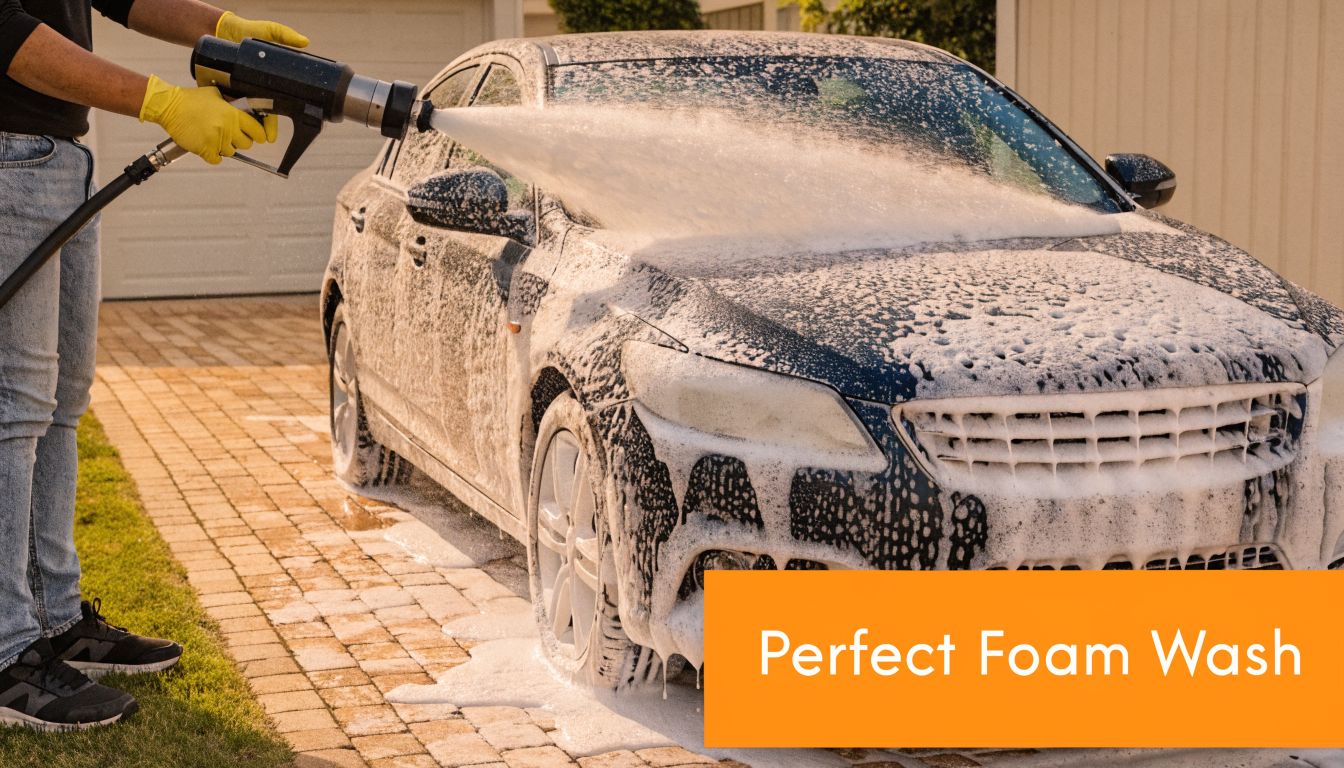
Good foam washing doesn't require a giant detailing cart. It requires a calm setup and the right order of operations. Most first-timers get into trouble because they rush the mix, spray in direct sun, or start scrubbing before the foam has had time to soften anything.
Get the car and area ready
Park in shade if you can. A cool surface gives the soap more time to work and makes rinsing easier. Close the windows, fold mirrors if needed, and pick up anything around the driveway that could snag your hose.
If the vehicle is heavily dusty or muddy, give it a quick plain-water rinse first. That's especially helpful on lower panels and wheel arches where loose grit tends to collect.
Mix the soap the smart way
Use a dedicated car wash soap, not dish soap. Dish soap can be harsh on vehicle finishes and isn't made for this job.
Read the soap bottle and the foam gun directions, then start conservative. Beginners often add too much soap because they think more product guarantees thicker foam. It usually just makes rinsing slower and wastes soap.
If you're still learning the routine, this walkthrough on car washing with a foam cannon is a helpful companion.
Attach and test before you soak the whole car
Connect the bottle securely. Check that the canister is seated properly and that the nozzle is pointed away from the car for the first test spray. You want to catch leaks, sputtering, or a crooked pattern before soap is all over the paint.
Then test on the ground or a small lower section. Adjust the dial and spray pattern until the output looks even.
A beginner-friendly wash order
Follow this order and the job gets much easier:
-
Rinse loose dirt first if needed
Don't grind dry grit into the paint. -
Foam from top to bottom
Roof, glass, hood, upper doors, then lower sections. -
Let the foam sit briefly
Give it time to soften grime. Don't let it dry on the surface. -
Rinse or hand wash depending on how dirty the car is
Light dirt may rinse away well. Heavier grime still needs a mitt. -
Final rinse thoroughly
Work methodically so soap doesn't hide in mirrors, trim, or emblems.
A video helps if you want to see that rhythm in motion.
How to apply foam without wasting it
You don't need to empty the bottle in one dramatic pass. Spray with control. Aim for even coverage rather than giant piles of foam sliding off the hood.
For broad panels, use the fan pattern. For tighter spots, switch to a narrower spray. Lower rocker panels and rear bumpers usually deserve a second pass because they collect the most mess.
Apply enough foam to wet and coat the surface. If the soap is dripping off instantly, adjust the mix or slow down your passes.
What to do after the foam sits
If the vehicle is only lightly dirty, a rinse may remove a surprising amount. If the paint still feels grimy, use a clean wash mitt and gentle straight-line motions. Start high and work downward so you're always moving from cleaner areas to dirtier ones.
Wheels and tires should usually get separate tools. Brake dust is abrasive, and you don't want to carry that onto the paint with the same mitt.
The small maintenance habit that keeps the tool working
After you're done, empty leftover soap if needed and run clean water through the foam tool. That flushes out soap residue before it dries inside the passages.
Then let the bottle and parts dry before storage. This one habit prevents many of the clogs and weird spray patterns people blame on the tool later.
A foam gun isn't high-maintenance. But it does punish neglect in a very predictable way.
Buying a Foam Cannon at Walmart What to Expect
Walmart is good at one thing that specialty shops can't always match. Convenience. If you want to try foam washing without waiting around for shipping, it's a sensible place to look.
The trade-off is that you need to shop with your eyes open.
What you’ll usually find
Search foam cannon walmart and you'll usually see a mix of entry-level attachments, pressure washer-focused cannons, and some broader auto care kits. One common budget option is the Hyper Tough Foam Blaster, listed around $18.88 with a 750ml canister, 1/4-inch quick disconnect, and adjustable fan or line spray pattern in this Hyper Tough Foam Blaster overview.
For a shopper, that's appealing. The price is low. The specs sound useful. The pickup may be immediate.
Why the Walmart route works for many people
There are some clear benefits:
- Low entry cost: You can experiment without making a big commitment.
- Local availability: If your store has it, you can wash the car today.
- Simple replacement path: Returns are often easier than with unknown marketplace sellers.
For a beginner, that's worth a lot. You may not know yet whether you want a hose foam gun, a pressure washer cannon, or a larger detailing setup. A budget purchase can answer that.
Where people get disappointed
The biggest issue isn't always the product itself. It's mismatch.
A shopper may expect thick detailing foam from a hose-powered tool, or buy a pressure washer attachment without owning a pressure washer. Product pages don't always make those limits obvious. Some listings are also stronger on basic specs than on practical advice like how the spray feels in real use or what kind of user it suits.
A second issue is selection. Walmart often gives you a broad retail snapshot, not a carefully curated lineup. That means you have to sort through tools built for very different water sources and expectations.
A good Walmart buying mindset
If you're buying there, think in terms of fit rather than hype:
- Know your water source first
- Read whether it needs a pressure washer
- Check the connector details
- Look at bottle size and adjustment controls
- Treat low price as a starting point, not proof of performance
For many people, Walmart is the trial run. It tells you whether you enjoy foam washing enough to stick with it.
Beyond the Basics The SwiftJet Foam Gun Alternative
Once you've tried the category, a different question usually comes up. What if you want a cleaner, more controlled hose-based wash without buying a pressure washer at all?
That's where a purpose-built garden hose foam gun makes more sense than a generic attachment designed to hit a low price point.
Why some hose users look for an upgrade
Garden hose users often want three things at the same time:
- easier setup
- better control during the wash
- less fiddling with adapters and awkward spray behavior
A hose-based tool should feel simple in the hand. You shouldn't have to fight the trigger, guess whether it's on, or keep stopping to rework the setup.
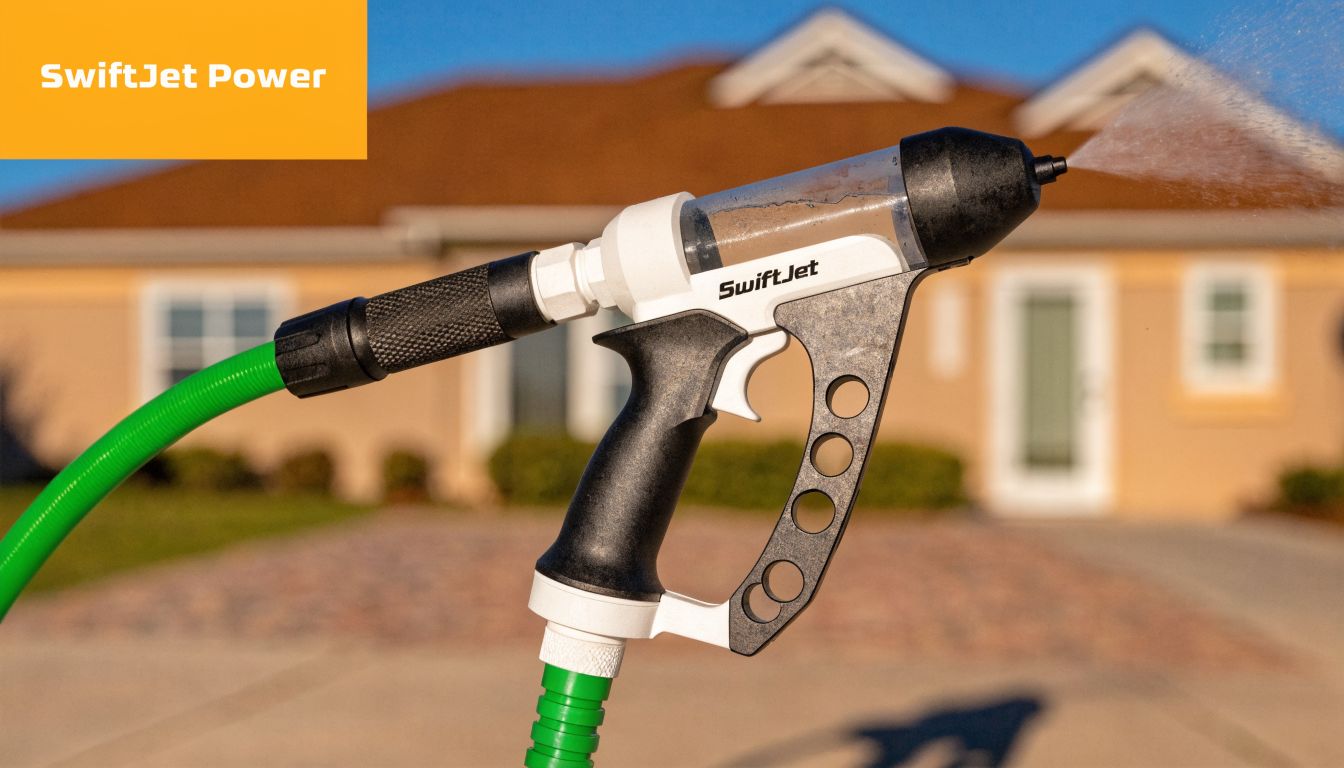
One option in that lane is the SwiftJet Car Wash Foam Gun with microfiber wash mitt, which is built for a garden hose rather than a pressure washer and includes an on/off trigger control plus a mitt. That kind of package fits people who want a more complete at-home wash tool without moving into pressure washer equipment.
What makes a dedicated hose foam gun feel different
The improvement usually isn't about chasing pressure washer-level foam. It's about making the hose workflow more practical.
A dedicated hose foam gun can help by offering:
- Simpler trigger control: Easier to start and stop flow while moving around the vehicle
- A more intentional design: Better suited to garden hose users than adapted pressure washer parts
- Useful extras: A wash mitt in the box can help first-time buyers get started with fewer add-ons
- Support and policy clarity: Helpful if you're buying for yourself or as a gift
That's why many people treat Walmart as the test drive and a more specialized hose foam gun as the next step. The first purchase teaches the method. The second one often fixes the annoyances.
If you know you want to stay with a garden hose, buy for the hose experience. Don't buy a pressure washer mindset and expect the tool to fill in the gap.
Safety Tips and Troubleshooting Common Issues
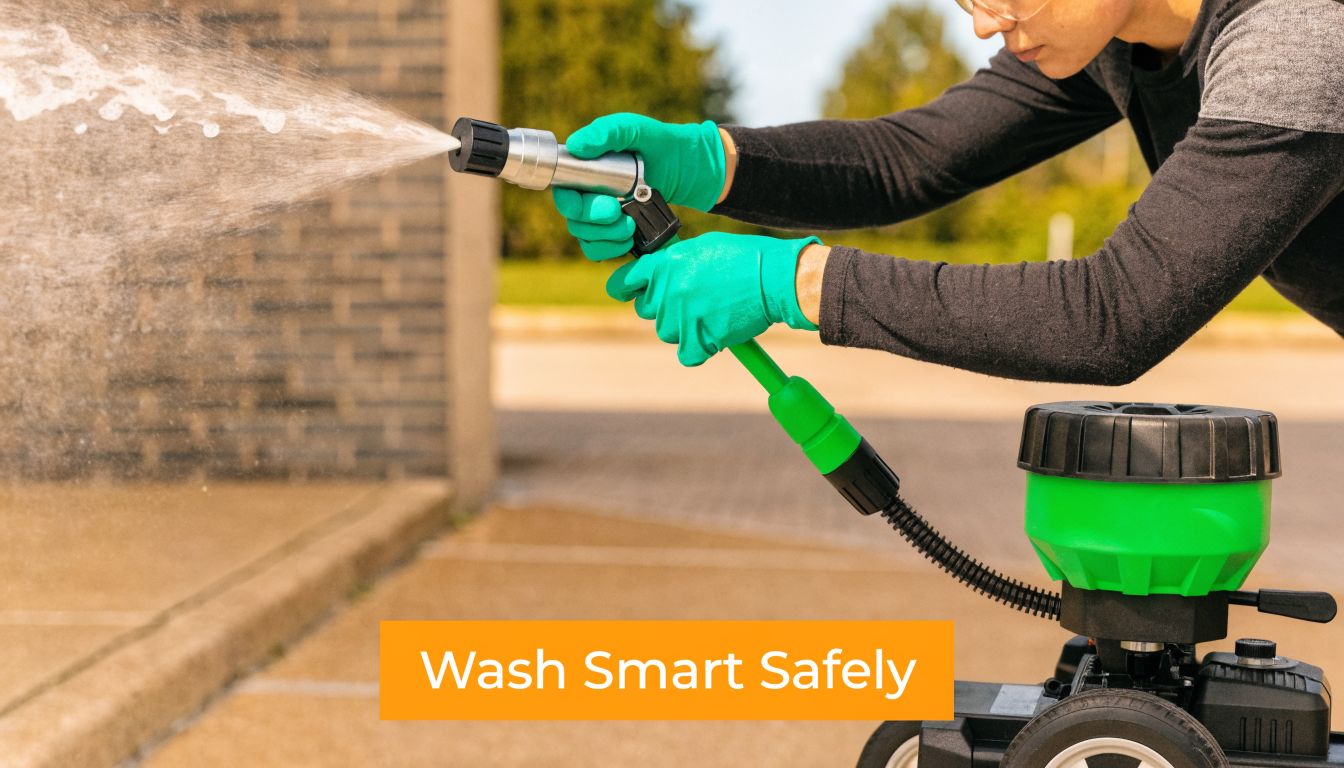
Foam tools are easy to use, but a few habits make them safer and less frustrating. Don't spray people or pets. Avoid getting soap mist in your eyes. If you're working with stronger cleaners around wheels or outdoor surfaces, eye protection is a smart move.
Foam tools also aren't just for cars. Walmart's category leaves a lot of room for better guidance on non-car jobs, even though foam can be useful on camping gear, RVs, and siding, as noted on this Walmart foam cannon category page for auto detailing.
Thin or watery foam
This is the complaint I hear most.
Possible causes:
- too little soap in the mix
- weak water flow
- wrong expectation for a hose model
- clogged internal passage
Fix it by rinsing the unit, remixing with proper car wash soap, and retesting the dial setting. If you're using a garden hose model, remember that lighter foam can still be useful as a pre-soak.
Leaking at the connection
This usually points to a fit issue, not a soap issue.
Check the gasket, tighten the connection correctly, and inspect the bottle seating point. If the canister isn't attached squarely, the whole tool can act inconsistent.
No foam coming out
If water is flowing but you get no suds, inspect the soap pickup path. Dried soap residue is a common culprit. Flush the tool with clean water and make sure the soap tube, if present, is positioned correctly.
Using it on more than your car
Foam can help on:
- RV panels: Good for loosening travel grime before hand washing
- Camping gear: Useful for muddy bins, mats, and hard-sided equipment
- Siding or outdoor surfaces: Handy for spreading cleaner before rinsing
Use surface-safe soap and test a small area first, especially on anything coated, painted, or weathered.
If you're comparing what foam cannon walmart options can do versus what a hose-focused setup should feel like, take a look at SwiftJet. It offers foam gun options built for garden hose users who want a simpler home wash routine without stepping into a full pressure washer system.
