

You pull into the driveway after a week of Houston commuting, look at the paint, and see the usual mess. Pollen dust on the hood. Grit packed behind the wheels. Water spot ghosts from the last rushed rinse. If you wash at the wrong time of day, the sun bakes soap onto the panels before you can finish one side.
That's why generic car-wash advice falls apart here. A clean, swirl-free finish in Houston depends less on enthusiasm and more on sequence, timing, and speed. The good news is that a home wash can still look excellent if you work with the climate instead of fighting it.
Your Pre-Wash Strategy for Houston's Climate
Houston punishes lazy setup. The heat shortens your working window, and mineral-heavy water makes every delay show up on the paint. If you start at noon on a warm driveway, you're already behind.
The first decision is when to wash. In hot climates, washing in the early morning or late afternoon reduces the chance of soap drying on the surface and lowers the risk of water spots left behind by evaporation, as noted in this Houston-focused DIY wash guide. That one adjustment fixes more bad washes than any fancy product.
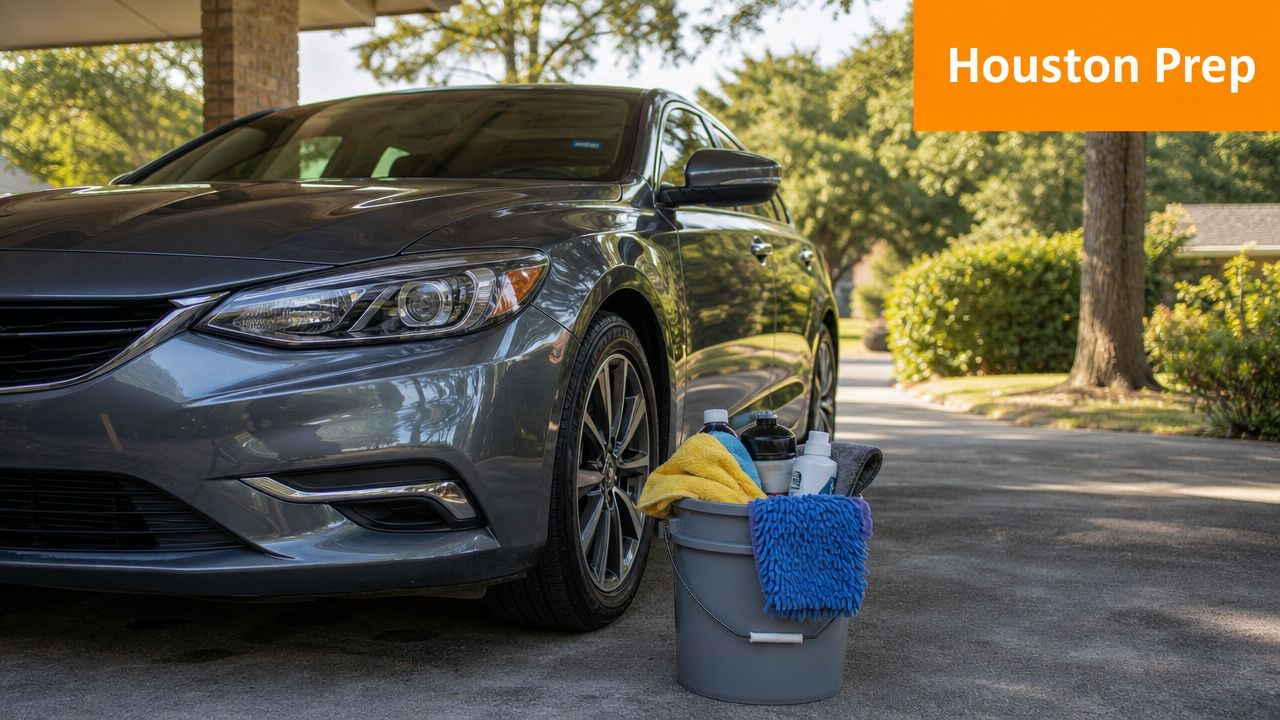
Pick the right wash location
A good DIY car wash in Houston starts with shade and drainage. A driveway works if you can keep part of the car out of direct sun and move quickly panel by panel. A self-serve bay can be smarter when your home setup leaves the vehicle exposed.
Houston has enough car-care demand to support both options. WashIndex's Houston market breakdown lists 4,442 car wash locations across 9 counties, including 10 self-serve bays, which says a lot about how established washing culture is here. For a home enthusiast, that means you can be selective. Use your driveway when the conditions are right. Use a bay when they aren't.
Practical rule: If the panel feels hot to your hand, it's too hot to start washing.
Gear that actually matters
You don't need a trailer full of detailing tools, but you do need more than an old sponge and a single bucket.
- Two buckets with grit separation in mind: One holds soap, the other handles rinse duty so you're not carrying grit back to the paint.
- A dedicated microfiber wash mitt: Skip kitchen sponges and bath towels. They don't release dirt safely.
- A hose foam sprayer or foam gun: This helps coat the surface before contact. One option is the SwiftJet foam gun, which connects to a standard garden hose and lays down wash foam to lubricate the surface before hand washing.
- Wheel tools kept separate: Use separate brushes or mitts for wheels and tires. Brake dust doesn't belong anywhere near your hood.
- Drying towels ready before you begin: In Houston, drying isn't the end. It's part of the wash plan from the start.
DIY vs. Commercial Wash in Houston A Quick Comparison
| Factor | DIY Setup (with Foam Gun) | Typical Houston Commercial Wash |
|---|---|---|
| Timing control | You choose the safest part of the day | You wash on the business schedule |
| Contact control | You control mitt pressure and wash order | Process depends on the wash format |
| Water spot management | Easier to dry panel by panel at home | Can be harder if you leave wet and drive off |
| Wheel and bug cleanup | You can spend extra time where needed | Usually faster, less tailored |
| Convenience | Requires setup and cleanup | Faster if you need a quick exterior wash |
The biggest pre-wash mistake is treating setup like dead time. In Houston, setup is the wash. Get the timing, tools, and location right, and the rest gets much easier.
The Pro-Level Foam Wash Method Step by Step
In Houston, the wash can go sideways fast. A panel that feels only lightly dusty can hold abrasive grit, and once that grit gets trapped in your mitt, you get the faint swirls that show up the next time the sun hits the paint.
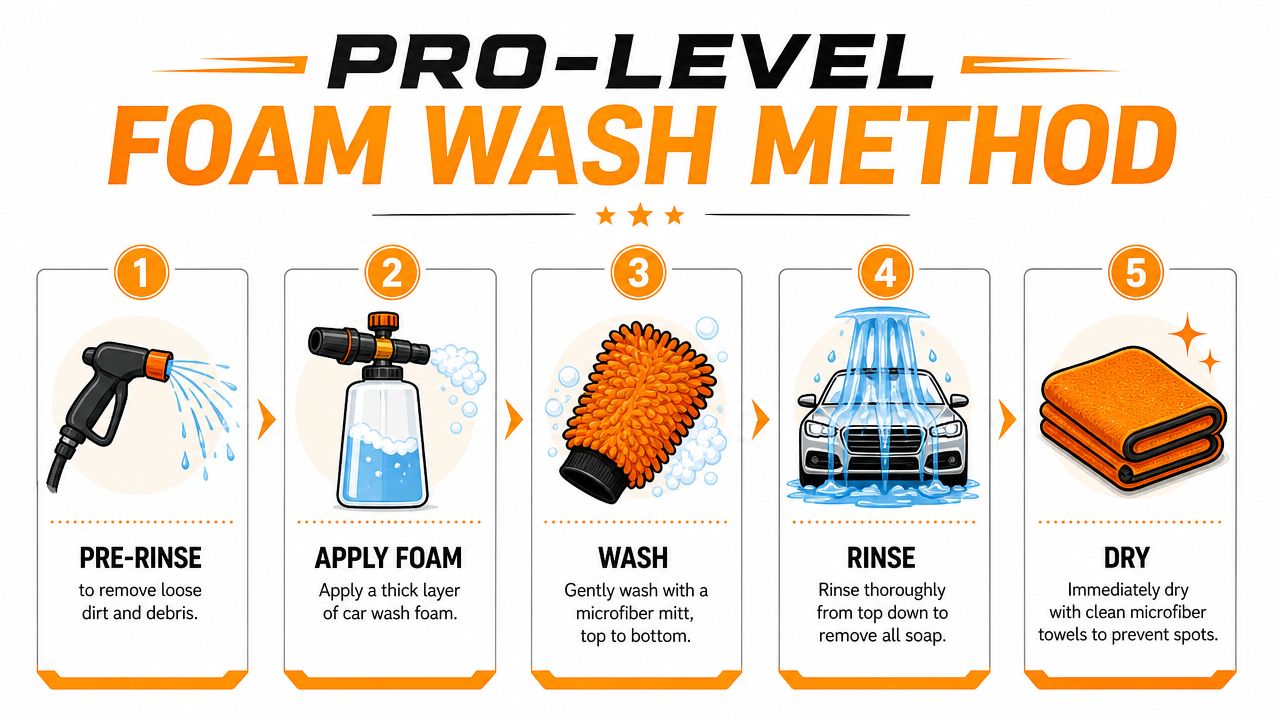
Start with a real pre-rinse
Get loose contamination off the car before soap touches it. Spend extra time on the lower doors, rocker panels, rear bumper, front bumper, and behind the wheel openings. Houston roads load those areas with the gritty mix that does the most scratching.
Use enough water volume to move debris off the surface, not just wet it. If you still see a dusty film or feel grit on the lower panels, rinse again. A second pass is cheaper than polishing.
Lay down foam before hand contact
Foam helps for one reason. It gives the wash media more lubrication while road film softens and starts to release.
That matters more in Houston than generic car wash advice admits. Pollen, oily traffic film, bug residue, and baked-on dust do not rinse off as easily after a hot day. A hose-based foam setup gives you a useful buffer before the mitt ever touches the clear coat, and this foam cannon washing guide from SwiftJet shows the basic workflow.
Let the foam dwell briefly, then move. Do not wait around for a thick blanket of soap to perform miracles, especially in heat. If foam starts drying at the edges, you waited too long.
Use a disciplined two-bucket wash
The soap matters less than the pattern. Wash the cleanest sections first and save the grime-heavy areas for last. Roof, glass, hood, and upper body panels come first. Lower doors, bumpers, and the area behind the wheels come at the end.
Use straight-line passes. Circular scrubbing hides bad habits until direct sunlight exposes them. Keep the mitt flat, use light pressure, and let the shampoo do the work.
A simple panel-by-panel routine works:
- Wash one section at a time. A door, half a hood, or one fender is enough.
- Rinse the mitt in the rinse bucket until the fibers release the dirt.
- Reload with fresh soap water only after the mitt is clean.
- Flip to a clean side often.
- Switch wash media if the mitt starts looking loaded or feels grabby.
If the paint feels rough even after the pre-rinse and foam, do not press harder. Wash it gently and deal with bonded contamination later. Pressure is what turns dirt into scratches.
Here's the process in motion if you want a visual reference before you start:
Handle wheels like they're a separate job
Treat wheels, tires, and wheel wells as their own wash zone. Brake dust and road grit are harsher than what sits on the hood or doors, and that contamination should never share brushes, mitts, or bucket water with your paint.
I like to clean wheels after the body pre-rinse, while the surface is still cool and before final paint contact. That order keeps the job organized and lowers the chance of dragging wheel grime onto a freshly washed panel.
If your windshield still shows stubborn spotting after the wash, Sparkle Tech's guide to clean auto glass is a useful reference. Glass usually reveals mineral residue before the paint does.
Achieving a Spot-Free Finish in High Heat
A bad drying routine ruins a good wash faster than almost anything else in Houston. You can wash carefully, rinse thoroughly, and still end up with mineral spotting if you leave water sitting on the surface for “just a minute.” In this climate, that minute disappears fast.
That's why I treat drying as paint care, not cleanup. Air-drying sounds harmless, but it leaves minerals behind as the water evaporates. If your rinse water isn't spot-free, the paint will tell on you.
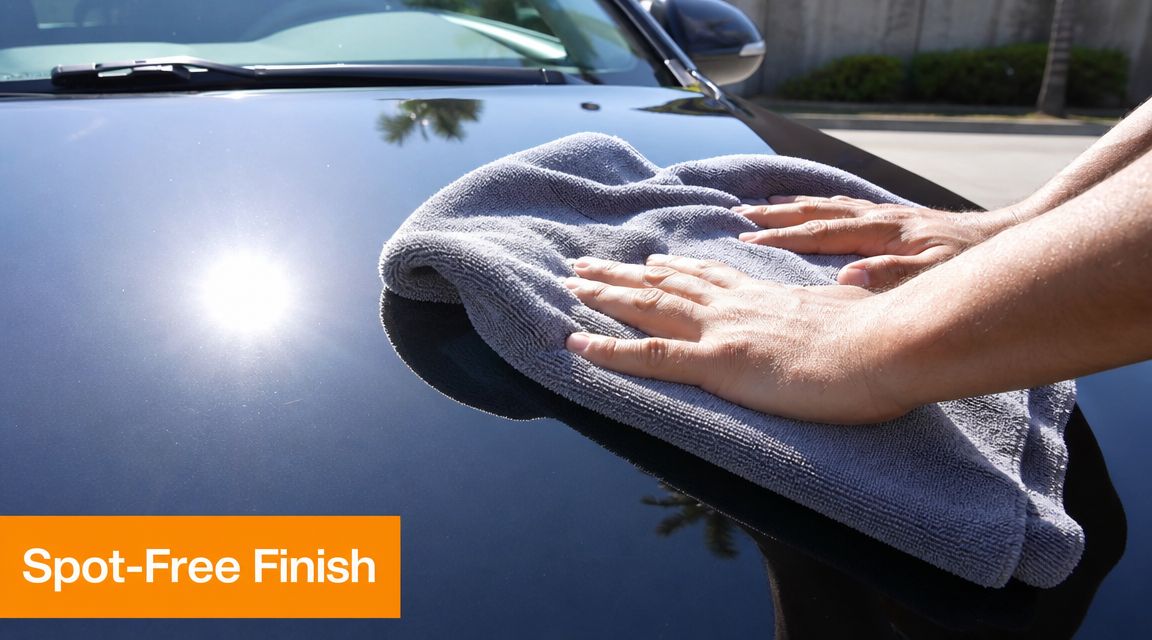
The two drying methods that work
The safest finish usually comes from one of two approaches.
- Forced air first: A dedicated car dryer or even a clean air blower helps push water out of mirrors, trim, badges, lug recesses, and emblems. That cuts down drips that reappear after you think you're done.
- Plush microfiber towels with a drying aid: The towel should glide, not scrub. Mist your drying aid lightly and pull the towel across the panel with almost no pressure.
If you've been fighting stubborn windshield spotting, Sparkle Tech's guide to clean auto glass is worth reading because glass usually shows mineral residue before painted panels do.
One hard truth: In Houston, a rushed drying stage creates more visible defects than a rushed wash stage.
How to stay ahead of the sun
Work one section at a time. Don't rinse the whole car and then look for your towels. Keep the drying stack close, and move immediately from final rinse to drying.
If you're serious about reducing mineral spotting at the source, a filtered rinse can help. Enthusiasts looking into that route can compare options in this overview of DI water systems for car washing. It's not mandatory for a good result, but it does make Houston-style drying less stressful.
A clean finish in high heat comes down to discipline. Shade where possible. Early or late timing. Fast but gentle drying. No standing around admiring the foam.
Conquering Houston's Unique Seasonal Car Care Woes
Houston doesn't give your paint the same kind of dirt all year. One month it's yellow pollen glued to every horizontal surface. Then a storm rolls through and leaves gritty splash-back behind the wheel arches. Then bug season turns the front bumper into a chemistry experiment.
That's why the wash routine has to flex with the season.
Spring pollen without scratching the hood
The classic Houston spring scene is a dark car wearing a yellow film by breakfast. The mistake is wiping it dry with a duster or a quick-detail towel. Pollen looks soft, but once it mixes with road dust, it becomes risky.
For pollen-heavy days, start with a gentle rinse and let water carry as much off as possible before foam or mitt contact. If the buildup is light, a careful rinse-and-dry maintenance wash is often safer than a full aggressive scrub. If it's heavy, use your normal lubricated wash routine and keep the mitt extra clean.
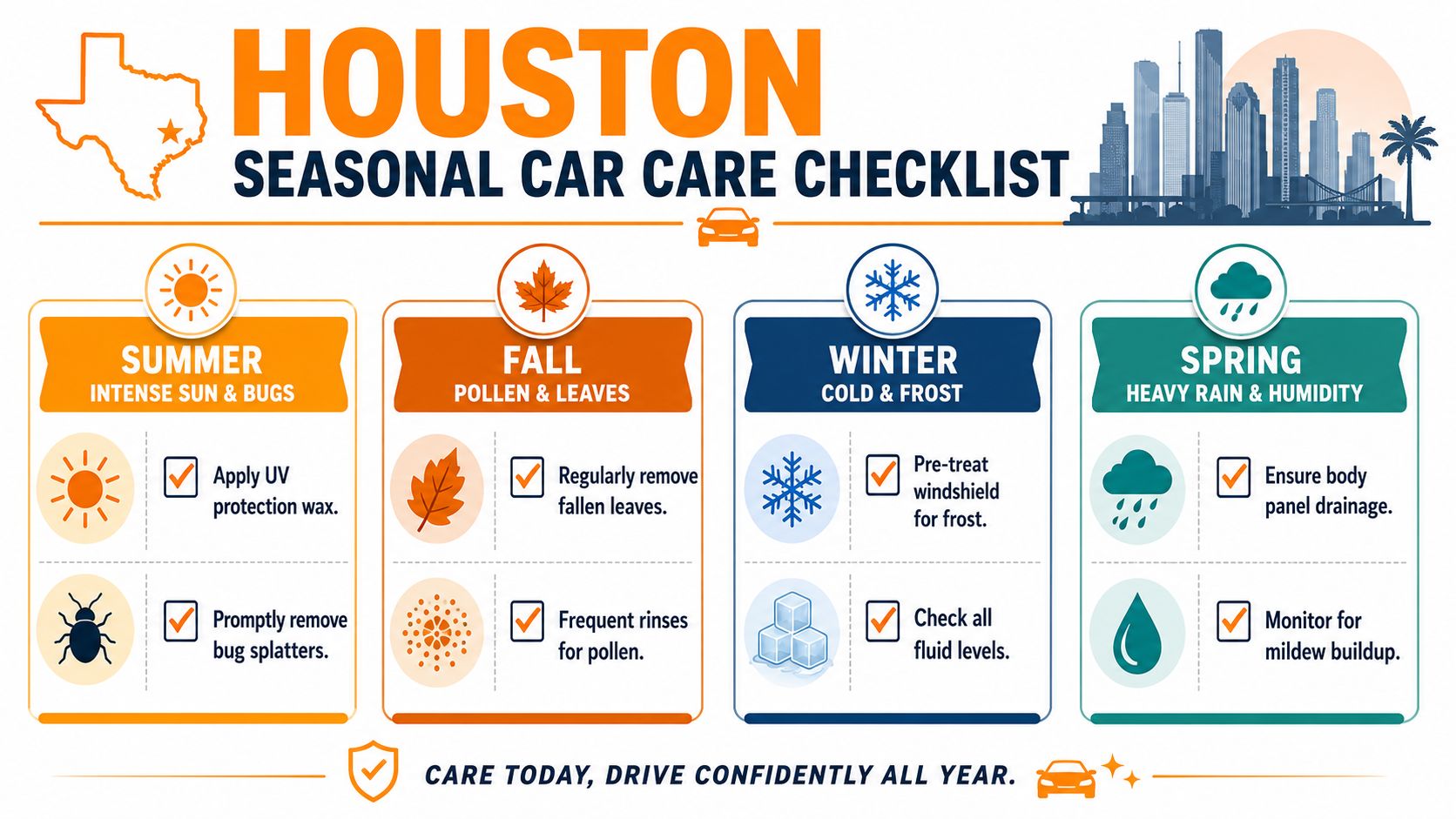
Thunderstorm grime and road film
After a hard rain, the car can look cleaner from a distance and filthier up close. Wet roads throw grime onto the lower doors, rear bumper, and trunk area. You'll usually see a dirty line along the lower body where splash contamination dried in place.
That's when the pre-rinse earns its keep. Spend extra time on lower panels, behind the wheels, and around mud-collecting seams. If you skip that and go straight to mitt contact, you're asking the wash media to drag storm grit across the paint.
Rain doesn't clean a Houston car. It rearranges the dirt.
Bug season and acidic residue
Bug remains on the front bumper, mirrors, and windshield need quick attention. The longer they sit in the sun, the tougher they get and the more likely they are to stain trim or mark the finish.
A practical habit is to do short front-end cleanups between full washes. Pre-soak the bug-covered area with wash solution or foam, let it soften, then use a dedicated microfiber or bug-safe wash media with light pressure. Don't attack dried splatter with your fingernail or a dry towel.
Tree sap and organic fallout
Park under a live oak for a week and you may get sticky spots mixed with dust, leaf debris, and bird mess. The safest approach is patience. Soften contamination first, then lift it away with lubrication. Hard rubbing usually turns a small cleanup job into a polishing job.
Seasonal paint care in Houston is less about buying different products for every month and more about reading the surface correctly. If the contamination is dry and loose, rinse first. If it's sticky, soften first. If it's gritty, increase lubrication and reduce pressure.
Water-Smart Washing and Common Problem Fixes
A smarter wash routine usually saves both water and paint. Those goals aren't in conflict. They support each other. When you use controlled rinses, foam to localize soap, and a more deliberate contact wash, you waste less water and create fewer mistakes.
That matters because home washing can get wasteful fast. Soap Hand Car Wash's discussion of Houston home washing notes that a traditional home wash can use over 100 gallons of water, while efficient techniques and tools can cut that down. The key takeaway isn't guilt. It's that sloppy washing tends to be both rougher on the car and less efficient.
Water-smart habits that also improve results
- Use the hose with purpose: Rinse to remove loose contamination, then shut the water off while you wash.
- Foam the surface instead of flooding it endlessly: That keeps soap where you need lubrication instead of sending it down the driveway.
- Wash smaller sections: You'll use less re-rinse water because soap won't dry before you get back to it.
- Choose vehicle-safe soap: A pH-balanced wash soap is easier on protection layers and simpler to manage in a home setup.
If you're trying to fine-tune hose output for home washing tools, this guide on garden hose PSI helps explain why flow and control matter more than brute force for most DIY setups.
Quick fixes for the problems that annoy people most
| Problem | What usually goes wrong | Better fix |
|---|---|---|
| Tar spots | Scrubbing them during the wash | Wash first, then treat the remaining spots gently with a dedicated tar-safe approach |
| Light swirls | Using pressure to “clean harder” | Stop adding more damage. Improve wash media, wash order, and drying technique before polishing |
| Tree sap | Picking at it dry | Soften it with lubrication first, then remove it carefully |
| Streaky glass | Dirty towel, dried minerals, hot glass | Clean glass in the shade with fresh towels and follow up if residue remains |
| Reappearing drips | Water trapped in mirrors and trim | Blow out crevices before final towel drying |
The best DIY car wash Houston routine is usually the one that looks almost boring. Controlled water use. Clean tools. Low pressure. No panic.
Your Final Walkaround and Lasting Protection
Houston will punish a rushed finish. A car can look perfect from ten feet away, then show drip trails under the mirrors and dusty haze on the glass once it sits in the sun for five minutes.
Do one slow lap before you put anything away. Check the lower doors, rear bumper, mirror bases, fuel door, license plate recess, and badge edges. Those are the spots that hold water and leave mineral marks after you thought the job was done. On dark paint, crouch a little and change your angle. That is how you catch faint residue before it dries hard.
The last layer should help the paint, not add work. A light drying aid, spray sealant, or spray wax gives the towel more slip and leaves behind short-term protection that stands up better to Houston pollen, surprise showers, and heavy humidity. Keep it light. Too much product smears in warm air and turns a clean finish into another buffing session.
Final details worth doing
- Glass check: Wipe exterior glass again with a dedicated dry towel if you see any haze. Windshields show leftover minerals fast in afternoon light.
- Door jamb wipe-down: Hit the jambs, trunk edges, and the inside of the fuel door. Those areas throw dirty water back onto clean paint.
- Tire finish: Use a water-based dressing in a thin coat if you want a finished look. Thick dressings sling onto the paint the first time you drive.
- Protection topper: Add a quick topper only if the surface is fully dry and cool enough to wipe clean. In Houston heat, less product usually gives a better result.
One more habit pays off. Back away, then come in close. From a distance you catch uneven tire finish and streaky glass. Up close you find trapped water, missed bugs, and leftover residue around trim.
A good wash gets the dirt off. A careful final walkaround keeps the finish sharp until the next round of pollen, rain, and hard-water spots shows up.
If you want to make your home wash routine faster and more controlled, take a look at SwiftJet. Its hose-connected foam gun fits naturally into a lubricated, low-friction wash process that suits Houston, especially when you need to work efficiently before heat and water spotting catch up with you.
