

It starts the same way for a lot of people. The hose is out, the bucket is filled, the car is sitting in the driveway, and twenty minutes later you're still chasing streaks, dragging grit around, or wondering why the finish looks dull instead of clean. The problem usually isn't effort, it's that the cleaning equipment and supplies aren't working as a system.
That's why the right kit matters more than brute force. A good wash is built from three parts, mechanical tools, chemical agents, and water and rinse. If one part is wrong, the result usually suffers, even when you work harder.
The practical difference shows up fast in the world. A proper mitt can lift grime without scratching, a foam applicator can give chemistry time to loosen dirt, and a clean drying towel can finish the job without leaving lint or water spots. Swap any one of those for a cheap substitute, and you often spend more time fixing the mess than cleaning the car.
What Cleaning Equipment and Supplies Actually Do
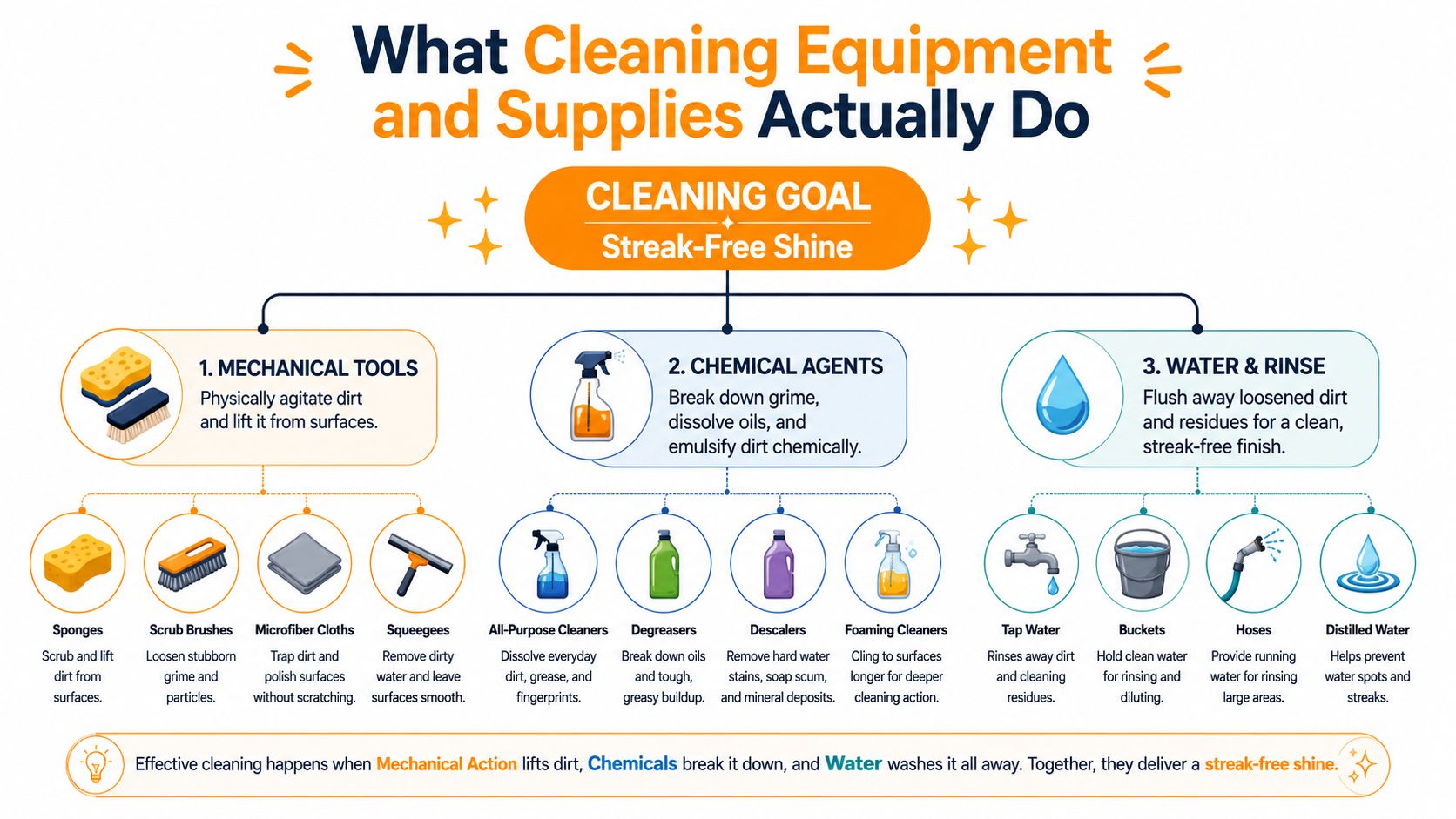
A wash works best when the gear does different jobs instead of competing with each other. Mechanical tools move and lift dirt, chemicals loosen it, and water flushes the mess away. That simple division is why a weak sponge with strong soap still underperforms, while a proper mitt with the same soap can finish cleaner with less rubbing.
The chain matters more than one flashy tool
A lot of buyers start with the wrong question, usually “What should I buy first?” The better question is, “What part of the wash am I missing?” If you already have decent soap but keep scratching paint, the issue is probably your contact tool. If the car feels slick but still looks hazy, your rinse and drying step may be the weak point.
That's why changing one component can do more than just putting in extra elbow grease. A microfiber wash mitt holds dirt differently than a rough sponge, a foam applicator keeps cleaner in contact with the surface longer, and a drying towel finishes without adding new marks. Each piece changes the outcome because each one affects how dirt is lifted, carried, and removed.
Practical rule: Buy for the job the tool actually does, not for how heavy or complicated it looks.
The phrase “cleaning equipment and supplies” sounds broad because it is broad, but the job stays specific. One setup might be right for a driveway detail, another for a commercial bay, and another for an RV trip. Once you see the system, product pages make more sense because you can place each item in a role instead of treating it like a standalone miracle.
The Seven Tool Families Worth Knowing
The easiest way to shop without wasting money is to sort gear into families. That keeps a foam gun from getting confused with a pressure washer, or a drying towel from being lumped in with a wash mitt. It also keeps you from buying five versions of the same thing.
Applicators and pressure tools
Foam applicators include foam guns and foam cannons. Their job is to lay down soap evenly so it can dwell and loosen grime before contact washing. Weekend users and RV owners usually get the most value from them, while a pro may use them for speed and consistency. A foam gun that runs off a garden hose sits in a simpler, lighter bracket, while a foam cannon used with a pressure washer lands in a heavier-duty bracket.
Pressure washers and electric washers force rinse water through a nozzle at much higher energy than a hose alone. They're for users who want faster soil removal, stronger pre-rinsing, or repeatable output on large jobs. They also tend to occupy a higher price bracket because the machine, not just the accessory, is part of the purchase.
Contact, chemistry, textiles, and protection
Brushes and wash mitts are the tools that touch the surface. They matter because they decide whether dirt gets lifted or dragged. Liquid chemistry includes soaps, degreasers, and wheel cleaners, and each one belongs to a different contamination type. Microfiber textiles cover drying towels, glass cloths, and waffle weaves, and they're the finish stage that prevents lint and streaking.
For deeper reading on textile selection, this microfiber towel guide is a useful companion because towel choice changes drying quality more than many expect.
Safety and maintenance gear
PPE means gloves and eye protection. If you're handling concentrated products or spraying under pressure, they're not optional extras. Storage and maintenance gear includes buckets with grit guards, hose quick-connects, and bins that keep the kit organized and dry. That's the stuff that turns a random pile of supplies into something you'll use again next weekend.
For a broader operational view of kit planning, the professional carpet care tips article is useful because it treats supplies as part of a repeatable routine, not a one-off shopping trip.
Matching the Kit to the User
The right kit depends on who's using it and where. A weekend driveway wash, a mobile detailing route, and an RV campsite clean all need different storage space, water access, and speed. The product is only half the story.
DIY weekend warrior
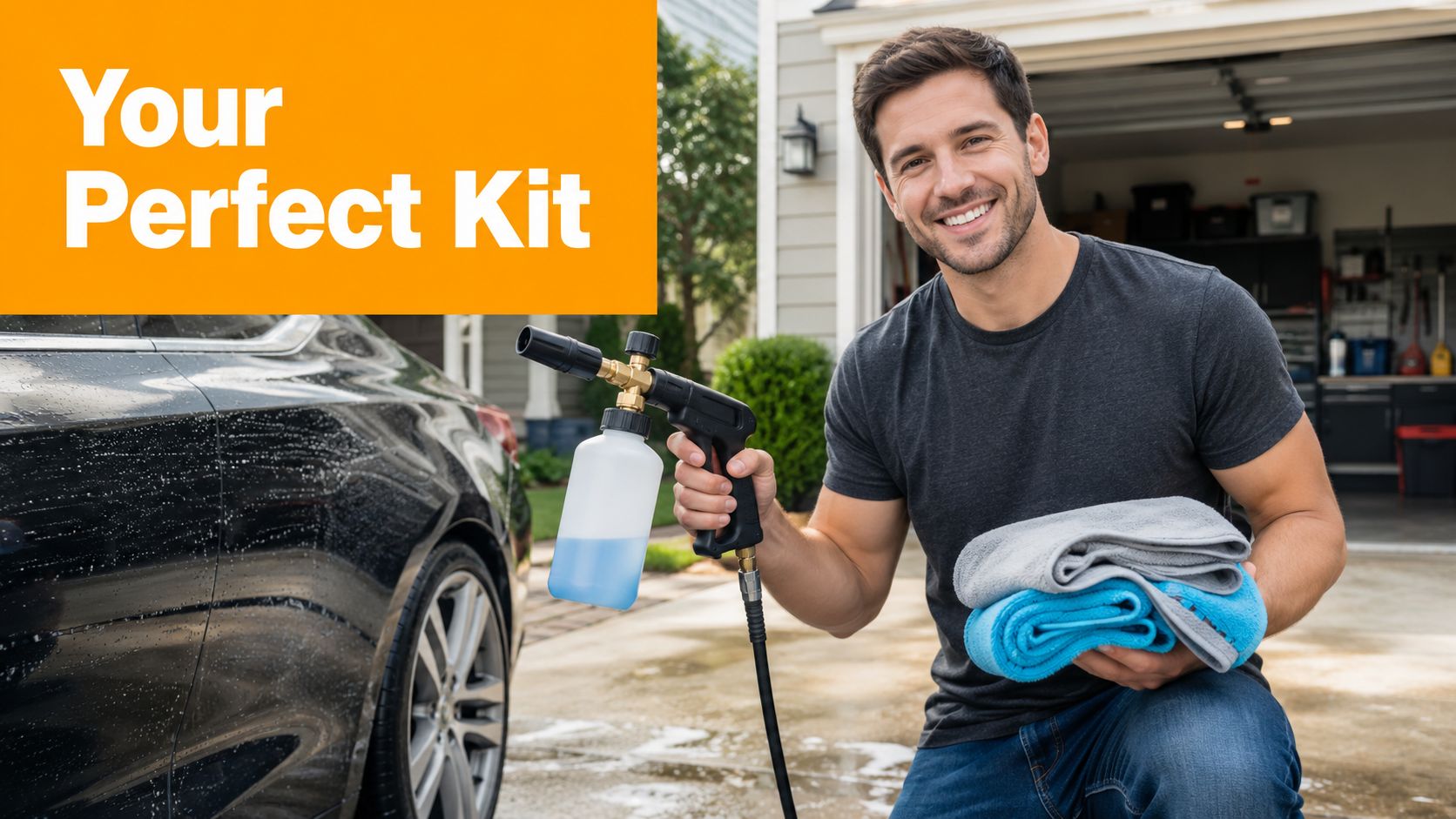
The DIY weekend warrior usually wants visible improvement without turning the garage into a warehouse. A smart starter kit is a foam gun, two buckets, a microfiber mitt, and a good drying towel. That combination gives you the biggest jump in finish quality with the smallest storage footprint.
For this user, the tool that pays for itself fastest is the foam gun. It helps distribute soap evenly, reduces the temptation to scrub too hard, and makes a home wash feel more controlled. A lot of beginners notice that the wash gets easier before they even notice it gets faster.
Mobile pro
A mobile or professional detailer cares about repeatability, not just a clean one-time result. That kit usually expands to a pressure washer, dedicated wheel bucket, stronger chemicals, more microfiber, and a larger PPE set. The workflow has to stay efficient because every extra minute compounds across the day.
For pros, the tool that earns its cost fastest is the pressure washer. It shortens rinse time, supports stronger pre-cleaning, and helps standardize results from vehicle to vehicle. A clean setup also matters here, because the day goes sideways quickly when hoses, bottles, and towels are scattered across the job.
RVer and outdoor traveler
RVers need compact gear that works across more than one surface. Exterior panels, awnings, windows, tow accessories, and camping gear all end up in the same maintenance bag. That makes microfiber the standout because it stores small, works on multiple surfaces, and doesn't demand a big machine to be useful.
For that user, the fastest-paying item is the microfiber kit. It dries, wipes, buffs, and finishes without much bulk. A foam gun can still make sense if water access is simple, and SwiftJet's garden-hose foam gun is one example of a portable option that fits that kind of use.
Rule of thumb: If storage is tight, buy tools that do more than one job. If the vehicle gets cleaned often, buy tools that survive repeated use without slowing you down.
How to Choose the Right Gear
Good gear selection starts with constraints, not marketing. Surface type, water source, storage space, and wash frequency tell you more than packaging ever will. That's the filter that keeps you from buying the wrong kit twice.
Start with your water and space
If you live in an apartment or have only a shared spigot, a foam gun fed by a garden hose makes more sense than a full pressure-washer setup. If you've got a driveway, outdoor power, and room to stage equipment, a pressure-washer-fed foam cannon becomes much more practical. The difference isn't abstract, it's about how much setup friction you're willing to tolerate before you even touch the paint.
For hospitality environments, product planning often gets more disciplined because the kit has to support repeat use and documented handling. The detergents and sanitisers for hospitality resource is a good example of how buyers think when hygiene, refill control, and workflow matter.
Match the surface to the tool
Modern clear coats usually reward soft microfiber more than stiff brushing. The goal is to move contamination off the paint, not press it deeper into the finish. Longer-reach brushes can make sense for tall vehicles, trailers, or RV sides, but a sedan owner usually gets more benefit from a gentler contact system.
For users who want portable gear that stays compact, this portable cleaning equipment guide is relevant because portability changes what's realistic to carry, store, and deploy.
Use frequency as your spending guide
If you wash less than monthly, prioritize ease of use and storage. If you wash weekly or more, prioritize durability and chemical efficiency. That's where cheap tools often stop being cheap, because they wear out, waste product, or make the job unpleasant enough that you skip it.
A simple diagnostic helps:
- Limited water access: Choose hose-fed tools and compact textiles.
- Large driveway or shop bay: Choose stronger rinse tools and bigger buckets.
- Delicate exterior finishes: Choose soft mitts and quality microfiber first.
- Frequent washing: Spend more on tools that hold up and measure product well.
A Real Vehicle Cleaning Workflow
A good wash is mostly about order. Start on a cool panel, remove loose grit first, and keep the dirtiest work for last. That sequence protects the finish and keeps the tools doing their jobs instead of fighting each other.
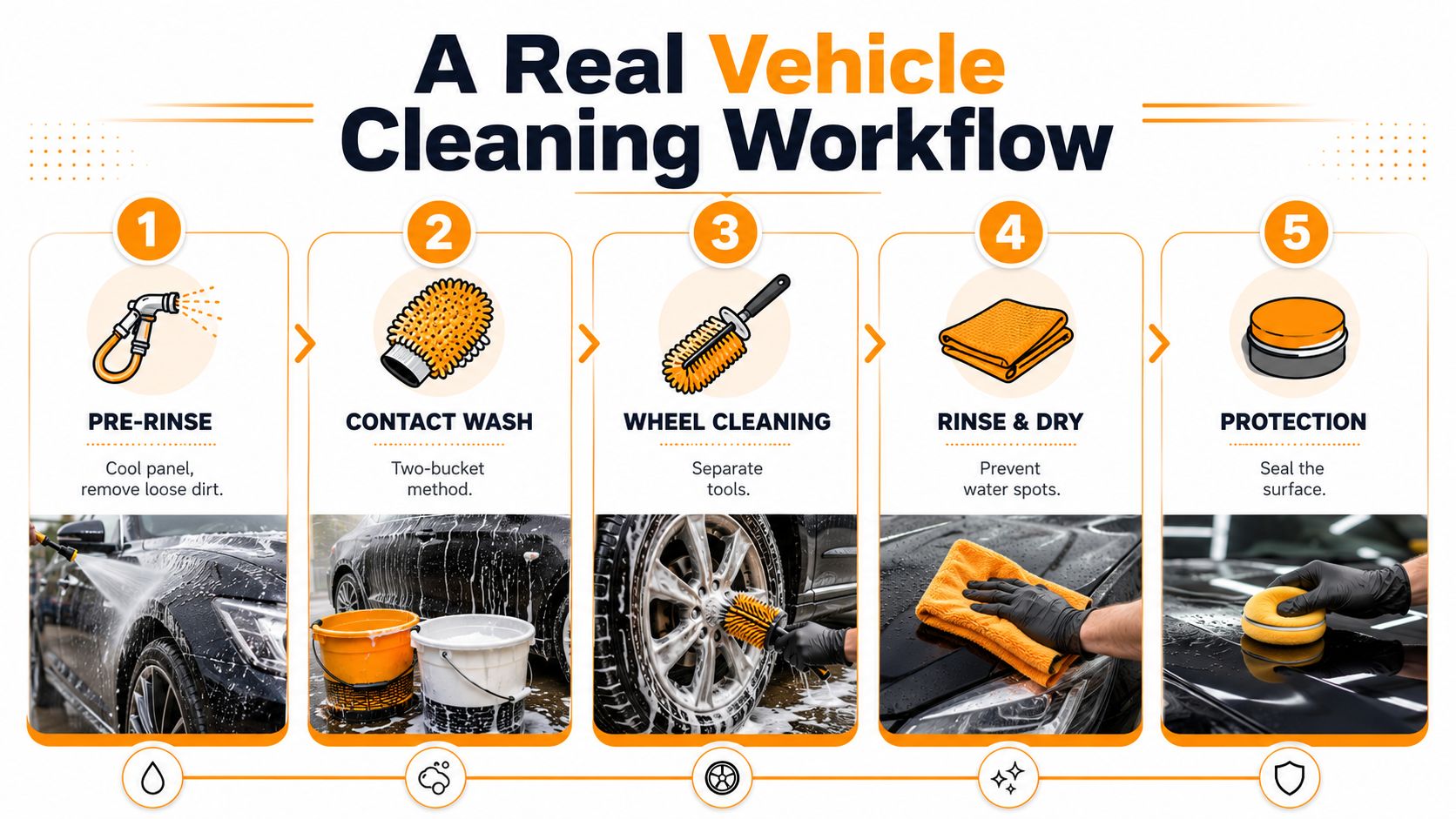
Here's a clean Saturday workflow that works in a driveway or a shop bay:
- Pre-rinse the panel. Use a hose or washer to knock off loose grit before anything touches the paint.
- Apply foam. Let the chemistry dwell long enough to soften the film.
- Contact wash with two buckets. One bucket holds soapy solution, the other holds rinse water with a grit guard, so dirty residue doesn't keep riding back onto the mitt.
- Clean wheels and lower panels separately. Those areas carry the heaviest contamination, so they should never share the same mitt or bucket as the paint.
- Dry and inspect. Use a blower or a clean microfiber drying towel, then hit any streaks with a light finishing product.
The gear matters because each stage uses a different family of tools. The hose or pressure source handles the first flush, the foam applicator gives dwell time, the mitt handles safe contact, and the microfiber finish keeps the result clean. A good wash isn't one big motion, it's a set of smaller jobs stacked in the right order.
Practical detail: If you rush the drying step, you often undo the work you just finished by leaving minerals and streaks behind.
If you've ever wondered why a clean backup camera lens suddenly makes the whole rear end feel better maintained, that's the same logic at work. The remove blur from backup camera guide is a helpful reminder that small surfaces still need the right sequence and the right cloth.
| Workflow Stages and the Gear Each Stage Uses | |||
|---|---|---|---|
| Stage | Primary Tool | Supporting Supplies | Why It Matters |
| Pre-rinse | Hose or washer | Water source, nozzle control | Removes loose grit before contact |
| Contact wash | Mitt or brush | Soap, two buckets, grit guard | Reduces scratching during scrubbing |
| Wheel cleaning | Dedicated brush | Separate cleaner, bucket | Keeps heavy grime away from paint tools |
| Drying | Microfiber towel or blower | Clean towel, drying aid if needed | Prevents water spots and streaking |
| Finish check | Soft cloth | Light spray product | Catches leftover film and smears |
Cost Versus Performance Tradeoffs
Price tags are the wrong way to compare most cleaning gear. The question is cost per clean vehicle, because that's where cheap tools reveal their hidden problems. A tool that wastes soap, sheds fibers, or forces extra passes usually costs more than the better-looking option sitting next to it.
A useful example comes from dilution. The janitorial guidance in the source brief notes a common 1 to 4 ounces per gallon dilution range, which means concentrate stretches much farther than most first-time buyers expect. When product is metered properly, a slightly better applicator can save chemistry over time, while a sloppy one burns through bottles.
That's why the cheap stuff often fails in predictable ways. A low-grade mitt can trap grit and shed fibers, which means you're buying both poorer results and more replacement cycles. A solid microfiber towel, by contrast, stays useful through repeated care and gives you a cleaner finish every time.
Spend more on the parts that touch the surface and control the product. That usually means a foam gun, microfiber, and gloves. Spend less on novelty bottles, color-coded caps, and gimmicky extras that don't change the wash.
Good buy, bad buy test: If the tool changes how clean the surface gets or how safely you work, it's worth real money. If it only changes how the kit looks on a shelf, skip it.
The deeper point is simple. Expensive doesn't mean overpriced when the item lowers waste, improves repeatability, and lasts. Cheap only helps when it still performs cleanly every time you use it.
Safety and Environmental Responsibility
The safest cleaning chemistry is usually the least dramatic one. The CDC recommends neutral detergents with a pH between 6 and 8 that dissolve easily in warm and cold water, because they remove soil effectively while reducing irritation risk and avoiding residue from incomplete mixing. That advice matters in real use, because a cleaner that doesn't dissolve properly leaves both performance and comfort on the table. CDC guidance on cleaning supplies and equipment
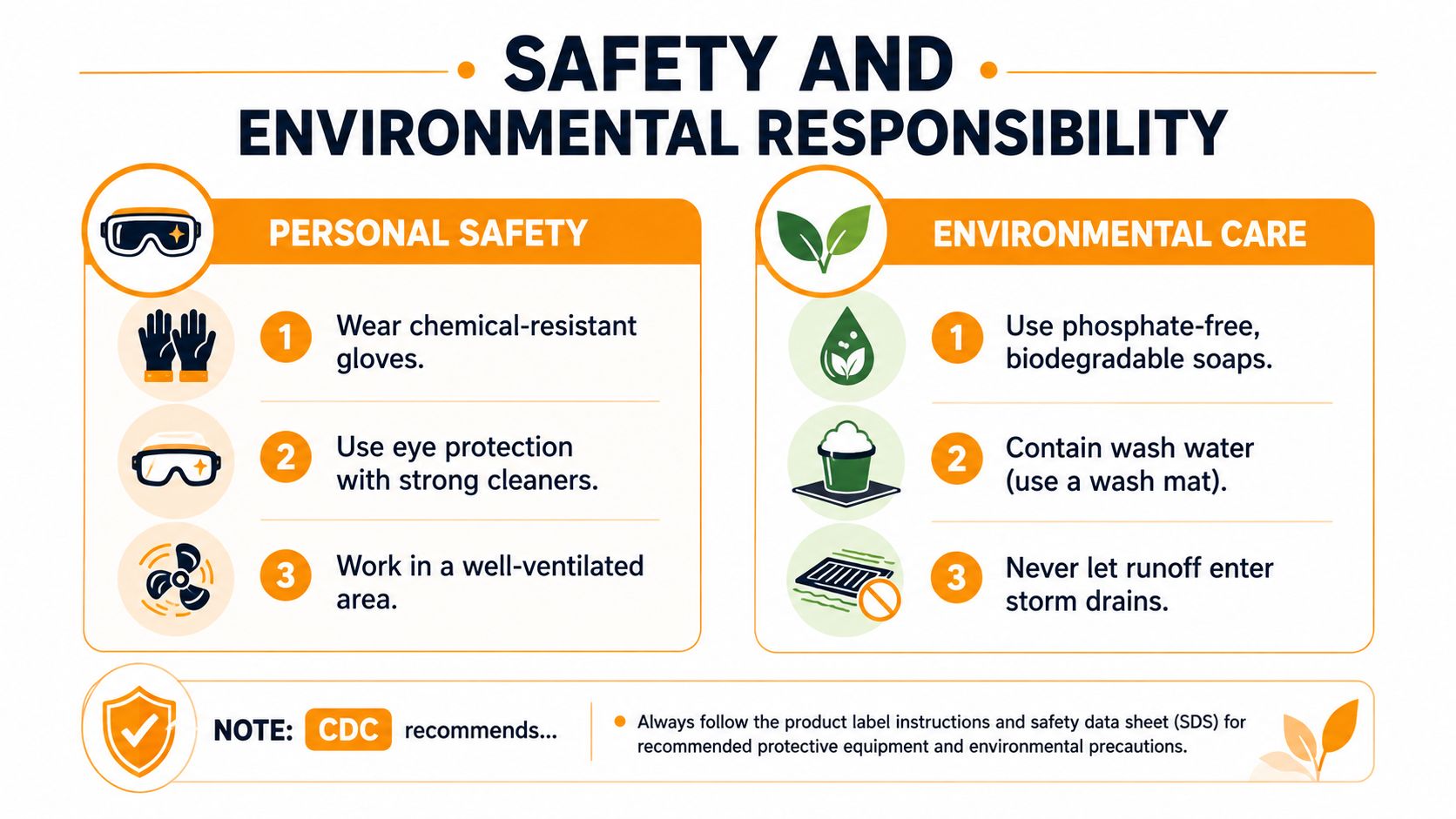
Concentrated products bring their own rules. The public-sector guidance in the brief emphasizes closed dilution-control systems, concentrated formulations, and clear documentation because controlled dispensing reduces worker exposure and lowers the chance of handling errors. In plain terms, that means follow the label, don't guess at dilution, and don't mix products just because they seem related.
Keep the person and the wash water in mind
Wear nitrile gloves when handling concentrated cleaners, and use eye protection whenever spray or pressure can rebound. Work in a ventilated area, especially if you're using stronger degreasers or wheel products. And never combine chemicals in a bucket or bottle, even if you've used them separately before.
Water care matters too. Use shut-off nozzles so you're not running water between passes, and contain runoff where local rules require it. Concentrates help from a logistics standpoint because they move less water in shipping and take up less storage space at home.
The safest kit is usually the one you can control without thinking too hard. That's a sign the gear matches the job, not the other way around.
Storage and Maintenance That Extends Gear Life
A decent kit only stays decent if you take care of it. Most of the frustration people blame on product quality comes from bad storage, dirty textiles, or clogged nozzles. Ten minutes after the wash can save you a lot of money before the next one.
Keep textiles clean and separate
Microfiber should be washed separately from cotton laundry and kept away from fabric softener. Softener coats the fibers and kills the grab that makes microfiber useful in the first place. Store it dry in a closed bin so dust doesn't settle into it between jobs.
Flush and protect the mechanical parts
Foam guns and pressure-washer wands should be flushed with clean water after each session. Clear the nozzles, check for debris, and keep rubber seals out of direct sunlight so they don't degrade early. The nozzle cleaning guide is a useful reminder that small clogs can turn a good spray pattern into a frustrating mess.
Buckets stack, bottles stay labeled, and PPE should live in one tote. That way the next wash starts with a kit, not a scavenger hunt.
The best cleaning equipment is the equipment still working five years from now.
A little routine goes a long way, rinse, dry, store out of UV, and keep dirty tools away from clean ones. Do that consistently, and your kit stops feeling disposable.
If you want a hose-fed foam gun and a bundled microfiber wash mitt that fit the kind of real-world wash routine covered here, take a look at SwiftJet. It's built for driveway cleaning, camping gear, and quick maintenance without turning the job into a full setup.
