

You've just finished rinsing the mud from your car, but the paint still looks dull under the driveway light. The problem often isn't the soap. It's the grit trapped in the wash mitt, the dirty water returned to the bucket, and the old towel dragged across the clear coat at the end.
A safe bucket car wash is a dirt-management system, not a quick splash with a sponge. Add a careful foam pre-wash, separate wash and rinse water, controlled panel-by-panel contact, and clean microfiber drying, and you can get a crisp finish without needlessly stressing the paint or wasting water.
Assembling Your Swirl-Free Wash Kit
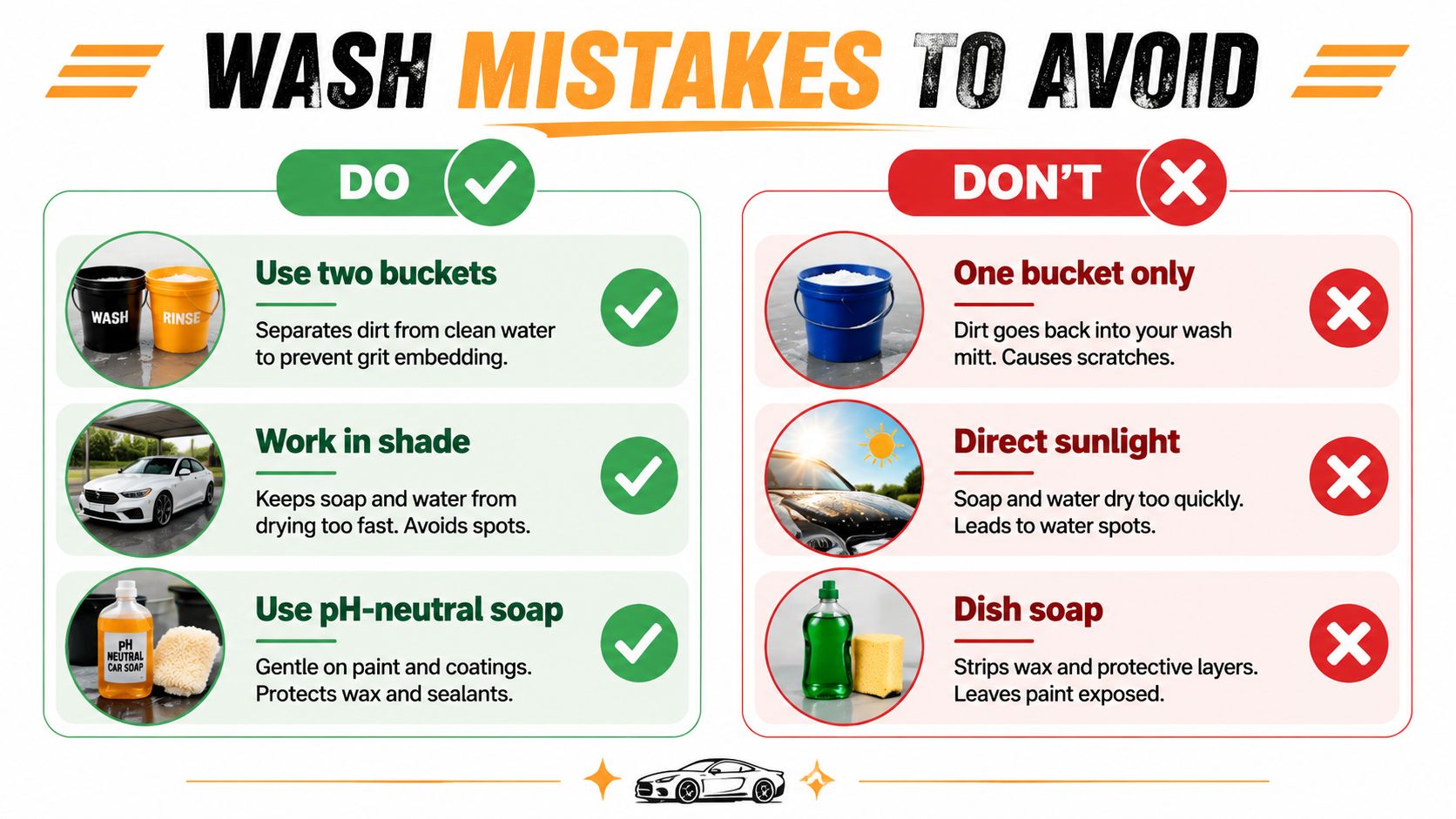
A scratch-conscious wash starts before the hose is turned on. The basic setup should include two five-gallon buckets, two grit guards, a plush microfiber wash mitt, pH-neutral car shampoo, a hose, and dedicated microfiber drying towels. The buckets give you separation. One holds shampoo solution, while the other holds clean rinse water.
Grit guards sit at the bottom of the buckets and help keep released dirt below the surface where the mitt is less likely to collect it. That matters because contamination control is the central weakness of casual bucket washing. Rinse the mitt after every panel, never wring dirty water back into the shampoo bucket, and keep separate tools for wheels and paint. The two-bucket method guidance from Chemical Guys also emphasizes this separation as a practical way to reduce cross-contamination.
Choose tools by their job
- Wash bucket: Mix a pH-neutral car soap at the manufacturer's dilution rate. The soap should provide lubrication, not just foam.
- Rinse bucket: Keep this bucket to clean water only. Its purpose is to remove grit from the mitt before the mitt returns to the shampoo.
- Grit guards: Use one in each bucket when possible. The guard gives the mitt a surface to agitate against while released particles settle below the waterline.
- Microfiber wash mitt: A plush mitt holds suds and gives dirt somewhere to move into. A household sponge tends to keep contamination at the contact surface.
- Wheel tools: Use a separate mitt or brush for wheels, tires, and arches. Brake dust and road film shouldn't share tools with painted panels.
- Drying towels: Keep large, plush microfiber towels reserved for drying. Old bath towels can hold rough fibers and embedded debris.
A garden-hose foam gun, such as SwiftJet, belongs at the front of this setup. It applies a foamy pre-wash through a hose, helping loosen surface grime before the mitt touches the paint. For a more complete home setup, compare the equipment choices in this home car washing kit guide.
The Critical Pre-Wash with a Foam Gun
The safest wash is the one that removes the most dirt before physical contact begins. Road dust, sand, dried mud, and oily film can sit on the surface as a loose abrasive layer. If you immediately wipe that layer with a mitt, you're asking the clear coat to tolerate friction that a pre-wash could have reduced.
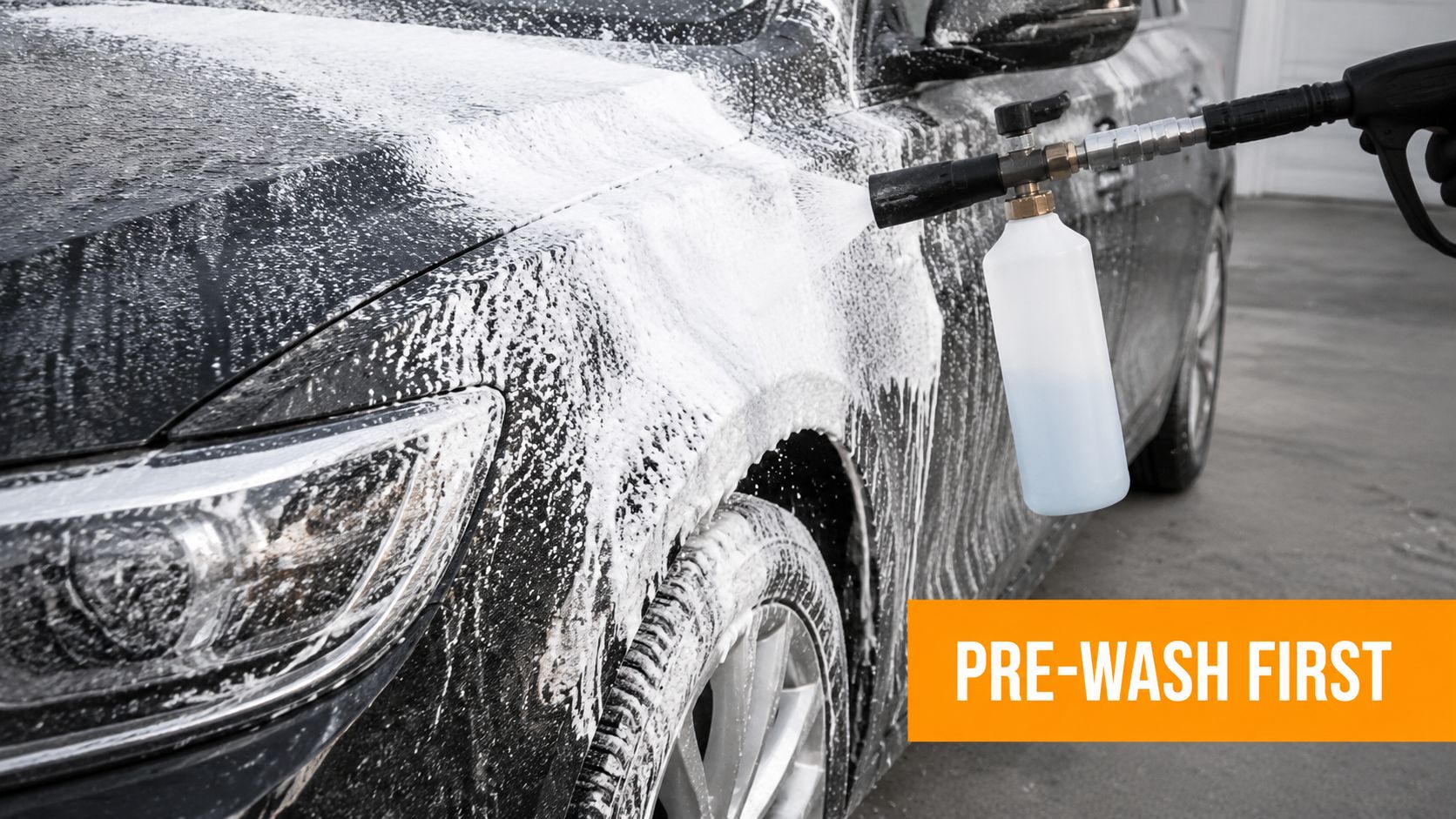
Start with cool paint in the shade. Connect the SwiftJet foam gun to the garden hose, add the recommended soap solution to its bottle, and confirm that the connection is secure. Adjust the spray pattern so you can cover the vehicle consistently rather than concentrating a narrow jet on one area.
Let the foam do the first round of work
Apply foam from the roof downward. Cover glass, upper panels, lower panels, and the rear of the vehicle, where grime often collects. The foam should dwell long enough to soften contamination, but it mustn't dry on the surface. Sun, wind, and a hot panel shorten the safe working window, so work in smaller areas if needed.
After the foam has loosened the film, rinse from the roof down with a steady hose flow. Spend extra attention on mirrors, badges, panel gaps, rocker panels, and the edges of bumpers. Those areas hold debris that can later migrate into the wash mitt.
The foam gun isn't a replacement for the two-bucket contact wash. It's a way to make that contact wash safer by reducing the amount of abrasive material left behind. You'll find the connection and application sequence in this practical guide to using a foam gun for car washing.
Practical rule: If the paint still feels visibly coated with grime after rinsing, don't compensate by scrubbing harder. Rinse again or work in a smaller section.
Once the vehicle has been thoroughly pre-rinsed, inspect the surface. The contact stage should remove the remaining bonded film with lubrication and light pressure. It shouldn't be the stage where you try to grind away thick mud.
Mastering the Two-Bucket Contact Wash
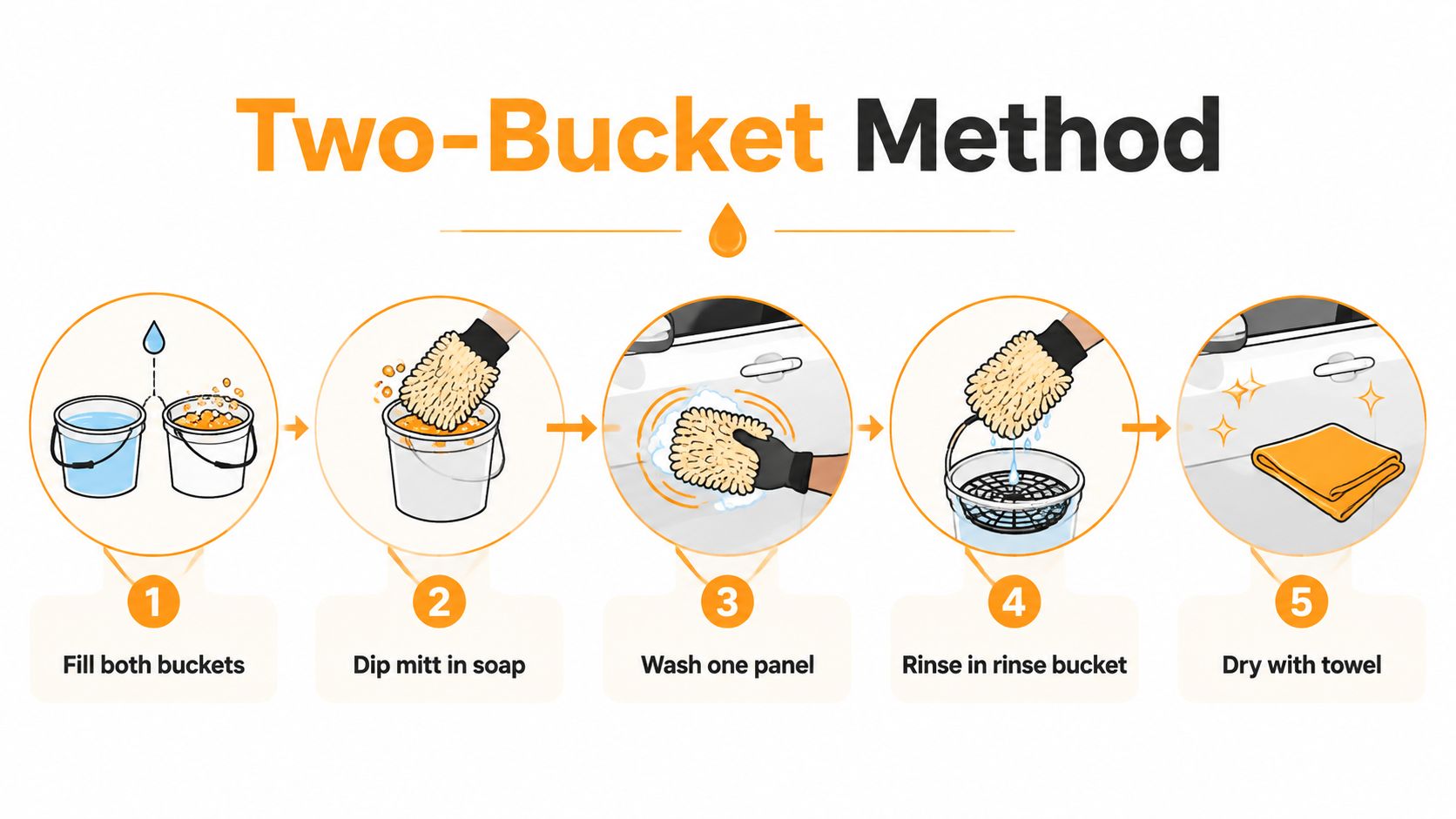
Fill the wash bucket with water and shampoo according to the product label. Fill the rinse bucket with clean water, then place a grit guard in each bucket if available. Keep the buckets close enough that you can move between them without setting the mitt on the ground.
The sequence is simple, but the discipline matters:
- Start with the cleanest surfaces: Wash the roof first, then the upper glass, hood, trunk, upper doors, and lower panels. Lower areas usually carry the heaviest road film, so they belong near the end.
- Load the mitt: Saturate it in the shampoo bucket and lift it without dragging it across the bucket rim.
- Wash one manageable panel: Use straight, overlapping strokes with light pressure. Follow the panel's shape, but don't scrub in circles.
- Rinse immediately: Place the mitt in the rinse bucket after the panel. Agitate it against the grit guard to release dirt.
- Reload with shampoo: Only after rinsing should the mitt return to the wash bucket.
Keep the wash pattern consistent
Wash half the roof, rinse the mitt, reload it, and then complete the other half. Move to the upper glass and upper bodywork before addressing the dirtier lower sections. If a panel is large, split it into smaller working zones. The larger the area, the easier it is to let the soap dry or lose track of where contamination came from.
Never press down to force a stubborn mark away. Add lubrication, rinse the panel, and use a suitable chemical or dedicated decontamination process later if the mark remains. Aggressive pressure turns a cleaning problem into a paint-correction problem.
A dropped mitt is no longer a paint mitt until it has been thoroughly washed. Set it aside and use a clean replacement. Also, don't dip a wheel tool into either bucket. Wheels collect brake dust and road tar, which are much more abrasive than ordinary body-panel dirt.
This two-bucket wash workflow guide describes the same core sequence, pre-rinse first, wash from the roof down, rinse the mitt, and reload it before the next panel.
Rinse the entire vehicle once the contact wash is complete. Remove soap from trim, emblems, glass, and panel gaps before it dries. If the rinse water becomes heavily dirty, replace it rather than relying on a contaminated bucket to clean the mitt.
The Art of Rinsing and Drying Safely
A clean vehicle can still pick up marks during the final rinse and drying stage. Water removal creates fresh contact with the paint, so use the same care that guided the pre-wash and two-bucket wash.
Start with a gentle rinse from the roof downward. Let water sheet across each panel instead of directing a narrow, forceful stream at the surface. A broad flow carries soap away and leaves less standing water for the towel to absorb.
Use the towel as a water remover
Lay a large, plush microfiber drying towel flat on the panel. Blot it, or pull it in one straight pass, then stop once the surface is dry. Do not twist the towel against the paint or keep rubbing after the water is gone. Turn to a clean side as the towel becomes saturated.
Old bath towels are a poor substitute. They may be less gentle and absorbent, while embedded residue can drag across the finish. Assign separate towels to paint, glass, wheels, and exhaust areas. The microfiber towel guidance from SwiftJet helps set up that separation.
- Large drying towel: Use it on broad painted surfaces and change it when saturated.
- Smaller microfiber towel: Use it around badges, mirrors, grilles, and door jambs.
- Glass towel: Reserve it for windows so bodywork or wax residue does not create streaks.
- Detail towel: Keep it off the ground and away from wheel grime.
Improper washing habits, including one-bucket washing, too little soap, and old drying media, are associated with swirl marks and scratches. Chemical Guys in its scratch-free wash guidance reports that over 95% of swirls and scratches come from those habits. The working rule is simple: use clean media, sufficient lubrication, and light pressure on every pass.
A forming water spot needs moisture, not dry polishing. Re-wet the area, soften the residue, and make a controlled pass with clean microfiber. The paint should feel slick and look uniform before any finishing product is applied.
Common Bucket Wash Mistakes to Avoid
A clean car can still suffer damage if the wash process is rushed. The most common errors involve heat, chemistry, wiping direction, and using force to solve contamination that needs a different treatment.
Five habits that create problems
- Washing on hot panels: Sun and heat dry shampoo before you can rinse it, leaving residue and water spots. Work in shade, keep the paint cool, and reduce the working area when conditions are difficult.
- Using dish soap: Household detergent is not designed for automotive finishes or existing protection. Choose a pH-neutral car shampoo made for painted surfaces.
- Wiping in circles: Circular motion keeps any remaining grit moving around the same area. Use straight, overlapping strokes so contamination travels off the panel and pressure stays controlled.
- Leaving tools on dirty surfaces: A wash mitt placed on the ground or against a dirty surface can collect hard particles before it returns to the paint. Keep it in the rinse bucket or on a clean, protected surface.
- Forcing bonded contamination: Tar, mineral deposits, and other bonded material often need a dedicated cleaner and separate process. More pressure with a mitt increases the chance of marring without removing the cause.
Small shortcuts create large risks
Do not let a mitt sit while you reach for another tool. Keep the pre-wash foam and two-bucket contact process moving in a controlled sequence, then rinse the mitt often enough to remove loosened grit. If the rinse water becomes visibly dirty, replace it before continuing, especially after cleaning a heavily soiled vehicle.
The pre-wash step matters because foam loosens surface contamination before contact. SwiftJet's foam gun can reduce the amount of grit carried into the mitt, while the traditional rinse stage still provides the friction control needed for careful paint washing. This combination improves efficiency without treating foam as a substitute for safe contact technique.
Use light pressure throughout. If a panel does not clean up with lubrication and a gentle pass, stop and identify the contamination instead of scrubbing harder. The expert scratch-free washing guide also supports treating pre-rinsing and wash technique as separate parts of scratch prevention.
A proper bucket wash is controlled rather than aggressive. Clean media, cool panels, adequate lubrication, and deliberate strokes protect the finish more reliably than extra effort.
Keeping Your Shine A Final Word
A reliable bucket car wash follows one rule from beginning to end: keep dirt away from clean water and clean tools. Foam loosens the first layer without contact, the rinse bucket intercepts contamination, and careful drying prevents the final towel pass from undoing the work.
The method also uses water more deliberately than an open running hose. A bucket wash has been cited at about 30 litres, or 7.9 gallons, compared with roughly 300 litres, or 79.3 gallons, typically wasted when a car is washed with a hose, a tenfold difference, as reported in this water-saving car wash reference.
Before the next wash, prepare your tools, choose shade, foam first, and work one panel at a time. Once the paint is clean and dry, you can apply a compatible spray wax or sealant without dragging fresh grime across the finish. Your car won't need aggressive polishing to look cared for when the routine itself prevents unnecessary damage.
For a cleaner bucket car wash routine, visit SwiftJet to explore its garden-hose foam gun and microfiber wash mitt options. Add the foam pre-wash to the two-bucket process, then use clean drying media to finish the job with less friction and more control.
