

The best way to get brake dust off your wheels for good is to use a high-quality, pH-neutral wheel cleaner paired with the right set of brushes. This combination is designed to safely dissolve and scrub away those stubborn, baked-on iron particles without damaging your wheel's finish. It's a method that protects your investment from the corrosive effects of brake dust—a nasty mix of hot metal shavings and adhesives that can permanently etch the surface if you let it sit.
Why Brake Dust Is More Than Just an Eyesore
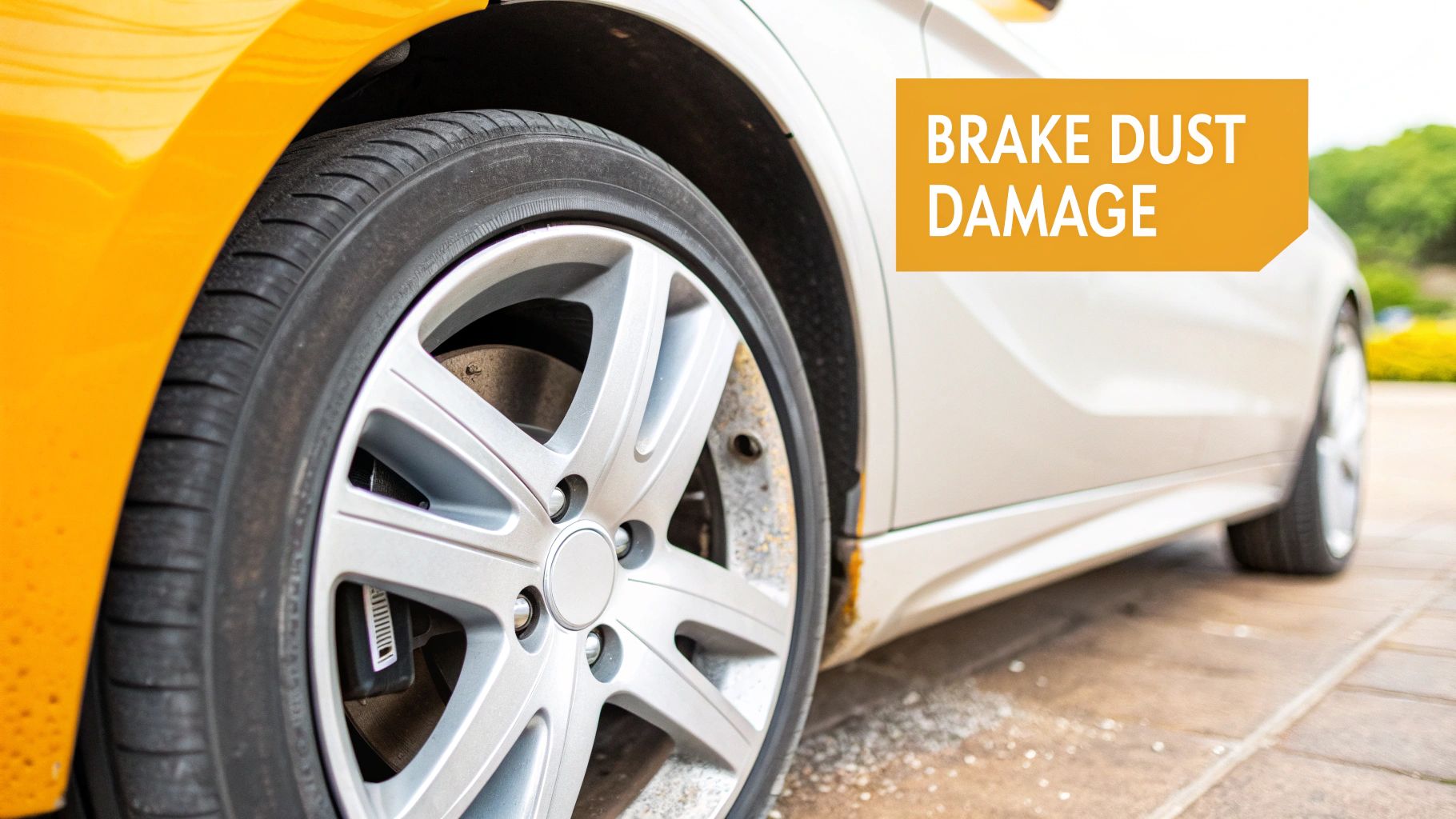
That grimy, dark-gray film clinging to your rims is far more destructive than typical road dirt. It's a highly corrosive and abrasive cocktail that, if left unchecked, can cause irreversible damage to one of your car's most noticeable features. Knowing what you're up against is the first step to getting rid of it for good.
To really get a handle on the problem, it’s worth understanding your brake pads, since they're the main source of all this gunk. Every time you hit the brakes, the friction between the pad and the rotor grinds off tiny particles. This isn't just dust; it's a superheated mix of:
- Metal Filings: These are microscopic iron particles shaved off the brake rotor.
- Carbon Fibers: A common ingredient in many of today's brake pads.
- Adhesive Residues: These are the bonding agents that hold the brake pad material together.
When this hot mess flies onto your wheels, the particles immediately start digging into the clear coat or the wheel's finish.
The Science of Wheel Damage
Those tiny iron particles are the real troublemakers. As they land and cool, they oxidize—basically, they rust—and expand, which creates tiny pits in the wheel's surface. Add a little moisture or road salt to the mix, and you've got a recipe for accelerated corrosion. This leads to permanent stains, etching, and can even cause the clear coat to start peeling away.
And this isn't just a problem for high-performance sports cars. You might be surprised to learn that many electric vehicles can produce 30-50% more brake dust in city driving. This happens because their weight and the way regenerative braking works in stop-and-go traffic leads to more friction-based braking. This very issue is driving a huge demand for better wheel cleaning systems worldwide, a market expected to top $1.5 billion by 2025. Detailers are trying to get ahead of the 25% wheel pitting rate that's been seen on untreated EVs.
Key Takeaway: Brake dust isn't just dirt; it's an active corrosive agent. Cleaning it off quickly and correctly isn't just about looks—it's essential maintenance to protect the value and integrity of your wheels.
Putting this job off doesn't just look bad. It makes the cleaning exponentially harder down the road and risks permanent damage that even the strongest chemicals can't fix. A proactive approach is always the winning strategy.
Assembling Your Wheel Cleaning Arsenal
Trying to get rid of baked-on brake dust without the right gear is a recipe for frustration. You'll spend hours scrubbing and still end up with a disappointing result. To do the job right—and protect your wheels' delicate finish—you need a dedicated set of tools.
Think of it like this: you'd never use the same gritty sponge on your car's paint that you just used on your wheels. That's a surefire way to drag abrasive metal particles all over your clear coat. That’s why the very first thing you need is a dedicated wheel bucket. This one simple move stops cross-contamination in its tracks and is a core principle of safe detailing.
Choosing the Right Cleaners and Brushes
Now, let's talk about the cleaning solution. While super aggressive, acidic cleaners might seem tempting for seriously neglected wheels, your everyday workhorse should be a high-quality, pH-neutral wheel cleaner. These are formulated to be absolute killers on iron deposits but gentle on sensitive finishes like clear-coated alloy, powder-coated, and painted wheels. They get the job done without the risk of etching or staining.
Of course, the best cleaner in the world needs a little help. You have to physically lift the loosened grime out of every nook and cranny, and for that, you need a good set of brushes. This is non-negotiable. Your collection should absolutely include:
- A Soft-Bristled Face Brush: This is your go-to for gently scrubbing the face of the wheel and around the lug nuts without leaving scratches.
- A Slender Barrel Brush: Its entire job is to reach deep inside the wheel barrel, tackling that grimy area behind the spokes that everyone seems to miss.
- A Detailing Brush: Think small. This little brush is perfect for getting into tight spots like lug nut holes and around the valve stem.
Here's a tip from the pros: the real secret to an effortless clean is to minimize how much you have to scrub. The less you're physically grinding away at the wheel surface, the lower your chances of creating micro-scratches and swirl marks over time.
The Foam Gun Advantage
This is exactly where a tool like the SwiftJet Car Wash Foam Gun completely changes the game. It hooks right up to a standard garden hose and turns your pH-neutral wheel cleaner into a thick, clinging foam. This blanket of foam pre-soaks the entire wheel, giving the cleaning agents time to dwell on the surface and start dissolving that stubborn brake dust before you even lay a brush on it.
This pre-soak does most of the heavy lifting for you. The foam encapsulates all those tiny, abrasive particles, lifting them safely away from the finish so they can just be rinsed off. You end up scrubbing a whole lot less, which makes the job faster, safer, and way more effective.
If you're looking to build out your entire toolkit, check out our full auto detailing supplies list to see what else you might need.
Your Guide to Flawless, Showroom-Ready Wheels
Alright, this is the fun part—the moment you get to melt away all that caked-on grime and restore your wheels to their former glory. This isn't just a quick spray-and-rinse; it's a proven method I've used countless times to get professional results safely and efficiently.
Before you grab a single bottle or brush, let's cover two golden rules that will save you a world of hurt. First, make sure your wheels are cool to the touch. Never, ever try to clean hot wheels. The heat will instantly bake the cleaner onto the surface, leaving you with ugly stains that are a real pain to remove.
Second, always work in the shade. Direct sunlight does the same thing as hot wheels—it dries out the cleaner before it has a chance to work, creating more problems than it solves. Get the car in the garage or wait for a cloudy day.
Getting into the Cleaning Groove
Once you're prepped, it's time to get down to business. My advice? Tackle one wheel at a time, from start to finish. This keeps any products from drying on you and lets you give each wheel the focused attention it deserves.
Start with a solid pre-rinse. Use a pressure washer or a strong jet from your hose to blast away all the loose dirt and surface-level dust. This single step is huge. It clears the way for your wheel cleaner to attack the really tough, bonded-on contaminants instead of wasting its strength on superficial grime.
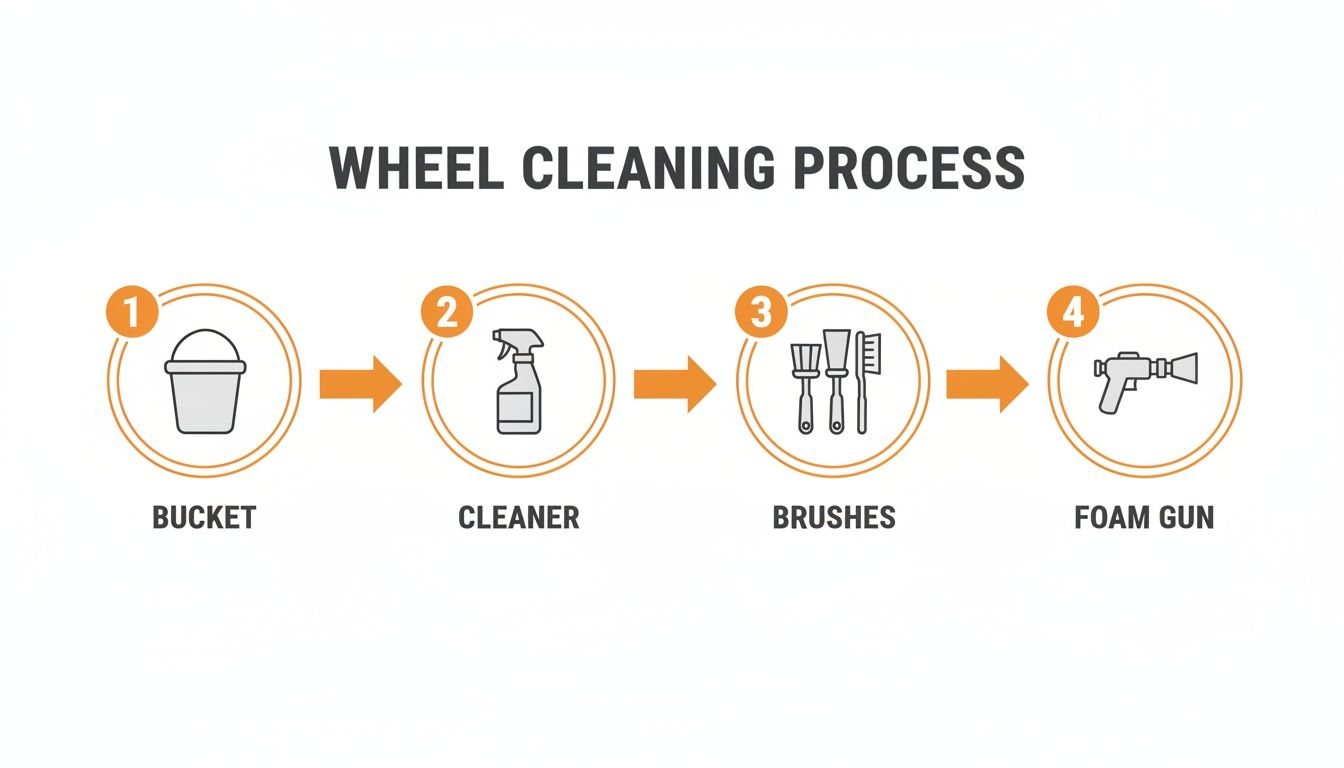
As you can see, having the right gear on hand—from a simple bucket to a high-quality foam gun—makes all the difference.
Bring on the Foam
Now for the secret weapon: a thick blanket of foam. Using a tool like the SwiftJet Car Wash Foam Gun, cover the entire wheel with your favorite pH-neutral wheel cleaner. The magic of foam is its cling time; it hangs on the vertical surfaces, giving the cleaner maximum time to dissolve those embedded iron particles. You’ll often see it change color as it reacts with the brake dust—that’s how you know it's working.
Let's be real, wheels and tires are consistently the dirtiest parts of any car. Brake dust alone can make up 60% of the contamination you see. This is a big reason the car care market shot past USD 11.6 billion in 2020. A good foam application, which can cling 3x longer than a simple spray, cuts right through that caked-on mess and can reduce your need for aggressive scrubbing by as much as 50%.
My Pro Tip: Don't just spray the face of the wheel. Use the foam gun to get deep inside the wheel barrels and even hit the brake calipers. These spots are grime magnets, and getting them clean makes a massive visual impact.
Gentle Agitation and a Final Rinse
After letting the foam dwell for a minute or two (don't let it dry!), it's time for some light agitation. Grab your soft-bristled brushes and gently work the cleaner into every nook and cranny. I usually start with the wheel face, use a smaller detailing brush for the lug nut holes, and then get the long-handled brush deep into the barrel. The foam has done the heavy lifting, so you're just helping it along.
While you're down there, don't neglect the tires! A pristine wheel next to a faded, brown tire just looks wrong. We have a great walkthrough on how to clean your tires properly to get that perfect deep-black finish.
Finally, give the wheel a complete and thorough rinse. Make sure you flush every bit of cleaner out from behind the spokes, inside the lug nuts, and out of the barrel. Any leftover residue will cause spots. Now, you can stand back and admire that first gleaming wheel before moving on to the next one.
Adapting Your Technique for Different Wheel Finishes
Taking a one-size-fits-all approach to wheel cleaning is a recipe for disaster. If you use the same aggressive method on every wheel, you're bound to cause some expensive, irreversible damage sooner or later.
The secret to safely getting brake dust off your wheels is matching your cleaning technique to the specific finish. A rugged powder-coated rim can handle a lot more than a delicate chrome one, so you've got to know what you're working with before you start spraying and scrubbing.
Safely Cleaning Clear-Coated and Painted Wheels
This is the finish you'll find on the vast majority of cars rolling off the factory line today. Think of the clear coat as a protective shield over the painted alloy, just like the clear coat on your car's body. It’s tough, but it’s not invincible.
For these super common wheels, your best friend is a good pH-neutral wheel cleaner. Stay away from the harsh, acidic stuff—it can eat away at the clear coat over time, leaving it looking dull and hazy, or even causing it to peel. This is where a foam gun like the SwiftJet really shines. It lays down a thick layer of gentle foam that lifts the dirt and grime without needing aggressive chemicals.
- Your Game Plan: Foam them up, let it sit for a minute to break down the gunk, then go in with a soft-bristled brush for some light agitation.
- What to Avoid: Steer clear of highly acidic or alkaline cleaners. And definitely don't use stiff, scratchy brushes unless you want to add swirl marks to your wheels.
Caring for Chrome Wheels
Nothing beats the brilliant, mirror-like shine of a clean set of chrome wheels. But that beautiful surface is surprisingly delicate. Chrome is just a very thin plating, and it's incredibly prone to scratching and pitting if you get too aggressive.
The real trick to keeping chrome looking its best is simple: clean it gently and clean it often. When you let brake dust and road grime sit on chrome, it traps moisture and creates a perfect environment for corrosion, which can cause the chrome plating to pit and flake right off.
Always reach for a cleaner made specifically for chrome, or just use a very mild, pH-neutral soap. Never, ever use anything abrasive on them—no scouring pads, no stiff brushes. A soft microfiber wash mitt is usually all you need to gently wipe away the loosened grime. For other types of wheels with heavier corrosion, our guide on how to clean rust off wheels has some great tips, but just remember that if you see rust on chrome, it’s a sign the plating has already failed.
Handling Powder-Coated and Anodized Finishes
Powder-coated wheels are built for toughness. That’s why they’re such a popular choice for performance and aftermarket rims. The finish is basically a durable plastic polymer that's baked right onto the wheel, creating a hard shell that can take a beating from road debris.
Even with that durability, you’ll want to stick with pH-neutral cleaners to keep the finish looking great for years to come. While the surface is more resilient, it's still a good idea to avoid overly stiff brushes. The same goes for anodized finishes, which are also tough but can be discolored by harsh chemicals. A good foam pre-soak is still the best first step, as it does most of the heavy lifting and means less scrubbing for you.
Keeping Your Wheels Clean: The Art of Proactive Protection
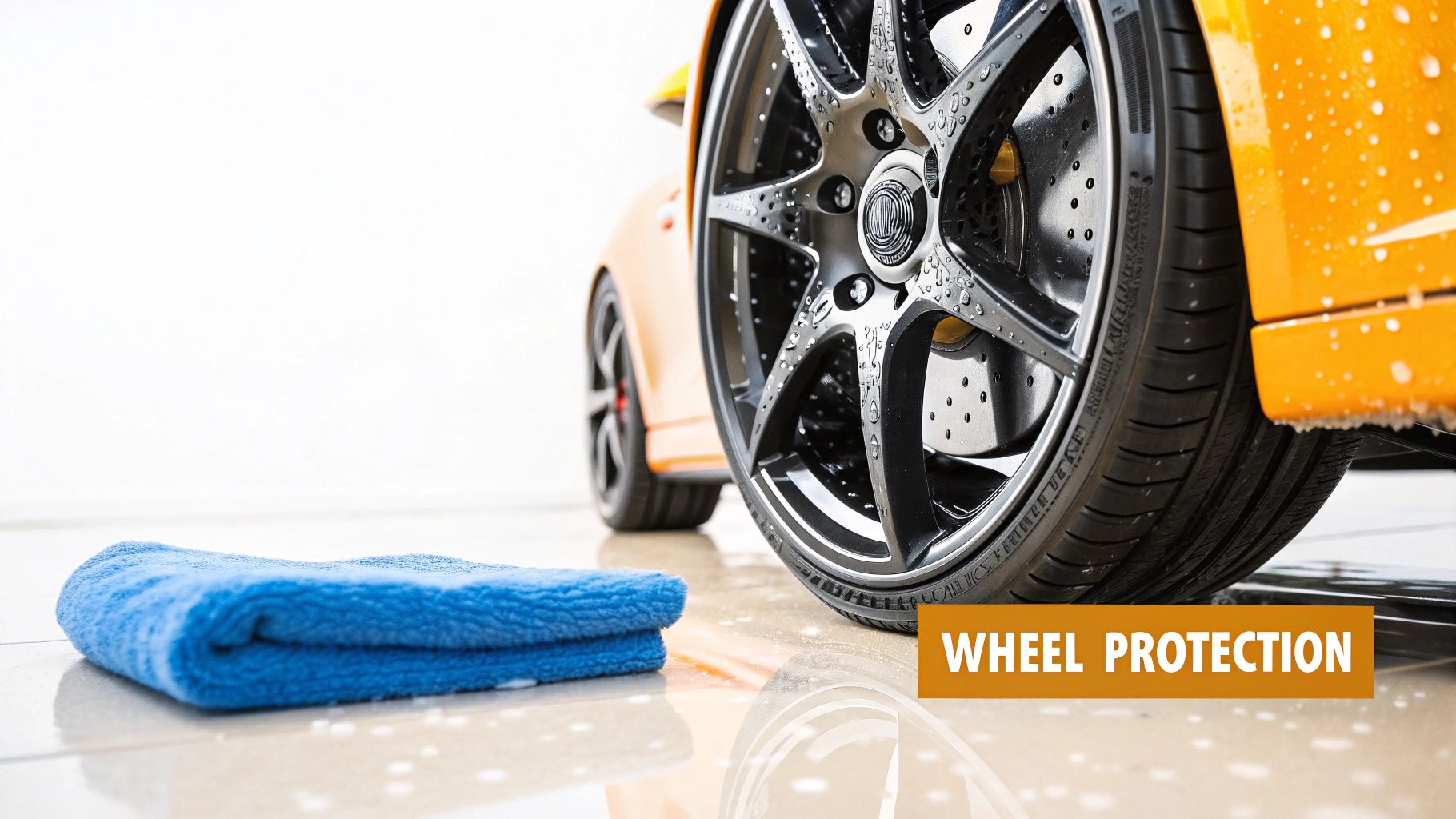
There's nothing quite like standing back to admire a set of perfectly clean wheels. But if you've done this before, you know that showroom shine can vanish in a hurry. The real secret to making your hard work last isn't just about cleaning—it's about getting ahead of the grime with proactive protection. This final step is arguably the most critical for saving yourself a ton of effort down the road.
Your protection phase starts the second you're done rinsing. Whatever you do, don't let those wheels air dry. That’s a surefire way to get ugly water spots from mineral deposits left behind. Instead, use a clean, plush microfiber towel to dry every surface completely. Pay close attention to the wheel barrels and the little crevices around the lug nuts.
For a truly spotless, touch-free finish, I like to grab my leaf blower or a dedicated car dryer. It's the best way to blast water out of all those hidden spots you can't reach with a towel.
Build a Barrier Against Grime
Once your wheels are bone dry and looking great, it's time to lay down a shield. This is where wheel sealants and ceramic coatings become your best friend. They create a slick, hydrophobic surface that's a total game-changer for preventing hot brake dust particles and road film from clinging to the wheel's finish.
Think of it like a non-stick pan. Contaminants will still land on the wheel, but they'll sit on top of that protective layer instead of digging in and bonding. After you've spent all that time getting your wheels flawless, investing in a good ceramic wheel coating makes future cleanups incredibly easy.
Applying these products isn't complicated. A sealant usually involves wiping a thin layer on with a foam applicator, letting it dry to a haze, and then buffing it off with a clean microfiber. A ceramic coating is the more heavy-duty option, creating a harder, more durable shell that lasts much longer.
Key Takeaway: A protected wheel is an easy-to-clean wheel. With a good barrier in place, you can often blast away most brake dust with just a strong jet of water or a quick foam wash, which means way less scrubbing next time around.
How to Maintain Your Wheel Protection
Of course, this protective layer isn't a one-and-done deal, but the upkeep is minimal. Topping up your sealant every few months or using a specialized maintenance spray on your ceramic coating will keep that barrier strong and effective. This simple routine is what really makes the difference—stopping brake dust before it has a chance to stick.
The global market for tire and wheel cleaners, valued at USD 2.0 billion, is projected to hit USD 2.5 billion by 2035, and it’s this constant battle against grime that's driving the demand. If left to its own devices, brake dust can corrode alloy wheels up to 30% faster.
This is where maintenance tools like the SwiftJet Car Wash Foam Gun really shine. It lays down a thick, pH-neutral foam that clings to the surface and lifts up to 90% of fresh dust without any harsh scrubbing, making it perfect for safely cleaning protected wheels and extending the life of your coating.
Got Questions About Brake Dust? Let's Talk.
Even with the best guide in hand, you’re bound to hit a snag or two when you're actually scrubbing away in the driveway. It happens to all of us. Let's run through some of the most common questions that pop up, so you can handle those real-world "what if" moments like a pro.
Nailing these little details is what separates a decent wash from a professional-level clean. A bit of know-how here can save you a ton of frustration and even prevent some expensive mistakes.
How Often Should I Really Be Cleaning My Wheels?
This is the big one, and the honest answer is: it depends. It comes down to how you drive and what kind of brake pads you have. For most people, a good, deep clean every one to two weeks is a solid routine. But if you're constantly in city traffic or running high-performance pads that shed dust like crazy, you'll probably want to do it weekly to keep them looking sharp.
Pro Tip: If you're tired of the constant battle, look into switching to ceramic brake pads next time you need a brake job. They produce way less dust, and the dust they do create is lighter in color, making it far less noticeable. It's a game-changer for keeping wheels clean.
Staying on top of it prevents that corrosive brake dust from baking onto the wheel finish. Once it bonds, it starts to cause real damage like pitting and corrosion. A quick, regular wash is always easier than a full-on restoration project down the road.
What Do I Do If the Brake Dust Is Totally Baked On?
We’ve all seen them: wheels that look like they haven't been cleaned in years, with a thick, brown, crusty layer of grime. If you're up against that, your standard pH-neutral wheel cleaner probably won't even make a dent. That stuff is stubborn. When you're facing a serious challenge, you have to bring out the bigger guns.
Here’s how I’d tackle it, starting with the safest option first:
- Bring in an Iron Remover. This is your first move. These products are specifically made to chemically dissolve the iron particles in brake dust. You just spray it on, let it sit for a few minutes, and watch it turn a dramatic purple as it works. It's not just for show—that "bleeding" effect means it's breaking down the contamination at a molecular level.
- Try a Clay Bar. If the iron remover did its job but the wheel still feels gritty to the touch, that means contaminants are physically stuck in the clear coat. An automotive clay bar, used with plenty of lubricant, will gently pull those embedded particles right out.
- Use Stronger Cleaners with Extreme Caution. This is your last resort. If nothing else has worked, you might consider a low-acid or high-alkaline wheel cleaner. These are incredibly effective but also risky. They can easily damage sensitive finishes like uncoated aluminum or certain powder coats. Always test on a hidden spot first and never let them dry on the surface.
In the end, the best way to deal with baked-on brake dust is to never let it happen in the first place. A little regular maintenance saves you a massive headache later.
Ready to make your next wheel cleaning session faster and way more effective? The SwiftJet Car Wash Foam Gun transforms your favorite cleaner into a thick, clinging foam that melts away grime before you even touch it. See how SwiftJet can change your routine and grab yours today!
