

Most advice about the best car cleaning sponge starts with product picks. That's the wrong starting point.
The primary question isn't which sponge to buy. It's how to wash paint without grinding dirt into it. If you begin there, the answer changes fast. In many cases, the safest wash tool for modern paint isn't a classic sponge at all. It's a microfiber mitt, a wash pad, or a wash routine that removes grime before your hand ever touches the panel.
That matters because convenience and paint safety aren't always the same thing. A cheap flat sponge can feel simple, hold a lot of soap, and move quickly across a hood. It can also keep contamination close to the paint if your process is poor. New enthusiasts often shop for a “best car cleaning sponge” as if every sponge works the same. It doesn't.
Traditional sponges still have a place. Some foam designs hold plenty of suds, feel easy in the hand, and can last a long time if you care for them properly. But if your goal is long-term gloss and fewer wash-induced marks, you need to judge every wash tool by one standard first. How well does it manage dirt between the tool and your clear coat?
Why Your Car Wash Sponge Matters More Than You Think
A lot of buyer guides treat car wash sponges like kitchen tools. Pick a shape, pick a material, get to work. That misses the part that affects your finish.
Independent detailing guidance has pushed the conversation toward paint safety versus convenience, not just product choice. The important distinction is that deep-pile microfiber mitts and pads trap grime away from the clear coat better than flatter sponge faces, so the most defensible answer to “what's the best car cleaning sponge?” is often that the safest option may not be a traditional sponge at all, as explained in this paint-safety focused wash sponge guide.
Cheap to buy can be expensive to use
A sponge doesn't scratch paint by itself. Dirt does. The problem is what happens when contamination has nowhere safe to go.
A flat-faced sponge tends to keep more of that contact close to the surface you're washing. If the panel is dusty or gritty, you're asking the wash media to both collect contamination and glide safely at the same time. That's where technique and tool design start to matter more than price.
Practical rule: Judge wash tools by how they handle grit, not by how soft they feel dry in your hand.
What new enthusiasts often get wrong
Many people shop by comfort first. They want something easy to grip, easy to rinse, and cheap enough to replace. Those are fair concerns, but they're secondary.
The better way to think about it is:
- Paint first: If you care about minimizing wash marks, choose the media that manages contamination best.
- Process second: A safe tool still needs a safe routine.
- Convenience third: Speed only helps if it doesn't leave damage behind.
That shift is what separates a quick cleanup from a proper maintenance wash. If you only remember one thing from this guide, remember this: the best car cleaning sponge might be a sponge-style tool, but it might also be a mitt, pad, or pre-wash system that reduces contact altogether.
From Cellulose to Microfiber The Science of Sponges
Material choice changes everything. Two wash tools can both look soft, both hold soap, and still behave very differently once they meet road film.
For paint-safe washing, professional-use guidance favors microfiber sponges and natural sea sponges because they combine strong absorbency with a softer contact surface. That matters because material quality and absorbency govern both cleaning effectiveness and paint safety, as noted in this professional car wash sponge overview.
Why material changes the risk
A simple way to think about it is this. A flat sponge acts more like a snowplow. A deep microfiber face acts more like a shag rug. One tends to push contamination along a broad surface. The other gives that contamination more places to move up and away from the paint.
That doesn't make every sponge bad. It means you need to understand what each type is good at, and where it becomes a compromise.
The four common categories
Cellulose sponges are familiar, inexpensive, and highly absorbent. They're useful for general wet work, but they aren't my first choice for painted panels because the contact face is usually too simple for modern paint-care expectations.
Polyurethane foam sponges are what comes to mind when thinking of a car wash sponge. Some hold lots of suds and feel very controlled in the hand. Better foam designs can work well for maintenance washes, especially on less delicate areas, but they still need frequent rinsing and a careful process.
Microfiber sponges wrap sponge structure with a softer, more contamination-friendly surface. They bridge the gap between classic sponge handling and microfiber safety. If someone insists on a sponge format for the main wash, this is usually the direction I'd point them.
Natural sea sponges are valued for softness and absorbency. They can be gentle in use, though consistency and care matter. They're less common for casual DIY buyers, but they're part of the conversation for a reason.
If you also care about lower-waste household cleaning tools outside the garage, a product like this sustainable stocking stuffer sponge is a useful example of how material choice changes performance and disposal. It isn't a car-specific wash recommendation, but it highlights why “sponge” is too broad a category to judge on name alone.
Car Wash Sponge Material Comparison
| Material | Paint Safety | Absorbency | Durability | Best Use Case |
|---|---|---|---|---|
| Cellulose | Lower for delicate paint | High | Moderate | General cleaning, non-critical surfaces |
| Polyurethane foam | Moderate, depends heavily on design and technique | High | Moderate to high | Maintenance washes, lower-risk use, broad coverage |
| Microfiber sponge | Higher | High | Moderate | Painted panels where sponge format is preferred |
| Natural sea sponge | Higher | High | Varies with care | Gentle washing where softness is the priority |
A wash tool should do two jobs at once. Carry lubrication and isolate grit. If it only does the first, it's incomplete.
What works in practice
The best-performing wash media usually combine three traits:
- High absorbency: More wash solution means better lubrication.
- Soft contact surface: Less aggressive touch against clear coat.
- Contamination management: Dirt needs somewhere to go other than between your hand and the paint.
That's why material science matters more than packaging. When someone asks for the best car cleaning sponge, the right answer starts with structure, not branding.
How to Choose the Right Sponge for Your Car
The right wash media depends less on the marketing label and more on the car in front of you. Paint type, dirt level, and wash process all change what's acceptable.
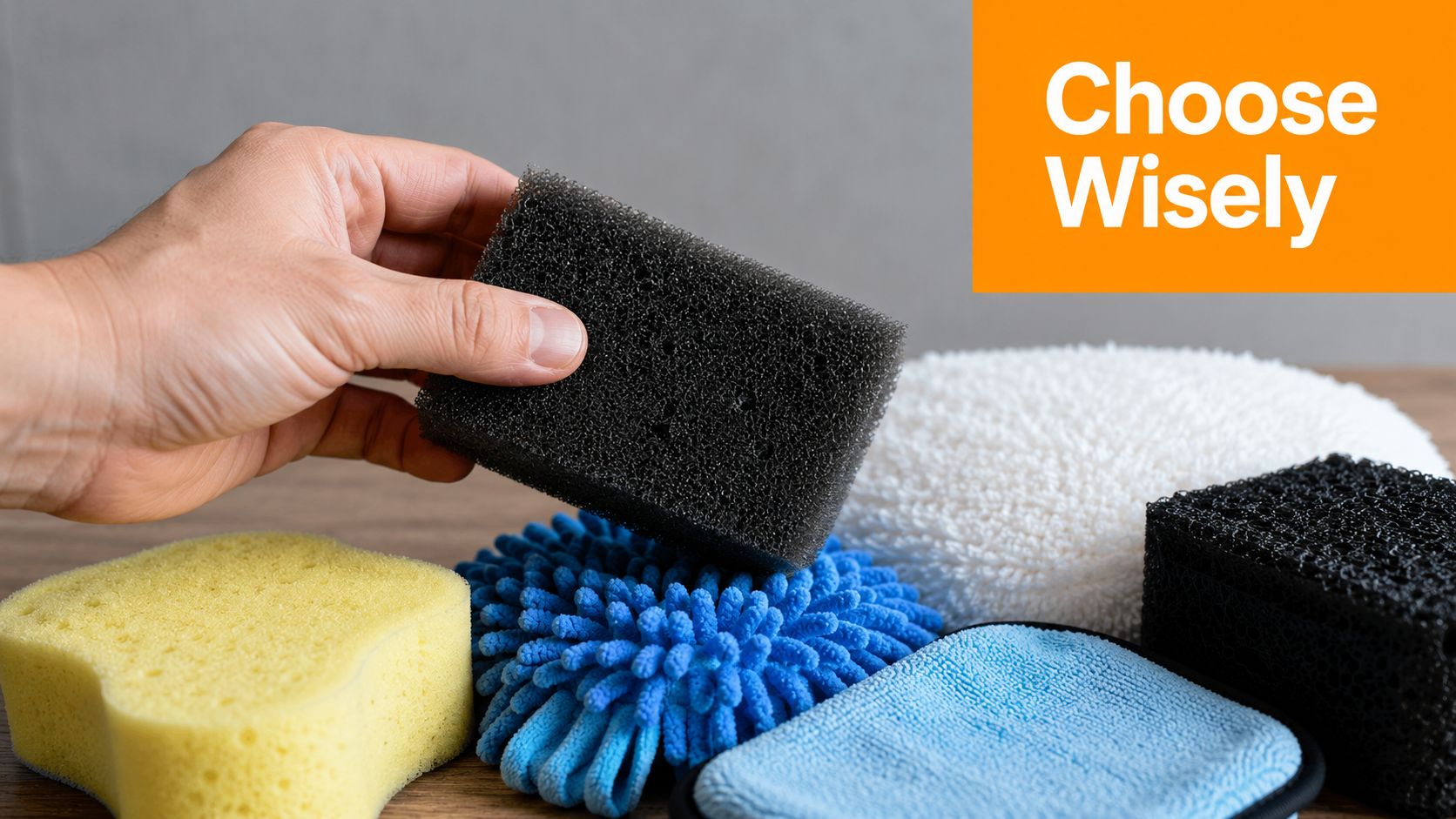
Start with the paint
Soft, dark, modern clear coat shows mistakes quickly. If that's what you're washing, lean toward the gentlest contact media you can manage. A deep-pile mitt or microfiber pad usually makes more sense than a flat traditional sponge.
Older work vehicles and less appearance-critical surfaces give you more room for compromise. That doesn't mean abuse them. It means a high-capacity foam block can be acceptable where you'd never risk one on a delicate black hood you inspect under garage lights.
Match the tool to the dirt
A lightly dusty car is one thing. A lower rocker panel covered in road grime is another.
Use this quick filter:
- Light dust or frequent maintenance washing: Choose the gentlest media available and keep it saturated.
- Moderate road film: A high-capacity foam sponge or microfiber alternative can work if you rinse often and avoid pressure.
- Heavy grime or mud: Don't rely on wash media alone. Remove as much contamination as possible before contact.
Experienced users often move toward higher-capacity foam blocks or microfiber alternatives because they offer better lubrication and control. In a long-running comparison, users highlighted the Lake Country Blue foam sponge and OPT Big Red sponge for suds capacity, and one report noted an Optimum Big Red Wash Sponge stayed in personal use for about two years with washing every 7–10 days in this forum thread discussing foam wash media durability.
Your process decides whether the tool is safe
A decent sponge in a good wash routine beats a premium tool in a sloppy one. If you're still building your process, spend time on shampoo choice and pre-wash planning too. A guide to foam soap for cars is worth reading because lubrication and pre-soak behavior affect how much stress you put on any sponge or mitt.
If the vehicle is dirty enough that you feel the need to scrub, the problem isn't the sponge. The problem is that the dirt should've been loosened first.
A simple decision framework
Ask these three questions before you buy:
-
Is the paint delicate or appearance-critical?
If yes, avoid traditional flat sponges for the main wash. -
How dirty does the vehicle usually get?
Heavier contamination demands more pre-rinse and more forgiving wash media. -
Is your wash method disciplined?
If you don't rinse often, separate tools by area, and keep the wash media clean, choose the safest material possible because your process won't bail you out.
That's how you choose the best car cleaning sponge for your situation. Not by category alone, but by tolerance for risk.
Common Sponge Mistakes That Can Ruin Your Paint
Most paint damage blamed on sponges comes from habits, not labels. The tool matters, but technique decides whether it stays harmless.

Using one sponge for everything
Brake dust, lower-panel grime, and general paint dirt shouldn't share the same wash media. When one sponge touches wheels and then paint, you're carrying harsh contamination straight to the most visible surfaces.
The fix is simple. Keep separate tools for wheels, dirty lower sections, and upper paintwork. Color-coding helps if you wash often.
Dropping it and keeping going
The ground is full of grit. Once a sponge hits it, you have to assume it picked something up that can score the clear coat.
Rinse it aggressively and inspect it before reuse. If you can't clean it confidently, retire it from paint duty and demote it to rough jobs.
A dropped sponge isn't “probably fine.” It's contaminated until proven otherwise.
Scrubbing instead of washing
Pressure doesn't make a sponge safer or more effective. It only forces whatever is trapped inside the media harder against the paint.
Use light passes and let the shampoo and pre-rinse do the heavy work. If bird mess, bugs, or road film won't move without force, soak them longer rather than digging in.
Using household detergents
Dish soap and general household cleaners create another common problem. They aren't designed around automotive protection, and they can leave the finish duller than it needs to be.
Use car-specific shampoo instead. The point isn't just cleaning. It's cleaning while keeping lubrication and respecting whatever protection is already on the surface.
Not rinsing often enough
A sponge loaded with old suds and trapped dirt turns into a contamination carrier. This mistake is easy to miss because the media can still feel wet and look clean from a distance.
Build a rhythm that includes frequent rinsing, especially after each panel or dirty section.
- Roof and glass first: These are usually cleaner and reduce risk early.
- Middle sections next: Doors, fenders, and hood need regular rinsing between passes.
- Lower panels last: Save the worst areas for the end, with separate media if possible.
The best car cleaning sponge can still ruin paint if you use it carelessly. Safe washing is always part tool, part discipline.
How to Clean and Store Your Sponge for Longevity
Good wash media gets ruined in the garage all the time. Not by use, but by bad cleanup. If you leave a sponge packed with soap residue, grit, and moisture, it won't stay safe for long.

Clean it right after the wash
Don't toss it into a bucket and deal with it later. Rinse the media until the water runs clear and the material feels free of slick residue and grit.
For different materials, keep it simple:
- Foam sponge: Flush it repeatedly, squeeze gently, and check the pores for trapped debris.
- Microfiber sponge or pad: Rinse first, then wash according to microfiber-safe care practices. This guide to microfiber towels for cleaning helps with the same basic maintenance mindset.
- Natural sea sponge: Rinse carefully and avoid rough handling that tears the structure.
Drying matters as much as washing
A clean sponge that stays damp in a closed bin becomes a contamination problem later. You want airflow, not a sealed plastic environment.
Hang it or place it somewhere it can dry thoroughly between uses. Don't store it compressed, buried under towels, or sitting in dirty wash water.
Shop habit: If your wash media smells bad when dry, it wasn't cleaned or dried well enough last time.
A quick visual on basic sponge care helps if you want to tighten up your routine:
When storage shortens lifespan
Three storage mistakes end more sponges than wear does:
- Leaving it in the bucket
- Storing it wet without airflow
- Mixing clean paint tools with wheel tools
Dedicated storage keeps your paint media from touching dirtier equipment. A simple shelf, hook, or breathable bin is enough. Clean, dry, separate. That's the standard.
When to Use a Sponge or Choose a Better Alternative
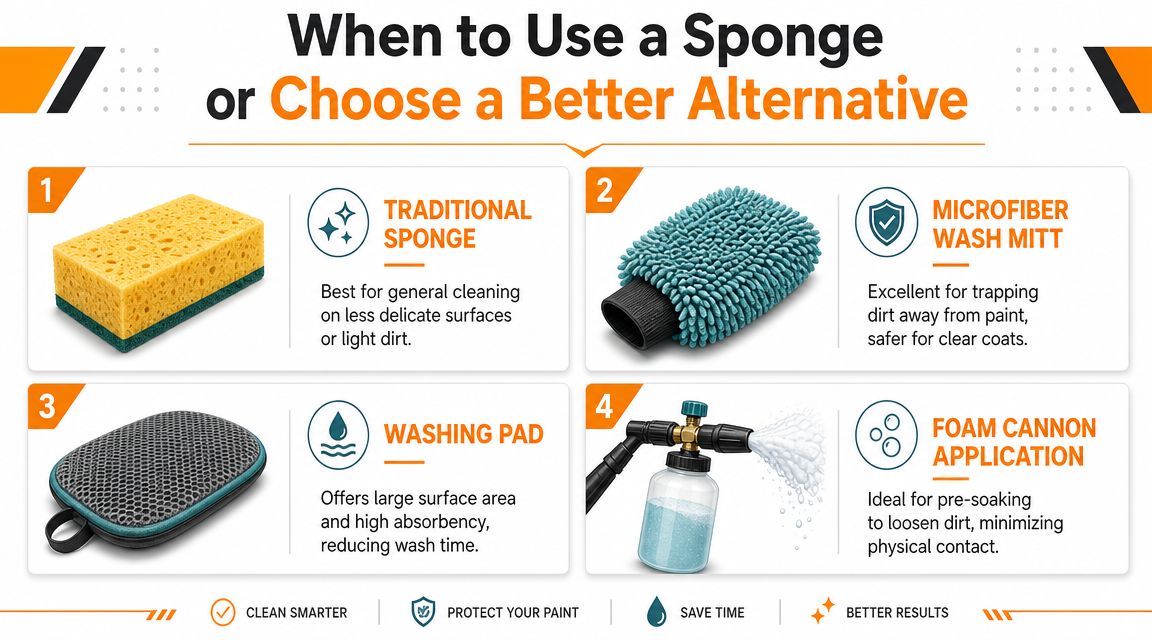
A sponge is not the safe default just because it has been around forever. On modern clear coat, the better question is simple. How well does your wash media keep grit off the paint while you wash?
Where a sponge still works
A sponge still has a place. I use one for jobs where the surface is already in decent shape, the dirt load is light, and I am not asking that tool to deal with the kind of gritty contamination that causes wash marring.
That usually means maintenance washes on well-kept vehicles, utility work on less sensitive surfaces, or a separate tool for areas that do not deserve your paint-safe wash media. A sponge can also make sense if you like the flat, controlled feel in your hand and you are disciplined about rinsing often.
The trade-off is straightforward. A traditional sponge holds debris closer to the contact face than a good microfiber mitt or pad.
Why mitts and pads are usually safer on paint
Paint safety comes down to dirt management, not just softness. A wash mitt or pad gives loosened grime more places to move up into the fibers instead of staying trapped between the tool and the panel.
That is why experienced detailers usually reach for mitts on painted panels first. The face stays more forgiving during the wash, especially on black paint, soft clear coat, and vehicles that see real road grime between washes. One useful demonstration in this DIY Detail discussion of mitts, pads, and paint-safe washing shows why tool structure matters more than simple feel in the hand.
If you want a closer comparison before buying, this guide to the best microfiber wash mitt is a practical next step.
The best alternative often starts before the contact wash
The safest wash media is the one dealing with less grit in the first place. Pre-soaking with foam helps soften and loosen dirt so your sponge, mitt, or pad has less contamination to drag across the paint.
That is where a foam cannon or foam gun earns its keep. It does not replace hand washing, but it lowers the risk during the part that matters most. A hose-mounted option like the SwiftJet foam gun fits that pre-wash role well if you want a simple way to add foam before touching the paint.
A side-by-side view
| Tool | Main Strength | Main Limitation | Best Role |
|---|---|---|---|
| Traditional sponge | Easy handling, broad contact | Keeps contamination closer to paint | Light-duty washes or secondary tasks |
| Microfiber wash mitt | Better dirt isolation during contact | Needs proper washing and drying after use | Main contact wash on painted panels |
| Wash pad | Covers large sections quickly with a safer face | Awkward in mirrors, grilles, and tight curves | Hoods, doors, roofs, and other broad panels |
| Foam cannon or foam gun | Reduces dirt before contact | Still needs a follow-up hand wash | Pre-wash stage |
If you are stocking a mobile setup, a shared garage, or a club wash kit, tool separation matters as much as tool choice. The same planning mindset applies to towels too. Thinking ahead about planning your bulk towel order supports a cleaner system where paint tools stay separate from wheel and utility tools.
Use a sponge where the risk is low and the job fits. Use a mitt or pad when you care about preserving gloss and avoiding wash-induced defects. Use foam first when the vehicle is dirty enough to punish any contact tool.
Your Car Cleaning Sponge Questions Answered
Can I use a kitchen sponge on my car?
You can, but you shouldn't on painted panels. Kitchen sponges aren't designed around automotive paint safety, and many have surfaces or structures that are too aggressive or too flat for safe contamination management. Keep them for household cleaning, not clear coat.
What's the difference between a clay sponge and a regular wash sponge?
A regular wash sponge is for removing loose dirt during washing. A clay sponge is a decontamination tool used after washing to remove bonded contaminants from the surface. They do different jobs, and a clay sponge should never be treated like everyday wash media.
When should I replace my car wash sponge?
Replace it when it no longer rinses clean, starts breaking down, feels rougher than it used to, smells bad after proper drying, or has visible embedded debris you can't safely remove. If you don't trust it on paint, demote it to wheels or dirty utility work.
Is a sponge ever the best car cleaning sponge?
Sometimes, but only within a narrow definition of “best.” If you want easy handling, broad coverage, and a reusable tool for light-maintenance washes, a well-made sponge-style product can fit. If your top priority is minimizing paint risk, modern microfiber mitts and pads are usually the smarter choice.
Do I need a separate wash tool for wheels?
Yes. Wheels collect the worst contamination on the vehicle. Keeping wheel media separate from paint media is one of the easiest ways to avoid avoidable scratches.
If you want a safer home wash setup, SwiftJet offers a foam-gun-based approach that helps move dirt before contact washing starts. Pairing a pre-wash foam step with the right mitt or pad is a practical way to make any hand wash gentler on paint.
