

You're in the driveway, one hand on the wheel, the other smearing a sleeve across a windshield that just keeps turning milky again. The clock is already against you, your breath is making the cabin feel damp, and the road ahead is invisible for a few uncomfortable seconds. Anti fog car windows is really shorthand for a bigger problem, moisture building up faster than the cabin can clear it, and the fix is usually a mix of airflow, heat, and a clean interior surface, not a magic spray alone.
Why Your Car Windows Fog Up in the First Place
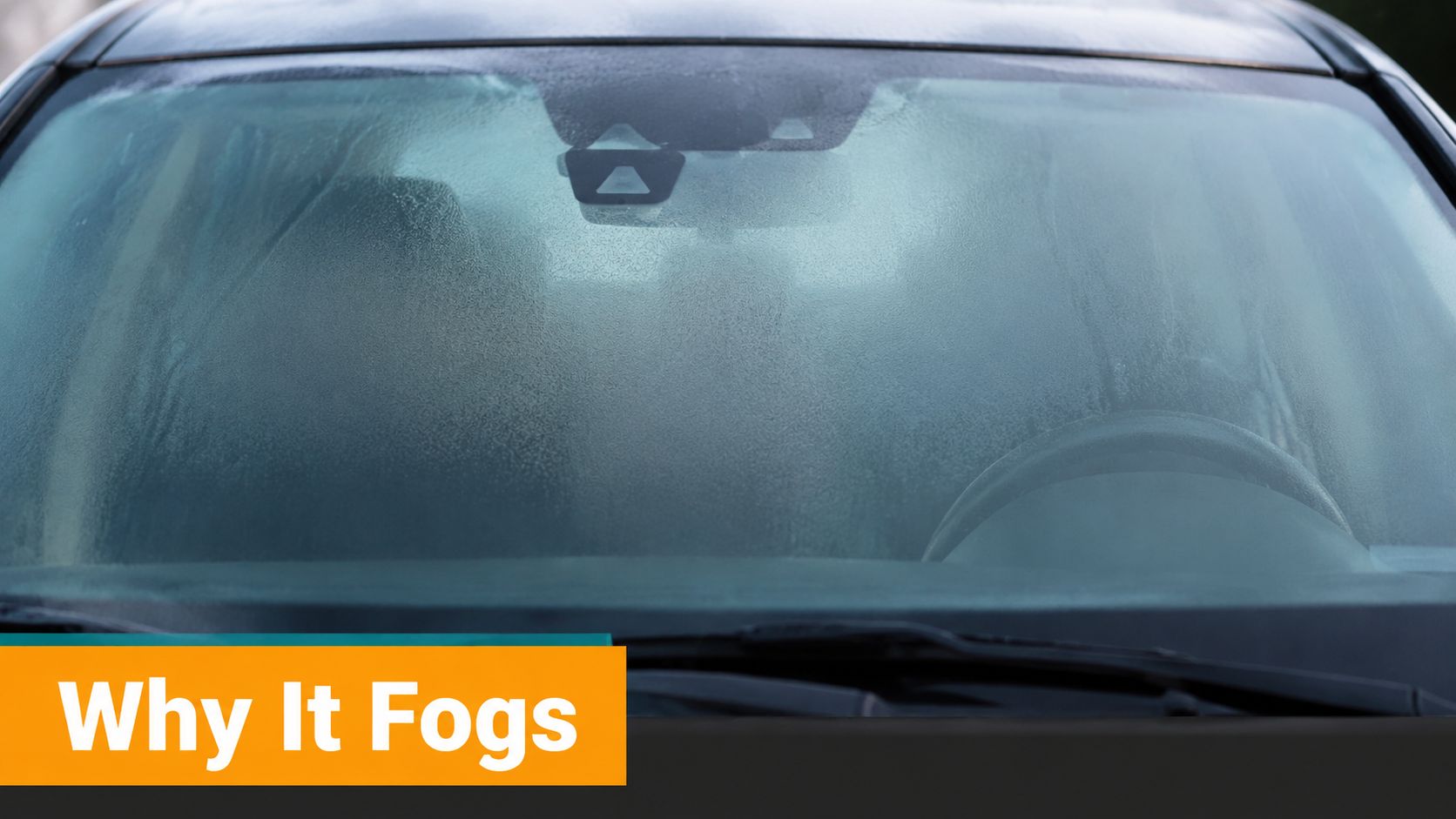
Fogging always seems to hit at the worst moment. You get into a cold car after scraping ice off the outside, or you drive home in steady rain with wet shoes and a damp coat, then the glass turns hazy before you've even merged into traffic. The frustration is familiar, but the cause is simple, moisture inside the cabin condenses on cooler glass and scatters light.
What's actually happening on the glass
Warm air can hold more moisture than cold air. When that warmer, damp cabin air touches cooler glass, the moisture turns into tiny droplets on the surface. That's why the windshield goes blurry, even though nothing is “on” it in the usual sense.
The inside of the car is often the culprit. Your breath adds humidity, wet floor mats add more, and snow on boots or rain on a jacket keeps feeding the problem. In a lot of cars, the issue isn't the glass itself, it's the cabin holding too much moisture for the temperature you're driving in.
Why this problem has stuck around for decades
Rear-window defogging didn't become a normal expectation overnight. German engineer Heinz Kunert proposed conductive filament heating in the 1960s, but many cars still went without rear-window defogging into the late 1970s. In the U.S., FMVSS 103 required windshield defrosting and defogging systems for passenger cars, trucks, and buses manufactured on or after January 1, 1968, while rear defoggers remained optional, and later adoption rose from 16% in domestic cars for model year 1973 to 94% for model year 2001 according to NHTSA reporting cited in the historical review on rear defoggers. That history says a lot, drivers have always needed a way to manage cabin moisture, and the industry slowly made it standard.
Fog is a moisture problem first. If the cabin stays wet, the glass will keep telling you so.
Immediate Fixes for Foggy Windows While Driving
The fastest fix is usually not wiping harder, it's changing the cabin environment. If the windshield starts to cloud while you're already moving, use the car's systems to dry the air and move it across the glass. That's what clears the fog without turning the whole situation into a wrestling match with a rag.
The simplest rule is this, defrost on, recirculation off, airflow up. Most cars clear faster when outside air is allowed in, because recirculation keeps the same humid air cycling through the cabin. Aim the vents toward the windshield and side glass, then let the system work on the moisture instead of trying to buff it away mid-drive.
The order that usually works best
- Turn on front defrost immediately. Use the windshield setting, not floor-only airflow.
- Switch off recirculation. Pull in outside air so the cabin can shed humidity.
- Raise fan speed and heat. Faster airflow helps, and warmer air dries the cabin more effectively.
- Crack a window slightly if conditions allow. A small opening can balance the temperature and let damp air escape.
- Wipe only if you must, and only with a clean microfiber cloth. Dirty cloths smear oils and make the glare worse.
If you drive with heavy fogging often, the problem can feel bigger than visibility. A good set of clear lenses helps too, especially if you're already fighting glare from wet pavement and headlights. For drivers who want a broader eye-strain solution, the reduce headlight glare lenses resource from Style Site Optical is a useful companion read.
A note on emergency wiping
Wiping is a temporary assist, not the main fix. If you use a cloth, make it microfiber and keep it clean, because even a soft towel can leave residue that makes the next fogging event worse. Think of wiping as a backup move while the HVAC system catches up.
A quick visual checklist helps when you're stressed.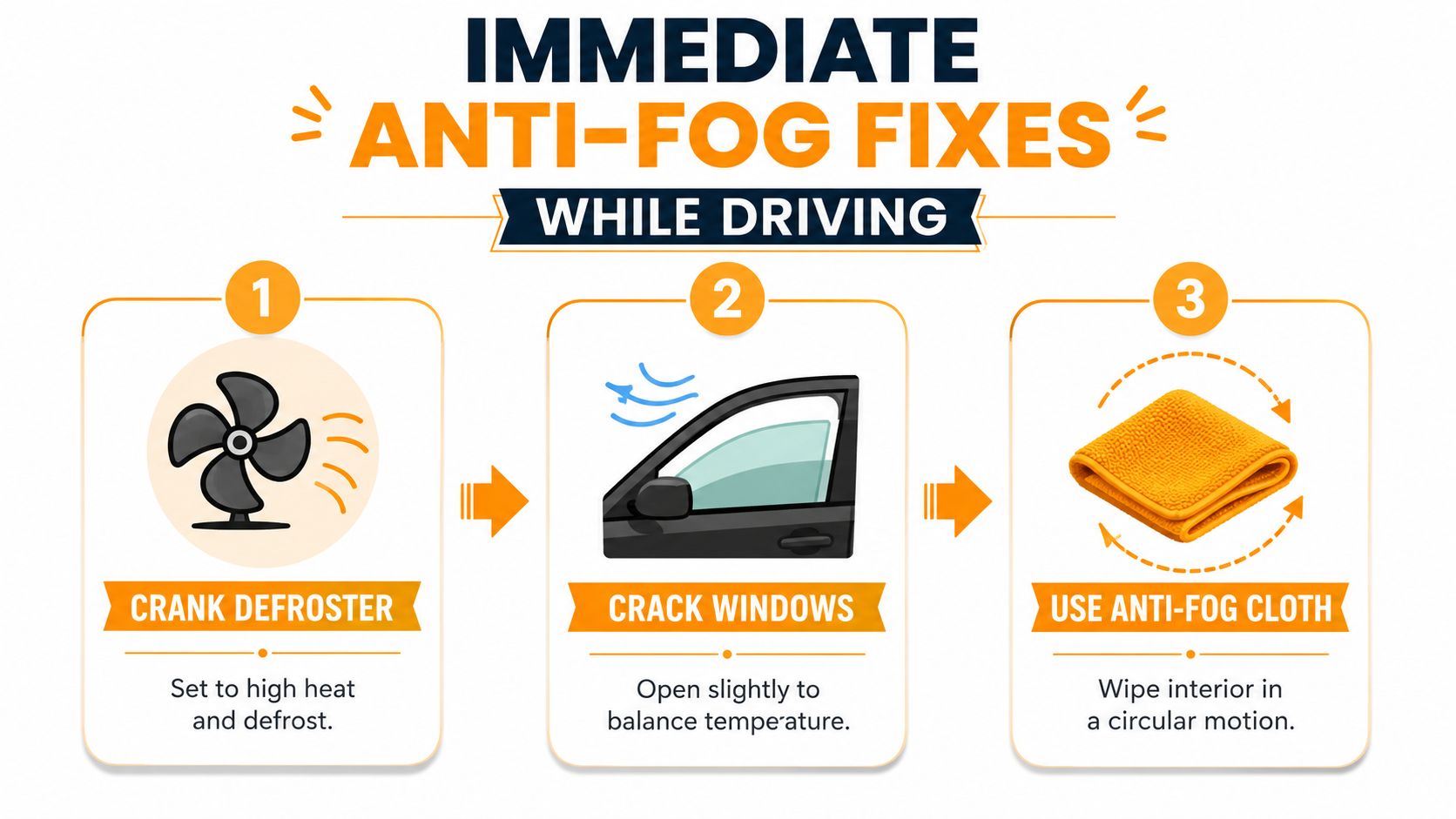
DIY and Commercial Anti-Fog Treatments Explained
Once the cabin is under control, treatments can help the glass resist the next wave of condensation. The catch is that product prep matters more than most marketing copy admits. A poorly cleaned windshield or a rushed buff is often what people remember as “the spray didn't work.”
How to apply treatments without sabotaging them
Start with a clean interior glass surface. Oils from skin, smoke residue, dashboard film, and old product layers all interfere with performance. If you want a practical cleaning reference before applying anything, the guide to professional-grade window cleaning from South Mountain Window Cleaning, LLC is a solid model for getting glass ready.
Commercial anti-fog sprays usually work best when applied lightly to a microfiber cloth, then spread in a thin, even layer across the interior glass. Buff until the surface looks clear, not hazy, because leftover film is what causes streaking and glare. If the bottle instructions call for a cure time, follow it, then avoid immediately exposing the glass to heavy condensation.
DIY remedies are more uneven. Shaving cream can leave a temporary moisture-resistant film, but it's easy to overapply and leave residue. Dish soap solutions can help in some cases, but too much product turns into a smear problem fast. Independent testing in the brief found that anti-fog and shaving foam worked, while dish soap was not ideal, and vinegar and hand sanitizer did not work at all. That lines up with the practical rule I've seen play out in real cars, the cleaner the glass, the better the treatment behaves.
Practical rule: if a treatment leaves the windshield looking cloudy in daylight, it'll usually look worse at night.
How long these products actually last
Durability is where consumer advice gets vague. One independent demo in the brief notes that an anti-fog treatment may only last about 1 month, and the useful takeaway is not that the product failed, but that real driving conditions are harsh. Repeated wiping, dust, and interior contamination all shorten the useful life of any coating.
For a quick interior refresh before re-treating the glass, the internal SwiftJet cleaning guide on interior cleaner for car fits well with this workflow. Clean first, treat second, buff last, that order matters more than brand loyalty.
A practical application sequence
- Clean thoroughly: remove dust, film, and old residue.
- Apply lightly: use a small amount, not a heavy coat.
- Buff carefully: use a dry microfiber towel until the glass is clear.
- Test at night: check for haze before relying on it daily.
- Reapply when clarity drops: don't wait for the fog to become constant again.
A lot of complaints blamed on product failure are really application errors, uneven buffing, excess product, or a dirty surface. That distinction saves a lot of frustration.
Anti-Fog Products vs Ventilation and Humidity Control
Anti-fog sprays are useful, but they're not always the main answer. Fogging is often a systems problem, the cabin has too much humidity, the temperature difference is wrong, or both. In those cases, treatment on the glass helps, but airflow and moisture control do the heavy lifting.
What each approach does best
The HVAC system changes the environment inside the car. The spray changes how the glass responds to that environment. Those are different jobs, and they solve different parts of the same complaint.
The consumer guidance in the brief points in the same direction, windshield fog forms when moisture condenses on glass, and the fix is balancing temperature and humidity through heat, defrost, outside air, and reduced recirculation. That means product-based prevention works best as a supplement, not a substitute, when the cabin itself is wet.
| Method | Effectiveness | Duration | Best For |
|---|---|---|---|
| Anti-fog spray | Helpful when applied correctly | Can be short-lived, especially under real driving use | Clean glass that still fogs in predictable conditions |
| Shaving foam | Can work in a pinch | Temporary | Emergency use if nothing else is available |
| Dish soap mix | Inconsistent | Short | Backup only, not ideal for clarity |
| Vinegar or hand sanitizer | Poor in testing cited in the brief | Not reliable | Generally not recommended |
| Heat and defrost | Strong for active fog removal | Works while the system is running | Driving in rain, cold weather, or damp cabins |
| Outside air and cracked windows | Very effective at lowering cabin humidity | Immediate while conditions allow | Humid weather, passenger load, wet floors |
| Moisture control habits | Strong over time | Ongoing | Commuters, rideshare drivers, RV users |
The biggest advantage of ventilation is that it addresses the cause, not just the symptom. If you've got wet mats, many passengers, or frequent temperature swings, that matters more than any coating.
For drivers who want the cabin to feel less damp overall, the related how to make your car smell good guide is relevant because odor and fog often share the same humidity problem.
Choosing the right approach for your driving pattern
- Short city commute: use defrost and outside air first, spray only if the glass still clouds regularly.
- Humid climate: prioritize airflow and moisture removal, then use a treatment as support.
- Rideshare or family vehicle: combine cleaner glass with better cabin hygiene, because more passengers usually means more humidity.
- RV or camping use: treat the windows, but also manage condensation at the source, especially after sleeping inside the vehicle.
If you've only tried a spray and given up, the missing piece may be the cabin, not the coating.
Maintenance Routine to Prevent Future Fogging
Prevention gets easier when the interior stays clean and dry. A treated windshield on a dirty cabin usually underperforms, while a clean cabin with steady airflow can go a long way even before you reach for any product. The routine doesn't need to be elaborate, it just needs to be consistent.
A simple routine that actually fits real life
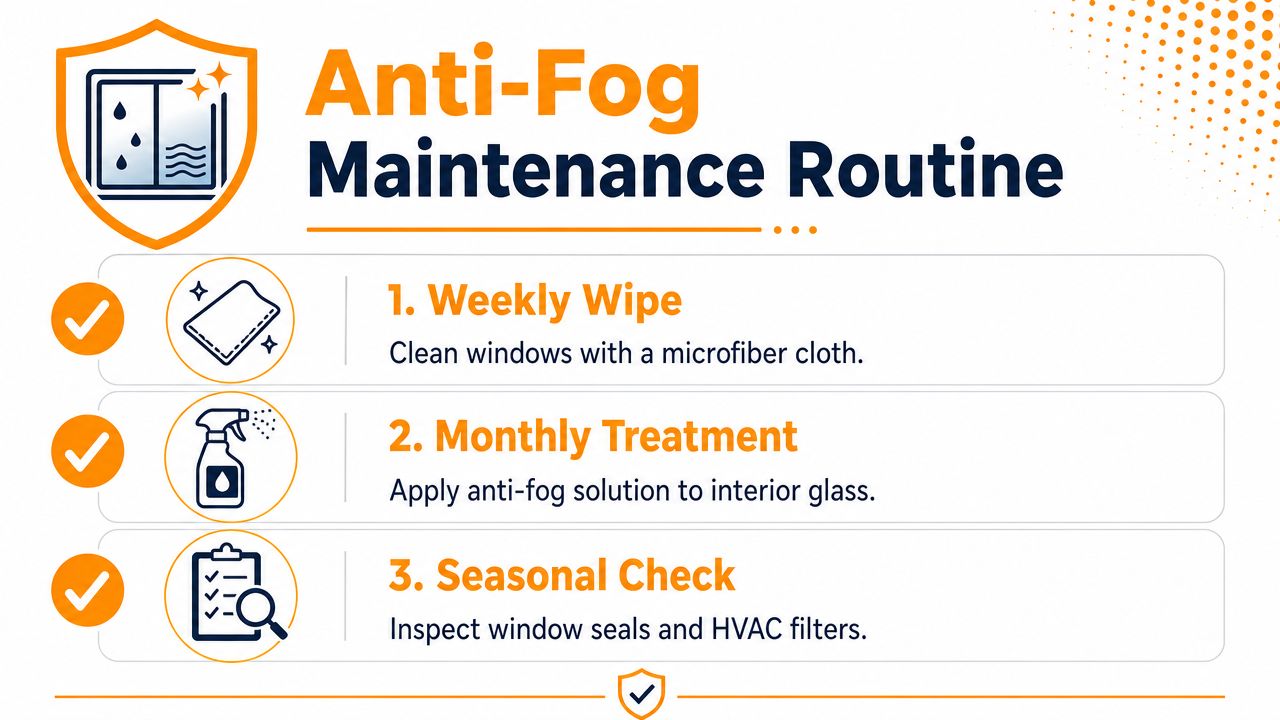
Start with a weekly wipe of the interior glass using a clean microfiber towel. That removes dust and film before they build into a layer that traps moisture and dulls visibility. If you smoke in the car, regularly carry pets, or drive with kids, that wipe matters even more because the interior glass picks up residue quickly.
Apply an anti-fog treatment when you notice performance dropping, or after a deep cleaning that strips the old coating. The useful cue isn't a calendar, it's the first sign that the windshield stops clearing as quickly as it used to. In the brief's independent demo, a treatment may last about 1 month, but that should be treated as a rough practical reference, not a universal promise.
The habits that prevent a damp cabin
- Dry wet floor mats: trapped moisture in fabric keeps feeding humidity.
- Keep vents and filters in good shape: weak airflow makes fog linger.
- Wipe the inside before parking overnight: you start the next morning with less residue.
- Keep the car free of spills and damp gear: water bottles, umbrellas, and gym bags all add up.
- Use proper glass cleaning before reapplying treatment: old residue blocks new coatings from behaving evenly.
A clean routine doesn't have to be fussy. It just has to stop the same moisture from cycling through the cabin day after day.
A fogged windshield usually isn't asking for a stronger product. It's asking for a drier car.
For deeper glass care, the internal how to remove hard water stains from car windows guide is helpful because stained glass and fog-prone glass often need the same reset, a clean surface.
Troubleshooting Persistent Window Fogging Problems
If your windows fog even after good airflow, clean glass, and a fresh treatment, stop treating it like a surface problem. Persistent fogging usually means something in the car is feeding moisture into the cabin or restricting the system that should remove it. That's when diagnosis beats guesswork.
What to check when the usual fixes fail
A clogged cabin air filter can reduce airflow enough to make defrosting sluggish. Worn door and window seals can let in extra moisture. A failing heater core can also create a different kind of mess, because coolant vapor in the cabin changes the problem entirely and often comes with a sweet smell or greasy film on the glass.
If you want to think in terms of the glass itself, not the cabin, the issue may resemble the kind of persistent moisture problem covered in fixing condensation between panes. The principle is similar, if moisture is trapped where it shouldn't be, surface treatment alone won't solve it.
Simple clues that narrow it down
- Fog clears slowly even on defrost: airflow may be restricted.
- Fog returns quickly after wiping: residue or cabin humidity is still high.
- Sweet smell or greasy film appears: a heater core issue is worth checking.
- Wet carpets or damp trim show up: seals or leaks may be feeding the problem.
- Fog is worse after passengers, rain, or winter gear: moisture load in the cabin is the main driver.
Season matters too. Some cars fog more in warm, humid weather because the outside air is carrying more moisture, while others struggle in winter because the temperature difference is bigger. The fix is the same in principle, reduce humidity in the cabin and keep airflow moving, but the setting you choose may change with the season.
A mechanic can usually narrow this down faster if you describe the symptom pattern, when it happens, how fast it returns, and whether the windshield feels oily or just damp. That information saves time and gets you closer to the actual cause.
SwiftJet helps drivers keep the rest of the car clean, and that matters more than it sounds when you're fighting foggy windows. A cleaner interior means less residue, less trapped moisture, and fewer of the conditions that make glass haze over. Visit SwiftJet if you want cleaning gear that supports the same kind of practical, no-nonsense maintenance mindset behind clear windows.
