

You open the door, sit down, and the smell hits before the key even turns. Maybe it's stale coffee in the carpet, damp floor mats after rain, a lingering smoke smell, or that sour “something's off” odor that seems to live in the cabin now. A common response involves hanging an air freshener, spraying something sweet, and hoping for the best.
That works for a day. Sometimes an hour.
If you want to know how to make your car smell good for real, stop treating the scent and start treating the source. That's how detailers approach it. A bad smell usually follows a pattern. Something caused it, something absorbed it, and something keeps reintroducing it. The fix has to follow that same logic. Diagnose, clean, neutralize, maintain.
A fresh interior doesn't come from overpowering odors with fragrance. It comes from removing the food crumb under the seat, the wetness trapped under the mat, the residue in the fabric, or the funk coming through the vents. Once the cause is gone, adding a light scent becomes optional instead of necessary.
Your Guide to a Permanently Fresh-Smelling Car
A car that smells clean changes the whole driving experience. It feels better kept, more comfortable, and less stressful to use every day. But “clean smell” and “perfume smell” aren't the same thing. One signals that the problem is gone. The other often means it's only being covered up.
The durable fix starts with a simple rule. Don't deodorize blindly. A sour smell, mildew smell, smoke smell, and pet smell don't respond the same way because they come from different sources and cling to different materials. Fabric seats hold onto spills. Carpets trap moisture and debris. Vents spread odors through the whole cabin. Hard plastics can carry residue long after the visible mess is gone.
Practical rule: If the smell comes back after the fragrance fades, the source is still in the car.
Professionals usually work through four stages:
- Find the odor source by checking the places people miss, not just the places they see.
- Deep clean the material holding the smell, whether that's carpet, upholstery, rubber mats, plastics, or the trunk liner.
- Neutralize what remains with the right product for the type of odor.
- Set up a maintenance routine so the smell doesn't rebuild.
That process works because it deals with cause before scent. It also saves time. Instead of wiping everything down and hoping something helps, you apply the right fix in the right place. That's the difference between a car that smells fresh this afternoon and a car that still smells fresh next week.
Playing Detective to Pinpoint the Odor Source
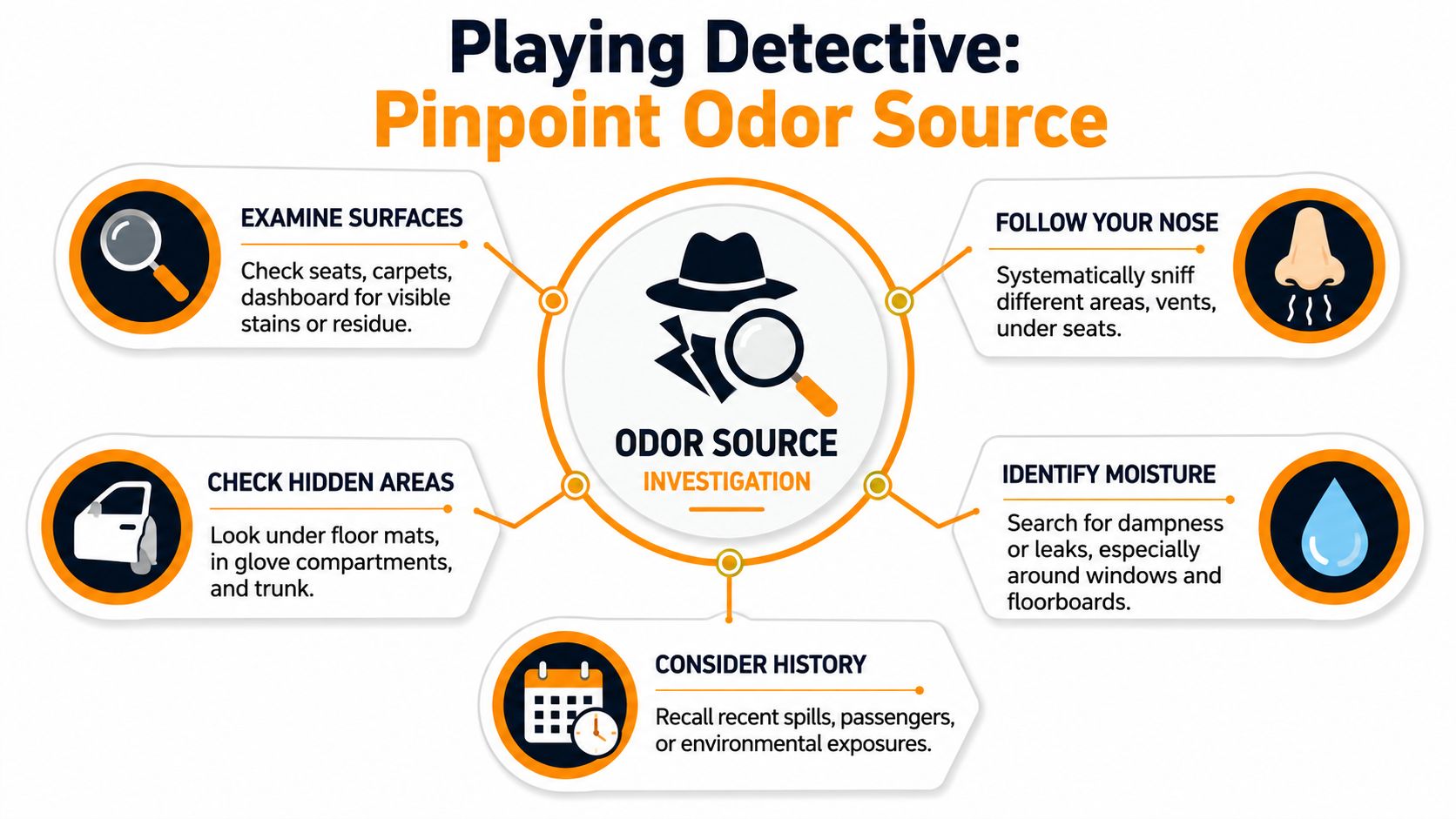
Most odor jobs go wrong in the first ten minutes. People start cleaning the dashboard, spraying the seats, or clipping a fragrance to the vent before they've confirmed where the smell is strongest. A better approach is to inspect the car by zone and let the odor tell you where to work.
Start with the floor and lower cabin
Bad smells often settle low because crumbs, liquid, pet hair, and moisture collect there. Pull out the floor mats. Check underneath them with your hand, not just your eyes. If the carpet feels damp, you're not dealing with a simple stale smell anymore. Moisture changes the job because odor keeps feeding itself until the area is dry and clean.
Slide the seats fully forward and back. Look under the rails for wrappers, old fries, coffee drips, and pet debris. Those hidden areas create the classic mystery smell because the cabin warms up, the odor rises, and nobody sees the source.
Check fabric and soft materials
Seats, armrests, headrests, and seat belts can all hold odor. If one seat smells stronger than the others, there's usually a reason. A spilled drink, body oils, smoke residue, or wet clothing from a recent trip can all soak into fabric and foam.
Use your nose in short passes. Smell the driver's seat, then the passenger side, then the back seat. Don't hover over one area too long or your nose adapts. Compare zones instead.
A few common patterns help:
- Sweet or sour smell: Often points to an old drink spill or food residue in upholstery or carpet.
- Wet dog or musty smell: Usually means moisture in mats, carpet padding, trunk liner, or the HVAC system.
- Ashy or stale smell: Smoke residue on fabric, headliner, and hard surfaces.
- Rotting smell: Forgotten trash, spilled dairy, food under the seat, or something left in the trunk.
Follow the strongest concentration, not the biggest stain. The worst smell source is often hidden, not obvious.
Don't skip the trunk and storage pockets
The trunk is easy to ignore because you don't sit in it. But trunk liners absorb groceries, sports gear, wet umbrellas, muddy boots, and leaks from cleaning supplies. Lift the trunk floor panel if your car has one. That lower compartment can hold moisture or spilled liquids long after the top layer looks fine.
Also check the small pockets people never clean:
- Door bins with old receipts, spilled drinks, or sticky residue
- Seat-back pockets filled with wrappers or forgotten snacks
- Center console compartments that trap spills and stale odors
- Glove box where damp papers or old items can create a papery, musty smell
Use the car's history
Odors usually make more sense when you connect them to what happened recently. If the smell appeared after a rainy week, think moisture. If it shows up after driving with the fan on, think air system. If it started after transporting a pet, gym bag, or takeout, inspect those contact areas first.
That mindset is what gets results. Diagnose first. Then clean with purpose.
The Deep Clean Your Car's Interior Needs
Once you know where the smell lives, cleaning becomes much more efficient. The job now is physical removal. You're taking out the dirt, residue, moisture, and trapped particles that keep feeding the odor.
Vacuum like you mean it
Vacuuming is not the warm-up. It's the foundation. If loose debris stays in the cabin, every liquid cleaner you use later just works around contamination instead of removing it.
Use a vacuum with a crevice tool and go after seams, seat rails, under-seat hardware, around pedals, between the console and seats, and the edges of trunk carpeting. One verified guideline notes that trapped debris in seat rails and vent ducts accounts for over 40% of persistent cabin odors despite surface cleaning, and that poor vacuuming after baking soda can leave residue that re-hydrates in humidity and creates a new musty smell, which is why the crevice tool matters so much in these areas (WikiHow guidance on making your car smell good).
That detail matters because many odor jobs fail after the visible dirt is gone. The hidden debris stays behind and starts smelling again as soon as the cabin heats up.
Clean soft surfaces in the right order
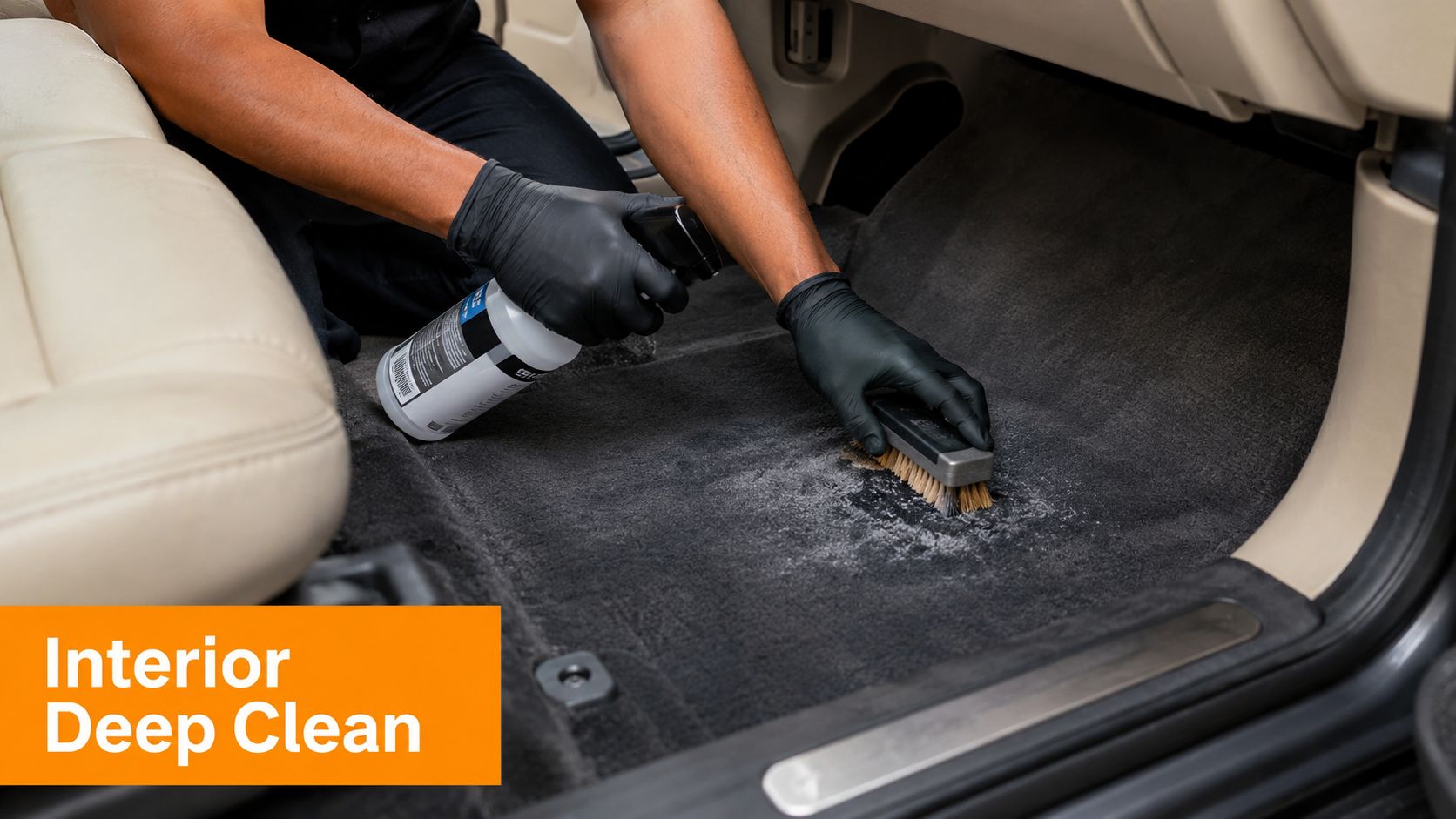
Fabric and carpet should be cleaned from dry to damp, not the other way around. Start with vacuuming, then spot-treat visible contamination, then clean the broader surface.
A practical sequence looks like this:
- Remove and wash floor mats separately so you're not pushing dirt back into the car.
- Spot-treat stains on seats and carpet before general cleaning.
- Agitate lightly with a soft interior brush where grime has worked into the fibers.
- Blot, don't soak. Too much liquid creates a second problem.
- Dry thoroughly with airflow and open doors or windows.
If your upholstery needs more attention, this guide on cleaning car upholstery is a useful companion for choosing methods based on fabric type and stain level.
Use baking soda correctly
Baking soda works best after loose contamination has already been removed. It's not a substitute for cleaning. It's a neutralizing step for fabric surfaces that still hold odor after vacuuming.
For deep-set odors in fabric upholstery, the verified method is to apply 2–3 cups of baking soda directly to carpets and seats, agitate lightly, and let it dwell for 3–6 hours, ideally overnight, before thoroughly vacuuming it out (verified baking soda method). If you rush the dwell time or don't extract all residue, you can create a fresh musty smell instead of solving the old one.
The mistake isn't using baking soda. The mistake is leaving it behind.
Patience pays off. Let it sit long enough to work, then vacuum until you think you're done, and vacuum again into the seams.
A quick visual walkthrough can help if you're turning this into a full interior reset:
Wipe hard surfaces after the fabrics
Dashboards, door panels, center consoles, cup holders, steering wheels, and plastic trim all collect films that hold odor. Smoke residue is a major example, but food oils and spilled drinks leave films too. Use a microfiber cloth and an appropriate interior cleaner. Work into corners, buttons, and cup holder inserts where grime dries and keeps smelling.
Don't forget the headliner if smoke or food odor has been in the cabin for a while. It should be cleaned gently, not saturated, because the adhesive underneath doesn't like heavy moisture.
A proper deep clean changes the cabin because the odor source is physically reduced, not just chemically challenged. That gives the next stage a chance to work.
Neutralizing Stubborn Lingering Odors
After a solid cleaning, some smells still hang on because they've bonded to fibers or seeped below the surface. Neutralization becomes important. The right choice depends on what kind of odor you're fighting.
When baking soda, vinegar, or charcoal makes sense
For general fabric odor, baking soda is the low-cost first move, but only after cleaning. It's best for broad, stale smells that don't trace back to an active spill anymore.
If the odor persists, a verified next step is a solution of equal parts water and white vinegar sprayed onto interior surfaces and wiped with a microfiber cloth. That approach is especially useful because vinegar's acidity helps neutralize alkaline odor sources like urine or smoke (Panda Hub car odor guidance).
That same guidance recommends activated charcoal bags placed under the front seats, in the trunk, and in the center console. Charcoal is passive, which makes it useful for maintenance after the heavy work is done. It doesn't clean the car, but it does help absorb what's left in the air and around fabrics. If smoke is your main problem, this related guide on cigarette smell in a car can help you match the treatment to the residue pattern.
When DIY stops being enough
DIY neutralizers do well with light organic smells, mild pet odor, old food traces, and stale cabin air. They struggle when the odor source is active or ingrained. That includes heavy smoke residue, repeated pet accidents, and organic contamination that has reached padding or foam.
In those cases, enzyme cleaners are often the smarter step. They're a better fit for odors tied to organic matter because the goal isn't to perfume the area. It's to break down what's still there. They take more care to apply correctly, but they're a better choice than repeatedly spraying fragrance over a biological odor.
If a smell returns in the same spot after cleaning and neutralizing, treat that area like a contamination problem, not a scent problem.
The trade-off is simple. Baking soda, vinegar, and charcoal are accessible and affordable. Enzyme cleaners are more targeted when the smell is tied to pet accidents, food saturation, or other organic residue. Pick the tool that matches the source, not the one with the strongest fragrance.
Cleaning Your Car's Hidden Air System
A lot of drivers assume the smell is in the seats because that's what they can touch. Then they start the fan and the odor gets worse. That's your clue. The problem may be in the air system, not the upholstery.
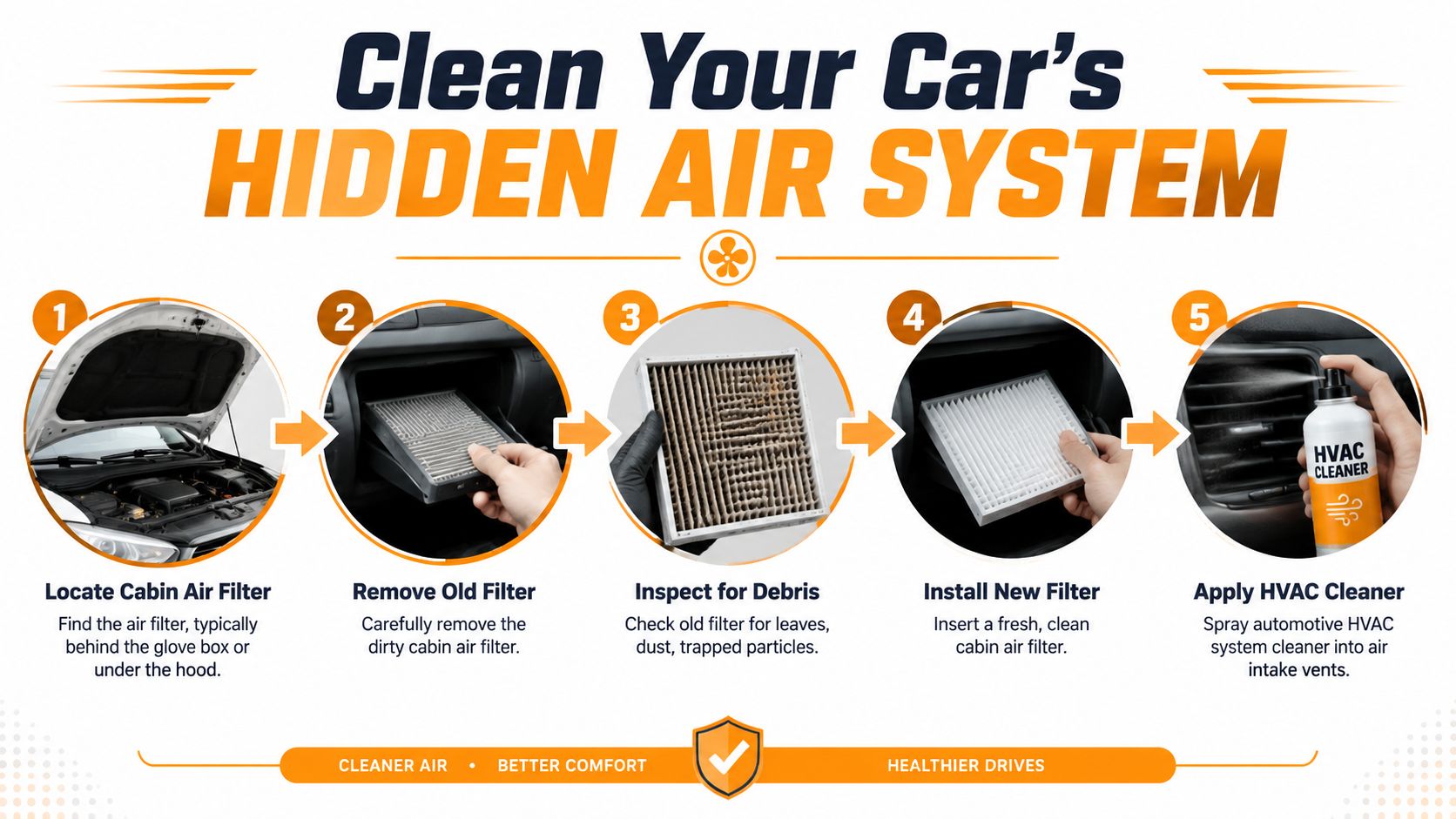
A dirty cabin air filter is the obvious starting point. Leaves, dust, and trapped debris can sit in the filter housing and keep recirculating stale air through the vents. Replacing the filter is simple on many cars and often worth doing if the odor appears mainly when the HVAC is running.
What a filter change can fix
If the smell is dusty, stale, or slightly musty and strongest when the fan first kicks on, inspect the cabin filter. In many vehicles, it sits behind the glove box or under the hood. Pull the old one out carefully, check for debris in the housing, and install a fresh filter in the correct airflow direction.
This can help when the odor comes from trapped particles and neglected maintenance. It can also improve airflow if the old filter is loaded up.
A quick checklist helps:
- Check the filter housing for leaves and loose debris before installing the new filter
- Inspect surrounding plastic channels for dust buildup and wipe them clean
- Run the fan after replacement to see if the odor changes immediately or stays the same
What a filter change cannot fix
Common advice often falls short. Some bad vent odors don't come from the filter at all. They come from bio-growth in the AC system, especially around the evaporator core. A verified source notes that many guides focus on masking odors with sprays or dryer sheets but miss the fact that AC system mold and bacteria can require specific ozone or fogging treatments rather than simple ventilation, because evaporator mold is invisible and needs professional-grade chemical intervention (video discussion of HVAC odor treatment).
That's why a new cabin filter sometimes changes nothing.
If the smell is strongest when the AC runs, especially if it resembles mildew, wet dog, or stale damp air, think deeper than the filter. Automotive HVAC cleaners can help in some cases, especially aerosol products designed for intake or evaporator treatment. But if the smell keeps returning, the practical move is a professional odor treatment focused on the HVAC system.
A cabin filter solves airflow contamination. It doesn't automatically solve evaporator contamination.
The key is matching the symptom to the source. If the vent smell started after humidity, rain, or long AC use and survives a filter replacement, move the diagnosis to the evaporator side of the system.
How to Keep Your Car Smelling Fresh
A clean-smelling car is mostly the result of boring habits done consistently. The deep clean gets you out of trouble. The routine keeps you from having to do that whole job again anytime soon.
Build a small routine that prevents big odor problems
Keep trash from sitting overnight. Shake out mats. Wipe spills when they happen, not when they start smelling. If you transport pets, sports gear, beach stuff, or wet jackets, unload the car fully instead of letting damp items ride around for days.
For passive odor control, I'd choose an absorber over a fragrance every time. If you want an extra layer beyond cleaning and standard maintenance, Advanced vehicle air purification can be a useful option to explore for drivers dealing with recurring in-cabin air quality issues. And if you want a simple absorbent approach, this guide to a charcoal smell remover is worth reading before you buy another vent clip.
Odor solutions quick comparison
| Solution Type | Examples | Effectiveness | Duration |
|---|---|---|---|
| Quick fix | Hanging air fresheners, vent clips, fragrance sprays | Good for covering light odors temporarily | Short-term |
| Absorbing option | Activated charcoal bags | Better for reducing lingering background odors after cleaning | Longer-lasting with maintenance |
| Neutralizing option | Baking soda, vinegar solution | Useful when matched to the right odor source | Medium, depends on cleanup quality |
| Deep treatment | Enzyme cleaners, HVAC odor treatment | Best for stubborn organic odors or vent-related smells | Long-term when the source is fully addressed |
The long-term formula is simple. Diagnose the source, clean the material holding the smell, neutralize what remains, then maintain the interior before odors build again. That's how to make your car smell good without relying on perfume to do a cleaning job.
A fresh-smelling interior starts with a proper wash and a thorough cleanup, not just a fragrance hanging from the mirror. If you want to make regular cleaning faster and easier at home, take a look at SwiftJet for tools that help keep your vehicle looking as good as it smells.
