

You're standing in the driveway with a soap cannon in one hand and three pressure washers on a screen in the other, and the numbers all blur together. One machine screams about PSI, another leans on GPM, and a third looks like it should do everything, until you notice the key question isn't how hard the water hits, it's how fast the job gets finished. A 2 GPM pressure washer sits right in that awkward, useful middle ground, and that's exactly why it's worth understanding before you buy.
For car owners, RV users, and mobile detailers, 2 GPM can be the difference between a fast rinse that clears foam cleanly and a setup that feels underpowered the moment you move beyond the wash bucket. It's also where a lot of shoppers get tripped up, because the same flow rating can feel excellent on one job and frustrating on another. The right answer depends less on the number on the box and more on what you're cleaning, how you're feeding the machine, and what nozzle you bolt onto the end of it.
Why 2 GPM Matters More Than You Think
A shopper in a driveway usually starts with PSI because that's the number that looks aggressive. The box says 3000 PSI, the ad says “deep clean,” and the mind jumps straight to power. Then soap gets sprayed, rinsing takes longer than expected, and the bottleneck shows up, which is flow.
That's where 2 GPM earns its keep. Industry guidance places most residential electric units around 1.2 to 2.0 GPM, while gas models commonly start at about 2.0 GPM and go higher for tougher work (Alkota's GPM vs PSI guide). That puts a 2 gpm pressure washer at the edge of the electric comfort zone and the entry point for many gas consumer models. In plain driveway terms, it's the line where “good enough for vehicles and light cleanup” starts to become “maybe strong enough for broader outdoor work.”
Practical rule: if you're mostly rinsing soap off a car, truck, or RV, 2 GPM feels very different from a lower-flow machine. If you're cleaning big flat concrete, the same machine can feel slow.
Flow rate control matters because water volume doesn't just affect speed, it affects how the machine feels in use. A strong spray with weak flow can still leave soap hanging on the surface, while a steadier flow clears debris and residue with less back-and-forth. That's why people who've used a few different washers tend to talk about rinse speed, not just pressure.
How GPM and PSI Work Together to Clean
PSI measures impact force, and GPM measures water volume. A narrow stream can hit hard and still leave soap, slurry, and loose grit sitting on the surface if the flow is thin. A pressure washer only works well when both numbers are in the right range for the job.
The cleanest way to compare machines is Cleaning Units, or CU, which is just PSI × GPM. A pressure washer rated at 2,000 PSI and 2 GPM produces 4,000 cleaning units (Powermate buying guide). That is useful because it gives a better read on real cleaning output than either number by itself. High PSI with low flow can still take longer to rinse, while a more balanced setup usually moves detergent and loosened grime off the surface more efficiently.
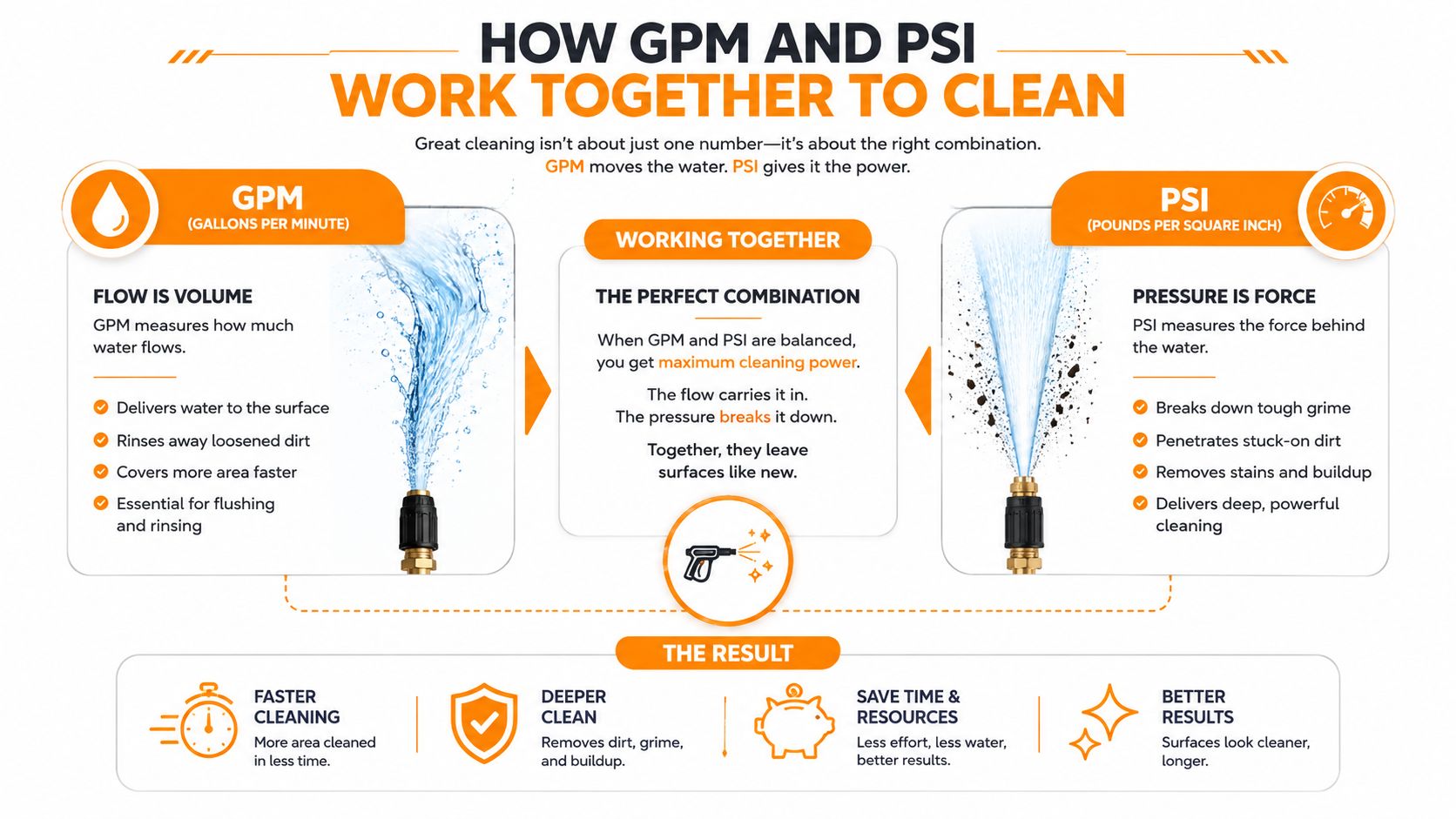
A buying guide also notes that a 1,750 PSI / 1.6 GPM machine can deliver about 68% less water than a stronger cleaning setup (Powermate buying guide). That is why a machine can look powerful on paper but still feel slow during the rinse phase. The rinse is what carries away the loosened film, and GPM is the part that speeds that up.
Shop-floor takeaway: pressure breaks the surface open, flow gets the mess off the surface.
A practical example shows up in how electric and pro-style machines are spec'd. One widely sold electric unit is rated at 2.0 GPM with 3000 PSI max in one configuration, while a different 2.0 GPM pro unit is rated at 1500 PSI with an 18A, 120V induction motor and a General triplex plunger pump (Greenworks product page). The lower-PSI unit can still perform well because the flow helps with detergent flushing, rinse speed, and debris transport. A closer look at a SwiftJet 2000 PSI electric pressure washer setup makes the same point in the driveway, flow and nozzle choice decide how useful the rated pressure feels once water reaches the surface.
Nozzle orifice size matters just as much as the numbers on the box. A machine that is rated for 2 GPM will only behave like that if the nozzle, pump, and water supply can support the flow. Use an orifice that is too small, and the machine feels choked off. Use one that is too large, and the spray loses the bite needed to clean. The inlet side matters too, because a weak hose, a partially closed spigot, or a supply that cannot keep up will turn a true 2 gpm pressure washer into something slower at the trigger than the spec sheet suggests.
What Tasks a 2 GPM Pressure Washer Handles Best
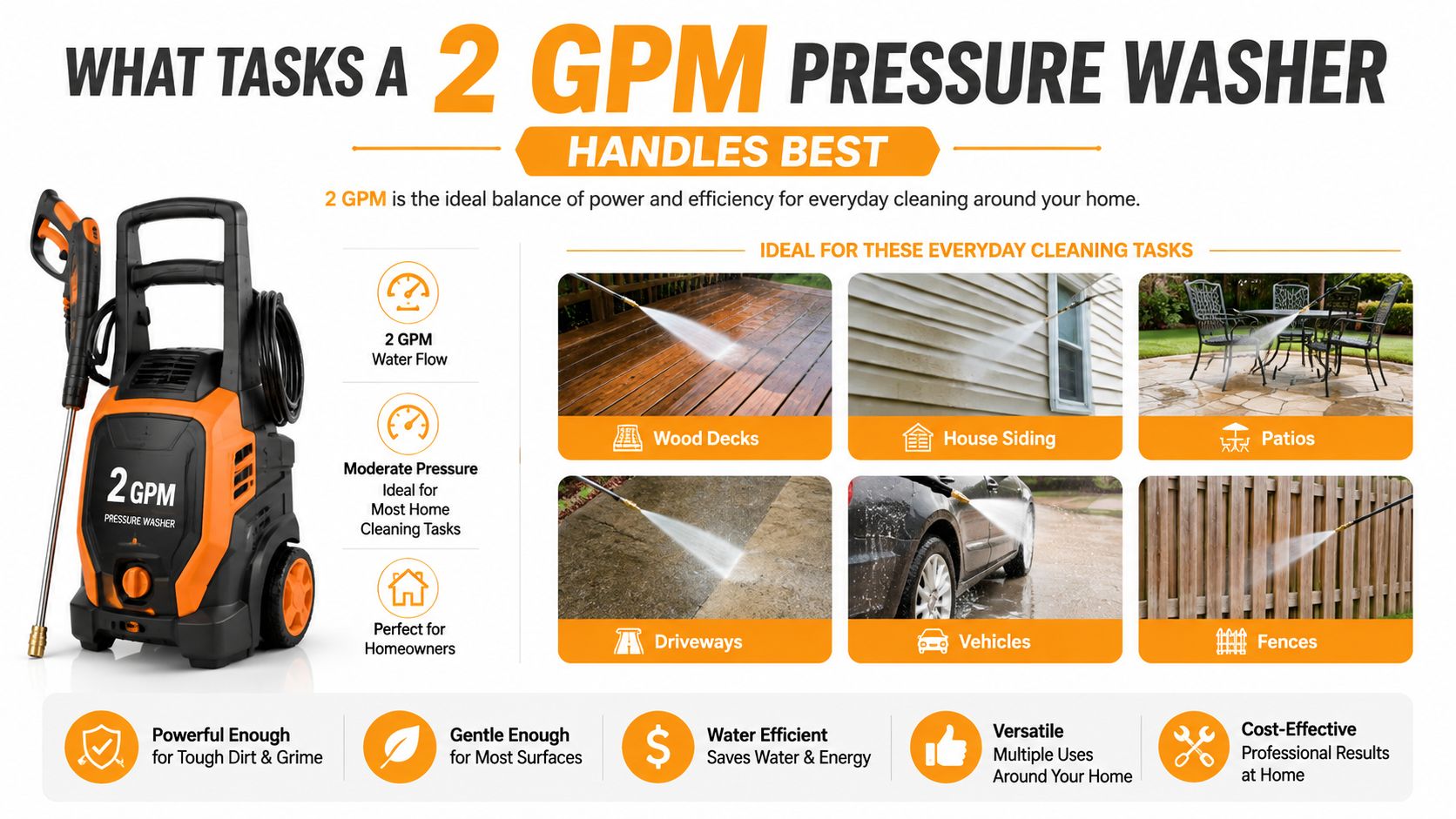
A 2 gpm pressure washer works well when the task is cleaning, rinsing, and moving soap off the surface, not when the goal is to strip heavy buildup. Car washing is the clearest fit, but the same setup also makes sense for RV panels, patio furniture, and light exterior cleanup where a controlled rinse matters more than raw aggression. In driveway use, that balance is what makes it practical for people who want a manageable wash instead of a machine that feels overkill on delicate surfaces.
A close look at buyer guidance puts 1.2 to 1.6 GPM in the car-wash-friendly range, 1.8 to 2.0+ GPM in the heavier-task range, and 2.0 to 2.3 GPM near the lower end of the all-around homeowner band (What's a good GPM for a pressure washer). That puts 2 GPM in a useful middle ground. It can do a lot, but it still depends on what you expect from it.
Best-fit jobs
- Vehicle washing: The flow is enough to rinse soap quickly, flush bugs and road film, and keep the wash moving without lingering in one spot.
- RV and camper cleanup: Tall panels and broad surfaces benefit from the steadier rinse, especially around trim, seals, and other areas where you want control.
- Patio furniture and outdoor gear: The washer feels restrained instead of harsh, which helps on plastics, vinyl, and coated surfaces.
- Light home exterior work: It suits maintenance washes on siding, small steps, and mild grime where the aim is a clean rinse, not heavy surface correction.
The limit shows up fast on large driveway sections, embedded grime, and oil stains. Those jobs ask for more rinse volume, more dwell time, and more passes, so a 2 GPM unit starts to feel like a compromise instead of a shortcut. In practice, it is a cleaner, not a concrete recovery tool.
A lot of buyers want one machine for every outdoor task. 2 GPM is honest about where that breaks down.
Real-world performance also depends on the water side of the setup, not just the machine label. A steady supply hose, an open spigot, and a nozzle orifice that matches the flow all shape whether the unit feels like a true 2 GPM washer or something weaker at the trigger. If the orifice is too small, the machine feels choked. If the supply cannot keep up, the rinse slows down and the washer loses the easy, consistent delivery that makes this flow rate useful.
The right setup lets a 2 gpm pressure washer do exactly what it is good at, quick rinsing, controlled washing, and steady detergent removal. The wrong setup makes it feel underpowered even when the pump rating looks fine on paper. For setup details on hose and accessory order, the SwiftJet setup instructions are the place to check.
Foam Cannon Compatibility and SwiftJet Setup Tips
Foam works best when the washer, nozzle, and soap setup all match. A 2 GPM machine gives you enough flow for a meaningful pre-wash stage, but foam thickness still depends on orifice size and how the nozzle is tuned. Independent testing of a 2.0-rated electric washer reported about 1.84 GPM at 825 PSI with the stock nozzle, and the same platform was observed to exceed 2.0 GPM with a larger 5.0 orifice nozzle (Obsessed Garage product testing). That tells you something useful, the nozzle can make or break how the washer behaves.
What actually helps foam
Use a foam cannon or foam gun that matches your water source and your machine's output. If the orifice is too small, you choke the flow and the spray can feel harsh or inconsistent. If it's sized properly, you get a steadier foam pattern, better detergent coverage, and less pressure drop at the gun.
That's where a garden-hose foam tool like the SwiftJet Car Wash Foam Gun fits naturally. It connects to a standard garden hose, uses an on/off trigger control, and works as a pre-wash tool before the pressure washer rinse. That makes it useful for a two-stage wash, soap first, rinse second, then the wash mitt for the panels. For setup details, the SwiftJet setup instructions are the right place to check the connection order and use pattern.
A practical routine looks like this:
- Set the soap mix conservatively first: start with a mild dilution, then adjust based on how thick the foam clings and how quickly it slides off.
- Let the foam dwell, but don't let it dry: the goal is to soften road film, not bake soap onto hot paint.
- Use the included microfiber wash mitt last: foam loosens the dirt, the mitt removes the residue, and the rinse clears what's left.
- Match the spray pattern to the panel: keep the flow even across the hood, doors, and lower body panels instead of chasing one thick blob of foam.
For mobile detailers, this matters because a foam stage plus a 2 GPM rinse can keep a wash moving without overcomplicating the setup. It's not about the biggest cannon on the market. It's about whether the nozzle and flow work together cleanly.
The Water Supply Bottleneck Most Buyers Miss
A machine can only perform as well as the water feeding it. That's the part many buyers miss, because the ads talk about output and the home plumbing determines whether that output is possible. One independent review notes that even a 2.0 GPM unit depends on a garden hose at least 5/8-inch in diameter and a spigot with enough supply, typically 5 to 10 GPM from municipal water (Wellfizz review).
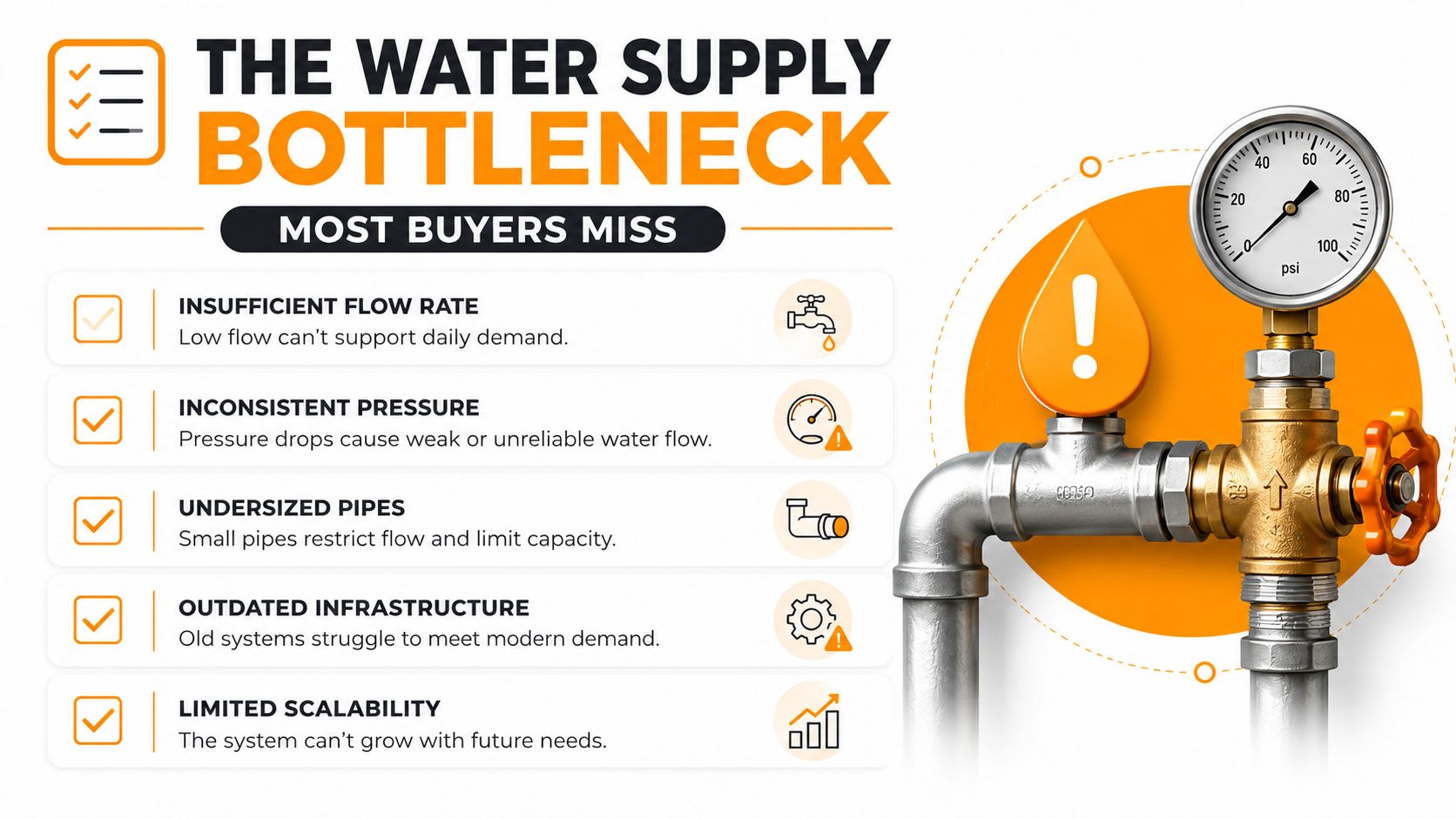
That means a weak hose, a restrictive spigot, or a long run of undersized plumbing can cap performance. You can own a 2 gpm pressure washer and still not see full flow if the supply side can't keep up. That's especially relevant for RV users and mobile detailers, because campground spigots and portable setups often have more variation than a normal driveway hookup.
A simple check before you buy
Fill a bucket from the hose you plan to use, and time how long it takes. You're not chasing a perfect lab result, you're checking whether the source side seems strong enough to support a machine that's built around meaningful flow. If the hose feels starved before you even connect the washer, the machine won't magically fix that.
For anyone building a mobile wash setup, storage matters too. If you're pairing a washer with a water reserve, a resource like compare horizontal storage tanks can help you think through supply capacity and portability as part of the setup, not as an afterthought.
If the feed side is weak, the label on the washer won't save you.
A lot of disappointment comes from this. Buyers blame the machine, but the hose, faucet, or tank was the actual restriction all along.
Pros and Cons of Choosing a 2 GPM Unit
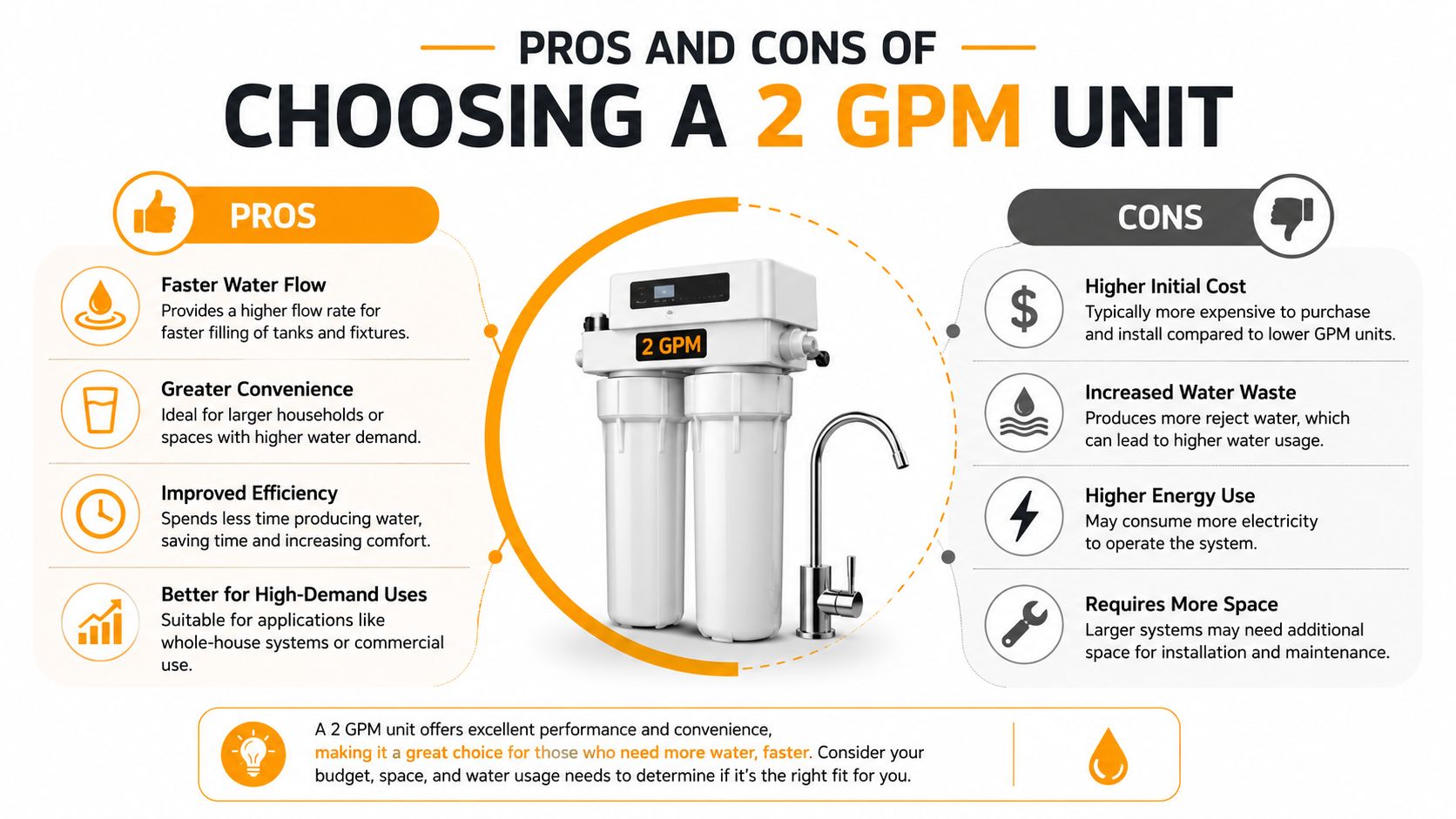
A 2 GPM washer makes sense in real driveways because it sits in the middle of useful and manageable. It gives enough flow for cars, RVs, patio furniture, and light home cleaning, and the rinse stage usually feels steady instead of starved. For homeowners who want a serious wash setup without dragging around heavier equipment, that balance is a big part of the appeal.
The limit shows up as soon as the job gets larger or the soil gets tougher. Wide concrete, oil spots, and grime that has worked into the surface ask for more flow, more time, or a different tool, and 2 GPM can become the bottleneck. Residential electric units often live in the lower-flow range, while gas models commonly start around 2.0 GPM and move higher, which is why gas gets picked more often for broader task lists.
Quick buyer comparison
| What you want | 2 GPM fits well | 2 GPM may fall short |
|---|---|---|
| Vehicle and RV washing | Yes | Rarely |
| Patio furniture and light exterior rinsing | Yes | Rarely |
| Fast driveway or slab work | Sometimes | Often |
| Embedded grime or oily surfaces | Sometimes | Often |
| One machine for every outdoor task | Maybe | Commonly |
A 2 gpm pressure washer is easier to live with than a bigger machine. It is lighter to handle, simpler to store, and usually less tiring during a long wash. The trade-off is scope. Once the job shifts from routine wash work to heavy surface recovery, you start wishing for more flow or a different class of machine. The nozzle orifice matters too. If the tip is too restrictive for the pump output, the machine will feel choked, and if the orifice is too open, you lose the bite that makes the washer worth using.
Your Pressure Washer Buying and Maintenance Checklist
Match the machine to your primary task, not the biggest number on the box. If most of your work is vehicle washing, RVs, patio furniture, and light siding cleaning, 2 GPM makes sense. If your weekend projects lean toward concrete, stains, and larger outdoor areas, size up with that reality in mind.
Before you buy, check the accessories that make the difference in day-to-day use. Make sure the hose diameter can support the washer, verify the nozzle orifice matches the pump output, and consider a foam gun or foam cannon if you want a cleaner pre-wash stage. For electric units, use a GFCI outlet, wear eye protection, never point the wand at people or pets, and keep your setup grounded in basic safety.
A few maintenance habits keep the machine feeling like new:
- Flush and clean nozzles regularly: restriction at the tip changes the whole wash pattern.
- Winterize the pump before freezing weather: trapped water ruins pumps fast.
- Store hoses without kinks: flow drops when the line is pinched.
- Check warranty terms and return policies before purchase: good support matters when you're buying a tool you'll use.
- Read customer reviews for setup issues, not just praise: look for comments about hose fit, foam performance, and real flow.
A 2 GPM pressure washer works best when the whole system is matched, not just the motor. Pair it with the right hose, the right nozzle, and a foam gun that fits your wash style, and you get a setup that feels much closer to a professional home wash than a random collection of parts.
If you're building a cleaner, easier wash routine, SwiftJet makes a garden-hose foam gun that fits naturally into a 2 GPM workflow. Visit SwiftJet to compare the foam gun, check setup support, and see how a simple pre-wash tool can make your rinse step work harder.
