

A waterless wash and wax is your secret weapon for cleaning a car with light to moderate dirt when you can't—or don't want to—break out the hose and buckets. The process relies on a high-lubricity spray that cleverly encapsulates dirt particles, letting you wipe them away safely while leaving behind a protective layer of wax. It's the perfect solution for quick touch-ups or for anyone without easy access to running water.
Decoding the Waterless Wash and Wax Method
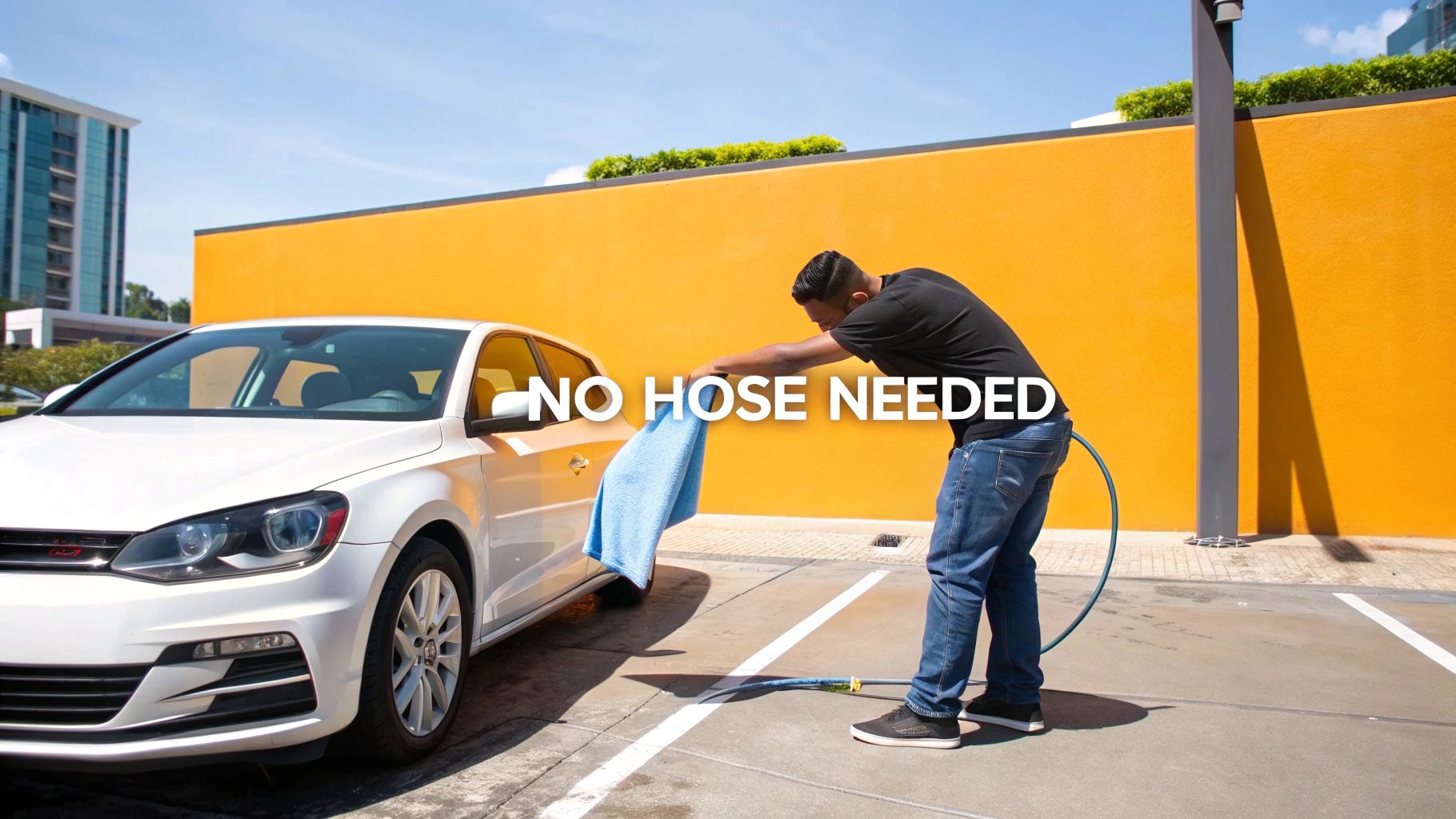
The idea of cleaning your car without a flood of water might sound a little strange at first, but modern chemical engineering has made it not only possible but incredibly effective. A top-notch waterless wash and wax formula is packed with specialized polymers and slick surfactants that get right to work, surrounding every speck of dirt and lifting it away from the paint. This process is all about minimizing friction to prevent the tiny scratches and swirl marks that can happen with a bad wash technique.
Think of it like a protective, slippery shield that gets between the grime and your car's finish. It allows your microfiber towel to glide effortlessly across the panel, scooping up all the contaminants without dragging them. This method really proves its worth in specific, real-world situations where a full-blown wash just isn't practical.
When to Reach for a Waterless Wash
This isn't just about convenience; it's a smart tool for any car care enthusiast. You'll find it's the perfect choice in scenarios like these:
- Apartment and Condo Living: If you don't have access to an outdoor spigot, a waterless wash is a lifesaver. You can get a fantastic clean right in your garage or assigned parking spot.
- Quick Touch-Ups: It’s ideal for getting rid of light dust, annoying fingerprints, fresh bird droppings, or water spots that pop up between deeper washes. It keeps your car looking like it just left the detailer.
- Water-Restricted Areas: During a drought or under local water bans, this method lets you keep your vehicle's paint protected and looking sharp without breaking any rules.
The rising popularity of this approach makes a lot of sense. The global waterless car wash market is expected to jump from US$722 million in 2025 to a massive US$1,062 million by 2031. This shift is largely fueled by a growing focus on water conservation, especially when you consider a traditional car wash can guzzle up to 100 gallons of water.
Key Takeaway: The core idea behind a waterless wash is lubrication over saturation. You're not trying to blast dirt off with water pressure. Instead, you're using a slick, engineered formula to safely lift dirt away, protecting your paint and a valuable resource at the same time.
This water-saving mindset isn't just for cars. The same principles apply to other areas, like the efficient low moisture carpet cleaning methods that also rely on advanced chemistry instead of sheer volume of water. Once you know exactly when to use a waterless wash, you can build a more effective and sustainable car care routine.
Gathering the Right Detailing Arsenal
Executing a flawless waterless wash and wax all comes down to having the right gear. Seriously, trying to pull this off with the wrong tools is the fastest way to turn a quick cleanup into a swirled-up mess. Your main defense against scratches isn't just the spray you choose—it's the towels you use to apply it and wipe it away.
Think of your microfiber towels as the most valuable players on the team. You're going to need a decent stack of them. For a typical sedan, I'd grab at least 8-10 plush, high-GSM (grams per square meter) towels. Trust me, trying to get by with fewer just isn't worth the risk. You need to be constantly swapping to a clean, fresh towel so you're not just dragging dirt all over your paint.
The Core Components
Your success really boils down to a few key items. First up, obviously, is a high-quality waterless wash and wax solution. You want to look for formulas that specifically talk about lubricating polymers. These are what create that slick, protective barrier between the grit and your car's clear coat. Many of the better products out there also pack in some carnauba wax, which leaves behind a fantastic, warm gloss after you've cleaned up the grime.
Next, you need a system for your towels. Don't just grab and go; dedicate them to specific tasks:
- Initial Wiping Towels: These are your workhorses. They do the heavy lifting on the first pass to get the dirt off the surface.
- Buffing Towels: Keep your absolute cleanest and plushest towels for this job. They're only for that final buff to get a perfect, streak-free shine.
- Glass Towels: Always, and I mean always, use separate towels for your glass. If you get any wax residue on them, you're in for a world of streaky frustration.
A classic rookie mistake is trying to make one or two towels last for the entire car. This is just asking for trouble. You end up cross-contaminating, turning your cleaning towel into what's essentially a piece of fine-grit sandpaper. Guaranteed swirl marks. Always fold your towel into quarters and flip to a clean section for every single pass.
Elevating Your Detail
Once you've got the essentials locked down, a couple of extra tools can really elevate your results to a more professional level. A soft-bristled detailing brush, for instance, is a complete game-changer for all those little nooks and crannies that a towel just can't handle properly. I'm talking about the tight spots around emblems, grilles, and headlight trim where dirt and dust love to settle.
Just a light spritz of your waterless wash onto the brush lets you gently agitate and lift that stubborn grime before you wipe it clean. If you're looking to build out a more complete kit, our definitive car detailing supplies list is a great place to see what the pros use. A little bit of thoughtful preparation like this makes all the difference, ensuring you can perform a safe, effective, and genuinely satisfying waterless wash every time.
Mastering the Spray, Wipe, and Buff Technique
This is where the magic really happens. You're turning a simple spray bottle and a couple of towels into a serious detailing tool. The whole secret to a successful waterless wash and wax is tackling the job one panel at a time, methodically. But before you even think about spraying, the cardinal rule is to get the car out of direct sun and make sure the paint is cool to the touch. If you try this on a hot panel, the product will just evaporate on contact, which kills its ability to lubricate and will leave you with a streaky mess.
Once your car is prepped and in the shade, you'll fall into a simple rhythm: spray, wipe, and buff. Pick a starting point—say, the hood or a fender—and give it a generous misting of your waterless wash solution. This is not the time to be shy with the product. You need enough liquid on the surface to completely surround every spec of dirt, creating a slick buffer between the grime and your paint. One of the biggest mistakes I see beginners make is spraying too little, which is a surefire way to scratch the finish.
This infographic gives you a great visual of the basic gear and the simple workflow.
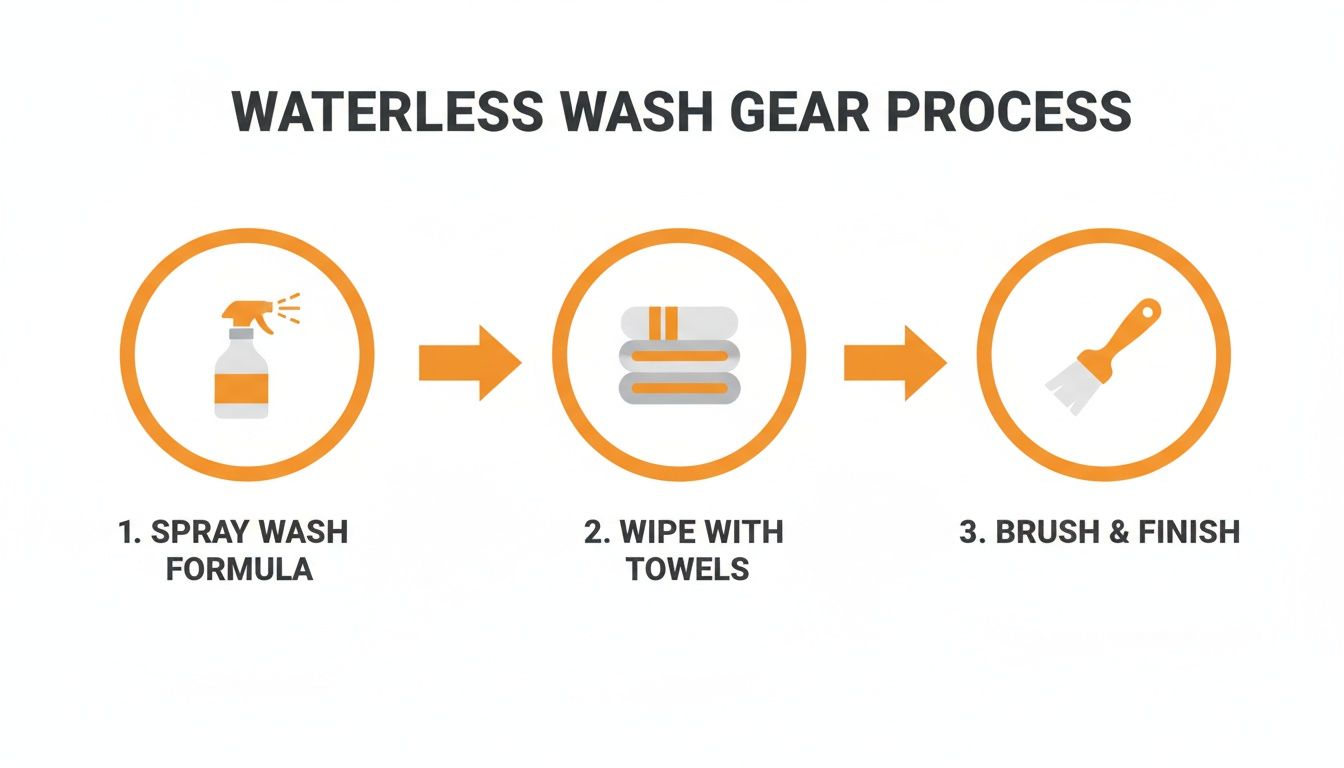
As you can see, it boils down to just three things—the spray, your towels, and maybe a soft brush for the details—to get a complete clean and wax.
Executing the Perfect Wipe
Alright, grab one of your plush microfiber towels and fold it into quarters. Doing this gives you eight clean, usable sides from just one towel. Now, lightly glide the towel across the panel you just sprayed. Use a straight-line motion, not circles. Wiping in circles just pushes the dirt around; you want to lift it straight off the surface in one clean pass.
After each wipe, take a look at your towel. See that line of dirt? That side is done. Flip the towel to a fresh, clean quarter. This discipline is absolutely non-negotiable if you want to avoid swirl marks. A dirty towel is the arch-enemy of a waterless wash. Once all eight sections of your first towel are dirty, toss it in the laundry pile and grab a new one. Never, ever be tempted to keep using a soiled towel on your paint.
The Final Buff for a High-Gloss Shine
With the dirt and grime safely lifted away, it’s time for the most satisfying part. Take your second, totally clean and dry microfiber—this is your dedicated buffing towel—and gently buff the panel. You're aiming for a brilliant, streak-free shine. Use light pressure and overlapping motions to wipe away any leftover product haze. This step does more than just dry the panel; it evenly spreads the built-in wax, leaving behind that slick, water-beading layer of protection.
Pro Tip: When you get to the lower parts of the car, like the rocker panels and the area behind the wheels, switch to what I call your "dirty job" towels. These spots are always caked with the worst road grime and brake dust, and the last thing you want is to drag those abrasive particles onto the cleaner, upper panels of your vehicle.
Different parts of the car might need a slight tweak to your technique, but the core principle is the same.
- For Glass: Give the window a light mist and wipe with a clean microfiber. Immediately follow up with a separate, dry glass towel to buff away any potential streaks for a perfectly clear view.
- For Wheels: Spray liberally, really focusing on areas with caked-on brake dust. A soft-bristled wheel brush can help loosen the tough stuff before you wipe it all away with a durable, dedicated wheel towel.
- For Tricky Spots: For grilles, emblems, and other tight spaces, try spraying the product directly onto a soft detailing brush. Gently agitate the area to lift the dirt, then follow up with a corner of your microfiber towel to wipe it clean.
Following this careful process ensures every inch of your car gets cleaned safely and looks fantastic. That shine isn't just for looks; it's a genuine layer of protection. If you're looking to build on that, our guide on how to wax a car at home dives much deeper into achieving long-lasting paint protection.
The Common Mistakes That Create Swirl Marks
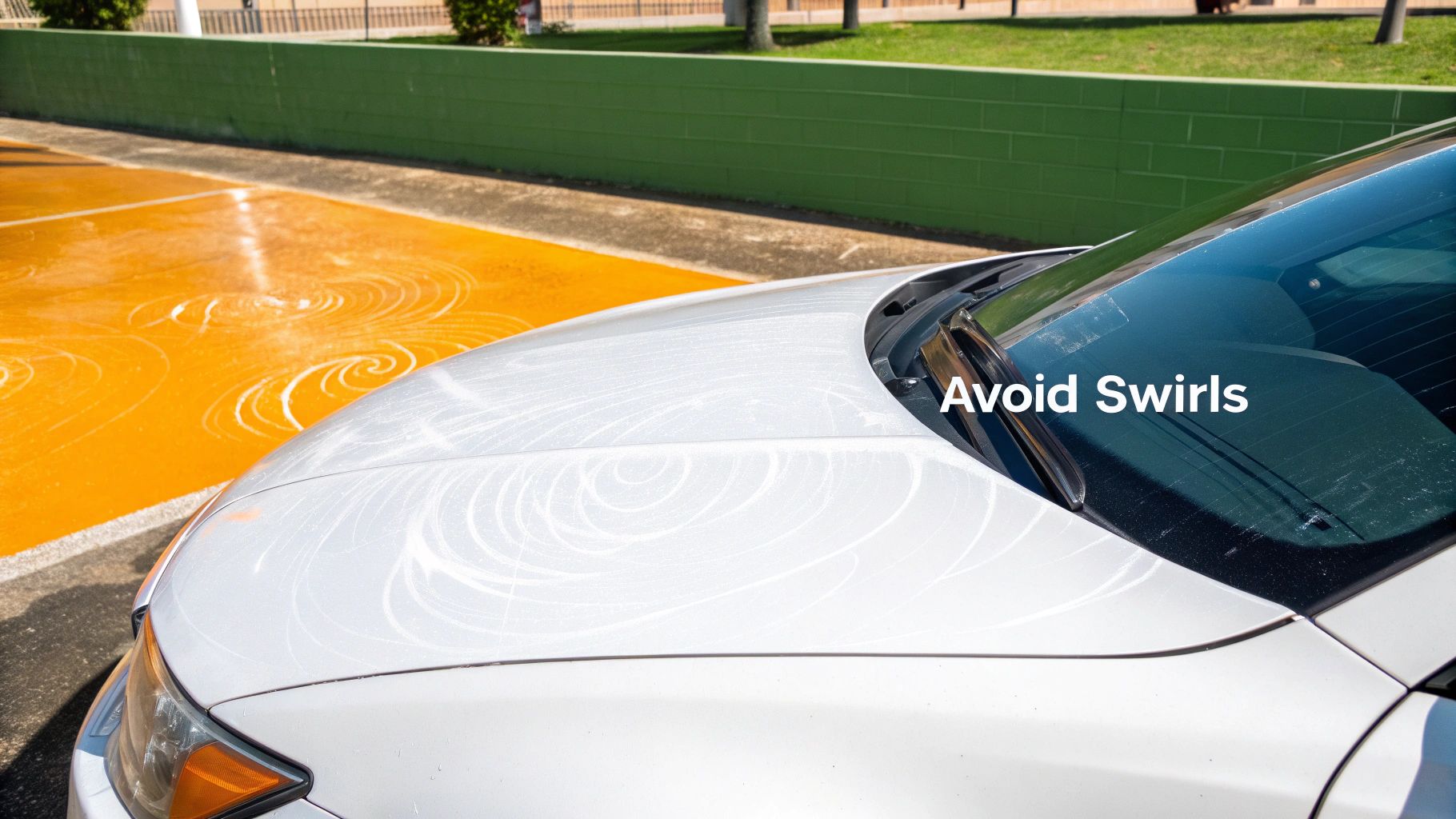
While a waterless wash is a fantastic and safe way to clean your car, a few simple missteps can turn a quick touch-up into a paint-damaging nightmare. It all comes down to one goal: lifting the dirt away from the surface, not grinding it in. Getting a handle on these common errors is the real secret to a flawless, swirl-free finish every single time.
The biggest mistake I see people make is trying to use a waterless wash on a car that’s just too dirty. This method is perfect for light dust, fingerprints, and fresh bird droppings—not a vehicle caked in mud, sand, or heavy road grime.
If your car is that soiled, you’re just asking for trouble. Even the best high-lubricity formula can only suspend so much abrasive grit. In those situations, a proper pre-rinse or a full-blown foam cannon wash is the only safe way to start.
Skimping on the Spray and Using Too Much Pressure
Another guaranteed way to scratch your paint is being stingy with the product. The entire process hinges on maximum lubrication. You need enough spray on the panel to completely encapsulate every dirt particle, creating a slick barrier between the grit and your paint.
If you don't use enough, you're essentially dragging dry, scratchy particles across the finish with your towel. This is what causes those microscopic scratches that look like ugly spiderwebs in the sunlight. Don't be shy with the spray bottle—the surface should look genuinely wet before you even think about wiping.
Applying too much pressure with your towel is just as bad.
- Let the towel do the work: Your only job is to gently guide the microfiber across the surface. A light, gliding touch is all that’s needed.
- Pressure causes friction: Pushing down forces the dirt you just lifted right back into the clear coat, completely defeating the purpose of the lubricating spray.
Think of it as skimming, not scrubbing. If you've already found yourself in this situation, don't worry. Our detailed guide explains how to remove swirl marks from a car and bring back that showroom shine.
Reusing Dirty Towels
The final cardinal sin of waterless washing is poor towel management. Trying to clean your entire car with one dirty towel is the fastest way to ruin a perfectly good paint job. As soon as a section of your towel picks up dirt, it’s contaminated. Using it again on another panel just drags those abrasive particles all over a new area.
Pro Tip: Fold your plush microfiber towel into quarters. This little trick instantly gives you eight clean, usable sides. After one gentle wipe, flip the towel to a fresh section. Once all eight sides are dirty, grab a new towel. Simple as that.
There's no denying the shift towards water-saving car care. The market for these products is expected to grow at a 7.1% CAGR between 2025 and 2033, reaching an estimated USD 3.36 billion. This reflects a major change in how we think about washing our cars, especially as professional washes now use just 30-40 gallons per car, a huge drop from the 100+ gallons often used at home. Tools like the SwiftJet foam gun help bridge this gap, offering a low-water yet scratch-free clean. By avoiding these simple mistakes, you can safely be a part of this trend.
Building a Hybrid Car Care Routine
It’s easy to think of a waterless wash and wax as a full-on replacement for your pressure washer and foam cannon, but that’s a common mistake. The real magic happens when you see it as another strategic tool in your detailing arsenal. When you start blending it with your traditional washing schedule, you unlock a whole new level of efficiency and get far better results.
Think of it this way: your weekends are for the deep clean—the satisfying foam cannon or two-bucket wash. Then, during the week, your waterless spray is your secret weapon for quick maintenance. It’s perfect for getting rid of light dust, smudgy fingerprints, or those dreaded fresh bird droppings before they have a chance to do any real damage to your paint.
The Benefits of a Blended Approach
This hybrid approach does a lot more than just keep your car looking sharp all the time. It also dramatically extends the life of your main wax or sealant layer. You're gently lifting contaminants without stripping away that protective barrier with harsh detergents, which means you won't have to break out the wax as often.
What you end up with is a sustainable car care rhythm that’s actually manageable. You’ll be amazed at how much time and water you save over a month. It helps build good detailing habits without making you feel like you need to set aside hours every few days for a full wash.
Expert Insight: The best detailers don't just clean cars; they maintain them. A hybrid routine shifts your mindset from "washing" to "upkeep." You’re preventing major dirt buildup, which makes every deep clean that much faster and easier.
Integrating Waterless Wash and Wax Effectively
So, what does this actually look like day-to-day?
Imagine you just spent Saturday giving your car the full treatment—a thorough wash and a fresh coat of wax. By Wednesday, a light layer of pollen has settled on it, and you spot a couple of bird droppings. Instead of dragging out all the gear for another full wash, you can grab your waterless spray and spend just 15-20 minutes bringing back that "just-detailed" shine. It’s that simple.
This kind of efficiency is driving a huge shift in the industry. The mobile car washing market, which relies heavily on these products, is projected to grow from USD 7.01 billion in 2024 to USD 12.83 billion by 2030. This boom is all thanks to people wanting professional results without wasting a ton of water. You can read more about the growth of waterless methods on globenewswire.com.
While a waterless wash and wax is fantastic for keeping the paint looking great, don't forget that total vehicle care includes a whole range of other essential car maintenance tasks. Adopting a smart, hybrid cleaning routine like this is really a cornerstone of modern, effective car care.
Got Questions About Waterless Washing? We’ve Got Answers.
Jumping into waterless detailing for the first time can feel a little strange. The whole idea of cleaning your car with just a couple of towels and a spray bottle might seem like you're breaking all the rules, but today's formulas are smarter and safer than you might think. Let's clear up some of the common questions so you can get started with confidence.
The number one worry I hear is always about scratching the paint. It’s a totally fair concern! But a good waterless wash and wax is engineered from the ground up to prevent swirls, not create them. The magic is all in the chemistry.
Is a Waterless Wash and Wax Actually Safe for My Paint?
Yes, it is—if you use it on the right kind of dirty. These products are loaded with lubricating polymers that wrap around every speck of dirt, lifting it off the surface. This process, called encapsulation, creates a slippery barrier between the grime and your car's clear coat.
When your microfiber towel glides over the panel, it's not dragging sharp dirt particles across the paint. Instead, it’s safely scooping up the encapsulated grime.
The trick is all in the technique:
- Only use it for light to moderate dust and dirt. If your car is caked in mud or thick road grime, stick with a traditional foam wash. That’s not what this is for.
- Don't be shy with the spray. You want the surface properly slick and saturated to provide that crucial lubrication.
- Let the towel do the heavy lifting. Use zero pressure. Just wipe gently in a straight line and let the plush fibers pick up the dirt.
Think of it this way: you're not scrubbing, you're lifting. When you do it right on a car that isn't filthy, a waterless wash is one of the gentlest ways to clean your paint while adding a fresh layer of protection.
How Often Can I Use a Waterless Car Wash?
As often as you need to. It’s the perfect solution for daily upkeep—think dust, fingerprints, fresh bird droppings, or water spots that haven't had time to bake into the paint.
A lot of detailers and car lovers will do a quick waterless wipe-down once or twice a week. It keeps the car looking like it was just detailed and constantly reinforces the wax layer, which makes the paint pop and helps it stay cleaner, longer.
Can I Use It on My Windows or Inside the Car?
These sprays are built for exterior surfaces: your paint, plastic trim, chrome, and even your wheels. You can definitely use a waterless wash on the outside of your windows, but you’ll need to follow up with a second, perfectly clean microfiber towel. A final buff with a dry towel is the key to getting a crystal-clear, streak-free finish on glass.
For the inside of your car, though, you'll want to stick with dedicated interior cleaners. Using a waterless wash and wax on your dashboard, leather, or fabric can leave a slick residue that’s just not meant for those materials.
Whether you’re ready to add the simple convenience of a waterless wash to your arsenal or need the heavy-hitting power of a foam cannon for the really dirty jobs, SwiftJet has you covered.
Check out the SwiftJet Car Wash Foam Gun and see how you can get a faster, safer, and more satisfying clean right in your own driveway.
