

Most car-care advice treats water beading as a simple verdict: if the droplets are round, the paint is protected. That shortcut is attractive, easy to demonstrate, and often wrong. Beading tells you something important about the surface, but it doesn't prove that the clear coat is resisting contamination, mineral deposits, or long-term wear.
The useful question isn't only, “Does my car bead?” Ask instead: What does the water behavior reveal about surface energy, how does it fit my washing routine, and is the protective layer still doing its job? Once you understand those distinctions, you can choose between beading and sheeting more intelligently, prepare the paint correctly, and diagnose poor performance without immediately blaming the coating.
The Physics Behind Water Beading and Surface Energy
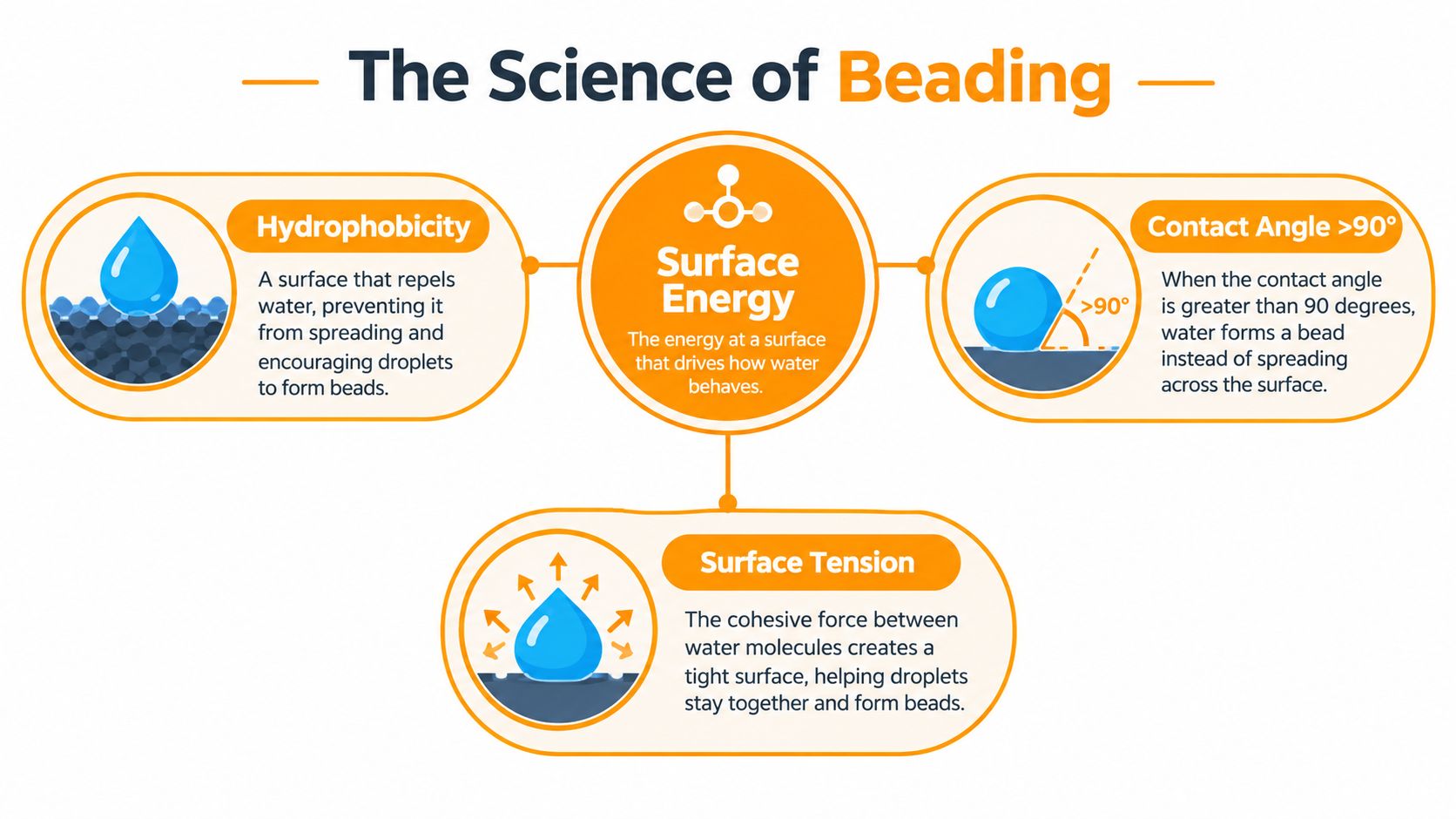
Water molecules naturally pull toward one another. That attraction creates surface tension, which makes a droplet behave somewhat like a flexible skin. On a clean surface that water doesn't strongly favor, the molecules stay grouped together instead of spreading into a thin film.
A crowded-room analogy makes the idea easier to picture. Water molecules are like people who prefer standing close to their own group. On a surface with low attraction to water, they gather into a rounded cluster. On a surface that attracts them more strongly, they spread out and make broader contact.
The shape of that droplet is described with a contact angle, measured where the water meets the surface. A shallow angle means the water spreads. A steep angle means it pulls into a tighter bead. According to Dow's technical guidance on hydrophobic additives, a contact angle above 90° is generally classified as hydrophobic, angles from 100° to 130° indicate good beading, and angles above 130° are considered very good. At 150° or higher, the surface is typically called superhydrophobic.
Why surface energy matters
Surface energy describes how strongly a surface interacts with another material. A protective layer can lower the paint's attraction to water, so droplets contract rather than flatten. That lower interaction is what detailers recognize as a hydrophobic finish.
The visual result is useful, but it isn't the whole story. Contact-angle testing offers a standardized way to compare treatments, while driveway beading gives car owners an immediate visual cue. A surface can look dramatically different after protection, yet two beads that appear similar may represent different measured angles and different levels of water repellency.
That distinction helps explain why water beading can support easier maintenance without acting as a complete health check for the paint. A rounded droplet shows that water is interacting differently with the surface. It doesn't independently reveal whether the layer has resisted bonded contamination, protected against every environmental threat, or retained its original thickness.
From laboratory measurement to driveway test
You don't need laboratory equipment to observe the effect. After rinsing a hood, watch whether water forms tight droplets, spreads into irregular patches, or runs away in a continuous sheet. Those observations can reveal changes across panels, especially when one area behaves differently from the rest.
For cleaner comparisons, wash the vehicle first and use consistent water conditions. A deionized-water car wash system guide can help explain why mineral content matters during rinsing and drying. The cleaner the test surface, the more meaningful the water behavior becomes.
Practical rule: Treat water beading as a measurement clue, not a protection certificate.
Water Beading vs Water Sheeting in Auto Care
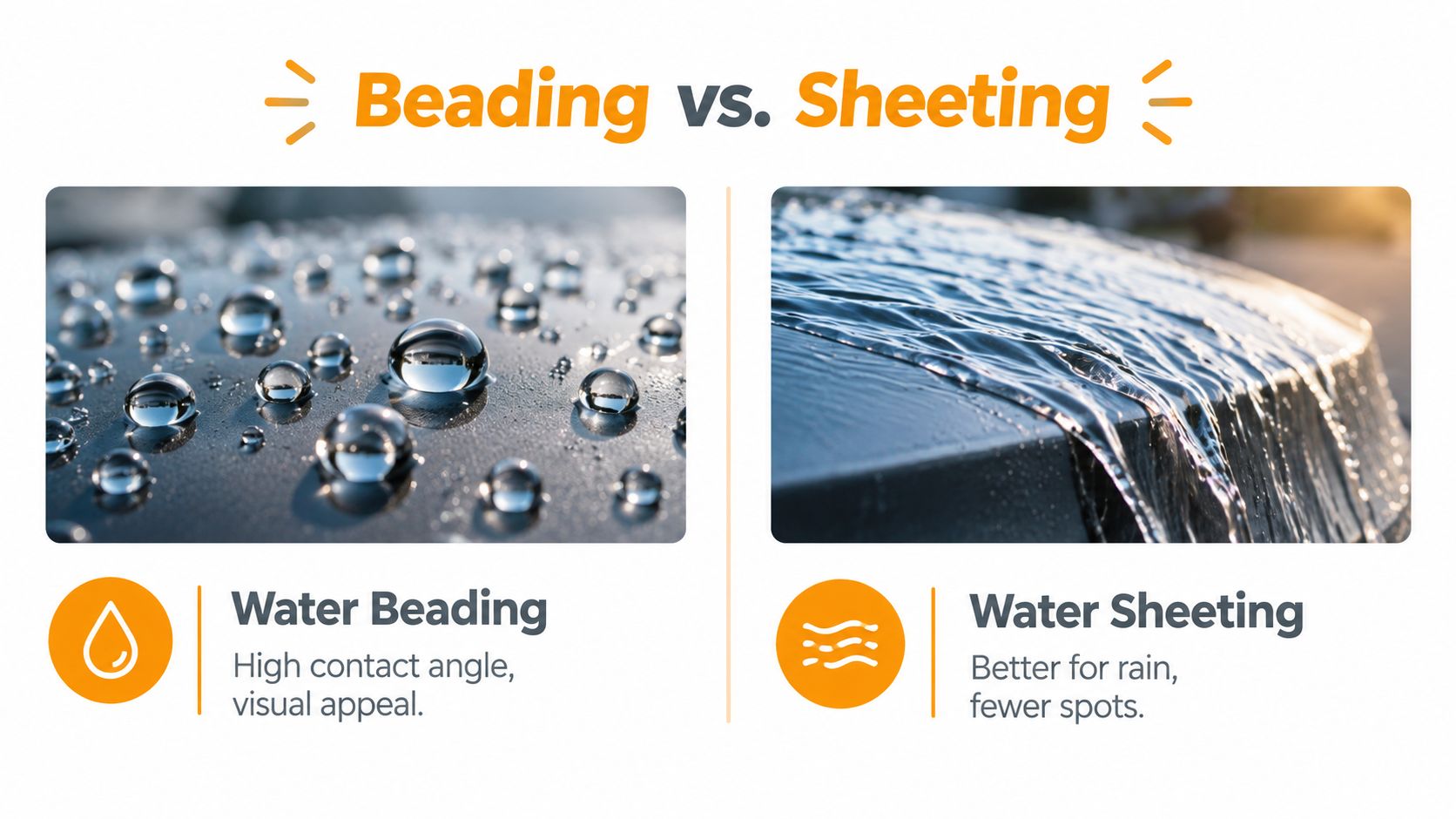
A beaded hood looks impressive because each droplet acts like a tiny lens. That visual appeal makes beading an easy marketing message, but water sheeting can be more practical in real washing conditions. The better behavior depends on what happens to the water after it touches the vehicle.
Beading produces separate droplets with a high contact angle. It suits owners who enjoy visible repellency and who can remove the remaining water quickly with an air dryer, leaf blower, or clean microfiber towel. Sheeting encourages water to move across the panel in a flatter layer, which can leave less water behind when the vehicle is rinsed.
The trade-off appears during drying
Tight beads don't disappear just because they're attractive. If mineral-rich water dries in the sun, each remaining droplet can leave a concentrated mark. Repeated exposure can make those deposits more difficult to remove, especially when the vehicle sits outside and the owner delays drying.
Sheeting reduces the number of isolated droplets left on the panel. That can shorten the drying stage and lower the opportunity for residue to remain, although it doesn't make a vehicle immune to spotting. Water quality, panel temperature, weather, and drying technique still control the result.
| Water behavior | Strength | Potential drawback |
|---|---|---|
| Beading | Strong visual feedback and clear evidence of changed surface interaction | Remaining droplets may dry into mineral spots |
| Sheeting | Moves water away in a flatter layer and can simplify drying | It may look less dramatic and still requires proper maintenance |
| Mixed behavior | Can offer visible repellency with practical runoff | Performance may vary by panel, product, and contamination |
Your workflow should decide the preference. An owner who washes in shade and follows with a blower may appreciate tight beads. Someone washing outdoors in hard water may prefer faster runoff and a disciplined drying routine. A coating discussion at SwiftJet's automotive ceramic coating resource can provide additional context on how protected surfaces behave, but the product label alone can't choose the right water pattern for your conditions.
Rain isn't the same as a controlled rinse
Rainwater, wash water, and sprinkler water don't behave identically. Wind can push droplets across the panel, road film can alter the surface, and dust can create channels that interrupt a uniform sheet. A dramatic rinse demonstration therefore shows a moment in time, not a complete durability test.
Choose the behavior that supports how you care for the vehicle. If you can dry promptly, beading is enjoyable and informative. If drying is difficult, sheeting may reduce the workload. Either way, judge the finish by cleanliness, spotting, ease of washing, and consistency across the vehicle, not by droplet shape alone.
Choosing the Right Protection for Maximum Hydrophobicity
The product category sets the starting point for water behavior, but application quality often decides whether that behavior survives. Natural waxes, synthetic sealants, and silicon dioxide coatings each make sense for a different owner. The highest theoretical hydrophobicity isn't automatically the best purchase if the product demands more preparation and curing discipline than you can provide.
| Protection Type | Expected Durability | Application Difficulty | Beading Performance |
|---|---|---|---|
| Carnauba wax | Shorter-lived protection that requires regular refreshing | Low to moderate | Warm, attractive beading |
| Synthetic polymer sealant | More durable than a basic wax, with a straightforward maintenance cycle | Low to moderate | Consistent hydrophobic response |
| Silicon dioxide ceramic coating | Longer-term protection when correctly prepared, applied, and maintained | High | Strong water repellency with durable surface chemistry |
Carnauba wax for simple, repeatable care
Carnauba wax remains popular because it's approachable. You spread a thin layer, allow the product to haze if directed, and buff it away with a clean towel. It can add gloss and produce satisfying droplets without requiring a complex installation environment.
The limitation is commitment. Wax works best for owners who enjoy frequent detailing and don't mind refreshing the layer as its surface behavior changes. It also won't correct defects or remove contamination by itself, so preparation still matters.
Polymer sealants for the practical middle ground
A synthetic sealant uses engineered polymers to create a more durable film than a basic wax. Many products apply by hand, flash predictably, and suit a weekend routine. They're a sensible choice when you want repeatable water repellency without managing the surface-preparation and curing demands of a professional coating.
Follow the manufacturer's instructions for panel temperature, wipe-off timing, and exposure after application. A sealant can underperform if you apply too much, leave residue behind, or expose it to water before the product has set.
Ceramic coatings for demanding installations
Silicon dioxide, commonly called SiO₂, ceramic coatings require the most careful process. The paint should be clean, decontaminated, and often corrected before application. High spots must be leveled during the product's working window, and the vehicle may need controlled conditions while the coating cures.
A ceramic layer can deliver strong and lasting hydrophobic behavior, but it isn't a substitute for washing. Contamination can cover the surface and make the coating appear inactive. Owners should also understand how to care for ceramic coating before committing to one, because maintenance technique affects the result.
For readers comparing newer coating concepts, this overview of graphene coating for cars may help separate chemistry claims from the basic requirements shared by most protective systems. Whatever the label says, match the product to your time, tools, and willingness to follow the curing instructions.
Surface Preparation and Maintenance for Lasting Results
A protective product can only bond properly to the surface beneath it. Washing removes loose dirt, but it doesn't necessarily remove iron particles, tar, old residue, or bonded mineral scale. Applying wax, sealant, or coating over those materials creates an uneven foundation and can make water behavior look inconsistent from the start.
Prepare the paint in the right order
Use a measured process rather than adding stronger chemicals at random:
- Rinse thoroughly. Remove loose grit before touching the paint.
- Pre-wash with foam. Let the cleaning solution soften traffic film, then rinse without allowing it to dry.
- Contact wash gently. Use a clean mitt and separate rinse bucket if available.
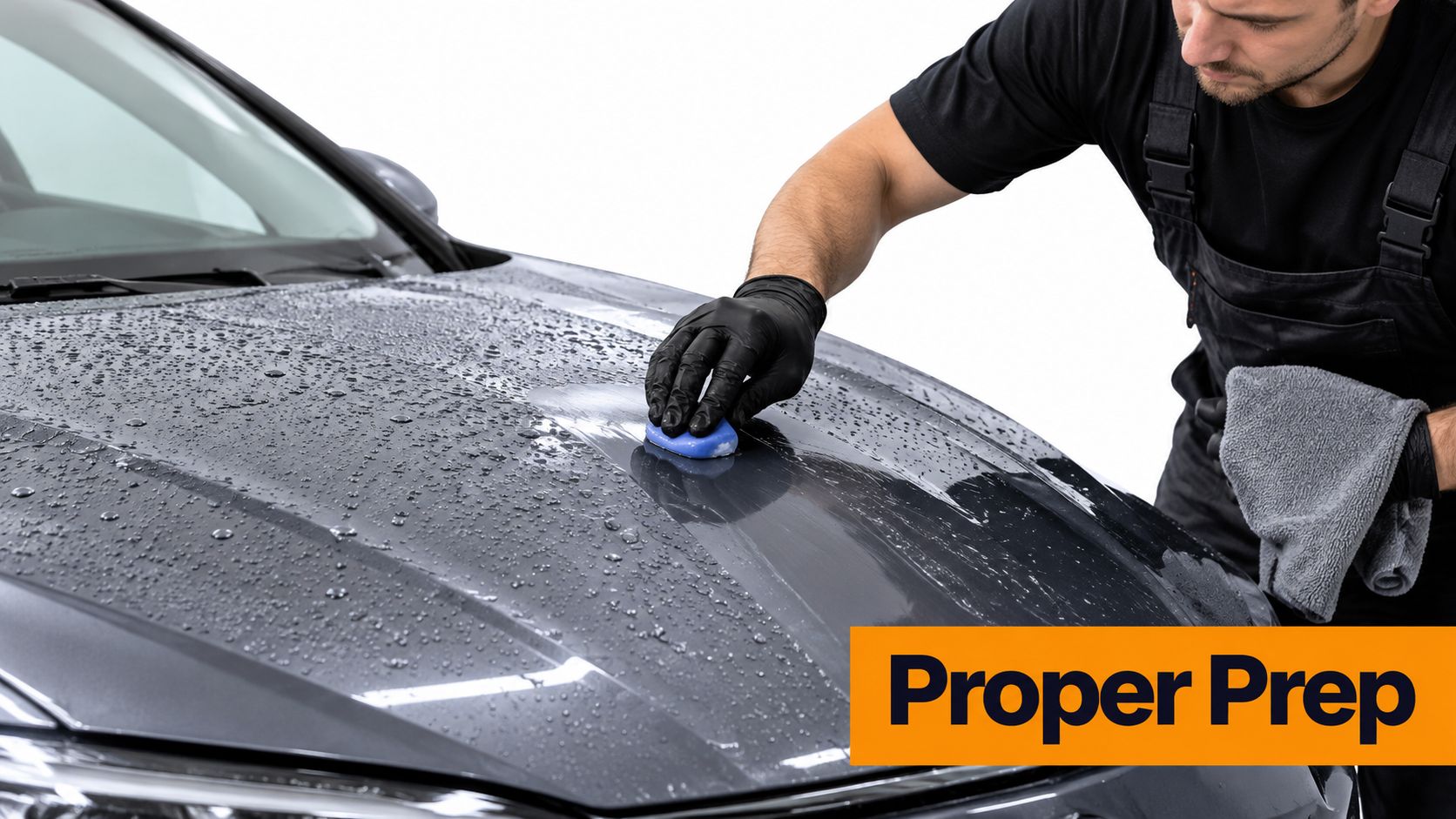
- Decontaminate chemically. An iron remover can react with embedded ferrous particles, while a tar remover addresses petroleum-based residue. Follow the label and keep each product off unsuitable materials.
- Clay the surface. Use plenty of lubricant and light pressure. The clay should glide, not drag.
- Correct the paint if needed. Polishing can remove or reduce defects that would otherwise remain beneath the protection.
- Panel wipe before protection. Remove polishing oils and residue so the chosen product meets the paint directly.
The sequence matters because each step prepares the surface for the next. Clay won't replace chemical decontamination, and a panel wipe won't remove bonded particles that you never treated.
Maintain the layer without fighting it
Wash in shade when possible, keep the panels cool, and work one manageable area at a time. Choose a pH-neutral shampoo intended for protected vehicles, then rinse completely before drying with a clean microfiber towel or air tool.
Avoid abrasive brush washes and heavily contaminated mitts. They can add marring even when the coating remains chemically present. A foam gun such as the SwiftJet Car Wash Foam Gun connects to a garden hose and applies clinging foam before the contact wash, giving DIY owners another way to loosen surface dirt while limiting unnecessary rubbing.
A smooth coating still needs gentle contact. Hydrophobicity can make dirt easier to remove, but it doesn't make the clear coat scratch-proof.
Refresh products should match the underlying protection. Don't assume that a strong cleaner, abrasive polish, or random spray will improve performance. If the finish suddenly looks less active, diagnose contamination and washing conditions before layering on more chemistry.
Troubleshooting Poor Beading and Hidden Contamination
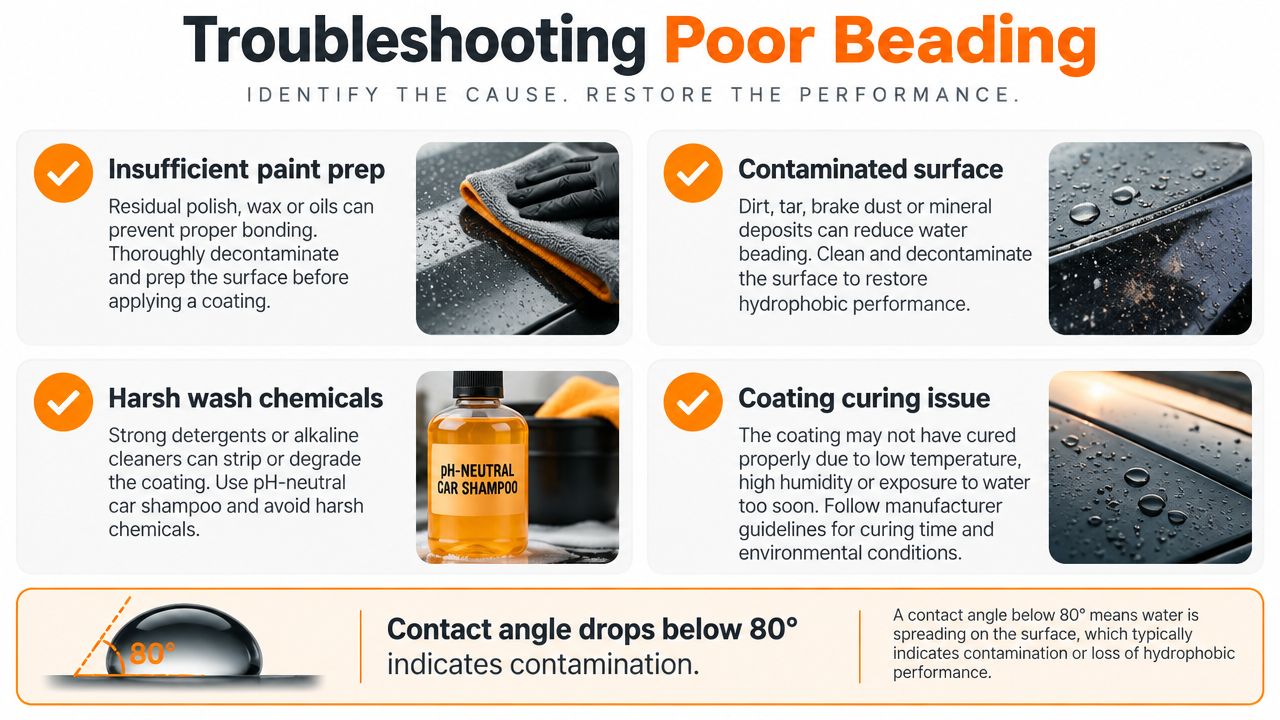
When a coated car stops beading, many owners conclude that the coating has failed. Sometimes it has. More often, the surface has become covered by material that changes how water reaches the protective layer.
Road film, industrial fallout, brake-related particles, tree residue, and mineral scale can create a patchy surface. Instead of interacting directly with the coating, water meets that contamination. The result may be flat droplets, slow runoff, or completely different behavior from one panel to another.
Start with a tactile inspection
Wash and dry the vehicle safely, then place a thin plastic bag over your hand and glide it lightly across the paint. A clean surface should feel relatively smooth. A gritty or rough sensation suggests bonded contamination that normal shampoo didn't remove.
Don't press harder to force the contamination away. Use the least aggressive suitable method. Iron remover can address ferrous fallout, tar remover can target tar, and clay can lift remaining bonded particles when used with adequate lubrication.
Separate contamination from coating failure
A simple diagnostic sequence prevents unnecessary reapplication:
- Wash first. Remove loose traffic film and inspect the water behavior on a clean panel.
- Decontaminate selectively. Treat suspected iron, tar, or mineral deposits with compatible products.
- Recheck after rinsing. If the surface becomes more responsive, the protection may still be present.
- Inspect for uneven loss. If behavior remains poor after proper cleaning, the coating may be worn, damaged, or incorrectly applied.
- Review the wash history. Strong chemicals, automatic brushes, and neglected drying can alter the surface or hide its behavior.
A visual bead test can't tell you whether the paint has complete protection. Independent guidance from Dr. Beasley's explanation of coating performance makes the central caution clear: beading mainly reflects surface energy, not the entire protective performance of the coating.
A clean, less-beading surface can be healthier than a contaminated surface covered in attractive droplets.
Don't use an aggressive polish just to restore a dramatic rinse effect. Polishing can remove some protective material, so first establish whether contamination is the actual cause. If the coating has actually failed, follow the manufacturer's removal and reapplication procedure rather than stacking incompatible products.
The Evolution of Hydrophobic Car Care Technology
Water beading became a mainstream car-care expectation through a long shift in how manufacturers and owners viewed protection. For much of automotive history, waxes dominated exterior care. Early beading often came from oils or waxes and could fade within days or weeks, according to this history of hydrophobic coatings from Professional Carwashing.
Rain-X was first developed in 1971 and became commercially available in 1972, helping popularize the idea that a treated surface could visibly repel water and improve visibility during poor weather. The product's cultural impact mattered because it turned water behavior into something drivers could observe immediately rather than a property discussed only by formulators.
From appearance to measurable performance
The industry later moved beyond short-lived surface effects. Synthetic additives and ceramic-style chemistries extended useful behavior from weeks to months, followed by systems designed to form more durable chemical bonds. That progression changed the meaning of a bead from a temporary cosmetic signal into one performance indicator associated with surface chemistry and longevity.
Modern coatings also raised the application standard. A wax can often be spread and buffed during a normal detailing session. A chemically bonding coating demands better decontamination, more careful leveling, and more disciplined curing conditions. The promise of longer protection therefore comes with more responsibility from the installer.
Why history helps with product claims
Knowing this development prevents a common comparison mistake. A wax, sealant, and ceramic coating aren't merely three versions of the same product with different prices. They use different technologies, ask different things from the installer, and create different maintenance expectations.
The visual test remains useful, but it should sit beside broader checks. Look at how easily dirt releases, whether contamination bonds quickly, how the surface dries, and whether water behavior remains consistent after a proper wash. Hydrophobicity is most valuable when it supports easier care rather than replacing it.
Frequently Asked Questions About Water Beading
Does an automatic car wash destroy water beading?
A touchless wash is generally less physically aggressive than brushes, but its chemical strength varies. Brush systems can introduce marring and spread contamination. For a protected vehicle, choose a gentle wash when possible, rinse thoroughly, and inspect the finish after drying rather than assuming one visit has removed the protection.
How should I remove bird droppings?
Don't scrub a dried deposit aggressively. Saturate it with a suitable detail spray or clean water, allow it to soften, and lift it with a plush microfiber towel using minimal pressure. Turn to a fresh section of the towel for each pass, then rinse the area.
Will beading work on glass, plastic, and wheels?
Water behavior can change on every material because each has different texture, contamination, and chemistry. Use a product designed for the specific surface, especially on windshields and wheels. Keep glass coatings away from areas where residue could affect visibility, and follow the label for plastics and trim.
What should I do when one panel stops beading?
Wash the panel, inspect it by touch with the plastic bag test, and decontaminate it if necessary. If the behavior stays weak after cleaning, compare it with adjacent panels and review whether that area received the same preparation and protection. A single poor panel doesn't automatically mean the entire coating has failed.
Keep water beading in perspective. Use it as a visible clue about surface interaction, then support that clue with careful preparation, safe washing, and attention to spotting and contamination. For a practical home routine, visit SwiftJet to explore a hose-connected foam gun that helps apply clinging foam before contact washing. Build the routine around clean tools, controlled rinsing, and prompt drying so your protection performs beyond the driveway wow factor.
