

The easiest way to overspend on a graphene coating for cars is to treat it like a miracle in a bottle.
Real paint protection does not work that way. In a home garage or a professional shop, the result comes from three parts working together. Surface prep, the coating itself, and the wash routine that follows. If one part is weak, the others cannot fully make up for it.
Graphene coatings can be very good at the jobs that matter day to day. They can make paint feel slicker, help grime release more easily during a wash, and hold up well against heat and chemicals. But the label on the bottle is only part of the story. A coating sits on top of whatever you give it. If the paint is not properly corrected and cleaned first, the coating is like clear tape laid over dust. It may stick for a while, but it will never perform at its best.
Many buyers get misled at this point. “Graphene” sounds like a material science breakthrough, so people start expecting scratch-proof paint, permanent gloss, and years of zero upkeep. Real-world results are less dramatic and more practical. What usually separates a coating that still looks good after years from one that disappoints after months is maintenance. Gentle contact washes, regular decontamination, and tools that reduce wash-induced marring, including a good foam gun, often matter more than marketing claims about exotic ingredients.
That balanced view is the useful one. Graphene can be a real upgrade, especially for owners who drive in hot climates or want easier maintenance between details. But longevity is not something you buy once. It is something you protect with the way you wash and care for the car afterward.
Is Graphene Coating Really a Miracle for Your Car
Graphene coating is best understood as a maintenance tool, not a one-time cure for paint care.
That answer can be disappointing for anyone hoping to coat the car once and stop thinking about it. It is also the answer that prevents wasted money and inflated expectations. A good graphene coating can protect paint, improve wash behavior, and help the surface stay cleaner between details. It cannot make neglect harmless.
Where the miracle claim falls apart
A lot of the hype starts with the word itself. "Graphene" sounds like a lab breakthrough, so brands often wrap it in promises that sound bigger than the benefit. The bottle is not applying a flawless science-project layer to your car. It is applying a coating formula that may include graphene-based material, plus solvents, resins, and other ingredients that affect how it behaves on paint.
That distinction matters.
Two products can both say "graphene" on the label and perform very differently in the garage or on a daily driver parked outside. Some are well-formulated coatings. Some are mostly marketing. So the useful question is not, "Is graphene magic?" It is, "Does this coating bond well, resist contamination, and stay easy to wash over time?"
What a good graphene coating should do
Skip the futuristic language and judge the coating by practical jobs:
- Bond securely to properly prepared paint so it does not fail early.
- Reduce how strongly grime sticks so routine washing takes less force.
- Handle heat, UV exposure, and chemical contact without dropping off quickly.
- Give you a slick, easy-to-clean surface that rewards careful maintenance.
If it does those jobs well, it is doing what most owners need.
The part many articles gloss over is what happens after installation. Longevity claims sound impressive on the box, but coatings do not live or die by chemistry alone. They live or die by wash habits. A car that gets careful washes, good drying practices, and regular decontamination will usually keep that coated feel far longer than one that gets run through harsh tunnel washes or scrubbed with dirty mitts. Tools like a foam gun help here because they increase lubrication and help loosen grit before your wash media touches the paint.
That is the balanced way to look at graphene. It can be a strong option. It is not a miracle. It works more like a high-end rain jacket than a force field. The jacket helps every time the weather turns bad, but only if you keep it clean, use it properly, and stop expecting it to make you invincible.
How Graphene Protects Your Car Paint
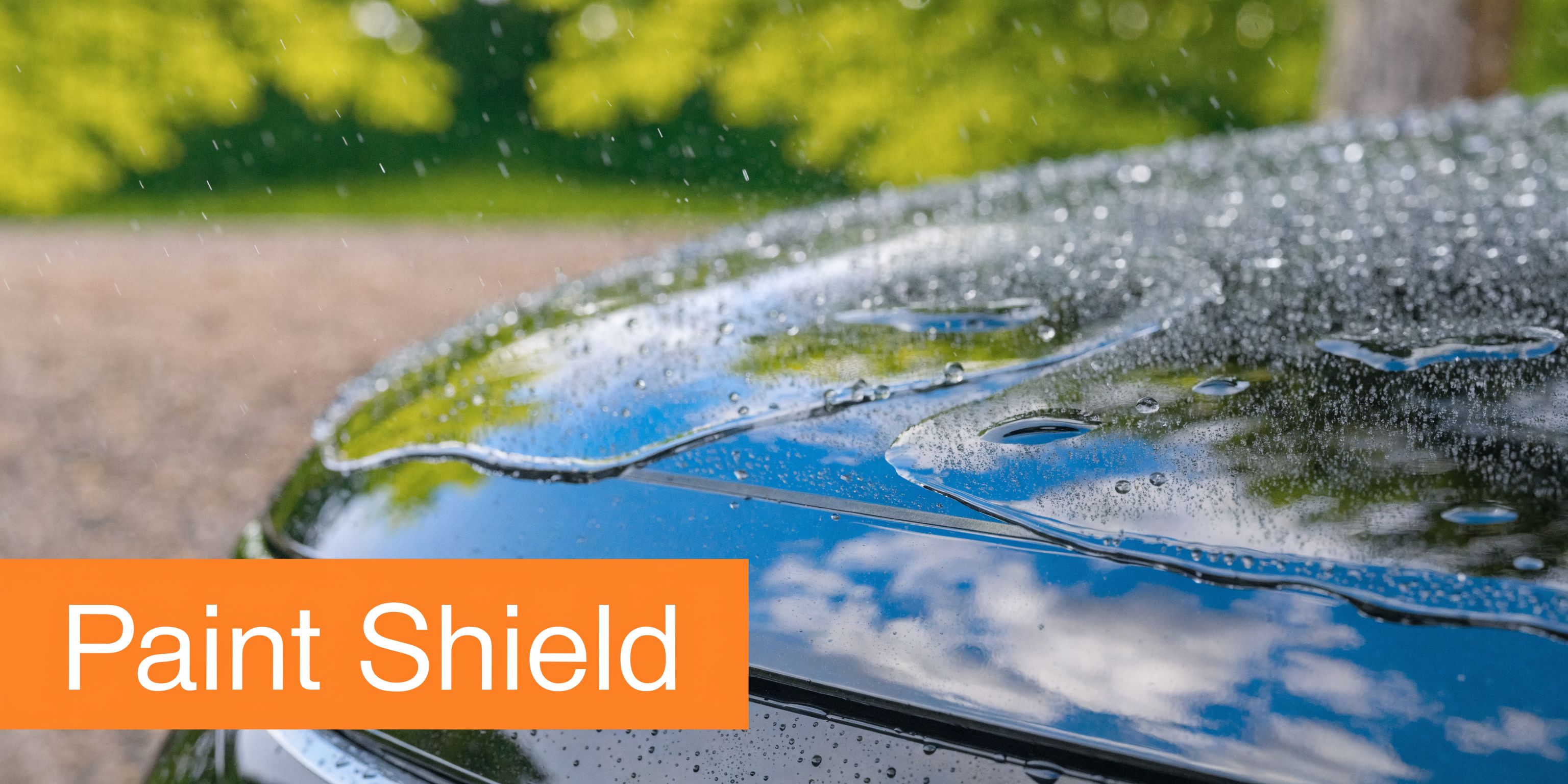
To understand how graphene protects paint, focus less on hardness and more on how the coating behaves on a car.
A lot of coating marketing trains people to picture a brittle shell, like a thin layer of glass sitting on top of the clear coat. That mental model misses the point. Graphene formulas are better understood as a very thin, slick barrier that bonds to the surface and stays easier to clean while the paint goes through heat, cold, washing, and contamination.
The structure matters because the car moves and heats up
Graphene comes from a carbon-based structure that is known for combining strength with very low thickness. In automotive coatings, that matters for a simple reason. Your paint never sits still.
Panels expand in the sun and cool off at night. A hood over an engine sees different temperatures than a door skin. Add washing, road film, bird droppings, and mineral deposits, and the coating has to do more than feel hard on day one. It has to remain bonded and keep contaminants from grabbing the surface too tightly.
That is why flexibility gets overlooked. A coating that can handle normal thermal cycling without becoming fragile has a better chance of staying consistent in daily use.
Protection usually looks like easier washing, not dramatic impact resistance
Many DIY owners expect a coating to stop scratches the way paint protection film can. Graphene does not work like that. It is closer to a low-stick cooking surface than a second layer of body armor.
Road grime, bug residue, and water minerals still land on the paint. The difference is that a good coating makes them less eager to cling. That reduces the effort needed to wash the car safely, and lower wash friction often matters more over a few years than a flashy spec sheet.
A black hood in summer, a salt-covered SUV in winter, and a weekend truck that gets frequent hand washes all test a coating in different ways. In each case, the practical benefit is the same. The surface stays slicker, contamination releases more easily, and the owner can do less scrubbing.
Heat behavior can affect maintenance more than appearance
One reason graphene gained attention is its reputation for handling heat well. The exact result depends on the formula, the color of the vehicle, and the environment, so broad temperature claims should be treated carefully. What matters in the driveway is simpler.
Hot panels tend to bake on water spots and grime faster. If a coating helps the surface run a bit cooler or shed heat more efficiently, cleanup can be less frustrating. You may not notice that as a dramatic visual difference on delivery day. You often notice it later, when wash residue does not seem to fight you as much.
That balanced view matters because owners usually judge a coating by maintenance. A product that stays easier to wash for months is doing real work, even if the marketing language makes it sound like a space-age shield.
Product quality still decides the outcome
Graphene on the label does not tell you how the product will behave. Some formulas use graphene as a small additive inside a coating that otherwise behaves a lot like a ceramic product. Others are tuned to improve slickness, dust resistance, or heat behavior, but still depend heavily on the underlying resin chemistry and how well the paint was prepared.
That is why two cars with "graphene coating" can perform very differently.
Application quality also changes everything. If the paint is not corrected properly, if oils are left behind, or if the coating is applied unevenly, the chemistry never gets a fair chance. For readers who want a baseline on how traditional SiO2 products work, this guide to automotive ceramic coating basics helps frame the comparison.
The short version is simple. Graphene protects paint by creating a bonded, slick, contamination-resistant surface that better handles real-world stress than bare clear coat. The long-term result still depends heavily on washing technique, drying habits, and whether you maintain that surface properly after application.
Graphene vs Ceramic and Titanium Coatings Compared
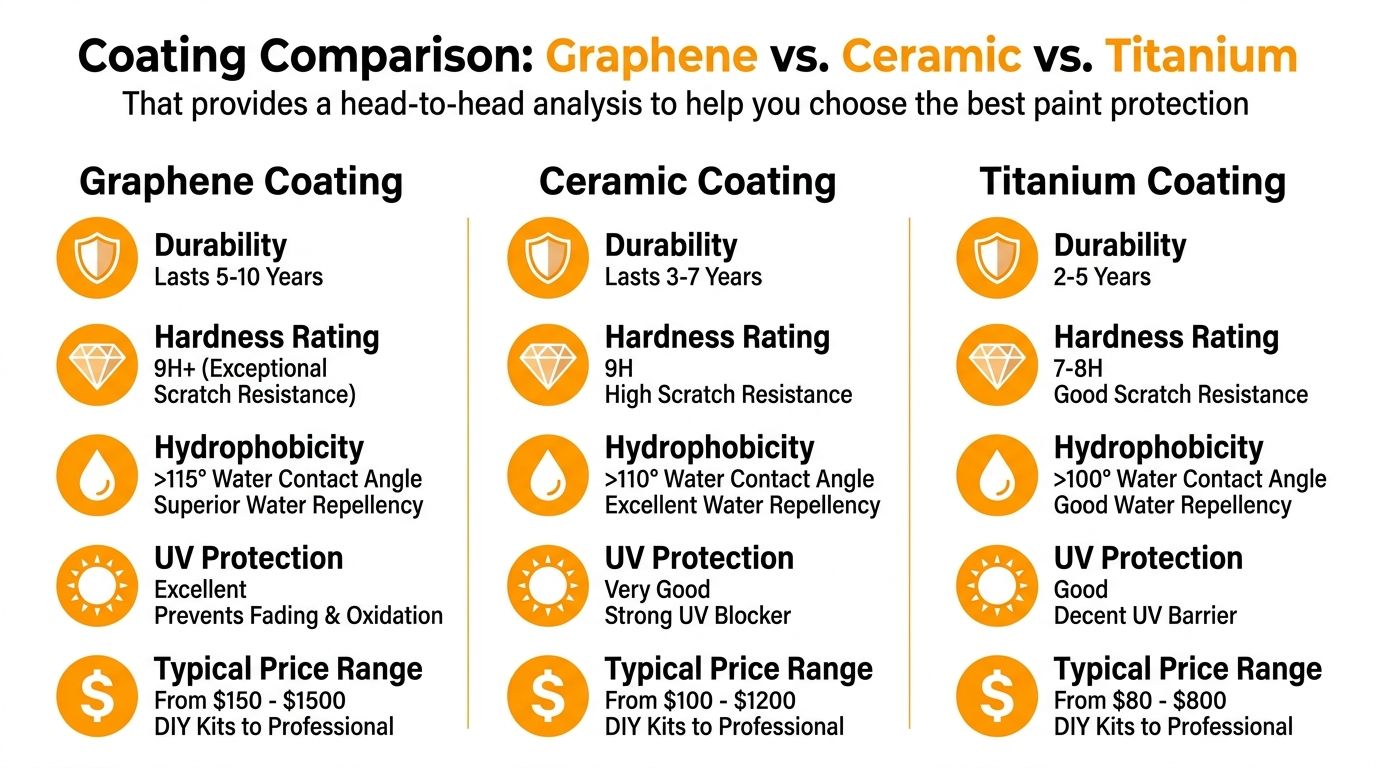
This comparison focuses on which coating fits your car, climate, and habits, rather than on complex nanomaterials.
A coating is less like armor and more like the tread on a tire. The material matters, but the right choice depends on where you drive, how you wash, and what kind of abuse the car sees between cleanings.
The short version
Ceramic coatings are the benchmark because they are proven, widely available, and capable of excellent protection when applied well.
Graphene coatings usually aim to improve a few real-world pain points, especially slickness, heat behavior, and how stubborn dust and mineral residue feel during maintenance. Titanium coatings often sit in a grayer area. In many products, "titanium" describes an additive package inside a ceramic-style coating rather than a fully separate category.
If you want a baseline for how SiO2 products behave, this automotive ceramic coating guide gives useful context.
Side by side comparison
| Feature | Graphene Coating | Ceramic Coating (SiO2) | Titanium Coating |
|---|---|---|---|
| Core identity | Usually a coating formula promoted for slickness, lower surface friction, and better heat-related behavior | Established silica-based coating category | Often a ceramic-based formula with titanium additives |
| Typical owner experience | Easier wash feel, less dust cling, fewer complaints about spotting in harsh conditions | Strong gloss, solid protection, familiar behavior to most installers | Depends heavily on the brand and installer's explanation |
| Surface character | Slicker, more lubricated feel after curing | Hard, glassy feel | Often closer to ceramic than graphene |
| Best fit | Hot climates, dark paint, outdoor parking, owners who care about easier upkeep | Drivers who want proven performance and a wider range of product options | Buyers who have verified what the chemistry is |
| Main caution | Marketing claims can outrun maintenance habits | Can still spot badly if hard water dries on the panel | The label alone can hide what you are buying |
Where graphene tends to pull ahead
Graphene makes the strongest case in conditions that punish coatings every week, not once a year.
If your car lives outside, sees strong sun, collects dust quickly, or gets washed with hard water, graphene's lower-friction feel can be helpful. The benefit is practical. Wash media glides more easily, drying usually takes less effort, and residue often releases with less arguing from the paint.
That does not mean the coating wins on chemistry alone. It wins only if the owner keeps the surface clean enough for those traits to keep showing up. A neglected graphene coating can behave a lot like any other neglected coating.
Graphene usually appeals most to drivers dealing with:
- Hard water that likes to dry on the paint
- High heat, especially on black or dark-colored cars
- Frequent dust buildup between washes
- Outdoor parking with inconsistent cleaning
Where ceramic still makes sense
Ceramic remains an easy recommendation for a lot of cars.
It has a long track record, many installers understand it well, and there are excellent SiO2 products across a wide price range. If your climate is milder, your wash routine is consistent, and you are not constantly fighting mineral spotting, a quality ceramic coating can make just as much sense.
That is the part marketing often skips. The best coating for your car is not always the newest label. It is the one that fits your environment and the way you maintain the vehicle.
Ceramic is often the better fit if:
- You want proven performance with more product choices
- You already trust a specific installer or SiO2 system
- Your budget matters more than chasing newer branding
- Your climate and water quality are not especially harsh
What about titanium
Titanium coatings create confusion because the term sounds more different than it often is.
Many titanium-branded products still behave like ceramic-family coatings in practice, featuring a different additive package and sales pitch. You may get a certain look or a claimed hardness benefit, but that does not automatically place titanium in a separate class with clearly different ownership results.
Ask simple questions. What is the base chemistry? How many layers are used? What maintenance products does the installer recommend? If those answers stay vague, the "titanium" label is doing more work than the formula description.
The buying decision that works in real life
Choose graphene if your biggest headache is keeping the car clean in hot, dusty, hard-water conditions, and you are willing to maintain it properly.
Choose ceramic if you want established performance, broad installer familiarity, and a lower entry point.
Choose titanium only after the shop explains the chemistry clearly enough that you can compare it on more than branding.
For long-term results, the maintenance plan matters almost as much as the coating choice. A graphene coating that gets careful washes with good lubrication, including a foam gun setup that helps lift grit before contact, often delivers more owner satisfaction than a premium coating of any type that is washed badly. That is the comparison many articles miss.
Benefits and Honest Limitations
A graphene coating helps most after the excitement of installation wears off.
You notice it on an ordinary wash day, in summer heat, under bug splatter, and during those weeks when the car gets dusty faster than you can clean it. That is also why coating discussions often go off track. Marketing focuses on hardness, gloss, and year claims. Ownership feels the difference in easier cleaning and slower buildup of the small defects that make paint look tired.
A good graphene coating changes the surface behavior of the paint. Water sheds more quickly. Road film releases with less effort. Drying usually takes fewer passes, which matters because every extra wipe is another chance to put fine marks into the finish. If you use careful wash technique and the right tools, including the kind of pre-wash setup covered in these vehicle detailing tips for safer washing, the coating has a much better chance of delivering the longevity printed on the box.
That maintenance piece gets skipped in a lot of articles. It should not.
What you will notice
The biggest benefit is reduced friction during ownership.
Graphene coatings can make the paint feel slicker and stay easier to clean, especially in hot, dusty, or hard-water conditions. As noted earlier in Detailing Bull’s graphene coating guide, that can translate into better resistance to water spotting and fewer light wash marks over time. For a daily driver, that matters more than bragging-rights gloss.
You may also see practical gains in a few common trouble spots:
- Bird droppings are easier to remove quickly before they bite into the finish.
- Bug residue tends to let go with less scrubbing.
- Road film and winter grime wash away more readily from a low-friction surface.
- Dust may cling less aggressively than it does on some traditional coatings.
None of that means maintenance stops. It means maintenance gets easier.
Where the limits start
A coating works like a very thin, chemically resistant shell. It is useful. It is not a force field.
Graphene does not stop rock chips from highway debris. It does not make tunnel washes with spinning brushes safe. It does not hide poor polishing, contaminated paint, or towel-induced marring. And it does not give true self-healing in the way many buyers picture it. If a brand mentions self-healing, that usually refers to very light surface marks under favorable heat conditions, not deep scratches disappearing in the sun.
That distinction saves people money and frustration.
Why some owners end up disappointed
Bad graphene experiences often stem from three common problems.
- Weak prep work If the paint was not fully cleaned, decontaminated, and corrected as needed, the coating bonds to a compromised surface. The result can look uneven, wear early, or perform below expectations.
- Longevity claims taken at face value A five-year label is not a promise that the car can be neglected for five years. Climate, storage, wash method, and contamination load all change how long a coating keeps its best behavior.
- Poor washing after installation This is the part the hype usually skips. A coating cannot save paint from dirty mitts, aggressive soaps, or grinding grit across the panel. Even a premium coating will seem average if the wash routine is rough.
That last point deserves extra attention. Owners sometimes compare coatings as if the bottle does all the work. In practice, the coating and the wash routine are a team. A modestly priced graphene coating that gets thoughtful maintenance often looks better after two years than a premium install that gets abused every Saturday.
Graphene is useful protection. It lowers the odds of staining, makes cleaning easier, and can help the finish stay sharper for longer. It also asks for realistic expectations and disciplined care. If you judge it by those standards, the value makes a lot more sense.
How to Prepare and Maintain Your Graphene Coating
The coating itself gets all the attention. The wash routine decides whether it earns its keep.
Most multi-year coating claims assume a surface that was properly prepared and then washed with some discipline. Skip either part and even a premium coating can act average.
Prep is not optional
A graphene coating locks onto the condition of the paint underneath it. If the finish is contaminated, swirled, or loaded with old protection, the coating doesn’t fix that. It seals it in.
A proper prep routine usually includes:
- Thorough wash to remove loose dirt and traffic film.
- Chemical decontamination to break down embedded contamination.
- Clay treatment if the paint still feels rough after decon.
- Paint correction if you want to remove swirls, haze, or oxidation first.
- Panel wipe so the coating bonds to clean paint rather than leftover oils.
DIYers who rush this step often think the coating failed, when the issue was poor surface prep.
The wash sequence that protects the coating
Maintenance starts before your wash mitt touches the paint.
Proper maintenance guidance is often missing, but using a pH-neutral soap with a foam gun for pre-washing helps preserve graphene’s slick, low-friction behavior and high water contact angle, which is often over 110°, according to Surface Protective Solutions.
That pre-wash matters because foam softens and lifts loose grime. If you skip it, you drag more grit across the coating during contact washing.
A safe maintenance routine
- Start with a foam pre-wash Cover the vehicle and let the foam dwell long enough to loosen film, dust, and road grime.
- Rinse thoroughly Remove as much loose contamination as possible before touching the paint.
- Use a contact wash only after the pre-rinse A soft wash mitt and clean rinse water reduce the chance of putting fresh marring into the coating.
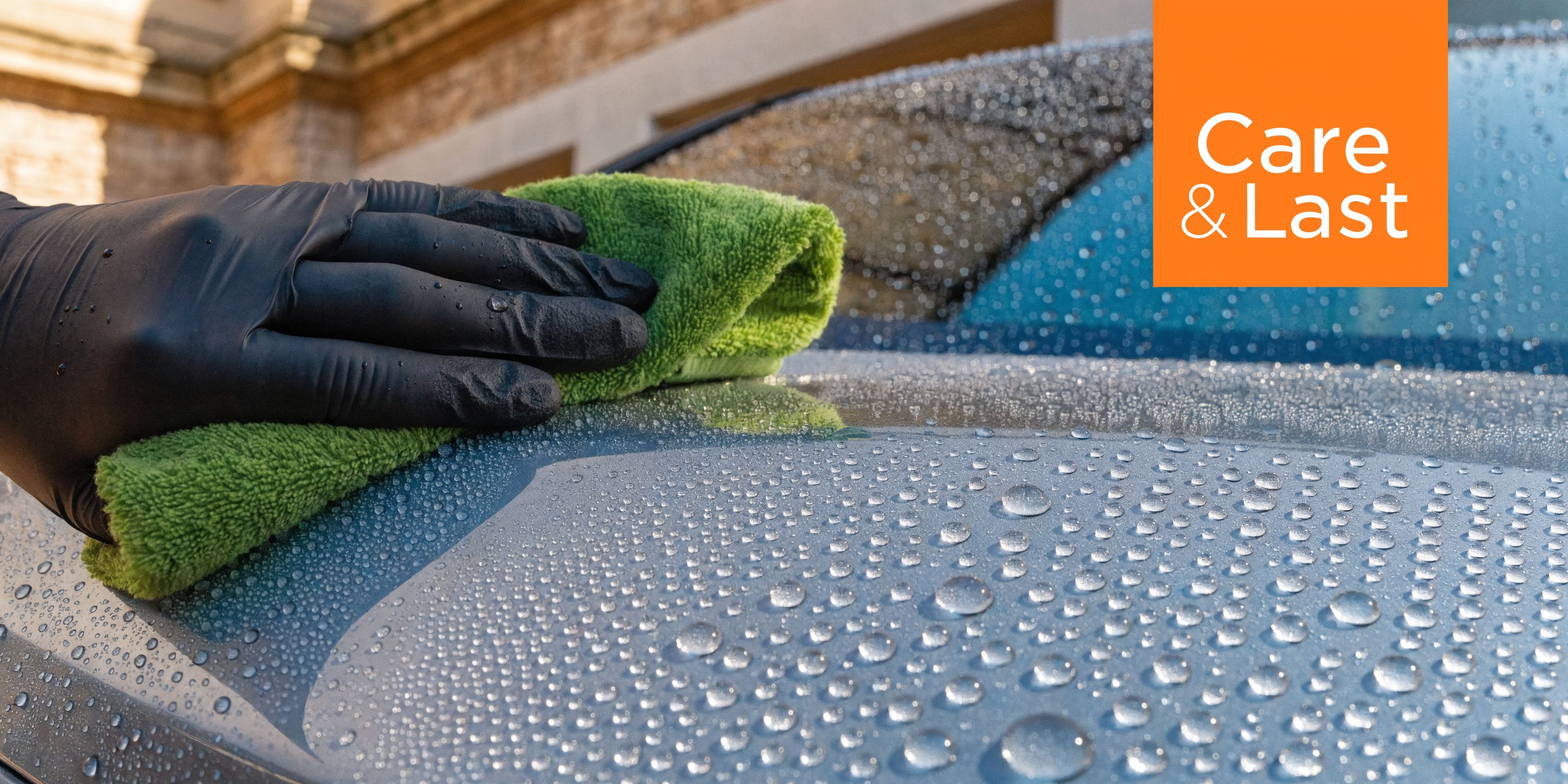
- Dry with quality microfiber towels Drying is where many people scratch the surface. Use light pressure.
- Use a compatible maintenance spray when needed This can help refresh slickness and water behavior between deeper maintenance sessions.
For more wash-process basics, these vehicle detailing tips are a helpful companion read.
Soap choice matters more than people think
A common mistake is using whatever soap is on the shelf. Strong cleaners may remove grime fast, but they can also interfere with how the coating behaves over time.
Use products that are:
- pH-neutral for regular washes
- Free-rinsing
- Designed for coated vehicles when possible
Avoid treating every wash like a decontamination wash. Your goal most of the time is to clean the surface without beating up the coating.
Wash for preservation, not aggression. If your routine strips everything every time, the coating spends its life recovering instead of protecting.
What to do between major washes
Not every dirty car needs a full correction-style process.
If the coating is healthy, routine upkeep is mostly about keeping contamination from sitting too long. Remove bird droppings quickly. Don’t let bug residue bake on the front end. Dry the vehicle after washing if your water leaves minerals behind.
This walk-through is useful if you want to watch safe wash mechanics in action:
The maintenance mistake that shortens coating life
The biggest one is simple. People trust the coating too much.
They stop washing carefully because the paint “has protection now.” Then they use poor towels, harsh tunnel washes, or strong cleaners every time the car gets dusty.
A graphene coating rewards consistency. Gentle pre-wash. Safe contact wash. Good drying. Quick response to contamination. That’s what turns a good product into long-term protection.
Understanding Costs Longevity and How to Hire a Pro
The hardest part of shopping for a graphene coating for cars isn’t the chemistry. It’s filtering sales language.
One shop says the coating lasts for years. Another says ceramic is all you need. A DIY kit promises pro results. All of that can be partly true.

Longevity claims need context
Manufacturers often claim 5+ year lifespans, but real-world durability data remains sparse, especially in harsh climates, according to Glidecoat’s discussion of alpha graphene ceramic coating. The same source notes that graphene’s upfront cost is often 2-3x that of ceramic, and that long-term consumer studies beyond 2-5 years are still limited.
That doesn’t mean the claims are false. It means they depend heavily on variables that sales pages rarely emphasize:
- How well the paint was corrected and cleaned first
- How the car is stored
- How often it sees harsh sun, salt, or industrial fallout
- How carefully it’s washed
Why professional installs cost more
A pro service is not just “someone wiping on the bottle for you.”
A reputable installer is charging for environment control, paint inspection, decontamination, correction skill, product knowledge, and aftercare guidance. That’s why comparing a pro install to a DIY bottle on price alone doesn’t tell you much.
If you’re weighing options, this overview of car paint protection products can help you think through where coatings fit among other choices.
Questions to ask before hiring a detailer
Don’t start with “How long does it last?” Start with process.
Ask these instead:
- What exact coating are you using Get the product name, not just “our graphene package.”
- What prep work is included Ask whether the service includes decontamination and paint correction, or whether correction is extra.
- How do you handle high spots or application errors Good installers have a clear answer. Bad ones get vague.
- What aftercare do you recommend If the shop can’t explain safe washing, they’re selling the install, not the result.
- What does any warranty cover A warranty may cover product failure, but not wash-induced marring or neglected maintenance.
DIY or pro
DIY makes sense if you’re patient, comfortable with prep, and willing to treat coating work like detail work rather than a quick weekend shortcut.
Go pro if the paint needs correction, the vehicle is valuable to you, or you want fewer variables. On dark paint especially, application quality can make the difference between a finish that looks crisp and one that ends up with streaks or missed spots.
The smartest buyer doesn’t ask for the longest warranty first. They ask for the most careful prep.
Graphene Coating Troubleshooting and FAQ
Can I apply a graphene coating myself
Yes, if you’re methodical.
The challenge isn’t spreading the product. The challenge is prep, lighting, leveling, and patience. If you’ve never corrected paint, never done a panel wipe, and don’t know what a high spot looks like, a spray-style maintenance product may be a safer starting point than a long-term coating.
What happens when the coating starts to wear off
It usually doesn’t fail all at once.
You’ll notice the surface feels less slick, water behavior changes, and dirt seems to hold on more than it used to. That doesn’t always mean the coating is gone. Sometimes it means the surface is clogged with minerals or road film and needs a proper decontamination wash.
Can I put wax or sealant on top of a graphene coating
You can, but make sure it’s compatible with coated surfaces.
Some toppers can improve slickness or temporarily enhance water behavior. The downside is that they can also mask how the coating itself is behaving, which makes troubleshooting harder. If you use a topper, use it intentionally, not out of habit.
Why do coatings get streaks or high spots
High spots are usually excess product that wasn’t leveled properly during application.
If you catch them early, they can often be leveled with the correct towel and technique. If they cure fully, correction may require polishing the area and reapplying the coating. Good lighting helps prevent this. So does working smaller sections.
Why doesn’t my coated car bead like it used to
Beading isn’t the whole story.
A coated surface can still be protected even when mineral buildup, traffic film, or soap residue changes the water behavior. Before assuming failure, wash the car thoroughly with a coating-safe process and inspect the surface again.
Is a graphene-coated car scratch proof
No.
It is more resistant to minor marring than bare paint, and in some cases more resistant than silica-based ceramic in field use, but it is still vulnerable to poor wash technique, brush washes, and physical abrasion. The coating is there to reduce damage, not eliminate it.
The Final Verdict on Graphene Coatings
A graphene coating for cars is one of the more interesting upgrades in modern paint protection, but the value isn’t in the buzzword. It’s in the behavior.
When the product is good, the prep is right, and the maintenance is consistent, graphene can deliver a slick surface, easier cleanup, better heat handling, and strong day-to-day resistance to the stuff that makes cars look older than they are. That’s why serious enthusiasts and working detailers pay attention to it.
But the truth never changes. Coatings don’t replace careful washing. They reward it.
If you want the best result, think less about miracle promises and more about the whole system. Surface prep. Safe washing. Good towels. Fast cleanup of bird droppings and bug residue. Realistic expectations about scratches and lifespan.
That’s the balanced answer. Graphene isn’t hype only, and it isn’t magic either. It’s a high-end protective layer that performs best in the hands of someone who understands what it can do and what it can’t.
The biggest long-term win isn’t the first glossy reveal after application. It’s that months later, the car is still easier to wash, easier to dry, and easier to keep looking sharp.
If you want to maintain a coated vehicle the right way, take a look at SwiftJet. A quality foam gun makes the pre-wash step easier, which is one of the simplest ways to reduce wash-induced marring and help your coating keep doing its job.
