

You're halfway through washing the family sedan when the spray pattern collapses. The trigger feels loose, water dribbles around the head, and the nozzle that worked perfectly last weekend now produces a weak, uneven fan. A replacement trigger spray nozzle may cost little, but choosing the right style requires understanding what the small tool can do.
A trigger spray nozzle is a hand-operated way to control water, cleaning solution, or diluted soap. It can be useful for rinsing a car, watering plants, treating patio grime, or applying a light household cleaner. It also has clear mechanical limits. A basic sprayer can shape water, but it usually can't create the thick, clingy foam that makes a dedicated automotive foam gun useful.
What a Trigger Spray Nozzle Does on a Garden Hose
On a Saturday morning, the hose is running across the driveway, suds are drying on the sedan, and the plastic sprayer in your hand refuses to give you a useful stream. You squeeze harder, twist the front, and get either a thin jet or a scattered splash. That handheld attachment is a trigger spray nozzle, sometimes called a pistol-grip or squeeze-handle sprayer.
Its job is simple: control water at the end of a hose. It isn't a powered pressure washer, and it doesn't create pressure by itself. The nozzle relies on the water pressure already available from the household supply. That distinction matters because changing the head can alter the spray shape, but it can't turn an ordinary garden hose into a high-powered cleaning machine.
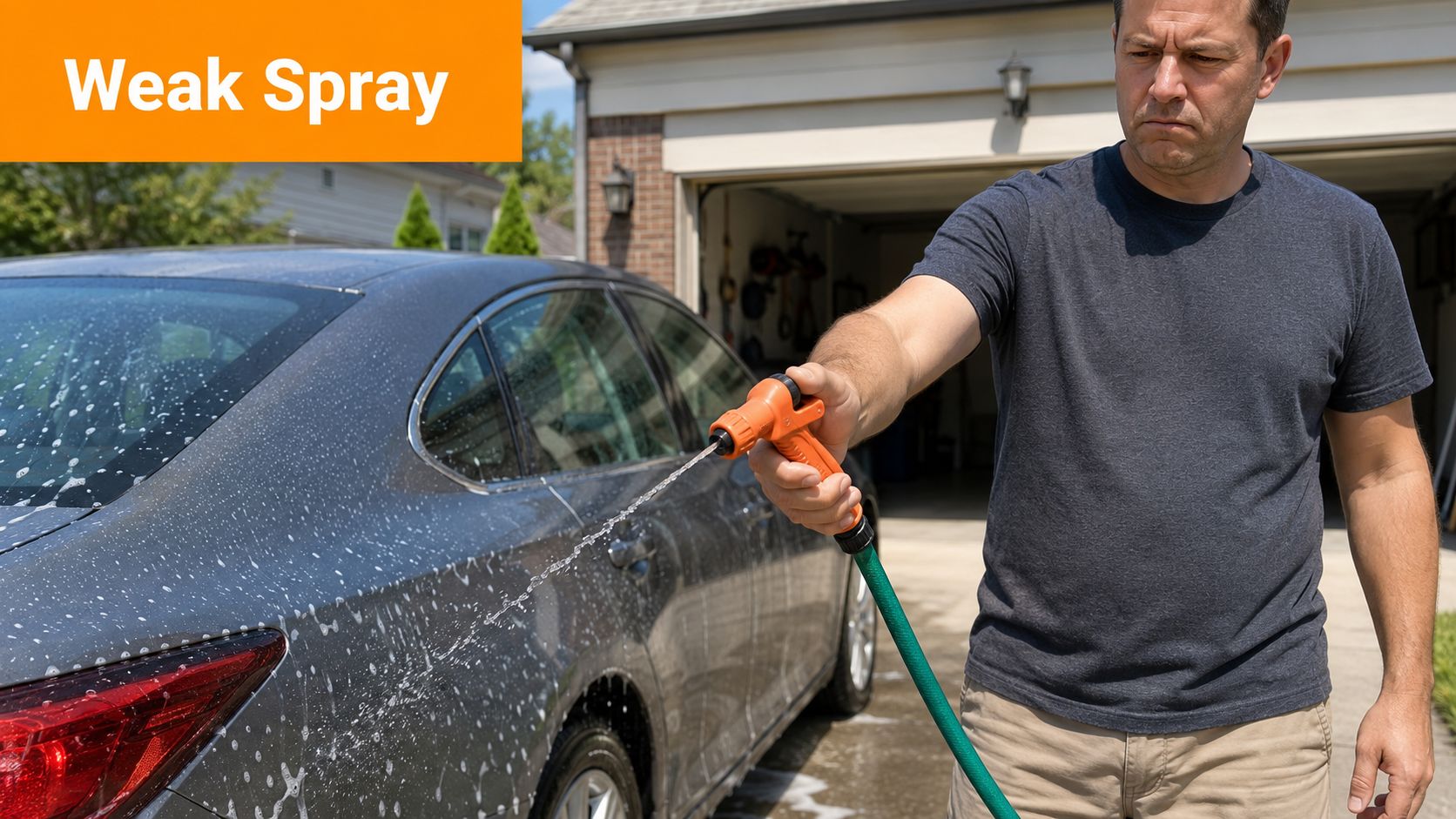
Three controls define the basic tool
A useful nozzle gives your hand control over three basic behaviors:
- On: Squeeze the trigger to release water only when you need it.
- Off: Release or lock the trigger to stop flow without walking back to the tap.
- Adjustable spray: Rotate the front head to change the outlet from a focused stream to a broader cone or lighter mist.
That last function often matters more than raw water volume. A narrow stream reaches wheel wells and knocks loose mud from tire treads. A wider pattern wets painted panels without concentrating the force in one small spot. A mist can dampen seedlings or apply a light surface treatment.
For a closer look at hose-end construction and connection choices, compare this guide to brass water hose nozzle designs. Material, grip shape, and connector quality affect how confidently you can control the water.
The key question is why one nozzle setting produces a jet while another produces a cone. If the water can change shape at the exit, something inside the head must be redirecting or dividing the flow.
Inside the Nozzle How Liquid Becomes a Spray
Start with the handle. When you pull the trigger, the trigger presses a small piston and compresses a return spring. The piston opens an internal valve, allowing pressurized liquid to move through the body and toward the spray chamber. When you let go, the spring pushes the mechanism back toward its resting position and shuts the valve.
In a bottle-style trigger sprayer, the liquid usually travels up a dip tube from the container. In a hose-end sprayer, the water enters through the hose connection instead, but the operating idea remains similar. A seal around the piston keeps liquid from escaping into the handle, while the inlet path and any small strainer help keep debris away from the narrow passages.
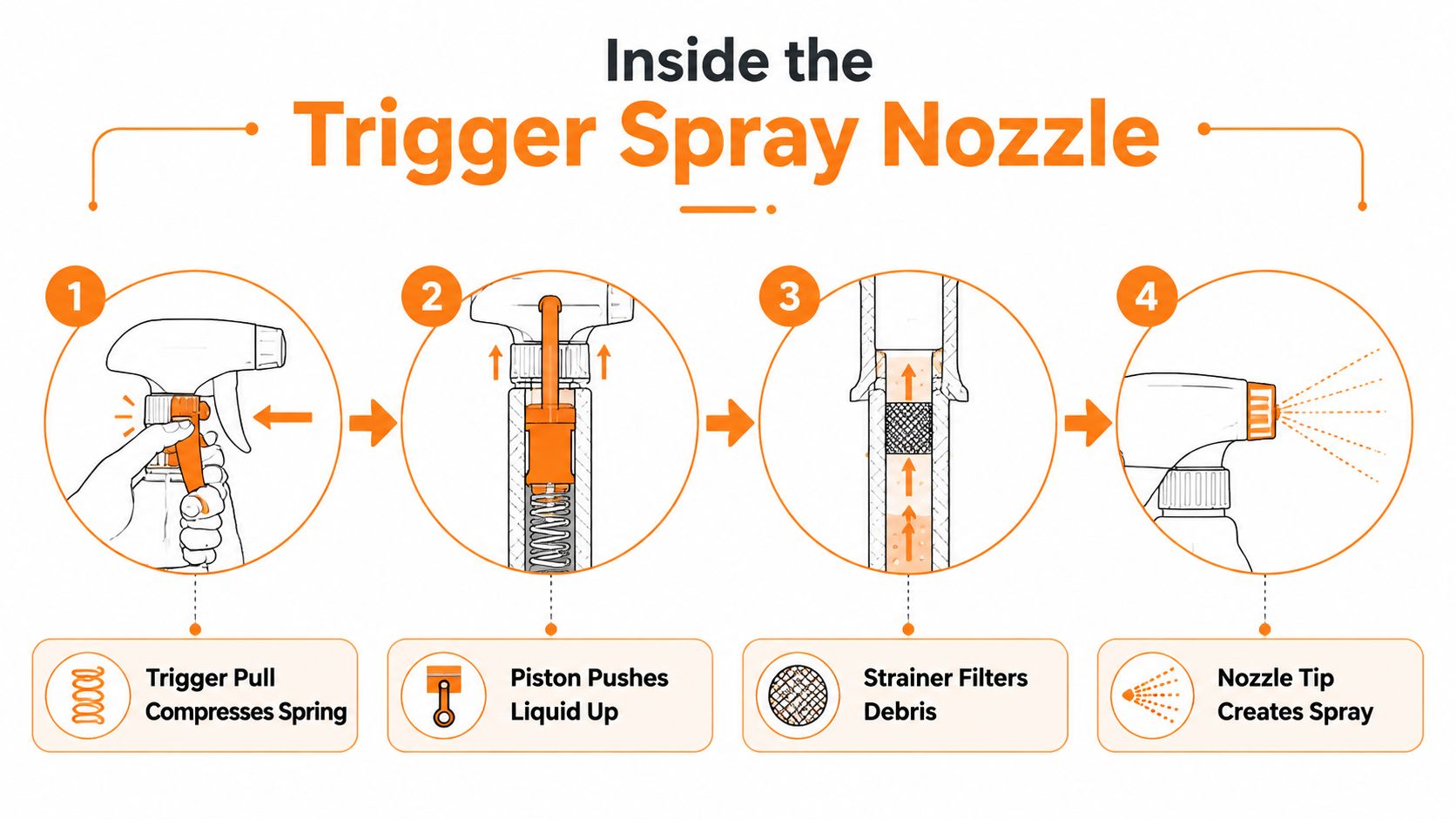
The head controls the final pattern
Inside the front section, liquid enters a chamber where the outlet geometry shapes the discharge. Turbulence, pressure, liquid properties, and the size of the opening all influence how the liquid breaks into droplets. Technical guidance on spray behavior explains that higher pressure generally creates finer droplets, while lower pressure tends to produce larger ones, although pressure also changes flow rate, spray angle, and coverage in technical spray-property guidance.
Many adjustable heads use a rotating disc or insert with openings of different shapes and sizes. Turning the head places a different orifice in front of the outlet. A smaller, more concentrated opening tends to create a forceful stream. A shaped opening spreads water into a fan or cone. A finer outlet can produce a lighter spray, but it won't necessarily deliver more cleaning power.
The internal swirl chamber can also make a major difference. Tangential channels push liquid into a rotating vortex. As the liquid exits the terminal orifice, centrifugal force helps break the liquid sheet into droplets. Orifice diameter, chamber angle, surface tension, density, and pressure differential all affect the resulting pattern, as described in this explanation of trigger sprayer nozzle design.
Foaming versions add another path. A mesh screen introduces air into water and diluted soap, helping the mixture form thicker foam. You can feel the design decisions in use: a restrictive passage may require a firmer pull, a wider opening creates broader coverage, and a small or partially blocked outlet produces a weaker or unstable stream. Understanding flow-rate control in hose tools makes those changes easier to diagnose.
Types of Trigger Spray Nozzles and What Each Is Built For
A shelf full of hose attachments can look confusing because many products use similar handles and colors. The practical difference is what each head is designed to do with the available water and liquid.
| Nozzle Type | Best For | Key Trade-Off |
|---|---|---|
| Adjustable trigger nozzle | Watering, rinsing, light patio cleaning | Versatile, but limited by ordinary hose pressure |
| Foam trigger nozzle | Light soap application, cars, outdoor furniture | Creates some foam, but may not match a dedicated foam tool |
| High-pressure trigger nozzle | Mud, loose grime, concrete rinsing | Narrower coverage and greater demand on the hose supply |
| Chemical-resistant trigger nozzle | Detergents, degreasers, selected chemical solutions | More durable for compatible liquids, often less inexpensive |
Match the head to the job
An adjustable trigger nozzle is the general-purpose choice. Its rotating head can move from a narrow stream to a cone or mist, making it suitable for garden beds, hanging baskets, vehicle rinsing, and spot cleaning. Choose this type if you need one attachment for several light-duty tasks.
A foam trigger nozzle adds an air-mixing screen or chamber. It works with diluted soap and can lay down a thicker coating than plain water, but it remains a compact, hose-end solution. It's a sensible fit for occasional car washing or outdoor furniture when you want soap distribution without buying a specialized wash tool.
A high-pressure trigger nozzle uses a smaller outlet to concentrate the available flow. That can improve reach and rinse impact on loose mud or patio residue. The trade-off is that a tight stream covers less surface at once, and the tool won't compensate for weak household pressure.
A chemical-resistant nozzle uses seal materials and body construction selected for harsher liquids. Technical buying guidance warns that incompatible chemicals can damage seals, springs, or the spray mechanism, while dried residue and mineral deposits can clog the outlet. Check the chemical label and the nozzle maker's compatibility guidance rather than assuming that a stronger cleaner belongs in any sprayer.
For patio work, nozzle choice is only part of the result. Surface condition, rinse direction, and cleaning technique matter too, so expert patio washing techniques can provide useful context before you aim a concentrated stream at concrete. Also check the connector itself with this guide to hose connector types, because a poor connection can make a good nozzle appear faulty.
Where People Actually Use a Trigger Spray Nozzle
The most useful way to choose a spray pattern is to start with the surface and the task, not the product label. A car wash, a seedling tray, and a dusty yoga mat need different amounts of water and different levels of impact.
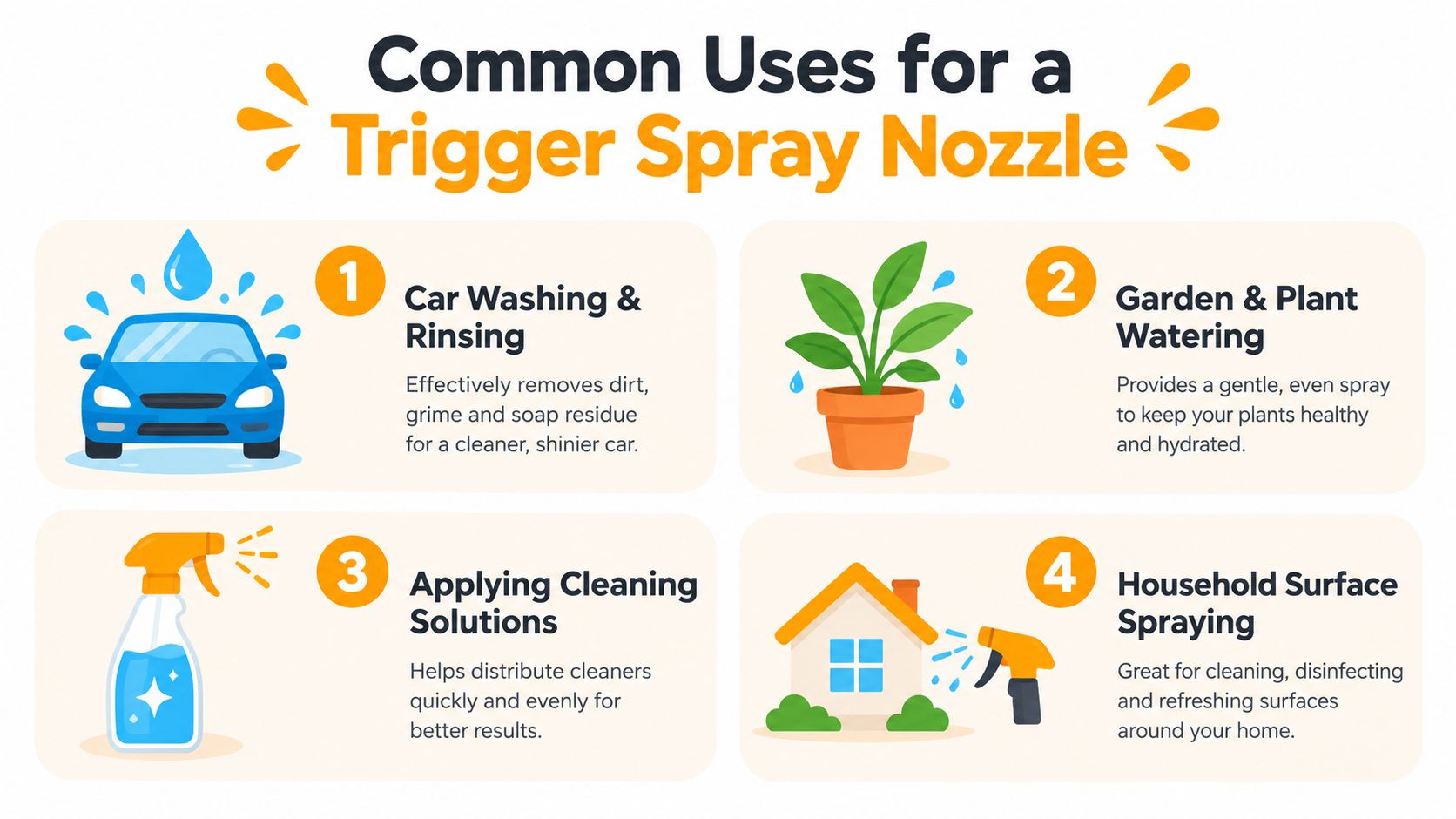
Car washing
Begin with a broad spray to wet the paint and loosen surface dust. Use a narrower jet around wheels, tire grooves, and lower rocker panels where mud collects. For bug splatter, a controlled low-flow spray can dampen the area before a cleaner or wash mitt touches it.
A basic nozzle is good at rinsing and pre-wetting, but it usually doesn't create a thick blanket of soap. A bottle of premixed solution may run quickly from a vertical hood or door, leaving limited contact time. That difference becomes important when the purpose of the wash is to loosen grit before contact cleaning.
Foam application
A foam-capable trigger sprayer can aerate diluted soap through a mesh screen, giving the mixture more body than plain liquid. It can work well on outdoor furniture, small vehicles, or quick spot treatments. Use the dilution setting carefully. A mixture that's too thick may not siphon properly, while one that's too weak may look watery even when the mechanism works correctly.
Garden and household work
For seedlings, use mist or a gentle shower so the soil and stems aren't disturbed. A medium shower suits hanging baskets and established plants. A focused jet can dislodge aphids from sturdy rose stems, but keep it away from fragile leaves.
Around the house, a trigger spray nozzle can mist a houseplant, dampen a washable yoga mat before wiping, or fill a watering can without carrying the hose across the room. The same on-demand trigger also reduces splashing because water flows only while your hand is engaged.
This short visual guide shows how the same attachment changes jobs through its pattern settings.
The setting should follow the surface. Use broad coverage for wetting, a focused stream for reach, and a gentle pattern for delicate plants or finished surfaces.
Why Nozzles Fail and What That Tells Buyers
A trigger spray nozzle often fails at the point where its convenience depends on small moving parts. The trigger can lose tension, the adjustment ring can become stiff, a dip tube can crack at its connection, or a seal can begin dripping when the bottle tilts. Those failures tell you more about the product than a package claim about spray strength.
Independent category analysis found that the spray nozzle was the number one complaint in Walmart cleaning-spray reviews, with 263 negative mentions connected to clogged nozzles, leaking triggers, and sprayers that stopped working after only a few uses in the cited cleaning-spray review analysis. The practical lesson is clear. Reliability is a central buying concern, not a minor detail after spray pattern.
Read failure points as a design map
A loose adjustment ring suggests wear or poor fit around the rotating head. A trigger that won't return points toward spring fatigue, mineral buildup, or friction around the piston. A leak near the head may indicate a worn O-ring or a damaged valve seat.
Foam heads deserve extra attention because mesh screens and narrow passages can retain soap residue or minerals. Chemical exposure adds another risk. Cleaning formulas that aren't compatible with seals or plastic can shorten service life, especially when the sprayer is left filled rather than rinsed and emptied.
Practical rule: Buy for the liquid you use most, not the cheapest price on the shelf.
A sturdier nozzle can cost more at purchase, but replacing a flimsy unit repeatedly is frustrating and wasteful. Water-only plant watering is forgiving. Weekly car washing, degreasing, or concentrated formulas demand better seals, a serviceable inlet screen, and materials selected for that liquid.
When a Foam Gun Beats a Standard Trigger Spray Nozzle
A standard trigger spray nozzle and a dedicated foam gun solve related but different problems. The trigger nozzle is a flexible water-control tool. A foam gun is a soap-application tool that uses a reservoir, water flow, and air to create a thicker layer on a vehicle.
What the foam mechanism adds
A hose-mounted foam gun draws car shampoo from its container and combines it with water inside a mixing path that includes an air-intake route and mesh screen. The screen helps divide the mixture and introduce air, producing foam that can cling to painted panels. A standard trigger spray nozzle generally lacks that dedicated foam chamber and air path, so it can spray diluted soap but can't create the same type of coverage.
That difference matters during a pre-wash. A thin soap film from a regular nozzle can run off a hood quickly, especially on a warm or steep surface. Foam from a dedicated tool stays in place longer, giving the solution more time to loosen grit before you use a wash mitt.
The foam gun still isn't a substitute for careful washing. Rinse loose contamination first, apply foam in manageable sections, and avoid letting soap dry on the paint. Thick foam can improve coverage, but it doesn't remove the need for clean wash media and a controlled contact pass.
Choose by routine rather than status
A trigger spray nozzle makes more sense if you need one attachment for watering, rinsing wheels, wetting paint, and cleaning outdoor surfaces. It's compact, multipurpose, and usually easier to store. A foam gun makes more sense when vehicle pre-wash is a regular part of your routine and you want a dedicated tool for distributing clinging shampoo.
SwiftJet's hose-connected car wash foam gun uses an ergonomic trigger handle, an on/off control, and a front nozzle that adjusts between a broad fan and a focused jet. It represents the foam-only side of the comparison, so it shouldn't be treated as a replacement for every general-purpose hose nozzle.
| Factor | Trigger Spray Nozzle | Foam Gun |
|---|---|---|
| Main function | Controls water or light liquid application | Applies aerated car shampoo |
| Car-wash role | Wetting, rinsing, and spot treatment | Pre-wash coverage and foam application |
| Foam output | Light or limited, depending on design | Thicker foam through a dedicated mixing path |
| Flexibility | Useful for garden and household jobs | Focused mainly on vehicle and outdoor cleaning |
| Setup | Simple hose-end attachment | Hose connection plus soap reservoir |
| Best fit | Occasional, multipurpose users | Regular vehicle washers seeking cling |
The choice isn't an upgrade ladder. A trigger nozzle is the right tool when flexibility matters. A foam gun is the better fit when the specific goal is consistent soap coverage before a contact wash.
Troubleshooting Tips and Buying Checklist
Before replacing a trigger spray nozzle, run a few simple checks. Many problems come from blocked passages, a damaged seal, or a connection issue rather than a completely failed body.
Diagnose the symptom
- Weak spray: Remove and rinse the inlet strainer if the design includes one. Inspect the dip tube for a kink, crack, or loose connection, then test the nozzle with clean water.
- Dripping at the head: Examine the O-ring and piston seat for wear, debris, or a crack. Clean the contact area and replace the seal if the model supports service parts.
- Sticking trigger: Look for mineral buildup around the pivot and piston. Rinse the mechanism, move the trigger repeatedly, and use only a lubricant compatible with the manufacturer's material guidance.
- Foam that stays watery: Check the dilution setting and make sure the detergent isn't too thick to siphon. Rinse the mesh screen because dried soap or mineral deposits can restrict air and liquid movement.
A garden tap, a soft brush, and clean water are enough for most first checks. Don't force a seized adjustment ring, and don't mix cleaners during testing. If a spring is visibly corroded or the plastic body is cracked, replacement is safer than trying to restore a pressure-containing part.
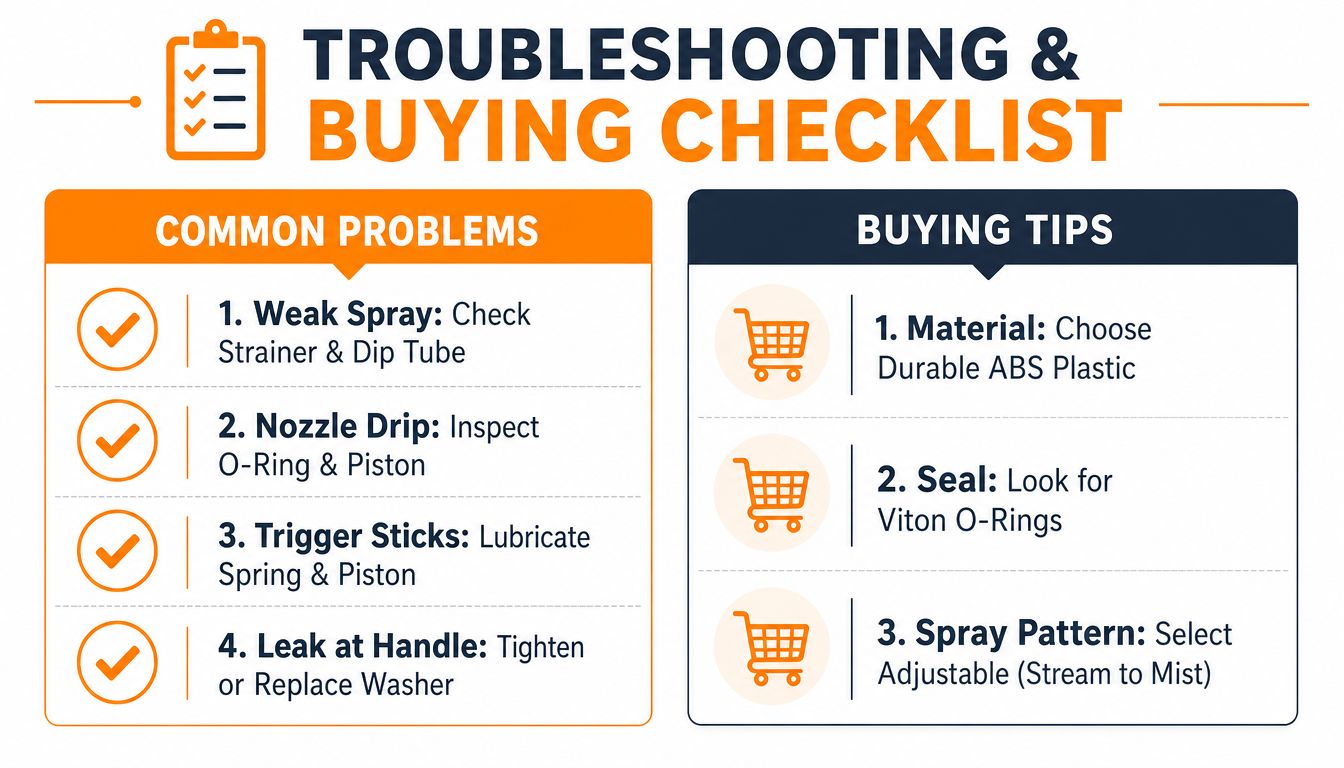
Check these features before buying
- Adjustable pattern: Choose a head that clearly moves from stream toward mist or shower.
- Chemical-resistant seals: Confirm compatibility with the detergents or cleaners you plan to use.
- Removable screen: A serviceable inlet or mesh screen makes rinsing debris easier.
- Comfortable grip: An ergonomic handle and trigger lock help during longer sessions.
- Reinforced construction: Brass components or reinforced polymer can be preferable where the tool sees regular use.
- Clear dilution control: If soap matters, choose a model with a marked adjustment rather than guessing at mixture strength.
The cheapest nozzle may be perfectly adequate for watering plants. Weekly car washing, chemical use, and repeated foam application justify closer attention to seals, screens, grip comfort, and replacement parts.
SwiftJet offers a garden-hose foam gun with trigger control for applying car shampoo and adjustable spray behavior for vehicle cleaning. Visit SwiftJet to compare that dedicated foam option with the multipurpose trigger spray nozzle that handles rinsing, watering, and light household work.
