

You bought a foam gun because you wanted that satisfying blanket of suds, not a wrestling match with a hose. But then wash day starts, the hose folds over on itself, water flow drops, the foam turns thin, and one cheap fitting starts misting your shoes instead of your car.
That's usually the moment people blame the foam gun, the soap, or their water pressure. A lot of the time, the problem is simpler. The hose feeding the system isn't built well enough for the job. If the hose kinks easily, swells under pressure, or doesn't play nicely with detailing chemicals, you're already starting with a handicap.
A good reinforced hose fixes more than convenience. It improves consistency, keeps water moving, helps your setup stay leak-free, and makes the whole wash feel less like a chore. For foam gun users, that matters more than most guides admit.
Why Your Regular Garden Hose Is Ruining Your Car Wash
A normal Saturday wash usually goes wrong in the same way.
You pull the hose across the driveway. It catches on a tire, twists near the faucet, and kinks right when you're trying to rinse dust off the hood. You straighten it out, get flow back for a second, then drag it around the front bumper and it folds again. By the time you hook up your foam gun, the stream feels weak and uneven.
Then the fittings start acting up. The plastic connector loosens, a spray leaks from the side, and now you're losing pressure and getting more water on yourself than on the paint.
That kind of hose isn't just annoying. It works against every part of a good wash routine. Foam guns need steady water delivery to make soap application feel smooth and predictable. If the hose keeps choking its own flow, your foam suffers before it ever reaches the nozzle.
This is why a reinforced hose matters. It isn't some overbuilt industrial accessory. It's the part of your setup that keeps water moving when the hose bends, gets pulled around mirrors, or rubs over concrete. Reinforcement gives the hose structure, so it holds shape better and resists the floppy collapse that causes kinks and frustration.
You can see that demand growing beyond just pro shops. The market for hose reinforcement wires, which are a core part of these hoses, is projected to reach USD 808.5 million by 2035 according to Future Market Insights' hose reinforcement wire market outlook. That projection points to a bigger shift toward more durable, higher-performance hose construction.
If you're also trying to understand whether your home water supply is holding back your setup, this guide on garden hose PSI helps connect hose behavior to wash performance.
A foam gun can only work with the water delivery you give it. If the hose is inconsistent, the foam will be inconsistent too.
Anatomy of a Reinforced Hose
A reinforced hose makes more sense once you stop thinking of it as a single tube.
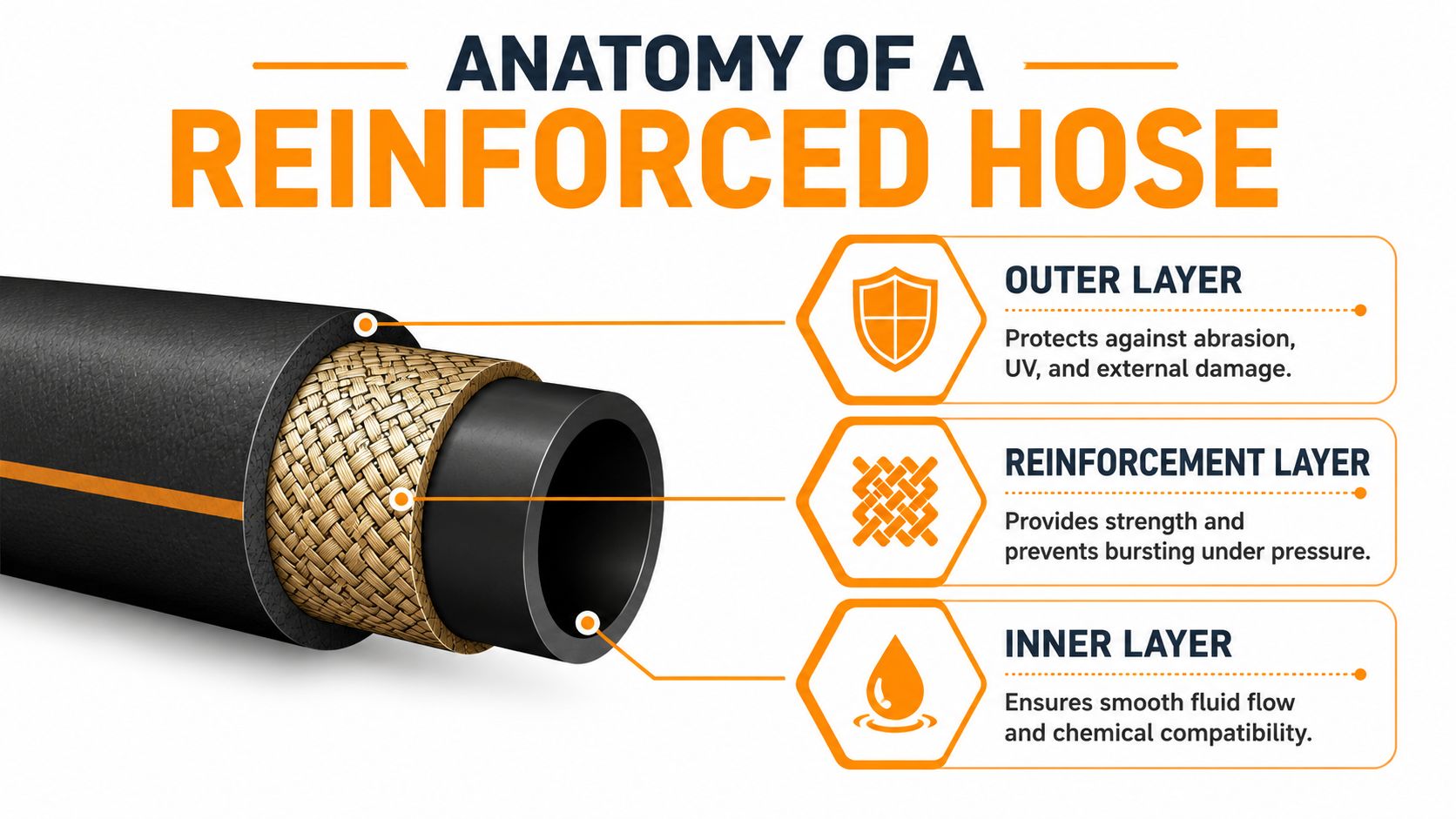
Think of it more like a car tire. A tire isn't just one slab of rubber. It has layers, and each layer has a job. A reinforced hose works the same way. One layer carries the water, one layer gives the hose strength, and one layer protects everything from the outside world.
The three layers that matter
A standard industrial reinforced hose has three distinct layers, and the key one is the reinforcement layer, often made from braided or spiral-wound steel wire or synthetic fibers, which helps prevent collapse and lets the hose handle significant pressure, as explained in NRP Jones' guide to industrial hose safety and performance.
Here's what that means in plain English:
- Inner layer This is the tube that touches the water or soap mix. It needs to stay smooth enough for flow and compatible with whatever is passing through it.
-
Reinforcement layer
This is the skeleton. It gives the hose its backbone so it can bend without flattening too easily and handle pressure without ballooning or collapsing. -
Outer cover
This is the armor. It takes the scraping, sun exposure, driveway abrasion, and general abuse that happens when you pull a hose around a car.
If you remember only one thing, remember this: the hose's outside might look fine, but its real quality is hidden in the middle.
Braided, spiral, and knitted reinforcement
Product descriptions get confusing because brands throw around terms like braided and spiral as if everyone should already know the difference.
A simple way to think about it:
| Reinforcement style | What it looks like | What it usually means for the user |
|---|---|---|
| Braided | Crisscross pattern | Good balance of strength and flexibility |
| Spiral | Wrapped in a helical pattern | Built for tougher pressure demands, often stiffer |
| Knitted or woven | Mesh-like structure | Often used where flexibility matters |
For a driveway wash setup, you usually care less about the manufacturing vocabulary and more about the result. Does the hose stay manageable when you loop it around the car? Does it resist flattening when the wheel rolls over part of it? Does it still feel controlled when water is running through it?
Practical rule: Don't shop by the words "heavy-duty" alone. Shop by construction. If the listing doesn't tell you what the reinforcement is, that's a sign to slow down.
Why this matters for foam
Foam gun users tend to focus on soap concentration and nozzle settings first. Fair enough. But if the hose feeding the gun is flimsy, the whole system becomes unpredictable.
A reinforced hose helps in a less dramatic but very important way. It supports steady water delivery. That gives you more consistent behavior at the nozzle, which makes your foam pattern easier to dial in and repeat from one wash to the next.
Hose Materials and Reinforcement Types
Most buyers commonly mistake hose material for hose reinforcement, treating them as if they're the same thing. They aren't.
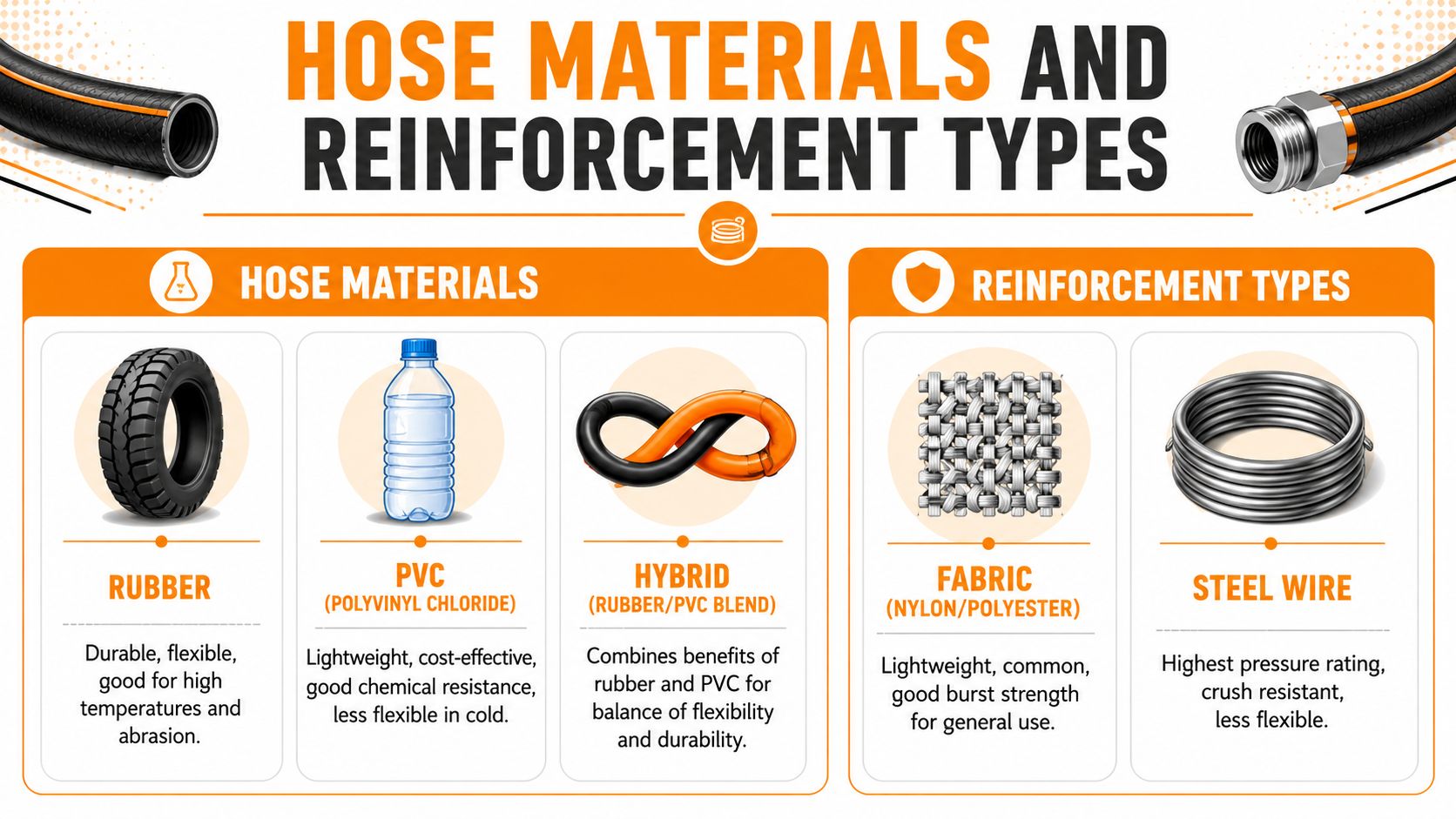
Material is what the hose body is made from, like rubber, vinyl, or a hybrid blend. Reinforcement is the internal structure that gives it strength. You need to think about both.
Fabric vs wire reinforcement
For foam gun users, the most useful dividing line is pressure.
Industry data shows that fabric-reinforced hoses are best for pressures below 5,000 PSI, while wire-reinforced hoses are necessary above 5,000 PSI for durability and maintaining a better bend radius under load, according to this industry discussion on hose reinforcement and pressure thresholds.
That doesn't mean every home wash setup needs wire reinforcement. Far from it. Those washing cars at home usually aren't operating in the kind of pressure range that calls for a wire-reinforced hose. But the threshold matters because it clears up a common misunderstanding: fabric reinforcement isn't "cheap junk" by default. In the right application, it's the right choice.
A simple way to decide:
-
Fabric-reinforced hose
Better when you want flexibility and easier handling in normal home-use conditions. -
Wire-reinforced hose
Better when pressure demands are much higher and the hose needs more structural support.
What the hose body material changes
Now look at the outer hose material itself. This shapes how the hose feels in your hands and how it behaves on the driveway.
Rubber
Rubber hoses usually feel more planted and durable. They tend to handle abrasion well and often stay more workable when the weather is cold.
If you wash early in the morning, in cooler months, or on rough concrete, rubber usually feels less stiff and less annoying than bargain hoses made from thin plastic-like material.
Vinyl or PVC
Vinyl hoses are often lighter and easier on the wallet. They can work fine for lighter-duty use, but they usually don't feel as forgiving when dragged, bent, or exposed to changing temperatures.
They can be a decent choice if you want something simple and lightweight, but they often become the hose people fight with after a while.
Hybrid blends
Hybrid hoses try to split the difference. They aim for some of the flexibility of rubber with some of the lighter feel of vinyl.
For a lot of car owners, this is the sweet spot. You get a hose that feels easier to manage than old-school heavy rubber, without wandering all the way into flimsy territory.
A practical comparison for car washing
| Hose type | Best trait | Main drawback | Good fit for |
|---|---|---|---|
| Rubber | Tough and flexible in varied conditions | Heavier | Frequent washers, rough surfaces, cooler climates |
| Vinyl/PVC | Light and affordable | More prone to annoying handling issues | Occasional use, tighter budgets |
| Hybrid | Balanced feel | Quality varies a lot by brand | Most DIY detailers |
If you move around the car constantly, flexibility matters as much as durability. A hose that's technically strong but constantly fights you can still ruin the wash experience.
What detailers often overlook
Most buyers choose based on packaging words like contractor-grade, pro, premium, or heavy-duty. Those labels don't tell you enough.
Look for the combination instead:
- Body material that fits your climate and tolerance for weight.
- Reinforcement type that matches the pressure demand.
- Fittings and overall build quality so the hose doesn't become the weak link at the ends.
That combo matters far more than any marketing badge printed on the wrap.
Sizing and Fittings for Peak Foam Gun Performance
Hose size changes how your setup feels at the trigger. It affects flow, maneuverability, and how easy it is to keep a steady rinse and foam pattern around the whole vehicle.
A lot of people buy a hose based only on length because they want to reach the far side of the driveway. Reasonable idea. But diameter and fittings matter just as much.
Diameter affects water feel
In practical terms, a wider hose can support more water volume than a narrower one. For foam gun users, that can mean a fuller, less starved feel at the tool.
Common home-use hose diameters often include sizes like 5/8 inch and 3/4 inch. You don't need to obsess over fractions, but you should understand the tradeoff:
- Smaller diameter usually feels lighter and easier to drag.
- Larger diameter can support stronger water delivery but may feel bulkier.
If your foam feels weak, don't assume the soap is the problem first. Check whether the hose itself is undersized, kink-prone, or paired with restrictive fittings.
Length is convenience with a price
Long hoses are nice until they become a giant loop of drag and resistance. Every extra stretch of hose adds more material for water to travel through and more chances for bends, twists, and pressure loss from poor routing.
For car washing, the goal isn't "longest possible." It's long enough to move around the vehicle without constantly repositioning, but not so long that half the hose sits coiled and fighting itself behind you.
A few practical habits help:
- Use only the length you need instead of buying the biggest roll available.
- Pull the hose out straight before washing so it doesn't feed twists into your hand.
- Avoid sharp bends near the faucet and near the tool end because that's where flow problems often start.
If you want a quick primer on matching connectors to your setup, this guide to hose connector types is worth reading before you buy adapters.
Fittings make or break the experience
People spend time comparing hose materials, then cheap out on the hardware at both ends. That's backwards.
Poor fittings cause leaks, sloppy connections, and that annoying hiss or side spray that robs performance. Good fittings make the whole wash smoother because everything connects cleanly and stays that way.
Here's the simple breakdown:
| Fitting material | What you'll notice |
|---|---|
| Brass | Usually more durable and corrosion-resistant |
| Aluminum | Lighter, but quality can vary |
| Plastic | Cheapest, usually the first thing to fail or crack |
For a foam gun setup, I like quick-connects if they're made well. They save time, reduce thread wear, and make switching between rinse nozzle, foam gun, and shutoff accessories much less annoying.
A short visual demo helps if you're dialing in your wash routine and setup flow:
The best setup is the one you don't fight
You want a hose that reaches the whole car, stays open when bent, and connects without drama.
When the diameter is sensible, the length is controlled, and the fittings seal properly, your foam gun becomes easier to use because the system feeding it stops getting in the way.
Maintenance and Chemical Compatibility Tips
Most hoses don't die because of one dramatic failure. They wear out from bad habits.
People leave them pressurized in the sun, crank them into tiny loops, drag them across sharp edges, and then run strong cleaners through them without checking whether the inner tube can handle the chemistry. Then they act surprised when the hose gets sticky, brittle, soft, or leaky.
Small handling habits that extend hose life
The easiest fixes are boring, but they work.
- Drain the hose after use so water isn't sitting inside longer than necessary.
- Coil it in large loops instead of wrapping it tightly around your arm.
- Store it out of direct sun when possible because heat and UV exposure are rough on hose materials.
- Don't yank it around corners if it's snagged. Walk back and free it.
- Avoid crushing it under tires or heavy equipment even if the outer cover looks tough.
A reinforced hose is stronger than a bargain hose, but it isn't indestructible. Reinforcement helps the hose keep shape and handle stress. It doesn't make abuse harmless.
A hose that kinks less still needs to be handled like a tool, not thrown around like an extension cord.
Chemical compatibility is the part most guides skip
This is the overlooked issue that matters a lot for detailing.
A frequently missed but critical factor is chemical compatibility. Industry standards stress that hoses need to be validated against the specific cleaning agents used to prevent material degradation, which can lead to leaks, contamination, and hose failure, as noted in Cleaner Times' article on hose handling and chemical considerations.
For a car washer, that means one simple thing. Don't assume a hose that handles water well will also handle every soap, degreaser, wheel cleaner, or concentrate you push through it.
What that looks like in real life
Chemical incompatibility usually doesn't announce itself with a dramatic pop. It often shows up as slow damage:
- the inner tube softens
- the hose develops odd odors
- the wall gets tacky or stiff
- fittings start leaking because the material near them is degrading
- residue contamination starts affecting what comes out of the hose
This matters even more if you use stronger cleaners around wheels, tires, engines, RV exteriors, or bug-removal jobs.
If you're trying to keep your wash chemistry gentler overall, these pH-neutral cleaning products are a smart place to start.
A simple compatibility check before you wash
Before running any cleaner through a reinforced hose, check these points:
-
Read the hose documentation
Look for fluid or chemical compatibility guidance, not just pressure marketing. -
Check the cleaner label
If the product is concentrated or aggressive, be more cautious. -
Watch for early warning signs
Swelling, soft spots, discoloration, or a new leak near the ends all count. -
When in doubt, ask before use
Manufacturer support is more helpful than guessing with a chemical line.
Shop-floor advice: The fastest way to ruin a decent hose is to use the wrong chemical through it over and over, then blame the hose for failing.
Your Reinforced Hose Buying Checklist
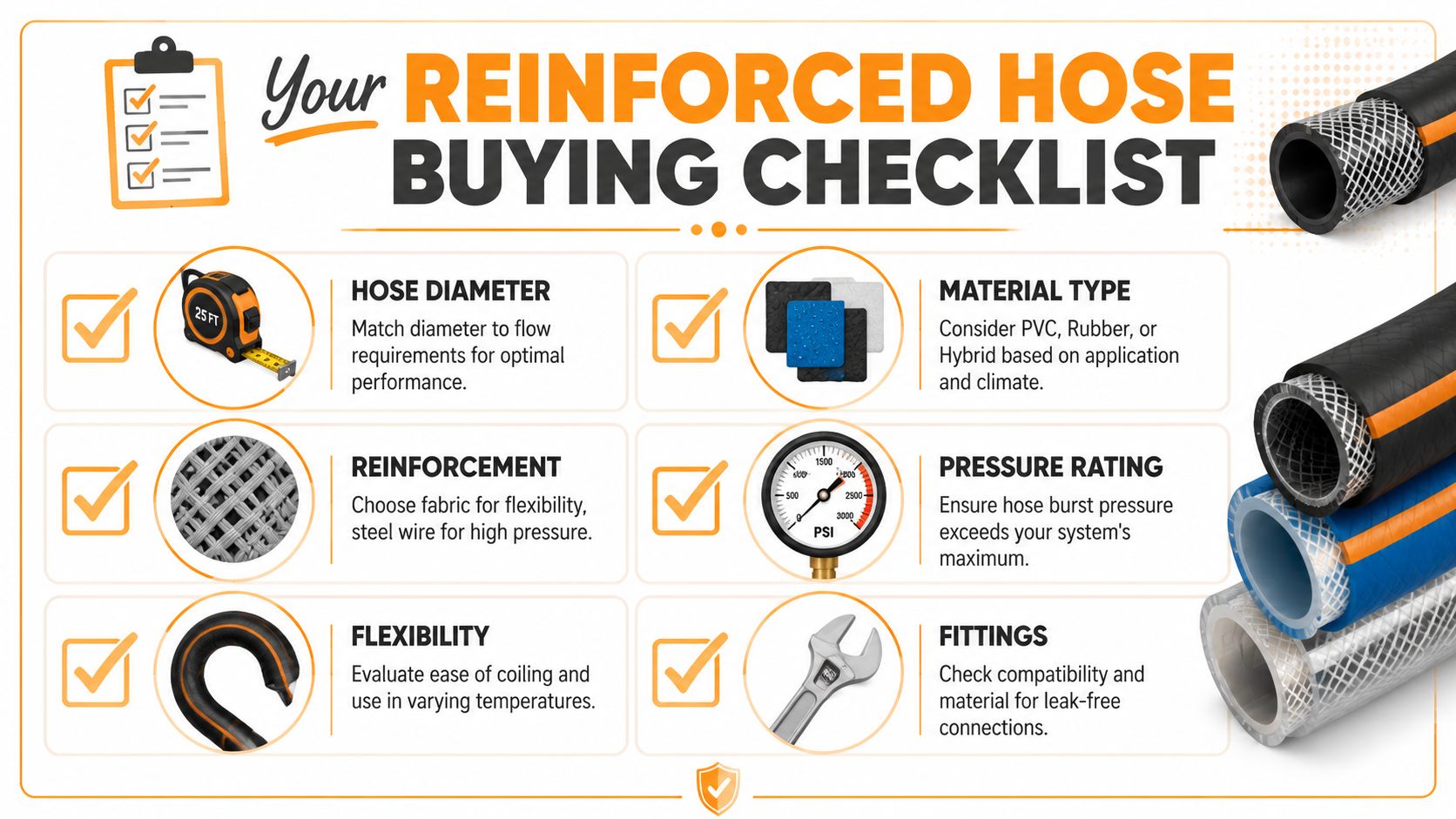
If you're standing in a store aisle or staring at five browser tabs, use this as your filter. A good reinforced hose should match your wash style, not just look impressive in the photos.
-
Check the reinforcement type
Fabric reinforcement is a practical fit for normal home-use flexibility. Wire reinforcement is for much higher pressure demands. -
Choose the hose material for your real conditions
Rubber suits tougher use and rougher environments. Hybrid materials often feel easier to manage. Vinyl can work for lighter-duty setups. -
Look at diameter before length
A hose that's too narrow for your setup can make the tool feel starved. -
Keep length sensible
Buy enough hose to move around the vehicle comfortably, not so much that it becomes dead weight. -
Inspect the fittings
Brass usually gives better long-term confidence than bargain plastic hardware. -
Check chemical compatibility
If you use soaps, pre-washes, or specialty cleaners, make sure the hose is suitable for them. -
Ignore vague labels
"Heavy-duty" isn't a spec. Construction details are.
If you're comparing hose problems across different wash setups, Boat Juice has a useful guide on solving leaky boat hose problems. Even though it's written for marine wash-down use, the leak diagnosis applies surprisingly well to driveway and detailing setups too.
Frequently Asked Questions About Reinforced Hoses
Can you repair a small leak in a reinforced hose
Sometimes, but I treat repairs as temporary. If the leak is at a fitting, replacing the fitting may solve the issue. If the hose body itself is split, bulging, or damaged near the reinforcement, replacement is the safer call.
Does hose color matter
Mostly for visibility and heat absorption in daily use, not for magic performance. A bright hose is easier to spot in the driveway and less likely to get stepped on or run over. Actual performance differences come from construction, not color.
Is every heavy-duty hose actually reinforced
No. Some hoses are marketed with broad labels that sound strong without clearly stating the internal construction. If the listing doesn't mention reinforcement material or layer design, don't assume.
How do you tell if a hose is fighting your foam gun
Watch for the obvious clues. Repeated kinks, weak output after bends, leaks at the ends, and inconsistent flow are all signs the hose is holding back the setup.
What matters more, hose or foam gun
They work as a system. A good foam gun connected to a frustrating hose will still feel frustrating. If you want easier setup, more predictable flow, and less wash-day irritation, the hose has to do its part.
Should you buy the stiffest hose for durability
Not necessarily. A hose can be strong on paper and still be annoying to use. For car washing, the best reinforced hose is one that balances strength with easy handling around mirrors, wheels, and tight turns.
If you're ready to upgrade the part of your wash setup that feeds the whole process, SwiftJet makes it easy to get thick foam from a standard garden hose without overcomplicating your routine. It's a simple way to make home car washing faster, cleaner, and a lot more satisfying.
