

When you're figuring out the right PSI to wash your car, the magic number is somewhere between 1200 and 1900 PSI. This is the sweet spot—powerful enough to blast away road grime but gentle enough to keep your car's paint and clear coat safe from harm.
Finding the Sweet Spot for a Safe Car Wash
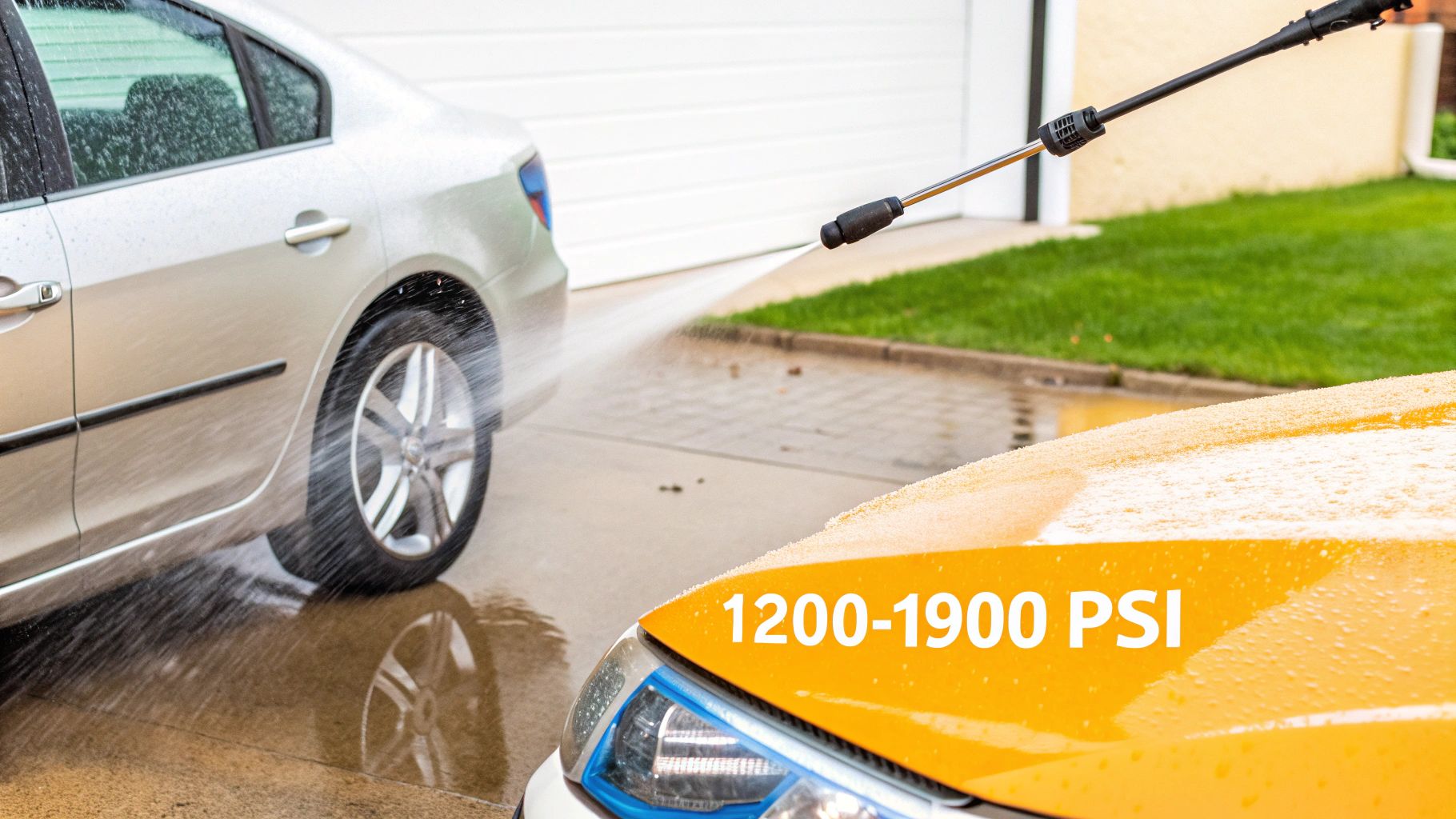
Think of PSI, or Pounds per Square Inch, as the punch packed by your water stream. If the pressure is too low, you're just giving your car a light shower, which won't do much against caked-on mud or stubborn bugs.
On the other hand, cranking the PSI too high is like taking a sandblaster to your paint. It can strip wax, sealant, and even etch the clear coat right off the car. This is a surprisingly common and costly mistake.
The 1200 to 1900 PSI range is considered the gold standard by detailers because it strikes the perfect balance between effective cleaning power and paint safety. Globally, high-PSI misuse during DIY car washing is a major issue, contributing to an estimated $500 million in annual damage claims. You can see more details in this research on car washing service market trends.
To help you dial in the perfect pressure for each step, here’s a quick reference guide.
Recommended PSI Levels for Car Washing Tasks
This table breaks down the ideal pressure settings for the different stages of cleaning your vehicle.
| Washing Task | Recommended PSI Range | Best For |
|---|---|---|
| Initial Pre-Rinse | 1200 - 1500 PSI | Gently lifting loose dirt and debris without scratching the paint. |
| Foam Cannon Application | 1200 - 1600 PSI | Creating thick, clinging foam to lubricate and lift grime from the surface. |
| Rinsing Soap | 1500 - 1900 PSI | Thoroughly removing all soap and loosened contaminants from the vehicle. |
| Cleaning Wheels & Tires | 1600 - 1900 PSI | Blasting away tough brake dust and road grime from durable surfaces. |
Sticking to these ranges ensures you get a deep clean without ever putting your vehicle's finish at risk. It’s all about using the right amount of force for the job at hand.
PSI Explained: Finding the Sweet Spot for Your Car’s Paint
So, what’s the big deal with PSI, and why should you care when washing your car? Let's start with a simple analogy. Think about using a garden hose. A gentle, misty spray is perfect for your prized rose bushes, but that focused, high-powered jet stream? It’ll shred the petals in an instant.
That’s exactly how PSI (Pounds per Square Inch) works on your car. It’s simply a measure of the water pressure hitting the surface. The right amount gets the job done beautifully, but too much can cause some serious, and expensive, damage to your paintwork.
When the pressure is cranked up too high, it stops being a cleaning tool and starts acting more like a sandblaster. It doesn't just wash away dirt; it can physically strip away the protective layers of your vehicle's finish.
The first and most important layer to worry about is the clear coat. This is the invisible shield that gives your car its deep gloss and protects the paint underneath from the sun's harsh UV rays. Damage that clear coat, and you’re opening the door to all sorts of problems.
A Quick Look at Your Car's Paint Layers
To really get why this matters, you need to picture your car's paint not as one thick coating, but as several distinct layers working together. Each one has a critical role.
- Primer: This is the foundation. It’s applied directly to the metal body panels to create a smooth, rust-proof base for everything else.
- Base Coat (Color Coat): This is the fun part—it’s what gives your car its color. But on its own, this layer is incredibly fragile and offers zero protection.
- Clear Coat: This is the hero layer. It's the tough, transparent topcoat that takes all the abuse from the environment, from bird droppings to minor scratches, all while protecting the delicate color coat below.
Using the wrong psi to wash car surfaces, especially anything climbing over 2000 PSI, can chew right through that clear coat. The result is a dull, faded look that makes your car look old and neglected, leaving the color coat exposed to chipping and sun damage. It's no surprise that improper pressure is a major contributor to an estimated $1-2 billion in paint damage claims every year. You can dive deeper into the numbers in this U.S. car wash industry overview.
Ultimately, managing the pressure isn't just about getting your car clean. It's about protecting your investment and keeping it looking its best for years to come.
How Nozzles and Distance Control Pressure
The PSI number on your pressure washer is just the starting point. The real control comes from two other crucial factors: the nozzle you attach and how far you stand from the car. Getting these two things right is the secret to a safe, scratch-free wash.
Think of it like a garden hose. You can put your thumb over the end to create a powerful, narrow jet, or you can use a spray head for a gentle, wide shower. The water pressure from the tap is the same, but the nozzle changes everything. A pressure washer nozzle does the same thing, just on a much more powerful scale.
This is why your nozzle choice is your most important safety tool.
Choosing The Right Nozzle (And Avoiding The Wrong Ones)
For rinsing your car's paint, the 40° white nozzle is the industry standard for a reason. Its wide fan pattern gives you a gentle but effective spray, strong enough to rinse away soap and loose dirt but soft enough to be completely safe on your clear coat.
On the other hand, you should never use the narrower-angle nozzles on your car's paint. The yellow (15°) and especially the red (0°) nozzles are designed for stripping paint or cleaning concrete—they will absolutely shred your clear coat in an instant.
This diagram shows exactly what happens when the pressure is too high.
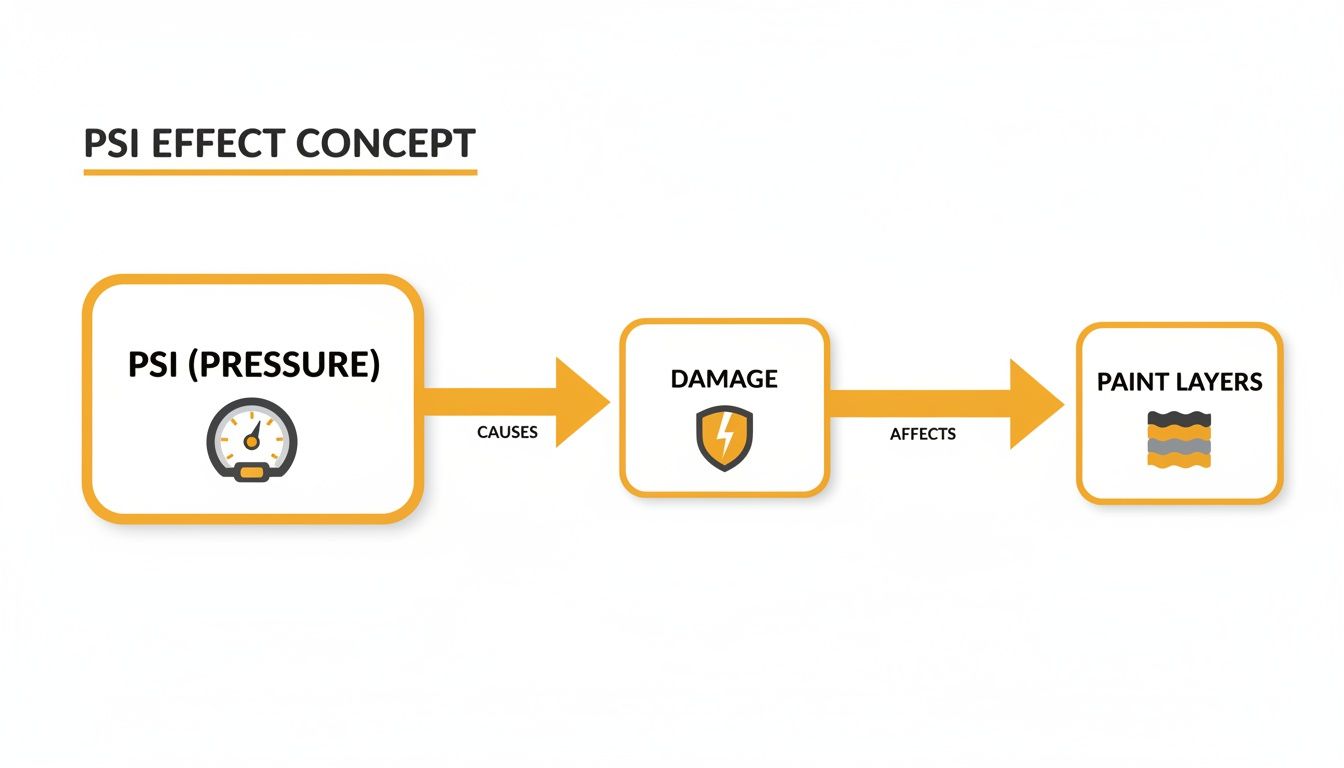
As you can see, excessive force doesn't just clean—it literally blasts away the protective layers of your paint, leaving it vulnerable to damage.
To make it simple, here's a quick guide to the most common pressure washer nozzles and where you should (and shouldn't) use them when cleaning your vehicle.
Pressure Washer Nozzle Guide For Car Washing
| Nozzle Degree & Color | Spray Pattern | Safe Car Washing Use |
|---|---|---|
| 0° (Red) | A tiny, focused jet | NEVER use on paint. Only for extremely tough, non-automotive stains on concrete. |
| 15° (Yellow) | Narrow, high-impact fan | Avoid on paint. Can be used cautiously for mud on undercarriages or wheel wells. |
| 25° (Green) | Medium-width fan | Can be used carefully for rinsing engine bays or heavily soiled tires, but keep your distance. |
| 40° (White) | Wide, low-impact fan | The best and safest choice for rinsing body panels, glass, and all painted surfaces. |
| Soap Nozzle (Black) | Very wide, low-pressure | Used for applying soap. Not effective for rinsing due to extremely low pressure. |
This table makes it clear: stick with the 40° white nozzle for 99% of your car rinsing needs to guarantee a safe wash every time.
The Importance Of Safe Distance
After choosing the right nozzle, your distance from the car is your next line of defense. Water loses pressure very quickly as it travels through the air. This simple bit of physics acts as your personal pressure dial.
A good rule of thumb is to always keep the nozzle tip at least 12 to 18 inches away from the surface. If you get any closer, the force hitting the paint increases dramatically, even with a "safe" white nozzle.
By combining the right nozzle with the right distance, you ensure the psi to wash car surfaces remains gentle and effective. And when you pair these techniques with a great foam cannon, your washing process gets even safer. To learn more, check out our guide on how to pick the perfect pressure washer foam cannon for your setup. It's all about controlling these simple variables to move from risky blasting to smart, professional-level cleaning.
Choosing the Right Pressure Washer for Your Car
Once you've got a handle on how pressure and nozzles work together, picking out the right pressure washer gets a whole lot easier. The biggest decision you'll make is between an electric or a gas-powered model, and for anyone serious about car care, the choice is pretty clear.
Electric pressure washers are hands-down the best tool for the job. They're built to operate in that sweet spot for car washing—the 1200-1900 PSI range—which makes it much harder to accidentally hurt your paint. Gas models, on the other hand, often start at 2000 PSI and can easily climb past 3000 PSI. That's a recipe for disaster on automotive finishes. We dive into some great electric options in our guide to the best pressure washers for cars.
GPM: The Other Half of the Equation
While PSI gets all the attention, there’s another number on the box that’s just as important: GPM, or Gallons Per Minute. This tells you how much water the machine is actually moving.
Think of it this way: PSI is the punch, but GPM is the push. A healthy GPM helps lift and carry away all that soap and grime without needing brute force. For washing a car, you want a machine that strikes a balance between a safe PSI and a GPM of 1.2 to 2.0.
This balance is key. High GPM allows you to rinse thoroughly and quickly, minimizing the time abrasive particles sit on your paint. It’s about working smarter, not harder.
This "efficiency over force" mindset is catching on everywhere. In North America, which accounts for 40.76% of the car wash market, you're seeing more regulations that favor low-PSI systems capable of recycling up to 75% of their water. It’s solid proof that you don't need paint-stripping pressure to get a fantastic clean. You can read up on these market trends over at the Mordor Intelligence website.
So when you're shopping, focus on finding an electric model with adjustable pressure settings and a good GPM. It's an investment that will pay off by cleaning your car effectively while keeping that delicate finish safe and sound.
A Step-by-Step Guide to Safe Pressure Washing
Alright, you've got the right gear and you understand the theory. Now it’s time to put it all together for a safe, professional-level wash right in your own driveway. The secret to a flawless, swirl-free finish isn't just about power—it's about process. Following a consistent workflow is what separates the pros from the amateurs.
Before you pull the trigger, grab your 40° white nozzle. This is your go-to for car paint, no exceptions. As you work, always keep the nozzle tip at least 12 to 18 inches away from the surface. This little buffer zone is your best friend for protecting your car's finish.
The Professional Wash Process
Think like gravity. You want to work from the top of the car down, so dirt and grime are always flowing away from the areas you've already cleaned. It’s a simple concept that makes a huge difference.
- Initial Pre-Rinse: Start with the roof and work your way down, panel by panel. Your goal here isn't to blast off baked-on grime; it's to gently sweep away all the loose stuff—dust, pollen, and surface grit. Getting this loose debris off first is the single most important step in preventing scratches.
- Foam Application: Now for the fun part. Coat the entire vehicle in a thick blanket of snow foam. To get that rich, clingy foam that does the heavy lifting, you need a good setup and the right soap. We've got a whole guide on choosing the best pressure washer soap for cars that can help. Let that foam sit and do its magic for 5-10 minutes, visibly lifting the dirt away from the paint.
- Final Top-Down Rinse: Once the foam has worked its way through the grime, switch back to your 40° nozzle. Again, start at the roof and rinse downwards. Use smooth, overlapping passes to make sure you've washed away every last bit of soap and loosened dirt.
Pro Tip: Be extra careful around the delicate parts of your car. Never aim the high-pressure stream directly at rubber window seals, panel gaps, emblems, or any vinyl decals. Water can get forced behind them, causing them to peel, lift, or get damaged over time.
This disciplined, top-down approach is a cornerstone of professional detailing. And the best part? These same principles of using pressure safely apply to other jobs, like cleaning your pool deck like a pro. Once you master this technique, you can be confident that every wash is making your car look better, not causing hidden damage.
Your Top Car Wash PSI Questions Answered
Jumping into the world of pressure washing can feel a little intimidating. You've got questions, and getting straight, simple answers is the best way to wash your car confidently and get that pro-level shine without any of the risks. Let's break down some of the most common questions we hear.
Can I Just Use My Garden Hose?
You absolutely can, and for many people, it's the smarter choice. A standard garden hose, paired with a good foam gun, is a fantastic and super-safe tool for regular car washes.
Your hose likely puts out around 40-60 PSI, which isn't nearly enough to blast away dirt—and that's the point. Its real job is to cover your car in a thick blanket of suds. This foam loosens up all the grit and grime, letting you safely wipe it away with a wash mitt without scratching the paint. It's the perfect low-pressure approach.
What’s the Highest PSI I Can Safely Use on Wheels?
Your wheels are a lot more durable than your paint, so you can dial up the pressure a bit here. A setting up to 1900 PSI is generally safe and works wonders for blasting away baked-on brake dust and caked-on mud.
But don't get too carried away. Keep these points in mind:
- Widen the spray: Always use a 25° (green) or 40° (white) nozzle to spread the pressure out. Never use a pinpoint (red) nozzle.
- Keep your distance: Stay at least a foot away from the wheel surface at all times.
- Watch out for custom finishes: If your wheels are painted, powder-coated, or have a special clear coat, be extra cautious. A focused blast can still cause them to chip.
Is It Safe to Pressure Wash My Engine Bay?
Honestly, for most folks washing their car at home, we'd say skip this. It's just too easy to force high-pressure water into sensitive electrical parts, sensors, and connectors. That mistake can lead to some seriously expensive repair bills.
The safer bet is to use a gentle stream of water from a hose, a quality engine degreaser, and some soft brushes to do the detail work. Before you even start, make sure to cover up the alternator, air intake, and any fuse boxes with plastic to keep them dry.
The Hand Test: A Quick Reality Check
Not sure if the pressure is too high? Here's an old-school trick. Stand back to your planned washing distance (at least 12-18 inches) and spray the water on the back of your hand for a split second. If it hurts or even stings, it's way too aggressive for your car's paint.
Protecting your car's paint is one of the best ways to maintain its value and appearance over the years. For more great advice on this, check out these tips to make your car last longer.
If you're looking for that perfect, low-pressure wash that still delivers a mountain of foam, the SwiftJet Car Wash Foam Gun is exactly what you need. It hooks right up to any garden hose and makes your wash routine safer, faster, and way more effective. Discover the SwiftJet difference today.
