

It's a sinking feeling every driver dreads: that unmistakable thump-thump-thump as you drive right through a freshly painted road line. Now, your car is splattered with stubborn yellow or white streaks that seem to fuse with the paintwork.
The honest truth is that road paint is designed to be ridiculously durable, which is why getting it off is such a delicate job. To do it right, you need to understand what you're up against and use methods that dissolve the paint without wrecking your car's finish.
Why Road Paint Is Such a Beast to Remove
Ever tried scrubbing off a streak of road paint only to have it laugh in your face? That’s because it's not your typical paint. It’s engineered to survive a warzone of constant tire traffic, blistering sun, and icy rain. That same resilience is what makes it a nightmare when it ends up on your car.
The secret to its strength is in the chemical formula. Modern road markings are less like paint and more like a high-tech coating, packed with powerful binders that create a permanent bond with asphalt. When that gunk hits your car, it immediately tries to do the same thing to your clear coat.
Made for Pavement, Not for Paint Jobs
Road paints are often made from hardcore materials like thermoplastics, epoxy, and other specialized polymers built to take a beating. Their incredible durability is great for road safety, but it makes them a real pain to get off automotive surfaces. Removing it requires specific methods that can break down these tough polymer chains without eating through your car’s factory paint.
If you're curious about the science behind these advanced materials, the latest market research from Grand View Research goes deep into the details.
This industrial-grade chemistry is precisely why your standard car wash soap won't even make a dent. It simply can't dissolve the complex binders that give road paint its grip. Worse, trying the wrong approach—like frantic scrubbing or grabbing a bottle of something harsh from under the sink—can easily make the problem worse, leaving you with scratches and a bigger mess than you started with.
Expert Tip: Think of it this way: you aren't just cleaning a stain. You're trying to reverse a powerful chemical bond. That calls for the right solvents and a gentle touch, not brute force.
Getting this part right is the first step. It shifts your mindset from "scrub harder" to "work smarter," helping you choose the right tools to safely break the paint's bond without damaging your car's delicate clear coat.
Matching Your Method to the Mess
So, you’ve found road paint splattered on your car. Before you panic, take a moment to assess the situation. The right way to tackle this mess depends entirely on what you're up against. A few fresh yellow specks from a newly painted crosswalk are a world away from thick, white stripes that have been baked onto your fender for a month.
The golden rule? Act fast. Fresh paint is just sitting on top of your clear coat; it hasn't had a chance to truly bond and cure. The longer you wait, the tougher the job becomes.
Your Essential Supply Checklist
Before you start scrubbing away, get your gear in order. Trust me, having everything you need within arm's reach prevents you from making a simple job more complicated.
Here’s what I always have on hand for a paint removal job:
- Microfiber Towels: Don't skimp here. You'll need a good stack of clean, plush towels to avoid grinding dirt into your finish and creating swirl marks.
- Automotive Bug and Tar Remover: This is your first line of defense, especially for fresh paint. It’s designed to be safe on clear coats while still being effective.
- Detailing Clay Bar: A clay bar is fantastic for grabbing and lifting contaminants that are bonded to the paint's surface without being overly aggressive.
- Nitrile Gloves: Many of these products contain solvents. Protect your hands.
- Protective Eyewear: It only takes one stray splash of a chemical to cause serious problems. Safety glasses are a must.
This infographic gives a great visual breakdown of when you can handle it yourself versus when it's time to call in a professional.

Paint Removal Method Selector
Choosing the right approach is crucial. Use this table to quickly identify the best method based on the paint's condition and where it is on your car.
| Paint Condition | Recommended Method | Difficulty Level | Best For |
|---|---|---|---|
| Fresh, wet splatters | Bug and Tar Remover | Easy | Small spots on paint, wheels, or plastic trim |
| Slightly tacky, dried specks | Clay Bar with Lubricant | Easy | Light overspray and small, bonded contaminants |
| Hard, cured paint | Gentle Solvent (e.g., Goo Gone) | Medium | Stubborn spots on clear-coated surfaces |
| Thick, old patches | Professional Detailing | N/A | Large areas or paint on sensitive materials |
Ultimately, the goal is to remove the road paint without harming your car's finish. Starting gently and working your way up is always the smartest path.
Pro Tip: Always start with the least aggressive method first. You can always step up to a stronger product if the first one doesn't work, but you can't undo damage from a chemical that's too harsh. This patient approach is the secret to removing road paint without creating a much bigger, more expensive problem.
Gentle Techniques for Fresh Paint Splatters

When you see fresh road paint on your car, your first instinct might be to panic and scrub. Don't. The golden rule here is to start with the least aggressive method you can. Going straight for the heavy-duty stuff can turn a simple cleanup into an expensive trip to the body shop. We want to gently lift the paint off, not attack your car's finish.
Before you do anything else, give your car a proper wash. A good rinse with a pressure washer can actually knock off a lot of the looser paint splatters right away. This also gets rid of any surface dirt and grit, which is crucial—you don't want to be grinding that into your clear coat while you work. For a full rundown, check out our guide on how to get a professional car wash at home.
First Line of Defense: Bug and Tar Remover
Once the car is clean and dry, grab a bottle of quality automotive bug and tar remover. This stuff is your best friend. It’s designed to break down sticky things like tar and tree sap, and it works wonders on the acrylics in most road paints without damaging your clear coat.
The trick is all in how you use it:
- Spray the remover generously, covering all the paint splatters completely.
- Now, walk away. Seriously. Let it sit and do its job for at least 30-60 seconds. This "dwell time" is when the solvents are breaking down the paint.
- Take a clean, soft microfiber towel and gently wipe the area. Use light pressure; let the product do the heavy lifting.
Patience is everything here. Don't force it. If the paint is being stubborn, just reapply the remover, let it sit a little longer, and then try wiping again. The chemical will get the job done.
Pro Tips for a Scratch-Free Finish
Always try to work on a cool surface and out of direct sunlight. If the panel is hot, the bug and tar remover will evaporate before it has a chance to work, leaving you with a sticky mess and zero results.
And be smart with your microfiber towel. Fold it into fourths so you have multiple clean surfaces to work with. As soon as one side gets dirty, flip to a fresh one. This keeps you from dragging a hardened piece of paint across your finish and causing the very scratches you're trying to avoid. Most of the time, this careful, gentle approach is all it takes.
Tackling Stubborn and Dried Road Paint
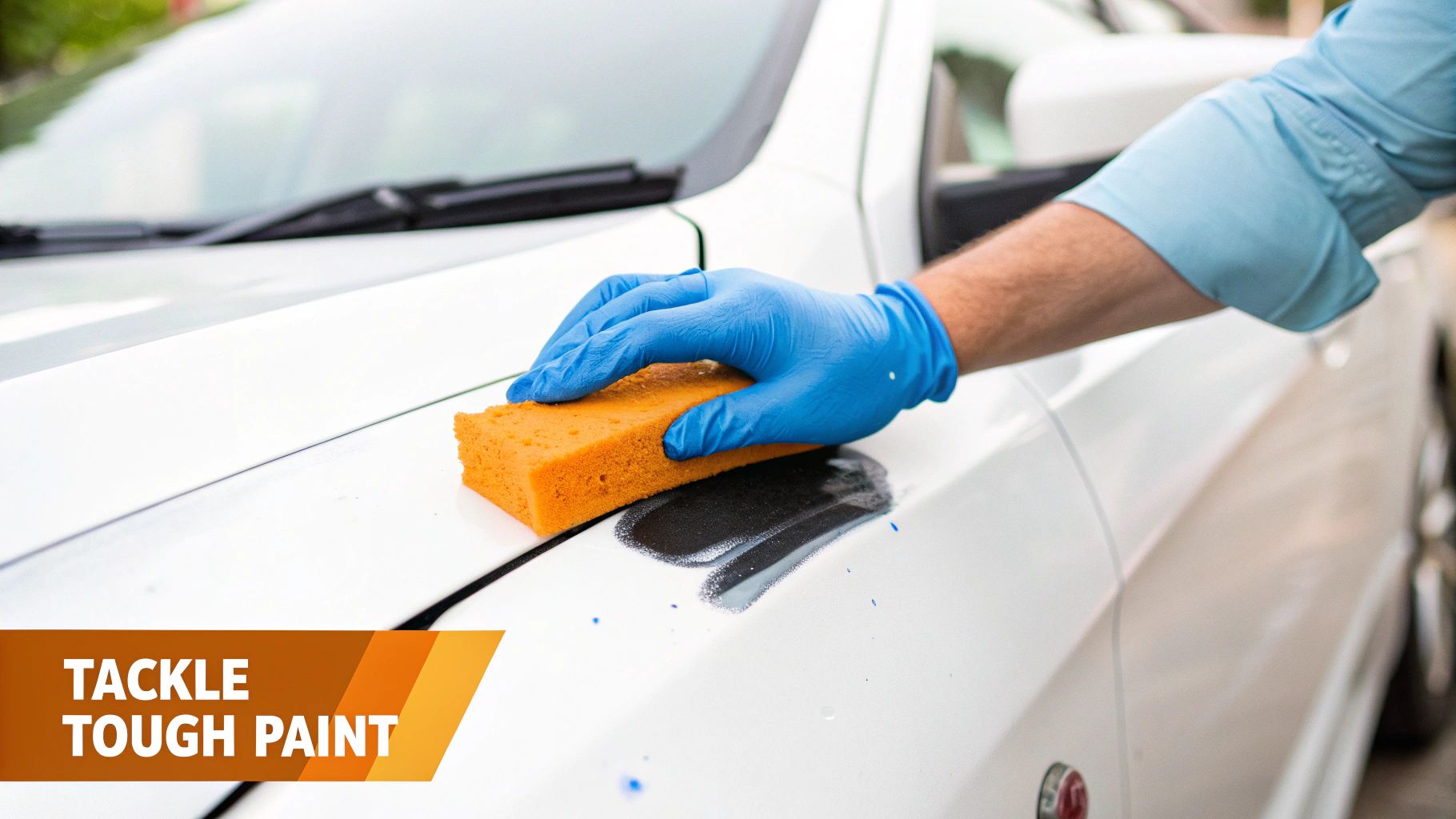
Alright, so the gentle approach didn't work. The road paint has had time to cure and really bond with your car's finish, turning it into a much bigger challenge. This is where patience and the right tools become critical. Getting too aggressive at this stage is a one-way ticket to permanent damage, so we need to step things up carefully.
The next tool in our arsenal is a detailing clay bar. This isn’t your kid's modeling clay; it's a specially engineered resin compound made to gently grab and pull embedded contaminants off your paint’s surface. Think of it as a powerful magnet for anything that shouldn't be there, from industrial fallout to, you guessed it, stubborn specks of dried road paint.
Using a Clay Bar for Paint Removal
A clay bar essentially shears off the bonded paint particles without scratching the clear coat underneath. The absolute key to doing this safely is lubrication—and plenty of it. Seriously, never, ever use a clay bar on a dry surface.
- Lube it Up: Grab a dedicated clay lubricant or even a quick detailer spray and generously mist a small section of the car. The surface needs to be slick to the touch.
- Glide, Don't Scrub: Flatten the clay bar a bit and gently glide it back and forth over the wet area. You don't need much pressure. You'll feel it "grabbing" at first, but as it picks up the paint specks, it will start to move smoothly. That's how you know it's working.
- Fold and Knead: Check the surface of the clay every so often. Once it looks dirty, fold it over and knead it until a fresh, clean side is exposed. This is super important to avoid dragging the gunk you just removed all over your finish.
This technique works wonders for light overspray or smaller, stubborn spots. It's a similar process for getting rid of other tough stuff, which you can learn more about in our guide on how to remove tar from your vehicle.
When You Need Something Stronger
If you're dealing with thick, defiant patches of dried road paint, a clay bar might just not have enough muscle. This is the moment to reach for a specialized automotive solvent or an adhesive remover. These products are specifically formulated to dissolve aggressive substances without eating away at modern automotive paint jobs.
A quick look through automotive forums from 2023 shows just how common this headache is, with splatters of bright yellow road paint being a frequent complaint after construction season. A common theme is that household solvents either fail completely or, worse, damage the clear coat. It really drives home the need for car-specific products.
Crucial Safety Step: Before you go all-in with a solvent, always test it on an inconspicuous spot first. The inner part of a door jamb or a low, hidden area of the bumper are perfect for this. Apply a small dab, let it sit for a minute, and wipe it off. Check carefully to make sure it doesn't cause any hazing, discoloration, or softening of your car's paint.
Once you've done your spot test, apply the solvent to a microfiber applicator—not directly to the car—and gently dab it onto the paint. Let it sit for the time recommended on the bottle. Then, carefully wipe it away. The idea is to let the chemical do the heavy lifting, not your elbow grease, to keep that clear coat intact.
Restoring and Protecting Your Car's Finish
https://www.youtube.com/embed/6tepA3wjPbY
Getting that last bit of road paint off feels great, but your work isn't quite done yet. The very products and techniques that lifted the paint—even the gentlest ones—have also stripped away your car's protective layer of wax or sealant. This leaves the clear coat exposed to the elements.
This final part of the process is all about bringing back that crucial barrier. It’s what restores that deep, glossy shine and creates a slick shield that helps prevent future gunk from sticking.
Neutralize and Prep the Surface
First things first, you need to get rid of any lingering chemical residue from the paint remover. Grab a quality car shampoo and give the entire area a proper wash. This isn't just for looks; it neutralizes any leftover solvents so you have a perfectly clean slate for your protective coat.
Once it's washed, dry the area thoroughly with a clean microfiber towel to avoid any annoying water spots. Now, here's a pro tip: gently run your hand over the paint. Does it feel as smooth as glass? If you feel any grittiness, you might need an extra step. We cover this in detail in our guide on how to properly clay bar a car to get that perfectly slick finish.
Expert Tip: Don't be tempted to skip the final wash. It’s less about cleaning and more about neutralizing any active chemicals left on your paint. This ensures your wax or sealant will bond correctly and last as long as it should.
Apply a Fresh Layer of Protection
Okay, now for the satisfying part—bringing back the shine and locking in the protection with a fresh coat of wax or sealant.
You've got a couple of solid choices here:
- Car Wax: This is your classic go-to for a warm, deep glow. Carnauba-based waxes are famous for the brilliant shine they produce. They're a favorite among enthusiasts.
- Paint Sealant: If you're looking for something that lasts longer, a synthetic paint sealant is the answer. It creates a more durable, hard-shell protection that can hold up for several months against rain, sun, and dirt.
Modern products have come a long way, with new formulas that make them easier to apply and wipe off without a ton of effort. This is great because it reduces the chances of accidentally marring a delicate finish.
Keeping your paint protected is a cornerstone of good vehicle care. Following an ultimate car maintenance checklist can save you from all sorts of headaches down the road. By taking the time to restore this protective layer, you're doing more than just making your car look fantastic—you're preserving its value for years to come.
Look, there’s no shame in knowing your limits. Sometimes the smartest thing you can do for your car is to put down the clay bar and pick up the phone. While taking on a road paint problem yourself can be satisfying, some situations are best left to the pros.
If you're feeling even a little hesitant, calling in an expert is a no-brainer. It can prevent you from turning a minor annoyance into a major, expensive headache.
When to Wave the White Flag
A professional detailer isn’t just a person with a fancy buffer. They have access to professional-grade solvents and equipment that you just can't buy at the local auto parts store. More importantly, they’ve seen it all before. They can tell what kind of paint you’re dealing with and know exactly how to get it off your car’s clear coat without causing damage.
Here are a few red flags that should have you reaching for your phone to call a detailer:
- The Splatter is Massive: If we're not talking about a few specks, but an entire side panel, hood, or bumper, don't try to be a hero. A DIY job on a large area can easily lead to an uneven, hazy finish.
- You Have a Special Finish: Is your car's finish matte, satin, or a custom paint job? What about a vinyl wrap? These surfaces are incredibly sensitive. The wrong chemical or even rubbing too hard can ruin them in a second.
- The Paint is Old and Cranky: If that yellow line has been sunbathing on your car for weeks or months, it's not just sitting on top anymore. It has started to chemically bond with your clear coat. Getting it off requires a delicate but aggressive approach that only experience can provide.
A professional can often fix in an hour what might take you a whole weekend of frustration. This is what they do, day in and day out.
And it’s not just about paint. Some messes on your car's finish are just too tough or specialized for a home garage. For really stubborn problems, it’s often best to look for specialized removal services for contaminants like rust, as they have the specific tools and knowledge for the job.
Still Have Questions About Removing Road Paint?
Even with the best instructions, it's natural to feel a bit hesitant. After all, you're about to work on your car's delicate finish. Let's walk through a few of the most common questions that pop up when dealing with stubborn road paint.
What About Using WD-40 or Goo Gone?
You'll see these two pop up constantly in online forums, but I'd advise you to proceed with extreme caution. While WD-40 is a solvent and can technically soften some paints, it wasn't designed for automotive clear coats. Leave it on too long, and you risk dulling the finish or even damaging rubber and plastic trim.
Goo Gone is a fantastic product for sticky, gummy messes, but the tough polymers in road paint are a completely different beast. It often just doesn't have the chemical muscle to do the job effectively.
If you're truly in a bind and have nothing else on hand:
- Always test first. Find an inconspicuous spot, like a low rocker panel or inside a door jamb, to see how your paint reacts.
- Less is more. Apply a minimal amount directly to the paint splatter, not the entire panel.
- Wash it off immediately. As soon as the road paint is gone, thoroughly wash the area with proper car soap and water to neutralize any leftover residue.
Honestly, your safest bet is always to stick with a product specifically formulated for automotive use.
How Quickly Do I Need to Act?
Time is not on your side here. Fresh road paint—we're talking within the first 24 to 48 hours—is infinitely easier to deal with. It hasn't had the chance to fully cure and create a strong bond with your car's clear coat.
Once that paint cures, especially after a few days baking in the sun, it becomes incredibly difficult to remove safely.
Getting cured paint off requires more aggressive chemicals and a lot more elbow grease. This is where you run a much higher risk of scratching or marring your finish. If the paint has been sitting there for weeks, I'd strongly recommend calling a professional detailer.
Will This Mess Up My Ceramic Coating?
Yes, it absolutely can. Most of the effective methods for removing road paint—from strong chemical solvents to heavy-duty clay bars—are aggressive enough to degrade or even completely strip a ceramic coating in that spot.
If your car is coated, you must start with the least aggressive method possible, like a high-quality, pH-neutral bug and tar remover that's rated as safe for coatings.
If you find yourself needing something stronger, just accept that you'll likely need to do some paint correction (a light polish) and reapply the ceramic coating to that specific area to get the protection back.
Ready to tackle this the right way? The SwiftJet Car Wash Foam Gun is the perfect tool for prepping the surface before you start and for the final cleanup. It ensures you're working on a perfectly clean car, which is key to avoiding scratches.
