

You pull the tarp off a project car after a damp spell and find orange freckles spreading across the wheel arch. In the same week, a favorite wrench comes out of the toolbox with rust flakes on the handle, while a trailer coupler that looked fine last season now shows pitting around the seams. Rust rarely announces itself at a convenient time. It waits behind trim, under paint edges, inside hollow tubing, and beneath the grime that makes inspection difficult.
The reliable way to understand how to prevent rust is to stop treating every surface the same. A daily driver in a winter road-salt region needs a faster response than a hand tool stored in a dry workshop. A boat trailer near saltwater needs a different coating strategy from painted bodywork. The practical system is simple, but it has to be matched to exposure: remove contamination, dry completely, apply the right barrier, then inspect before the barrier fails.
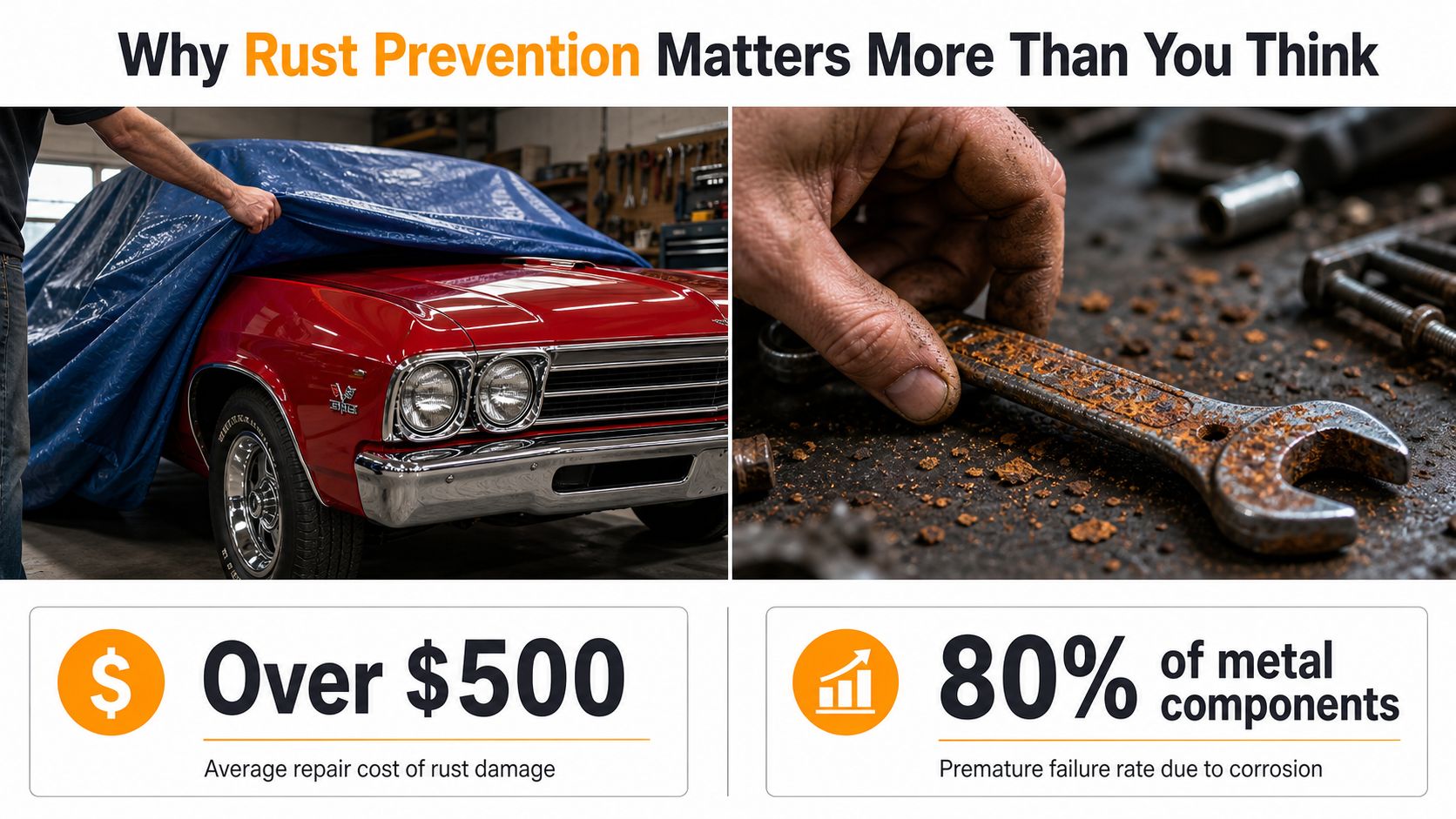
Why Rust Prevention Matters More Than You Think
Rust begins with a small electrochemical reaction. Iron or steel meets moisture and oxygen, while an electrolyte such as road salt, sea spray, or acidic contamination helps conduct the reaction across the surface. You don't need a visible puddle. A damp seam, trapped road film, or condensation inside a closed garage can keep the process moving.
Once corrosion breaks through a coating, it doesn't stay neatly inside the original chip. Moisture can travel beneath paint, powder coat, and underseal, loosening the surrounding film and creating more exposed metal. That's why a tiny orange spot on a rocker panel or tool joint deserves attention before it turns into blistering, flaking, or deep pitting.
The economic scale is larger than most garage owners realize. A major global corrosion study estimated the annual cost of corrosion at US$2.5 trillion, about 3.4% of global GDP in 2013. The same NACE corrosion cost study projected that established corrosion-control practices could save 15% to 35% of those losses, equivalent to roughly US$375 billion to US$875 billion each year worldwide. Prevention protects more than appearance. It helps preserve vehicle value, keeps tools usable, and reduces the chance that a neglected fastener or support becomes an emergency replacement.
Why one product rarely solves the problem
The strongest approach combines several modest defenses rather than trusting one thick layer:
- Control moisture: Rinse salt and dirt away, then dry seams, cavities, and undersides.
- Create a barrier: Use paint, wax, oil, lanolin, galvanizing, or another coating suited to the surface.
- Choose resistant materials: Stainless hardware, galvanized parts, and suitable alloys can reduce vulnerable bare steel.
- Inspect and renew: Scratches, stone chips, abrasions, and coating breakdown need local repair.
Older corrosion research had already treated the problem as a national economic concern. The NACE report references a 1949 study that placed U.S. corrosion losses at 2.5% of GDP, showing that large-scale prevention has been recognized for decades. In a home garage, the lesson is direct: a short cleaning and inspection routine is cheaper and easier than recovering metal after pitting has spread.
Assessing Your Environment and Exposure Level
Rust advice fails when it ignores the surroundings. Start by asking four questions: Does the item see road salt or seawater? Does it stay outside? Does temperature swing enough to create condensation? Does dirt remain trapped in seams, wheel wells, or hollow sections?
ISO 12944 provides a useful technical framework for steel exposure, with corrosivity categories from C1 through CX. The categories are based on unprotected carbon-steel loss, ranging from ≤1.3 µm/year in C1 to >200 µm/year in CX, as described by the ISO 12944 standard. You don't need laboratory instruments to use the idea. Match your protection to the harshest regular condition your equipment faces.
A practical exposure check
- C1, controlled indoor storage: A climate-controlled garage or dry workshop with little condensation. Focus on clean surfaces, basic barriers, and periodic visual checks.
- C2, ordinary sheltered or suburban exposure: A driveway, unheated garage, or shed with changing humidity. Painted surfaces and tool steel need consistent cleaning and coating renewal.
- C3, humid general exposure: A damp regional climate, frequent outdoor use, or areas where moisture remains on equipment. Wheel wells, fasteners, and tool joints deserve closer inspection.
- C4, coastal or industrial exposure: Salt air, chemical contamination, persistent humidity, or frequent wetting. Use engineered coating systems and inspect exposed areas regularly.
- C5 or CX, severe marine or industrial exposure: Offshore-like, heavily contaminated, or continuously wet conditions. Treat coating selection as a specification decision, not a matter of picking a convenient spray can.
ISO 12944 also defines durability bands of <7 years, 7 to 15 years, 15 to 25 years, and >25 years. Those bands describe the expected time to the first major maintenance event for a coating system, not a promise that steel will never rust. A system rated for the wrong environment can fail early even when it was applied neatly.
| Tier | Typical Environment | Key Exposure Factors | Inspection Cadence | Coating Refresh Interval |
|---|---|---|---|---|
| C1 | Dry indoor garage or workshop | Low humidity, limited condensation | Occasional visual check | Based on wear |
| C2 | Sheltered driveway or suburban garage | Seasonal humidity and temperature change | Routine seasonal check | Refresh when film thins or wears |
| C3 | Humid region or frequently wet equipment | Persistent moisture, dirt traps | Regular monthly-style checks | Shorter than sheltered storage |
| C4 | Coastal or industrial area | Salt air, chlorides, chemical contamination | Frequent inspection | Use a specified system and renew before breakdown |
| C5 or CX | Severe marine or industrial exposure | Continuous wetting or aggressive contaminants | Very frequent inspection | Follow the coating system's service specification |
A Midwest daily driver belongs in a more demanding routine than a weekend car kept indoors. A Florida boat trailer needs attention around rollers, couplers, axles, and welds because saltwater can remain in crevices after a casual rinse. A Pacific Northwest woodworking shop may not expose tools to salt, but damp air and condensation still make drying and storage important.
For wheel-specific guidance, these alloy wheel corrosion prevention tips are useful when brake dust, winter contamination, and moisture collect around rims. Assess the environment first, then choose the cleaning frequency, coating type, and inspection intensity that fit it.
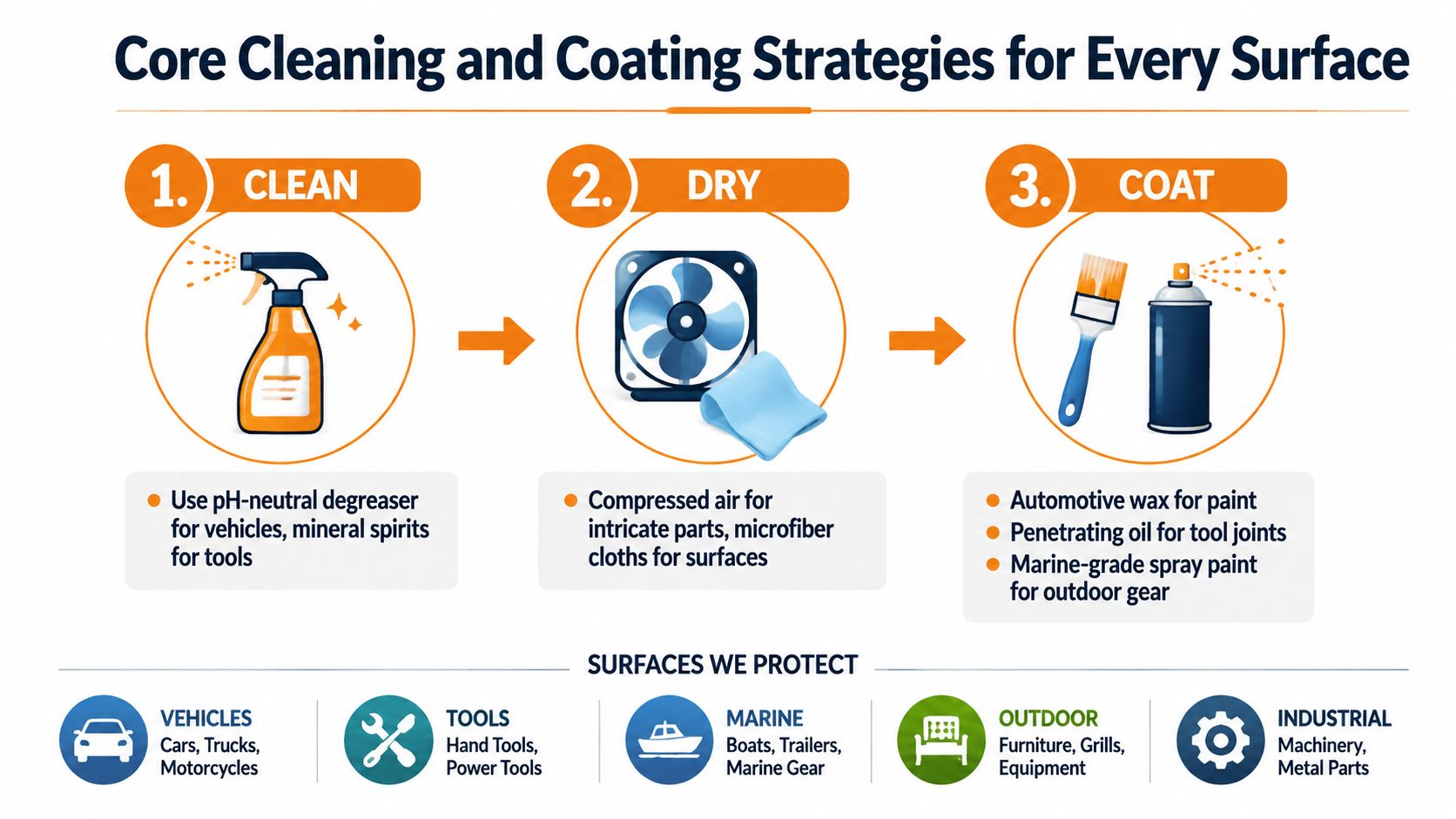
Core Cleaning and Coating Strategies for Every Surface
The dependable workflow is clean, dry, coat. Skipping any stage creates a weak point. Coating over salt leaves an electrolyte under the barrier, while coating damp metal can trap moisture where you can't see it.
Clean without creating new problems
For painted vehicle panels, use a pH-neutral automotive wash and a clean wash mitt. A product such as a dedicated vehicle shampoo lifts road film without treating the paint like a kitchen pan. Dish soap can strip protective films and leave you with a surface that dries quickly but has less sacrificial protection.
Use a stronger degreaser on bare tool steel, but keep it away from delicate finishes and plastic markings unless the manufacturer allows it. Marine hardware needs a thorough freshwater rinse because salt residue can remain after the visible spray dries. Griddles and outdoor cooking equipment also need a method that removes food residue without leaving corrosive contamination, so this guide to how to clean an outdoor griddle can help with the cleaning side before you protect the metal.
Pressure washers are useful when controlled, not when aimed indiscriminately. High pressure can force water and grit into wheel-well seams, electrical connectors, bearings, tool pivots, and weatherstripping. Use a wider spray pattern, keep distance from sensitive areas, and follow with deliberate drying.
Dry past the obvious surface
A microfiber towel handles broad painted panels, but it won't empty a bolt recess or a folded seam. Use compressed air around fasteners, hinges, wheel-well lips, sockets, and tool joints. Move the nozzle so you push water out of the cavity instead of deeper into it.
Let cold equipment reach ambient temperature before sealing it in a box, cover, or plastic case. If you close a cold metal object while the surrounding air is warmer and damp, condensation can form inside the enclosure. For small tools, a simple drying cabinet can be built from a ventilated storage cabinet, a low-output fan, and a dehumidifier placed nearby. The objective isn't heat for its own sake. It's stable, dry air and enough circulation to remove moisture from recesses.
Practical rule: If you can still feel cool dampness around a seam, the item isn't ready for its final coating or storage.
Coat according to the surface
- Vehicle underbodies: Fluid Film or another lanolin-based spray can reach seams and provide a flexible, renewing film. It's messy, but flexibility is valuable where panels flex and stones strike.
- Painted panels: Paste wax or a ceramic spray sealant creates a water-shedding layer. Repair chips first instead of using the sealant to disguise exposed metal.
- Hand tools: A thin paste wax works well for tool steel stored indoors. Wipe off excess so dust doesn't turn the coating into abrasive sludge.
- Moving joints: Use a penetrating corrosion-inhibiting oil, then cycle the joint so the product reaches the contact surfaces.
- Outdoor gear: Select a compatible exterior coating for the material. Bare steel may need primer and paint, while marine parts require products intended for wet and saline service.
- Firearms and precision equipment: A silicone-impregnated cloth can protect exterior metal, but internal lubrication and storage must follow the equipment maker's instructions.
Don't cover micro-rust blindly. Remove loose oxidation, clean the surface, and use a suitable rust-conversion or stabilization treatment before applying the final barrier. A beautiful topcoat over active scale is still a temporary disguise.
For vehicle wheel-well work, this wheel-well cleaning guide is a useful reference for reaching the areas that collect the most road film. A SwiftJet Car Wash Foam Gun can connect to a garden hose and apply clinging foam before rinsing, which is one option for making the cleaning stage easier at home.
Traditional Waxes Versus Modern Smart Coatings
Traditional barriers remain useful because they're inexpensive, easy to inspect, and simple to renew. Carnauba and synthetic paste waxes protect painted panels by placing a sacrificial film between contamination and the clear coat. They don't repair a chip, stop corrosion inside a seam, or replace an underbody treatment. Their strength is convenient maintenance, not permanent encapsulation.
Fluid Film, lanolin sprays, and petroleum-based creep oils occupy a different role. They flow into seams and cavities, remain flexible, and can renew coverage after minor movement or abrasion. That makes them practical for chassis rails, hinges, trailer hardware, and exposed fasteners. The trade-off is mess. These films attract dust, can wash away in severe exposure, and require access to the underside during application.
Ceramic coatings and advanced polymer sealants form harder, more chemically resistant barriers on suitable painted surfaces. Zinc-rich primers serve another purpose, providing a protective primer layer beneath compatible topcoats on prepared steel. Emerging smart inhibitor systems and advanced polymer coatings are active areas of corrosion research. A 2025 report described a dual-layer coating with 99.6% protection efficiency against iron corrosion, as reported by Phys.org's coverage of the dual-layer coating. That result is promising, but it doesn't mean a consumer can apply the material to any rusty vehicle and expect the same outcome.
Match the coating to the job
| Coating Type | Best For | Durability | Reapplication | Cost Tier |
|---|---|---|---|---|
| Paste wax | Painted panels and indoor tools | Sacrificial and condition-dependent | Renew when water behavior and film quality decline | Low |
| Lanolin or fluid film | Undercarriages, cavities, fasteners | Flexible and self-renewing, but exposed to wash-off | Inspect after wet or salty use | Low to medium |
| Penetrating oil | Hinges, joints, and small bare-metal areas | Shorter-lived film in exposed locations | Apply after cleaning and drying | Low |
| Ceramic or advanced polymer sealant | Prepared painted surfaces | Harder barrier with higher preparation demands | Follow the product system and inspect for wear | Medium to high |
| Zinc-rich primer and topcoat | Prepared steel and fabricated outdoor parts | Depends on surface preparation and compatible layers | Repair damaged areas before broad failure | Medium |
| Smart inhibitor coating | Specialized high-exposure applications | Product-specific and test-dependent | Follow technical documentation | High or specialized |
Product compatibility matters more than marketing language. Wax may not bond correctly over every ceramic system, while a thick oil film can trap moisture if applied over dirty or damp metal. Before layering, check whether the new product is designed to bond with the existing film. If not, clean back to a sound surface.
For people outfitting a serious garage, this corrosion-resistant tools resource offers another way to reduce the amount of vulnerable bare steel you need to maintain. You can also browse the corrosion resistance collection from XTREME EDEALS INC. when comparing tool and hardware options, but material choice still doesn't eliminate the need for cleaning and inspection.
Seasonal Routines and Time-Bound Response Plans
Salt exposure creates a clock. Don't wait for the next convenient detailing day if the vehicle has just driven through treated roads. An independent winter protection guide recommends rinsing the undercarriage within 48 hours of road-salt exposure, keeping a fresh wax or sealant layer on painted surfaces, and storing the vehicle in a sealed, ventilated enclosure when it isn't in use, as outlined in this winter car rust prevention guide.
Winter and road-salt regions
Rinse the lower body, wheel wells, suspension parts, and undercarriage inside that 48-hour window. Use enough water to carry salt away rather than just wetting the surface, then dry seams and exposed fasteners. Apply underbody protection before the season becomes consistently wet, and only when the product can cure under its stated temperature conditions.
A salt-neutralizing wash can help remove road film during routine vehicle cleaning. Don't focus exclusively on the hood and roof. The parts that fail first are often hidden from casual view, including pinch welds, subframes, brake hardware, and the backs of panels.

Humid and coastal storage
Wipe tools and metal gear after use instead of leaving moisture to evaporate inside a closed box. Store small tools with desiccant or vapor-corrosion-inhibitor materials where appropriate, and use ventilation rather than sealing damp equipment in plastic. A dehumidifier can help a garage or shed, with a practical target of keeping relative humidity below 50% when the space and equipment allow it.
Coastal owners should inspect more often because salt air reaches places that never receive direct spray. Pay attention to trailer welds, wheel hubs, electrical grounds, door hardware, and the undersides of outdoor furniture.
Spring and fall resets
Spring is the time to remove accumulated contamination, clean brake dust from wheels, inspect rubber seals, and look behind trim or splash shields. Fall preparation is different. Clean grills, furniture, generators, and power equipment before storage, apply a light compatible oil film to vulnerable bare metal, and use a cover that keeps rain out without trapping humid air.
Building Your Inspection and Maintenance Schedule
A schedule only works when it fits the way you use the equipment. A vehicle driven through salt needs a response-based routine, while a workshop tool may need a quick wipe after every damp job and a deeper inspection less often. Use the environment tier from earlier as the adjustment knob.
A garage-wall checklist
- Weekly quick-check: Look for orange spots, wet seams, dirt-packed wheel wells, and moisture inside tool drawers. Wipe hand tools that saw damp air.
- Monthly inspection: Wash and dry the vehicle thoroughly, check underbody films, examine hinges and moving parts, and inspect outdoor equipment at joints and fasteners.
- Seasonal reset: Reapply protection suited to the coming weather, clean hidden cavities, inspect trailer and lawn equipment hardware, and repair chips before exposure increases.
- Annual review: Strip failing coatings from high-wear areas, treat active corrosion, replace damaged weatherstripping, and evaluate whether the storage space remains dry enough.
Keep a simple spreadsheet or phone reminder with the item, exposure tier, last wash, last coating, and areas that need watching. Add photos of recurring trouble spots. That record helps you shorten intervals after a harsh season or avoid wasting product on equipment that stays clean and dry.
For exhaust components, this guide to how to clean an exhaust pipe can support the inspection process before you assess surface condition and apply a compatible treatment. Rust prevention is easier when the cleaning date, drying step, and coating date are all visible instead of left to memory.

Keep your vehicle, tools, and outdoor gear ahead of corrosion by matching the coating to the exposure and acting quickly after salt or moisture contact. Visit SwiftJet to explore its garden-hose foam gun for a more controlled vehicle cleaning routine, then build the rinse, dry, inspect, and recoat habits that keep rust from becoming an expensive repair.
