

You turn on the shower and get a weak stream. The kitchen faucet takes forever to fill a pot. Maybe the bathroom sink is fine, or maybe the whole house feels sluggish. Low water pressure is annoying, but it isn't always a major plumbing failure.
Most of the time, the fastest way to solve it is to diagnose it in the right order. Start at the fixture. Then move to shutoff valves. Then check the main supply side. Only after that should you start worrying about hidden leaks, bad regulators, or old piping in the walls. If you're trying to figure out how to fix low water pressure, that sequence matters more than any single trick.
Why Is My Water Pressure So Low
When water pressure drops, the first question isn't how to raise it. It's where the drop is happening. If one sink runs poorly but the rest of the house is normal, the problem is almost always local. If every fixture is weak, you're dealing with something farther upstream.
That distinction saves time, money, and a lot of unnecessary part swapping. Homeowners often jump straight to the pressure regulator or assume they need a pump, when the actual issue is a clogged aerator, a partly closed valve, or debris stuck in a fixture supply.
Start with the pattern
Use this quick sort before touching anything:
- Only one faucet is weak: Think aerator, faucet cartridge, or the supply valve under that sink.
- Only one shower is weak: Think showerhead scale buildup or a local valve issue.
- Only hot water is weak: Think water heater or blockage in the hot side.
- Everything is weak: Think main shutoff valve, pressure regulator, incoming supply, leak, or old piping.
Practical rule: Don't diagnose the whole house from one bad faucet.
If your problem showed up suddenly, it can help to compare your symptoms with these solutions for sudden low water pressure from Bear Valley Plumbing & Heating. The useful part isn't the list by itself. It's recognizing whether your issue is isolated, hot-side-only, or house-wide before you buy anything.
Pressure and flow aren't the same thing
Homeowners use “pressure” to describe almost any weak water problem, but sometimes the issue is really restricted flow. That matters because a clogged screen at the tip of a faucet can feel like low pressure even when the house supply is fine.
If you want a simple baseline for what pressure feels like at a hose bib or outdoor spigot, this guide to garden hose PSI gives useful context. It won't diagnose indoor plumbing by itself, but it helps you understand why a fixture can feel weak even when some pressure is still present.
Start Your Diagnosis With The Easiest Fixes
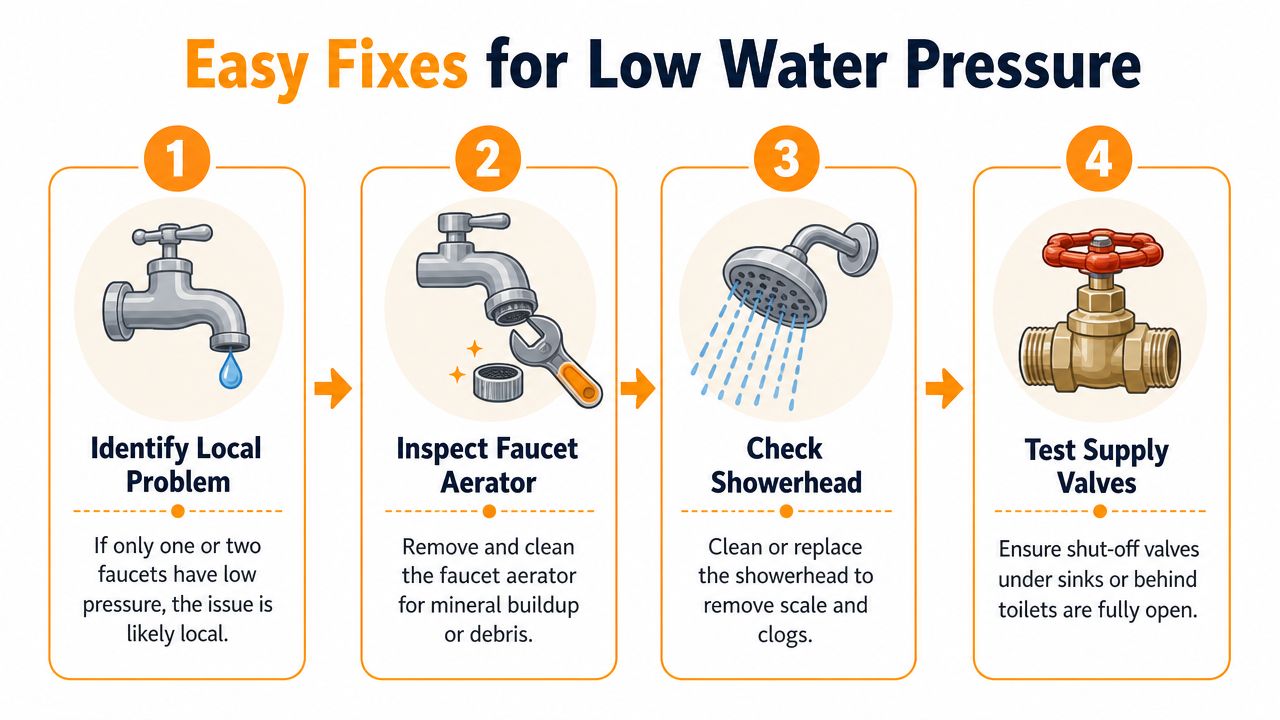
If only one or two fixtures are acting up, don't open walls and don't touch the regulator. Start where the water exits.
Clean the faucet aerator first
The aerator is the small screen on the tip of the faucet spout. It catches debris and shapes the stream, but it also clogs easily with mineral scale and sediment. That's one of the most common reasons a single sink starts trickling.
Here's the basic approach:
- Unscrew the aerator: Use your hand first. If it's stuck, use pliers with a rag around the finish.
- Take it apart carefully: Lay the pieces out in order so they go back the same way.
- Soak the parts in vinegar: That loosens mineral buildup.
- Rinse and reassemble: Then test the faucet again.
If the flow returns immediately, you've found the problem. If it doesn't, leave the aerator off for one quick test. A strong stream without the aerator tells you the faucet body is probably fine.
Treat the showerhead the same way
A showerhead can clog in a way that feels like a house pressure issue, especially if the spray pattern has gone uneven or several nozzles barely work. Unscrew it, soak it in vinegar, and flush it before reinstalling.
A lot of people replace the showerhead too quickly. Cleaning usually comes first. Replacement makes sense when the face is heavily scaled, the internal parts are worn, or cleaning doesn't restore a normal pattern.
If one shower is weak and every sink is fine, stay focused on that shower. The problem usually isn't in the basement.
Check the shutoff valves under the fixture
Under sinks and behind toilets, you'll usually find small fixture shutoff valves, often called angle stops. These get overlooked constantly. Someone may have bumped one partly closed during a repair, or the valve may be failing internally.
Homeowners often waste money on the wrong part. Data shows that replacing specific older quarter-turn angle stops is a top overlooked fix. Debris or a kinked rubber seal inside the valve can restrict flow even when fully open, and diagnostics have shown cases where swapping the $15 valve restored pressure after a plumber first suggested replacing the entire faucet (plumbing forum example).
What to try before replacing a faucet
Use this order:
- Open the angle stop fully: Turn it gently to the full open position.
- Test hot and cold separately: If one side is weak, the restriction may be on only that supply.
- Disconnect the supply line if you're comfortable: Briefly check whether water comes out strongly from the valve into a bucket.
- Replace the angle stop before replacing the faucet: Especially if the faucet itself is newer and the weakness is isolated.
For readers who already spend time working with outdoor fittings and valves, this overview of a brass water hose nozzle is a good reminder that small restrictions at the outlet can change performance a lot more than people expect. Indoor fixtures behave the same way.
Investigating System-Wide Pressure Loss
You turn on the kitchen faucet, then the hall bath, then the shower. All three are weak. That changes the diagnosis right away. A whole-house drop points away from a clogged aerator or a single bad fixture and toward the supply path into the house.
Check the main shutoff valve
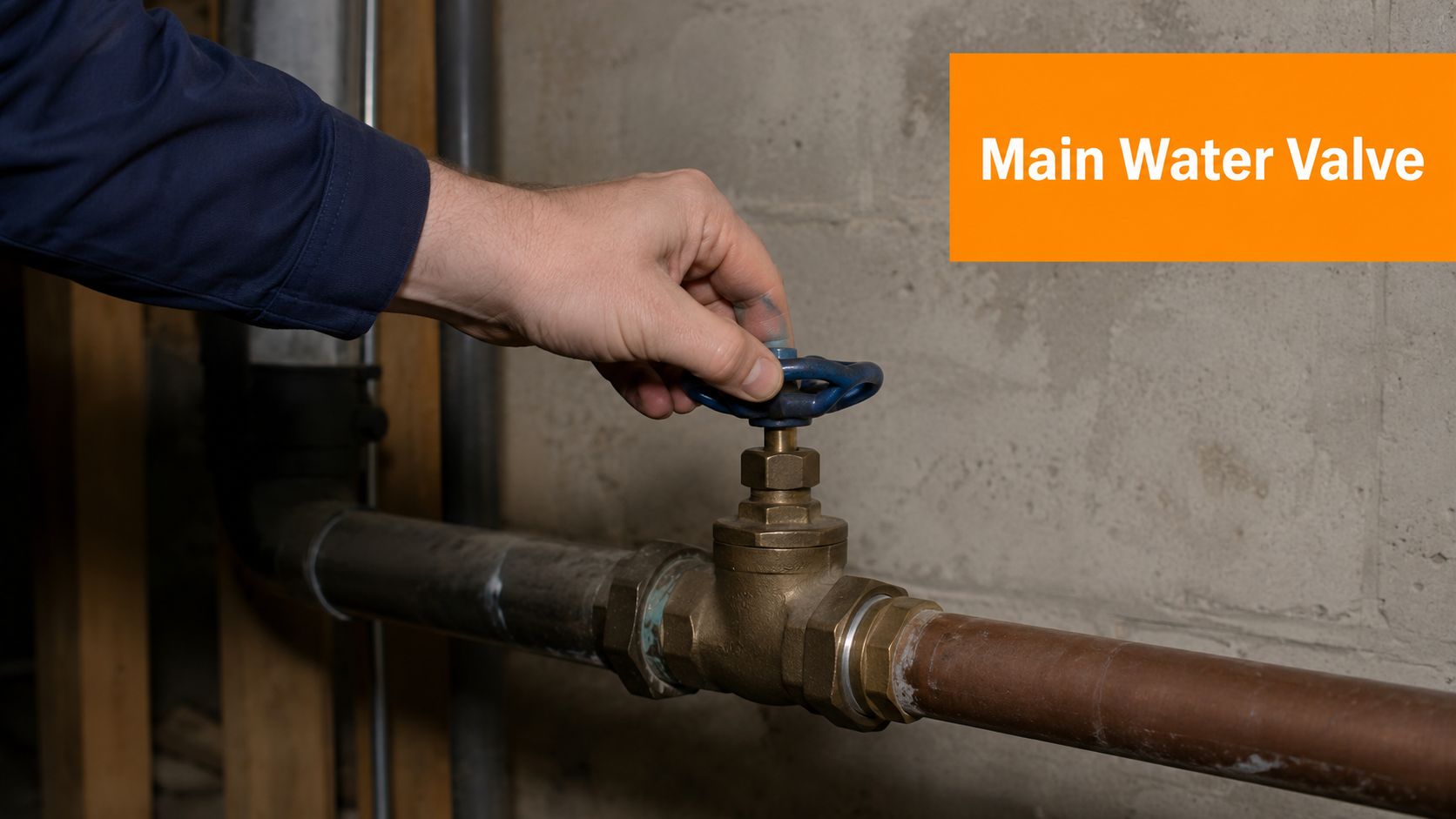
Start with the cheapest, fastest check. Find the main house shutoff valve where the water line enters the home and confirm it is fully open.
This gets missed more often than homeowners expect. After a leak repair, water heater replacement, filter service, or winter shutoff, someone may leave the valve partly closed. On a phone call, this is usually my first whole-house question because it takes minutes to verify and costs nothing.
Common locations include:
- Basement: Near the front foundation wall
- Crawlspace: Close to the service entry point
- Utility closet or garage: Often near the water heater
- Exterior wall: In warmer climates
The valve type matters. A wheel-handle gate valve should be turned open gently until it stops, then backed off slightly if it feels tight. A lever-style ball valve should sit parallel with the pipe when fully open. If it is angled across the pipe, it is restricting flow.
Why a partly closed main causes so much trouble
You do not need a nearly closed valve to feel a big difference at the fixtures. A restriction at the main affects every branch line in the house, so showers, sinks, and tubs all lose performance at once.
This is also why homeowners misread the symptom. A partly closed main can look a lot like a bad pressure regulator or low city supply. The pattern is the clue. If every fixture is weak, check the shutoff before touching anything more expensive.
Check whether the home has a pressure reducing valve
If the main valve is fully open and the pressure is weak everywhere, look for a pressure reducing valve, or PRV, on the main line. It is usually a bell-shaped brass body installed after the shutoff, often near the meter or where the water line enters the house.
A simple hose-bib pressure gauge gives a much cleaner answer than guessing by feel. The U.S. Environmental Protection Agency notes that pressure above 80 psi is considered high for a home plumbing system, which is one reason many homes have a regulator installed in the first place (EPA WaterSense guidance on pressure). In practice, many plumbers set residential pressure around the middle of the normal working range so fixtures perform well without putting unnecessary strain on supply lines and appliance valves.
Here's a simple interpretation table:
| Gauge reading | What it suggests |
|---|---|
| Normal pressure, weak single fixture | Local restriction, not a whole-house supply problem |
| Low pressure everywhere | Main supply issue, PRV issue, or major restriction |
| Normal cold, weak hot | Don't chase the PRV. Look at the water heater side |
If the gauge reads low at an outside hose bib and the whole house feels weak, the problem is upstream of individual fixtures. That narrows the field fast.
Do not start cranking on the PRV adjustment screw just to see what happens. If the regulator has failed internally, random adjustment often wastes time and can create a second problem. A failing PRV may cause low pressure, unstable pressure, or pressure that changes depending on time of day and fixture use. Diagnosis first. Adjustment second.
A quick visual walkthrough can help if you're trying to identify the valve layout before calling someone:
When whole-house symptoms point away from DIY
House-wide low pressure usually comes from one of four places:
- The main valve is not fully open
- The PRV is failing or set too low
- The incoming municipal supply is low
- There is a hidden leak or a serious restriction in the system
The order matters. A bad regulator can mimic a city supply issue. A partly closed main can mimic a bad regulator. Checking the simple items first keeps you from replacing the wrong part.
Once you have verified the main shutoff position, checked pressure with a gauge if possible, and confirmed the problem affects the whole house, you are no longer in single-fixture territory. At that point, the right next move depends on one detail many people miss. Whether the weakness affects both hot and cold equally.
The Hot Water Only Pressure Problem
One of the easiest ways to waste time on low pressure is to treat every symptom like it comes from the same cause. It doesn't.
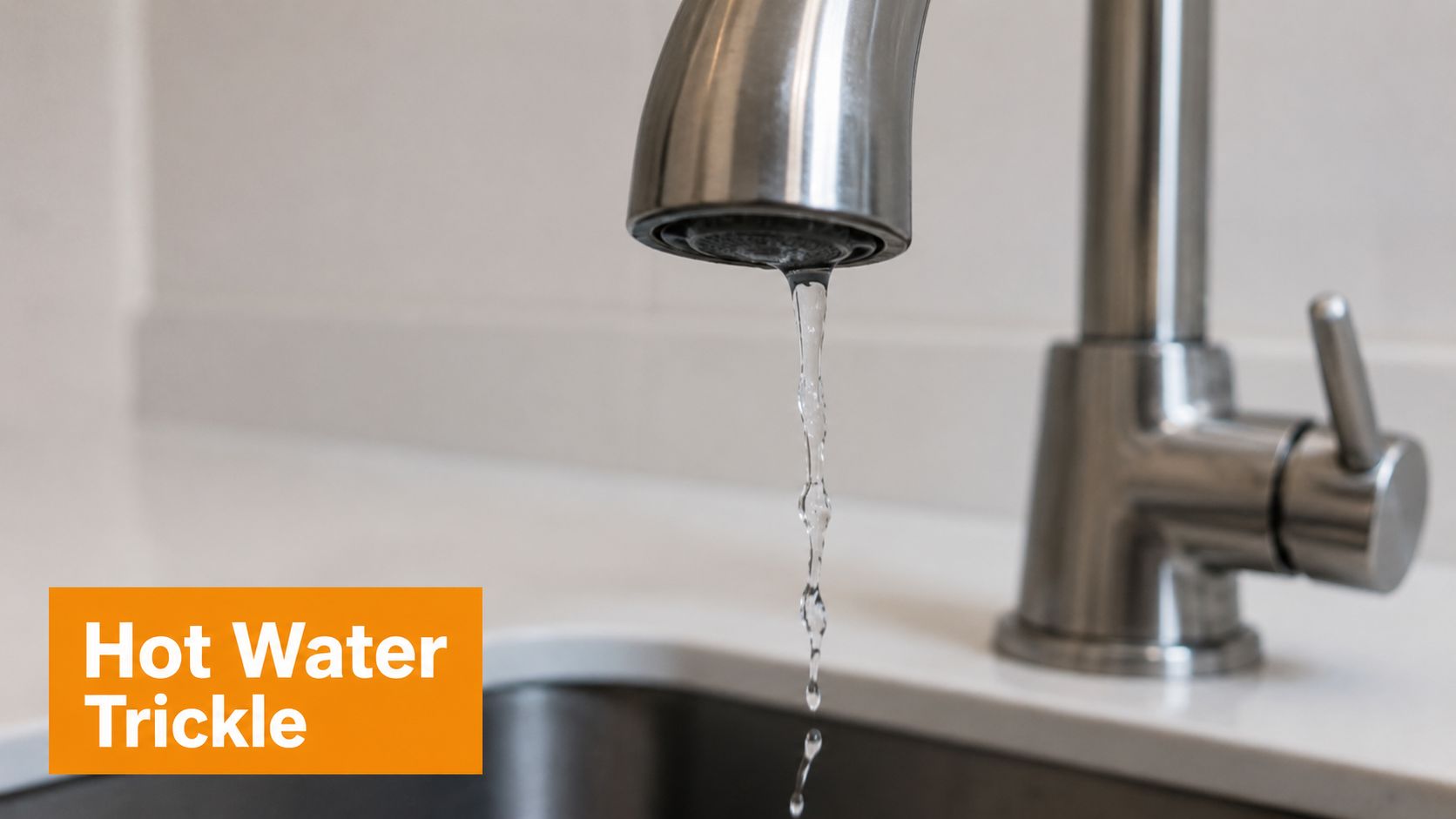
If the cold side works normally and the hot side is weak everywhere, stop looking at the main shutoff and stop blaming the city supply. That pattern points to the water heater side of the plumbing.
Why hot-side problems fool people
Hot water pressure complaints often sound like whole-house pressure problems because every bathroom may be affected. But the dividing line is simple. If cold water still runs well at those same fixtures, the issue is between the heater and the tap.
An estimated 20% of low-pressure complaints are isolated to the hot side due to water heater sediment buildup, and these cases are often misdiagnosed. When cold water pressure is normal but hot is low, the cause is often debris in the hot line or a kinked seal, and the fix is often a specific hot-line backwash flush rather than a regulator adjustment (hot-water-only discussion).
What the symptoms usually look like
Watch for this pattern:
- Kitchen faucet: Cold is strong, hot is weak
- Bathroom sinks: Same pattern at multiple fixtures
- Shower: Pressure drops noticeably on the hot side
- Outside hose bibs: Usually unaffected because they're cold only
That pattern narrows the search quickly. You're not dealing with the main service valve. You're not dealing with a single clogged aerator unless only one fixture is involved. You're likely dealing with sediment, debris, or a restriction on the hot side.
What usually works
The practical fixes depend on your setup, but the logic is consistent.
- Flush or service the water heater: Sediment can move into the hot outlet side and restrict flow.
- Inspect the hot-side supply connections: A deteriorated rubber seal or debris can choke flow.
- Backwash the affected hot line if appropriate: That can clear sediment that standard fixture cleaning won't touch.
Cold strong, hot weak. That's not a general pressure problem. It's a hot-side restriction until proven otherwise.
This is one of the most useful checkpoints in learning how to fix low water pressure because it keeps you from chasing the wrong system. A lot of homeowners assume “all the sinks” means “main pressure.” Sometimes it just means the hot branch is restricted at the source.
Advanced Diagnostics Hidden Leaks and Old Pipes
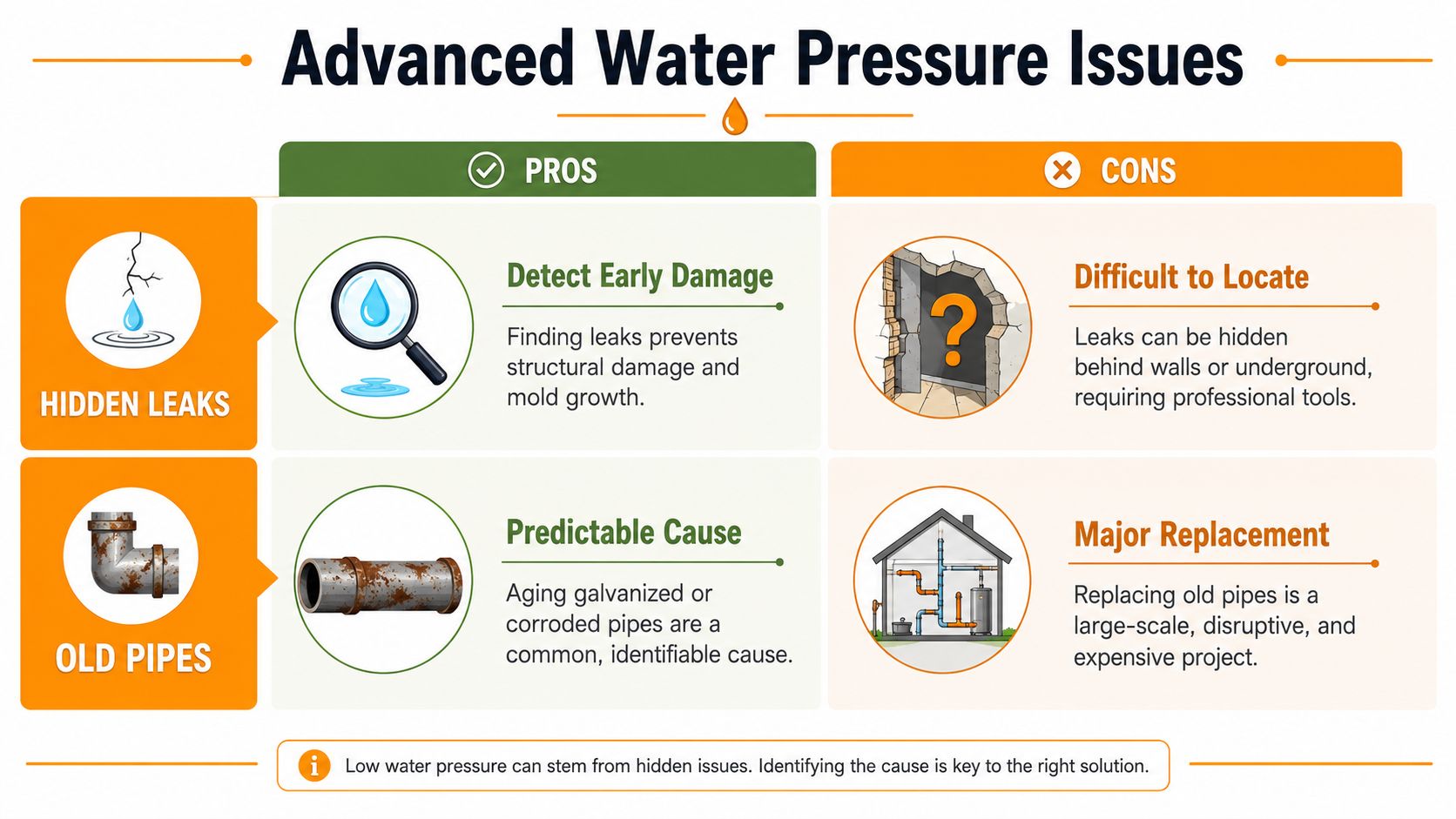
If pressure is weak at multiple fixtures and the simple checks have already come up clean, stop chasing faucet parts. This is the stage where I start looking for two expensive causes that change the repair plan: a hidden leak, or piping that has closed up from the inside.
Rule out a hidden leak
A supply leak can lower pressure without leaving an obvious puddle. I have seen houses lose performance for weeks before anyone noticed because the water was escaping under a slab, in a crawlspace, or out in the yard.
The meter check is still the cheapest useful test:
- Turn off all water use in the house
- Make sure toilets and appliances are not filling
- Read the water meter
- Wait without using water
- Check the meter again
If the meter moves, water is going somewhere. That points the diagnosis away from fixture clogs and toward a leak or a control valve that is not sealing properly.
One caution here. Hose connections can confuse this test if an outside spigot is dripping or a garden setup is still pressurized. If you are not sure what is attached outside, this guide to hose connector types can help you identify what should be disconnected before you trust the meter reading.
Old galvanized pipe is a common, often overlooked culprit
In older homes, galvanized steel pipe often causes low pressure because corrosion builds inward year after year. The pipe may look intact from the outside while the opening inside has narrowed enough to choke flow through the whole branch.
Corrosion in galvanized plumbing is a major historical cause of low pressure in older homes. These pipes typically last 40 to 50 years, and internal rust can reduce the pipe diameter by 50% or more, cutting flow from 15 to 20 GPM down to less than 5 GPM (Portland water pressure and flow guidance).
That is why an old 3/4-inch galvanized line can perform like a much smaller pipe after decades of buildup. At that point, cleaning aerators or replacing a showerhead may help at the ends, but it will not restore the volume the system can no longer carry.
Signs that point toward repiping
A few clues make galvanized pipe much more likely:
- Older house: Pre-1960 construction raises suspicion fast.
- Low pressure across the house: More than one bathroom, more than one fixture.
- Gradual decline: Performance got worse over time instead of dropping suddenly.
- Visible threaded steel piping: Dull gray pipe with corrosion around joints and fittings.
If that pattern fits your house, the practical fix may be replacement rather than another round of cleaning and part swapping. For homeowners comparing scope, material choices, and what a full replacement usually involves, this page on reliable San Antonio repiping shows the kind of decisions that come up when old distribution piping is the root problem.
Field insight: When galvanized pipe is badly restricted, fixture-level fixes can make one sink feel a little better. They do not solve a system that has lost carrying capacity inside the walls.
Knowing When to Call a Professional Plumber
You can do a lot over the phone with a homeowner. Clean an aerator. Open an angle stop. Check whether the problem is only on the hot side. Make sure the main shutoff is fully open. After that, the goal changes. At that point, you stop guessing and start testing.
A plumber is the right call when the next step requires pressure gauges, access behind walls, or a repair that can go wrong fast if the diagnosis is off.
Jobs that usually should not stay DIY
These problems usually need licensed help:
- Faulty PRV: Pressure-reducing valves are replaceable parts, but they are not trial-and-error parts. If the regulator is failing, the fix is usually replacement and pressure verification afterward.
- Suspected hidden main-line or slab leak: Finding a buried or concealed leak takes the right test equipment and a methodical isolation process.
- Old galvanized distribution piping: If restriction is spread through the house piping, you are past fixture cleaning and into repair planning.
- Unclear supply problem: A plumber can tell whether the pressure loss is inside the home, at the meter setup, or upstream on the utility side.
Use thresholds as a screening tool, not the diagnosis
Low gauge readings matter, but they do not tell the whole story by themselves. If pressure is low throughout the house and stays low after the simple checks earlier in this guide, a plumber should test both static pressure and pressure under flow. That is how you separate a supply problem from a restriction problem.
Booster pumps have their place. They are useful when incoming pressure is exceptionally low and the rest of the system is in good shape. They are a bad bandage for a half-closed valve, a failing PRV, or old pipe that is choked down inside. In those cases, adding pressure can leave the underlying restriction in place and put more stress on weak parts.
A simple decision point
Use this framework:
| What you found | Best next step |
|---|---|
| One fixture only | Keep troubleshooting at that fixture |
| Hot only is weak | Service the water-heater side |
| Whole house is weak and a valve was not fully open | Correct the valve position and retest |
| Whole house is weak with modern piping and low incoming pressure | Professional pressure test and booster evaluation |
| Whole house is weak in an older galvanized home | Professional inspection for repipe planning |
One practical rule applies here. If the fix you are considering does not match the level of the problem, stop and reassess. A showerhead will not fix a main-line issue. A booster pump will not fix a restricted branch line. Repiping will not fix a closed stop under one sink.
Call a pro when the problem has clearly moved beyond a single fixture, when pressure readings need to be confirmed with proper tools, or when the repair involves the main line, pressure regulator, or concealed piping.
If you like practical gear that makes routine cleanup faster after plumbing work, driveway rinsing, or vehicle washing, take a look at SwiftJet. Its foam gun connects to a standard garden hose, gives you controlled soap application, and helps cut down the mess when the job is done.
