

You're probably here because you typed detail spray gun into a search bar and got two completely different kinds of products. One looks like a body shop tool with a paint cup on top. The other clips onto a garden hose and sprays sudsy foam over a car.
That confusion trips up a lot of people.
If your goal is to wash your car at home, you do not want the same tool a painter uses for spot repairs, pinstriping, or refinishing trim. You want the simpler tool that matches the job. For washing, that means a hose-end foam gun. It's easier to use, easier to maintain, and much better suited to laying down a blanket of soap before you touch the paint with a mitt.
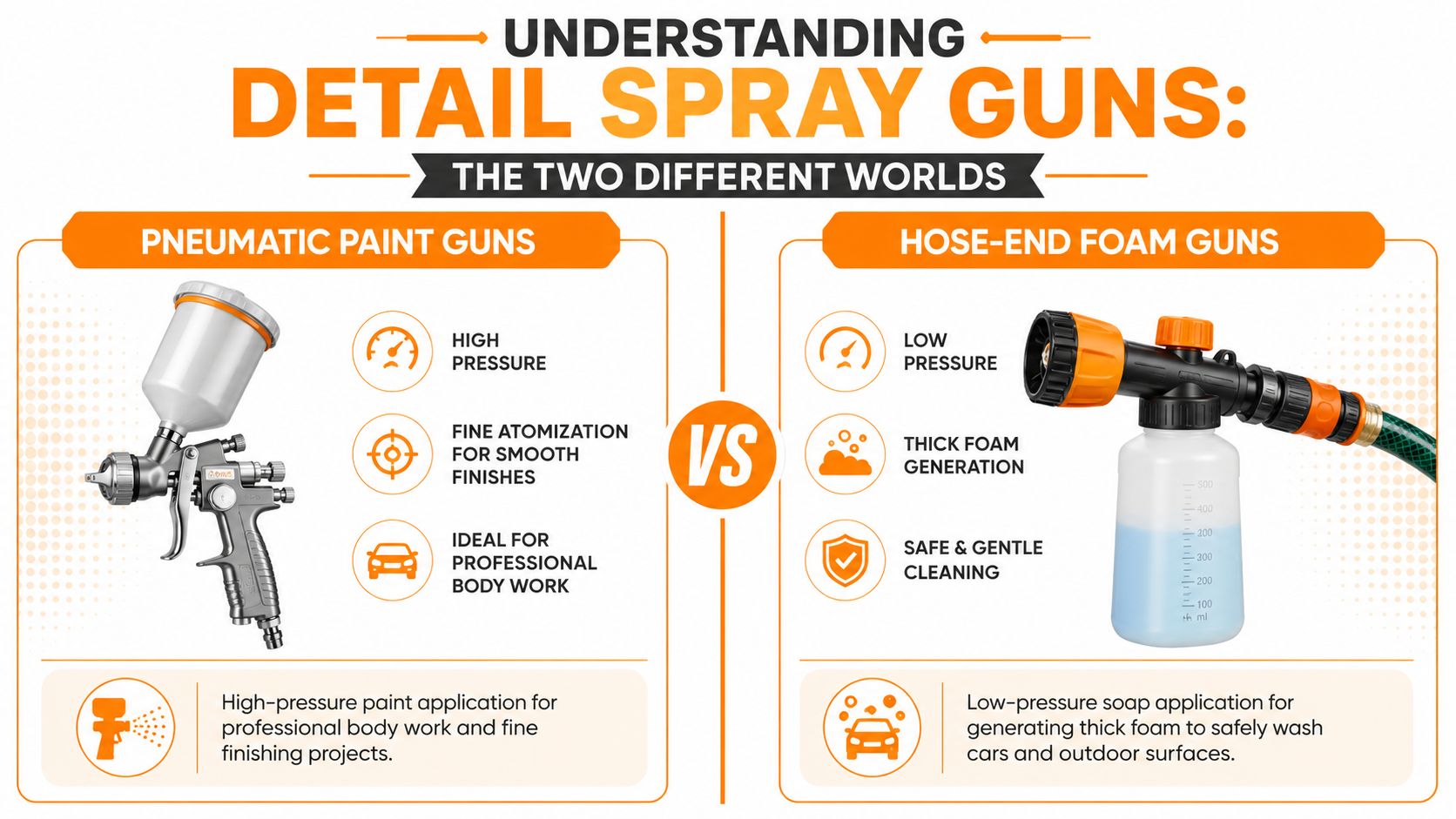
The Two Worlds of Detail Spray Guns
The phrase detail spray gun sounds specific, but in practice it covers two very different tools.
One lives in the world of body shops and automotive refinishing. These are professional paint detail guns that run on compressed air. They use very small nozzles, often in the 0.5 to 1.5mm range, to atomize paint for controlled application in tight areas like emblems, jambs, and trim, as described by Auto Restorer's spray technique discussion.
The other lives in the driveway. That's the hose-end foam gun. It attaches to a standard garden hose and works off normal household water pressure. It's made to apply soap for washing, not paint for finishing.
Why the name causes so much trouble
A paint detail gun and a foam gun may both spray liquid in a controlled pattern, but that's where the similarity mostly ends. Buying one when you need the other is like buying a precision chef's paring knife when what you really needed was a vegetable peeler. Both are handheld kitchen tools. Only one fits the task.
Practical rule: If you need a compressor, you're looking at a paint tool, not a car-wash tool.
That distinction matters because people often expect “detail spray gun” to mean “something that helps me wash my car better.” In the paint world, it means a compact spray gun for coatings. In the home detailing world, people typically look for foam delivery.
Paint gun vs foam gun at a glance
| Feature | Pro Paint Spray Gun | Hose-End Foam Gun |
|---|---|---|
| Primary job | Paint application and refinishing | Soap application for vehicle washing |
| Power source | Air compressor | Garden hose water pressure |
| Typical output | Atomized paint or coating | Thick soap foam |
| Nozzle style | Small precision nozzle | Foam-producing wash nozzle |
| Best for | Touch-up work, trim, jambs, graphics | Pre-soak and hand-wash prep |
| Skill needed | Higher | Lower |
| Setup | Gun, compressor, hose, regulator, cleaning solvents | Hose, shampoo, rinse afterward |
| Risk if misused | Overspray, poor atomization, finish defects | Mostly wasted soap or weak foam |
What works for washing and what doesn't
For a driveway wash, a paint gun is usually the wrong answer. It adds complexity you don't need. You're dealing with air pressure, atomization settings, cleanup meant for coatings, and a tool designed around finish control, not wash safety.
A foam gun solves the problem. It spreads shampoo across the panel in a way a standard nozzle can't, and it does it without dragging you into body shop equipment.
Professional paint detail guns absolutely have their place. They're useful when someone is spraying paint into narrow areas with a controlled pattern. But if your Saturday plan is washing brake dust off wheels, loosening road film on lower doors, and cleaning bugs off the front bumper, a hose-end foam gun is the right lane.
Why a Foam Gun Outperforms a Standard Nozzle
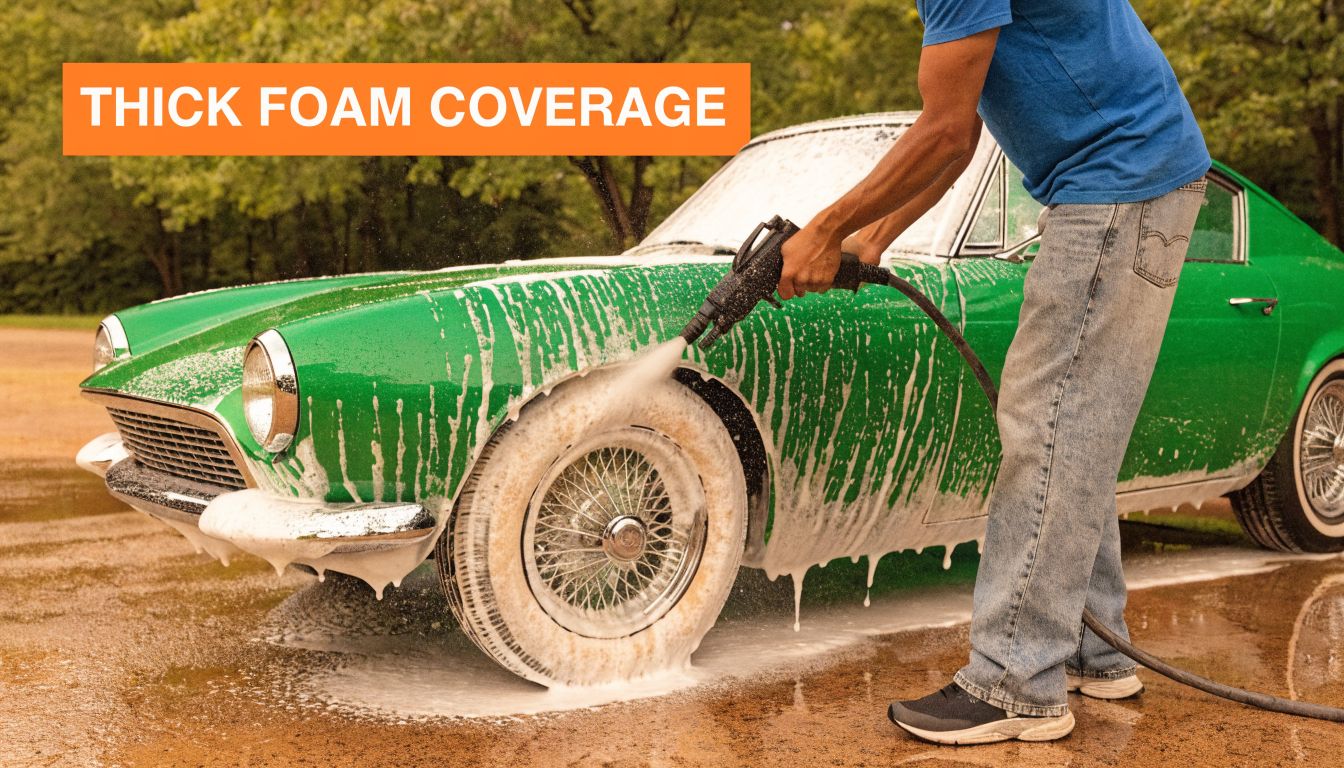
A standard spray nozzle gets the car wet. A foam gun does more than that. It lays down soap in a way that stays on the surface long enough to help.
That's the difference that's immediately apparent. With a nozzle, the water runs off fast. With a foam gun, the shampoo clings, softens grime, and gives you a lubricated surface before the mitt ever touches the paint.
Foam gives soap time to work
The roots of that spray behavior go back a long way. Thomas DeVilbiss's 1907 handheld air-powered spray gun built on his father's earlier atomizer concept, and that same basic air-and-liquid principle still sits underneath modern spray tools, including foam guns, according to this spray gun history from BodyShop Business.
For washing, the benefit is simple. Foam hangs on the panel better than a quick sheet of soapy water from a hose nozzle. That extra contact helps loosen dirt and road film before your wash mitt starts moving debris around.
Why it's safer for the paint
Most wash damage doesn't come from the soap. It comes from rubbing dirt across the surface.
A foam gun helps in two ways:
- Pre-soak coverage reduces the amount of dry or stubborn grime left on the panel before contact washing.
- Lubrication during the wash gives your mitt a slicker surface to glide across.
- More even application means you're less likely to miss lower panels, mirrors, badges, and grille areas where grime tends to stick.
Thick foam isn't just for looks. It gives the shampoo more time on the surface and makes the contact wash less harsh.
A nozzle still has a place
A regular nozzle is still useful for the initial rinse and final rinse. It just isn't the best tool for applying wash soap.
That's the practical way to think about it. Keep the nozzle for blasting loose dirt off tires, wheel wells, and underbody edges. Use the foam gun when you want to cover paint, glass, trim, and body lines with a consistent layer of shampoo before hand washing.
Once you try both side by side, the upgrade makes sense quickly. A nozzle is a water tool. A foam gun is a wash tool.
Key Features of a Quality Detail Foam Gun
A good foam gun feels sorted out within the first few minutes. The hose connection stays tight, the bottle threads on without fighting you, and the trigger works the same on panel one as it does on panel twenty. That matters more than flashy claims on the box.
This is also where the paint-gun confusion trips people up. For home washing, you do not need a body-shop detail spray gun with fine atomization controls. You need a foam gun that connects to a garden hose, lays down consistent shampoo, and stays comfortable in your hand for a full wash.
What to look for first
Start with the hardware. Durable fittings hold up better than cheap plastic parts at the stress points, especially where the hose connects and where the canister locks into the gun body. If those areas feel loose or flimsy out of the box, they usually do not improve with use.
Then check the controls and bottle design:
- Foam adjustment control lets you dial the output based on the job, whether you want a lighter pre-soak or heavier foam for dirtier lower panels.
- Comfortable trigger shape makes a real difference on larger vehicles and longer washes.
- Quick disconnect compatibility speeds up setup and makes it easier to swap back to a rinse nozzle.
- Clear bottle or canister helps you track soap mix before you run out halfway around the vehicle.
- Consistent spray pattern gives you even coverage instead of sputtering patches that waste soap and time.
Ease of use matters more on bigger jobs
Ergonomics usually get ignored until you wash something larger than a coupe. On a truck, van, camper, or siding job, a foam gun that is awkward to hold gets old fast. A lighter unit with a predictable trigger pull is easier to control overhead, around mirrors, and along lower rocker panels where you spend more time working grime loose.
I also pay attention to balance. If a full bottle makes the gun feel nose-heavy or sloppy in the hand, that shows up during the wash.
Buy the one that stays comfortable and predictable when the bottle is full and your hands are wet.
The soap still has to match the tool
Foam gun performance depends on the shampoo as much as the sprayer. Some soaps rinse clean and foam well through a hose-end setup. Others are better suited to a bucket wash and never produce the coverage people expect. If you are comparing formulas, this guide to the best foam soap for cars is a useful place to start.
One practical example in this category is the SwiftJet Car Wash Foam Gun, which connects to a garden hose and applies soap foam for washing. That is the type of tool most home users should compare, not professional paint detail guns built for spraying coatings or color.
How to Get Professional Results at Home
A foam gun is easy to use, but getting a clean, even result comes down to sequence. The biggest mistake people make is treating foam like the whole wash instead of the setup for a safer contact wash.
Start with rinse and mix
Rinse the vehicle first. Knock off loose dirt, grit, and anything chunky enough to come away before soap goes on. Pay extra attention to rocker panels, wheel arches, rear bumpers, and the lower tailgate area.
Then mix your shampoo in the foam gun canister according to the soap maker's directions. Don't guess wildly. Too little soap gives weak performance. Too much wastes product and can leave you rinsing longer than needed.
A dedicated walkthrough on how to use a foam gun is helpful if you want a visual reference for setup and spraying.
Apply foam with control
A consistent spray distance matters. In paint work, detail guns are sensitive to distance, with 2 to 4 inches called out for optimal spray in the Hydrodip guidance. While a foam gun is a different tool, the same idea applies. A steady working distance helps create an even blanket of foam across the panel, as described in Hydrodip's detail gun guidance.
Work from the top down. Roof first, then glass, hood, upper doors, lower doors, and the dirtiest lower sections last. That way, the foam runs downward over dirtier areas instead of dragging lower-panel grime back onto cleaner sections.
Here's the rhythm that works well:
- Initial rinse to remove loose debris.
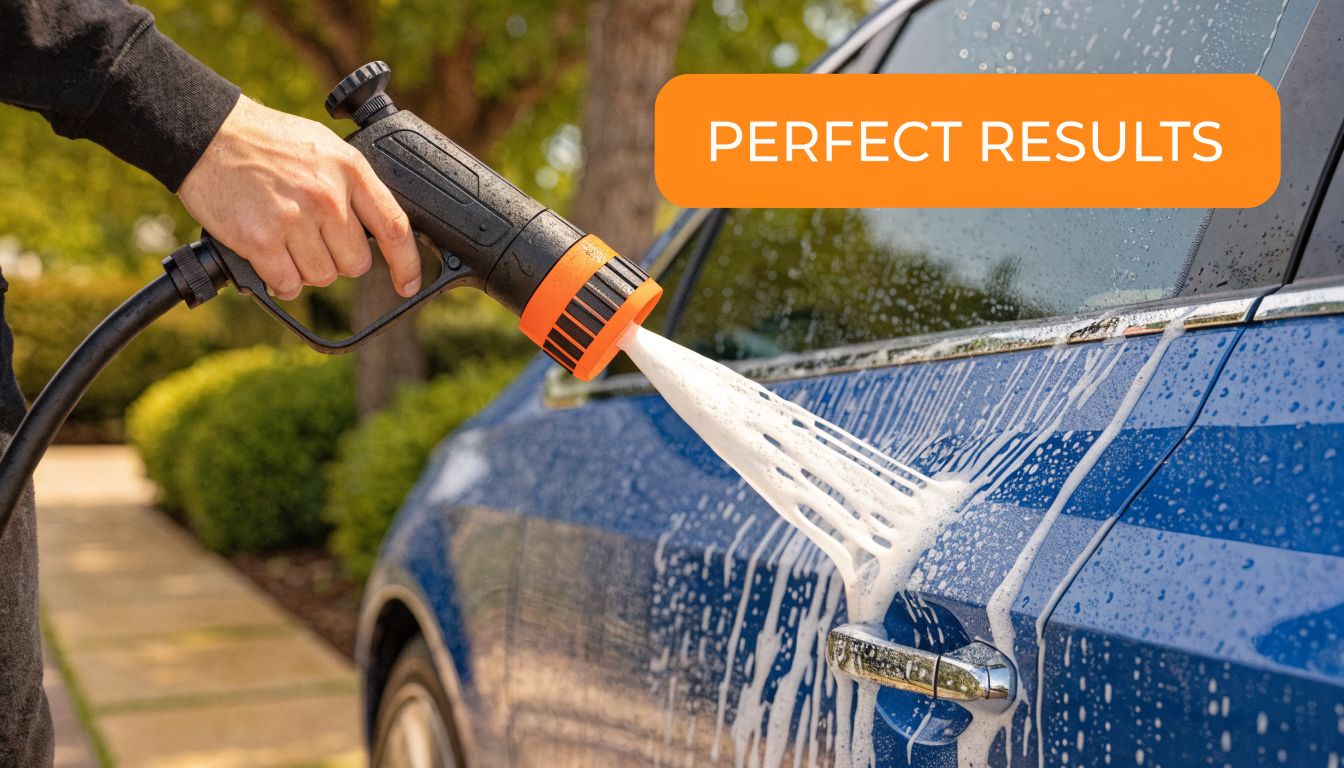
- Foam the whole vehicle in a steady top-down pass.
- Let the soap dwell briefly so it can loosen grime.
- Wash with a mitt using gentle, straight passes.
- Rinse thoroughly before the soap dries on the surface.
Keep the nozzle distance steady as you move. Uneven distance creates thin spots and patchy coverage.
After the foam has had a little time to sit, wash one section at a time with a clean mitt. Rinse the mitt often. Foam helps, but it doesn't replace good wash habits.
A quick visual demo helps here:
Small details that improve the finish
Wash in the shade if you can. Soap that dries too fast becomes harder to rinse cleanly. If the surface is hot, work in smaller sections.
Leave wheels and tires for separate tools if possible. The grime there is harsher, and you don't want to bring that contamination onto paint with the same mitt.
Finish with a full rinse and dry the vehicle with a clean drying towel or other safe drying method. The foam gun gets you to a cleaner contact wash. The finish still depends on what you do next.
More Than a Car Wash Practical Uses and Maintenance
A foam gun earns its keep once you stop treating it like a car-only accessory. For home washing, this is the practical side of the "detail spray gun" conversation. The paint-shop version belongs in refinishing work. The hose-end foam gun is the one that makes sense for cleaning vehicles and outdoor surfaces without turning setup into a project.
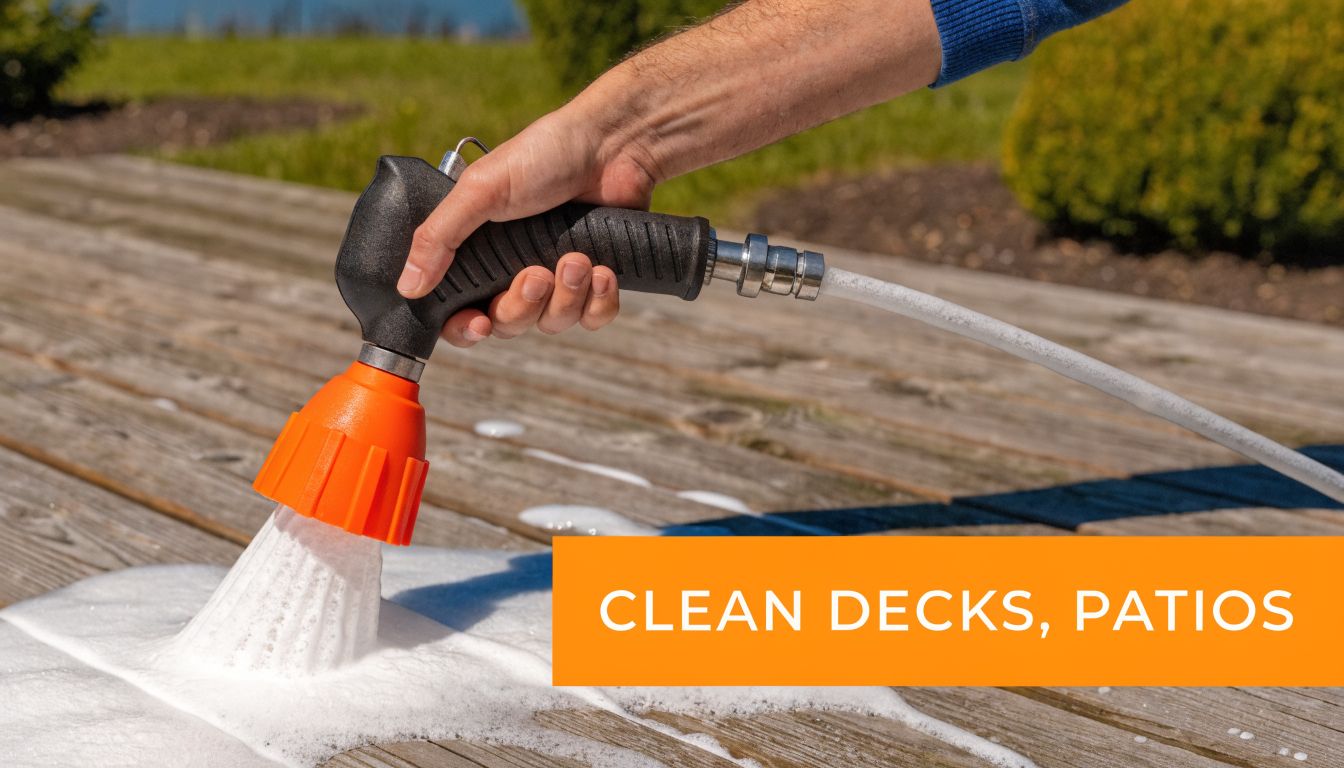
It works well on trucks, trailers, motorcycles, boats, patio furniture, and small sections of siding. Broad, awkward surfaces benefit the most because even soap coverage is hard to get with a standard nozzle.
Where it pulls its weight outside the driveway
An RV is a good example. Washing one by hand takes time, and a heavier trigger sprayer gets old fast when you are working around tall walls, ladders, awnings, and roof edges. A foam gun keeps the process simple and gives you better reach and more consistent soap laydown across large panels.
Soap choice matters too. A foam gun helps apply product evenly, but it does not turn one shampoo into the right cleaner for every mess. If you are dealing with oxidation, black streaks, roof buildup, or waste-system residue, these specialized RV roof and tank cleaners are worth checking so you can use the right chemistry on the right surface.
Other solid uses include deck furniture, kids' outdoor equipment, and spot-cleaning dirty siding near entryways. Foam clings better than plain rinse water, which gives cleaner more time to work on textured plastic, vinyl, and painted metal.
The maintenance that keeps it working
Most foam gun problems come from dried soap, neglected threads, or worn seals. The fix is simple. Clean it right after use.
Run clean water through the gun and bottle until it sprays clear. Empty leftover solution instead of storing it in the canister, especially in hot weather. Check the pickup tube, nozzle opening, and bottle threads for soap residue before putting everything away.
Connections deserve a quick look too. Cross-threaded fittings and cheap adapters cause a lot of frustration, especially if you move the gun between hoses or accessories. If you want a clear breakdown of hose-side hardware, this guide to 3/4 quick connect fittings for a standard garden hose setup helps sort out what fits.
Store the bottle and gun dry, out of direct heat, and do not leave the trigger under pressure. That small habit goes a long way. A foam gun that rinses clean easily and feels comfortable in the hand usually lasts longer because you are more likely to use it, clean it, and put it away properly.
The Right Detail Gun for a Flawless Finish
For washing, the right detail spray gun is not a paint gun. It's a hose-end foam gun built to apply soap evenly, quickly, and with less hassle.
That's the main takeaway. The terminology is messy, but the decision doesn't need to be. Paint detail guns belong in refinishing work. Foam guns belong in routine vehicle washing.
A good foam gun gives you three practical advantages. It lays down soap more evenly than a standard nozzle, gives the shampoo better contact with the surface, and makes the contact wash gentler because the paint stays better lubricated. It also keeps the setup simple. Hose, soap, rinse, done.
Connection hardware matters too. If you want to understand the fittings side before buying, SwiftJet's explanation of 3/4 quick connect fittings helps make sense of what will work with a standard hose setup.
When people ask me what kind of detail spray gun they need for washing a car at home, I point them toward the simpler category every time. Skip the body-shop tool unless you're spraying coatings. For washing, use the tool built for foam.
If you want a hose-end foam gun that connects to a standard garden hose and makes home washing simpler, take a look at SwiftJet. It's built for the job commonly associated with a detail spray gun: covering a vehicle in wash foam quickly, then moving into a safer hand wash with less fuss.
