

If you're chasing that elusive, perfectly spotless finish on your car, let me tell you a secret: it’s all in the final rinse. Using deionized water for car washing is hands-down the best way to get that perfect, spot-free result every single time. This ultra-pure water is stripped of all the minerals that cause those annoying water spots, meaning when it evaporates, it leaves absolutely nothing behind. Your car can literally air dry in the sun without a single blemish, saving you from that frantic towel-drying rush.
The Science Behind a Spotless Shine
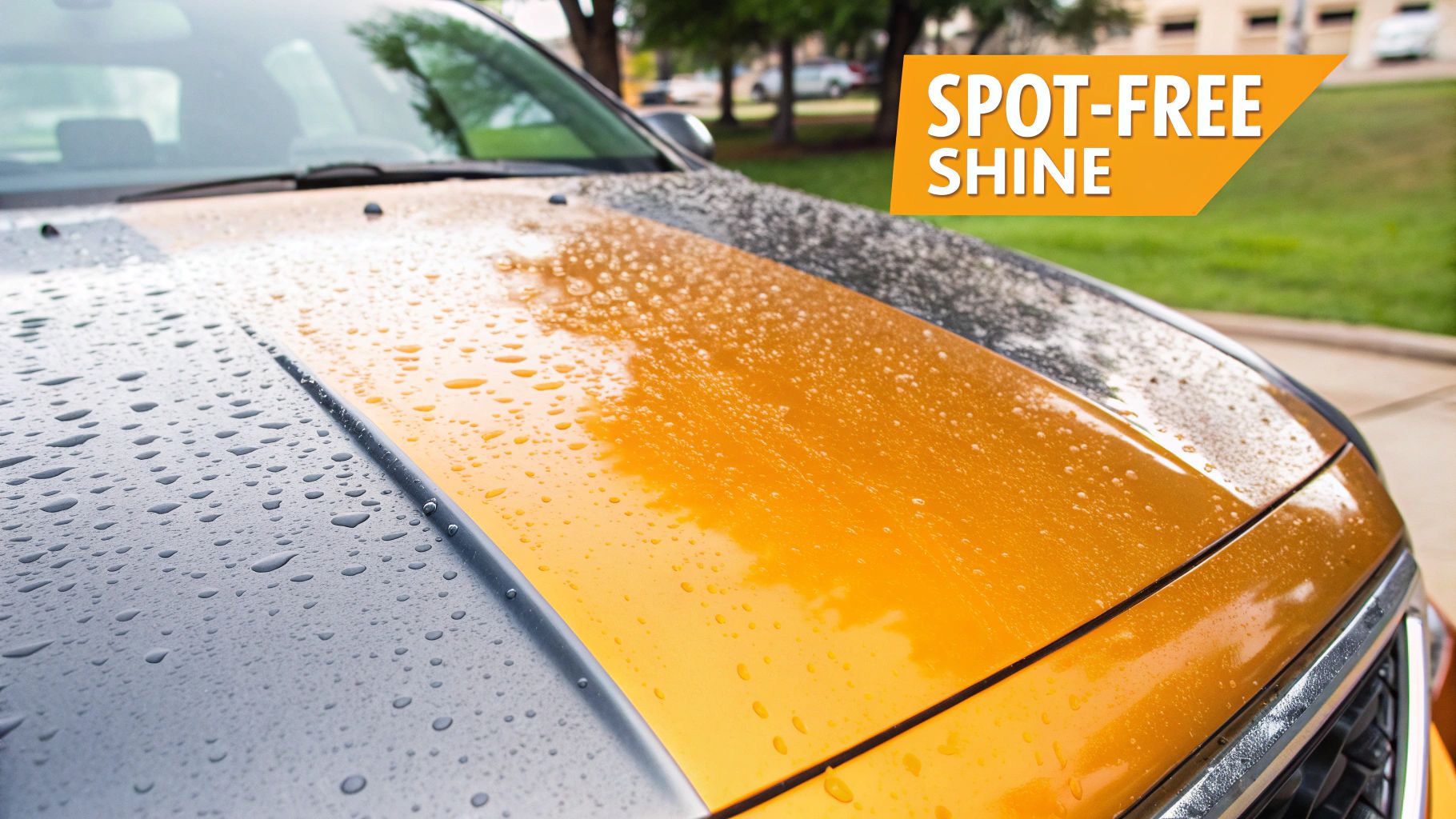
Think of your regular tap water as a stream full of tiny, dissolved rocks—mostly minerals like calcium and magnesium. When you rinse your car, the water eventually evaporates, but all those little mineral deposits get left behind on your paint. Those are the white spots that drive you crazy.
Deionized (DI) water is completely different. It’s pure H₂O that has been run through a special filter to pull out all those mineral ions. It’s essentially empty water. This purity is its superpower. When you use DI water for that final rinse, the water evaporates cleanly, leaving a pristine surface with zero residue.
Why Minerals Matter for More Than Just Spots
Those dissolved solids in hard tap water do more than just leave spots; they actually sabotage your car wash soap. The minerals react with the soap's cleaning agents (surfactants) and get in the way, preventing them from creating the thick, rich suds you need for a good, safe wash.
Ever wonder why your foam cannon produces watery, weak foam that just slides right off the car? Hard water is often the culprit. If you've struggled with this, we've got a whole guide on how to master a hard water car wash.
By using deionized water from the start, you let your soap work exactly as the manufacturer intended. The result? Much better lubrication during the wash, which helps lift dirt away from the paint safely and dramatically cuts down on the risk of swirl marks.
Key Takeaway: Deionized water isn't just about preventing spots. It's about unlocking the full potential of your car wash soap for thicker foam, better cleaning power, and a safer wash for your paint.
A Booming Trend for Detailers
This push for a perfect, effortless finish isn't a niche obsession anymore. The global Deionized Water System market for automotive detailing shot up to USD 1.14 billion in 2024, which shows just how much interest there is from both pro detailers and weekend warriors.
For the 66% of Americans who wash their car every month, switching to a DI system can slash the final rinse time by up to 30%. It’s a huge gain in efficiency that gives you back a little bit of your weekend.
How Deionized Water Unlocks Peak Foam Cannon Performance
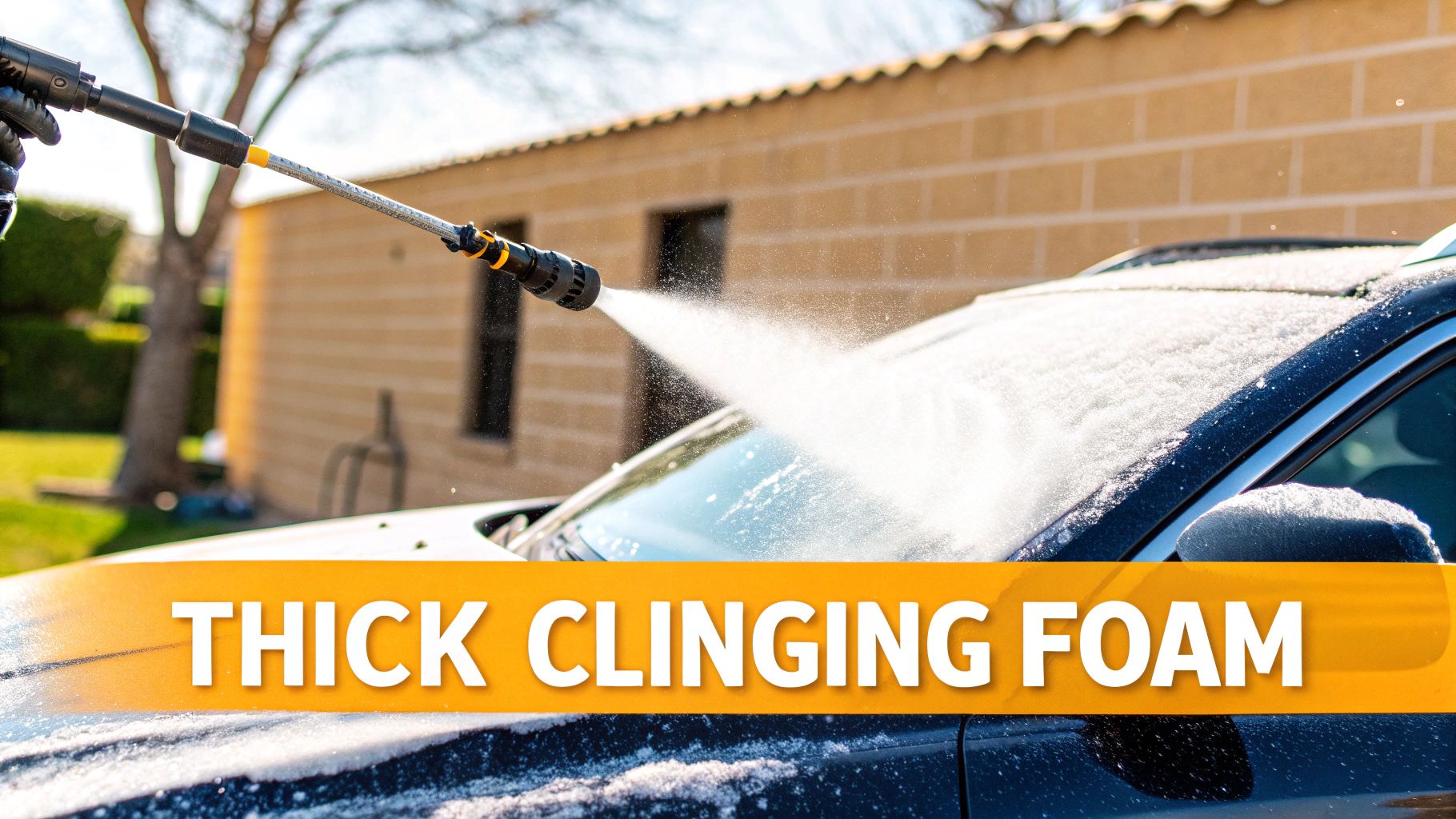
A foam cannon is one of the most satisfying tools in any detailer’s kit, but its performance is only as good as the water you feed it. If you're using regular hard tap water, you're essentially asking your car soap to work with one hand tied behind its back. Why? Because the minerals in that water—mostly calcium and magnesium—are chemically getting in the way of the soap's surfactants.
This interference is the number one culprit behind weak, watery foam that just slides off your car in seconds. Instead of making a rich, stable lather, the soap molecules are too busy fighting off minerals. The result is a disappointing performance that offers very little lubrication or real cleaning power. This is where switching to deionized water makes a night-and-day difference.
Creating the Perfect Lather
When you mix your favorite car wash soap with deionized (DI) water, you're taking all that mineral interference out of the equation. Suddenly, the soap’s surfactants are free to do what they were designed for: create an insane amount of thick, clinging suds. Your foam cannon can finally live up to its full potential, laying down that luxurious blanket of foam you see in professional videos.
This isn't just for show, either. That superior foam has two critical jobs:
- Encapsulation: The thick suds grab onto dirt and grime, lifting the particles away from the paint and holding them safely in suspension.
- Lubrication: This dense lather creates an ultra-slick barrier between your wash mitt and the paint, which is your best defense against inflicting swirl marks and fine scratches.
For the best possible results, especially when using high-quality foam solutions like Citrus Foam2, deionized water is a must. It allows the cleaning agents to perform at their absolute peak, giving you the safest and most effective clean. Our guide on using a foam cannon for your pressure washer has even more tips for dialing in your setup.
The Ultimate Spot-Free Final Rinse
Better foam is a huge plus, but the most famous benefit of deionized water comes at the very end of the wash. Forget that frantic rush to grab a towel and dry every panel before the sun bakes ugly water spots onto your paint.
With a final rinse using DI water, you can simply wash your car, rinse it off, and walk away. Because the water is completely pure, it evaporates without leaving a single mineral deposit behind. Your vehicle can air dry perfectly, even in direct sunlight, for a guaranteed spotless finish.
This touch-free drying method saves a ton of time and effort. More importantly, it’s the safest way to dry your car, period. By eliminating the towel, you remove the risk of towel-induced micro-marring, preserving the pristine finish of your paint. It’s the professional detailer’s secret for getting a flawless result with maximum efficiency.
Sourcing DI Water for Your Car Wash
Alright, so you're sold on the magic of a spot-free rinse. The next logical question is, where do you actually get this stuff? When it comes to sourcing deionized water for car washing, you really have two main paths to go down. Each one fits different needs, budgets, and how often you find yourself pulling out the buckets and mitts.
Your first option is the simplest: just buy pre-made DI water off the shelf. You'll find it in jugs at auto parts stores, big-box home improvement centers, or a quick search online. This is the "no-muss, no-fuss" approach. It’s perfect if you just want to give the DI water method a test drive without any real commitment.
The second path is for those who are a bit more serious—installing your own deionization system at home. These units hook right up to your garden hose or pressure washer, stripping the minerals from your tap water as you use it. It's a bigger step up front, for sure, but it means you have an endless supply of pure water ready to go whenever you are.
Option 1: Buying Pre-Made DI Water
For the weekend warrior who washes their car maybe once or twice a month, grabbing a few jugs of DI water is a fantastic place to start. It’s the easiest, most direct way to see what a truly spot-free rinse looks like on your own paint.
Here’s the breakdown of just buying it:
- Low Initial Cost: You’re not shelling out for any equipment. Just buy a gallon or two when you need it.
- Super Convenient: It's a simple grab-and-go solution before you start your wash.
- Storage Can Be a Pain: Those heavy jugs take up a surprising amount of shelf space in the garage.
- Gets Pricey Over Time: The per-gallon cost is way higher, which adds up fast if you wash regularly.
This route makes a ton of sense if you're only using the DI water for the final rinse on one car. But if you start noticing you're making a weekly trip for more jugs, it’s probably time to look at the more permanent solution.
Option 2: Investing in a Home DI System
For the dedicated detailer, the multi-car family, or anyone who just can't stand water spots, a home deionization system is a game-changer. These systems are basically a tank (or two) filled with a special resin that grabs all the nasty minerals out of your water as it passes through.
This is where the economics of car washing really start to shift. In fact, the market for these systems is expected to explode from USD 7.9 billion in 2025 to a whopping USD 16.4 billion by 2035. For SwiftJet foam cannon users, hooking up to a DI system means your foam is purer and clings better without minerals getting in the way. Pros who switch have even reported using 40% fewer drying towels. You can dive deeper into the growth of deionized water systems if you're curious.
Expert Insight: A home DI system is an investment that absolutely pays for itself. The upfront price might make you pause, but your cost per gallon plummets, making it the cheapest way to get pure water in the long run if you're serious about your car's finish.
The real beauty of a home system is having pure water on tap. You get as much spot-free water as you need, exactly when you need it. The only recurring cost is swapping out the resin cartridges when they’re used up, which is a fraction of the cost of constantly buying jugs. For consistent, professional-level results, it's really the only way to go.
DI Water Sourcing Options Cost and Convenience Breakdown
Choosing between buying DI water and installing a system often comes down to balancing cost, convenience, and how often you'll be using it. This table breaks down the key differences to help you decide which path is right for your detailing routine.
| Method | Upfront Cost | Cost Per Gallon (Est.) | Best For |
|---|---|---|---|
| Buying Pre-Made | $0 (just the cost of water) | $5 - $10 | Casual users, first-timers, or those washing 1-2 times per month. |
| Home DI System | $200 - $600+ | $0.25 - $0.50 | Serious hobbyists, professional detailers, and anyone washing weekly. |
Ultimately, the numbers speak for themselves. If you're going through more than a few gallons a month, the initial investment in a home system quickly pays off, saving you both money and trips to the store in the long run.
Your Guide to a Perfect DI Water Car Wash
Alright, you've got your deionized water sorted. Now for the fun part: putting it to work. Using DI water the right way is more than just a fancy final rinse. It's a whole process that elevates every part of your wash, from the moment you mix your soap to that final, incredible shine. Think of this as your playbook for getting that professional, touch-free dry right on your own driveway.
The magic really starts in your foam cannon. For the thickest, most luxurious foam you've ever seen, mix your favorite car soap directly with DI water in the cannon's reservoir. With no minerals interfering, the soap's surfactants can work exactly as intended. The result is a dense, clingy lather that lubricates the paint and safely pulls dirt away from the surface.
The Step-by-Step DI Wash Process
A proper DI water wash is a structured affair. While you can definitely use regular tap water for the initial heavy rinsing to save your precious DI supply, the real trick is knowing when to use the pure stuff to guarantee that flawless finish. This workflow is all about preventing spots and keeping your paint safe.
Here's a quick look at how the whole process comes together, from sourcing the water to the wash itself.
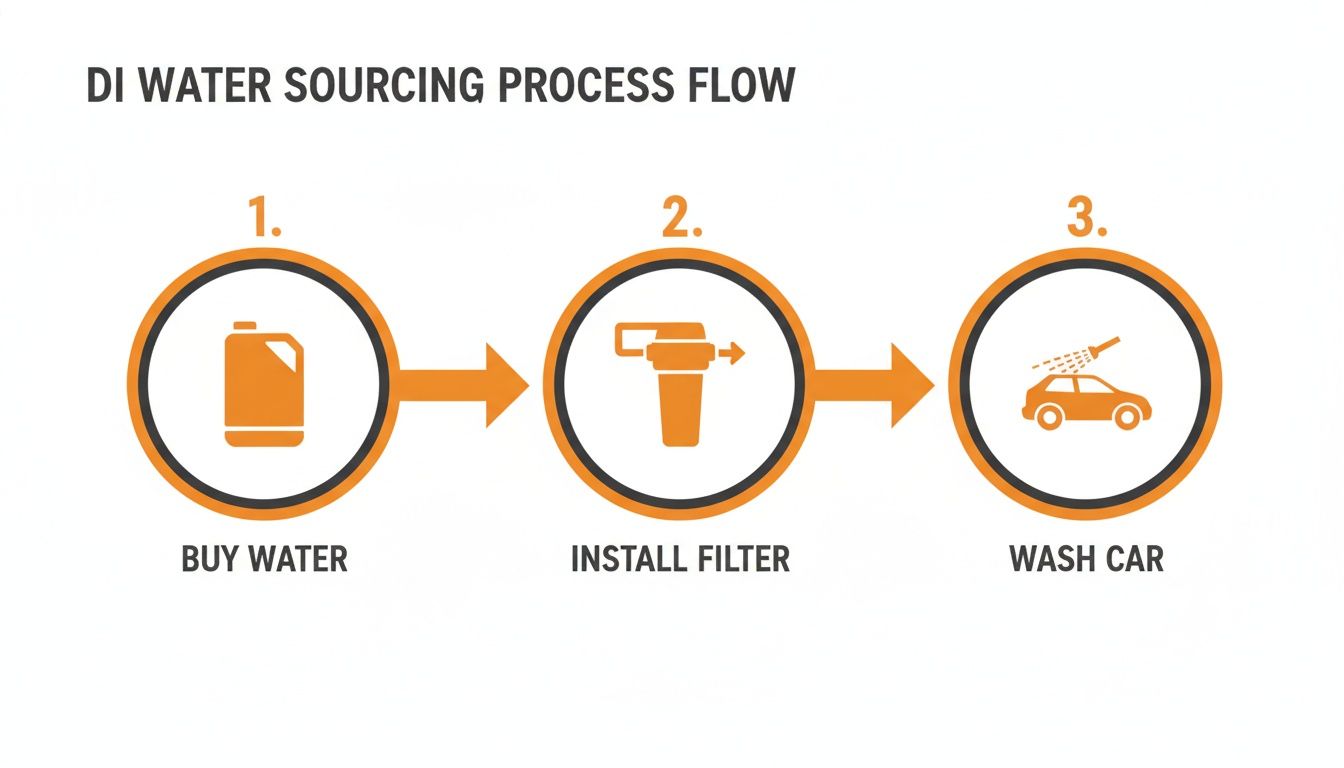
This just simplifies the journey, showing that a great result comes from a simple, repeatable plan.
- Pre-Rinse (Optional: Tap Water): First, hit the car with your hose using regular tap water. The goal here is just to knock off the loose dirt, mud, and grime. This simple step saves your valuable DI water for the stages where it matters most.
- Foam Application (DI Water): Now, cover the vehicle in that thick, rich foam you mixed with DI water. Let it sit for a few minutes; you'll see it start to break down and lift the dirt, which dramatically cuts down the risk of scratching when you start the contact wash.
- Contact Wash (Two-Bucket Method): Grab a clean wash mitt and gently wash the car, working from the top down. For the absolute best results, use DI water in both your soap and rinse buckets. This keeps the whole process pure and the lubrication at its peak.
- The Critical Final Rinse (DI Water Only): This is the moment of truth. Rinse the entire vehicle thoroughly from top to bottom using 100% deionized water. Make sure every last bit of soap residue is gone.
Once that final rinse is done, you can literally just walk away. No towels, no leaf blowers. The car will air dry perfectly, even in direct sunlight, without a single water spot. It’s the ultimate way to protect your paint from towel-induced swirls. For a more detailed guide on the entire wash routine, check out our complete car wash checklist for a perfect finish.
Pro Tips for Handling DI Water
To really get the most out of your deionized water, a few good habits go a long way. These simple tricks will protect the water's purity and ensure you get that spot-free result every single time.
Always store any leftover DI water in a clean, sealed container. Because DI water is so pure, it's like a magnet for impurities. It can easily absorb minerals and contaminants from the air or a dirty jug, which will raise its TDS reading and make it less effective.
Finally, always keep an eye on your DI system's resin levels or how many jugs you have left. The absolute worst-case scenario is running out of pure water mid-rinse. You'd be forced to finish with tap water, instantly re-introducing all the minerals you worked so hard to eliminate. Have a backup plan or monitor your system closely—trust me on this one.
Why the Pros and Global Markets Swear By DI Water
If you think deionized water is just some niche trick for weekend warriors, think again. For top-tier professional detailers, it’s not a "nice-to-have"—it's a cornerstone of their entire business. When your reputation is on the line with every single client, leaving a car covered in water spots simply isn't an option.
This is exactly why DI water has become the gold standard for the final rinse. Pros know that time is money, and completely skipping the tedious (and risky) towel-drying stage is a massive efficiency boost. More importantly, it delivers a flawless, predictable result that keeps discerning clients happy and coming back. When you use DI water, you’re not just trying a new product; you're adopting the same secret weapon the experts depend on.
The Global Shift to Purer Rinsing
This isn’t just happening in a few high-end shops, either. It’s a full-blown global trend. In places with notoriously hard water or strict environmental regulations, purified water is practically a requirement. Europe, for example, has been leading this charge for years, driven by a need to reduce chemical runoff and deliver a higher quality wash.
The numbers don't lie. Europe currently makes up 30% of the entire global deionized water market, a market valued at USD 0.12 billion in 2023. A huge chunk of that demand comes directly from the automotive and detailing world, where deionized water for car washing is seen as essential. This shift goes hand-in-hand with the explosive growth of the car wash industry, which is expected to jump from USD 34.62 billion in 2024 to a staggering 59.49 billion by 2033. You can dig deeper into the numbers by checking out the global DI water market landscape.
What This Means for You: When you use DI water at home, you’re tapping into a method that’s been battle-tested and proven by the best in the business. It’s a method validated by its widespread success in the world’s most demanding markets. You're simply aiming for a higher standard of clean.
Bringing That Professional Standard to Your Driveway
At the end of the day, the logic is pretty straightforward. If the world’s best detailers—and entire continents—are all-in on deionized water to get better results, that’s a pretty powerful endorsement. It shows that a spot-free rinse isn't some crazy luxury; it's a fundamental part of doing the job right.
By making DI water a part of your wash routine, you’re lifting your game from a weekend chore to a professional-grade process. You stop just cleaning your car and start preserving its finish with the same precision and care as the experts.
Got Questions About Using DI Water? We’ve Got Answers.
Jumping into the world of deionized water for car washing can feel like a big step. It’s normal to have a few questions before you’re ready to go all-in, especially if you've spent years battling water spots the old-fashioned way.
Let’s clear the air and tackle some of the most common questions we hear from detailing pros and weekend warriors. My goal here is to give you straight, simple answers so you can get that perfect, spot-free finish you're after.
Can I Use Deionized Water for the Entire Car Wash?
You could, but it's not the smartest or most economical way to do it. The real magic of DI water happens during the final rinse—that’s the moment that makes or breaks a spot-free finish.
For the best results without burning through your expensive pure water, think like a pro. Here’s a workflow that balances performance and cost:
- Pre-Rinse: Stick with regular tap water. You just need to knock off the heavy, loose grime.
- Foam & Wash: It's a great idea to mix your soap with DI water for better foam, but feel free to use tap water for your main rinse bucket.
- Final Rinse: Now's the time to switch over. Use DI water exclusively for the final, sheeting rinse that covers every panel.
This method saves your DI water for when it truly counts, making your filters or purchased jugs last way longer.
Is DI Water the Same as Distilled Water?
This is a classic question, and it's easy to see why people get them confused. While they're both highly purified, they get there through completely different processes.
Distilled water is made by boiling it, capturing the steam, and condensing it back into liquid. Think of it like a big science experiment—it leaves all the heavy minerals behind. Deionized water, on the other hand, is made by running water through special ion-exchange resins that act like super-magnets, pulling mineral salts right out of the water.
When it comes to washing your car, DI water is the clear winner. The deionization process is incredibly efficient at stripping out virtually everything, often getting you down to a perfect 0 PPM (parts per million) on a TDS meter. That level of purity is what makes it the gold standard for a flawless, spot-free shine.
Will DI Water Damage My Car's Wax or Ceramic Coating?
Nope. Not a chance. This is probably the biggest myth out there, but it's completely baseless. In reality, DI water is one of the best things for your car's protection.
Think about it: deionized water is just pure H₂O. There are no abrasive minerals or weird chemicals left in it. It’s incredibly gentle. The real enemy is hard tap water, which leaves behind that chalky mineral film that can dull your shine and even weaken the bond of your wax, sealant, or ceramic coating over time.
The Bottom Line: DI water creates a perfectly clean, neutral surface. It doesn't just protect your wax or coating—it actually helps it perform better and last longer by ensuring no mineral gunk is left behind to mess with it.
How Do I Know When to Replace My DI System's Resin?
You don't want to find out your resin is spent by discovering new water spots all over your freshly washed car. The best way to stay ahead of the game is with a TDS (Total Dissolved Solids) meter. It’s a cheap, must-have tool for any DI water setup.
Every so often, just test a sample of the water coming out of your DI tank. When the resin is fresh, you'll see a reading close to 0 PPM. As the resin does its job and fills up with minerals from your tap water, that number will start to creep up.
Once your TDS meter starts showing a reading above 10-20 PPM, you're entering the danger zone for water spots. That's your signal. It's time to swap in a new resin cartridge to get back to those perfect, professional results.
Ready to stop chasing water spots and let your car air dry to a perfect shine? The SwiftJet Car Wash Foam Gun is the perfect partner for your DI water system, delivering thick, rich foam for a safer wash. Click here to get your SwiftJet today!
