

You pull into the site after a long drive, set the jacks, and plug into shore power. The breaker trips before the air conditioner even starts. Nobody checked the electrical system at home, so a tired connection or the wrong adapter shows up when the site is dark and the cooler is still in the truck.
A camping in a RV checklist that only names bins and groceries will not catch that. The rig is a set of systems, and each one fails on its own schedule. Water, power, propane, safety gear, the exterior, the chassis, campsite setup, and paperwork all need a pass before the wheels turn. A packing list gets longer every season. A system check stays short, and it finds the leak, the soft tire, and the dead detector while you are still in the driveway.
I run these checks before I load food. In 2024, approximately 81.1 million Americans went camping, including 5.8 million people who camped for the first time, and 53.4% said their preferred camping style involved a vehicle such as an RV, trailer, or camper van, according to the KOA camping and outdoor hospitality report. Walk the eight systems below on every departure. Once you know where each valve and gauge lives, the pass takes about half an hour.
1. Water Systems and Tanks
Fresh water, the 12-volt pump, the water heater, and the gray and black tanks are one system. A dry pump run burns the motor and flattens the house battery. A black tank that was never rinsed smells like last July by mile 40.
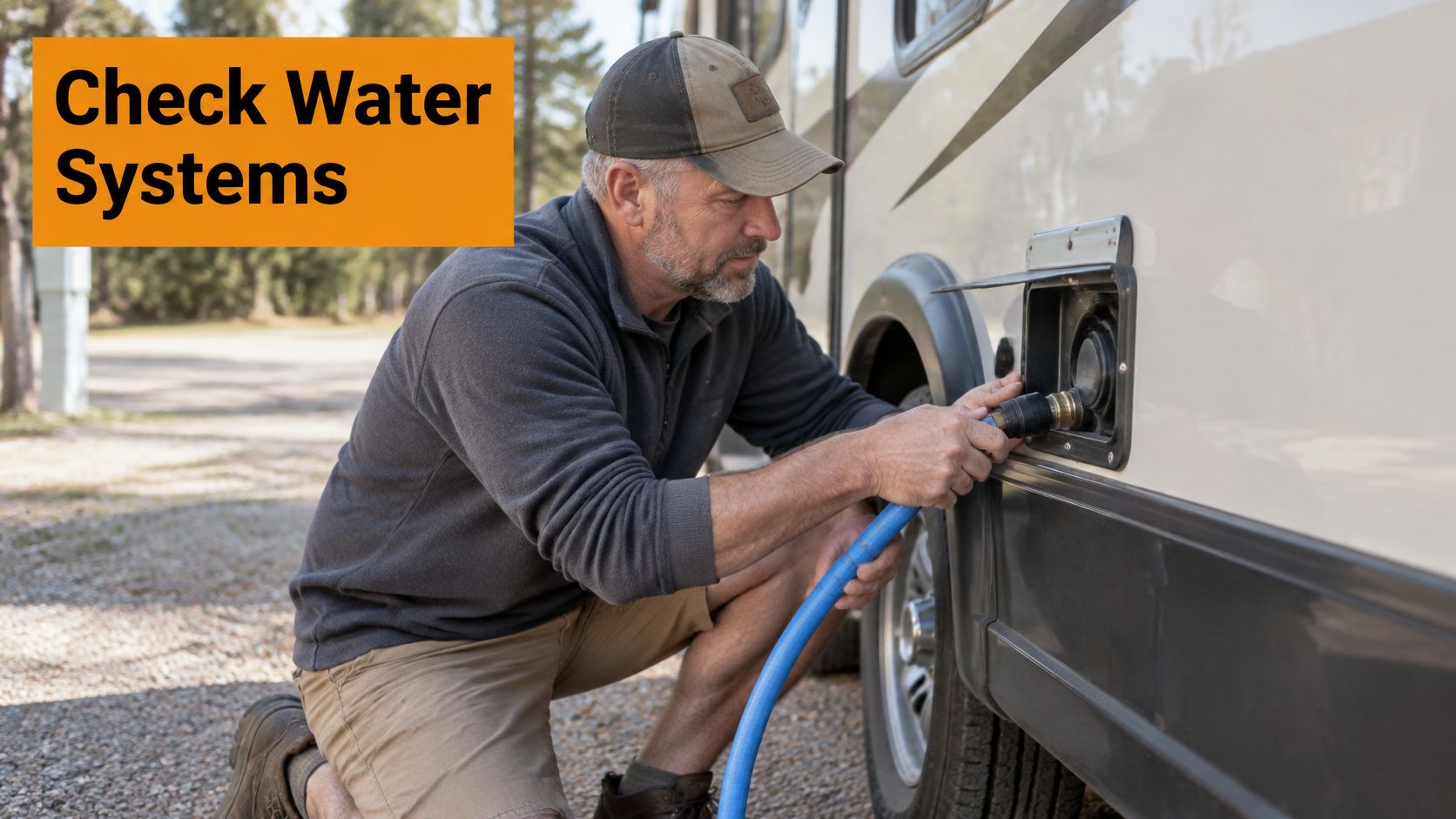
The CDC safe RV water guidance says travelers should confirm that campground water is safe to drink, fill tanks only from safe treated sources when dry camping, and treat private well water as something that should be tested for germs at least annually. Most RV manufacturers recommend draining, disinfecting, and flushing the system at least yearly, or after several months of disuse. A cartridge that improves taste is not a germ filter. If you cannot verify the source, I drink bottled or separately treated water and keep tank water for washing.
Say you rinse the black tank after every dump. Residue stays soft and the sensors keep reading. Skip that for a season of weekends and the gauge lies.
- Use a potable hose: A garden hose can leach into the tank. Bag the drinking hose away from sewer gear.
- Regulate spigot pressure: A regulator saves hoses when park pressure spikes.
- Protect the black tank: Septic-safe paper and tank treatment beat a seal replacement.
Sanitize with an RV-safe solution before the first trip and after storage. In a freeze, drain the lines and winterize the plumbing with RV antifreeze in the traps and the pump. Once a year, check the water heater anode and open the drain. When you shop cartridges, find filters for your RV water and match the rating to the source, not the label color.
2. Power and Electrical Systems
Shore power, the house batteries, the converter, and any generator or solar array have to agree before you flip on the air conditioner. A pretty pedestal is not a promise of stable voltage.
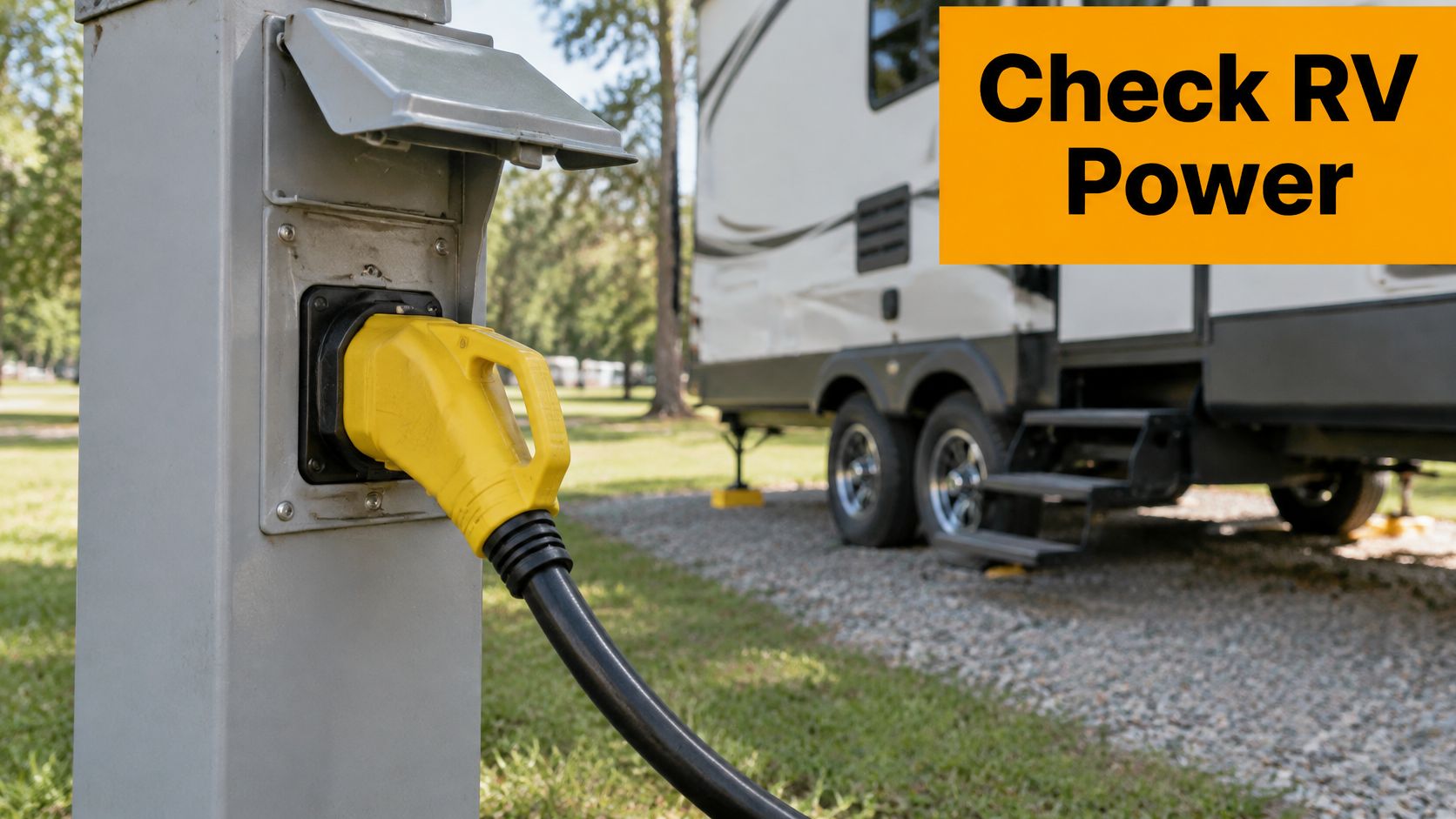
Electric hookups were the most important campsite amenity for 52.3% of surveyed campers, according to a CarPro summary of camping survey results. That is why the cord, the adapter, and a surge protector or electrical management system belong in the door, not in a bin at home. Confirm the site's amp rating when you book, then match it to the RV. Turn the pedestal breaker off, inspect the cord for cuts, plug in, and read voltage before you energize the coach. Start heavy loads one at a time.
A 30-amp hookup will not run the air conditioner and the microwave together without a trip. I leave one of them off. Travelers who added a power management system stopped cooking circuit boards at low-voltage parks. Boondockers on a lithium bank plus solar can sit for days without a generator, but only if the panels, the charge controller, and the battery monitor were tested at home. An off-grid solar setup for your RV is a project, not a last-minute adapter.
Practical rule: Test GFCI outlets and the breaker panel in the driveway. Carry the adapter that matches the pedestal you actually reserved.
On flooded lead-acid batteries, check water level and terminal corrosion monthly. A converter that is not charging will leave you dark on night two even if the batteries looked fine at the curb.
3. Propane and Fuel Systems
Propane feeds the stove, the furnace, the water heater, and on many rigs the refrigerator and the generator. It is routine when the hoses, the regulator, and the leak detector are sound. It is a cabin hazard when they are not.
After every tank swap
Brush soapy water on every connection you just touched. Bubbles mean a leak. Tighten or replace the fitting, then test again. Do not trust a sniff test in the wind. Owners who swapped a cracked hose after that bubble test avoided a slow leak while parked. An automatic changeover regulator is worth it on multi-day stays because the second cylinder takes over instead of the furnace dying at 2 a.m. The trade-off is simple. You still have to weigh or gauge both cylinders, or the "full" spare is empty too.
Turn the tanks off while you drive and whenever the rig sits unused. Keep cylinders secured outside the living space. Read the date stamp on tanks and regulators and replace them when that stamp says they are done, not when they look rusty enough to worry you.
A galley fire extinguisher stays within arm's reach of the stove, not under a dinette bench. If the propane detector chirps, shut the tanks, open windows, and get people out before you hunt for the fitting. Soap solution finds leaks. A lighter does not.
4. Safety and Emergency Equipment
A safety check takes minutes, but it can determine whether everyone can get out quickly. Check alarms, exits, and fire equipment before each departure.
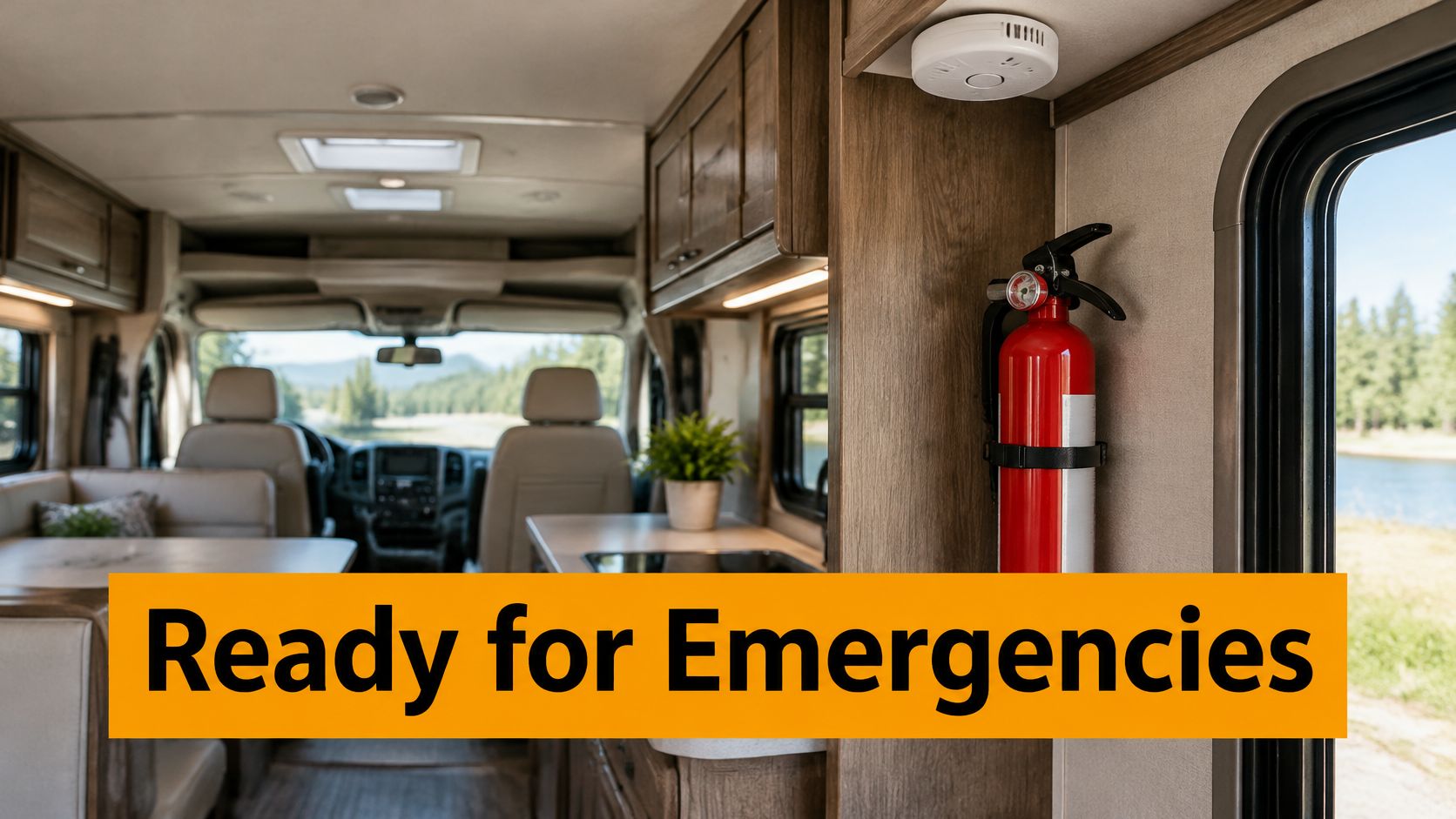
If a carbon monoxide alarm sounds, get everyone outside first. Generator exhaust can collect near the RV, and a closed door or window does not make it safe to investigate from inside. A galley extinguisher should also be reachable without moving stored gear.
- Test smoke and CO alarms monthly: Replace batteries at least twice a year. Place CO alarms near sleeping areas and smoke alarms outside each bedroom.
- Check the extinguisher gauge and date: Replace the unit according to the maker's date, and keep it where you can reach it quickly.
- Keep two exits clear: Decide who uses each door or window. Keep the aisle and exit routes free of bags and other gear.
Never run a generator or grill inside the coach or under an open window. Keep roadside emergency gear accessible, including a first-aid kit, reflective triangles, and a working flashlight. Everyone aboard should know where both exits are and how to use them.
5. Exterior Washing and Maintenance
Road film, bugs, and bird droppings etch paint and hide the crack in the caulk you needed to see. Washing is inspection with soap on it.
Foam first, then contact. A thick pre-soak lifts grit so the mitt is not sandpaper. Owners who foam before they touch fiberglass see fewer swirl marks than people who scrub a dry, dusty sidewall. You do not need a bulky pressure washer at a campground. A hose-end foam gun and a mitt will take road dust off before it bakes on. A foam cannon RV wash is the right idea when the panels are large and the water pressure is ordinary.
What the wash is really for
Rinse top to bottom and work one panel at a time so soap does not dry into streaks. Use one mitt for the roof and upper walls and a second mitt for the lower body, where brake dust and road tar live. Washing in direct sun, or on panels that are hot to the touch, flashes the soap and leaves spots. Wax fiberglass and paint every few months if the rig lives outside. Skip wax on rubber roofs and decals that the maker says not to coat.
While the surface is wet and clean, look at roof seams, vent boots, and skylights. Soft caulk, a lifted strip of sealant, or a stain running from a fixture is a leak you can still stop. I reseal when I see that, not after the ceiling stain shows up indoors. A wash kit that stays in the rig beats a perfect detail you only do at home.
6. Tires, Chassis, and Towing Equipment
Tire trouble is the roadside failure I would rather catch cold, in the driveway, with a gauge.
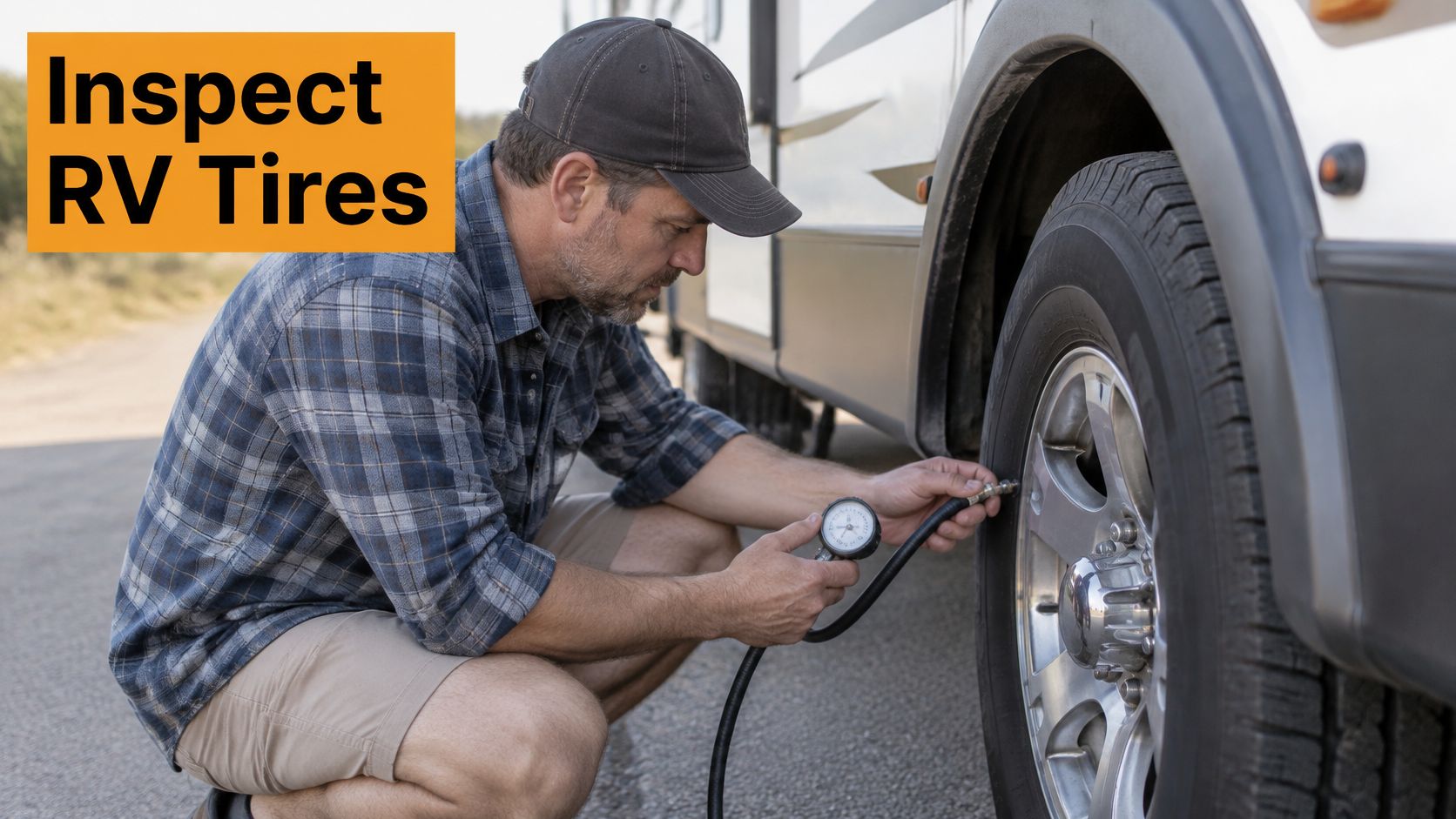
The largest owner group is casual. In the RV News report on RV owner segments, 31% of RV owners are Casual Campers who use the RV a median of 20 days a year, and 70% of them use conventional travel trailers. If that is your pattern, the hitch, the brake controller, the safety chains, and the trailer lights matter more than a fancy compressor you never practice with. Check cold pressure against the placard PSI, not the number molded on the sidewall. Look for cracks, bulges, and uneven wear. Re-torque lug nuts after the first 50 miles, then on a schedule you keep.
A tire-pressure monitor that catches a slow leak on a grade is cheaper than a blowout. Tires that have sat in sun for years can look fine and still separate. I replace on age and condition, not only on remaining tread. Stay inside GVWR and axle ratings, and use a scale when the load is unfamiliar. More routine checks live in these RV maintenance tips.
A plug kit and a portable compressor help after a nail. They do not replace a tire that was already heat-cracked when you left.
7. Campsite Setup and Leveling
A level rig keeps the refrigerator happy, stops doors from swinging, and takes twist out of the frame. An unlevel one makes every cabinet a nuisance.
Level side to side first, then front to back, with a bubble level on the floor or the counter, not by eye from the picnic table. Blocks or ramps under the low tires beat cranking stabilizers until the frame groans. Stabilizers stop bounce. They are not jacks. Set the parking brake and chock the wheels before you unhitch. If your refrigerator needs a slight nose-up attitude to drain, raise the front a little after the side-to-side pass and confirm it on the level.
Say the site is wide and the pedestal is far from the door. Extra hose and a supported sewer run keep the dump hose from sagging into a puddle. Connect sewer before fresh water so a mistake is dirty gear, not a contaminated drinking hose. Use a regulator and the same dedicated fresh hose you filled with at home.
This short setup walk-through shows the order once the rig is in the spot:
When utilities are on and the rig is stable, then make great camp brews in 2026. Coffee before chocks is how slide-outs and sewer caps get forgotten.
8. Documents, Reservations, and Trip Planning
Paperwork is a system. Registration, insurance, a reservation you can open offline, and a route the rig can drive belong in the same folder as the checklist.
A 2025 survey of more than 2,000 respondents, covered by RV Trader, found that 45% planned trips less than two months ahead, that campground availability worried 45%, and that once people were traveling, 51% named RV repairs or breakdowns as a major anxiety. A static gear list does not answer that. I keep a backup park within an hour of the route, a same-day call to confirm the site, and a short list of repair shops and dump stations. Weather and health belong on that page too, including meds and a reason to delay if the forecast turns.
What goes in the folder
- Two copies of the documents: Paper in a waterproof sleeve, plus photos on a phone that still works without signal.
- Park rules before you arrive: Check-in, check-out, quiet hours, pet rules, and rig-length limits.
- A route sized to the coach: An RV-specific GPS that knows height, length, and weight beats a car app that loves low bridges.
Say a summer route has a low overpass and a steep grade the car navigation loves. The RV unit skips both, and you still plan fuel where stations can take a long rig. Booking only when you feel like leaving works until a holiday weekend. Confirm the site, then drive.
The 8-System RV Camping Checklist at a Glance
| Checklist Area | What It Covers | Check Before Every Trip | Biggest Risk If Skipped |
|---|---|---|---|
| Water Systems and Tanks | Fresh, gray, and black tanks; pump, heater, plumbing, and connections | Check for leaks, confirm water supply and pump operation, and inspect tank levels and valves | Water damage, pump or plumbing damage, or unpleasant odors |
| Power and Electrical Systems | Shore power, batteries, charger, inverter, generator or solar, and surge protection | Check battery charge, cords, connections, outlets, and power protection | Electrical damage, overloaded circuits, or loss of power |
| Propane and Fuel Systems | Tanks, regulator, hoses, fittings, and leak detector | Check tank supply and connections; test for leaks and confirm the detector works | Propane leak, fire, or explosion |
| Safety and Emergency Equipment | Detectors, fire extinguisher, first aid kit, exits, and roadside tools | Test detectors, check extinguisher condition, and keep exits and emergency supplies accessible | Delayed warning or inability to respond to a fire, gas leak, or breakdown |
| Exterior Washing and Maintenance | Exterior surfaces, roof, seals, trim, and protective coatings | Inspect for cracked caulk, loose trim, roof damage, and dirt or debris | Leaks, exterior damage, or costly deterioration |
| Tires, Chassis, and Towing Equipment | Tires, brakes, suspension, hitch, safety chains, and weight limits | Check cold tire pressure, tire condition, brakes, hitch connections, and load limits | Tire failure, loss of control, or towing accident |
| Campsite Setup and Leveling | Leveling, chocks, stabilizers, and utility hookups | Confirm leveling gear, chocks, adapters, hoses, and cables are ready | RV movement, appliance problems, or leaking and damaged hookups |
| Documents, Reservations, and Trip Planning | Registration, insurance, reservations, route, and emergency contacts | Confirm documents, booking details, route restrictions, and planned stops | Delays, missed reservations, or unsafe routes for the RV |
Run the Checklist, Then Hit the Road
Print this camping in a RV checklist or save it on your phone, and run the eight systems before every departure. Water, power, propane, safety gear, the skin of the rig, the chassis, the setup sequence, and the paperwork each get a pass. Most campsite disasters are the thing you meant to look at in the driveway. Half an hour is enough once the tools have a home.
Do the checks in the same order every time so a skipped step feels wrong. Start with anything that can leak or fail while you are moving, then the living systems, then the site plan. If a gauge, alarm, or tire looks borderline, fix it before you load people. A spare adapter in a drawer does nothing if the one on the cord is cracked.
Keep a wash kit in the rig for campground cleanups. Road dust baked onto fiberglass is harder to lift than dust you rinse the same day. The SwiftJet Car Wash Foam Gun attaches to any standard garden hose and comes with a microfiber wash mitt, so you can foam a sidewall without a pressure washer. The soap is formulated for RVs, boats, and other vehicle exteriors. Foam, rinse, and look at seals while the panel is clean. That is maintenance, not a detailing hobby.
Pair the wash with the mechanical checks so the exterior is not the only system you ignore between trips. Tires, lugs, lights, battery charge, and visible leaks still come first. A clean sidewall just makes the next crack easier to see. If you only have time for three items, do tires and lugs, propane shutoff and leak detector, and smoke plus carbon monoxide alarms. Everything else can wait a day. Those three cannot.
New campers and people who roll a few weekends a year forget steps because the rig sat. Full-timers forget steps because the routine feels automatic. The list fixes both habits. Run it, fix what failed, then leave.
SwiftJet builds a hose-end foam sprayer for driveway and campsite washes, with adjustable foam, a mixing bottle, and a microfiber mitt so you can lift road dust off an RV before it stains the finish. If exterior care is the system you keep skipping, start with a tool that works on a regular garden hose. See the kit and how we set it up at SwiftJet.
