

You can tell a wheel is past its best days the moment it stops catching light and starts looking gray, hazy, or chalky in the spokes. That's the point where most owners grab a random metal polish, work too hard, and still end up staring at dull aluminum or streaks that won't wipe clean.
The better move is to match the polish to the wheel's material, finish, and oxidation level. On bare aluminum, a strong paste can be the right tool. On a clear-coated or painted wheel, that same bottle can be overkill or the wrong chemistry. The best aluminum polish for wheels isn't one product, it's the right type of product used at the right stage of decay.
| Polish format | Best for | Typical finish | Main trade-off |
|---|---|---|---|
| Paste | Bare aluminum, heavier oxidation, neglected wheels | Strong cut, brighter restoration | More labor, more residue |
| Liquid | Routine upkeep, lighter haze, easier spreading | Cleaner wipe-off, smoother control | Usually less bite on severe oxidation |
| Heavy-duty restorer | Deeply neglected bare metal, pitting, chalky buildup | Aggressive correction | Can be messy and finish more slowly |
In recent buyer behavior, the category doesn't point to one universal winner. A July 2026 comparison showed Mothers 05101 at 53.23% of selections, with 3M 09020 Restorer at 19.89%, Chemical Guys 10616 at 16.13%, Adam's Metal Polish at 6.45%, and Rolite Metal Polish Paste at 4.3%. That spread says a lot, detailers keep comparing a few benchmark products because wheel condition varies too much for one bottle to solve every case. 2026 aluminum wheel polish comparison
Why Aluminum Wheels Lose Their Shine
A clean wheel can look great one month and tired the next. The usual story starts with brake dust, road grime, rain, and heat, then ends with a finish that looks flat even after a wash. If the wheel is bare aluminum, that dulling isn't just dirt sitting on top, it's the surface reacting and changing.
What's actually happening on the metal
Aluminum naturally forms oxidation, and that oxidized layer is why a wheel starts to look hazy instead of reflective. Brake dust makes it worse because those fine particles cling to the wheel face, get worked into the surface, and speed up the ugly part of the process. Wax alone won't rescue that, because wax sits on top while oxidation lives in the metal itself.
That's why a wheel can feel clean to the touch and still look dead in daylight. I've seen owners scrub hard with all-purpose cleaners, rinse everything perfectly, and still end up with the same chalky cast. The fix is polishing, not just washing, because polish removes the damaged upper layer and gives the aluminum a chance to reflect light again.
Practical rule: if the wheel went dull because the metal changed, a surface protectant won't bring back the shine by itself.
The visual cue matters too. A 2020 aluminum polishing guide noted that once polish turns black, the product is actively lifting oxidized material, and users should keep working for another 30 seconds to 1 minute before removal. That black residue is not a defect, it's the signal that the polish is doing the job on bare metal rather than just smearing around contaminants. step-by-step aluminum wheel polishing guide
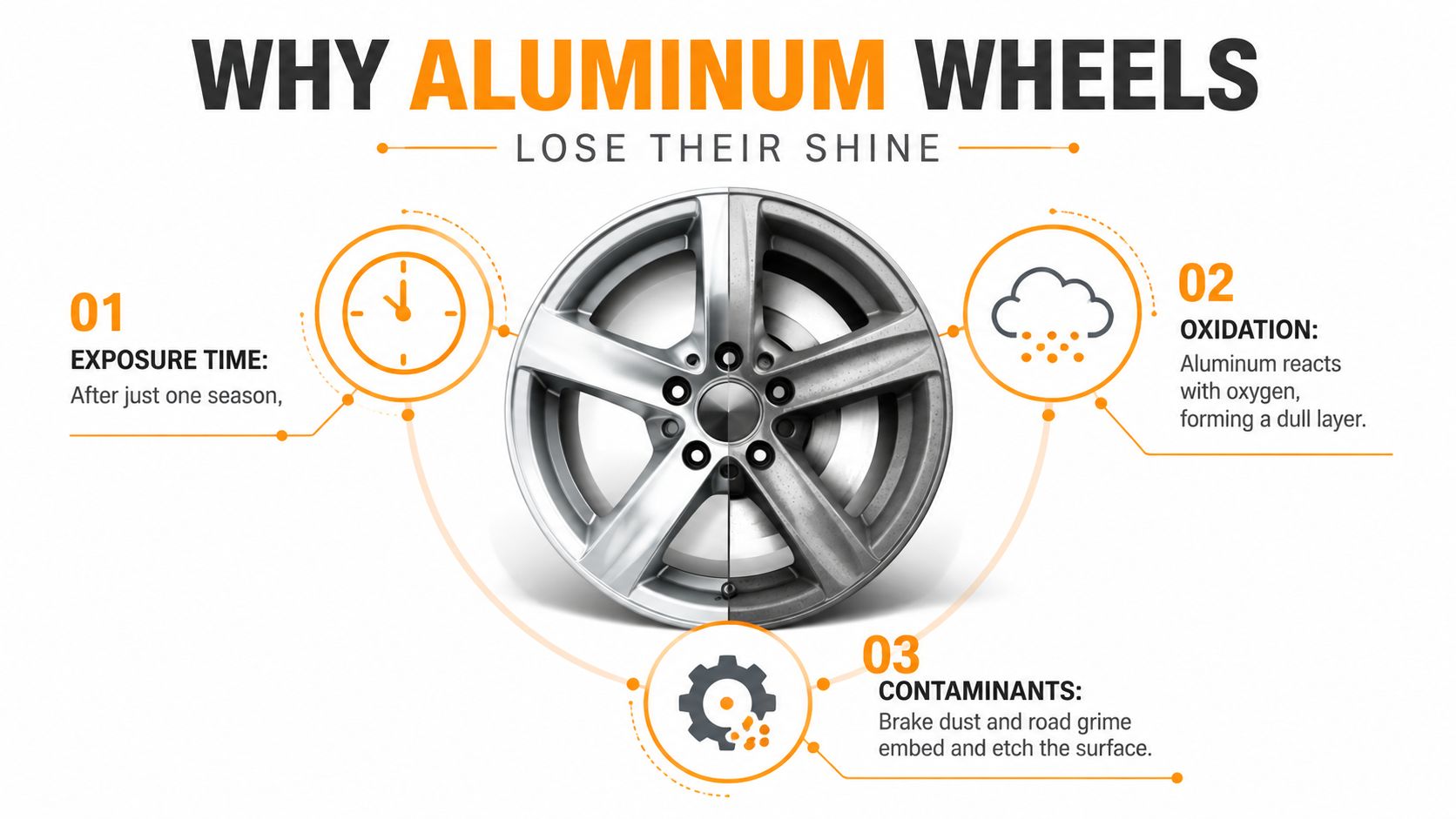
The last piece is the one most buyers miss. The right polish depends on wheel material, finish, and oxidation level. Those three variables decide whether you need a paste, a liquid, or a heavy-duty restorer, and they're what separate a clean result from a scratched or overworked one.
Paste, Liquid, and Heavy-Duty Formulations Compared
The shelf looks crowded because this category really breaks into three useful families. Once you know what each one does, the brand name matters less than the wheel in front of you. I see the same pattern over and over. Paste gives control, liquid gives easier spread, and heavy-duty formulas handle the neglected wheels that need real correction before they can be protected.
Paste for cut and control
A paste stays where you place it, which matters on a wheel face with complex spokes, deep pockets, or stubborn oxidation. That thicker body usually comes with more bite, so paste is the format I reach for when a wheel needs restoration instead of a cosmetic wipe. In the 2025 expert roundup, Mothers Mag & Aluminum Polish stands out as the benchmark paste, with a 5.0 overall rating and the Best Paste award. best aluminum polish review
Paste is usually the better fit for bare aluminum and neglected surfaces. It does more of the cutting for you, but it also leaves more residue and asks for better cleanup. That trade is fair when the wheel needs correction, not when the goal is a quick freshen-up.
Liquid for easier spread
Liquid polish spreads faster, works into tighter geometry with less dragging, and usually feels friendlier on wheels that only need maintenance. The 2025 roundup names Chemical Guys Heavy Metal Polish as the Best Liquid, which matches how this format behaves in real use. Liquid is the easier everyday choice when the wheel is not badly oxidized, and it is the style many owners prefer for routine upkeep. best aluminum polish review
I like liquids for polished lips, less damaged aluminum, and jobs where residue control matters more than raw bite. They are not magic, and they will not erase deep oxidation as quickly as a heavy paste, but they are easier to live with on regular maintenance work.
Heavy-duty restorers for neglected wheels
Heavy-duty formulas are for wheels that have been ignored long enough to go chalky, stained, and stubborn. The same 2025 review ranks 3D Metal Polish & Aluminum Restorer as Best Heavy-Duty, which fits the category well. That is the right tool for wheels that need stronger correction before they can be protected. best aluminum polish review
If the wheel only needs maintenance, a heavy-duty restorer can be too much product for the job.
That is the buying rule that keeps people out of trouble. Paste gives you cut, liquid gives you ease, and heavy-duty gives you rescue power. The best aluminum polish for wheels is the one that matches how far gone the surface really is, not the most aggressive bottle on the shelf.
For a broader look at alloy-finish product choices, the alloy wheel polish guide from SwiftJet is a useful companion read.
Matching Polish to Wheel Material and Finish
Not every shiny wheel is bare aluminum, and that's where a lot of bad advice starts. Some wheels are raw metal, some are clear-coated alloys, some are painted, and some only have a polished lip or face. If you pick the wrong polish class, you can waste time at best and damage the finish at worst.
Read the wheel before you touch the bottle
Bare aluminum usually looks more natural and less plasticky than coated finishes. It often reacts faster to polishing, which is why pastes and stronger restorers can make such a visible difference. Clear-coated and painted wheels behave differently, because the visible layer is a coating, not exposed metal, so aggressive metal polish is usually the wrong move.
Polished lips sit in a gray area. They benefit from a gentler liquid and careful hand work because the edge geometry is easy to haze if you overwork it. If you want a broader buyer's reference on alloy finishes, the alloy wheel polish guide from SwiftJet is a useful companion read.
The one-minute self-test
Run water over the wheel and watch how it behaves. If it sheets and beads like a coated surface, you're probably not dealing with raw aluminum in the exposed area. Then run a clean fingertip across a hidden spot, if it feels smooth but the shine looks muted, you may be dealing with oxidation or a clear-coated finish rather than raw metal.
Visible pitting is another clue. Bare aluminum often shows tiny pits or cloudy patches where oxidation has worked into the surface. Painted or coated wheels usually show different symptoms, like streaking or embedded grime, not the same raw-metal dullness.
Rule of thumb: if the finish looks like paint, treat it like paint, not like raw aluminum.
That matters because a strong polish can absolutely outperform on bare aluminum while doing almost nothing useful on a coated wheel. The safest move is to identify the finish first, then choose the polish family second. The wrong order is how people end up chasing shine that never arrives.
Reading Oxidation Level to Pick the Right Cut
The second mistake people make is buying more cut than the wheel needs. A wheel that's only lightly hazed does not need a full restoration bottle, and a wheel that's gone chalky won't respond well to a delicate finishing liquid. The condition of the metal should set the pace.
Light haze, moderate dullness, heavy buildup
Light haze usually shows up as a soft loss of reflection, but the surface still looks uniform. That's maintenance territory, not rescue work, so a gentle liquid or mild paste is usually enough. Moderate dullness brings more visible roughness, minor pitting, and a less even gloss, which is where a stronger paste starts to make sense.
Heavy chalky buildup is the point where the wheel looks faded even after washing, and the residue often feels stubborn under the microfiber. That's restoration territory, and a heavy-duty product can justify the extra labor. If the wheel hasn't been properly cleaned or polished in a long time, the stronger chemistry is often the shortest path back.
| Oxidation Level | Visible Signs | Recommended Polish | Typical Labor |
|---|---|---|---|
| Light haze | Slight dulling, still fairly even | Gentle liquid | Short session |
| Moderate dullness | Pitting, reduced reflection | Paste or stronger liquid | Moderate session |
| Heavy chalky buildup | Flat, oxidized, visibly neglected | Heavy-duty restorer | Longer restoration |
The maintenance rhythm matters here. One independent source recommends cleaning aluminum wheels every 2 to 3 weeks and polishing every 3 to 4 months, which is a strong clue that a lot of owners don't need aggressive restoration at all. If the wheel is already being cared for on that schedule, heavy-duty products are usually overkill. aluminum wheel cleaners and polishes guide
Buy for the level of neglect, not the fantasy result
A lot of shelves sell the idea of a miracle. Real wheel care is more boring than that. If the wheel is only slightly tired, a mild liquid and patience usually beat a harsh product that has to be cleaned up later.
If the wheel is neglected, though, don't be afraid of the stronger option. Neglected bare aluminum often needs more than one pass, and the right heavy-duty restorer can save you from endless hand rubbing. The trick is matching the cut to the oxidation, not guessing by brand reputation.
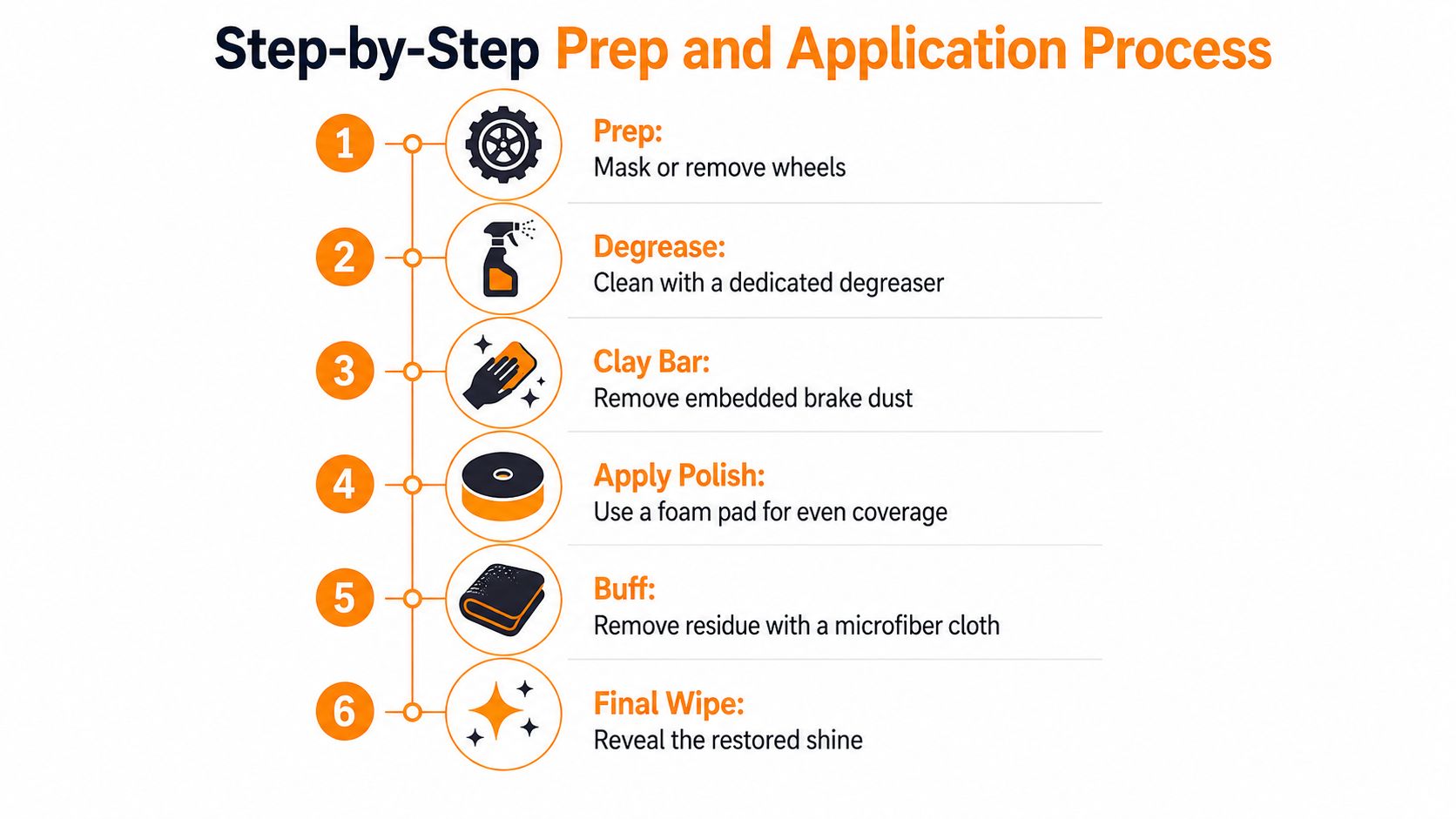
Step-by-Step Prep and Application Process
Good polish on a dirty wheel still gives a bad result. The prep matters because brake dust, road film, and old dressing residue all get in the way of actual metal correction. I've seen more failed jobs caused by sloppy prep than by weak polish.
Start with a clean, cool wheel
Remove the wheel if you can, or at least mask nearby trim and bodywork. Clean the wheel thoroughly with a wheel-safe cleaner first, then dry it completely before polishing. If the wheel is hot from driving, let it cool, because polish flashes faster and wipes unevenly on warm metal.
A dedicated wheel cleaner like the ph-neutral wheel cleaner guide from SwiftJet is a better starting point than a harsh all-purpose product for this kind of prep. Once the wheel is degreased, clay can help pull out embedded contamination that washing alone leaves behind.
Work in small sections
Apply the polish by hand or with a low-RPM orbital, then stay in a manageable section. The best signal that you're cutting oxidation is the product turning black on bare aluminum. That's the moment to keep working briefly, then buff off with a clean microfiber before it gets stubborn.
A short pass with controlled pressure beats hard scrubbing. If you're using a machine, keep the pad moving and don't lean into the corners where the finish can go uneven. On complex wheels, I'd rather do two controlled passes than one aggressive one that leaves residue jammed in the spokes.
Finish with protection
After the surface looks right, seal it. A wheel-specific wax or ceramic coating helps slow down the next round of contamination and makes future maintenance easier. Once protection is on, the wheel is much easier to clean without repeating the full restoration cycle every time.
Safety note: wear nitrile gloves and eye protection, keep the area ventilated, and don't polish in direct sun or on a hot wheel.
The best results always come from prep, not from brute force. The polish does the correction, but the cleaning, timing, and wipe-off decide whether the finish looks bright or merely worked over.
The Buying Checklist Every Polish Bottle Should Pass
A bottle can look premium and still be wrong for the job. I'd rather judge it by a short checklist than by the label claims on the front. If you can score the bottle in the aisle in under a minute, you're less likely to buy a product that fights the wheel instead of helping it.
What actually matters on the shelf
Price per ounce tells you how far the bottle goes, but only if you think in uses, not just sticker price. A small bottle that wipes clean and spreads easily can be a better buy than a larger one that turns into wasted residue on every wheel. Abrasive grade matters too, because heavy, medium, and fine cut all behave differently on bare metal and coated surfaces.
Protective additives are worth checking because some polishes leave behind a little sealing help, while others are correction-only. Ease of wipe-off matters on intricate spoke designs, where product that smears in corners can double your cleanup time. And clear-coat compatibility is essential if you're not working on raw aluminum.
| Checklist item | What to look for |
|---|---|
| Price per ounce | Enough product for your wheel count and frequency |
| Abrasive grade | Heavy, medium, or fine, matched to wheel condition |
| Protective additives | Wax, sealant, or ceramic support if present |
| Ease of wipe-off | Clean removal with minimal smearing |
| Residue control | Handles spokes, pockets, and edges well |
| Clear-coat compatibility | Safe for coated or painted wheel surfaces |
For a broader consumer-friendly breakdown of shine products, the expert guide to car shine from Prime Shine Hand Car Wash is a useful reference point. It helps frame polish selection as a finish-quality decision, not just a cleanup task.
Budget bands without the guesswork
Budget products make sense if the wheels are only lightly tired and you're maintaining them often. Mid-range bottles tend to be the sweet spot for most owners, because they usually balance cut, wipe-off, and finish quality. Premium products are worth it when the wheels are neglected or when you care a lot about residue control on complex geometry.
The buyer trap is simple. People chase the strongest bottle, then spend the rest of the afternoon cleaning up what the polish left behind. A better checklist keeps the decision grounded in use case, wheel finish, and how much cleanup you're willing to tolerate.
Maintenance Rhythm vs One-Time Restoration
The smartest wheel-care purchase is the one that fits the way you maintain the car. If you buy a heavy-duty restorer for a one-time rescue and then neglect the wheels again, you've solved a symptom, not a routine. A gentler polish used on schedule usually keeps the wheel looking better with less drama.
Routine care wins on cost and effort
A mid-range liquid used every 3 to 4 months is usually the more practical buy for owners who already clean their wheels every 2 to 3 weeks. That rhythm keeps oxidation from building up to the point where you need a serious rescue product. In other words, the maintenance polish is doing preventive work, while the heavy-duty bottle is doing emergency work.
The difference shows up in how much time you spend per wheel. Restoration is more labor, more residue, and more cleanup. Maintenance is lighter, faster, and easier to repeat, which matters if you're keeping a daily driver or a family vehicle presentable all year.
The cheapest polish is often the one you don't have to use as a rescue tool.
Protective additives can stretch the interval between full polishes, which is why some products feel better over a season even if they aren't the strongest cutters on day one. That's also where a strong wash-and-maintain routine pays off. A quality foam pre-wash helps strip brake dust before it settles deep enough to accelerate oxidation, and that's the kind of base cleaning SwiftJet is built around.
If you want a wheel finish that stays ahead of the curve, the best ceramic wheel coating guide is worth reading after you've chosen the polish. Coating and polish work best as partners, not replacements.
Restoration has its place, but it shouldn't become the plan
A neglected set of bare aluminum wheels may absolutely deserve one good restoration session. After that, the smarter move is to switch to maintenance products and keep the finish alive. Chasing a “miracle” bottle every time usually means the wheel is being allowed to fall behind.
Choose the routine first, then the polish. That's how you keep the finish under control without turning wheel care into a weekend project every month.
Troubleshooting and Situational Recommendations
Streaks usually mean too much product or a dirty towel. Switch to a fresh microfiber, reduce the amount of polish, and buff in smaller sections until the residue clears. If the streaking keeps showing up on the same wheel, the surface may still have contamination that needs a better prep step.
Haze on a clear-coated wheel usually means the polish is too aggressive for the finish. Stop using metal polish on that area and move to a mild, non-abrasive product that respects the coating. Tight spots need a detailing brush or cotton swab, because no pad on earth reaches every spoke corner cleanly.
Quick situational matrix
| Wheel condition | Buy this | Do this |
|---|---|---|
| Barely dull | Gentle liquid | Polish on a maintenance schedule |
| Heavily oxidized bare aluminum | Heavy-duty paste | Plan a longer restoration session |
| Clear-coated wheel | Non-abrasive wheel wax | Skip metal polish entirely |
| Tight spoke design | Low-residue formula | Use a brush for corners |
Uneven finish between the center and the lip usually comes from inconsistent pressure or overlapping too little. Keep your strokes even, work one section at a time, and don't rush the wipe-off. If one area looks brighter than the rest, the wheel probably needs another controlled pass, not a different product.
The clean answer is simple. If your wheels are lightly tired, buy a gentle liquid and maintain them. If they're heavily oxidized bare aluminum, buy a heavy-duty paste and clear a half-day. If they're coated, skip the metal polish and use a finish-safe protectant instead.
If you want a cleaner wash routine before oxidation ever gets a foothold, SwiftJet has the gear that helps you prep wheels properly at home without making the process more complicated. Visit SwiftJet to build a better wheel-care routine, then pair that wash habit with the polish type that fits your finish and maintenance schedule.
