

You're probably looking at the Vapamore MR-100 because you're tired of two kinds of cleaning tools.
The first is the weak handheld steamer that spits hot mist, runs out fast, and turns a real cleaning job into an all-day project. The second is the oversized premium machine that costs far more than most homeowners or DIY detailers want to spend. The MR-100 sits between those extremes, and that's why it still gets attention.
What matters with this machine isn't the marketing language. It's what the heat, pressure, runtime, and form factor mean when you're staring at greasy kitchen grout, sticky cupholders, cloth seats, shower tile, or textured interior trim. That's where the Vapamore MR-100 either earns its place or becomes one more bulky tool you regret storing.
What Is the Vapamore MR 100 and Who Is It For
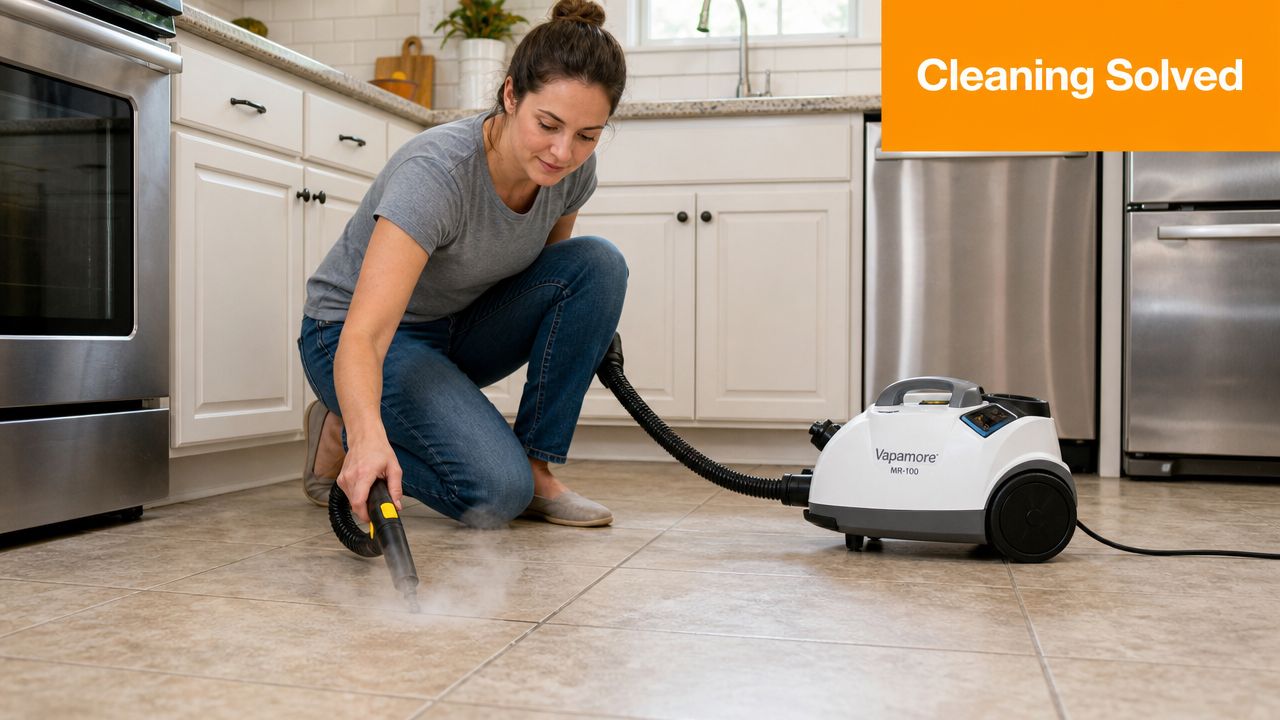
The Vapamore MR-100 Primo is a residential steam cleaner aimed at people who want more than a lightweight spot-cleaning gadget. Vapamore describes it as “one of the top-selling and highest-rated residential cleaners,” and says it earned Consumers Digest's designation as “Best in Consumer Value” on Vapamore's MR-100 overview. That same product information highlights a 1500-watt heating element, 210°–220°F steam, and 60 minutes of operation per tank.
Where it fits in the market
The easiest way to understand the Vapamore MR 100 is to stop thinking of it as a countertop appliance. It's closer to a compact canister system for people who clean whole rooms, not just isolated messes.
That makes it a fit for:
- DIY car detailers who want steam for carpets, fabric seats, vents, trim, pedals, and tight interior crevices
- Homeowners with tile and grout who need sustained steam instead of a short burst
- People avoiding chemical-heavy cleaning on surfaces where heat and agitation can do most of the work
- Anyone cleaning multiple zones in one session, like a bathroom and kitchen back-to-back, or a full interior instead of one stain
It's not really built for someone who wants to pull a tool out for two minutes, hit one spill, and put it away. For that buyer, a smaller handheld unit usually feels easier, even if it cleans less effectively.
Who should pay attention
The MR-100 makes the most sense when your cleaning problems are repetitive and stubborn. Think grout haze that keeps returning, greasy stove edges, sealed hard floors, seat rails, rubber floor mats, and the film that builds up on textured plastics in a vehicle.
Practical rule: If you regularly clean surfaces with seams, pores, texture, or baked-on residue, a stronger canister steamer makes sense. If you mostly wipe smooth counters and glass, it's more machine than you need.
There's also a mindset factor. This machine suits people who don't mind a setup process if the payoff is deeper cleaning and less scrubbing. If you want instant-on convenience above all else, the Vapamore MR 100 may feel like work. If you value sustained performance, it feels much more purposeful.
Under the Hood Key Specs and Features Explained
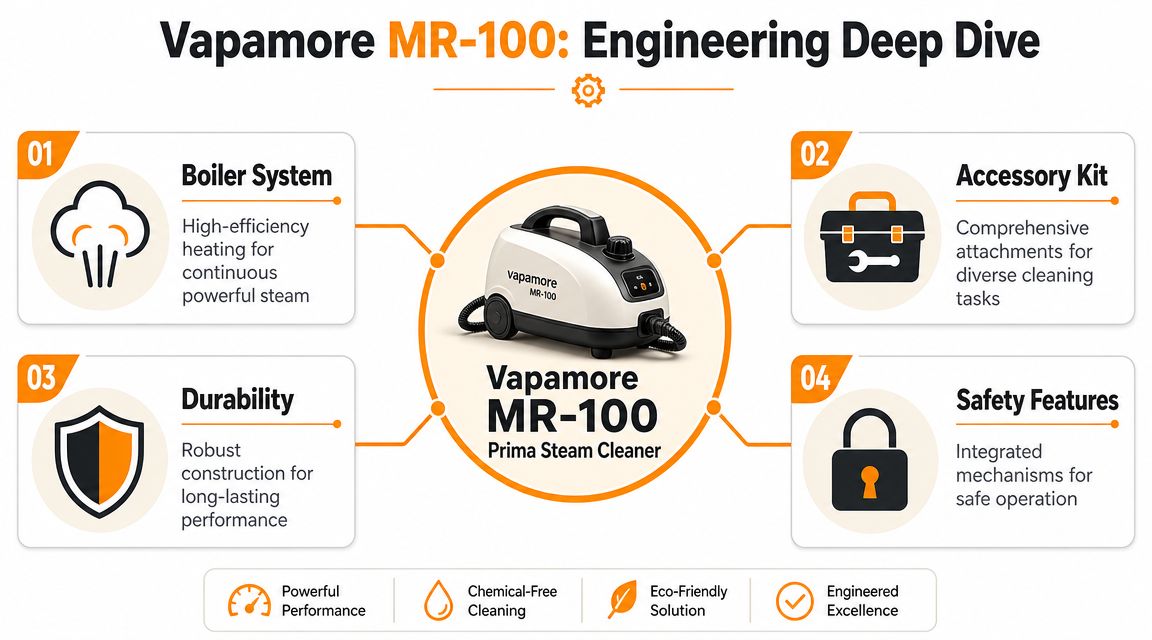
The reason the Vapamore MR 100 performs differently from bargain steamers comes down to a few connected parts working together. Published specifications describe a 1,500 W heater, a 1.6 L stainless-steel boiler, 3.5 bar operating steam pressure, 210-220°F nozzle-tip temperature, and about 11 minutes of heat-up time, with roughly 50-60 minutes per tank according to this MR-100 review discussion at AutoGeek Online.
What the heater and boiler actually do
A 1,500 W heater matters because steam cleaning falls apart when the machine can't recover heat fast enough. You pull the trigger, get a good initial burst, then the output softens and turns into damp vapor. On tougher jobs, that ruins your rhythm.
The 1.6 L stainless-steel boiler gives the MR-100 enough reserve to behave like a real canister steamer instead of a glorified spray bottle. Stainless construction also makes sense in a machine built around repeated heat cycles and water exposure.
In practice, this translates to steadier work on:
- Kitchen grease around burners, vents, and cabinet edges
- Bathroom grout lines where soil sits below the surface
- Automotive upholstery that needs heat plus agitation, not soaking
- Rubber and vinyl textures that trap dirt in grain and ridges
Why pressure changes the result
Steam temperature gets most of the attention, but 3.5 bar pressure is a big part of why the machine can move contamination out of pores, seams, and textured surfaces.
High heat softens grime. Pressure helps push that softened residue out so your towel or brush can remove it. That's especially useful when cleaning:
| Surface | What pressure helps with |
|---|---|
| Tile grout | Driving steam deeper into the line so loosened soil lifts more easily |
| Seat tracks and hinges | Reaching into narrow areas where brushes can't fully penetrate |
| Textured dash and door plastics | Flushing dirt from the grain rather than only warming the top layer |
| Upholstery seams | Opening compacted debris so extraction or wiping works better |
Why the runtime matters more than people think
Short-runtime steamers force you to clean in fragments. You do one area, refill, wait, then come back. That breaks momentum and usually leaves half the job undone.
With roughly 50-60 minutes of cleaning time per tank from the published specs in the AutoGeek review, the Vapamore MR 100 is built for longer sessions. That means you can often finish a real project in one run, whether that's a bathroom floor, a shower surround, or a vehicle interior.
Hot steam only helps when the machine can sustain it long enough for you to work methodically. That's where bigger canister units separate themselves from small consumer steamers.
The takeaway is simple. The MR-100's numbers aren't just brochure filler. They describe a machine that can keep producing useful steam long enough to tackle actual cleaning cycles instead of isolated touch-ups.
Real-World Cleaning Power In Your Car and Home
The Vapamore MR 100 does its best work where grime is bonded, textured, or buried in tight spaces. It's not magic, and it's not safe to blast at every surface the same way. The trick is knowing where steam gives you an advantage and where restraint matters more than raw heat.
Where it works well in a vehicle
On fabric seats and carpet edges, the MR-100 is useful for loosening old grime before blotting or extraction. Steam helps relax compacted dirt around seams, stitched edges, and the areas near seat mounts where brushes struggle to reach. It's especially handy for cupholder pockets, pedal faces, shifter trim, and door panel grain.
On rubber floor mats, steam usually works fast. Road film softens, old dressing residue releases, and the texture comes back without much chemical help. For vents, badges, and console gaps, steam can move debris out of crevices that compressed air alone often just redistributes.
Mold and odor issues are where people often overestimate steam. Steam can help clean the surface, but if the backing or padding is contaminated, the fix usually takes more than heat alone. If you're dealing with carpet contamination in a vehicle, this guide on removing mold from car carpet is a useful companion because it covers the wider cleaning problem, not just the visible top layer.
Where you need to slow down
This is the part many reviews skip. The available product coverage raises a real concern about mixed-surface use, especially around leather, touchscreen plastics, textured trim, adhesive residues, and moisture-sensitive finishes, as noted on Detailed Image's MR-100 product page.
That doesn't mean the machine can't be used on those areas. It means technique matters more than the spec sheet.
Use caution on:
- Leather seats. Don't park the nozzle in one spot. Keep moving, use distance, and wipe immediately.
- Glossy piano-black trim. Steam can loosen grime, but careless wiping after steaming can mark delicate finishes.
- Touchscreens and electronics-heavy panels. Steam the towel or work at a distance instead of directing concentrated heat into edges and seams.
- Headliners. Excess moisture and heat are a bad combination here. Light passes only.
Surface rule: The more delicate the finish and the more glue involved, the less direct steam you want.
Where it earns its keep in the house
At home, the MR-100 shines on grout lines, shower corners, around faucets, stovetop buildup, oven-edge grime, and sealed tile. The machine's value shows up when wiping alone just smears grease or when a brush alone can't break the bond.
For mattresses and fabric household surfaces, steam can be part of a broader hygiene routine, but it shouldn't replace common-sense cleaning steps. If allergens are part of the reason you're considering steam, Purified Air Duct Cleaning's dust mite advice is worth reading because it frames steam as one piece of a larger approach that includes laundering, vacuuming, and moisture control.
What it can't do well
The MR-100 won't replace every cleaning tool in your garage or laundry room.
It doesn't solve thick mud by itself. It doesn't fully extract contamination from deep padding. It doesn't make brittle plastics safer. And it won't rescue every adhesive mess without repeated passes, towels, and patience.
For automotive work, I think of it as a precision deep-cleaning tool, not a complete interior system by itself. It pairs well with brushes, microfiber towels, and extraction when the material calls for it. At home, it's a grime-breaker and detail tool more than an all-purpose replacement for vacuuming, mopping, or scrubbing.
Your First Clean Getting Started and Proper Use
The first session with the Vapamore MR 100 usually goes one of two ways. Either you treat it like a serious tool and get strong results, or you rush setup, grab the wrong attachment, over-wet a surface, and decide steam cleaning is overrated.
Start with the basics and the machine makes more sense.
A simple first-use routine
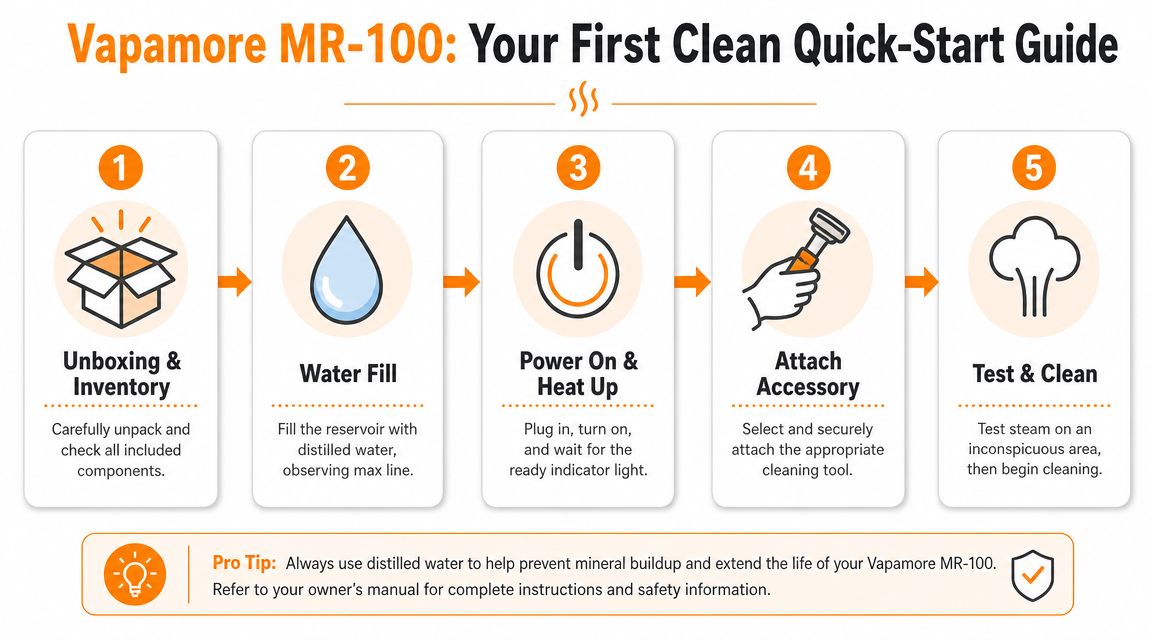
- Lay out the parts first. Don't start assembling attachments in the middle of a hot cleaning session. Figure out which tools fit your first job before you plug it in.
- Fill with water carefully. Keep your filling routine consistent and avoid turning it into a messy guessing game. Many owners prefer distilled water to reduce mineral buildup over time, especially if local water is hard.
- Choose one small test area. On a car, that could be a lower door panel or seat base. In the house, try a corner of grout or a small patch behind a fixture.
- Attach the least aggressive tool that can do the job. Start with a towel-wrapped head or a broader accessory before switching to a concentrated nozzle.
A visual walkthrough helps if you're more of a see-it-done person than a manual reader.
Matching the tool to the job
Beginners often make one mistake. They assume the smallest, most focused attachment is always the strongest option. Sometimes it is. Sometimes it just over-concentrates heat.
Use this approach instead:
- For broad hard surfaces, start with the larger head and a microfiber cover or towel.
- For grout, seat rails, hinges, and crevices, move to the detail nozzle.
- For upholstery and interior plastics, use controlled bursts and wipe as you go.
- For greasy areas, steam first, then agitate, then wipe. Don't just chase residue around with vapor.
If you're building a full interior routine, pairing steam work with a dedicated cleaner can make the process more predictable on plastics and trim. This guide to choosing an interior cleaner for your car is useful for deciding when steam should lead and when a liquid cleaner should.
What new owners should avoid
Don't judge the machine by the first trigger pull. Let it heat fully, purge condensation if needed, and test on something forgiving before touching delicate trim.
Avoid soaking soft materials. Avoid holding steam still on one point. Avoid trying to clean an entire car or room with only one attachment because it's already installed. The MR-100 works best when you change tools based on the material, not on convenience.
Long-Term Care Keeping Your MR 100 in Top Condition
Steam cleaners age based on how they're fed, how they're emptied, and how they're stored. The Vapamore MR 100 is no different. If steam output starts feeling inconsistent over time, the cause is often maintenance, not the machine suddenly becoming weak.
The maintenance habits that matter
The biggest issue with long-term steam performance is mineral buildup. If your water leaves spots on faucets or shower glass, it can leave deposits inside a boiler too. Using cleaner water helps, but so does staying disciplined about emptying the unit after use once it's safe to do so.
Make these habits routine:
- Drain responsibly after use. Don't leave old water sitting in the machine for long stretches.
- Wipe down accessories. Brushes and nozzles collect loosened grime. If you store them dirty, you just reintroduce residue next time.
- Inspect small openings. Reduced output can come from a partially blocked tip or attachment.
- Store hoses and tools neatly. Kinks, crushed fittings, and jammed connectors create frustration later.
How to think about descaling and storage
Descaling isn't glamorous, but steam machines depend on internal cleanliness. If output changes, recovery seems slower, or the flow feels uneven, scale is one of the first things to consider. Follow the manufacturer's guidance for any deep cleaning or descaling process rather than improvising with harsh chemicals.
Storage matters more than people think. Let the machine cool fully, keep attachments dry, and avoid tossing everything into a bin while still damp. That simple step prevents stale smells, dirty pads, and clogged accessories.
When performance drops
If the MR-100 starts acting off, work through the easy causes first:
| Symptom | First thing to check |
|---|---|
| Weak steam | Attachment blockage or incomplete heat-up |
| Wet sputtering | Condensation in the line or too little pre-purge |
| Dirty smell | Damp accessories stored after use |
| Uneven output | Residue in tips, hose, or accessory head |
A well-kept canister steamer stays useful for years. A neglected one becomes a heavy reminder that even solid tools punish lazy maintenance.
The Honest Truth Pros Cons and Common Problems
The Vapamore MR 100 is good at real cleaning. It's also not especially forgiving if your habits lean toward speed, convenience, and quick storage. That tension is the whole buying decision.
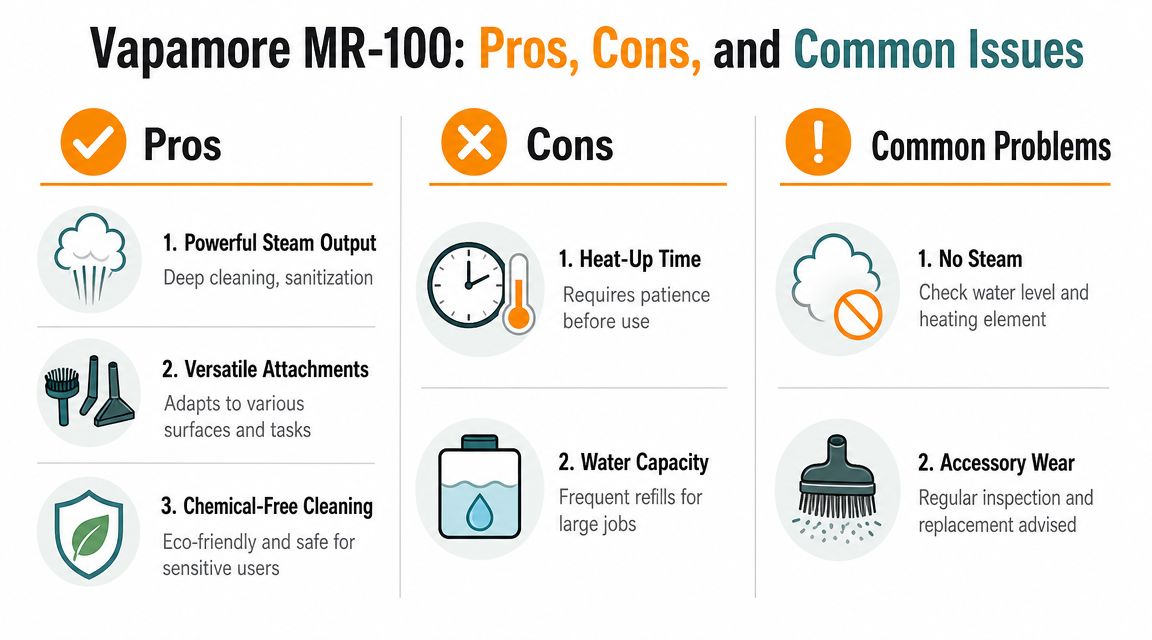
Published ownership details point to key friction points: an 11-minute heat-up, roughly 50–60 minutes of steam time, an 18-foot power cord, and a 30 dB operating claim, all noted on The Vacuum Factory's MR-100 listing. Those numbers tell you this machine is built more for sustained sessions than instant response.
What it does well
The strongest case for the MR-100 is straightforward.
- It supports longer cleaning sessions. That changes the experience from spot steaming to actual project work.
- It produces meaningful heat and pressure. On the right surfaces, that reduces scrubbing and helps release grime from texture and seams.
- It covers both home and vehicle use. Few tools move comfortably between shower tile, kitchen grease, floor mats, seat rails, and vinyl trim.
For detailers working from a garage, that versatility is a real advantage. For homeowners who hate buying single-purpose tools, it's one of the biggest reasons to consider it.
Where people get frustrated
The drawbacks are just as real.
A canister unit takes space. It asks for setup. It needs somewhere to park while you work, and somewhere sensible to store afterward. The heat-up period is long enough that spontaneous use feels less natural than with a small handheld steamer.
The 18-foot power cord is workable indoors, but mobile users and driveway detailers may find themselves planning around outlet placement. That doesn't make it a bad machine. It means workflow matters.
If you clean in batches, the MR-100 feels efficient. If you clean in short bursts between other tasks, it can feel slower than it should.
Common problems that usually aren't deal-breakers
Most complaints with steamers like this come from three sources: setup errors, blocked accessories, or using steam on the wrong material.
Typical issues include:
- Weak output at startup from condensation or incomplete heat-up
- Intermittent steam when an attachment isn't seated properly
- Too much moisture because the user works too close to fabric or holds the trigger too long
- Awkward maneuvering in tight interiors due to hose and canister management
None of those are unusual. But they do matter if you want a tool that feels effortless. The Vapamore MR 100 isn't effortless. It's effective when used with some discipline.
Is the MR 100 the Right Choice for You
The Vapamore MR 100 makes the most sense for the buyer who values deeper cleaning over instant convenience. Historically, that value proposition has been part of its appeal. A 2010-era review said the MR-100 sold for about $300, while a comparison from that period put similarly positioned machines like the Ladybug at over $1,000, a gap of more than $700, according to this YouTube-era market snapshot of the MR-100. That context helps explain why the machine earned attention as an accessible alternative to premium steam systems.
It's a strong fit if this sounds like you
You'll likely get good use from it if you're a homeowner with a lot of tile, grout, bathrooms, or kitchen buildup. The same goes for DIY detailers who clean full interiors and want one machine for vents, mats, cloth, trim, and hard-to-reach areas.
It's less appealing if you want a tiny grab-and-go steamer for quick spills. In that case, a smaller handheld model may be easier to live with even if it gives up runtime and consistency.
Who should consider other tools
If your main problem is liquid extraction, not surface steaming, look at an extractor first. Steam loosens soil. Extraction removes suspended contamination from deeper fabric layers. If you're comparing those approaches for carpets and upholstery, this breakdown of a carpet extractor with heater helps clarify which tool solves which problem.
For routine exterior washing, a steam cleaner also isn't the first tool I'd buy. Foam, rinse, contact wash, and drying still handle the bulk of that job better.
The bottom line is simple. The Vapamore MR 100 is a practical machine for people who clean stubborn surfaces often enough to justify a real canister steamer. If that's your situation, it still makes sense. If you prize speed, compact storage, and casual use, it probably doesn't.
If you're building a complete home car-care setup, SwiftJet offers a foam gun that connects to a garden hose for exterior washing. It's a different tool than the Vapamore MR-100, but it fits naturally alongside a steam cleaner when you want one setup for outside wash work and another for interior or detail cleaning.
