

If there's one golden rule for washing a black car, it's this: touch the paint as little as possible. Forget everything you know about quick driveway scrubs. Keeping that deep, mirror-like finish means adopting a smarter, safer routine that lifts dirt away without grinding it into the clear coat.
Why Washing a Black Car Requires a Different Approach
Black paint is brutally honest. While lighter colors are great at hiding small imperfections, black acts like a high-definition screen, magnifying every single swirl, tiny scratch, and water spot. The flaws aren't any deeper than they would be on a silver or white car, but the way light reflects off a dark surface makes them impossible to ignore.
The real enemy isn't the dirt itself, but the damage caused by removing it the wrong way. Every time you drag a gritty sponge or a rough towel across the paint, you're creating a microscopic web of scratches. On a black car, this network of "swirl marks" catches the light, creating a hazy, dull look that completely ruins the deep, liquid gloss that makes the color so stunning to begin with.

Shifting to a Detailer's Mindset
To really get this right, you have to ditch the "quick wash" mentality and start thinking like a professional detailer. Every step, from the initial rinse to the final wipe-down, must be about protecting the paint. This isn't just a recommendation; it's a necessity. Investing in the right gear is your first and most important step.
Before you even think about touching the car, you need to have the right tools on hand. Trying to wash a black car without them is just asking for swirl marks.
Here’s a quick rundown of what you absolutely need in your arsenal.
Your Essential Swirl-Free Wash Toolkit
| Tool or Product | Why It Is Critical for Black Paint |
|---|---|
| Foam Cannon or Gun | This is non-negotiable. It pre-soaks the car in thick suds, loosening and lifting heavy dirt before you ever touch the surface. |
| pH-Neutral Car Soap | Aggressive soaps strip away your wax or sealant, leaving the paint vulnerable. A gentle, pH-balanced soap cleans without compromising protection. |
| Plush Microfiber Mitts | A high-quality mitt has deep fibers that trap dirt particles, pulling them safely away from the paint instead of dragging them across it. |
| Dedicated Drying Towels | Using a plush, dedicated microfiber drying towel is key to avoiding water spots and scratches during the final, critical drying phase. |
Having these tools isn't about being fancy—it's about fundamentally changing how you clean your car. Each one is designed to minimize friction and protect that delicate finish.
The entire goal is to let your products and tools do the work for you. By using a quality foam to do the initial heavy lifting, you drastically reduce the physical contact and pressure that cause nearly all wash-induced damage.
Setting the Stage for a Perfect Wash
Believe it or not, the fight against swirl marks is usually won or lost before your wash mitt even touches the paint. Getting this first part right is the secret that separates a frustrating, spot-filled wash day from one that leaves you with a flawless, mirror-like finish. It's more than just grabbing your supplies; it's about strategically taking down the biggest threats to your car's delicate black paint.
First things first: get out of the sun. Washing a black car in direct sunlight is practically asking for trouble. Those dark panels get hot, fast, causing your water and soap to evaporate almost instantly. This is what leaves behind those stubborn, chalky water spots that can be a nightmare to remove and can even etch into your clear coat.
Always find a cool, shaded spot to work. If you don't have a garage, the next best thing is washing early in the morning or later in the evening when the sun isn't beating down. The goal is simple: keep the paint cool to the touch from start to finish.
Tackle the Wheels and Tires First
Before you even think about the paint, get the dirtiest parts of your vehicle out of the way—the wheels and tires. These areas are magnets for the worst kind of grime: abrasive brake dust, caked-on mud, and road oils. If you wash them last, you’re just going to sling all that gunk onto your freshly cleaned panels. That means rewashing and doubling your risk of scratching.
By cleaning them first, you isolate all those heavy-duty contaminants and keep them far away from the rest of the job.
Pro Tip: Keep a completely separate set of brushes and a dedicated bucket just for your wheels. The tools that touch your brake calipers and tires should never touch your paint. This hard-and-fast rule is a cornerstone of professional detailing that prevents cross-contamination.
The All-Important Pre-Rinse
With the wheels done, it’s time for a proper pre-rinse of the entire car. Don't just give it a quick spritz. This step is about letting water pressure do the heavy lifting for you. Grab a pressure washer (on a safe setting!) or a hose with a strong jet nozzle and methodically blast off as much loose dirt, dust, and grit as you can.
Always work from the top down. Let gravity be your friend here, pulling all that debris down and away from the car. Think of it as your "touchless" first pass. Every single particle you remove now is one less piece of grit that can get trapped in your mitt and dragged across the paint later.
To make the whole process smoother, it helps to have all your detailing gear ready to go. Having a system to organize your garage tools and supplies makes the job faster, more effective, and a lot more enjoyable.
Using a Foam Pre-Soak for a Safer Clean
If there's one step you absolutely cannot skip in your quest for a perfect, swirl-free wash on a black car, this is it. A thick blanket of foam does the heavy lifting for you, drastically cutting down on the amount of physical scrubbing your paint has to endure.
Think of it as a protective cushion. This layer of suds gets between the abrasive grit and your delicate clear coat, making it the undisputed hero of a safe wash. The foam clings to the car, and its active cleaning agents get to work breaking down, surrounding, and lifting away the worst of the grime. Instead of grinding that dirt into the paint with your wash mitt, you’ll be rinsing most of it away harmlessly.
Achieving the Perfect Foam Consistency
Not all foam is created equal. What you're after is a consistency that looks and feels a lot like shaving cream—thick enough to cling to vertical panels and do its job, but not so heavy that it just slides right off.
Finding that perfect balance usually comes down to dialing in the soap-to-water ratio in your foam cannon or foam gun. A good starting point is often a 1:10 ratio, but don't treat that as gospel. Things like the hardness of your water and the specific soap you're using will change the equation. It might take a little trial and error, but you’ll quickly find the sweet spot.
For anyone just getting started with this method, our complete guide explains exactly how to use a foam gun to get incredible results, even with just a standard garden hose.
Proper Application and Dwell Time
Technique really matters here. Always start applying foam from the bottom of the car and work your way up. Why? This simple trick prevents the foam from running down clean panels prematurely, giving the dirtiest lower sections of your car the longest time to soak.
Cover every single inch of the vehicle—wheel wells, undercarriage, the works—until it looks like it’s been hit by a snowstorm.
Now, just let it sit. This "dwell time" is where the real work gets done. Give the foam a good 5 to 10 minutes to break down the grime. You’ll literally see the dirt start to drip off the car, suspended in the suds.
Crucial Insight: Whatever you do, never let the foam dry on the surface. If it's a hot day or you see it starting to cake on, just give the car a light mist of water or even a fresh layer of foam to keep things wet and active. Dried soap can be just as stubborn to remove as the dirt itself.
Once the foam has worked its magic, it's time to rinse thoroughly, this time from the top down. You’ll be shocked at how much cleaner the car is before you've even laid a mitt on it. This one step can safely remove up to 80% of the surface grit, setting the stage for a much, much safer contact wash.
The Two-Bucket Method: Your Best Defense Against Swirls
Your car is now foamed and rinsed, and most of the heavy grit is gone. But what about that stubborn film of road grime still clinging to the surface? Now it’s time for the contact wash, and this is where most swirl marks are born. To do it right on a black car, the two-bucket wash method isn't just a suggestion—it's the golden rule.
The logic behind it is simple yet incredibly effective. You have one bucket with your car shampoo solution and a second bucket with nothing but plain, clean water. The entire point is to stop dirt you’ve just removed from ever touching your paint again.

Remember, that crucial pre-soak stage of mixing, spraying, and letting the foam dwell is what makes this next step so much safer. You're no longer grinding in heavy debris, just lifting away the last bit of film.
How to Execute the Two-Bucket Wash Perfectly
First, dip your clean microfiber wash mitt into the soap bucket. Gently wash one small section at a time—think half a hood or a single door panel. The most important thing here is to move in straight, overlapping lines. Never, ever scrub in circles. That circular motion is exactly what etches those dreaded swirl marks into your paint.
After you finish that single panel, here’s the game-changing step: before you get more soap, plunge the dirty mitt into your plain water rinse bucket. Agitate it well. You're literally washing your wash mitt. You’ll be shocked at how quickly that rinse water turns cloudy. That’s a good thing! It means all that grit is now trapped in the rinse bucket, far away from your car's delicate finish.
This separation is non-negotiable. Every time you dunk a dirty mitt straight back into your soap, you're contaminating the whole bucket. It basically turns your expensive car shampoo into a bucket of liquid sandpaper that you’ll be dragging all over the paint.
A Few Pro Tips for a Flawless Finish
To really elevate your wash and guarantee you’re not causing any harm, weave these habits into your routine.
- Work Top to Bottom: This is a classic for a reason. Start on the roof, then the glass, then the hood and trunk. Work your way down, saving the lower panels (rocker panels, bumpers) for the absolute last. They’re always the filthiest, and this prevents you from dragging that caked-on grime to cleaner upper sections.
- Invest in Grit Guards: For a few bucks, Grit Guards are one of the best upgrades you can make. Drop one in the bottom of each bucket. They create a baffle that traps grit at the bottom, so your mitt can’t pick it back up when you dunk it.
- Rinse Your Mitt Obsessively: Don’t get lazy here. Wash one panel, dunk in the rinse bucket. Wash another panel, dunk in the rinse bucket. This simple discipline is what truly separates a safe wash from a scratch-fest.
Perfecting these techniques is more relevant than ever. The global car wash service market, valued at USD 34.31 billion, is expected to hit USD 49.06 billion by 2030. That growth shows just how much people care about maintaining their cars, which makes learning to do it safely at home invaluable, especially for tough-to-maintain colors like black.
If you want to dive deeper, we have a complete guide that covers the finer points of the two-bucket wash method.
How to Dry Your Black Car Without Leaving Scratches
You’ve just finished a perfect two-bucket wash, and the paint looks incredible. But don’t relax just yet. The next few minutes are where most people accidentally undo all their hard work, especially on a black car.
Drying is a high-stakes game. A sloppy technique will immediately create new swirls and fine scratches. The mission is simple: get every drop of water off the paint before it air-dries and leaves behind ugly mineral spots, all while touching the surface as little as humanly possible.
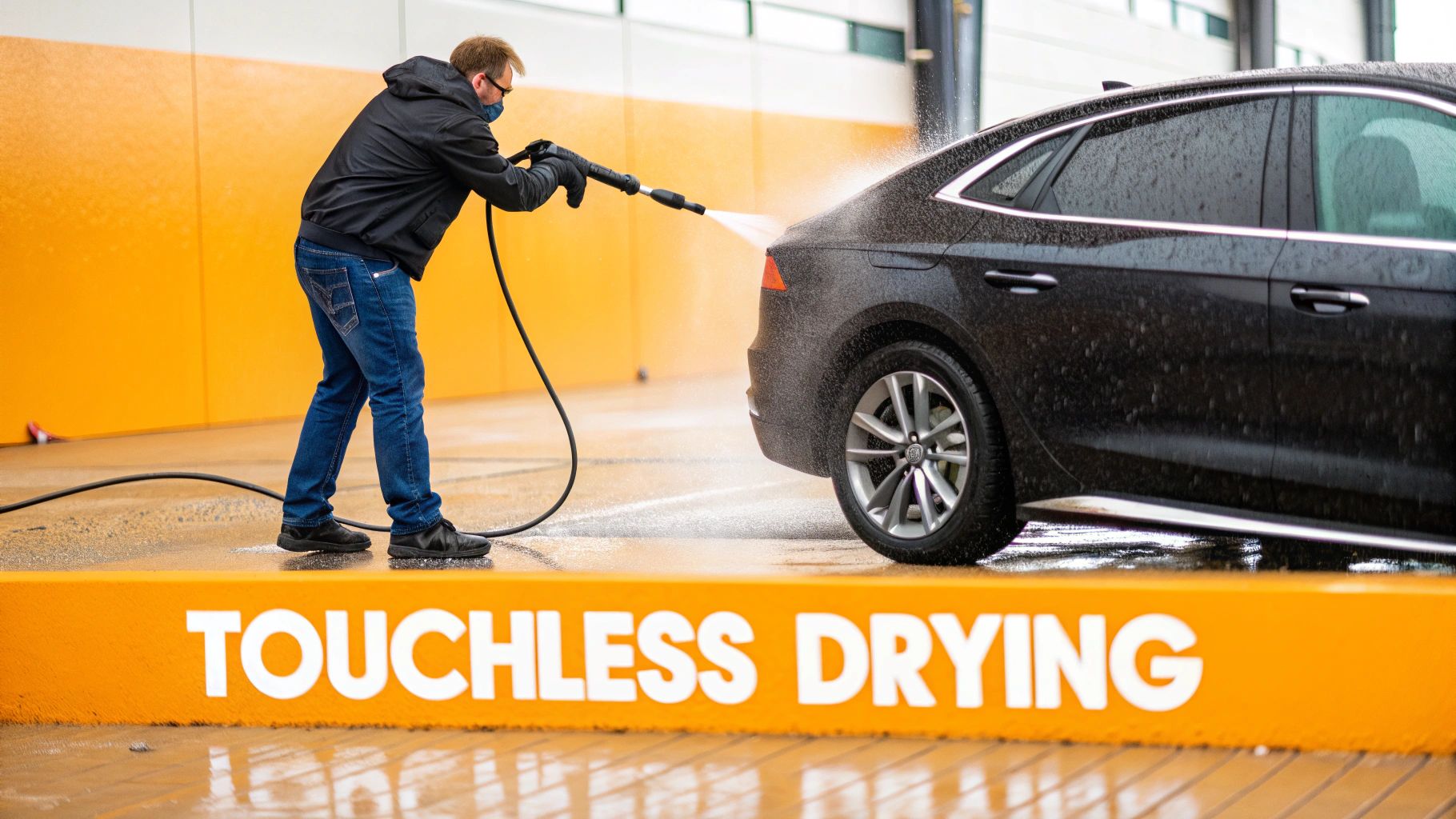
It all starts with your final rinse. Instead of hitting the car with a pressure washer or a jet spray, take the nozzle right off your hose. Let a gentle sheet of water flow over the car, starting from the roof and working your way down. This is a classic detailer's trick called "sheeting," and it works because the water molecules stick together, pulling the vast majority of the water right off the panels. This leaves you with far less to dry manually.
Choosing Your Drying Method
After you’ve sheeted off most of the water, you have a couple of great, paint-safe options to finish the job. What works best for you will probably depend on the tools you have on hand.
- The Touchless Dry: Honestly, the absolute safest way to dry a black car is with forced air. Using a powerful leaf blower (one you only use for your car) or a dedicated car dryer blasts water out of every nook and cranny—think mirror housings, panel gaps, and grilles where water always seems to hide. Since there is zero physical contact with the paint, the risk of scratching is completely eliminated.
- The Microfiber Blot: If you don't have a blower, a high-quality, ultra-plush microfiber drying towel is your best friend. But technique is everything. Please, do not drag the towel across the paint like you're wiping down a kitchen counter. The proper way is to lay the towel flat on a section, gently pat it to absorb the water, and then lift it straight up. Move to the next spot and repeat. This "blot and lift" method drastically reduces friction and the chance of creating swirls.
Expert Insight: Whatever you do, never use a bath towel, a rubber squeegee, or an old-school chamois on your car's paint. Bath towels are far too rough. Squeegees and traditional chamois are notorious for trapping one tiny piece of grit and then dragging it across an entire panel, leaving a nasty, deep scratch in their path.
Final Touches for a Flawless Finish
This level of care is what separates a good result from a perfect one. It’s a principle that applies to all aspects of detailing, from achieving flawless paint to mastering professional streak-free cleaning techniques for perfectly clear glass.
If you want to dive deeper into the tools of the trade, we have a complete guide on picking the perfect car wash drying towel that’s worth a read. It’s no surprise the demand for proper car care solutions keeps growing, especially in North America. More cars on the road mean more owners who need the right tools and knowledge to care for sensitive finishes like black paint.
Locking in That Deep, Wet Shine with a Protective Layer
You've done the hard work. The paint is clean, corrected, and looks incredible. But don't stop now! Leaving your perfect black paint naked is just asking for trouble—dust, pollen, and water spots will stick to it almost immediately. This final step is crucial for protecting all that effort and keeping that brilliant gloss locked in.
This is where a "Last Step Product," or LSP, comes in. Think of it as a sacrificial shield that sits on top of your car's clear coat. It takes the hit from all the environmental junk so your paint doesn't have to. Beyond just protection, a good LSP amplifies that shine and makes your next wash way easier because dirt just can't get a good grip on a slick, protected surface.
Choosing Your Shield
You've got a few great options for paint protection, and the right one really boils down to your goals and how much time you want to spend.
- Traditional Wax: Nothing beats the warm, deep glow of a quality carnauba wax. It's a look enthusiasts have chased for decades. The trade-off? Durability. You'll likely be reapplying it every few weeks.
- Paint Sealant: These are synthetic polymers built for endurance. A solid paint sealant can give you months of protection with a sharp, glassy shine.
- Ceramic Coating: This is the undisputed champion of long-term protection. A properly applied ceramic coating can last for years, not months. It offers incredible resistance to chemicals and that insane water-beading (hydrophobic) effect you see online.
For most folks just trying to keep their daily driver looking its best, a modern spray sealant hits the sweet spot between performance and ease of use.
A high-quality spray sealant can be applied to your entire car in less than 15 minutes, right after you finish drying it. That small bit of effort buys you months of serious protection and makes the next wash a walk in the park.
Honestly, think of it as sunscreen for your car's paint. A quick spray-on, wipe-off application is one of the single most effective things you can do to preserve that flawless finish you just worked so hard for. It keeps your black paint looking darker, glossier, and safer until it's time for the next wash.
Your Top Questions About Washing a Black Car, Answered
If you own a black car, you've probably asked yourself some of these questions. Getting the details right is the secret to keeping that deep, mirror-like finish you fell in love with. Let's tackle some of the most common concerns I hear from fellow black car owners.
How Often Should I Be Washing My Black Car?
The sweet spot is usually every one to two weeks. Washing it this frequently keeps grime and contaminants from baking onto the surface. If you let it go longer, you'll need a much more aggressive wash to get it clean, and that's exactly when you risk creating swirls.
Of course, if you see things like bird droppings or tree sap, you need to get those off immediately. Don't wait for your next scheduled wash; that stuff can etch into your clear coat surprisingly fast.
Expert Tip: Think of it this way: a series of gentle, frequent washes is infinitely better for your black paint than one heavy-duty scrub session every month.
Is It Okay to Just Use a Sponge and a Bath Towel?
Please, don't do this. I can't stress this enough. A traditional sponge is one of the worst things you can touch your car's paint with—it traps dirt and grit right at the surface and just grinds it across your finish. You might as well be using fine-grit sandpaper.
The same goes for old bath towels. Their fibers are too coarse and will absolutely cause micro-scratches and swirls. You have to invest in the right tools. Always use a quality microfiber wash mitt and plush, dedicated microfiber drying towels. They're designed specifically to trap dirt away from the paint and absorb water safely.
Ready to make every wash safer and easier? The SwiftJet Car Wash Foam Gun connects to any garden hose to deliver the thick, protective foam your black car deserves. Upgrade your wash routine today at SwiftJetUSA.com.
