

Are you shopping for a green pressure washer because you want a machine that's eco-friendly, or because the machine itself is green and sold under a brand like Greenworks?
That mix-up causes a lot of bad buying decisions. People focus on color, branding, or a headline PSI number, then end up with a washer that either hits too hard for paint, uses more water than expected, or doesn't clean efficiently.
A better way to buy is to tie the specs to the job. For car washing, that means enough pressure to rinse safely, enough flow to move dirt off the panel, and a setup that doesn't waste water. For home use, it means matching output to concrete, siding, patio furniture, and occasional vehicle work without jumping straight to a gas unit you don't need.
What Does a Green Pressure Washer Really Mean
A green pressure washer can mean three different things in everyday shopping.
First, it can mean a washer that is green in color. Second, it can mean a Greenworks pressure washer, since that brand has made green-colored electric machines common in retail. Third, and most important, it can mean a washer that cleans with less waste, less maintenance mess, and lower emissions.
Only one of those meanings helps you choose well.
If you care about practical results, treat “green” as a performance-and-efficiency question. Ask:
- Does it use water efficiently?
- Does it avoid gas-engine emissions and fuel handling?
- Does it fit the work you do, especially vehicle washing?
That last point matters more than most buyers think. A machine that's oversized for cars often forces you to work farther away, change tips constantly, or compensate with bad technique. A machine that's too weak drags out the wash and wastes time and water.
The same buyer confusion shows up in other vehicle categories too. Someone shopping electric neighborhood vehicles can also get distracted by color or branding instead of use case. A lineup like the Solana EV green vehicle lineup is a good reminder that “green” should describe the ownership experience and intended use, not just the paint color.
Practical rule: Buy for the task first. Treat color and marketing language as secondary.
For most homeowners and DIY detailers, the best green pressure washer isn't the one with the loudest claim on the box. It's the one that balances output, water control, nozzle selection, and easy ownership.
Unpacking the Two Types of Green
The two meanings of “green” need to be separated cleanly, because they lead buyers in very different directions.
Green as a brand or color
In retail, “green pressure washer” often points straight to Greenworks. That's understandable. The brand uses a recognizable green look, and it has pushed electric pressure washers into higher-output territory. Greenworks has introduced high-PSI electric models, including a 3000 PSI hybrid model that offers zero-emission power positioned against gas alternatives, according to the Greenworks hybrid launch announcement.
That makes the brand relevant. It doesn't automatically make every green-colored machine the right environmental or practical choice.
Green as eco-friendly operation
The more useful definition is operational. A green pressure washer should help you clean effectively while reducing unnecessary water use, fuel emissions, and wasted effort.
That starts with the simple fact that pressure washers changed cleaning by using up to 80% less water than a standard garden hose in the historical framing cited by Greenworks' announcement. But low water use on paper doesn't guarantee low waste in the driveway. Technique, nozzle choice, and machine design still matter.
A practical eco-friendly setup usually includes:
- Electric power for zero-emission operation at the machine
- Controlled flow and pressure so you're not blasting more water than the surface needs
- Nozzle discipline so the spray lands on the work, not the surrounding area
- Detergent restraint with products chosen for the surface and the runoff conditions
If your focus is vehicle care, pairing the washer with the right soap and rinse process matters just as much as the machine itself. That's the same reason many owners also look at an eco all purpose cleaner for exterior washing workflows when building a lower-waste setup.
A machine can be green in color and still be a poor green choice in practice.
For buyers, the takeaway is simple. Brand and color identify the machine. Specs and workflow determine whether it's environmentally sensible.
Evaluating Key Performance and Eco Features
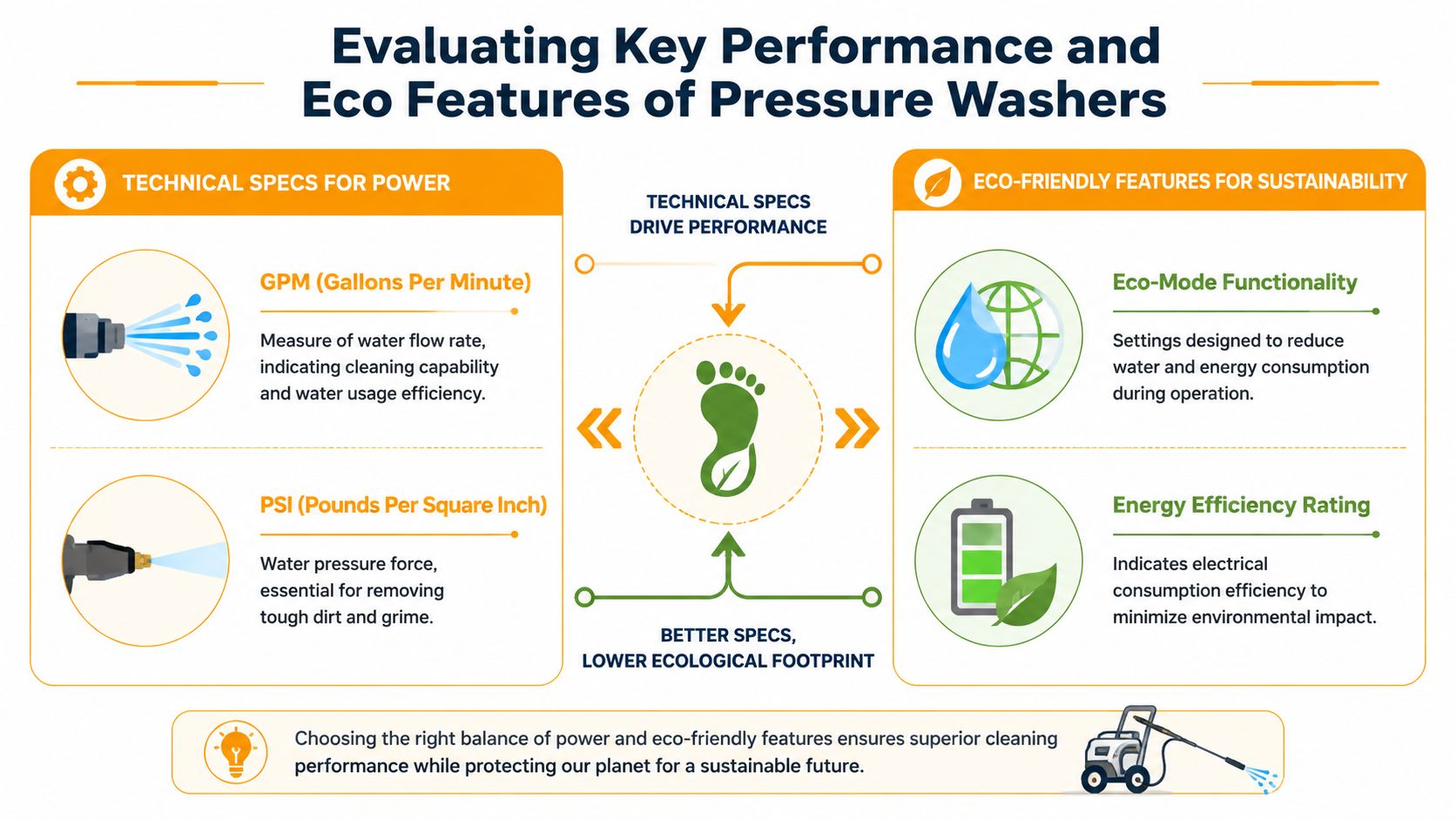
Spec sheets confuse buyers because brands highlight the biggest-looking number instead of the number that predicts real cleaning. Read a pressure washer in this order: PSI, GPM, Cleaning Units, motor type, then control features.
Why PSI and GPM must be read together
PSI is force at the surface. GPM is how much water moves through the job. Good cleaning needs both.
The more useful shortcut is Cleaning Units, or CU, which multiplies PSI by GPM. A machine rated at 2700 PSI and 1.2 GPM produces 3240 CU, as explained in this Greenworks 2700 PSI pressure washer analysis. That same analysis points out a buying trap I see all the time. Some washers advertise a strong flow number, but that higher GPM only shows up in soap mode or at very low pressure.
That matters on real jobs. A washer with honest working-pressure specs will rinse a car faster, clear mud from wheel wells more cleanly, and waste less time in repeated passes. A machine with inflated low-pressure flow claims looks good on the box and feels underpowered once you start cleaning.
What the numbers mean in real use
For most home tasks, the pattern is straightforward:
- Higher PSI cuts through stuck-on grime faster
- Higher GPM rinses and flushes debris away faster
- Balanced CU gives a better picture of overall cleaning speed
- Moderate output is usually the greener choice for cars, outdoor furniture, and routine maintenance because it avoids excess force and unnecessary water use
For car detailing, I do not chase the highest PSI number. I want enough pressure to rinse grit off the paint and enough flow to move contamination off the panel quickly. That is also why many detailing setups pair moderate pressure with a foam cannon and a wide fan tip instead of treating every surface like concrete.
If you want a broader look at why most household cleaning is handled with lower-temperature, practical-output machines, this guide to cold water power washers for home cleaning tasks is a useful reference.
Buying filter: If a washer advertises a standout GPM number, confirm that flow is available at working pressure, not only in low-pressure soap mode.
Motor type changes the long-term equation
Motor type affects noise, heat, service life, and how stable the washer feels during a longer session. Universal motors keep entry pricing down, but they tend to be louder and are a weaker fit for frequent washing.
Brushless motors are usually the better pick for repeat use, especially if the washer will handle cars, patio cleanup, and seasonal house washing instead of occasional spot jobs. They run more efficiently, hold output more consistently, and make more sense when "green" means lower waste over the machine's useful life, not just lower water use during one wash.
Eco features that matter in the driveway
A lot of eco language on product pages is decoration. The features that help in practice are easy to spot:
- Total Stop or trigger-activated shutoff so the machine stops drawing power and water pressure when you pause
- A brushless motor for better durability and fewer replacement-cycle headaches
- A true low-pressure soap setting for foam cannons, pre-soak work, and safer use on paint
- Good hose storage and nozzle control so you spend less time fighting kinks, overspray, and accidental runoff
The useful test is simple. A green pressure washer should let you finish the job in fewer passes, with controlled water use, and without using more pressure than the surface needs. That is what makes a washer green in operation, regardless of whether the badge says Greenworks or the housing happens to be green.
Choosing Your Power Source Electric vs Gas
Do you need a pressure washer that is green in the environmental sense, or just a Greenworks-style electric unit for typical home jobs? That question clears up a lot of bad buying decisions.
Power source is where the two meanings of green start to separate. If your priority is lower noise, no exhaust at the point of use, easier storage, and better control for car washing, electric usually wins. If your priority is long runtime on large hard surfaces with no concern about outlet access, gas still has a place.
Electric vs gas in real use
The practical choice comes down to task, not marketing.
| Feature | Electric Pressure Washer | Gas Pressure Washer |
|---|---|---|
| Use-phase emissions | No exhaust at the machine | Burns fuel and produces exhaust |
| Noise | Usually easier on ears and neighbors | Noticeably louder during longer jobs |
| Maintenance | No engine oil, spark plug, or fuel issues | Regular engine service and fuel management |
| Startup | Push-button or trigger-ready | Pull-start or engine-start routine |
| Storage | Simpler indoor storage, fewer odor concerns | Fuel storage and winterizing matter more |
| Best fit | Cars, decks, patio furniture, siding, weekly home use | Remote areas, long driveway cleaning, commercial-style runtimes |
For car detailing, I rarely recommend gas for homeowners. The extra output sounds attractive on paper, but paintwork rewards control more than brute force. A machine that starts fast, shuts off cleanly, and works well with a foam cannon tends to waste less water because the operator spends less time fighting the tool.
Where electric makes more sense
Electric pressure washers work well for the tasks many homeowners perform. Wash a car. Rinse patio furniture. Clean a small driveway section. Freshen up siding around the entryway.
That matters for eco use in everyday practice. A washer that is easy to roll out and put away gets used correctly. A gas unit that needs fuel, engine upkeep, and more setup often gets left sitting, or it gets used at higher pressure than the surface calls for because the machine is built for heavier work.
Cold-water electric units also fit most residential cleaning better than many buyers expect. This guide to cold water power washers for common exterior jobs does a good job of laying out where they make sense.
Where gas still earns its spot
Gas is still the right tool for certain workloads. Large concrete areas, rural properties without convenient power, and long cleaning sessions favor gas because runtime and mobility matter more there.
That does not make gas greener just because the job gets finished quickly. It only becomes the better choice if an undersized electric unit would force repeated passes, extension-cord compromises, or a machine swap halfway through the work. Efficiency is job-specific.
For vehicle care, though, gas usually overshoots the target. Plenty of detailing pros, including Platinum car detailing experts, center results around wash method, chemical dwell time, nozzle choice, and surface safety rather than chasing maximum pressure.
A simple decision framework
Choose electric if the washer will spend most of its life on cars, small-to-medium hard surfaces, routine home maintenance, and jobs where lower noise and cleaner storage matter.
Choose gas if you regularly clean large areas, work far from power, or need continuous runtime that would frustrate you on an electric platform.
The greener option is the one that matches the task closely enough to finish efficiently without excess pressure, excess water, or excess machine.
Mastering the Green Car Wash Technique
A safe, efficient car wash has less to do with brute pressure than with sequencing. The biggest mistake I see is skipping the loosening stage and trying to rinse dirt off with force alone.
That wastes water and raises the risk of pushing grit across the paint.
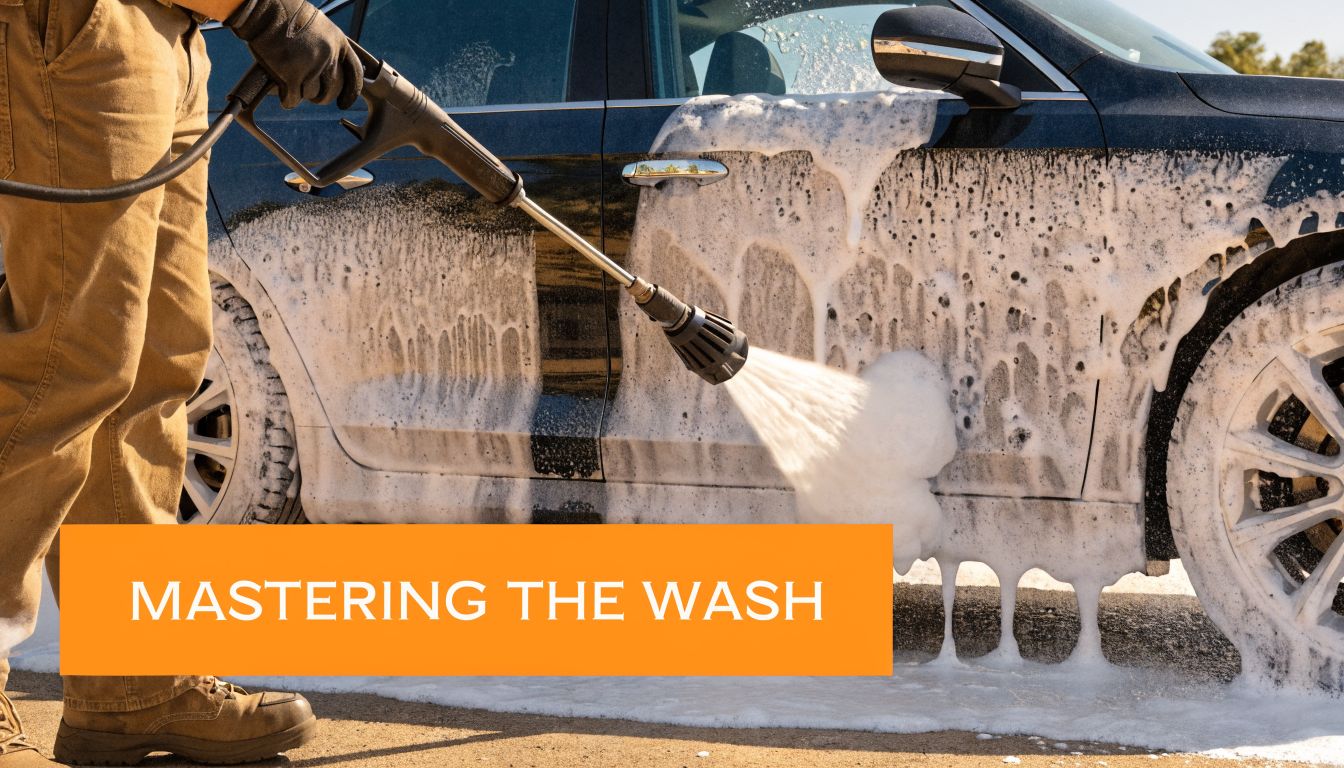
Start with foam, not pressure
There's a real knowledge gap around pairing pressure washer nozzles with foam cannon workflows. The practical method is straightforward: pre-foam first, then rinse with a lower-impact tip. Guidance compiled around this topic notes that using the 25° green tip or 40° white tip for rinsing helps protect paint and can save 20-30% more water than using standard nozzles alone, based on the detailing guidance discussed in this nozzle-and-foam workflow source.
That matches what works in practice. Foam gives surfactants time to loosen traffic film, pollen, and light road grime before the pressure washer does the carrying-away part.
Use this order:
- Rinse lightly if the vehicle is muddy
- Apply a thick foam layer
- Let the foam dwell briefly without drying
- Rinse with a 25° or 40° tip
- Hand wash only after loose grit is off the panel
Pick the nozzle by surface, not habit
The wrong nozzle ruins an otherwise good wash. A narrow, aggressive tip can force you to stand too far away or create streaky cleaning. On wheels and tires, a slightly stronger approach can make sense. On paint, restraint wins.
A practical nozzle approach looks like this:
- 25° green tip for controlled rinsing around lower panels, wheel faces, and dirtier areas
- 40° white tip for broad, safer rinsing on paint, glass, and final sheet-off style passes
- Avoid 0° and 15° tips on paint unless you want to gamble with surface damage
If you want a deeper nozzle primer for vehicle washing, this guide on pressure washer nozzle selection for detailing is worth keeping handy.
Use the least aggressive tip that still clears the contamination. That's how you protect paint and reduce wasted passes.
Work methodically around the vehicle
Car washing gets wasteful when people chase missed spots. Good sequencing prevents that.
Start at the top, then move down. Leave rocker panels, rear lower sections, and wheel areas for last. Those are the grit-heavy zones. If you hit them first and then circle back upward with splashback, you undo your own work.
A lot of professional shops follow the same discipline. If you want to compare that process mindset with a service-based workflow, these Platinum car detailing experts show the level of finish-focused attention that separates a fast wash from a careful one.
A useful demonstration of wash flow and tool handling is below.
What doesn't work
A few habits sound efficient but usually aren't:
- Blasting dry dirt immediately. This turns pressure into a stripping tool instead of a safe rinse.
- Using one nozzle for everything. Concrete logic doesn't transfer to clear coat.
- Standing too close. More force at the panel isn't better if it drives grit around or stresses trim.
For cars, a green pressure washer setup is one that loosens contamination early, rinses with control, and limits unnecessary trigger time.
Advanced Use Cases and Essential Maintenance
Once you own the machine, longevity and adaptability matter as much as first-day performance. A pressure washer that's stored badly or fed poorly will act weak long before it is worn out.
Maintenance that prevents most problems
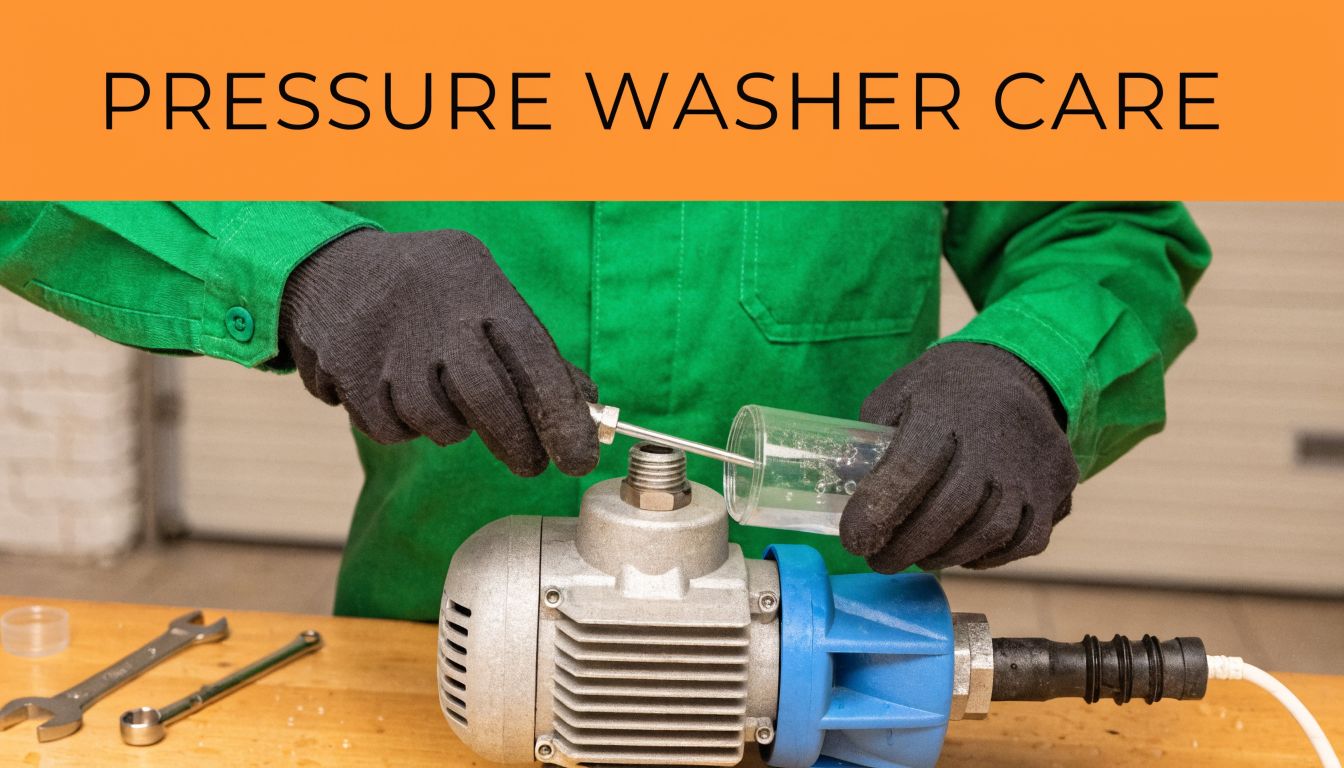
Most avoidable pressure washer issues come from basic neglect. Keep the inlet filter clean, don't store the hose under a hard kink, and don't leave water sitting in the pump if freezing weather is possible.
My practical checklist is simple:
- After use. Relieve pressure in the line and coil the hose without sharp bends.
- Before storage. Inspect quick-connects, seals, and the water inlet screen.
- Before winter. Protect the pump from freeze damage and store the unit dry.
- During the season. Watch for changes in spray pattern, pulsing, or reduced output.
Small leaks and clogged filters make people think the machine is underpowered when the setup is actually the problem.
Off-grid washing for RVs and campers
Battery-powered washing has opened up useful mobile scenarios, especially for RV owners, campers, and detailers working away from a house spigot. The weak point is usually water supply, not pressure washer power.
The current gap is practical instruction. Users of battery-powered washers often get hose-size and kink advice from manuals, but those manuals don't explain how to feed a foam cannon workflow from a portable tank or low-flow RV water setup. That problem is described directly in this off-grid washer compatibility discussion.
In practice, mobile users need to think through the full chain:
- Water source such as a portable tank or reserve container
- Stable feed method that won't starve the pump
- Foam stage before aggressive rinsing
- Final rinse plan based on available water volume
This matters for more than vehicles. RV exteriors, campsite gear, entry mats, utility trailers, and sidewalls all benefit from a controlled, low-waste wash process.
For business properties, the same efficiency mindset carries over to larger surfaces where appearance and safety both matter. If you manage storefronts or service buildings, this resource on how to boost commercial curb appeal and safety shows why disciplined exterior cleaning practices matter beyond the driveway.
Making the Right Choice for Your Needs
A good green pressure washer fits the job, the water supply, and how often you will use it.
Start by clearing up the word green. It can mean lower water and energy waste, or it can mean Greenworks, or it can just mean the plastic housing is green. For buying decisions, color means nothing. What matters is output you can control, attachments you will use, and a setup that gets the surface clean without forcing you to blast away at it.
For mixed home use, I would rather see a well-built electric unit with usable nozzle options than a machine that advertises huge PSI but delivers clumsy results. Cars, patio furniture, grills, screens, and most siding jobs benefit more from steady flow and safe spray patterns than raw pressure. If your priority is concrete, long driveway runs, or heavy buildup, compare cleaning power as a whole, not PSI alone. Higher flow often shortens the job and reduces repeat passes, which is where a lot of water gets wasted.
The same rule applies to car washing.
A smart car-wash setup lets you lay down soap with a foam cannon, loosen grime before contact, then rinse with enough flow to clear panels quickly without pushing water into trim or stressing soft paint. That usually points buyers toward an electric washer with moderate PSI, decent GPM, and reliable nozzle control. If you wash weekly, a brushless motor and better hose management are not luxury features. They save time, reduce frustration, and keep performance more consistent over the long haul.
Convenience matters more than buyers admit. The machine you can roll out, connect fast, and put away without a fight gets used correctly. The machine that is awkward to move or annoying to set up often leads to rushed washing, bad technique, and too much pressure used in the wrong places.
The right choice cleans efficiently, uses water with purpose, and matches the work you do most often, not the hardest job you might tackle once a year.
If you want a faster, lower-effort way to add thick foam to your home wash routine, SwiftJet makes it easy to build a more controlled vehicle-cleaning setup without overcomplicating the process.
