

You spot it a second too late. A dark, sticky blob is mashed into the carpet, someone has already stepped on it, and now the gum is woven into the fibers instead of sitting on top. That's usually the moment people panic and start rubbing, scraping hard, or reaching for the nearest spray bottle.
Don't.
Chewing gum in carpet looks worse than it is, and most damage happens during the rescue attempt, not from the gum itself. The job is simple in principle. Make the gum less sticky, lift it without shredding the pile, and clean away anything left behind so the spot doesn't turn into a dirt magnet later.
There are a few reliable ways to get chewing gum out of carpet. Start with cold. Move to a solvent only if the gum won't release. Then finish the job properly by rinsing out what you used. That last step is commonly overlooked, and it's why a “cleaned” spot can look greasy again a week later.
That Sinking Feeling Discovering Gum on Your Carpet
It usually happens in a high-traffic spot. A hallway runner. The family room. Under a coffee table where someone dropped gum, forgot about it, and pressed it deeper with a shoe. By the time you find it, it's not a neat little wad anymore. It's flattened, fuzzy around the edges, and gripping the carpet like glue.
That's the part that makes people think the carpet is ruined. It usually isn't.
What matters first is not making it worse. If you rub at fresh gum with a cloth, you spread it. If you attack it with a sharp knife, you can cut loops or pull out tufts. If you pour on an oily product and stop after the gum lifts, the carpet may look clean for a day and then start grabbing dust.
Practical rule: Treat gum like candle wax or tar. Work the material itself first, then clean the carpet second.
The good news is that the process is predictable. Most of the time, cold is your safest opening move because it hardens the gum and lets you chip away at it. If that doesn't get the last stubborn smear, a solvent can loosen what freezing leaves behind. The catch is that solvents solve one problem and can create another if you leave residue in the fibers.
What usually works best
- Freezing first: Best for fresh gum and most standard synthetic carpets.
- A solvent second: Useful when the gum is old, smeared thin, or mixed with dirt.
- A careful rinse: Essential after any oily or lubricating product touches the carpet.
- Professional help: Smart when the carpet is delicate, valuable, or the gum covers a larger area.
If you're trying to get chewing gum out of carpet without turning one spot into a bigger stain, patience beats force every time.
The Ice Method Your First Line of Defense
Start with cold. It hardens the gum so you can lift it in pieces instead of dragging a sticky smear deeper into the pile.
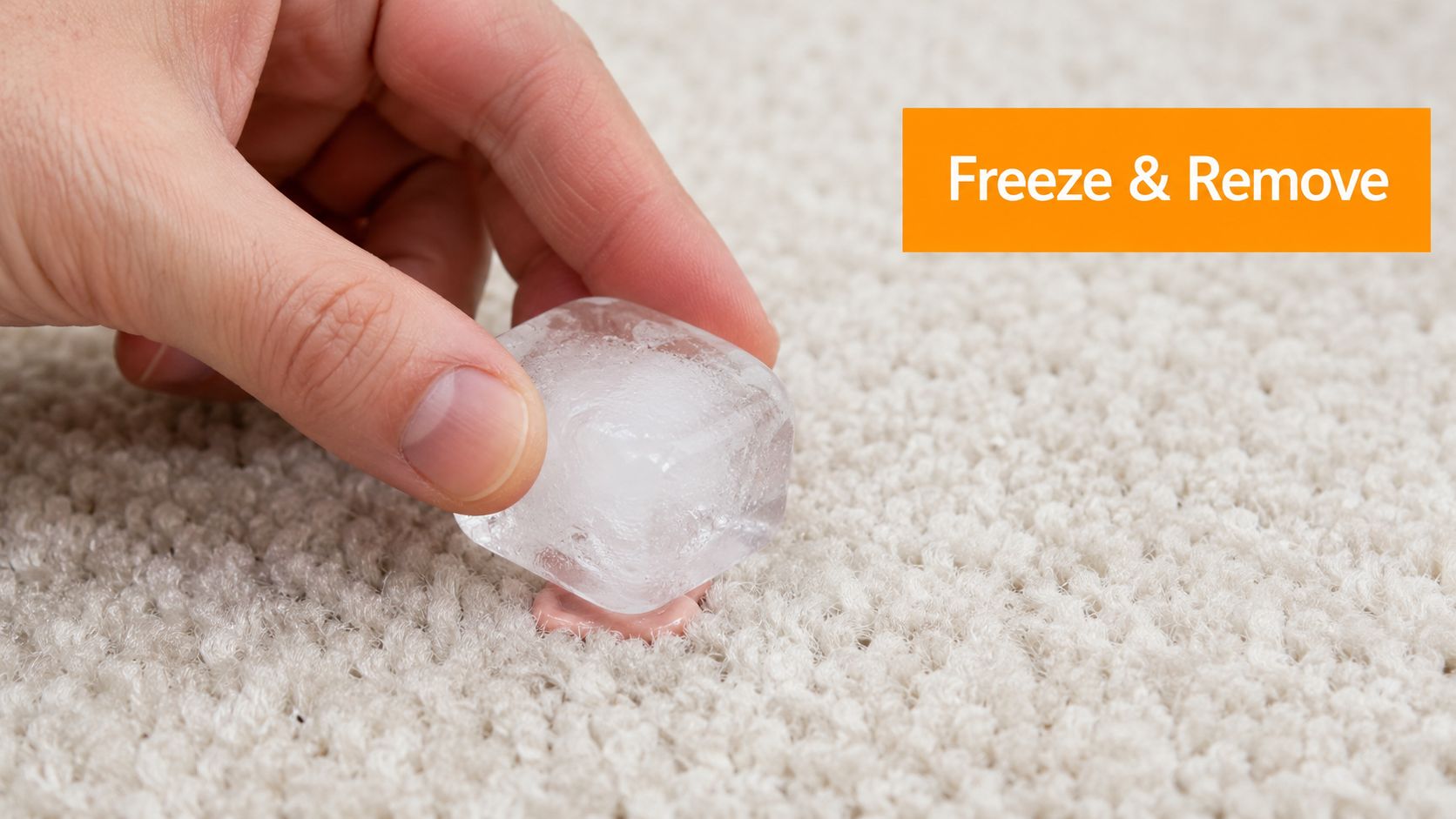
As noted earlier from Fabra-Cleen's guidance, freezing is the standard first step because it changes the gum's texture without adding cleaners to the carpet. In practice, that matters. A hardened wad gives you something to break loose cleanly. Soft gum just stretches, smears, and grabs more fiber.
What you need
Use a short list of tools:
- Ice cubes in a plastic bag: Keeps meltwater from soaking the spot.
- A spoon or butter knife: Dull edges are less likely to catch loops.
- Paper towels or a white cloth: For blotting moisture and picking up crumbs.
- Vacuum cleaner: Helpful for the last dry bits.
If you deal with fabric messes in cars too, the same gentle approach applies to mats and upholstery. This guide on how to clean car upholstery without grinding residue deeper into the fabric follows the same basic principle.
How to do it without damaging the pile
- Put the ice in a plastic bag and hold it on the gum. Keep steady pressure on the spot, but do not press hard enough to flatten the gum wider.
- Wait for the gum to turn firm and brittle. If it still bends or strings, it is not cold enough yet.
- Work from the outside edge inward. Lift the rim first with the spoon or butter knife.
- Use short scraping motions. Controlled strokes are safer than long, forceful ones.
- Repeat the cycle if needed. Freeze, lift, and clear away the loose pieces before going back in.
This part rewards patience. Rushing usually causes the damage people blame on the gum itself. I see the same mistake over and over. The gum is only half frozen, someone digs at it, and the scraper catches carpet yarn instead.
Check your tool on a hidden area first. If it snags, switch to something duller.
Ice versus freeze spray
A commercial gum freeze spray can speed things up, especially on older gum that has been walked in. It cools faster and reaches tighter spots around the edges. Ice is still the better starting point for most homes because it is cheap, controlled, and less likely to tempt you into overdoing the job.
Skip the social media shortcut of spraying keyboard cleaner on carpet. Those cans are not designed as carpet cleaners, and some formulas can leave residue, discolor fibers, or create safety issues in a confined room. A proper gum freeze spray is made for this job. Keyboard cleaner is not.
Here's a quick visual walkthrough before you start:
When this method is enough
Cold alone often solves the problem if the gum is still fairly fresh, the spot is small, and the carpet has a lower or tighter pile. That includes many synthetic household carpets that do not let gum sink too far down.
Stop once the remaining material is a thin film that no longer chips away cleanly. At that point, more dry scraping usually roughs up the carpet without removing much gum.
Using Solvents for Stubborn Sticky Messes
Sometimes freezing removes the bulk of the gum but leaves behind a smeary patch that won't crack off cleanly. That usually happens when the gum is old, warm, ground in, or mixed with lint and foot traffic soil. In those cases, a solvent can loosen the sticky residue enough to lift it.
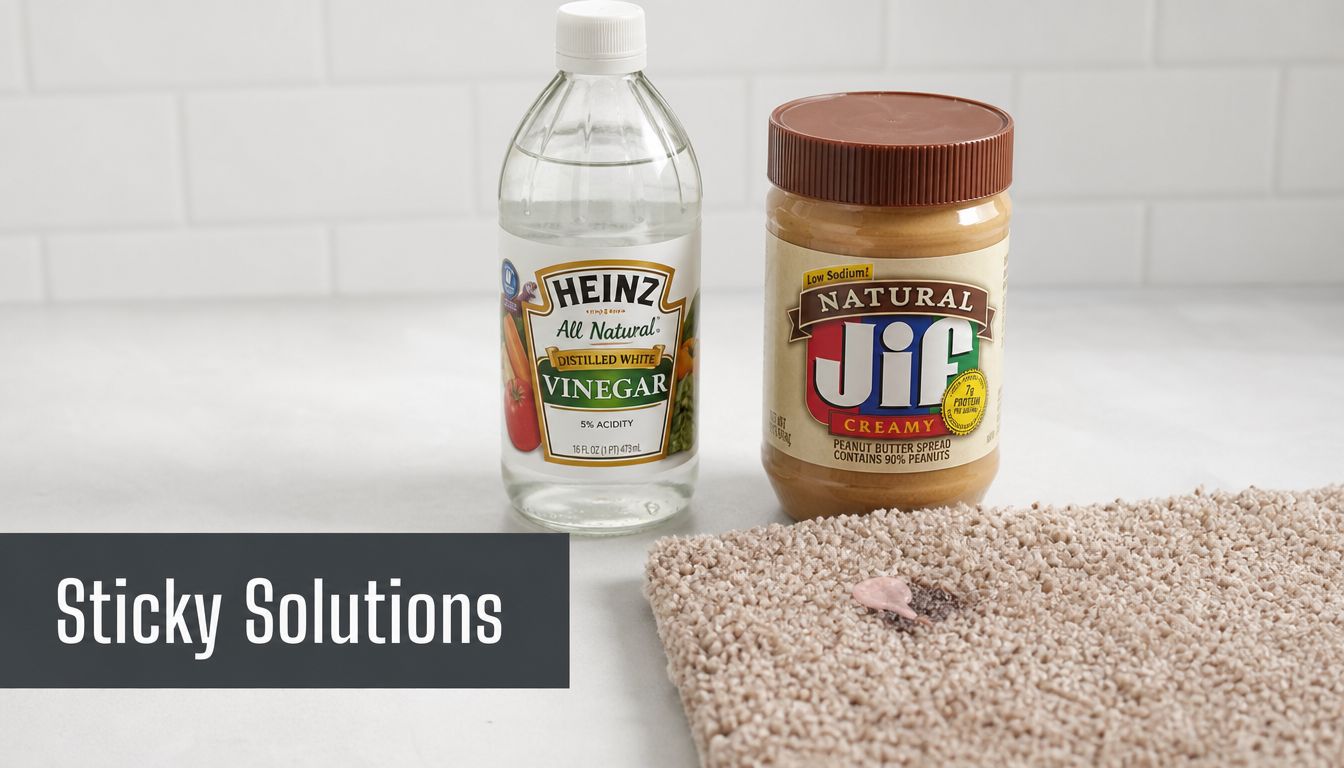
Common choices include white vinegar, peanut butter, mayonnaise, WD-40, and citrus-based adhesive removers. They don't all work the same way, but they have one thing in common. They help break the bond between the gum and the carpet so you can blot and lift instead of tearing fibers.
How to use a solvent carefully
Work small. More product doesn't make the job better.
- Apply to a cloth first when possible: That gives you control.
- Dab onto the gum, don't flood the carpet: You only need enough to soften the residue.
- Wait briefly, then loosen with a spoon or cloth: Lift from the outside inward.
- Blot repeatedly: Transfer the gum to the cloth instead of spreading it.
If the gum is sitting in auto carpet or upholstery, the cleanup principles are similar to what you'd use for other fabric surfaces. This guide to cleaning car upholstery without grinding stains deeper is a useful comparison because the same caution applies. Gentle agitation is fine. Saturation and rubbing usually backfire.
What works and what causes trouble
A quick comparison helps here:
| Solvent option | Why people use it | Main drawback |
|---|---|---|
| White vinegar | Readily available, can help loosen residue | Needs a thorough rinse |
| Peanut butter or mayonnaise | Oils can reduce stickiness | Leaves oily residue fast |
| WD-40 | Effective on sticky buildup | Easy to overapply |
| Citrus remover | Strong on adhesives | Can leave scent or residue |
The biggest mistake isn't using a solvent. It's stopping once the gum is gone.
According to the guidance discussed in WD-40's carpet gum removal article, 75% of post-gum-stain re-soiling occurs due to improper solvent rinsing. That matches what many homeowners see in practice. The spot looks better immediately, then darkens again because the leftover film grabs dust and grit.
Warning: If a product feels slick on your fingers, assume it can stay in the carpet unless you rinse it out properly.
Solvent choices I'd treat with caution
Not every internet tip deserves equal trust.
- Peanut butter: It can loosen gum, but it also brings oil, smell, and extra cleanup.
- Heavy sprays: If the label suggests lubrication, expect residue.
- Homemade mixes with several ingredients: Harder to rinse, harder to troubleshoot.
Solvents have a place. They're often the right move for the last stubborn layer. Just don't confuse gum removal with carpet cleaning. Those are two different steps, and the second one decides whether the repair holds up.
The Crucial Final Step Removing Solvent Residue
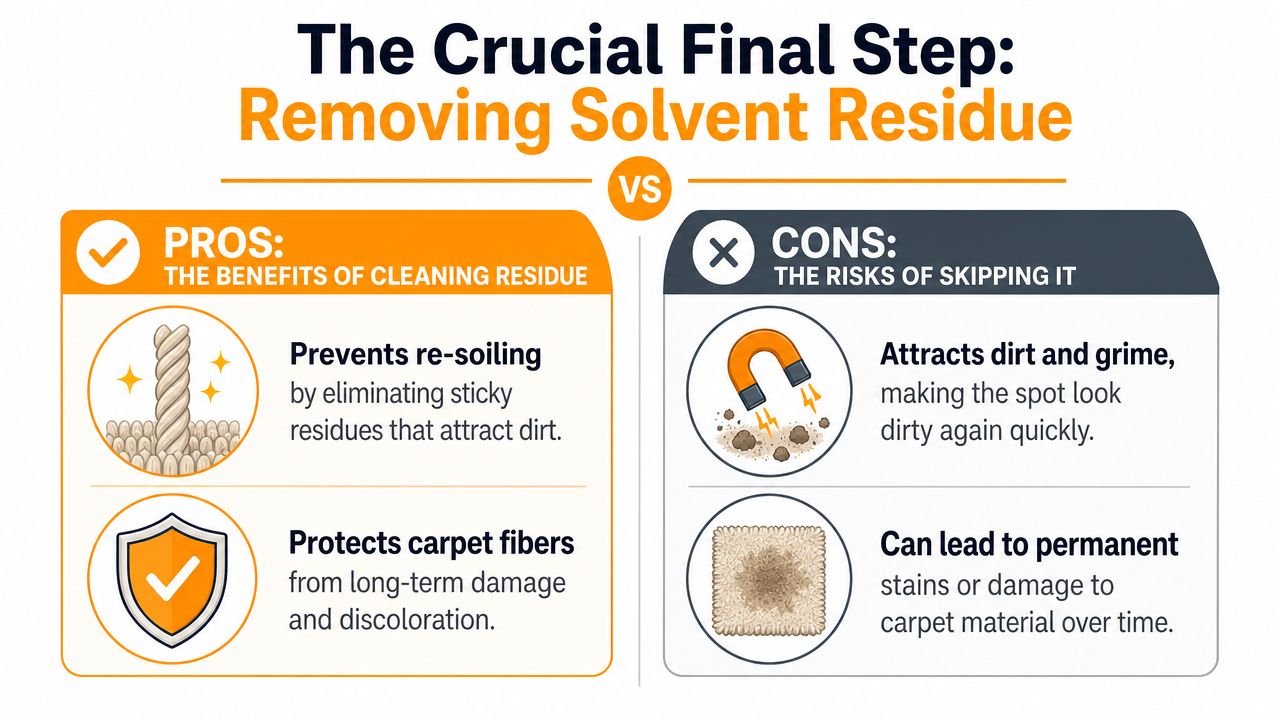
This is the part most DIY guides rush through, and it's the reason some gum spots “come back.” The gum is gone, but the carpet isn't clean. There's still a thin film from the product you used, and that film starts collecting dirt the moment people walk over it.
That's why residue removal is not optional.
If you used vinegar, peanut butter, WD-40, mayonnaise, or any adhesive remover, the carpet needs a follow-up rinse and blot. Skip that, and the repaired area can turn into a sticky traffic spot. If you've ever removed a smell from fabric or carpet, you've seen the same principle in play: the source has to come out, not just the visible mess. This practical guide on dealing with stubborn odor residue in soft surfaces explains that idea well.
How to rinse the spot properly
Use a mild cleaning mix. You don't need a bucket of soap.
- Mix lukewarm water with a small drop of clear dish soap. Keep it light.
- Dampen a clean white cloth. Don't pour the mixture onto the carpet.
- Blot the area repeatedly. Press down, lift, and rotate to a clean part of the cloth.
- Follow with a plain water blot. This removes the soap and whatever solvent is left.
- Dry with towels and airflow. Press with a dry towel, then let the area air dry fully.
Blotting beats rubbing
Rubbing feels productive, but it pushes residue sideways and roughs up the pile. Blotting lifts contamination vertically, which is exactly what you want.
Clean the carpet in layers. Remove the gum, remove the product, then remove the moisture.
Signs you still have residue
Use this quick check before you call the job done:
- The fibers feel slick: There's probably still product in them.
- The area looks darker when dry: Residue may be holding soil.
- The pile clumps together: Oil or soap is still present.
- Dust sticks fast over the next day or two: The spot needs another rinse.
A properly finished repair shouldn't feel greasy, crunchy, or tacky. It should feel like the surrounding carpet. That's the standard.
When to Call a Professional Carpet Cleaner
There's a point where DIY stops being the smart choice. If the gum is buried in a delicate wool carpet, stuck in a patterned rug with sensitive dyes, or spread across a larger traffic area, the risk of fiber damage climbs fast. Repeated home attempts can do more harm than the gum.
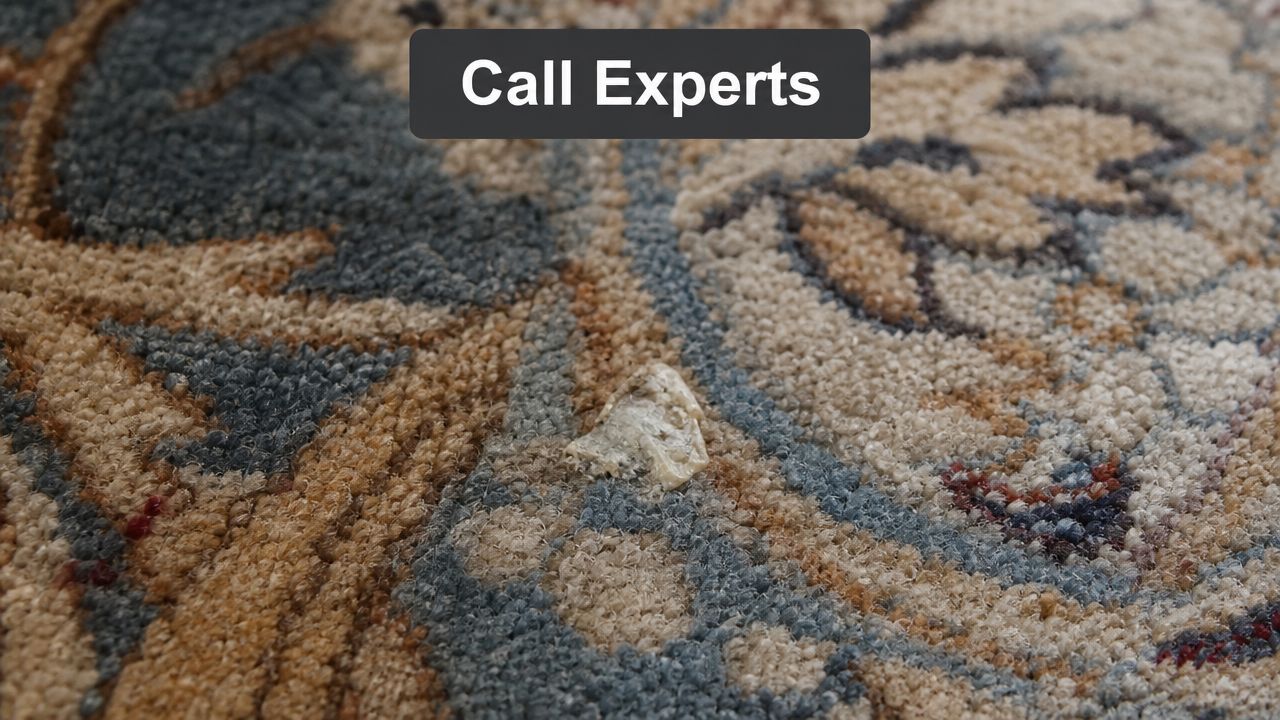
Professional cleaners have a big advantage here. According to Action Cleanup's explanation of professional gum removal, hot water carpet extractors heat water to temperatures exceeding 200 degrees Fahrenheit (approximately 93°C), generating steam that dissolves chewing gum embedded in carpet fibers while also cleaning and removing residue with added detergent.
Good reasons to stop and book help
- Delicate fibers: Wool, silk, handwoven rugs, and older carpets deserve caution.
- Deep contamination: The gum has been walked in and spread through the pile.
- Multiple failed attempts: The spot now includes gum, cleaner, and abrasion.
- Large affected area: More square footage means more chance of uneven cleaning.
If that sounds like your situation, professional service isn't overkill. It's asset protection. A provider that offers specialty carpet cleaning solutions is often the better fit than a basic quick-clean service because gum removal needs both stain work and proper extraction.
For homeowners comparing tools and methods before deciding, this overview of a carpet extractor with heater and what it does differently gives useful context on why heat plus extraction can outperform surface cleaning alone.
Frequently Asked Questions About Gum Removal
Is keyboard cleaner safe to freeze gum out of carpet
I wouldn't recommend it.
The social media appeal is obvious. It can freeze gum very hard, very fast. But the problem is safety and aftereffects, not just whether it works in the moment. As discussed in this Reddit thread about freezing gum with keyboard cleaner, it “freezes it rock hard,” but there is zero data on the risk of chemical inhalation, carpet fiber degradation from extreme cold, or potential for the refrigerant to leave a toxic residue. Stick with ice or a product specifically intended for gum removal on carpet.
Does the method change for shag carpet or high pile carpet
Yes. Use less scraping and more lifting. In shag or high pile carpet, gum wraps around longer fibers, so aggressive scraping tangles and pulls them. Freeze thoroughly, separate the fibers with your fingers if needed, and lift in small bits. Work slower than you would on low pile carpet.
What if the gum is old and hardened already
That can help at first. Old gum is often less elastic than fresh gum. Start with the freezing method anyway, because it can make brittle gum break apart more cleanly. If a thin residue remains, use a small amount of solvent and then rinse the spot thoroughly.
Can I use heat instead of cold
Sometimes, but I'm cautious with it. Heat can soften gum enough to transfer it to a cloth or bag, but it can also press the mess deeper or stress certain fibers if you overdo it. Cold is usually the safer first move for most homeowners.
How do I keep the spot from looking different after cleaning
Match your final cleanup to the rest of the carpet. Blot, rinse, dry thoroughly, and then lift the pile gently with your fingers or a soft brush once dry. If you want more general fabric-safe maintenance ideas after spot cleaning, these DIY carpet cleaning techniques are a helpful reference.
Should I vacuum before or after
After. Vacuuming over sticky gum can smear it, catch it in the vacuum head, or spread loose fragments. Once the gum is fully removed and the area is dry, a quick vacuum helps reset the pile and pick up any remaining crumbs.
If you like practical cleaning tools that make home care faster, take a look at SwiftJet. It's built for efficient, no-fuss cleaning around the house, garage, and driveway, and it's a smart fit for anyone who values simple gear that gets real work done.
