

That dark, baked-on gunk clinging to your wheels isn't just everyday dirt. It’s a nasty, corrosive cocktail of hot metal shavings from your brake rotors, carbon fibers, and sticky adhesive residue from the pads themselves. This stuff literally bonds to the surface of your rims, which is why a simple wash with soap and water barely makes a dent. To really clean brake dust off your rims safely, you need a different game plan.
Why Is Brake Dust So Tough to Beat?
Let's get one thing straight: brake dust is not your average road grime. It’s created by the intense friction between your brake pads and rotors.
Every time you hit the brakes, tiny, superheated iron particles fly off and embed themselves into the clear coat on your wheels. Once they’re stuck, they don’t want to let go. That’s the real reason it’s so stubborn.
Over time, moisture and heat make things worse. Those iron particles start to oxidize and corrode, which can lead to permanent etching and pitting on your wheel’s finish. This is where a lot of people go wrong—they reach for an aggressive, acidic cleaner thinking they need brute force. Big mistake. Those harsh chemicals can easily ruin sensitive wheel finishes, including:
- Painted or powder-coated alloys
- Polished aluminum
- Chrome plating
- Clear-coated wheels
The smart, professional approach these days is to use a dedicated, pH-neutral iron remover. These formulas are engineered to specifically target and dissolve the ferrous (iron) particles without harming the wheel itself. They trigger a chemical reaction that safely breaks the bond between the brake dust and your rim's surface.
It's no surprise that the demand for safe, effective wheel cleaners has exploded. The global market was recently valued at USD 2.0 billion, with products designed for brake dust grabbing nearly 30% of that share. This just goes to show how many car owners are looking for solutions that actually work without causing damage. You can dive deeper into these market trends in wheel care if you're curious. At the end of the day, using the right product is what separates a quick-and-easy job from a costly mistake.
Getting Your Wheels Ready for a Flawless Finish
Before you grab a bottle of wheel cleaner, there are a couple of crucial things you need to do to get the best results and, more importantly, avoid damaging your rims. The absolute first rule of wheel cleaning is to work on a surface that's cool to the touch. If you've just been driving, park the car in the shade and give them plenty of time to cool down.
Why is this so important? Spraying any cleaner onto a hot wheel is a recipe for disaster. The heat causes the liquid to evaporate almost instantly, which can leave behind nasty chemical stains and even etch the finish. It also prevents the cleaner from having enough time to break down the grime, making your job harder, not easier.
Don't Skip the Pre-Rinse
Once you're sure the wheels are cool, it's time to give them a good, solid rinse with a hose or a pressure washer. The goal here is to knock off all the loose stuff—the surface-level dirt, road grit, and any brake dust that hasn't yet baked on.
Think of it this way: you're clearing away the easy-to-remove debris so your specialized cleaner can focus its energy on the really stubborn, bonded contaminants.
My Two Cents: Taking a minute to blast off that top layer of grit dramatically lowers the chances of you scratching the wheel's finish when you start scrubbing with your brushes. You're not just moving dirt around; you're removing it first.
This step is a must for a scratch-free shine. It's also worth noting that clean wheels are a key part of proper vehicle maintenance and inspections, especially during safety events like the International Roadcheck focused on wheel ends.
By following these prep steps, you're setting yourself up for success. Your wheel cleaner can get straight to work dissolving the embedded iron particles, making the whole process faster, safer, and way more effective. This initial effort is what separates a decent clean from a truly brilliant, showroom-quality result.
Using a Touchless Iron Remover Cleaner
Alright, with the initial prep work out of the way, it’s time to bring out the heavy hitter: a quality, touchless iron remover. This is where the real magic happens. Forget the days of endless, aggressive scrubbing that risked scratching your wheels. Modern chemical cleaners do the hard work for you by dissolving that stubborn, baked-on brake dust right before your eyes.
What makes these products so great is that they’re typically pH-neutral. This means they’re safe to use on just about any wheel finish you can think of—painted, powder-coated, clear-coated, and even delicate chrome. The science is simple but effective: the formula targets the iron particles (the "ferrous" stuff) from your brake pads. When the cleaner makes contact, it triggers a chemical reaction that you can actually see. The wheel will start to "bleed" a deep purple or red color, which is your proof that the baked-on grime is breaking down.
Proper Application and Dwell Time
Getting this right is all about coverage and patience. Start by spraying the iron remover generously over the entire surface of the wheel. I mean it—don't be stingy here. You want to hit the face of the wheel, get in between the spokes, and really soak the inner barrel, which is usually where the worst of the dust collects.
This infographic breaks down the essential prep work that sets you up for success.
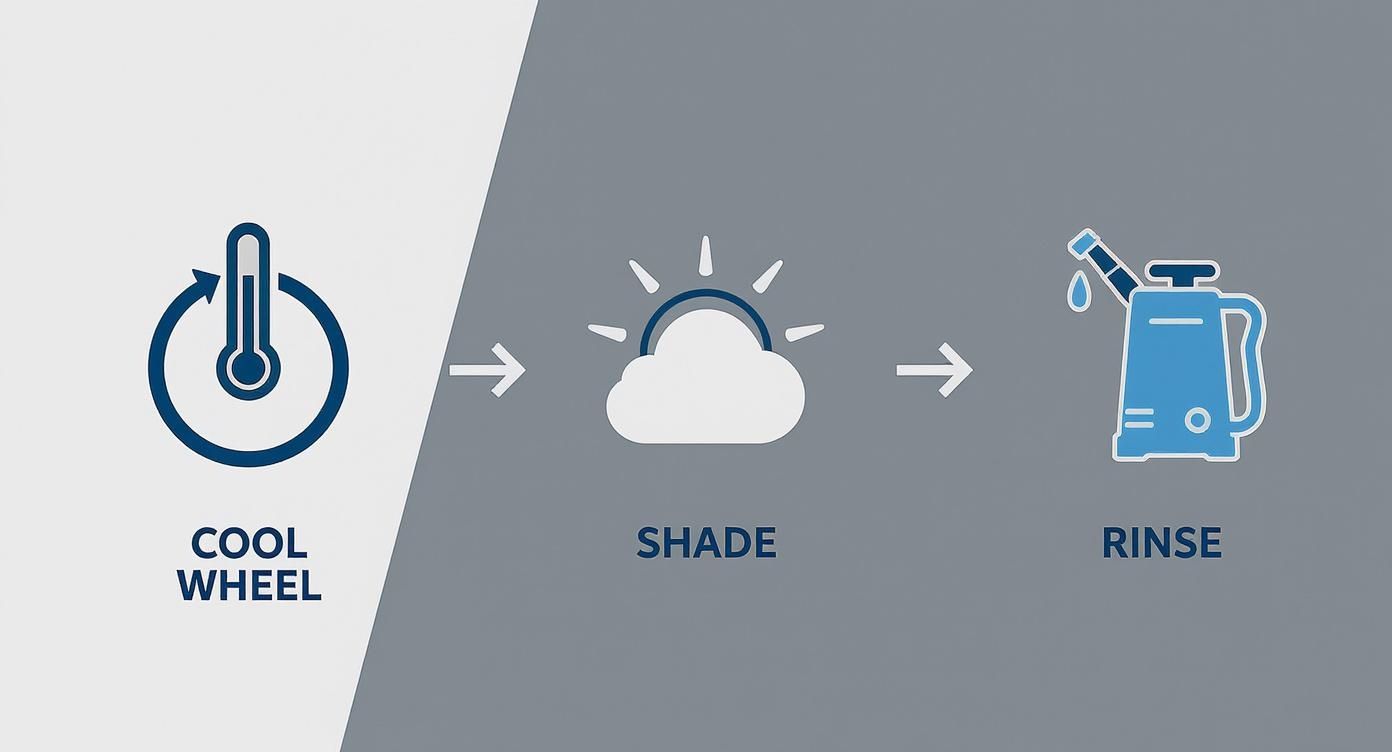
As you can see, starting with a cool, rinsed wheel in the shade isn't just a suggestion; it's a critical step for getting professional-level results.
Once you’ve coated the wheel, the single most important thing you can do is let the product work. Just let it sit.
Give the iron remover a solid 3-5 minutes to dwell on the surface. This isn't just downtime; it’s when the cleaner is actively breaking the molecular bond holding those tiny iron particles to your wheel.
The one rule you can’t break is letting the cleaner dry. If it's a hot day or a bit breezy, you might need to re-mist the wheel with a little more product or even just some water to keep it from drying out. This little trick ensures you can properly clean brake dust off rims without needing a ton of elbow grease. For more on picking the perfect cleaner for the job, check out our deep dive on the best car cleaning products.
Agitating Safely for a Deeper Clean
Even the best iron remover can't always conquer years of baked-on grime. Sometimes, you just need to get in there and give it a little nudge. This is where gentle agitation makes all the difference, but you have to use the right tools. Seriously, put down that old t-shirt or dish sponge. They're notorious for trapping grit and will absolutely scratch your wheel’s finish.
To properly clean brake dust off rims without inflicting new damage, you need a set of dedicated, soft-bristled wheel brushes. I like to think of it as having a specific tool for every part of the job. A big, fluffy brush is your go-to for the wheel faces, but a long, skinny barrel brush is non-negotiable for getting deep inside the rim.
Choosing Your Agitation Tools
The devil is in the details, especially when you're dealing with intricate multi-spoke designs or tight lug nut holes. This is where having the right tools separates a quick wash from a professional-level detail.
- Lug Nut Brush: This small, soft-bristled brush is designed to get right into the lug nut recesses where dirt and dust love to hide.
- Barrel Brush: Look for a long, flexible brush, ideally with a microfiber or wool head. It's the only way to safely clean the inner barrel of the wheel without scratching it.
- Face Brush: A soft, larger brush that makes quick work of the main surface and spokes of your rims.
Pro Tip: Don't skip the two-bucket method here, even for your wheels. Have one bucket with your cleaning solution and a second one with plain water. Dunk your brush in the rinse bucket before reloading it with cleaner. This simple step prevents you from dragging the grit you just removed right back across the wheel's finish.
This methodical approach ensures you clean every single part of the wheel. It's also a great time to think about the products you're using. In Europe, strict regulations have pushed the market toward eco-friendly cleaners, which now make up 45–50% of all products sold. Choosing a modern, low-VOC formula is not just better for the planet, it's often safer for your wheels.
I always recommend starting with the dirtiest part first—the inner barrel—and then moving out to the face. This keeps the worst of the grime contained. For a full breakdown of the entire process, check out our complete guide on the best way to clean car rims.
Final Rinse, Dry, and Protect
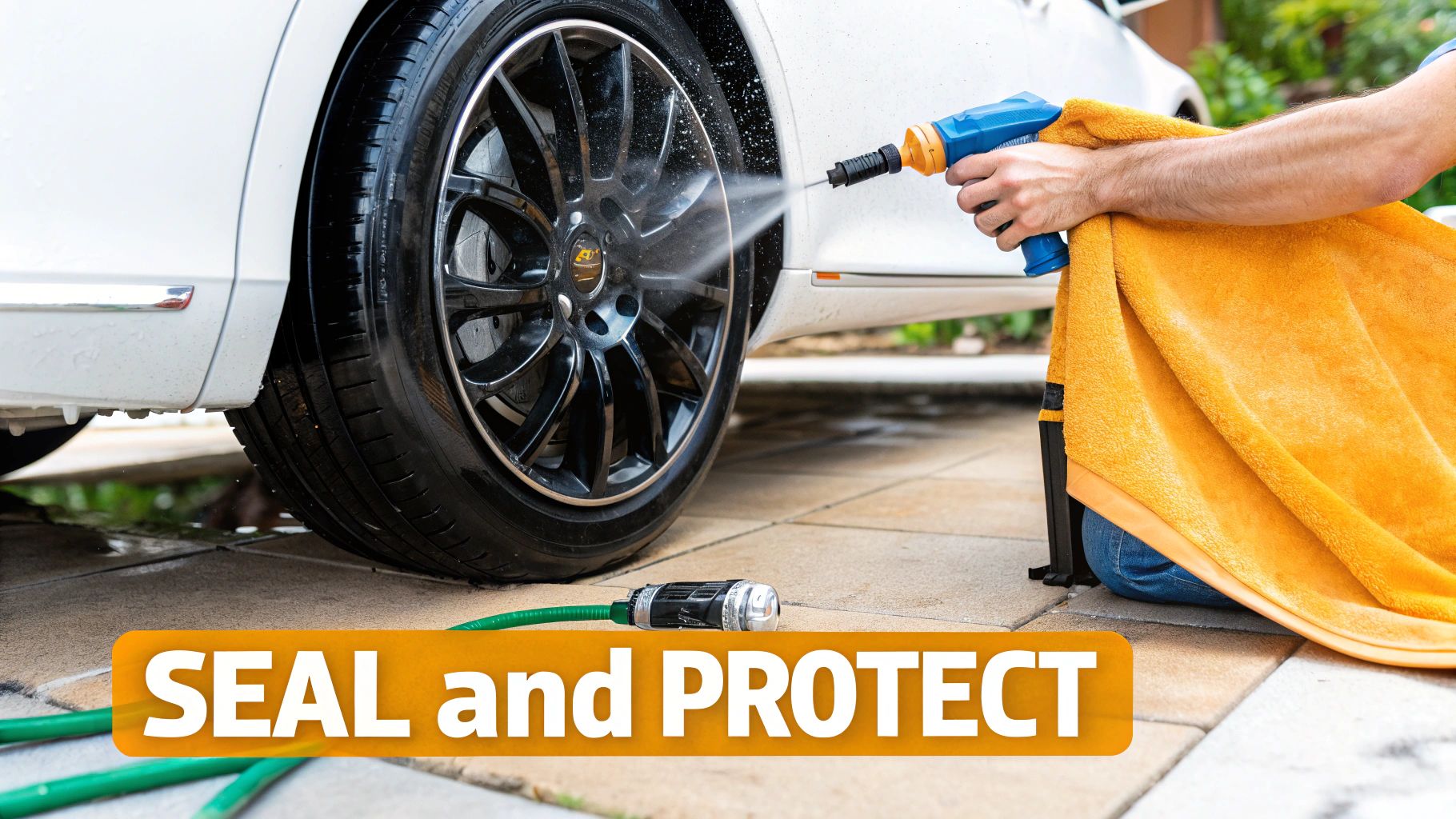
You've done the hard part with the chemicals and the brushing. Now it's time to bring it all home, and a proper rinse is more important than you might think. You need to completely flush away every bit of cleaner and loosened gunk.
Grab your hose or pressure washer and use a strong, steady stream of water, always working from the top of the wheel down. This lets gravity help you out, pulling the dirty residue away.
Don't forget the tricky spots where cleaners love to hide. Really focus on:
- The lug nut holes
- The area behind each spoke
- The inner barrel of the wheel
If you leave any cleaner behind, you'll end up with ugly streaks or spots, which basically undoes all your effort. Give it one last look-over to make sure it's totally clean before moving on.
Getting That Spot-Free Finish
Whatever you do, don't let your wheels air-dry. That's a one-way ticket to water spots from mineral deposits. A completely avoidable headache.
Instead, grab a clean, dedicated microfiber towel and gently pat the surfaces dry. For those of us who are extra meticulous, a leaf blower or some compressed air works wonders. It blasts water out of all those tight crevices for a perfect, touch-free dry.
If you're curious about why the right towel matters so much for a scratch-free finish, take a look at our guide on the best car drying towels.
The final step is what separates a good detail from a great one: protection. Applying a quality wheel sealant or ceramic coating creates a slick, invisible barrier on the rim's surface. It not only gives you that deep, wet-look shine but also makes it incredibly difficult for new brake dust to bond to the wheel.
This simple, proactive step is the secret to easier cleanings in the future. With your wheels looking brand new, you might want to explore options like professional window tinting to elevate and protect the rest of your car's look. It's all about working smarter, not harder, to keep your ride looking its best.
Got Questions About Cleaning Your Rims? We’ve Got Answers.
Even the most seasoned car enthusiast runs into questions when tackling a deep clean. Getting those rims perfect can be tricky. Let’s go over some of the most common things people ask when they set out to clean brake dust off rims, so you can get the job done right.
How Often Should I Be Cleaning My Rims?
This really comes down to how you drive. If you're in your car every day, especially with high-performance brakes that are notorious for dust, a good cleaning every week or two is a smart move. That schedule keeps the corrosive brake dust from baking on and causing real damage.
For a car that only sees the road on sunny weekends, a solid wash once a month will probably do the trick. The key is to get that dust off before it has a chance to bond with your wheel's finish.
Can't I Just Use a Regular Degreaser?
I see this all the time, and it's a shortcut you really want to avoid. Grabbing a generic all-purpose cleaner or a powerful degreaser from under the sink might seem like a good idea, but it can be a costly mistake. Most of those products are just too harsh.
The highly alkaline or acidic formulas in general cleaners aren't made for delicate automotive surfaces. They can easily stain, dull, or even strip the clear coat right off your rims. This is especially risky with sensitive finishes like polished aluminum, chrome, or powder-coated wheels.
Your best bet is to always use a dedicated, pH-neutral wheel cleaner. It's formulated to dissolve those stubborn iron particles from brake dust without eating away at your wheel's finish.
Why Do Some Cars Make So Much More Brake Dust?
It almost always comes down to the brake pads. You’ve probably noticed that many European cars, known for their incredible stopping power, tend to have wheels caked in black dust. That’s because they often use softer, organic brake pad compounds. They stop on a dime, but the trade-off is a ton of fine, black dust.
On the flip side, you can find aftermarket ceramic brake pads specifically designed to be low-dust. The dust they do create is usually lighter in color and way less noticeable.
Is It Safe to Just Run My Car Through an Automatic Car Wash?
If you really care about your wheels, hand-washing is the only way to go. It's tempting to take the easy route, but automatic car washes can be rough on your rims.
Here’s why:
- Harsh Chemicals: Many use aggressive, acidic wheel cleaners to get fast results in a touchless system. Repeated exposure can degrade and damage your finish.
- Abrasive Brushes: The big, spinning brushes in tunnel washes can easily cause swirl marks and fine scratches, especially when they're grinding gritty brake dust into your wheels.
Ready to make cleaning brake dust off your rims easier than ever? The SwiftJet Car Wash Foam Gun turns any garden hose into a professional-grade foaming system, lifting away grime without the hard work. Get your SwiftJet today and experience a faster, safer, and more effective clean.
